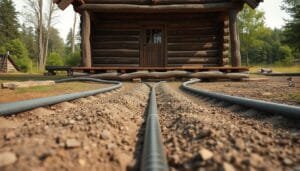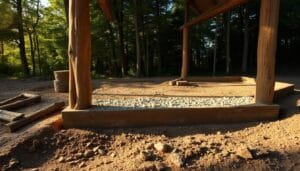
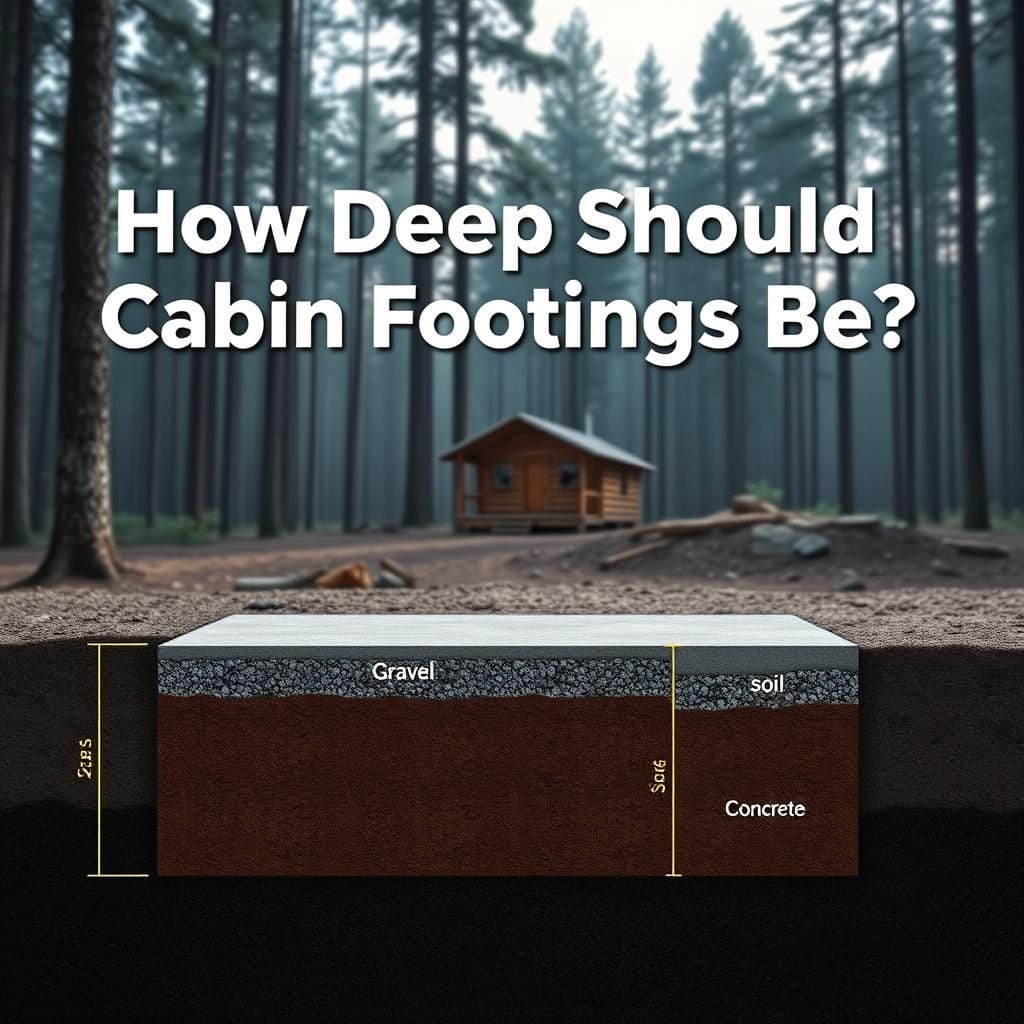

Welcome to this comprehensive guide on determining the proper depth for your cabin footings. This is one of the most critical decisions you’ll make when planning your building project.
Getting the footing depth right from the start is essential. Proper installation prevents costly structural problems down the line. It also avoids settling issues and potential safety hazards.
This foundation guide will walk you through everything from understanding what footings actually do to the specific factors that determine their required depth. We’ll cover site assessment, material selection, and installation methods.
Whether you’re planning to build cabin for weekend getaways or a full-time off-grid retreat, proper footing depth forms the foundation of a successful structure. Our cabin foundation approach incorporates real-world building experience used by DIY enthusiasts and professionals alike.
Understanding Cabin Footings and Their Importance
Building a solid base starts with understanding what supports your structure underground. These critical components ensure your building stands strong for years to come.
What Are Cabin Footings?
Cabin footings are the underground supports that carry your entire building’s weight. They safely transfer this load into the earth below. Various types exist to suit different needs.
Common options include concrete piers, pads with posts on top, and continuous foundation walls. Concrete piers work by pouring material into deep holes in the ground. Once cured, they act like legs for your structure.
Role in Structural Stability
Footings play a vital role in maintaining your building’s stability. They prevent uneven settling and shifting during weather changes. This is especially important in areas with freeze-thaw cycles.
Properly positioned supports distribute weight across stable soil layers. This prevents concentrated stress points. Your foundation cabin needs these elements to reach firm ground below the frost line for maximum durability.
Well-designed footings are essential for challenging terrain or variable soil conditions. They form the base of a reliable structural system that includes beams and floor frameworks.
Assessing Your Site and Soil Conditions
A careful look at your build site’s unique characteristics prevents future foundation headaches. The ground itself holds the answers for creating a stable base.
Start by checking if the land is level. Significant slopes require more complex foundation work. Also, consider sun exposure and wind patterns for your cabin’s placement.
Evaluating Soil Type and Drainage
Soil condition is a major factor. Sandy ground drains well but can shift. It often needs wider bases for support. Clay holds water and expands or contracts with the weather.
You can test drainage easily. Dig a small hole, fill it with water, and see how fast it drains. Slow drainage means you need to plan for better water runoff.
For soft or unstable ground, use special techniques. Adding a layer of gravel at the bottom of holes improves drainage and support. Widening the base of your piers also adds stability.
Local Building Codes and Regulations
Always check your local building codes before you start. Rules for foundation work change from one place to another. These regulations ensure safety and durability.
Your area might need permits or inspections before you pour concrete. Consult your local building department early. They provide crucial info on frost line depth and minimum requirements.
Following these rules from the start saves time and money. It guarantees your project meets all necessary standards for a secure structure.
How Deep to Dig Cabin Footings
The excavation measurements for your building’s underground supports depend heavily on local conditions and structural requirements. Getting this right prevents future problems with settling and stability.
Key Factors to Consider
Several elements determine the proper measurements for your supports. Soil type, building weight, and local regulations all play crucial roles.
The absolute minimum requirement is typically twelve inches below the surface. Most situations need significantly more excavation. Larger structures may require measurements reaching ten to fifteen feet.
| Structure Type | Minimum Depth | Recommended Range | Critical Factors |
|---|---|---|---|
| Small Cabin/Shed | 12 inches | 3-6 feet | Soil stability, local codes |
| Medium Building | 18 inches | 4-8 feet | Frost line, load requirements |
| Large Structure | 24 inches | 10-15 feet | Soil composition, climate |
Frost Line and Climate Impact
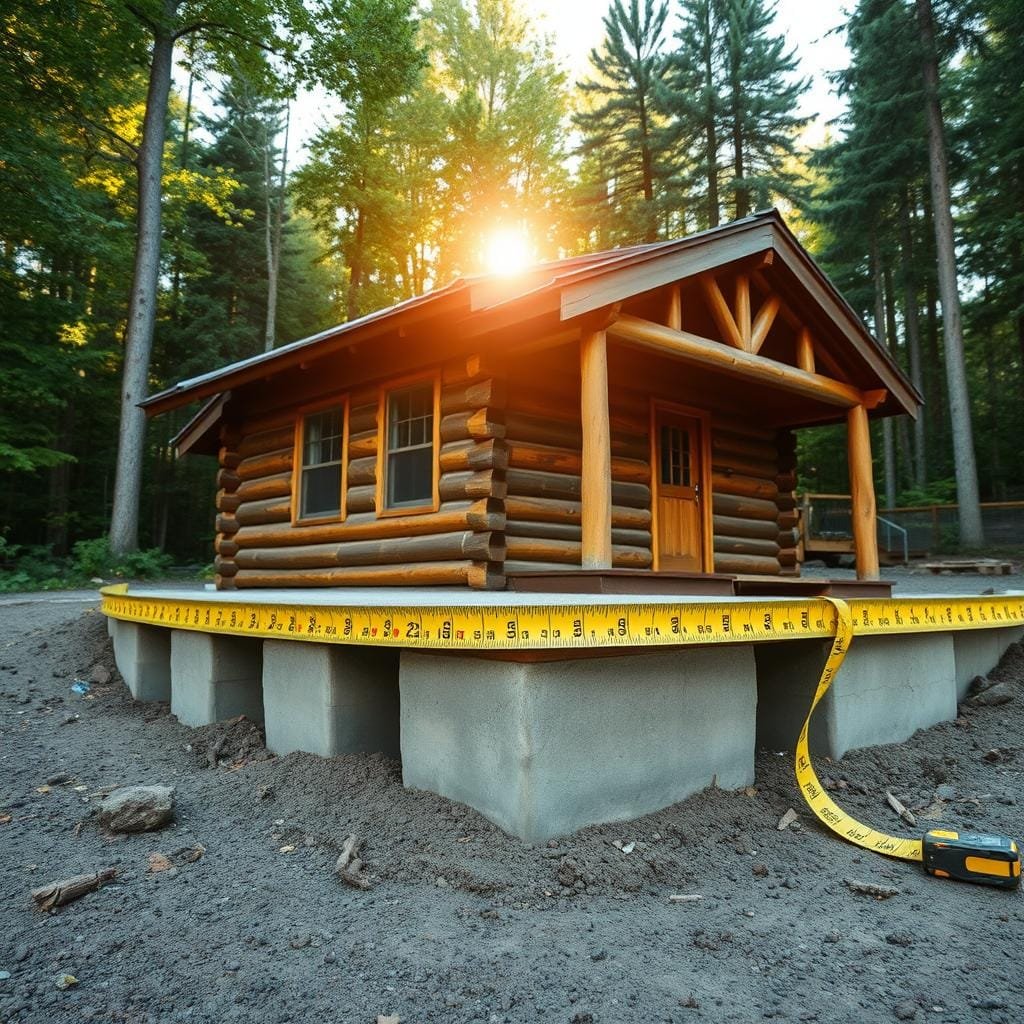
In colder regions, your supports must extend below the frost line. This typically measures thirty-six to forty-eight inches down. This prevents frost heave during winter months.
Always consult local frost depth maps before starting your project. For detailed information on concrete pier requirements, check local building codes. Proper depth ensures your foundation remains stable through seasonal changes.
Selecting the Right Materials for Footings
Your material selection for underground supports significantly impacts your structure’s longevity and performance. The right combination ensures stability while minimizing future maintenance needs.
Concrete vs. Treated Wood Options
Poured concrete offers the strongest, most permanent foundation solution. It resists rot, pests, and harsh weather conditions effectively.
Treated wood provides a more affordable and DIY-friendly alternative. This option works well for lighter buildings and seasonal structures.
For any wood post contacting soil, choose highly rot-resistant varieties. Cedar and tarred logs serve as excellent natural choices. Standard 4×4 treated wood posts deliver good strength for most applications.
Durability and Maintenance Considerations
Never place untreated lumber directly against concrete or cement blocks. Moisture transfer causes premature rot. Use pressure-treated spacers or plastic gaskets for proper separation.
Concrete blocks present a middle-ground option when stacked on pads. Corner posts require broad, flat tops for weight distribution.
Your final decision depends on budget, structure permanence, local availability, and builder experience. Each material offers distinct advantages for different situations.
Step-by-Step Guide to Excavation
Proper excavation is where your cabin project transitions from planning to physical reality. This critical phase requires careful attention to detail and proper technique.
Following a systematic approach ensures your foundation will be square, level, and stable for years to come.
Marking Your Layout Accurately
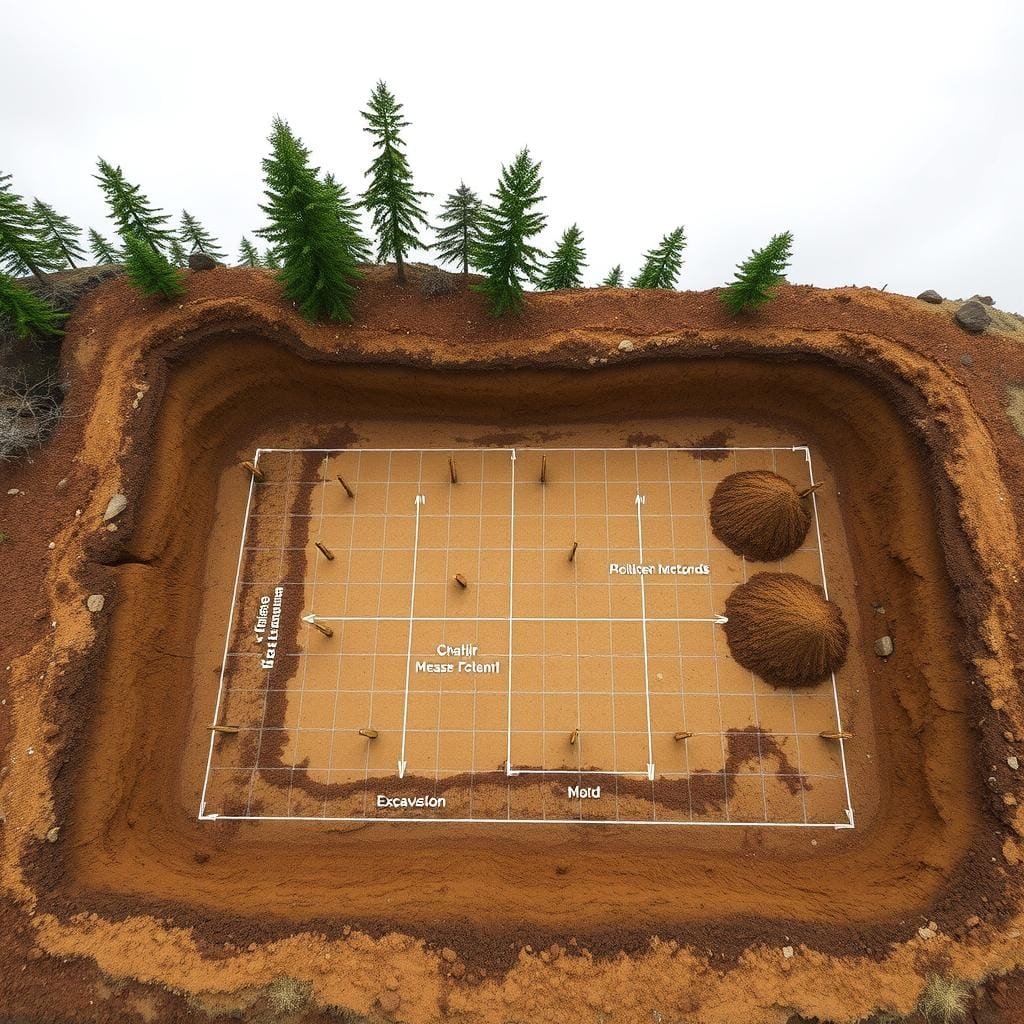
Begin by marking your structure’s outline on the ground. Place stakes at each corner and connect them with string lines.
This creates a clear visual guide for your entire foundation perimeter. The next step involves verifying your layout is perfectly square.
Measure the diagonals using the Pythagorean Theorem. Equal diagonal measurements confirm a true rectangular shape.
Mark individual support locations using stakes and string lines. Ensure they’re spaced evenly according to your building plan.
Safe and Efficient Digging Practices
Clear the site of rocks, roots, and debris before starting. This prevents interference with your excavation work.
Use a power auger for faster, more consistent holes. Manual post-hole diggers work well for smaller projects.
Always dig straight down rather than at an angle. This creates uniform holes that will hold supports securely.
Excavate to the proper depth and diameter for your load requirements. Typically, this ranges between 12 and 24 inches wide.
Clear loose soil and debris from the bottom of each hole. Footings must rest on solid, undisturbed earth for maximum stability.
Use a tape measure to confirm you’ve reached target depth. When close to final depth, lay boards across holes and check with a level.
This ensures all supports will sit evenly for a perfectly level foundation.
Installing Posts and Floor Joists
After excavation comes the crucial step of installing the vertical and horizontal supports that create your cabin’s base platform. This phase transforms your foundation into a sturdy framework ready for flooring.
Proper Post Installation Techniques
Begin by adding a drainage layer to each hole. Place sand or gravel at the bottom to prevent water accumulation against wood grain. This simple step significantly extends the life of your posts.
Set your treated wood posts carefully into position. Check for plumb in multiple directions using a level. Maintain perfect vertical alignment before proceeding to the next step.
Once positioned correctly, pour concrete around the base to secure posts permanently. Work systematically to ensure each post remains perfectly plumb during setting. Corner posts require particular attention during this process.
Position support posts throughout your foundation strategically. They must be close enough so floor joists always have adequate support. Ideally, place them under both ends and centers of your joists.
Methods for Aligning Floor Joists
Place solid treated wood bearers on top of your posts. Use durable 2×6 or 4×4 lumber for these horizontal support beams. Secure them firmly to the posts beneath.
Your floor joists need specific spacing for optimal performance. They should be spaced evenly between 16 and 24 inches apart. This creates a strong, stable base for your cabin floor.
| Joist Material | Standard Spacing | Maximum Span | Recommended Use |
|---|---|---|---|
| 2×6 Treated Wood | 16 inches | 10 feet | Light-duty floors |
| 2×8 Treated Wood | 16 inches | 13 feet | Standard cabins |
| 2×10 Treated Wood | 24 inches | 16 feet | Heavy-duty applications |
Create spacer blocks cut to your exact joist spacing measurement. Use these blocks to line up joists consistently across the entire framework. This ensures perfectly spaced evenly placement every time.
Toenail each joist securely to the bearers. Drive nails at an angle through the joist into the bearer below. Remember that floor joists must run perpendicular to bearers for proper structural support.
Proper alignment at this stage directly affects your entire cabin floor system. Take your time to get the spacing and orientation right. Your careful work now ensures a level, stable floor for years to come.
Exploring Foundation Options for Cabins
Understanding the various foundation types available helps you select the best option for your specific needs. Each system offers different benefits for stability, cost, and installation complexity.
Understanding Concrete, Pier, and Skid Foundations
Four main foundation systems work well for remote structures. These include concrete slab, pier and beam, skid, and screw pile foundations.
Concrete foundations represent the most traditional approach. Workers pour material into wooden forms to create either a solid slab or crawl space.
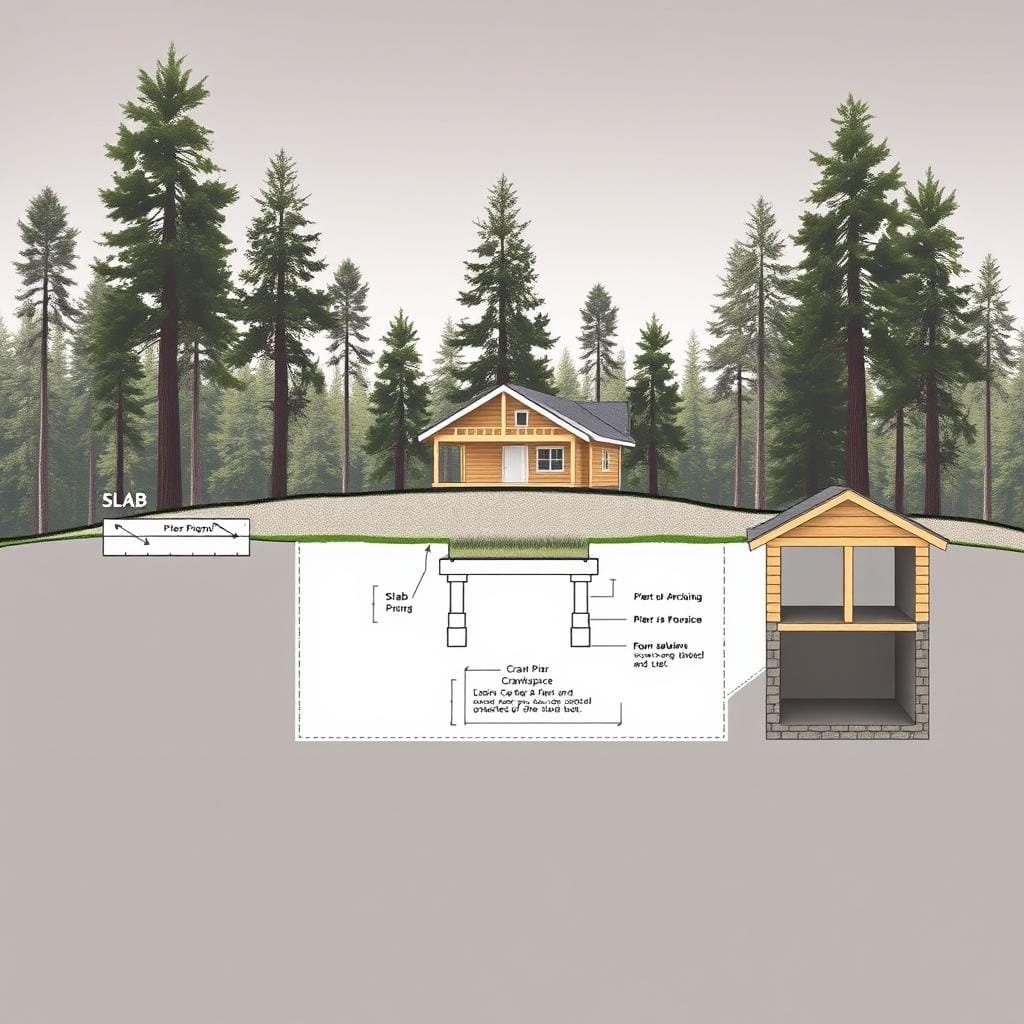
Pier and beam systems offer excellent versatility. One variation uses cement pads topped with cinder blocks or treated wood. Another method involves installing vertical posts into the ground connected by horizontal beams.
Skid foundations provide the simplest installation. Builders lay wooden beams directly on the ground and place the structure on top. Screw pile systems use metal posts with helical blades that twist into the soil.
The best foundation type depends on your site conditions, budget, and building timeline. Consider soil stability, terrain challenges, and whether you need a permanent or temporary solution.
Pier foundations work particularly well for uneven terrain. They require less material and can often be installed without heavy equipment. Each foundation type has specific advantages worth careful consideration.
Building a Stable Cabin Foundation for Off-Grid Sites
Remote build sites present a unique set of challenges that demand a smart, adaptable foundation strategy. Limited access often rules out heavy machinery and expensive materials.
Your design must prioritize simplicity and efficiency. The goal is a sturdy base you can construct with a small team and basic tools.
Adapting to Remote Build Challenges
In remote locations, getting a cement truck to your build site is frequently impossible. This makes traditional poured slabs impractical and costly.
Instead, consider systems like pier or skid foundations. These options require no deep excavation or large concrete pours.
A simple pier system can often be completed in a single day by just two people. This approach keeps labor costs low and project timelines short.
These designs also offer a significant advantage: future adjustability. You can easily re-level your structure if the ground settles over time.
For cold climates, this type of construction provides an excellent thermal break. It helps prevent heat loss from your cabin floor into the frozen ground below.
Many successful remote projects use this practical method. For more detailed plans, explore this guide on the best foundation for an off-grid cabin.
Ensuring Adequate Drainage and Water Resistance
Protecting your investment begins with proper water control measures that prevent moisture-related damage. Standing water is the primary enemy of any structural base, causing wood rot, concrete deterioration, and eventual failure.
Utilizing Sand, Gravel, and Drainage Systems
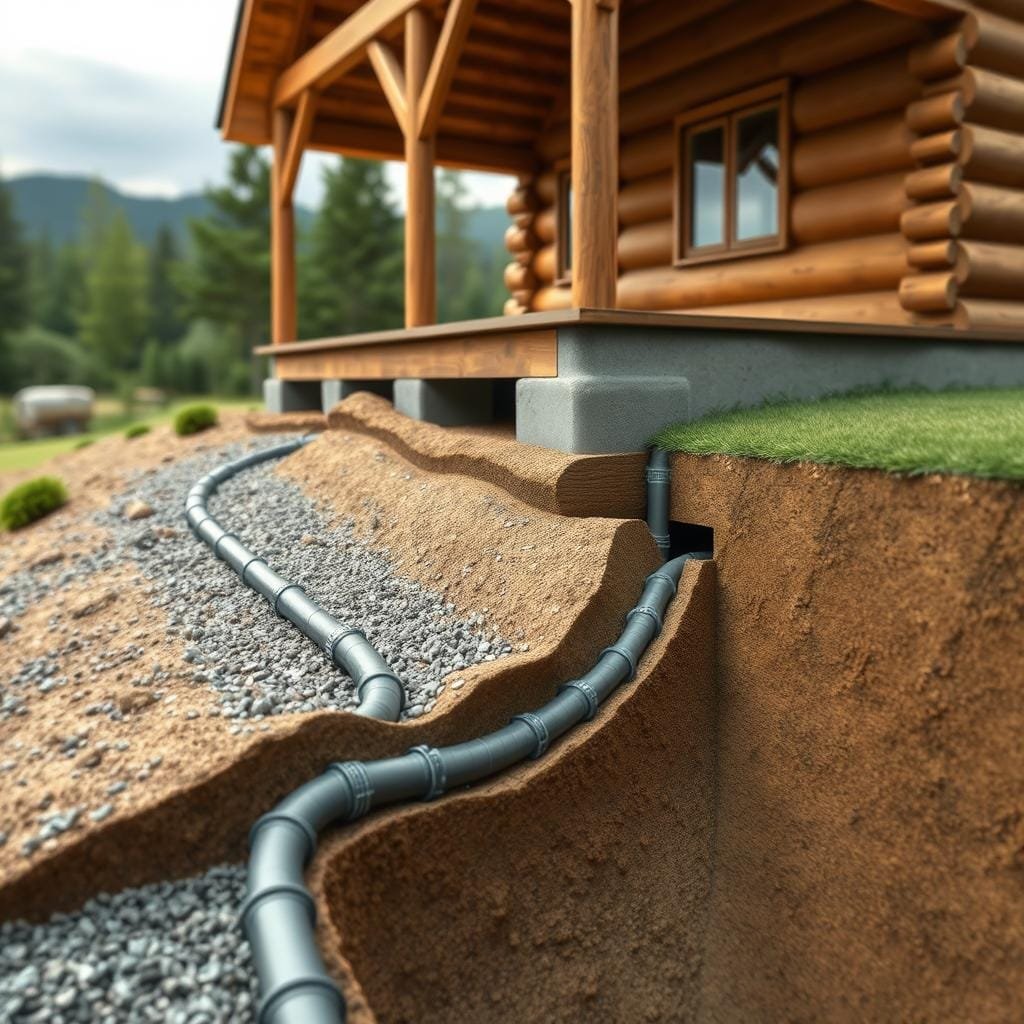
Always place a layer of sand or gravel at the bottom of each support hole. This simple step creates essential drainage that prevents water from pooling against wood grain or concrete bases.
For leveling uneven ground, use approximately two bags of Quikrete All-Purpose-Sand per location. This material, sometimes called crusher dust, provides a stable base while allowing proper water flow.
Assess your site’s natural drainage patterns during the planning phase. Observe where water flows during rainfall and avoid low spots where water collects. Choose building locations with natural drainage away from your structure’s footprint.
In areas with poor drainage or high water tables, consider additional measures like French drains or perimeter systems. Gravel provides both drainage and structural support in soft or unstable soils.
Proper water management protects not only your foundation but also prevents moisture problems in the living space above. Regular inspection ensures drainage systems remain functional throughout your building’s life.
Tips for Leveling and Aligning Your Foundation
Getting your foundation perfectly level is arguably the most important step in cabin building. This critical process affects everything built above it. A solid, even base prevents shifting and ensures proper structural alignment.
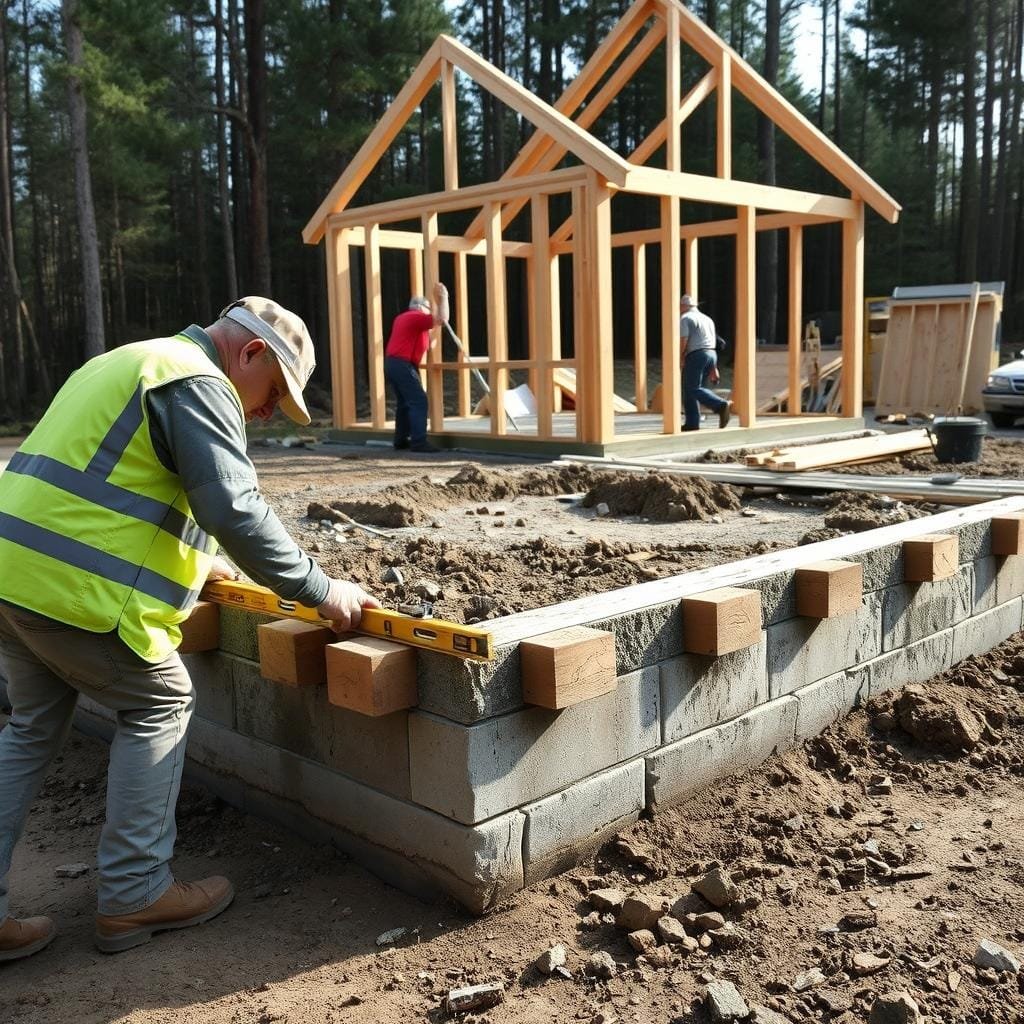
Use a simple but effective technique for checking height consistency. Lay boards across from post to post as you approach final depth. Use a long level to verify all support tops will sit evenly.
Tools and Techniques for Accurate Leveling
Re-check your work multiple times during installation, not just at the beginning. Cut form tubes to exact matching heights. Use your level to ensure their tops sit flush and ready for beams.
String lines stretched across the foundation maintain straight alignment. They help verify that posts or piers form perfect lines. Always double-check opposite corners by measuring diagonals.
Equal diagonal measurements confirm a square, properly aligned base. Check bolt hole positions before concrete sets. This makes sure hardware will align properly with structural members.
Discovering misalignment later means costly rework. Extra care now saves significant effort down the line. Follow the carpenter’s wisdom: measure twice, cut once.
Investing in a quality 4-foot or 6-foot level pays dividends. Accurate foundation work creates a stable platform for your entire structure. Proper alignment allows every beam, board and joist to line up perfectly.
The Role of Footings in Overall Cabin Construction
Quality footings serve as the silent guardian of your structure’s integrity for decades. They form the literal and figurative base for every aspect of your building’s performance.
The support system beneath your walls affects comfort, safety, and efficiency. A well-built platform prevents shifting or sinking over time.
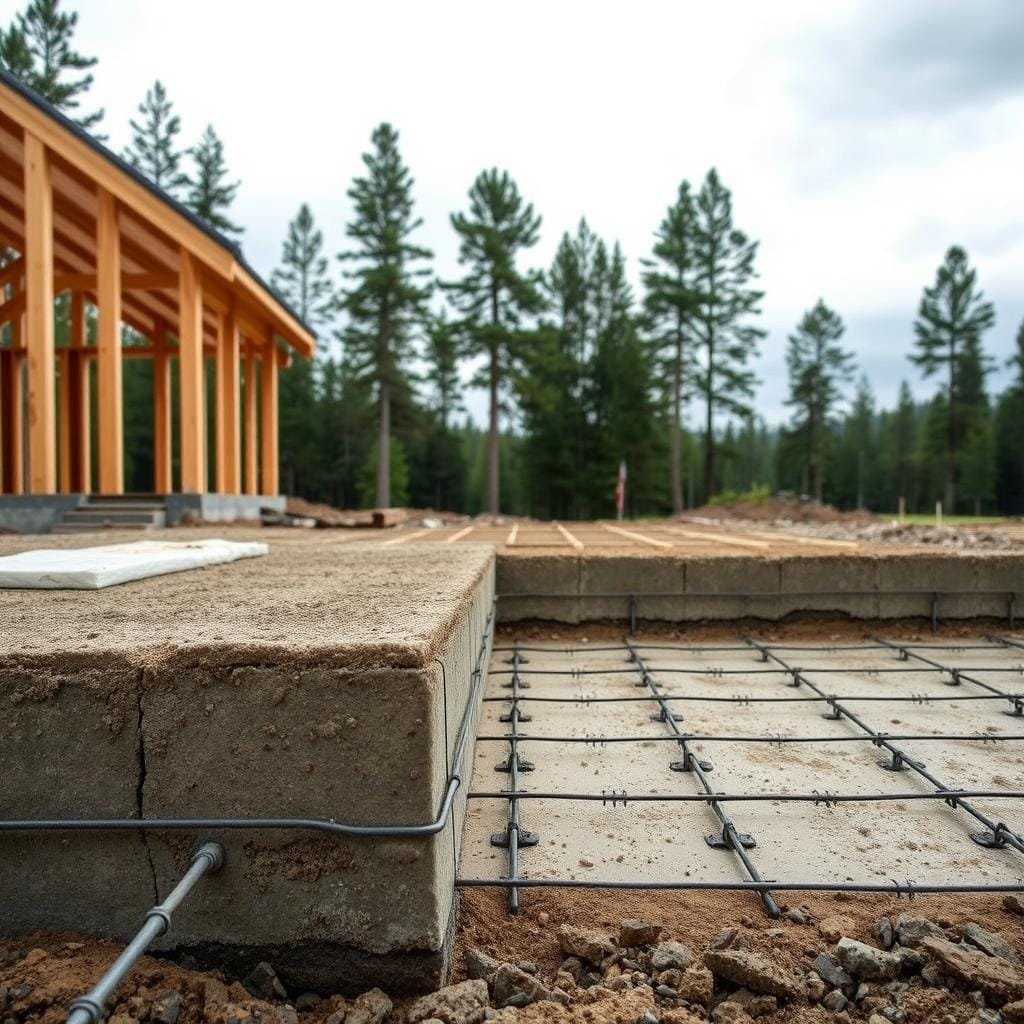
This protective barrier keeps out moisture, frost, and pests. It creates essential separation between ground and living space.
Long-Term Benefits of a Solid Base
Your foundation cabin quality directly impacts daily living experience. Energy efficiency improves with proper insulation from cold ground.
A level, stable base makes the rest of construction more precise. Walls, floors, and roofs all depend on this initial work.
Some builders find their foundation makes an excellent deck before walls go up. This multi-purpose approach adds immediate value.
Proper supports reaching stable soil prevent seasonal movement. This avoids cracked walls and jammed doors over time.
Investing in quality work upfront saves significant repair costs later. Though invisible once complete, the foundation affects every day spent in your retreat.
Tools and Techniques for Efficient Construction
Having the right gear makes starting your construction project smoother and more efficient. The way you approach the work directly impacts both speed and final quality. Proper preparation is a critical first step.
Gathering your equipment before you begin prevents frustrating delays. This guide covers the essentials you’ll need for a successful build foundation.
DIY Equipment Recommendations
For a pier build foundation, you’ll need a core set of tools. An auger or post-hole digger handles the excavation. Augers work faster for projects with multiple piers.
Accurate measuring tools are non-negotiable. A quality tape measure and a long level (4-foot or 6-foot) are vital. Stakes and string help with initial layout and keeping everything square.

Invest in fiber-form tubes for concrete piers. They create clean columns and keep soil out. For piers deeper than three feet, include rebar in your materials list for reinforcement.
Specialty tools can save immense time and effort. One builder called a cordless framing nailer his best purchase. Construction adhesive is also essential for securing beams and subfloor.
For specialized tasks, consider renting equipment. A hydraulic auger might only be needed for a single day. This is a smart way to access professional-grade tools without the full cost.
When to Consider Professional Help
Many capable DIYers can handle a simple pier foundation. Straightforward site conditions and basic tools are often enough.
Know when to call in the pros. Complex engineering, heavy equipment needs, or strict local code requirements are key signs. Hiring experts for this step ensures safety and compliance.
Your methodical approach with the right tools sets the stage for a solid, long-lasting structure. It’s the best way to guarantee a quality result from the ground up.
Maximizing Foundation Longevity and Maintenance
Periodic checks and simple upkeep ensure your building’s foundation remains strong for years to come. Even the best-built structural base needs regular attention to perform properly for decades.
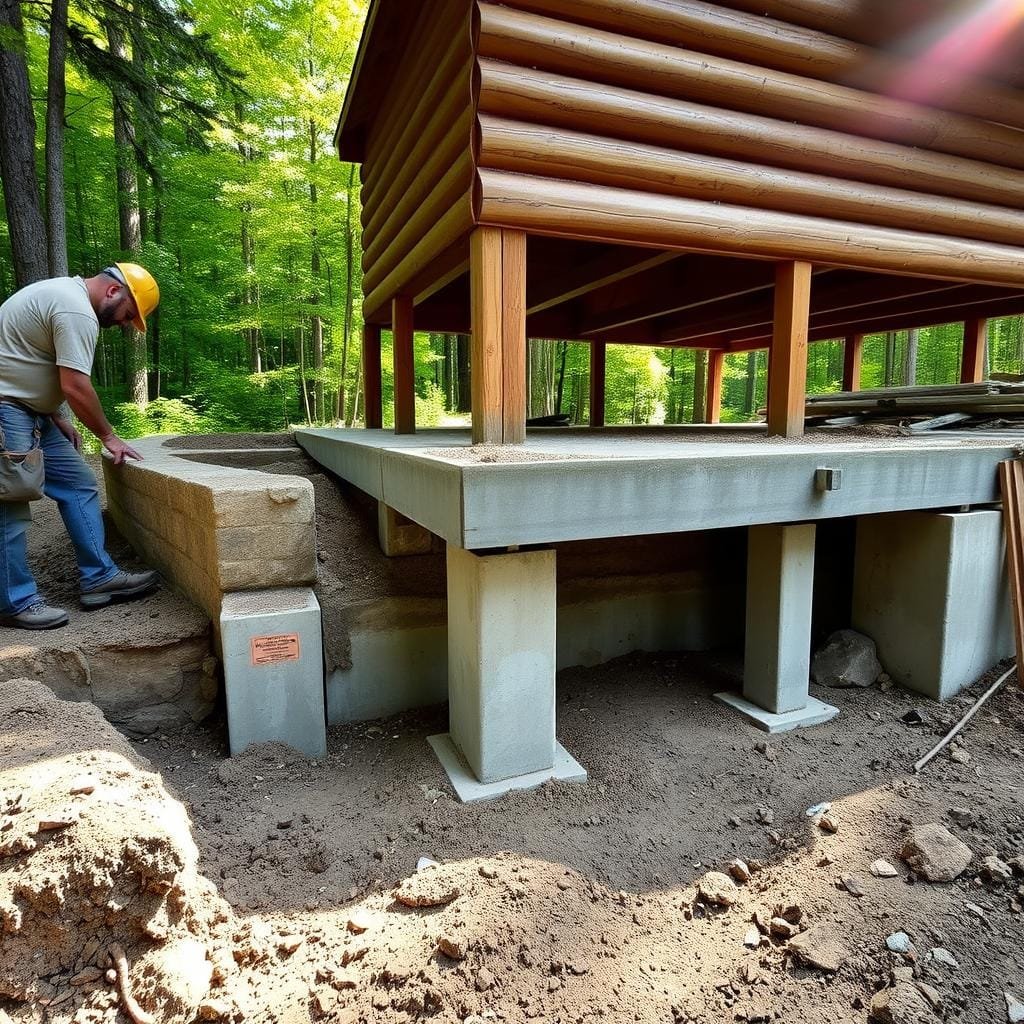
Annual inspections catch small issues before they become major problems. This routine maintenance saves significant repair costs down the line.
Regular Inspection and Repair Tips
Check pier and beam systems each year for wood rot and insect damage. Look for discolored or soft timber, gaps between beams, and leaning posts.
Concrete bases need examination for cracks or settling signs. These indicators can reveal foundation movement that requires attention.
Maintain proper drainage by clearing debris from water paths. Ensure moisture flows away from your structural supports. This prevents wood deterioration and concrete issues.
Verify that timber stays separated from concrete with intact moisture barriers. Replace any deteriorated spacers promptly. Re-seal exposed wood every few years in harsh climates.
Check all fasteners remain tight and flush with surfaces. Exposed screw heads can indicate movement or create future complications. Foundations supporting exterior decks need extra attention due to weather exposure.
Simple repairs like shimming settled posts or filling minor cracks prevent expensive structural work later. Catching problems early through consistent inspection protects your investment.
Adapting Foundation Techniques for Different Climates
Different regions require tailored foundation strategies to handle unique environmental challenges. Your local climate directly impacts the proper approach for building a stable base.
Handling Frost and Freeze-Thaw Cycles
In colder areas, frost penetration is a major concern. The frost line typically measures 36 to 48 inches below the surface. Your structural supports must extend below this critical depth.
Frost heaving occurs when water in soil freezes and expands. This can lift piers and cause serious damage. Proper depth prevents this seasonal movement.
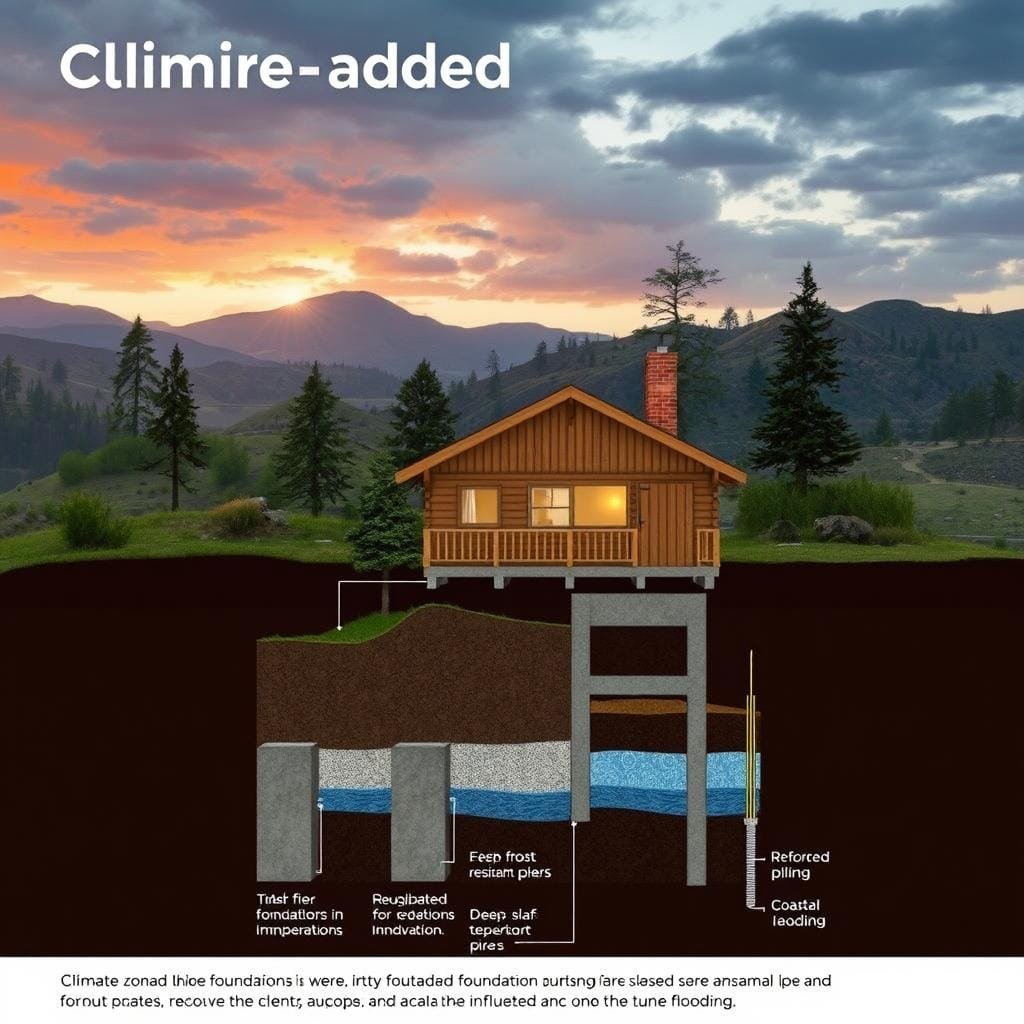
Cold climate foundations benefit from thermal breaks. These insulation layers prevent heat loss from your structure to the frozen ground. This improves energy efficiency.
Seasonal Adjustments for Stability
Temperature significantly affects concrete curing times. Warmer weather accelerates the process while cold conditions slow it down.
At 50-60°F, concrete needs about 72 hours to cure properly. Between 60-75°F, this reduces to 48 hours. In warm conditions of 75-90°F, curing takes just 24-36 hours.
Building in cold or damp weather requires extra curing time. Insulated blankets can protect fresh concrete during chilly periods.
In warm, dry climates without frost concerns, structural supports can be shallower. However, they still need adequate depth for soil stability. Always consult local experts for region-specific guidance.
Planning Your Build and Managing Construction Challenges
Smart planning transforms your cabin project from a dream into a manageable reality. Thorough preparation prevents costly mistakes and frustrating delays before you even break ground.
Create a realistic timeline that accounts for every phase. Include site preparation, excavation, material delivery, and concrete curing times. Always build in extra days for unexpected weather or challenges.
Project Scheduling and Budgeting Strategies
One successful off-grid structure was completed by just two people in fifteen days total. The foundation work took only one day thanks to careful planning.
The total budget was $20,000 with limited equipment access. The team had an excavator for just one day, requiring precise scheduling.
Get material quotes early and factor in tool rentals. Include a 15% contingency fund for unexpected issues like rocky soil or weather delays.
Break your project into clear phases with specific completion criteria. This step-by-step approach makes progress tracking easier. You’ll need to assess your site, order materials, then begin layout and excavation.
Remote locations may not accommodate concrete trucks or heavy machinery. Choose foundation types that match your site’s accessibility. The best way to build pier or concrete foundations depends on your specific conditions.
Allow proper curing time before moving to the next construction phase. Rushing this step compromises quality and long-term stability.
Secure Your Cabin’s Future with a Solid Foundation
Creating a lasting sanctuary in nature requires careful attention to the elements that support it from below. Your specific combination of frost line, soil conditions, structural load, and local building codes determines the proper measurements.
While general guidelines suggest 3-6 feet for most structures, your situation may require different specifications. The effort you invest in proper foundation work pays dividends throughout your building’s entire life.
A solid base built on properly placed piers and beams creates a stable, level platform. This makes all subsequent construction phases easier and more precise. Take your time with this critical step, double-checking measurements and alignment.
Whether choosing concrete piers, treated wood posts, or another system, following proper guidelines prevents costly problems. Foundations do more than support weight—they protect against moisture and resist seasonal ground movement.
Consult with local building departments and experienced builders to ensure your project meets all requirements. With the knowledge from this guide, approach your foundation work with confidence. This first step creates a retreat that will provide enjoyment and memories for years.