
Building your dream cabin in a secluded spot is an exciting adventure. But getting all your heavy supplies to the location can be a huge hurdle. Standard delivery trucks often can’t reach these off-the-grid sites.
Careful planning for moving your materials is absolutely essential. A good strategy makes your entire building project run smoothly. Without it, you could face major delays and unexpected costs.
This guide is here to help. We will walk you through every step. You’ll learn about choosing the right equipment and scouting the best path. We cover how to handle tough terrain and stay on budget.
Constructing a home far from the power grid is physically demanding. The logistics are complex. But with the right preparation, you can succeed. It is possible to move thousands of pounds of supplies, even deep into the wilderness.
Whether you’re a first-timer or a seasoned pro, this guide offers practical advice. Get ready to tackle the challenge and make your dream a reality.
Understanding Off-Grid Cabins and Material Transport
Embracing a life of self-reliance starts with creating a home that operates independently. These dwellings are completely separate from public utilities. They manage their own power, water, and waste.
Overview of Off-Grid Living and Cabin Builds
This style of living has become very popular. People love the lower environmental impact and financial freedom. A standard house build can create over eighty tonnes of carbon emissions.
Off-grid cabins often use sustainable designs. Log homes have thick beams for great insulation. Cob structures use natural clay and straw for excellent temperature control.
Key Considerations for Safe Transport
Getting supplies to a secluded build site is very different from a normal project. You must think about the land itself. Steep hills, soft ground, and weather can all cause big problems.
Planning is your best tool. You need to understand weight limits and the best time of year for moving things. Successful delivery depends on coordinating equipment and people. It’s one of the most important key considerations for your project.
These homes often use renewable and recycled items. This choice reduces the total amount of resources needed. It makes the entire process more efficient from start to finish.
Assessing Your Remote Cabin Site
The journey to your secluded retreat begins with a meticulous evaluation of the land you plan to build on. Rushing this step can lead to major headaches later. A thorough assessment ensures your dream spot is actually buildable and functional.

Think of your property as a complete system. You need to check several key factors for long-term success.
| Assessment Factor | Key Question | Why It Matters |
|---|---|---|
| Solar Exposure | Is there year-round southern sun for panels? | Critical for off-grid power generation. |
| Water Source | How close is a reliable well, stream, or lake? | Ensures a steady supply of fresh water. |
| Terrain Stability | Is the ground flat and stable for a foundation? | Prevents costly structural issues down the road. |
Evaluating Terrain, Weather, and Accessibility Challenges
Getting to your site is half the battle. Map the exact route from the nearest public road. Note every obstacle like steep hills or wet areas.
For example, one build required a 650-foot trek down a private lane. Then, another 650 feet down a forested slope to the lake. This directly impacts equipment choice and effort.
Local weather patterns are a huge factor. Heavy snow can block access for weeks. Extreme rain turns paths to mud. Visit during different seasons to see the real challenges.
Don’t forget legal checks. Local zoning laws may restrict off-grid builds. Also, check for environmental hazards like flood zones or wildfire risk. This protects your investment and safety.
Essential Equipment and Methods for Material Transport
The equipment you choose determines how smoothly your wilderness building project will progress. Having the right gear saves time and prevents frustration. A smart combination of machines and manual methods works best.
Using ATVs, Folding Trailers, and Forklifts
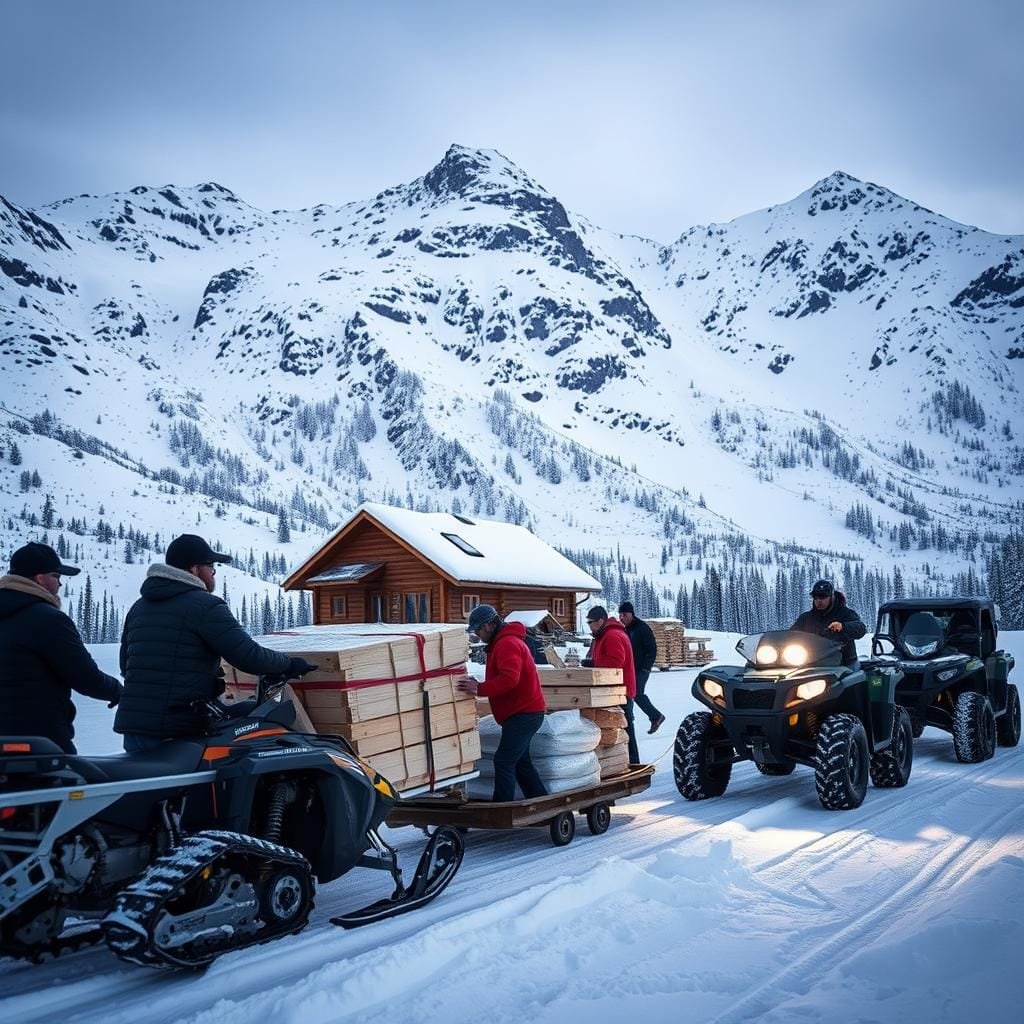
All-terrain vehicles like the Yamaha Grizzly 550 are perfect for narrow forest paths. Pair them with folding utility trailers for maximum efficiency. These trailers store compactly and handle tight turns well.
Delivery services often use Moffit forklifts to unload at the last vehicle-accessible point. This gets your supplies as close as possible. Then the ATV takes over for the final leg.
Advantages of Hand and ATV-Based Transport
Manual carrying becomes necessary for steep or densely wooded areas. It’s labor-intensive but often unavoidable. The ATV-trailer combo is much more efficient for most situations.
Proper storage is critical for long-term projects. A 75 cubic foot shed protects your tools and generator. The Keter Extra Large Deck Box keeps everything dry and organized.
This prevents rust and damage to your valuable equipment. Good organization makes the entire construction process smoother and safer.
Planning Your Route and Delivery Logistics
Mapping your delivery path is arguably the most critical phase of any secluded construction endeavor. Starting this process months in advance prevents costly setbacks. One real project required over six months of preparation before work could begin.
Mapping Out Trails and Access Roads
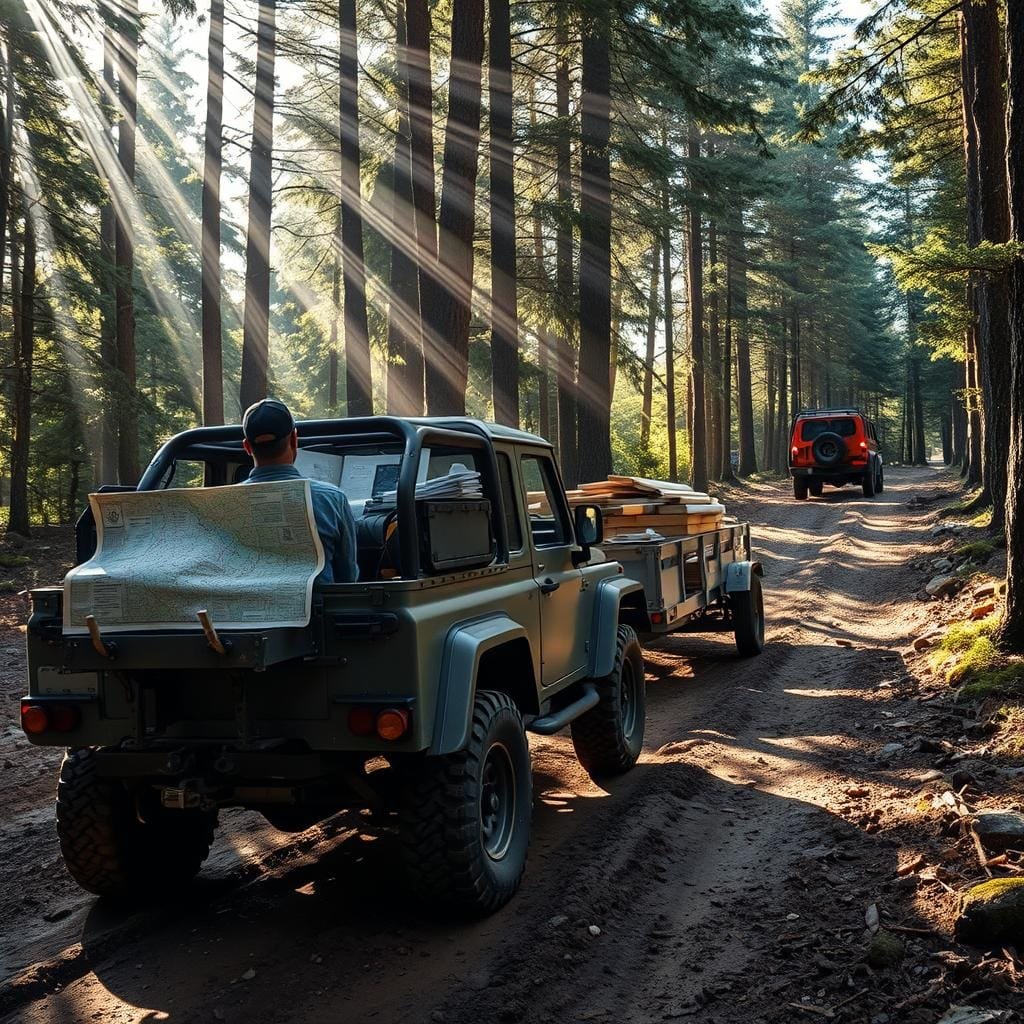
Begin by thoroughly scouting the land between the nearest road and your site. Use GPS devices and topographic maps for accurate measurements. Walk the proposed route multiple times to identify potential obstacles.
Trail clearing, or “blazing,” creates paths wide enough for equipment like ATVs. Work carefully to minimize environmental impact. Always check local regulations before modifying any terrain.
Identify staging areas where large trucks can safely unload. This transfer point is crucial for efficient access. Coordinate delivery schedules with suppliers who understand your limitations.
Weather can derail even the best plan. A historic snowfall in Halifax delayed one project by ten days. This created a domino effect, forcing last-minute equipment purchases and schedule changes.
Always develop contingency strategies. Test your route with loaded equipment before delivery day. Clear communication with helpers about physical demands ensures everyone stays safe and productive.
Transport Materials to Remote Cabin
When delivery day arrives, your logistical systems must work together seamlessly. Coordinating with suppliers for precise timing is crucial. They need to reach your furthest accessible point.
Step-by-Step Guide to Moving Heavy Materials
Begin by scheduling delivery to your staging area. Specialized equipment like Moffit forklifts safely unload supplies. This happened with a real 20,000-pound delivery.
Categorize items by priority and fragility. Create an efficient sequence for movement. Use ATVs with trailers for most items.
Load equipment properly with balanced weight distribution. Secure everything with strong straps. Never exceed capacity limits for safety.
Expert Tips for Efficient Transportation
Make multiple smaller trips instead of overloading. This prevents damage to both supplies and vehicles. Establish a midway rest point for reorganization.
Set up on-site infrastructure immediately. Build a wooden platform for a large weather shelter. Include a backup tent for unexpected rain.
Keep detailed inventory lists throughout the process. Check off items as they reach your build site. This ensures nothing gets lost during multiple runs.
| Equipment Type | Weight Capacity | Safety Considerations |
|---|---|---|
| ATV with Trailer | 800-1,200 lbs | Balance load evenly, secure with straps |
| Hand Carrying | 50-100 lbs per person | Use proper lifting techniques, work in teams |
| Folding Utility Trailer | 1,000-1,500 lbs | Check tire pressure, maintain slow speeds |
Selecting the Right Building Materials and Insulation
Smart material selection forms the foundation of an efficient and comfortable wilderness home. Your choices directly impact energy needs and maintenance requirements for years ahead.

Choosing Sustainable Wood, Panels, and Insulation Options
Log structures with thick beams offer superior natural insulation compared to standard framing. This approach creates excellent walls that retain warmth effectively.
Local sourcing reduces costs and environmental impact. It supports regional economies while minimizing delivery challenges.
For optimal energy efficiency, target R-20 for walls and R-30 for ceilings. High-performance options like spray foam seal cracks completely.
Weather Considerations and Material Durability
Your building materials must withstand local climate conditions. Rot-resistant wood suits humid areas, while fire-resistant options protect in wildfire zones.
Proper insulation dramatically reduces heating demands on off-grid systems. This makes limited power sources more effective throughout harsh seasons.
Quality construction supplies withstand extreme weather while maintaining comfort. They prevent frequent repairs in hard-to-reach locations.
| Insulation Type | R-Value per Inch | Best Applications |
|---|---|---|
| Spray Foam | 6.0-7.0 | Complete air sealing, difficult areas |
| Cellulose | 3.2-3.8 | Wall cavities, eco-friendly option |
| Fiberglass Batts | 2.9-3.8 | Standard framing, DIY installation |
| Rigid Foam Panels | 4.0-6.5 | Exterior sheathing, high moisture areas |
Investing in proper insulation and durable materials pays off long-term. It ensures comfort while reducing energy consumption dramatically.
Budgeting, Scheduling, and Permitting Essentials
Financial foresight and regulatory compliance are essential for turning your remote living dream into reality. A solid financial plan keeps your project on track from start to finish.
Managing Costs and Timeframes
Your budget must cover every phase of the project. This includes land preparation, construction, and essential systems. Many people focus only on the main building costs.
They forget about critical utility infrastructure. Proper waste management, water systems, and energy solutions are vital. These systems meet your basic needs for comfortable off-grid living.
Always add a 50% buffer to your initial budget estimate. Unexpected challenges often arise in wilderness projects. This cushion prevents financial stress when surprises occur.
| Budget Category | Essential Items | Common Oversights |
|---|---|---|
| Construction | Materials, labor, tools | Site preparation costs |
| Utility Systems | Solar panels, water filtration | Waste management setup |
| Living Expenses | Food, fuel, temporary shelter | Ongoing maintenance funds |
Scheduling requires realistic thinking about weather delays and material deliveries. Research local permits before purchasing land. Some areas have restrictions that affect off-grid projects.
Keep detailed records and maintain flexibility. For more insights on wilderness construction challenges, proper planning makes all the difference.
Real-Life Experiences from Off-Grid Construction Projects
A remarkable Halifax construction project demonstrates how determination overcomes logistical hurdles. This real-world case shows what happens when planning meets unexpected challenges.
Delivery Day Success Stories and Challenges
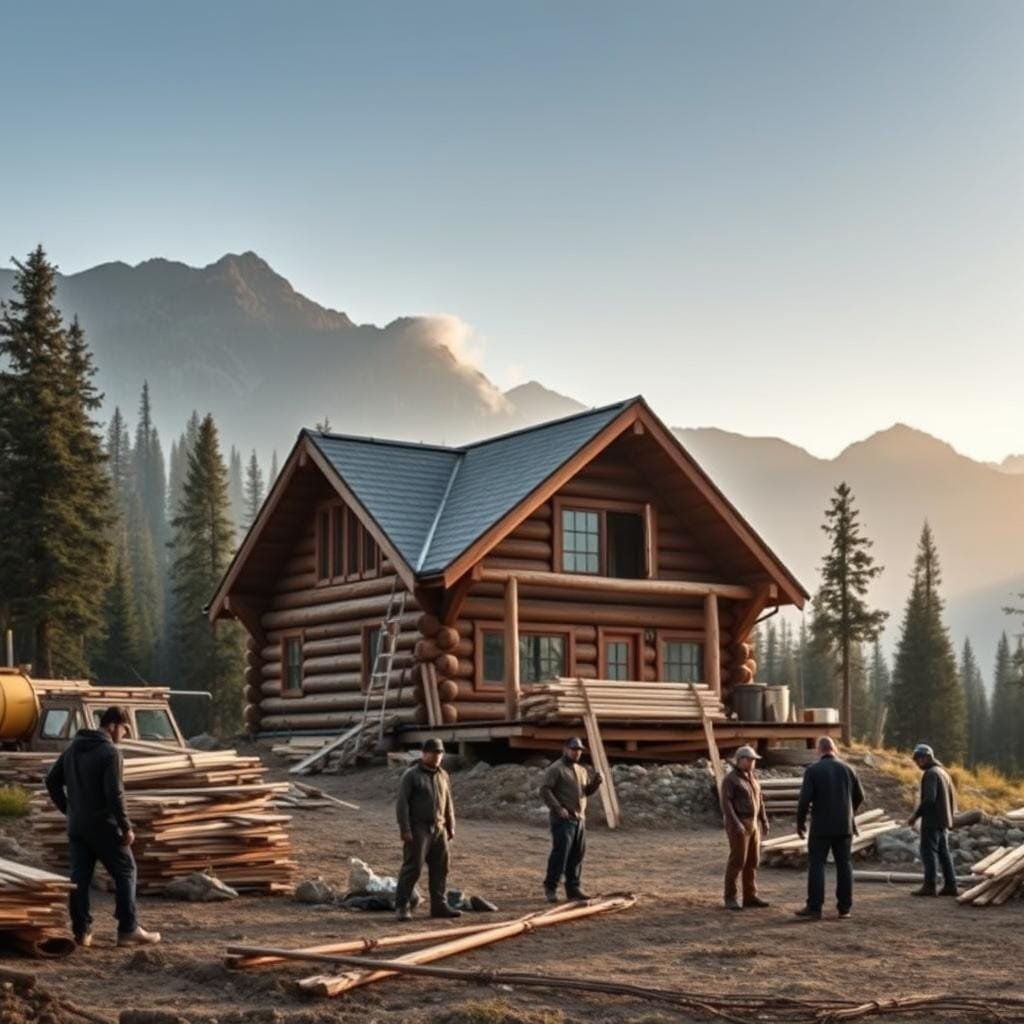
Historic snowfall delayed this project by ten days. The team had to purchase an ATV and folding trailer for the final leg. They moved 20,000 pounds of supplies 1,300 feet from the nearest road.
The journey involved a 650-foot private gravel lane. Then another 650-foot descent through thick forest. This required careful coordination and multiple trips.
Case Study: Home Depot’s Moffit Forklift in Action
Home Depot delivered using their Moffit forklift at the access point. The Yamaha Grizzly 550 ATV handled mid-range movement. Manual carrying completed the difficult sections.
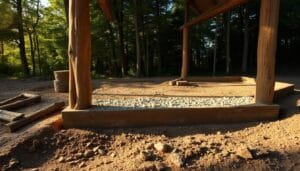
The team built a 10×18-foot wooden platform for a large tent. This served as temporary workshop and storage area. They used a 75-cubic-foot shed and Keter deck box for weather protection.
Over six months of planning preceded the actual work. When shared online, tens of thousands followed the progress. This case proves that thorough preparation leads to success despite obstacles.
On-Site Organization and Temporary Workshop Setup
Once your supplies arrive at the site, creating an organized workspace becomes your top priority. You cannot easily run back to a shop for a forgotten item. A well-planned setup keeps your project moving efficiently.
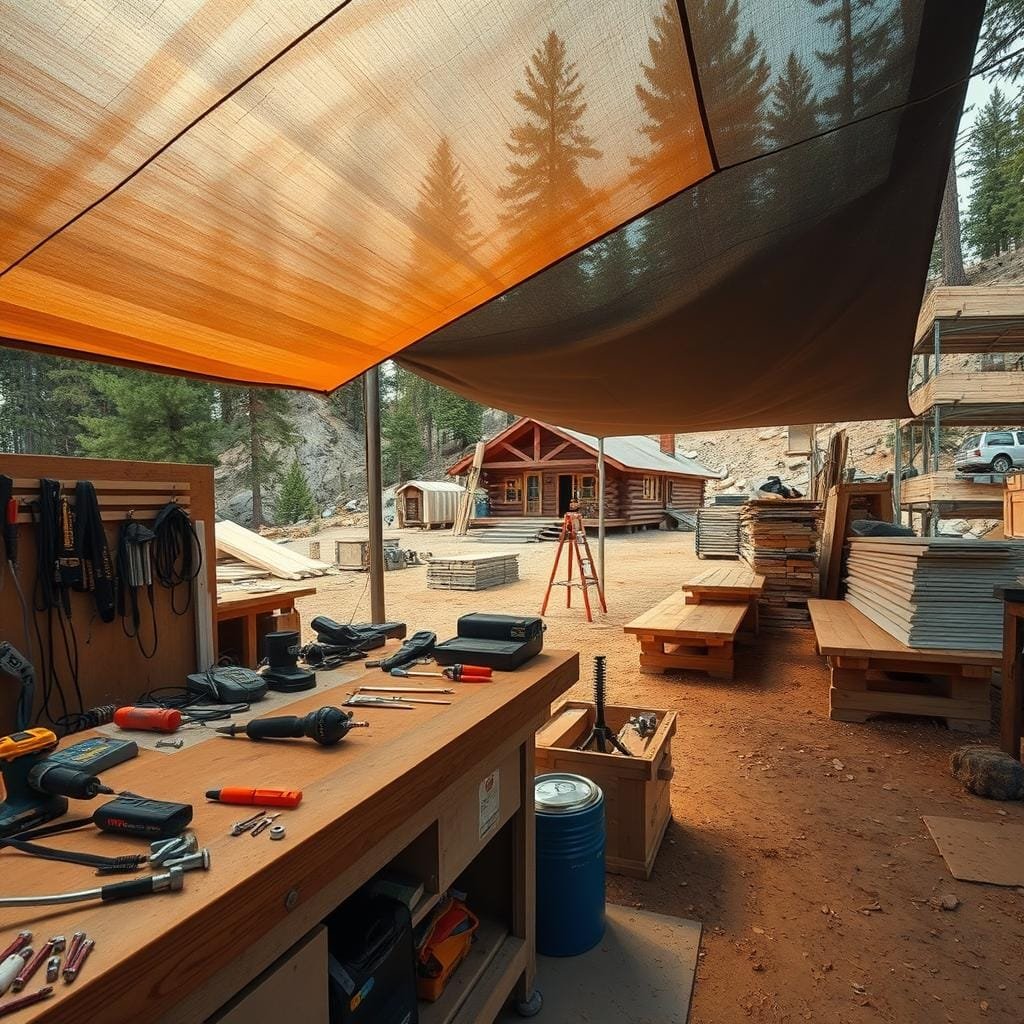
Start by building a solid foundation. A 10-foot by 18-foot wooden platform is perfect. This creates a stable, level base for your temporary headquarters.
Creating Efficient Storage and Tool Areas
Place a large tent on this platform. A 10-person tent works great as a central hub. It can house your tools, a temporary toilet, and even interior doors.
Protect your equipment from the elements. A 75-cubic-foot storage shed is ideal for your generator and tools. Later, it makes excellent firewood storage.
Never leave tools under a simple tarp. Moisture causes fast rusting. Use a sealed deck box for fuel, propane tanks, and items in use.
Set up a smaller backup tent near your work walls. This provides quick shelter for items during surprise rain. Good storage solutions protect your investment throughout the long build.
Wrapping Up Your Remote Cabin Transport Project
Achieving independence through off-grid living requires integrating multiple systems that work in harmony. Your cabin becomes a complete home when solar power, water sources, waste management, and climate control function together seamlessly.
Success starts with a solid plan and continues through smart choices. Quality insulation and proper heating systems ensure comfort while reducing energy needs. Remember that building off-grid requires patience and flexibility.
Thousands have completed similar projects, proving it’s achievable with determination. Your dream cabin awaits—ready to provide sustainable living far from the conventional utility grid.