
Welcome to your complete guide on safeguarding your cabin walls from one of nature’s most persistent threats. Many cabin owners face the frustrating challenge of maintaining their retreat’s structural integrity against environmental wear and tear.
Cabin exteriors endure constant exposure to moisture, harsh UV rays, and temperature changes. These elements can lead to deterioration that compromises your investment. Without proper protection, you might face costly repairs down the line.
This article explores top-performing product options that create durable exterior coatings. These solutions repel water while blocking harmful UV radiation that can dry out materials. Our testing involved applying various formulas to different species and subjecting them to real-world conditions.
You’ll discover how to choose the right formula for your specific climate and material type. We provide actionable tips for achieving professional results, whether you’re a seasoned DIYer or new to maintenance projects. Our recommendations come from rigorous evaluation of water resistance, durability, and ease of application.
Understanding Cabin Wall Rot and Its Underlying Causes
Before exploring protective solutions, it’s crucial to understand what causes structural damage to your cabin walls. This natural material requires proper shielding from biological threats that can compromise its integrity over time.
Common Signs of Wood Rot
Early detection is your best defense against serious decay. Watch for discoloration that appears as darkening or yellowing spots on the surface. The material may feel soft or spongy when pressed.
Other red flags include crumbling surfaces, visible fungal growth, and musty odors near affected areas. These symptoms indicate that fungi have begun breaking down the cellular structure.
https://www.youtube.com/watch?v=gncCfLg30b8
Impact of Moisture and UV Exposure
Moisture creates the perfect environment for decay organisms to thrive. When water content exceeds 20%, fungi can feed on wood fibers. Common moisture sources include rain penetration, ground contact, and poor ventilation.
UV radiation presents a dual threat by breaking down lignin, the natural polymer that gives wood its strength. This surface degradation creates cracks and entry points for water penetration.
Mildew often appears first as surface discoloration, signaling conditions favorable for deeper decay. Once rot begins, it accelerates the cycle by creating more pathways for moisture.
How Wood Sealants Combat Decay
Today’s advanced coatings offer multi-layered defense systems that address the root causes of structural damage. These solutions work simultaneously on several fronts to extend material life and maintain cabin integrity.
The Science Behind Protective Coatings
Modern preservatives contain active ingredients that target biological threats. Compounds like Permethrin, Iodo propynyl Butylcarbamate, and Tebuconazole actively repel or eliminate fungi, mold, and wood-boring insects.
Quality formulas create hydrophobic barriers that cause water to bead up and run off. This maintains moisture content below the critical 20% threshold where decay organisms thrive.

UV protection is another crucial component. Many formulas incorporate stabilizers that absorb or reflect harmful radiation. This prevents lignin breakdown that weakens the material’s structure.
The best protection comes from deep penetration into the grain. This creates internal protection while allowing the material to breathe properly. Flexible membranes move with natural expansion and contraction.
Today’s wood preservative options balance effectiveness with safety. Unlike older toxic treatments, modern solutions are designed to be safe for people, pets, and plants once fully dried.
While excellent against biological decay, these treatments often benefit from additional topcoats. This enhances weather resistance and durability against physical wear.
Key Features to Look for in a Wood Sealant
The market offers numerous protective options, but focusing on key performance attributes ensures you choose wisely. Different formulas excel in specific areas, so understanding these characteristics helps match the right product to your cabin’s needs.
Waterproofing and UV Resistance
Effective water resistance forms the foundation of any quality coating. Look for products that create strong barriers causing water to bead and run off. This protection keeps moisture content below dangerous levels.
UV resistance is equally crucial for sunny locations. Quality options contain stabilizers that block harmful radiation. This prevents surface degradation that can lead to cracking over time.
Durability and Ease of Application
Consider how the coating will handle daily contact and wear. High-traffic areas need formulas resistant to abrasion from cleaning and furniture contact. Durable surfaces maintain their protection longer.
Application simplicity matters for DIY projects. Good products work with brushes, rollers, or sprayers. Check drying time between coats and coverage rates to calculate your actual project cost.
Exploring Different Types of Wood Sealants
The world of protective coatings divides primarily into two distinct categories with unique properties and applications. Understanding these differences helps you make informed decisions for your cabin’s specific needs.
Water-Based Versus Oil-Based Formulas
Oil-based formulas, often called solvent-based, penetrate deeply into the material’s grain. They offer superior water repellency and longer-lasting protection. Traditional oil options enhance the natural beauty with rich color development.
However, these formulas require longer drying times and have stronger odors during application. Cleanup typically needs mineral spirits rather than simple soap and water.
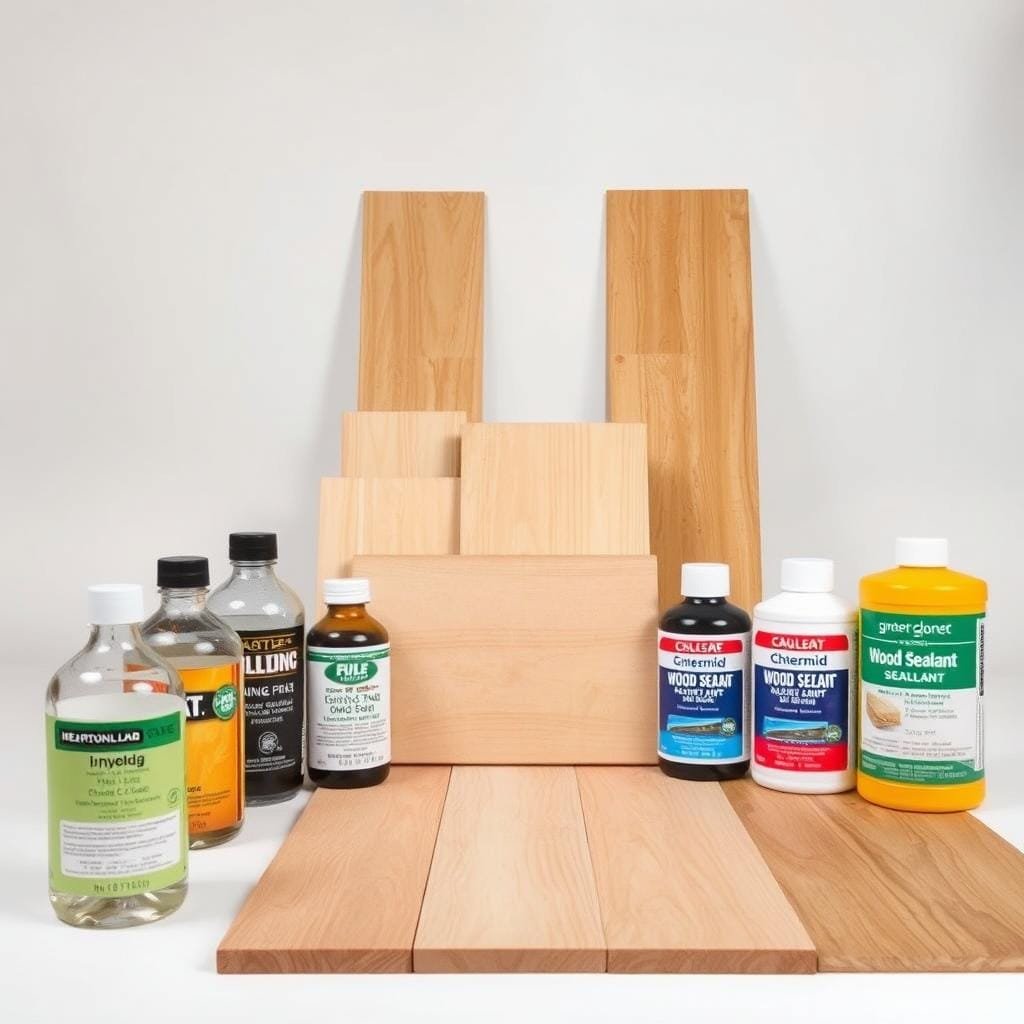
Water-based treatments dry quickly and have low odor levels. They meet strict environmental regulations with lower VOC emissions. Easy cleanup with soap and water makes them user-friendly for DIY projects.
While convenient, water-based options may need more frequent reapplication. They can sometimes show lap marks if not applied carefully. The key features that make a quality protective vary between these formula types.
Transparency options range from clear preservers that maintain natural appearance to colored treatments that combine stain and protection. Semitransparent stains reveal grain patterns while adding subtle color. Solid varieties provide coverage similar to paint but preserve texture.
Specialty formulas include penetrating sealers that soak deep without surface film. Film-forming types create protective membranes on the surface. Some products contain wax for enhanced water resistance but limit future coating options.
Best Wood Sealant for Rot Prevention
When it comes to defending your cabin against environmental threats, certain products consistently outperform others in our testing. After evaluating numerous options, we found clear winners that offer reliable protection for your investment.
For premium performance, Seal-Once Nano+Poly stands out with exceptional resistance to water, mold, and UV damage. This low-VOC formula requires sprayer application but delivers outstanding durability. If budget matters, Rain Guard’s concentrated product mixes 7:1 to cover large areas economically.
Oil-based enthusiasts will appreciate Ready Seal’s rich, even color options and superior scuff resistance. Thompson’s WaterSeal offers excellent value with thicker consistency for easy brush application. For those concerned about environmental impact, Eco Advance provides a safe, non-toxic solution.
Even pressure-treated lumber benefits from additional coating. These solutions work well on cabin walls, deck boards, and fence panels. Water-based options dry quickly for same-day recoating, while oil-based choices require patience but last longer.
Expert Advice on Application Techniques
Applying protective coatings correctly makes all the difference in achieving lasting results. Proper technique ensures the product penetrates deeply and forms a durable barrier.
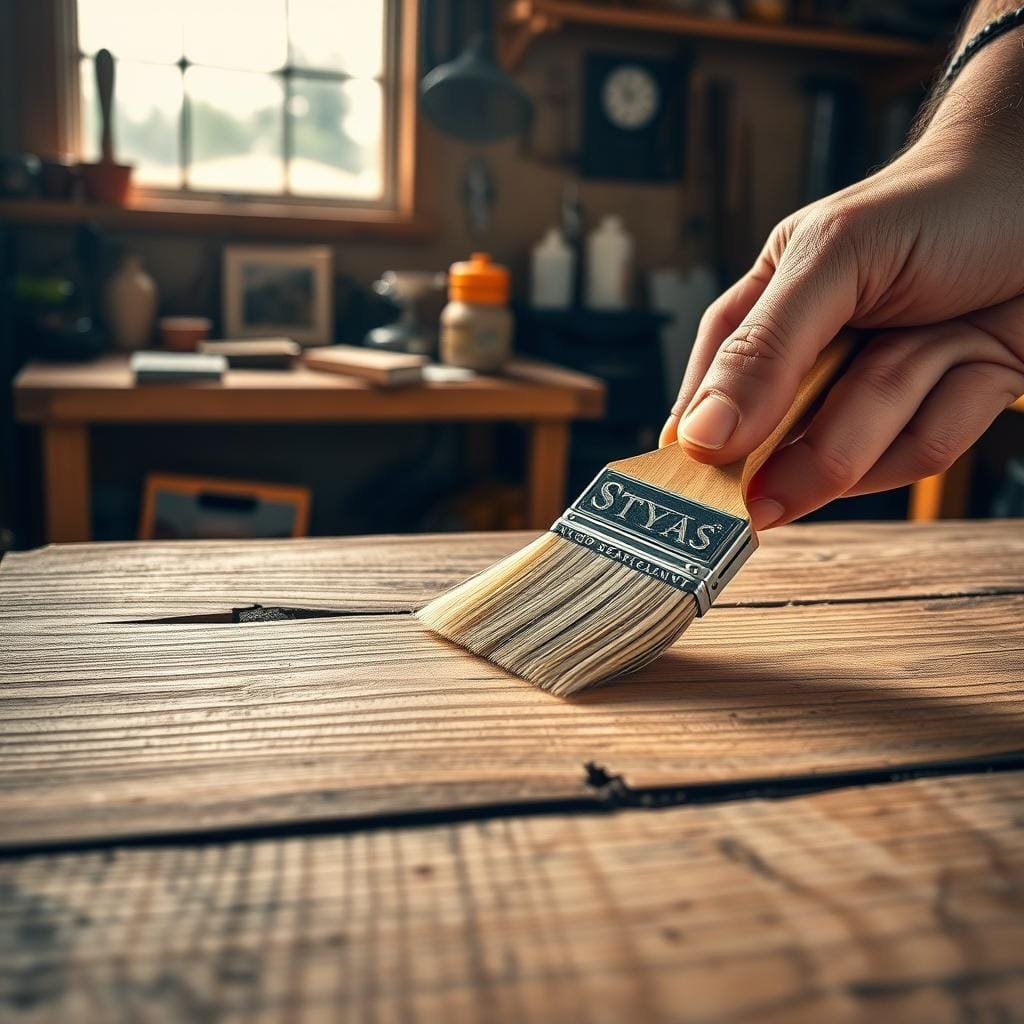
Start with a clean, dry surface. Moisture content should be below 15%. Remove all dirt, mildew, and old finishes. A fungicidal wash kills hidden spores for superior long-term protection.
Step-by-Step Application Tips
Choose your tool based on the product’s consistency. Thin formulas work well with sprayers. Thicker options apply smoothly with brushes or rollers.
Most projects require two coats. The first coat soaks in deep. The second creates a strong surface barrier. Always follow the manufacturer’s timing guidelines between applications.
| Application Tool | Best For | Coverage | Drying Time |
|---|---|---|---|
| Sprayer | Thin, watery formulas | Even, no drips | 1-2 hours (water-based) |
| Brush | Thicker formulas, detailed work | Deep penetration | 24-48 hours (oil-based) |
| Roller | Large, flat surfaces | Fast application | 1-2 hours (water-based) |
Work in manageable sections on vertical surfaces. Maintain a wet edge to prevent lap marks. Use long, smooth strokes following the grain direction.
Pay special attention to end-grains on boards. These areas absorb moisture quickly. Apply extra product to cut ends and edges for complete protection.
Make sure weather conditions are ideal. Apply when temperatures are between 50-90°F. Avoid direct sunlight and rain for at least 24 hours after the final coat.
Performance Comparison Under High Moisture Conditions
Cabin owners in moisture-rich environments face accelerated deterioration that requires targeted protection. Coastal areas, humid climates, and regions with heavy rainfall create sustained dampness that accelerates degradation beyond what standard products can handle.
Optimal Solutions for Coastal and Humid Climates
Ocean air carries salt particles and elevated moisture that penetrate materials. This causes swelling and warping while creating ideal conditions for fungal growth. Salt simultaneously dries out surface fibers causing cracking.
Seal-Once Marine stands out for extreme conditions. This specialized formula includes enhanced UV stabilizers and saltwater resistance. It’s designed to protect from the dual threats of high moisture and salt corrosion.
While pressure treatment provides baseline protection, cabins in challenging areas benefit from additional layers. These create hydrophobic barriers preventing water contact with surfaces. Our spray tests showed immediate beading and runoff with top performers.
| Product | Saltwater Resistance | Water Beading | Mildew Protection |
|---|---|---|---|
| Seal-Once Marine | Excellent | Immediate | Advanced |
| Thompson’s WaterSeal | Good | Strong | Basic |
| Standard Outdoor Options | Limited | Moderate | Minimal |
Look for solutions with mildewcides and fungicides that actively prevent biological growth. This is essential for warm, humid regions where mildew thrives. According to outdoor protection experts, complete coverage is critical in high moisture environments.
Any unsealed areas become vulnerability points where water infiltrates. Ensure thorough application to all exposed surfaces including hard-to-reach areas. Walls near soil or in splash zones need the most robust protection.
Plan for recoating every 2-3 years in challenging climates. This maintains optimal water resistance and prevents breakthrough moisture penetration. Proper maintenance ensures long-term structural integrity.
Interpreting Product Reviews and Ratings
Reading between the lines of product reviews can reveal the real-world performance that matters most for your cabin project. Savvy buyers look beyond star ratings to find detailed experiences from users with similar needs.

What Users Value Most in Sealers
Ease of application consistently tops user priorities. Customers appreciate formulas that go on smoothly without drips. They also want products that forgive minor mistakes during DIY projects.
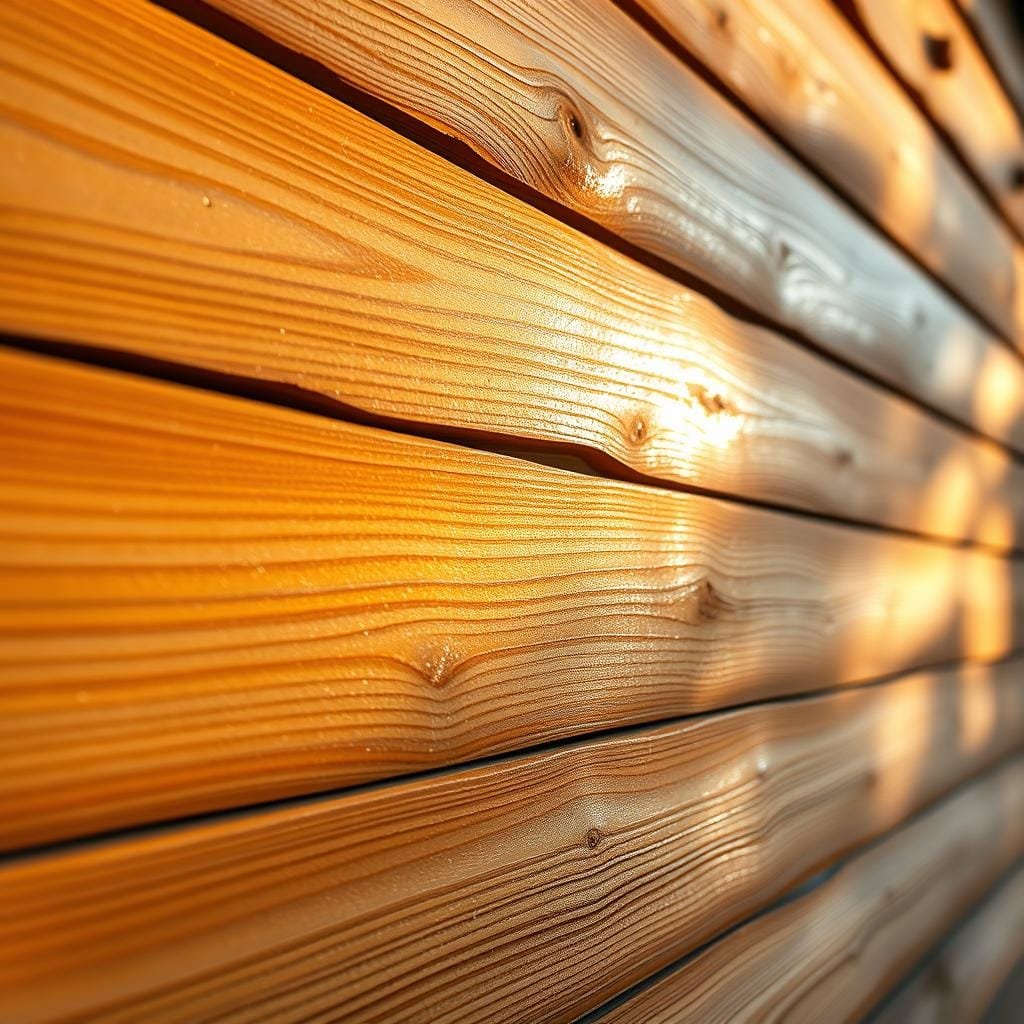
The final appearance receives heavy attention in reviews. Users frequently mention how well treatments enhance the natural wood grain. Many seek options that make grain patterns more prominent rather than hiding them.
Color accuracy is another critical factor. Reviewers compare results against manufacturer swatches. They value when the finished appearance matches their expectations.
Look for climate-specific feedback from users in your region. Performance varies significantly between dry and humid environments. The most valuable reviews come from people reporting back after 1-3 years of exposure.
Pay attention to coverage rates and value assessments. Smart reviewers calculate actual square footage per gallon. This helps you understand true project costs beyond the initial price.
Watch for consistent complaints about excessive odor or uneven color application. These red flags indicate potential issues with the product. Honest reviews about reapplication timing set realistic expectations.
Safety, Environmental Impact, and Low-VOC Options
Choosing a protective coating involves more than just performance—it’s also about protecting your family and the surrounding environment. Modern formulas prioritize safety while delivering excellent protection for your cabin walls.
Eco-Friendly Sealant Choices
Volatile Organic Compounds (VOCs) are chemicals that evaporate during application. They contribute to air pollution and can cause health issues. Today’s regulations strictly limit VOC content in protective products.
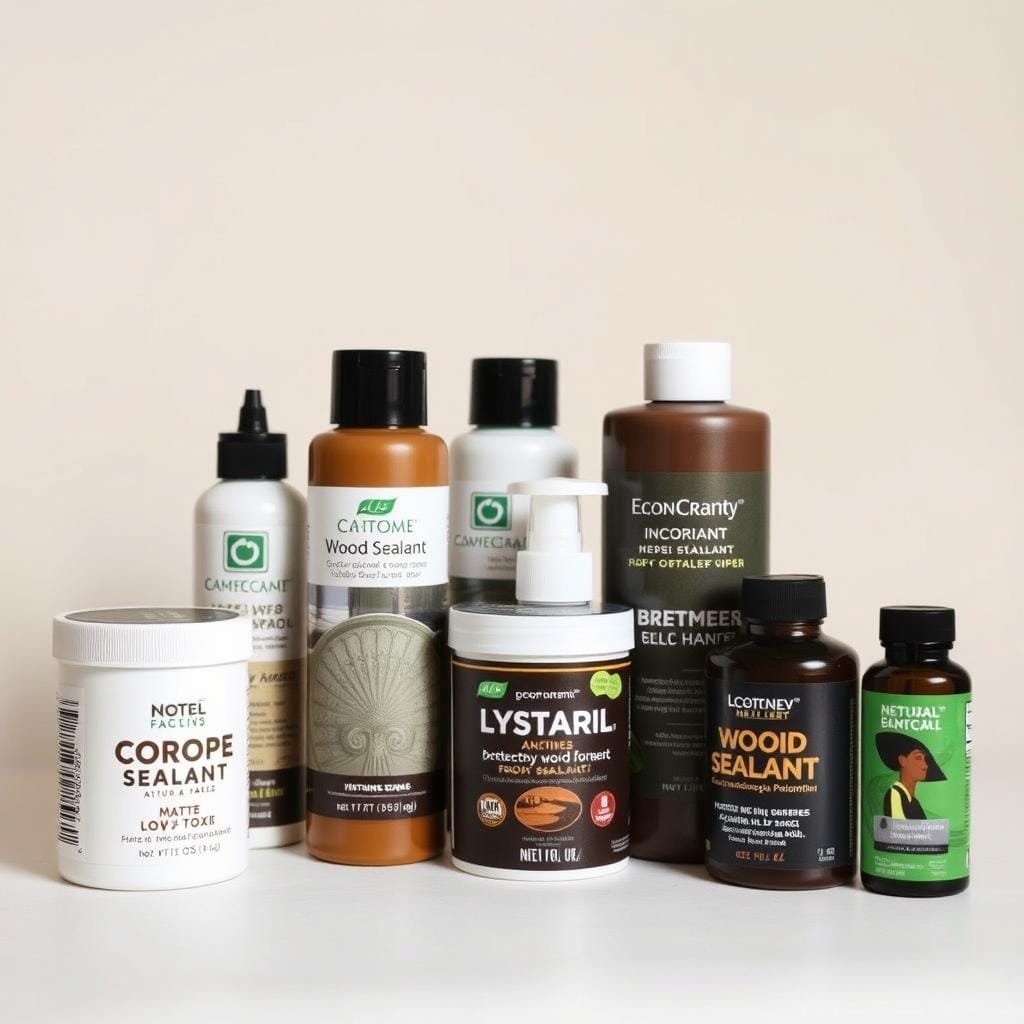
Low-VOC and ultralow-VOC options like Seal-Once Nano+Poly minimize environmental impact. These formulas maintain strong protection while reducing application odor. They’re much safer than historical treatments like creosote, which are now restricted.
For the ultimate eco-friendly choice, consider non-toxic water-based formulas. Products like Eco Advance are completely safe around children, pets, and garden plants once dry. This makes them ideal for family cabins with surrounding landscaping.
| Feature | Water-Based | Oil-Based |
|---|---|---|
| VOC Content | Low to Ultralow | Typically Higher |
| Cleanup | Soap and Water | Mineral Spirits |
| Environmental Impact | Lower | Higher |
| Safety When Dry | Completely Safe | Safe After Curing |
Even with low-VOC products, proper ventilation during application is essential. Wear gloves and eye protection for safety. Most modern preservatives become completely safe for contact within 24-48 hours after drying.
For pressure-treated lumber near gardens or water sources, choose eco-friendly additional coatings. Water-based formulas allow easier, more responsible cleanup compared to oil-based options requiring special disposal.
Additional Tips for Enhancing Wood Protection
Beyond the initial application, long-term success depends on a systematic maintenance approach. A strategic layered system delivers superior defense against environmental challenges.
Maintenance and Re-Coating Strategies
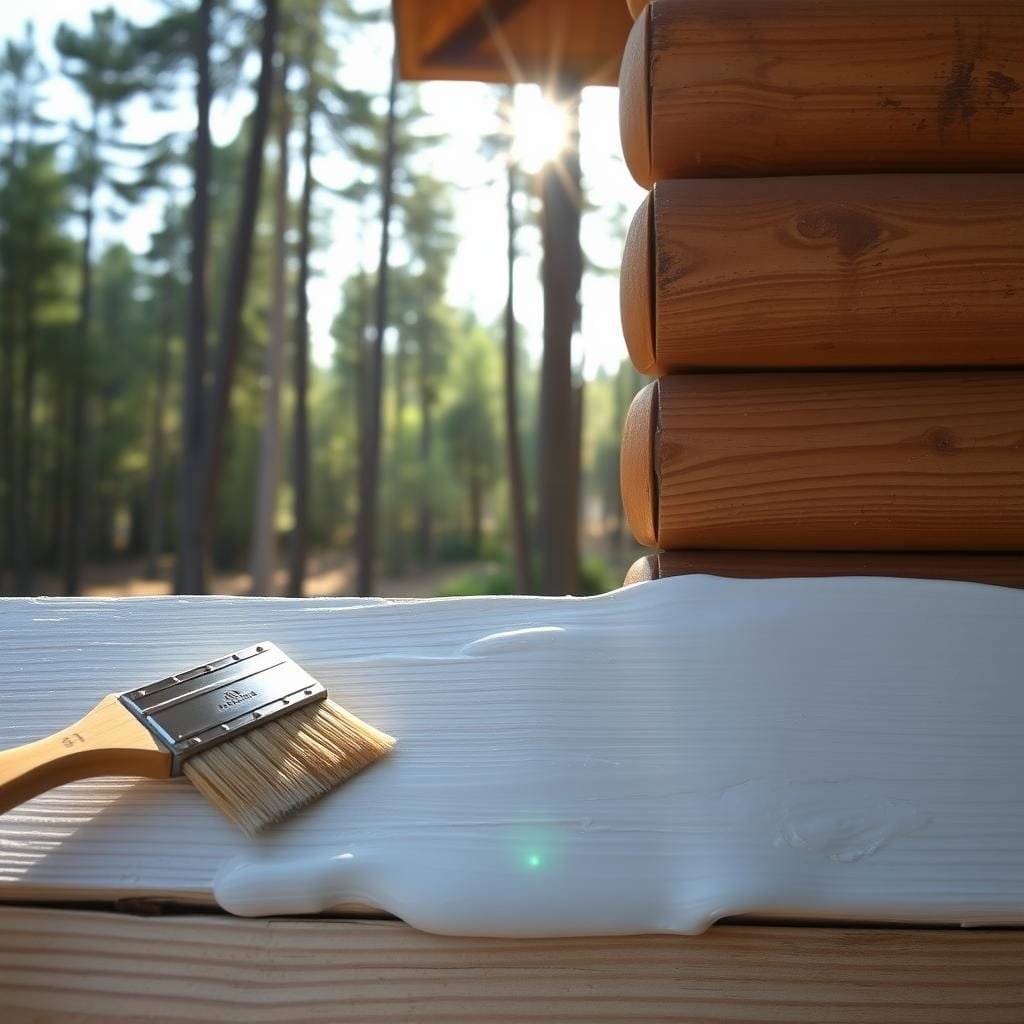
Start with a quality preservative to prevent biological damage. Then add a topcoat like oil, paint, or varnish. This combination seals in the preservative while adding weather resistance.
Most surfaces need recoating every couple of years for optimal performance. Annual spring inspections help catch early wear signs. Check for water absorption and mildew growth during these checks.
Before reapplying, clean surfaces thoroughly to ensure proper adhesion. Focus on high-traffic areas and south-facing walls that show wear first. Spot treatments between full recoats extend protection economically.
| Surface Type | Inspection Frequency | Recoating Schedule | Special Considerations |
|---|---|---|---|
| Exterior Walls | Annual | 2-3 years | Check near ground contact |
| Deck Boards | Semi-annual | 1-2 years | High foot traffic areas |
| Fence Panels | Annual | 3-4 years | End grain protection critical |
| Treated Lumber | Annual | 2-3 years | Compatible topcoats needed |
Keep application records to track what works best for your climate. Well-maintained structures can last for many years, making consistent upkeep a smart investment. Make sure to choose compatible products when layering different coats.
Real-Life Success Stories and Customer Experiences
Hearing from real users provides the most honest assessment of how protective coatings perform over time. These stories showcase practical results from everyday homeowners.
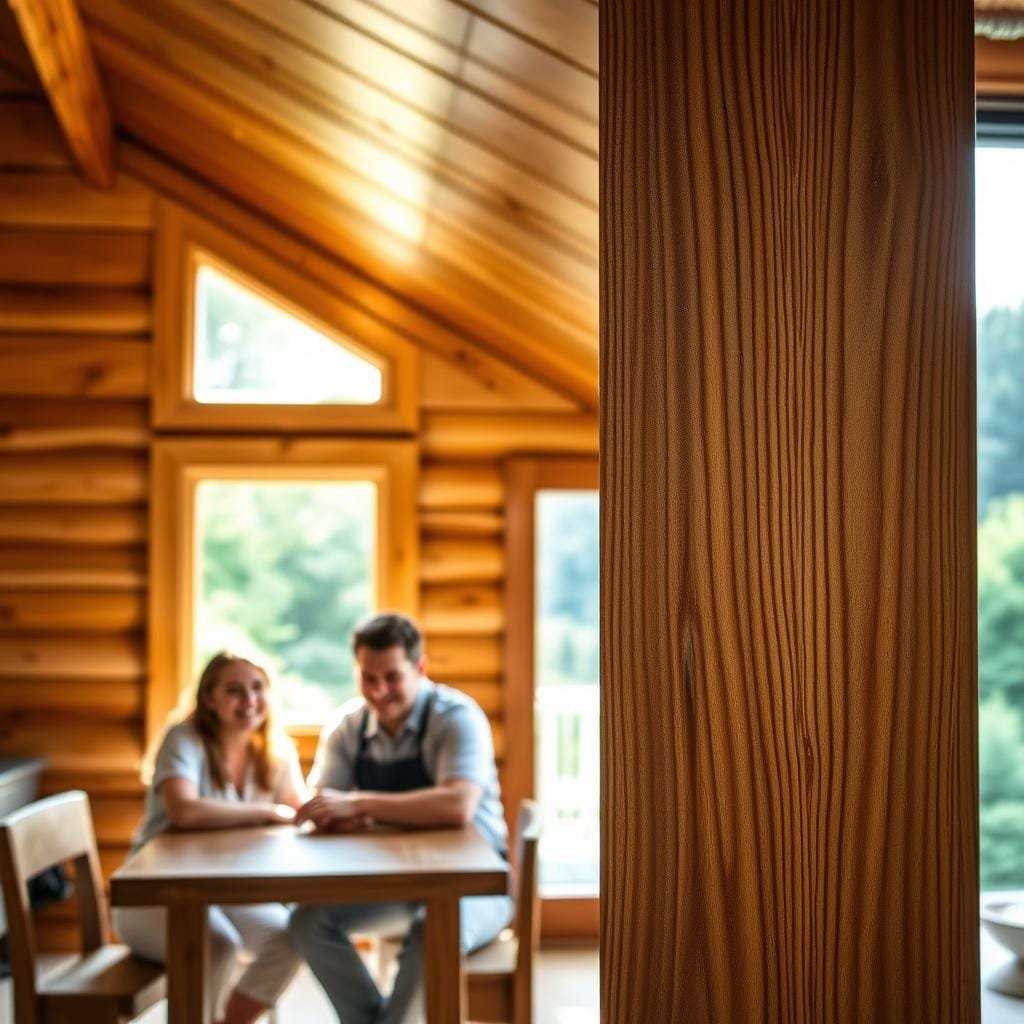
Before and After Project Highlights
One homeowner reported excellent results after three years. Their house boards maintained great appearance with minimal fungus growth.
Another user successfully treated both their deck and fence with the same product. They appreciated how the natural color enhanced the wood grain.
For high-moisture areas, one customer applied protection to a bathroom door. This created a smart barrier before adding the final finish.
Garden structures like used sheds benefit greatly from proper treatment. Multiple users reported preventing green algae in damp conditions.
Fence owners found that quality products provide lasting defense. Easy brush application made maintenance manageable over time.
The natural stain-like appearance pleased many customers. Products brought out the beautiful wood grain without artificial tinting.
Quick-drying formulas allowed projects to finish efficiently. Immediate protection began even before final topcoats were applied.
Final Thoughts on Protecting Your Cabin Walls
Taking proactive steps now ensures your cabin remains a cherished retreat for generations to come. Your investment deserves protection that stands the test of time.
Remember that one size doesn’t fit all. The right solution depends on your climate, materials, and maintenance commitment. Quality products may cost more upfront but save money over the years.
This maintenance mindset prevents expensive repairs down the road. Regular inspections catch issues early before they become major problems.
You may also want to explore related topics like deck care or fence maintenance. If you want to know your cabin’s condition, inspect it today rather than waiting.
Armed with this knowledge, you can confidently preserve your cabin’s beauty and structure for many years ahead.