
Your getaway spot is more than just a building; it’s a sanctuary. The base of your structure is its most critical component, holding everything up and keeping it level. A solid base provides essential support and protects your entire property from environmental stresses.
When your retreat is near a lake or river, this support system needs extra attention. Water, soil changes, and seasonal shifts create unique pressures. Properties near water bodies require extra to maintain their strength and integrity over the long term.
Ignoring the health of this critical part of your building can lead to serious complications. Small signs, if missed, can turn into expensive repairs. Early detection of potential foundation issues is key to avoiding major structural headaches later on.
Taking a proactive approach is a smart investment. It safeguards your property’s value, safety, and longevity. With the right knowledge, you can confidently maintain a sturdy and reliable structure for years to come.
Common Foundation Mistakes to Avoid
Many property owners make critical errors when planning their structure’s support system. Getting this right from the start saves time and money later.
Underestimating the Importance of a Solid Base
Your building’s base deserves special attention. It’s not just about pouring concrete. You must plan for electrical, plumbing, and drainage needs early.
Working with structural experts is smart. They understand local conditions. This investment pays off by avoiding future issues.
Overlooking Soil and Water Impact
Soil conditions vary greatly between properties. What works for your neighbor might not work for you. Testing the ground is essential.
Water has a major impact on stability. Moisture causes soil to shift. Frozen ground during winter creates additional pressure.
| Soil Type | Water Reaction | Stability Level | Preparation Needed |
|---|---|---|---|
| Clay | Expands when wet | Low | Extra compaction |
| Sandy | Drains quickly | Medium | Moisture control |
| Loamy | Balanced absorption | High | Standard preparation |
Learn more about common foundation errors to ensure your project’s success. Proper planning prevents most issues.
Key Factors Affecting Cabin Foundation Stability
Environmental pressures from water and earth play a crucial role in how well your structure stands the test of time. These natural elements create unique challenges that require specific attention.
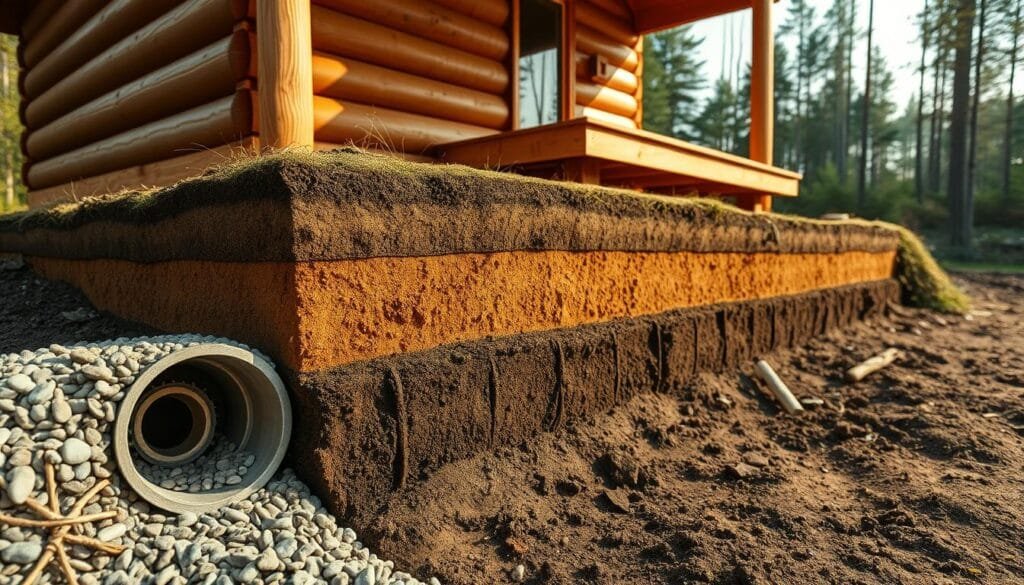
Understanding Water Tables and Drainage
The water table is the permanently saturated layer of soil beneath your property. Near lakes and rivers, this layer sits much higher. Constant moisture from below creates pressure on your base.
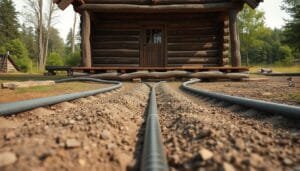
Proper drainage systems are essential for channeling water away. Good drainage prevents soil saturation that weakens support. It also reduces hydrostatic pressure against walls.
Understanding how soil composition interacts with water helps you plan effective solutions. Different ground types react uniquely to moisture levels.
Managing Flood Zones and Erosion Risks
Check the FEMA Flood Map Service Center to see if your property sits in a flood zone. This indicates higher water-related risk for your home’s support system.
Erosion occurs when water dislodges soil particles. This creates gullies that can undermine ground stability. Impervious surfaces like driveways increase runoff velocity.
More runoff means greater erosion force directed toward vulnerable areas. Addressing these conditions early helps avoid serious structural issues later.
Strategies for Preventing Cabin Foundation Problems
Smart preparation begins with understanding how water interacts with building materials over time. Taking the right steps early can save you from costly repairs later.
Implementing Effective Waterproofing and Moist Curing
Water infiltration causes most structural issues. Proper protection involves two approaches: waterproofing stops surface water, while damp proofing blocks soil moisture.
Concrete needs special care during installation. Moist curing keeps it damp for about a week. This prevents cracking from rapid drying.
Ideal pouring temperatures range from 50°F to 60°F. Below 40°F, use insulating blankets. These simple steps ensure durable concrete.
Selecting the Right Materials and Engineering Help
Choosing appropriate materials for your climate is crucial. Different types of foundations work better in various conditions.
Consulting with structural experts helps you make informed decisions. They understand local soil and weather patterns. Professional guidance prevents common log cabin issues.
Tailoring Solutions to Local Weather and Soil Conditions
Your property’s unique environment demands custom solutions. Effective drainage systems direct water away from vulnerable areas.
Consider foundation vents for air circulation. Proper grading around your structure improves water flow. These tailored approaches address specific moisture challenges.
Avoiding Errors in Concrete, Soil, and Vegetation Management
Even a well-designed base can fail if simple mistakes in material handling and landscaping are made. Proper care during construction and smart choices for the surrounding ground are your best defense.
Maintaining Consistent Moisture Levels & Preventing Cracking
Concrete needs careful attention as it sets. If it dries too fast, it becomes brittle. This weakness often leads to cracks.
These cracks allow water to seep in. This moisture can cause significant damage over time. It also weakens the slab’s integrity.
Keep the concrete damp for about a week after pouring. This process, called moist curing, prevents excess drying. It stops those early cracks from forming.
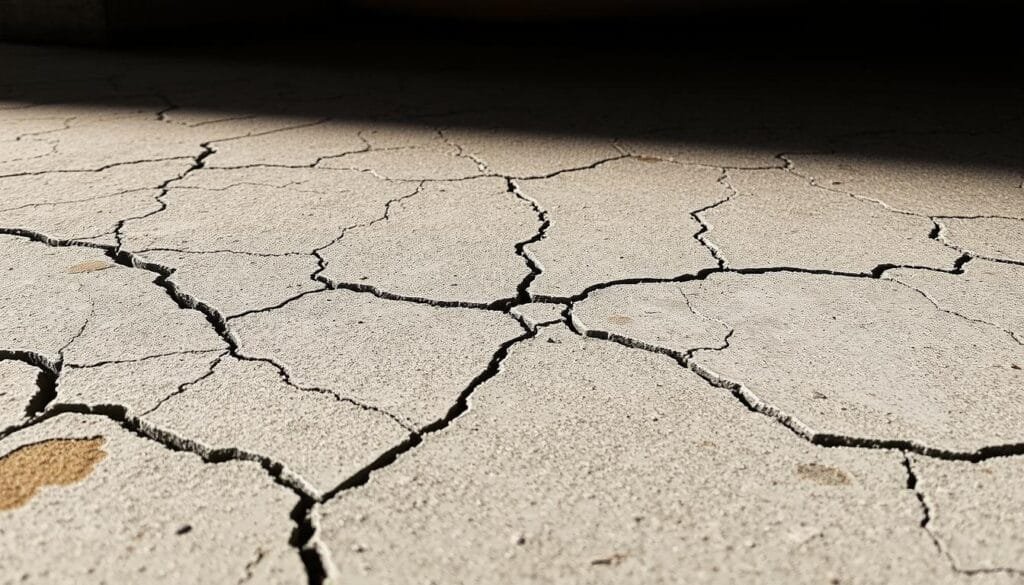
Check any cracks that appear below ground level. Seal them quickly with waterproof caulk or hydraulic cement. This stops water infiltration and tracks potential issues.
Utilizing Vegetative Solutions to Minimize Erosion
Plants are powerful allies for stabilizing the ground. Their roots hold soil in place. This action helps prevent erosion from rain and runoff.
Choose deep-rooted native vegetation for the best results. These plants are adapted to local conditions. They effectively slow down water flow across surfaces.
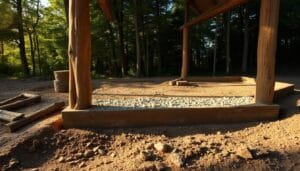
You can also reduce erosion by choosing porous materials for walkways and driveways. This allows water to soak into the ground instead of creating fast runoff.
- Use clean 3/4-inch rock or pea gravel instead of solid pavement.
- Install stepping stones instead of continuous concrete paths.
- Consider porous paving blocks that let water through.
These strategies protect the soil around your structure. They maintain ground stability and support your investment.
Wrapping Up: Safeguard Your Cabin’s Future
Your peaceful getaway deserves a solid start, beginning from the ground up. Keep an eye out for early warning signs like sticking doors, cracks above windows, or walls that seem out of level. These small clues can signal bigger structural issues developing below.
Regular checks with a simple level help you track changes over time. This routine is a key part of responsible ownership. It helps you catch small issues before they lead to expensive damage.
A sound structure does more than just support your walls. It blocks moisture that can cause mold, protecting your home’s air quality and your family’s health. Investing time in proper drainage and soil management defends against water and erosion impact.
When you see potential trouble, talk to a qualified expert. Their advice provides peace of mind. For more guidance, explore our resource on building a strong base. A little attention now ensures your retreat remains a safe, enjoyable haven for years.