
Building a cabin is a significant project. Your choice of construction materials will affect the structure for a very long time. Picking the right timber is one of the most critical decisions you will make.
The species you select directly influences the cabin’s strength and longevity. It also impacts your future maintenance schedule and overall project costs. Durability is key for withstanding weather, pests, and the test of time.
This guide explores what makes certain woods stand out. We will look at strength ratings, resistance to moisture, and how different species perform in various climates. Understanding these properties helps builders make smart choices.
We will cover everything from hardness tests to commercially available options. Our goal is to help you balance performance, budget, and environmental responsibility for your cabin construction.
Exploring Cabin Construction Requirements and Durable Materials
The success of a cabin build hinges on how well its materials can withstand environmental pressures. These structures face harsher conditions than typical homes.
Why Durability is Essential for Cabins
Cabins often sit in remote areas with big temperature swings and high moisture. This constant exposure tests a structure over time. Strong resistance to rot and pests is crucial for long-term integrity.
Maintenance can be difficult when your retreat is far from town. Choosing high-quality materials from the start saves effort and money later. This foresight ensures your cabin remains solid for generations.
Matching Wood Properties with Environmental Demands
Picking the right species is like choosing the right tool for the job. A humid coastal cabin needs different timber than a dry mountain lodge. Moisture resistance is vital for exterior parts and damp climates to prevent decay.
This careful selection prevents warping and cracking. It maintains the cabin’s stability. Builders must also consider fire risk. Some timbers and treatments offer better fire resistance.
Understanding these needs helps you select materials that perform well immediately and last. It’s the foundation of smart sustainable log cabin construction techniques.
Identifying the Most Durable Wood for Building and Its Benefits
The integrity of any cabin structure is directly tied to the mechanical properties of the lumber used. True durability is a blend of several factors working together.
It combines high strength, hardness, decay resistance, and dimensional stability. This combination ensures long-term performance under stress.
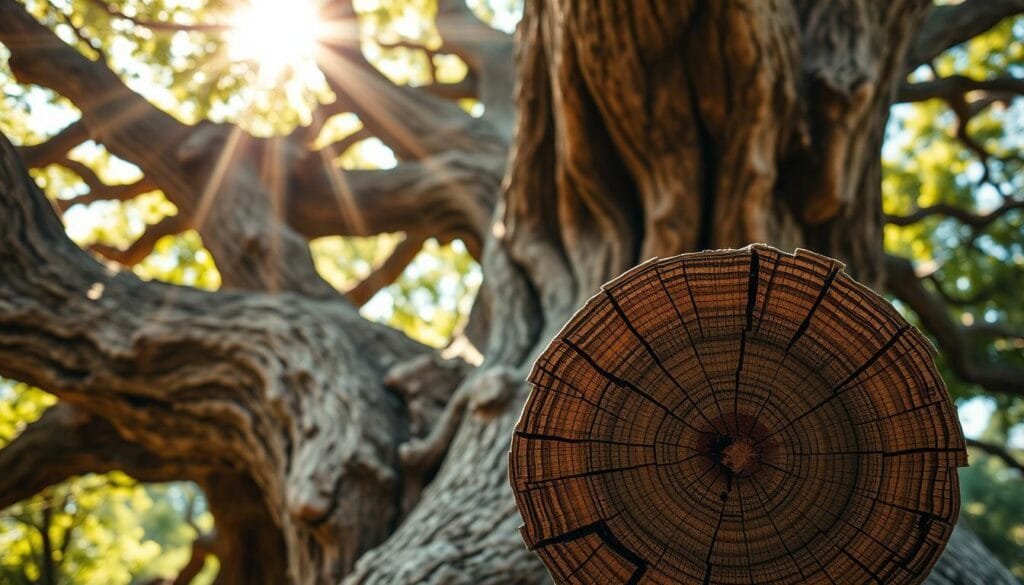
How Wood Strength Influences Structural Integrity
Strength determines how well a cabin supports heavy loads. It resists bending and prevents failure in key areas like framing.
Choosing the right species for load-bearing walls is critical. This careful selection minimizes risks like warping or cracking.
It prevents costly repairs down the line. High-density materials with tight grain patterns generally offer superior wear resistance.
Different products, from solid lumber to engineered beams, provide unique strength characteristics. Understanding these properties allows for smarter construction choices.
You can prioritize high-strength species for the frame. Softer, more workable materials might be better for interior finishes.
| Property | Impact on Cabin | Ideal Characteristic |
|---|---|---|
| Compressive Strength | Supports vertical loads (roof, snow) | High |
| Bending Strength | Resists sagging in beams and joists | High |
| Density | Correlates with hardness and wear resistance | Medium to High |
| Grain Pattern | Affects stability and splitting resistance | Straight and Tight |
This knowledge empowers you to design a cabin that remains safe and stable for decades. A strong frame is the backbone of a lasting retreat.
Hardwoods vs. Softwoods: Choosing the Right Species
When selecting materials for your cabin project, understanding the fundamental differences between hardwood and softwood categories is essential. This knowledge helps you match the right timber to each part of your structure.
Understanding Key Differences in Durability
The classification of hardwoods and softwoods comes from botanical origins, not actual hardness. Hardwoods come from deciduous trees that lose their leaves annually.
Softwoods originate from coniferous trees that typically keep their needles year-round. Interestingly, some softwoods like Siberian larch exceed many hardwoods in actual hardness.
Popular Species for Cabin Projects
Hardwood species like oak and maple offer exceptional density and beautiful grain patterns. They work well for high-visibility elements where aesthetics matter.
Softwoods including pine and fir provide excellent structural qualities at lower cost. Their straight grain and lightweight nature make them ideal for framing.
| Characteristic | Hardwoods | Softwoods |
|---|---|---|
| Common Species | Oak, Maple, Cherry | Pine, Fir, Spruce |
| Best Applications | Flooring, Cabinetry, Details | Framing, Structural Timber |
| Workability | More challenging | Easier to cut and shape |
| Cost Factor | Typically higher | Generally more affordable |
Choosing between these wood types involves balancing initial investment with long-term performance. Each category serves distinct purposes in cabin construction.
The Science Behind Wood Hardness: A Look at the Janka Test
The Janka hardness test provides scientific data to guide your wood selection process. This industry-standard method measures how much force is needed to embed a steel ball into a timber sample.
It’s an excellent way to quantify resistance to wear, dents, and scratching. Higher ratings indicate better performance against daily impacts.
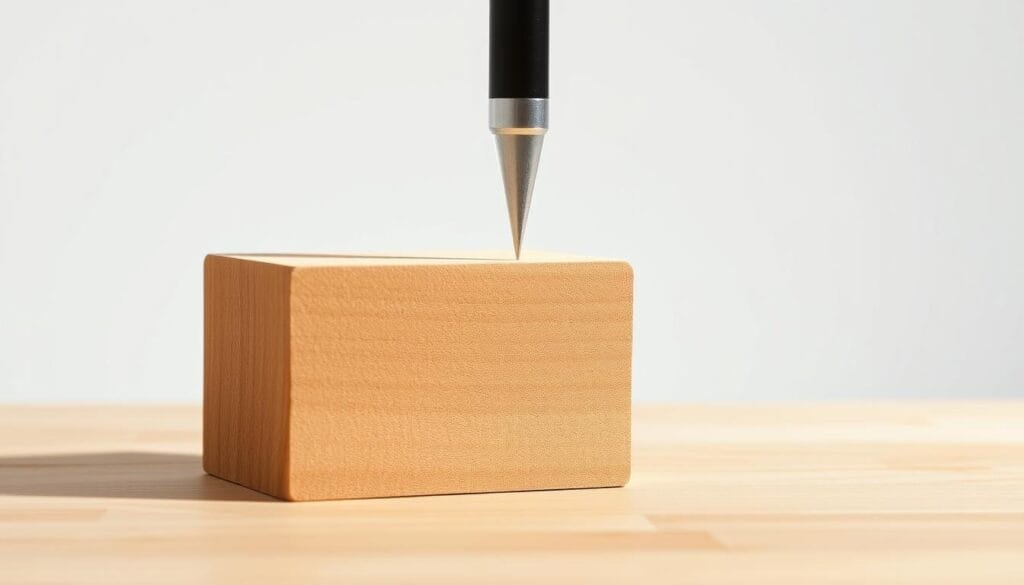
Interpreting Janka Test Results
Some species achieve remarkable hardness scores. Australian buloke leads at 22,500 Newtons. Barauna and quebracho follow closely behind.
These ratings have real-world context. An 18,000 N score equals a great white shark’s bite force. 16,500 N matches a saltwater crocodile’s crushing power.
Understanding the Janka wood hardness scale helps builders select appropriate materials. High scores mean better performance in high-traffic areas.
Softer options like Western red cedar (1,600 N) serve different purposes. They might be ideal where natural decay resistance matters more than surface hardness.
Remember that Janka ratings represent just one aspect of overall performance. Balance hardness requirements with workability, cost, and other durability factors for your project.
Commercially Available Strong Woods for Construction
The marketplace offers numerous timber options that combine impressive strength characteristics with practical availability for construction projects. Builders can access these materials through regular lumber suppliers and specialty retailers.
Top Options for Builders
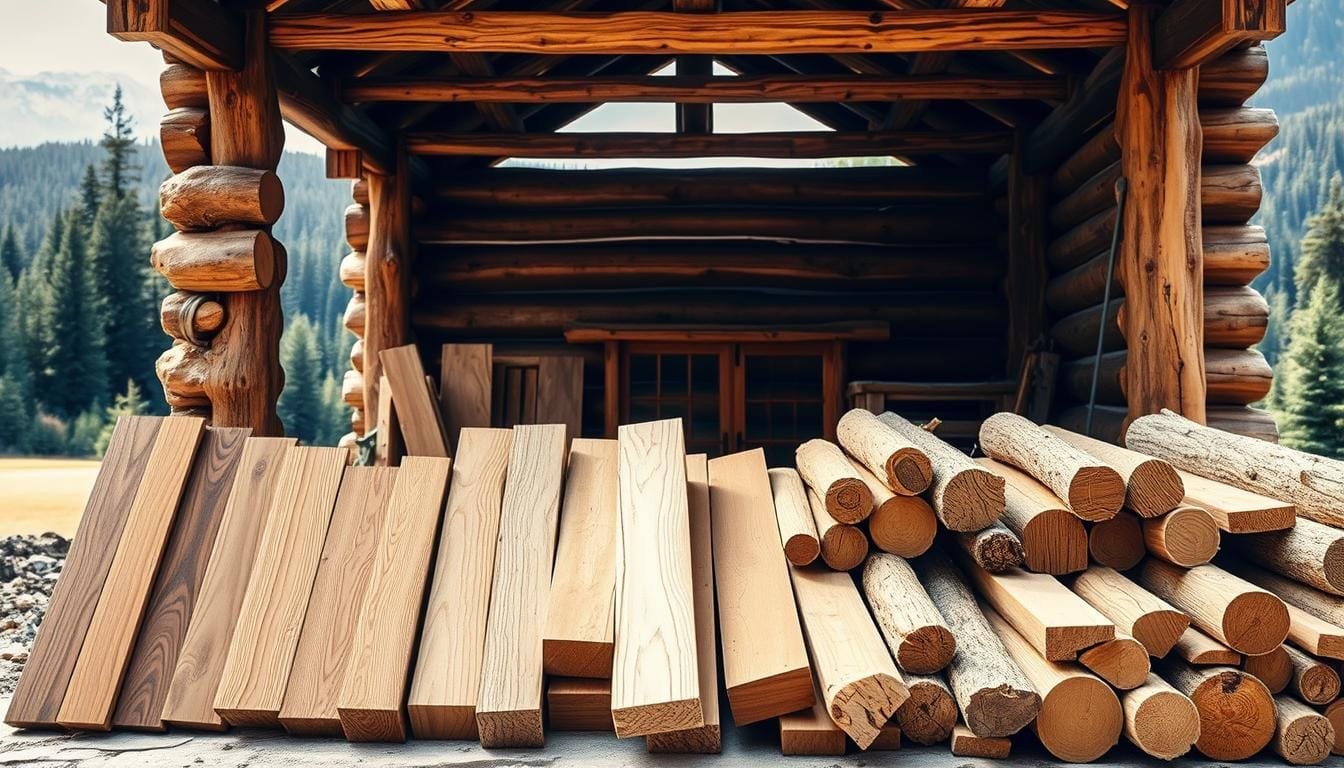
African hardwoods lead with exceptional performance. Wenge scores 7,300 N on the Janka scale, while Zebrano reaches 7,010 N. These species offer phenomenal strength plus striking visual appeal.
American favorites provide reliable alternatives. Hard maple (6,400 N) and white oak (6,000 N) deliver excellent hardness ratings. Black walnut (4,500 N) balances beauty with structural integrity.
Outdoor-specific options excel in exterior applications. Siberian larch (4,900 N) and Iroko (5,600 N) withstand weather challenges. Thermally-modified products enhance natural properties for decking use.
Balancing Cost with Longevity
Premium species often justify their higher initial cost through reduced maintenance needs. They typically offer longer service life, making them smart investments for critical structural elements.
Budget-conscious builders can strategically allocate resources. Use top-tier lumber for high-stress areas while selecting mid-range options for less demanding applications. This approach optimizes overall project value.
These commercially available products represent the sweet spot between world-class performance and practical accessibility. They empower builders to create structures that stand the test of time.
Specialty Wood Options for Flooring, Decking, and Exterior Use
Different areas of your cabin face unique challenges, demanding specific wood products tailored to their environment and use. Selecting the right material for each application ensures optimal performance and longevity.
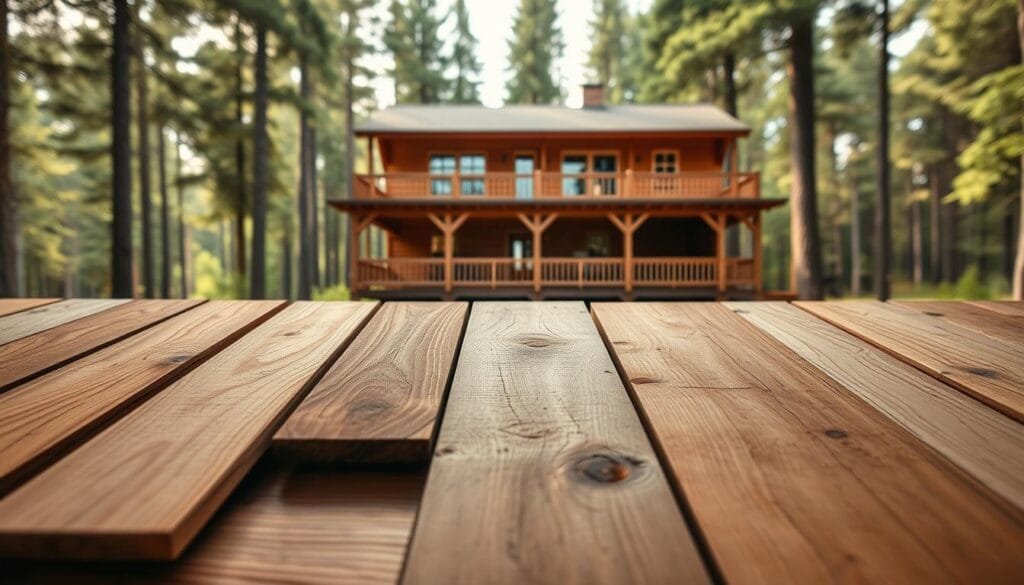
From the entryway to the deck, each zone has distinct needs. High-traffic flooring requires species that resist wear. Exterior elements need superior moisture resistance.
Applications Tailored for Cabin Environments
Hardwood plywood offers an excellent solution for interior projects. It provides stability and a beautiful finish. Species like oak and maple are ideal for cabinetry and paneling.
For outdoor applications, marine grade plywood is the premium choice. It is engineered to withstand damp conditions. This makes it perfect for decking and exterior builds.
Specialty woods like Cumaru excel in demanding roles. This dense South American hardwood is popular for outdoor flooring. It handles constant foot traffic and weather exposure well.
Western red cedar is another top pick for exterior cladding. It contains natural substances that protect against insects and moisture. This makes it a smart choice for siding and fencing.
| Product Type | Best Applications | Key Advantage |
|---|---|---|
| Hardwood Plywood | Cabinetry, Interior Paneling | Strength and Attractive Grain |
| Marine Grade Plywood | Decking, Exterior Structures | Superior Moisture Resistance |
| Cumaru (Brazilian Teak) | Decking, High-Traffic Flooring | Extreme Density and Durability |
| Western Red Cedar | Siding, Fencing, Cladding | Natural Insect and Rot Resistance |
Matching the right material to each part of your project is crucial. This approach balances performance with aesthetic goals for a successful build.
Sustainable Practices in Wood-Framed Cabin Construction
Sustainable construction practices transform your cabin project into an eco-friendly investment that pays dividends for generations. This approach balances structural needs with environmental responsibility.
Eco-Friendly Material Sourcing
Responsible forestry programs help builders source timber from well-managed forests. These programs ensure harvesting rates don’t exceed natural regeneration.
Choosing locally sourced materials reduces transportation emissions. It also supports regional economies and forest management. Certification programs guide smart material selection for your structure.
Long-Term Environmental and Structural Benefits
Timber acts as a carbon storehouse throughout its service life. Trees absorb CO₂ during growth, and harvested products continue storing carbon. This makes wood frame construction a climate-positive choice.
Compared to steel and concrete, timber has a much lower carbon footprint. Manufacturing alternatives requires significantly more energy. Durable species also reduce environmental impact over time by minimizing repairs.
Smart material choices deliver both structural integrity and ecological benefits. Your cabin becomes a testament to sustainable building practices.
Wrapping Up: Key Insights for a Durable Cabin Build
Your cabin’s longevity begins with informed material choices that balance performance with practical considerations. Understanding wood species characteristics helps you match the right timber to each part of your project.
The Janka test provides valuable data about hardness and strength. This information guides smart selections for different applications. From framing to flooring, each area needs specific materials.
Balancing cost with long-term performance ensures your investment pays off. Sustainable sourcing creates beautiful cabins while protecting our natural world. Consult with specialists to make the best choices.
Armed with this knowledge, you can create a cabin that stands strong for generations. The right combination of wood types and construction techniques leads to lasting success.