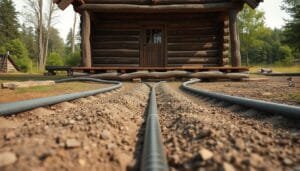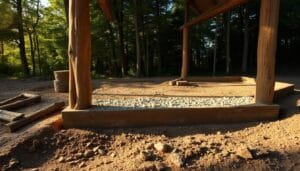


Welcome, cabin owners! Your peaceful retreat is a special place. This guide helps you protect your property from land degradation. Wind and water can slowly wear away the ground. This process threatens the beauty and stability of your cherished space.
This issue is more than just looks. It can weaken your property’s foundation. It also affects the quality of nearby streams and lakes. Left unchecked, it often leads to expensive repairs. A smart landscape site plan is a powerful first step to avoid these problems.
We will explore practical, proven methods for your cabin. You’ll learn to work with nature, not against it. Whether you have steep slopes or areas with heavy runoff, effective strategies exist. These approaches safeguard your investment for years to come.
This guide covers vegetative covers, terracing techniques, and mulching strategies. Combining these methods creates a strong defense for your property. Let’s begin building a comprehensive plan to keep your land healthy and intact.
Understanding Soil Erosion and Its Impact on Cabin Land
Before we explore solutions, let’s look at the common culprits behind land degradation on cabin sites. This process often starts subtly but can have serious consequences.
What Causes Soil Erosion on Cabin Land?
Bare patches on your property are a major red flag. They appear when plants struggle to grow or when water runoff washes away the precious topsoil layer.
Once the protective plant cover is gone, the ground becomes vulnerable. The rate of land loss accelerates quickly. Small channels can form and grow into deep gullies over time.
Several types of degradation affect these properties. Sheet and rill soil erosion remove thin layers across a surface. Ephemeral gully erosion creates temporary channels in areas of concentrated flow. Wind can also wear away exposed soil when it’s dry.
Heavy rain is a primary driver. Water moves across the land, carrying particles and carving paths, especially on sloped cabin sites.
The Environmental and Property Impacts
This issue extends beyond your property line. Sediment reaching streams can harm aquatic life. It also carries pollutants that degrade water quality.
For your cabin land, the impacts are direct. You lose nutrient-rich topsoil essential for plant health. Slopes can become unstable, and foundations may be at risk. The beauty and value of your retreat can diminish.
Recognizing these causes and effects is the essential first step toward a successful protection plan.
Sustainable Practices: How to Prevent Soil Erosion
Building lasting protection for your retreat involves strategic vegetation planning. The key principle is maintaining adequate ground coverage. Industry standards recommend at least 30% coverage to effectively reduce soil movement and water runoff.
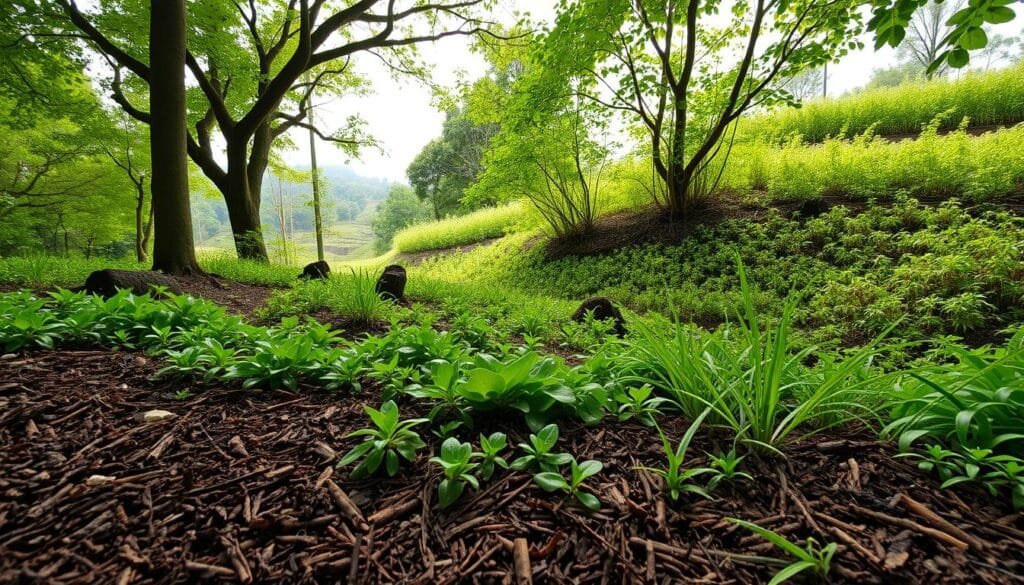
Utilizing Vegetative Cover and Mulching
A healthy, perennial plant cover serves as your primary defense. Well-established vegetation stabilizes the ground through strong root systems. The foliage also breaks the impact of raindrops.
Strategic mulching provides immediate protection in vulnerable areas. Add mulch around trees, shrubs, and places where vegetation struggles. Organic materials like wood chips create a protective layer while improving soil health.
Consider planting cover crops like winter rye in garden spaces. These quick-growing plants shield bare ground during vulnerable periods. Later, they can be tilled in to add organic matter.
Replanting Native Species for Stabilization
Native plants offer excellent long-term stabilization benefits. They’re already adapted to local conditions and require less maintenance. Their deeper root systems provide superior soil binding.
When selecting plants, consider your specific site conditions. Choose species suited to the moisture levels and sun exposure. Plants that thrive will deliver the best erosion protection.
For heavily used areas where vegetation is hard to maintain, consider permanent materials. Crushed stone or wood chips create effective protective barriers. Combining these approaches creates a comprehensive system for property conservation, as detailed in this educational resource.
Erosion Control Strategies on Steep Slopes and Terraces
When your cabin sits on an incline, specialized approaches become crucial for maintaining the integrity of your land. Gravity and fast-moving water work together to accelerate land loss on these steep slopes.
A well-planned strategy intercepts this flow and reduces its damaging power.
Designing Effective Terraces
Terraces are one of the most effective solutions for managing slopes. These cross-slope channels are built along the contour of the land.
They interrupt the downhill path of water. A series of shorter terraces works better than one tall wall. This design spreads the workload and lets water soak into the ground at multiple levels.
You can build them using various materials:
- Coir fiber biologs
- Stone
- Wood
Always include a drainage system behind the retaining wall. Use gravel or perforated pipes. Storage terraces let allow water to soak in, while gradient terraces guide it to a safe outlet.
Building Check Dams and Managing Runoff
For existing channels with concentrated flow, check dams are a smart choice. These small barriers slow down runoff effectively.
Construct them by piling large stones a few inches high across the flow path. Arrange the pile with the center lowest and the ends highest.
This shape helps spread the water out. On steeper slopes, place check dams closer together to handle the faster flow. This simple technique provides significant erosion control.
Optimizing Vegetation and Mulch for Soil Retention
Fine-tuning your vegetative and mulching strategies is the next step in building a resilient landscape for your cabin. The right choices create a living blanket that holds the ground firmly in place.
Choosing the Right Grass and Cover Crops
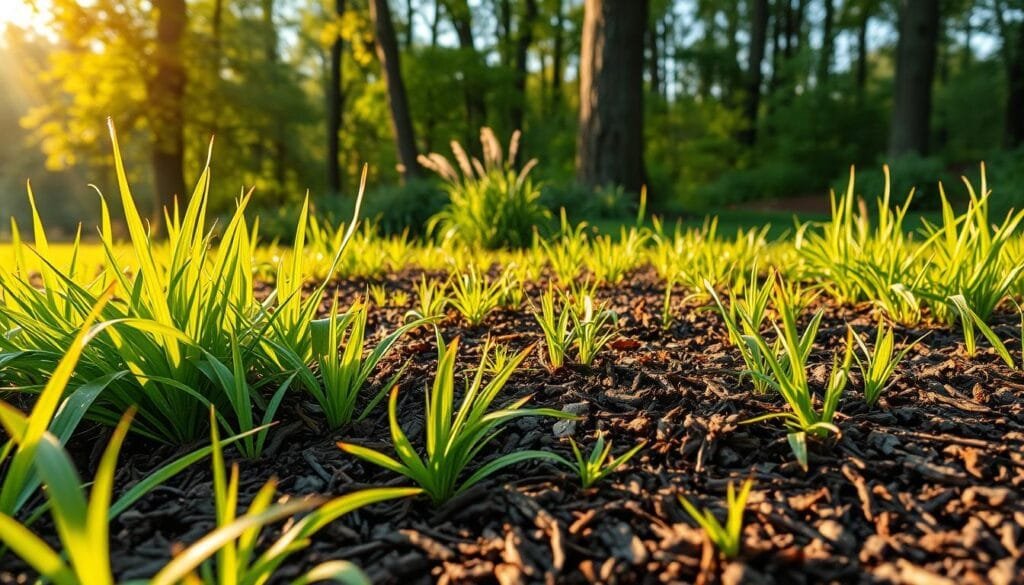
Selecting appropriate grass species is critical. Consider your local climate, sun exposure, and soil type. Native varieties often provide the best control with minimal upkeep.
When planting new grass, protect the seeds for successful germination. Apply a thin layer of topsoil over the seeds. Follow this with a light layer of straw.
This technique shields the seeds from birds and helps retain moisture. For steep slopes, consider low-maintenance vegetation instead of grass to avoid mowing hazards.
In garden areas, use cover crops like clover or rye. Plant them right after harvest. Let them grow to achieve at least 30% residue cover.
Implementing Mulch Layers and Soil Amendments
A strategic layer of mulch is a powerful tool. Use organic materials like wood chips in beds and pathways. Apply a 2-4 inch layer to suppress weeds and retain moisture.
This mulch also allows water to infiltrate slowly. In challenging spots where plants struggle, a thick layer of mulch protects the surface.
Improving the earth itself is also key. Mixing compost into the soil boosts fertility and structure. Healthy plants develop strong roots that bind particles.
Minimize tillage to protect the land’s structure. Reducing unnecessary disturbance is a core principle for effective comprehensive soil and erosion control strategies.
Additional Erosion Prevention Techniques for Cabin Land
Deep channels and concentrated water flow demand targeted intervention strategies. These advanced methods provide permanent solutions for challenging landscape issues.
Addressing Gully Erosion and Concentrated Flow
Ephemeral gullies pose a serious threat to your property. These channels form repeatedly in the same vulnerable areas. They range from 4 to 18 inches deep and can become permanent gullies if ignored.
The most effective solution involves establishing grassed waterways. These permanent vegetated channels stabilize areas of concentrated flow. They safely guide water without causing further damage.
For existing gullies, fill them with high-clay content soil. Add a layer of topsoil on top. Then establish strong vegetation to prevent reformation.
Incorporating Retaining Walls and Landscape Diversions
Retaining walls offer strong protection for steep slopes. Walls taller than two feet may need professional engineering and permits. They create usable terraced spaces while stopping soil loss.
Landscape diversions are wider than traditional terraces. They redirect water flow away from problem areas. Built on steep slopes, they’re planted with permanent grass for stability.
Consider contour planting and buffer strips to improve water infiltration. These methods reduce runoff volume and velocity. Field borders and vegetative barriers capture sediment before it leaves your property.
Minimizing tillage operations helps control displacement of earth in undulating landscapes. These structural approaches work alongside vegetative methods for comprehensive protection.
Wrapping Up: Ensuring a Sustainable Future for Your Cabin Land
A lasting defense for your property blends quick actions with patient, long-term planning. Combining methods like establishing strong vegetation and managing runoff creates a powerful, custom shield for your unique land.
This work is an investment. You protect your valuable soil and the property’s future. Start with the most vulnerable spots, like bare areas on slopes.
Use mulch for immediate control while deep-rooted plants establish themselves. After heavy rain, check your progress and make adjustments.
Your efforts also benefit the local environment by reducing sediment loss. You now have the knowledge to protect your cabin’s beauty and stability for a long time to come.