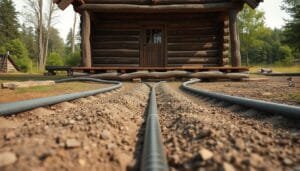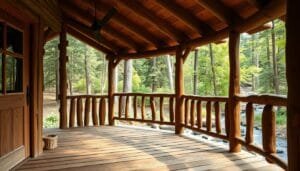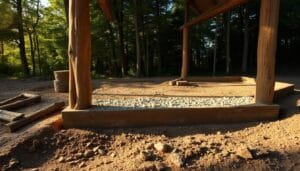
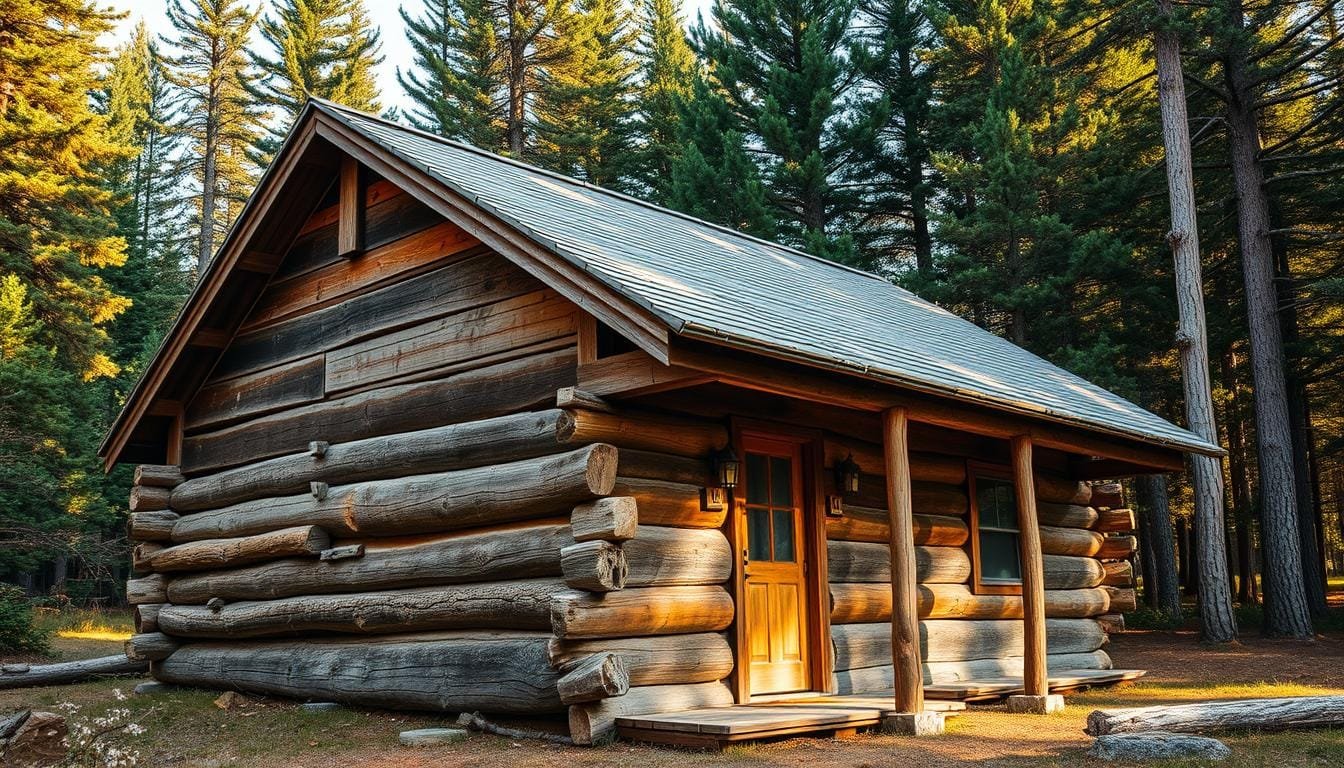

Imagine a cabin built with materials that tell a story. Using salvaged timber for your project is a growing trend for good reason. This approach offers a sustainable path to creating a home with deep character and history.
Old barns and historic structures often provide superior lumber. Species like Douglas fir, oak, and cedar were harvested from the finest old-growth forests. This timber boasts an authentic patina and dimensions that are rare today.
The journey from a weathered board to a cabin-ready material is a rewarding process. It involves careful sourcing, evaluation, and preparation. While it requires dedication, the payoff is a space with unmatched warmth and soul.
This guide will walk you through the essential steps. You’ll learn about building with reclaimed wood, from dismantling to final finishing. We’ll cover how to transform salvaged planks into premium building materials.
Embarking on this project connects you to a rich tradition of craftsmanship. The result is a beautiful, eco-friendly cabin that new lumber simply cannot replicate.
Sourcing Quality Reclaimed Wood
Your journey to building with character-rich materials starts with smart sourcing. Finding authentic reclaimed wood is both rare and exciting. The search requires patience and strategic networking.
Locating Old Barns and Historic Structures
Connect with local construction and demolition companies. They often know which buildings are scheduled for removal. This networking can lead you to property owners with available structures.
Most American barns were built in the 19th century. They typically contain superior species like oak, Douglas fir, and redwood. These woods offer characteristics unavailable in modern lumber.
Choosing Projects with Authentic Materials
Evaluate the entire lot before committing. Check the wood’s condition, species present, and dimensions available. The structural integrity of the materials is crucial.
Dismantling a barn can take from several days to weeks. A project in Oregon’s Rogue Valley required two weeks. Choose sources with genuine history that justify your time investment.
Evaluating Your Wood: From Old Nails to Natural Patina
Transforming weathered boards into cabin-ready materials starts with a detailed assessment of each piece. The condition of salvaged lumber varies dramatically from relatively clean framing studs to heavily nail-studded planks that require extensive preparation.
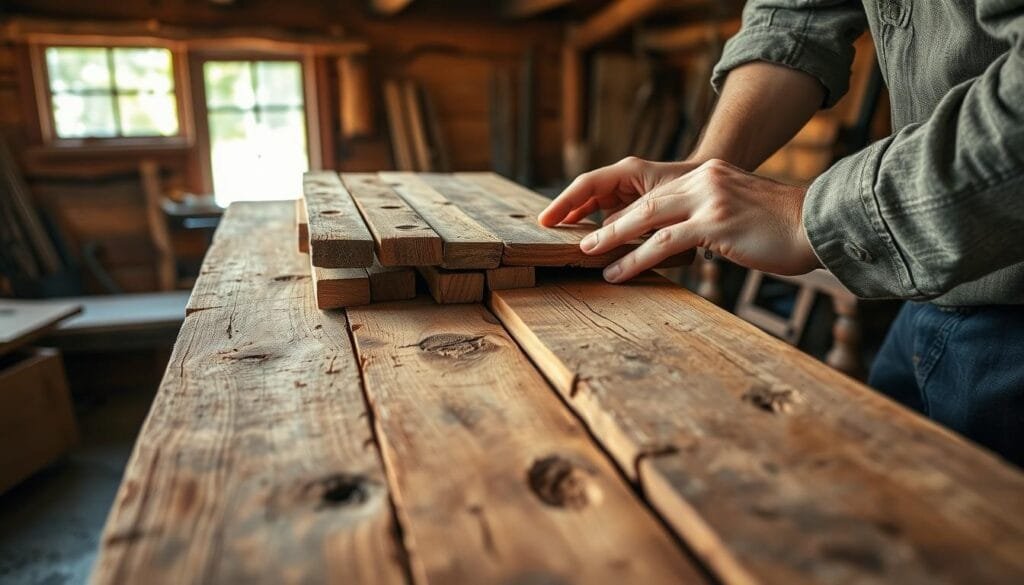
Inspecting for Embedded Nails and Metal
Hidden metal fasteners pose the greatest risk to your tools and safety. Old nails, screws, and staples can ruin expensive saw blades during milling. Always run your hands carefully over surfaces to feel for protruding metal.
For thick pieces, a metal detector helps locate buried fasteners. This simple tool prevents costly blade damage. Be especially cautious with painted materials from before the 1970s, as they may contain lead paint requiring proper handling precautions.
Assessing Wood Species and Structural Integrity
Identifying species becomes challenging when natural patina obscures typical features. Look for clues like growth rings, color variations, and grain patterns. Old barns contain diverse species including oak, Douglas fir, pine, and maple.
Check each piece for splits, cracks, rot, and insect damage. The weathered character adds beauty, but structural soundness matters most. Preserve the natural patina where possible—this aged surface tells the material’s unique story and adds character that new lumber cannot replicate.
Best Ways to Reclaim Wood: Step-by-Step Process
Working with previously used timber involves a multi-stage procedure that ensures quality while maintaining authentic character. This systematic approach transforms weathered materials into premium building components ready for your cabin project.
Dismantling, De-Nailing, and Sorting Techniques
The initial phase begins with careful dismantling of the source structure. Teams typically start at the top, removing roofing materials before working downward through rafters and siding. Each piece is cut into manageable sections and lowered safely.
This careful process can span approximately two weeks for a typical barn. The timeframe depends on structure size, accessibility, and crew experience. Rushing can damage valuable materials.
After dismantling, the tedious but essential de-nailing stage begins. Workers remove every fastener by hand—nails, brackets, and staples that could harm milling equipment. This meticulous work protects both tools and final product quality.
The Milling Process to Achieve Cabin-Ready Lumber
Kiln drying represents a critical step in the milling process. It stabilizes moisture content and eliminates insects or fungi. This treatment prevents future deterioration while reducing warping.
Sorting follows drying, organizing materials by dimensions, species, and condition. Pieces with splits or insect damage are identified for trimming. This organization maximizes usable lumber from each batch.
The actual milling involves running planks through jointers to create flat surfaces. Planers then achieve consistent thickness before final ripping to specified widths. Each step transforms rough barn wood into precision materials.
| Preparation Stage | Key Tools Needed | Time Investment | Primary Outcome |
|---|---|---|---|
| Dismantling | Saws, ladders, safety gear | 1-2 weeks | Safe material removal |
| De-nailing | Pry bars, hammers, metal detector | Several days | Fastener-free lumber |
| Kiln Drying | Industrial kiln | 1-2 weeks | Stabilized moisture content |
| Milling | Jointer, planer, table saw | Variable | Consistent dimensions |
This comprehensive approach yields materials with unique character and structural reliability. The investment of time and care results in lumber that new stock cannot match.
Preparing and Finishing Reclaimed Wood for Cabin Projects
The final stage of your project brings the material’s unique character to life. Proper preparation ensures your chosen finish enhances the wood’s natural beauty and provides lasting protection.
This process transforms rough-sawn planks into beautiful, durable surfaces ready for your cabin’s interior.
Sanding, Cleaning, and Surface Preparation
Begin with a thorough cleaning using a stiff brush. Remove all dirt and debris from the surface. For very grimy pieces, a mild wood cleaner or vinegar solution works well.
Sanding is essential for smoothing splintered areas. Start with coarse 60-80 grit paper on an orbital sander. Progress to a finer 120-150 grit for a smooth finish.
Avoid over-sanding. The goal is to preserve the unique texture and aged patina. These marks tell the story of the material.
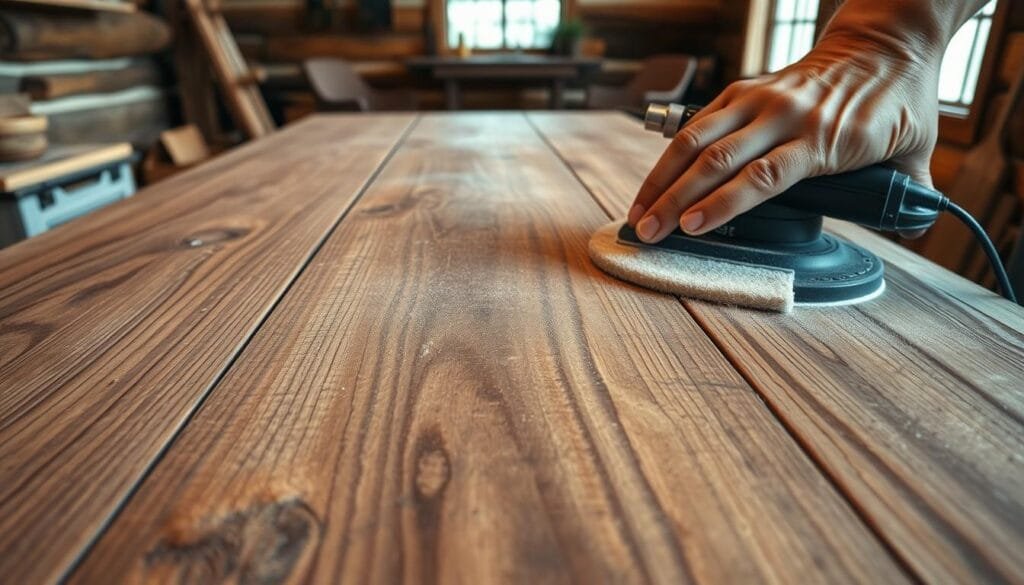
After sanding, wipe the wood with a tack cloth. This critical step removes all dust. A clean surface allows finishes to absorb evenly into the grain.
Selecting Oils, Waxes, and Sealants for Protection
Your choice of finish defines the final look. Clear oil finishes like tung or Danish oil penetrate deeply. They enhance the grain with a natural, matte look.
Stains add color while showcasing the wood’s history. Whitewash techniques create a light, rustic appearance.
Always apply the product along the direction of the grain. Use a clean brush or cloth. Let it soak in, then wipe off any excess.
For protection, apply a sealer after the finish dries. This is vital for high-traffic areas like countertops.
| Product Type | Primary Benefit | Ideal Use | Application Notes |
|---|---|---|---|
| Tung or Danish Oil | Deep penetration, enhances grain | Furniture, wall paneling | Natural matte finish, easy to maintain |
| Polyurethane | Extreme durability | Floors, countertops, tables | Apply 2-3 thin coats; sand between layers |
| Wax | Soft sheen, easy to reapply | Decorative pieces, furniture | Offers less protection but a beautiful feel |
| Water-based Polyacrylic | Eco-friendly, low odor | Interior projects, kid’s rooms | Won’t yellow over time, quick drying |
Tools and Techniques for Efficient Milling and Jointing
Proper tools transform the challenge of milling irregular salvaged lumber into a manageable task. The right equipment ensures straight, consistent cuts while preserving the material’s unique character.
Essential tools include table saws, bandsaws, planers, and jointers. For those without a dedicated jointer, creative jig solutions work wonderfully. Clamps and precise measuring tools complete your setup.
DIY Jointer Jigs and Table Saw Methods
A simple jointer jig uses plywood’s factory-straight edge as a reference surface. Attach a second piece on top with toggle clamps to secure your lumber.
This setup lets your table saw’s rip fence follow the straight plywood edge rather than the wood’s irregular surface. Shim your piece to prevent movement during cutting.
Carefully align each piece to trim undesired sections first. This method creates perfectly straight edges on even the most curved materials.
Using Bandsaws for Consistent Cutting
Bandsaws excel with thicker lumber, often requiring just one cut instead of two. Build a simple sled from plywood cut slightly shorter than your blade-to-fence distance.
Attach a backboard and screw your wood piece directly to the sled. This eliminates all movement during cutting. Add a clamped fence if your saw lacks one.
Once you create two flat, perpendicular edges, they become reference surfaces for remaining cuts. This efficient workflow means you won’t need jigs for every piece. Ensure your bandsaw has adequate depth capacity for your milling project.
| Essential Tool | Primary Function | Best For | Setup Tip |
|---|---|---|---|
| Table Saw with Jig | Creating straight edges | Initial milling of irregular pieces | Use plywood’s factory edge as guide |
| Bandsaw | Cutting thicker stock | Resawing and curved cuts | Build simple sled for stability |
| Planer | Achieving consistent thickness | Final dimensioning | Always joint one face first |
| Quality Blades | Clean cutting | All milling operations | Invest in carbide-tipped blades |
Select tools appropriate for your project’s scale. Quality blades handle the density and potential hidden metal in salvaged materials. These techniques make your milling process efficient and effective.
Understanding the History and Benefits of Reclaimed Wood
There’s something special about working with materials that have already lived a full life before reaching your hands. Each plank carries a unique history from decades or even centuries past.
These materials represent the craftsmanship of earlier generations who built structures that stood the test of time. The superior quality comes from old growth timber harvested when loggers selected the finest trees.
Exploring Character and Eco-friendly Advantages
The natural aging process creates distinctive patina, color variations, and surface textures. This gives each piece one-of-a-kind visual appeal that new lumber cannot match.
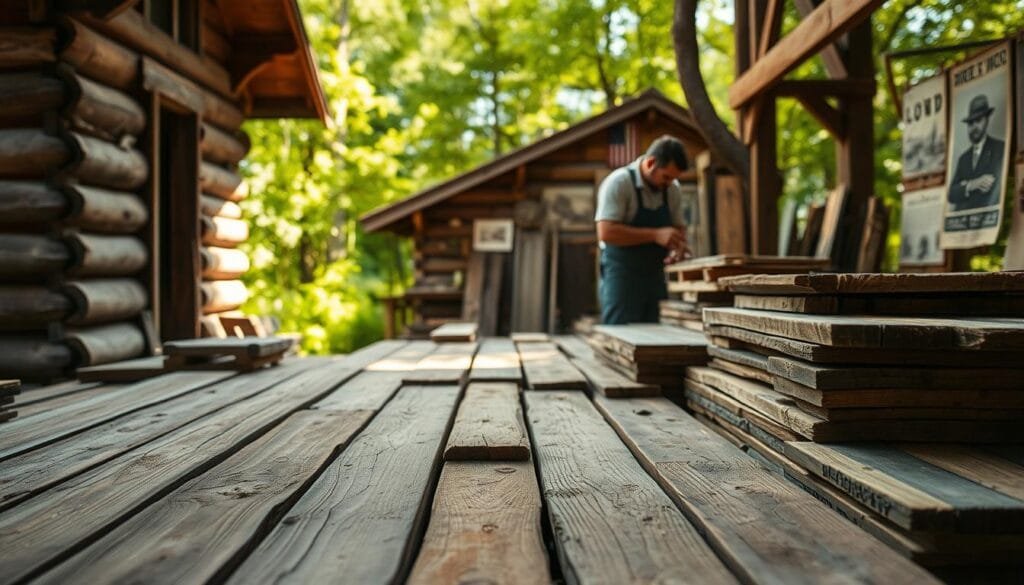
Using salvaged material offers significant environmental benefits. It reduces demand for new lumber and prevents usable wood from ending up in landfills.
The embodied energy—the life the wood has lived—adds intangible value. People seeking authentic furniture and cabin projects appreciate this meaningful connection to the past.
| Benefit Type | Historical Value | Environmental Impact | Practical Advantage |
|---|---|---|---|
| Character & Appearance | Unique patina and weathering | Preserves forest resources | Superior stability from aging |
| Material Quality | Old growth timber density | Reduces carbon footprint | Less warping after installation |
| Long-term Value | Connection to craftsmanship | Landfill diversion | Durability from natural seasoning |
Choosing salvaged lumber is both sustainable and historically significant. It connects modern builders to quality from a bygone era while creating spaces with genuine character. For more detailed information, explore this comprehensive reclaimed wood guide.
Bringing Your Cabin Vision to Life
Embarking on a building project with history-rich lumber creates spaces with soul. You now have comprehensive knowledge to transform weathered pieces into beautiful cabin features.
Consider starting with smaller furniture projects to build confidence. This approach lets you practice removing nails and metal fasteners before tackling larger installations. Check out inspiring DIY projects with reclaimed wood for creative ideas.
Despite the time investment, the results are truly rewarding. Each piece tells a story through its distinctive grain and natural patina. Modern products cannot replicate this authentic look.
Your cabin will showcase sustainability and craftsmanship. The journey from old barn to finished space creates a meaningful connection to history. Take that first step toward your unique vision today.