Skip a season of maintenance on log cabins, and you’ll pay for it in rot, cracked chinking, or a stain job that’s already peeling by the time you notice. Log cabins aren’t “build it and forget it” structures. They’re wood, sitting outside, taking on sun and rain and snow year-round, and they need attention on a schedule, not just when something looks obviously wrong.
If you’re mid-build or just moved in, this is the maintenance rhythm I’d actually follow, based on what I’ve seen go wrong on real cabins, not just what a product label tells you to do.
Why Log Cabins Aren’t a One-and-Done Build
A log cabin needs ongoing care because logs move, expand, and contract with humidity and temperature, and the finish protecting them breaks down under UV exposure every single year. Treat it as maintenance-free and you’ll see checking, gray weathered wood, and gaps in your chinking within two or three seasons.
The biggest myth I run into is that a good initial build means you’re set for a decade. Wood movement doesn’t stop once the walls are up. Logs keep shrinking slightly as they dry out over the first 2-3 years, and that alone opens up chinking joints that were tight on day one.
Sun exposure is the other piece people underestimate. South and west-facing walls take way more UV than the north side, and you’ll often see stain fail on those exposures a full year or two before the shaded walls need attention. That’s not a flaw in your product choice, that’s just physics.
The upside: none of this requires a contractor most of the time. A homeowner with a ladder, a garden hose, and a weekend can handle the bulk of it.
The Seasonal Maintenance Schedule That Actually Works
Tying maintenance to the seasons, not to a random “every few years” reminder, is the difference between catching problems early and finding rot behind the trim in July.
Spring: Inspection and Cleanup
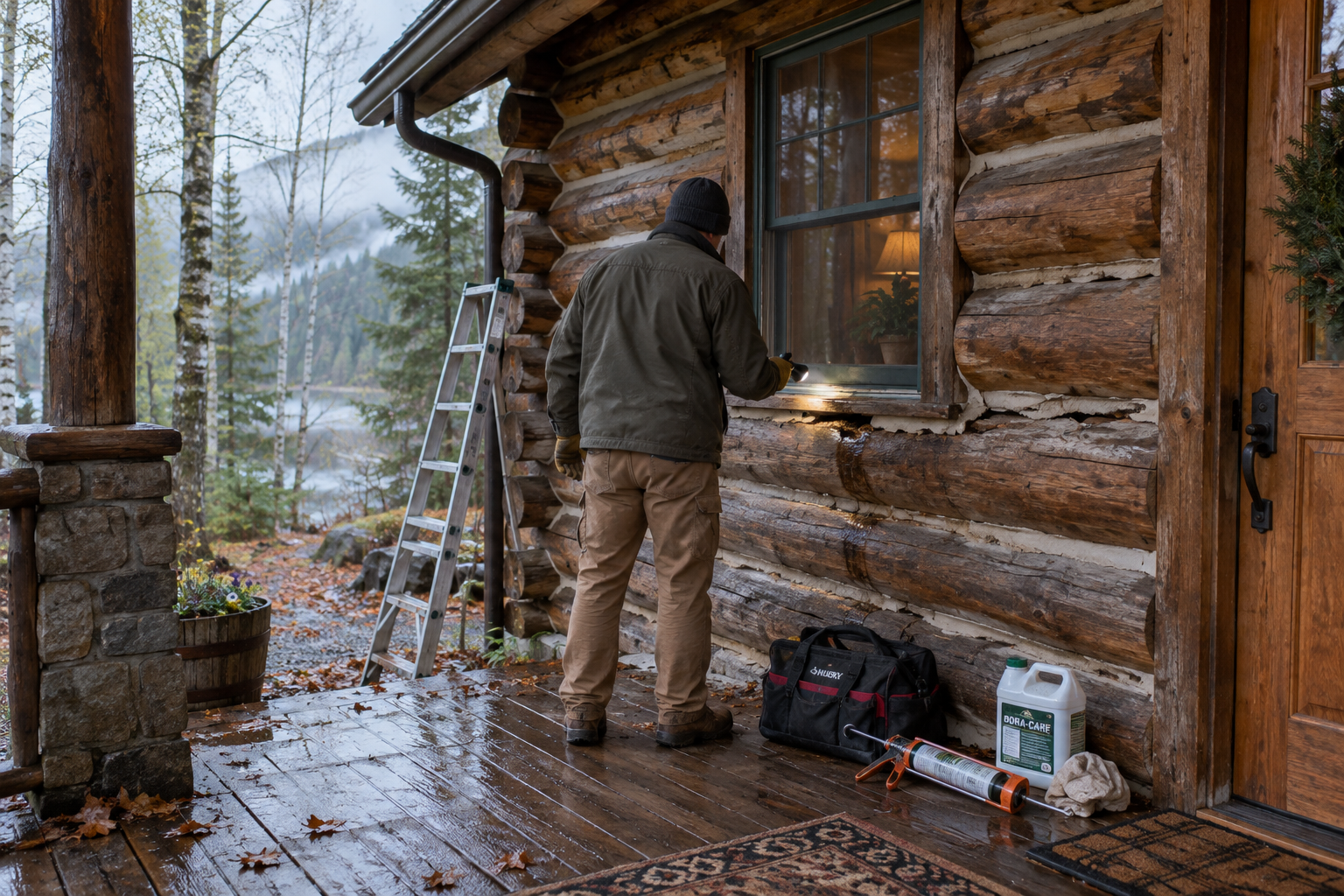
Spring is when you walk the whole exterior after winter and look for damage snow and ice left behind. Check gutters for debris, look at roof flashing, and inspect chinking joints for any new cracks that opened up from freeze-thaw cycling.
Summer: Cleaning and Resealing
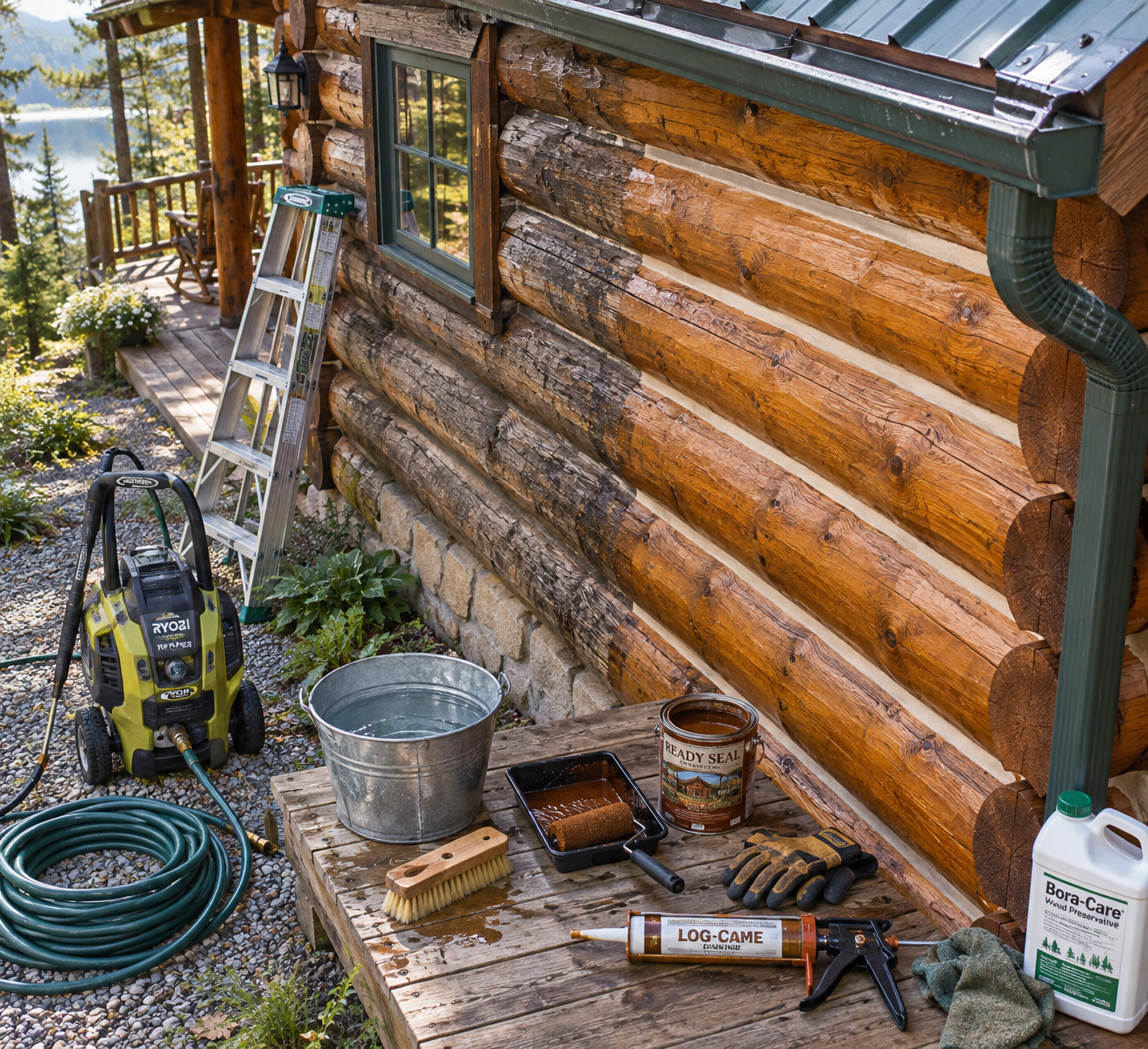
Summer, especially June through August when humidity is lower in most of the country, is your window for power washing and restaining. This is also when borate treatments and any chinking repairs should get done, since the wood needs to be dry and warm for the products to cure right.
Fall: Sealing Gaps Before Winter
Before the first hard freeze, recheck caulking around windows and doors and touch up any chinking that’s still soft or cracked from summer work. This is your last real chance before snow load and ice make repairs harder.
Here’s the yearly rhythm laid out plainly:
Late winter/early spring: full visual inspection of logs, roof, and foundation for storm or ice damage.
Spring: clear gutters and downspouts, check for standing water near the foundation.
Early summer: power wash logs (low pressure, wide fan tip) and let dry 48-72 hours.
Mid-summer: apply stain/sealant to any faded or bare sections once fully dry.
Late summer: repair or replace failing chinking and caulk joints.
Fall: apply borate treatment to any exposed or vulnerable end-grain and sill areas.
Late fall: final seal check on windows, doors, and roof penetrations before winter.
Stain, Chinking, and Rot: The Three Jobs You Can’t Skip
These three tasks protect the wood itself, and skipping any one of them is how a solid cabin turns into a rot repair project within five years.
Restaining on a Preventive Timeline, Not a Reactive One
Don’t wait until the stain visibly peels to reseal. Most semi-transparent log cabin stains need reapplication every 2-3 years, and solid-body stains can stretch to 4-5 years, but sun-heavy walls often need it sooner. Waiting until failure means the wood has already gone gray and started absorbing moisture unprotected, which costs you sanding time you wouldn’t have needed otherwise.
The finish matters as much as the timing. A film-forming finish that doesn’t let the wood breathe will trap moisture inside the log instead of letting it escape, and that’s a direct path to hidden rot. I’d stick with a breathable, penetrating oil-based or water-based log stain made for full-log construction, not a generic deck stain.
Chinking Cracks Are an Open Door for Pests and Water
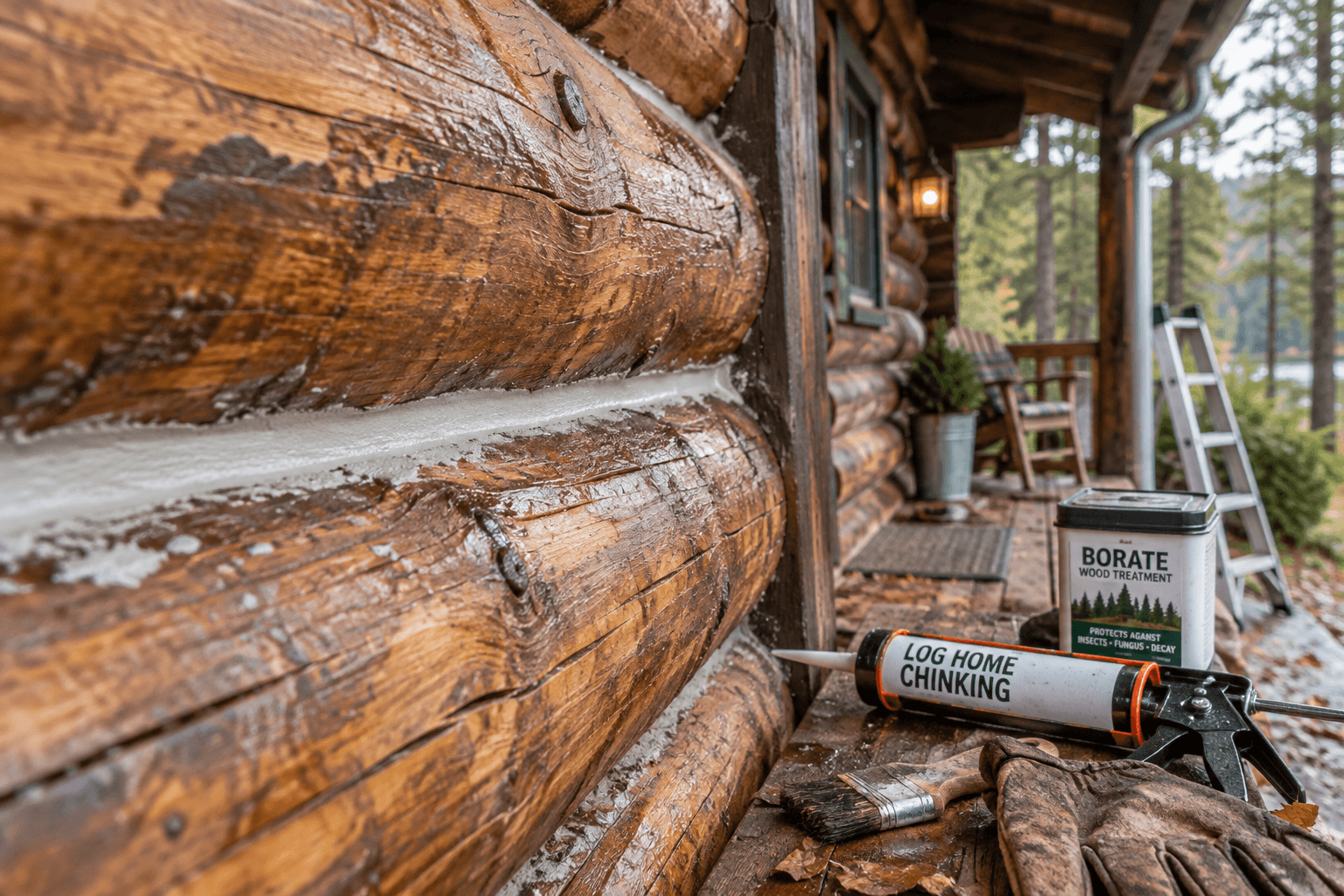
Any crack in your chinking wider than about 1/8 inch is worth caulking or patching before the next rain. Once chinking splits, water tracks behind it into the wall cavity, and that same gap is an entry point for carpenter ants, wood-boring beetles, and rodents looking for a warm winter spot.
Check chinking at least twice a year, spring and fall, running your hand along horizontal joints where movement shows up first.
Rot and Insect Prevention Start at the Sill
Sill logs, the bottom course sitting closest to the foundation, take the most moisture abuse of any part of the structure. Ground splashback, snowmelt, and poor grading around the foundation all target that bottom log first. A borate-based wood treatment applied to sill logs and any exposed end-grain is one of the cheapest insurance policies you can buy, and it works against both rot fungus and wood-boring insects without the toxicity concerns of older pesticide treatments.
Moisture, Drainage, and the Power Washing Mistake Almost Everyone Makes
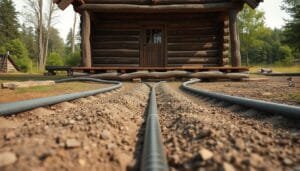
Poor drainage around the foundation is the single biggest cause of sill log rot, and it’s almost entirely preventable with grading and gutter work most owners can do themselves in a weekend.
Grade the soil around your cabin so it slopes away from the foundation at roughly a 5% slope for the first 10 feet, and keep gutters clean so runoff isn’t dumping straight down the wall. Splash blocks or a simple French drain on the downhill side handle the rest in most setups.
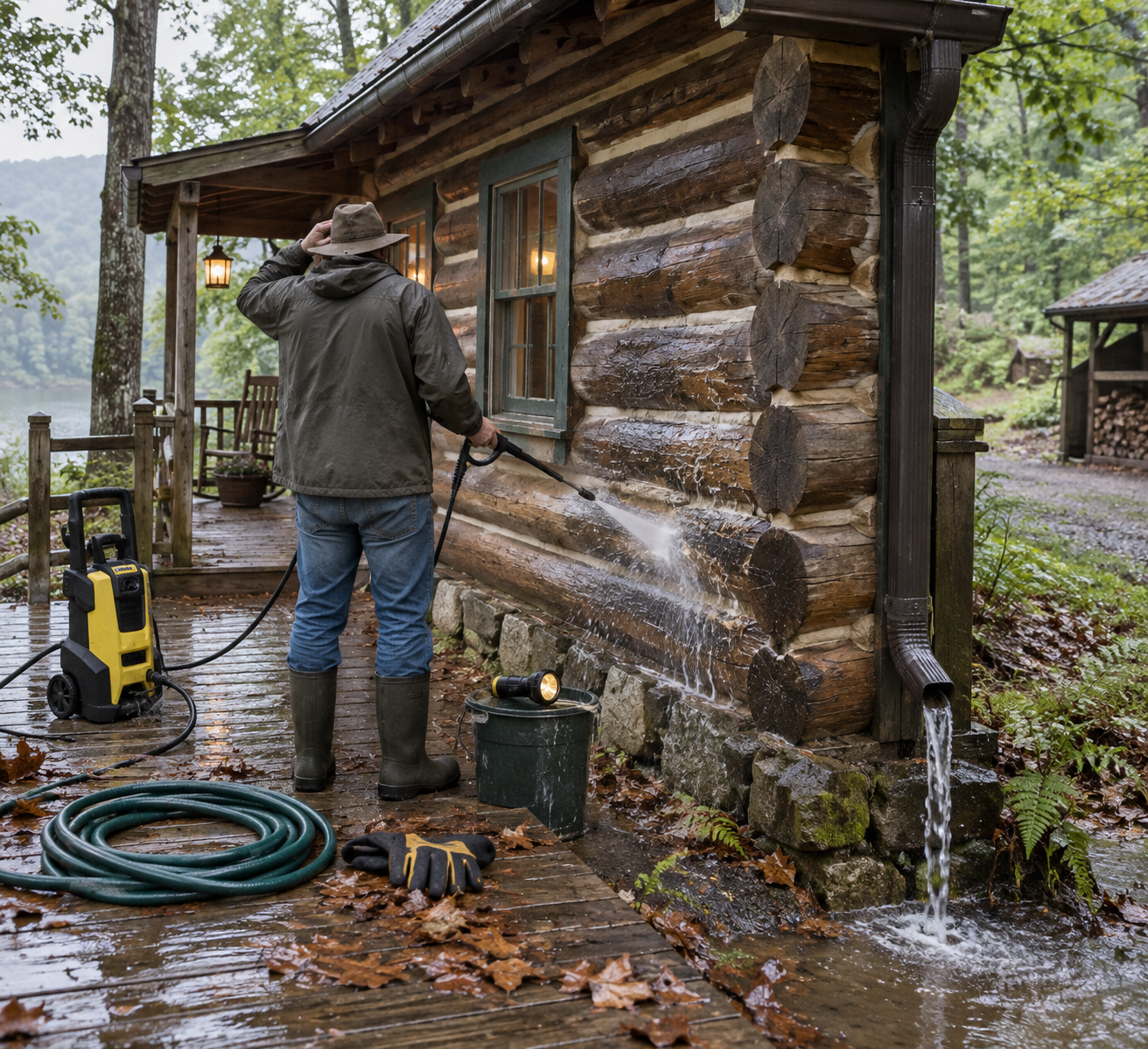
Power washing is where I see people cause the exact damage they’re trying to prevent. Running a pressure washer at 3,000+ PSI straight into log seams forces water past the chinking and into the wall cavity, and that moisture doesn’t dry out fast, especially in shaded areas. Keep pressure under 1,500 PSI, use a 25-40 degree fan tip, and hold the nozzle at least 12 inches from the surface, working with the grain, not straight into seams.
For anyone looking at wood treatment options in more depth, the sealant guides over on cabinlodger.com break down which finishes actually hold up in different climates, which is worth a look before you commit to a product for the whole cabin.
Here’s a quick comparison of common finish types and how they hold up:
Finish Type
Reapplication Interval
Breathability
Best For
Semi-transparent oil stain
2-3 years
High
Most climates, shows wood grain
Solid-body stain
4-5 years
Moderate
Heavy UV exposure, sun-heavy walls
Film-forming varnish/poly
1-2 years (often peels early)
Low
Not recommended for full logs
Borate treatment (sill/end-grain)
5+ years
N/A (below-surface)
Rot and insect prevention at ground level
Frequently Asked Questions
How often does a log cabin actually need to be restained?
Most log cabins need restaining every 2-3 years with a semi-transparent stain, or 4-5 years with a solid-body stain. South and west-facing walls under direct sun usually need it a year or two sooner than shaded sides.
Can I do log cabin maintenance myself, or do I need a professional?
You can handle inspection, cleaning, staining, chinking touch-ups, and borate treatment yourself with basic tools and a weekend or two per year. Call a pro for structural sill log replacement or serious termite infestations found during inspection.
What’s the biggest mistake first-time cabin owners make with maintenance?
Waiting until stain visibly fails or chinking is cracked wide open before acting. By then moisture’s already gotten into the wood, turning a simple resealing job into a repair project involving sanding, spot-treating, or replacing damaged logs.