
Building your dream retreat on a hillside or mountain property is rewarding. It comes with unique challenges, though. Imagine those stunning sunrise views and the peaceful seclusion that elevation offers.
Creating access roads for steep cabin sites needs careful planning and budgeting. The hurdles are real—like getting heavy equipment up steep slopes and managing weather delays. But, with proper planning, these challenges can be overcome.
People choose sloped locations for good reasons. Mountain terrain planning offers breathtaking views, natural privacy, and a true connection with nature. This makes cabin living special.
This guide covers everything about remote property access. You’ll learn from site evaluation to long-term maintenance strategies. You’ll make confident decisions about your project. Whether building new pathways or improving existing ones, you’re in the right place. Here, you’ll find safe, functional, and cost-effective solutions.
Understanding the Challenges of Building on Steep Terrain
Building roads on steep terrain is very different from flat ground. Gravity is always working against you. Every load of gravel wants to roll downhill, and heavy equipment operators need nerves of steel to maneuver bulldozers on slopes that would make most people dizzy.
The first challenge is getting equipment to the site. That concrete mixer truck your contractor relies on for flat-ground projects? It might refuse to make the climb to your property. Many delivery drivers won’t risk their vehicles on unfinished mountain roads, which means you’ll need alternative solutions like smaller equipment or even helicopter delivery in extreme cases.
Heavy machinery faces serious limitations on steep grades. Excavators can only operate safely on certain angles before they risk tipping over. Bulldozers lose traction on loose soil, and grading equipment needs stable platforms to work effectively. These limitations mean work proceeds slower than on flat ground, and time equals money in construction.
Weather conditions amplify every challenge. A rainstorm that would barely slow down a flat-ground project can turn your mountainside construction site into a mudslide waiting to happen. Soil stability becomes critical when saturated earth starts moving downhill. Many mountain construction projects halt completely during wet seasons because the risks simply outweigh any progress you might make.
Here’s something many people don’t consider until they’re knee-deep in the project: utility installation on steep terrain costs significantly more. Running power lines, water pipes, and septic systems uphill requires specialized techniques. You can’t just dig a trench like you would on flat land. Every utility line needs proper anchoring and protection from erosion and soil movement.
Material delivery presents its own set of headaches. Lumber trucks struggle with tight switchback turns. Concrete needs to be pumped uphill, which requires special equipment and adds considerable expense. Even something as simple as getting roofing shingles to your cabin site becomes a logistical puzzle when standard delivery vehicles can’t make the journey.
| Challenge Category | Flat Terrain Impact | Steep Terrain Impact | Cost Multiplier |
|---|---|---|---|
| Equipment Access | Standard machinery arrives easily | Specialized equipment required, limited options | 1.5x to 2.5x |
| Material Delivery | Direct truck access to site | Multiple transfers, smaller loads, specialized vehicles | 1.3x to 2x |
| Weather Delays | Minimal project interruption | Extended shutdowns during rain, snow, freeze | 1.2x to 1.8x |
| Soil Stabilization | Basic grading sufficient | Retaining walls, drainage systems, erosion control | 2x to 4x |
But here’s the silver lining that makes all these challenges potentially worthwhile: sloped properties typically sell for 20-40% less than comparable flat land. That discount often exceeds the construction premium you’ll pay for hillside cabin access. If you can purchase mountain property at a significant discount, the extra construction costs might not be as bad.
The key is careful planning from the start. Rushing into steep terrain road building without proper site assessment and expert guidance will drain your budget fast. But, working with experienced contractors who understand mountainside construction can help you avoid costly mistakes and unnecessary expenses.
Soil composition on slopes varies dramatically even within a single property. One section might have stable bedrock close to the surface, while another area could have deep layers of loose soil prone to sliding. This variability means you can’t assume conditions will remain consistent as you build your access road. Professional soil testing becomes essential.
Ongoing maintenance requirements also differ significantly from flat-ground driveways. Erosion happens constantly on slopes, and your access road will need regular attention to remain passable. Drainage systems require monitoring and cleaning, and road surfaces need more frequent repair. These long-term costs should factor into your decision-making process before you commit to a sloped property.
Despite all these construction challenges on slopes, thousands of homeowners successfully build beautiful mountain retreats every year. The spectacular views, privacy, and connection with nature that steep terrain provides often justify the extra effort and expense. Understanding these challenges upfront helps you budget appropriately and approach your project with realistic expectations.
Site Assessment and Topographical Analysis
Knowing your land well before starting a project is key. A thorough site evaluation helps make smart decisions about road placement and budget. Skipping this step can lead to costly mistakes.
Professional site assessment involves many specialized analyses. Each one reveals different aspects of your terrain that impact sloped property access solutions.
This phase is like gathering intelligence before a battle. Knowing your land’s challenges and opportunities helps plan routes that last. It prevents problems caused by heavy rain.
Conducting a Professional Land Survey
Hiring a licensed surveyor gives you accurate data. Professional topographical analysis uses special equipment to create detailed maps. These maps help plan safe, efficient access routes.
Surveyors find boundary markers and locate underground utilities. They also identify easements and right-of-way restrictions that affect road placement.
Topographical maps show elevation changes and slope steepness. Tightly spaced contour lines indicate steep grades. Wider spacing shows gentler slopes.
Professional surveys cost between $500 and $3,000. This investment prevents costly mistakes and ensures compliance with regulations.
Your surveyor should provide both digital and paper formats. Digital files integrate with design software used by engineers and contractors. Keep these documents safe for future reference.
Identifying Soil Types and Stability Issues
Soil composition affects your road foundation’s performance. Different soil types behave differently under various conditions. Understanding your soil helps choose the right cabin site grading techniques.
Clay soils retain water and expand when wet. They shrink when dry, causing movement that can crack pavement. Clay requires extra drainage and compaction.
Sandy soils drain quickly but don’t compact as firmly. They shift easily under vehicle weight. Sandy terrain often needs geotextile reinforcement.
Rocky soils provide excellent stability once cleared and graded. They’re expensive to excavate but can serve as natural retaining structures.
Loamy soils offer the best natural building conditions. They drain well and compact decently. If you have loam, construction will be simpler and less expensive.
| Soil Type | Drainage Quality | Stability Rating | Special Considerations |
|---|---|---|---|
| Clay | Poor (retains water) | Low when wet | Requires extensive drainage systems |
| Sand | Excellent (drains quickly) | Medium (shifts easily) | Needs geotextile reinforcement |
| Rock | Excellent (minimal absorption) | Very High | Expensive excavation, potentially blasting |
| Loam | Good (balanced drainage) | High | Ideal for construction, minimal treatment |
A simple field test helps identify your soil type. Grab a handful of moist soil and squeeze it. Clay forms a tight ball, sand falls apart, and loam crumbles with light pressure.
For steep terrain projects, consider hiring a geotechnical engineer. They conduct soil boring tests to reveal soil composition and identify stability issues.
Evaluating Drainage Patterns and Water Flow
Water is the biggest threat to mountain roads and driveways. Understanding how water moves across your property prevents washouts and erosion. This requires observation over time, not just a single site visit.
Study your site to determine where water and mud have gone in the past. Look for erosion channels and sediment deposits. Visit your site during a heavy downpour to see how water behaves.
Natural drainage follows the path of least resistance down slopes. Water concentrates in low spots and natural channels. Your access road will likely cross these paths, requiring culverts or bridges.
A simple string, tape measure, and inexpensive “string level” can help determine your home site’s slope. Measure the distance from the string to the ground. A 15 percent slope means a 15-foot elevation change for every 100 feet of horizontal distance.
Understanding slope percentages helps predict water velocity. Steeper slopes mean faster-moving water with greater erosive power. According to USDA Forest Service guidelines, slopes over 30 percent require special erosion control measures.
Spring snowmelt often produces the highest water volumes. Visit during this period to see maximum flow conditions. Mark these points on your property map for engineers to design adequate drainage structures.
Underground water movement is also important. Springs, seeps, and high water tables create hidden challenges. Look for unusually lush vegetation in specific areas—this often indicates underground water sources that could undermine road foundations.
Analyzing Vegetation and Rock Formations
Existing plants and geological features provide valuable clues about your terrain. A thorough vegetation and rock analysis informs both your topographical analysis and your cabin site grading strategy.
Large trees with extensive root systems stabilize soil on slopes. Removing these trees during construction eliminates that natural reinforcement, potentially triggering erosion. Whenever possible, plan routes that preserve major root systems near the road edge.
Certain plant species indicate specific soil and moisture conditions:
- Willows and cattails signal wet areas with high water tables or poor drainage
- Pine trees typically grow in well-drained, slightly acidic soils
- Ferns and moss indicate shaded areas with consistent moisture
- Native grasses suggest stable soil with moderate drainage
Rock formations require careful evaluation. Exposed bedrock provides excellent road foundation material once the surface is graded. Buried rock layers discovered during excavation increase costs significantly.
Look for rock outcroppings along your proposed route. These indicate bedrock depth and composition. Large boulders on the surface suggest more subsurface rock that may require removal or blasting.
Sometimes rock formations become assets. Natural rock walls can serve as retaining structures with minimal modification. Building your road against a rock face on the uphill side reduces the need for constructed retaining walls.
Document significant vegetation and rock features with photographs from multiple angles. Share these with your contractor during planning discussions. Understanding what needs removal versus what can be preserved or incorporated into the design saves money and protects your land’s natural character.
Professional arborists can assess tree health and root system extent if you’re trying to preserve specific specimens. Their input helps determine safe distances between road edges and valuable trees you want to keep.
Planning Access Roads for Steep Cabin Sites
Before starting your cabin driveway, learn about mountain access routes. This knowledge can save you thousands and prevent future problems. Good road planning ensures safe access now and for years to come. It affects construction costs and daily convenience.
Start by understanding your needs and local conditions. Will you visit all year or just seasonally? Do you need space for more than one vehicle? These questions shape your road design, from width to surface materials.
Road Width and Clearance Requirements
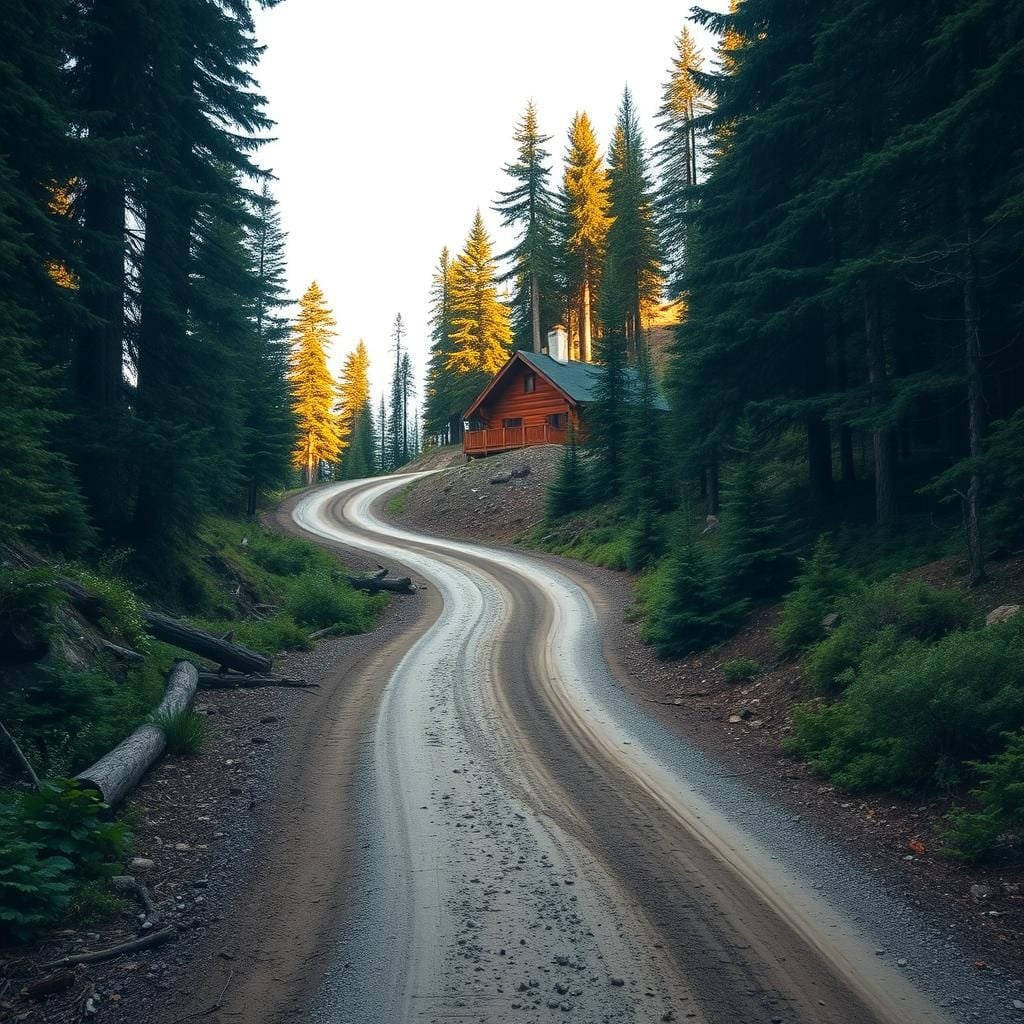
The standard width for two-way traffic is 12 feet. But, many access roads for steep cabin sites work well at 10 feet wide with pull-offs. This narrower option can cut costs by 30% or more, thanks to less earthwork needed.
Space pull-offs every 200-300 feet. Make them 14-16 feet wide for easy passing. This ensures comfort for all vehicles.
Don’t forget about horizontal clearance. You need at least 2 feet of clearance on each side for mirrors and to avoid vegetation damage. Large vehicles need 14 feet of total width for easy access.
Vertical clearance is also important. Aim for a minimum of 14 feet of overhead clearance. This allows for personal vehicles, delivery trucks, RVs, and construction equipment.
Calculating Optimal Road Grades
Grade calculation shows how steep your driveway is. A 10% grade means the road rises 10 feet for every 100 feet of horizontal distance. This affects traction, drainage, and comfort.
To calculate grade, divide elevation change by horizontal distance and multiply by 100. For example, a 50-foot elevation gain over 400 feet horizontally is a 12.5% grade. This is comfortable for most vehicles and weather.
Grades over 15% make driving harder. Uphill acceleration is slow, and braking is tricky. Winter ice makes these grades dangerous. For steeper slopes, consider switchbacks or better surface materials.
| Grade Percentage | Rise per 100 Feet | Driving Experience | Winter Accessibility |
|---|---|---|---|
| 5-8% | 5-8 feet | Barely noticeable, comfortable for all vehicles | Good with minimal treatment |
| 10-12% | 10-12 feet | Noticeable climb, manageable for most vehicles | Fair with regular maintenance |
| 15-18% | 15-18 feet | Steep climb, requires good traction | Challenging, needs frequent clearing |
| 20%+ | 20+ feet | Very steep, 4WD recommended | Poor, may be impassable without chains |
Planning for Emergency Vehicle Access
Fire trucks and ambulances need more space than cars. Most fire departments require a minimum inside turning radius of 28 feet and an outside radius of 50 feet. Talk to your local fire marshal early to meet these requirements.
Fire trucks can weigh 30 tons. Your road must support this weight without collapsing. Proper base preparation and drainage are key to prevent washouts.
Think about emergency response needs. Keeping the distance between the ambulance and your cabin under 150 feet is helpful. The same goes for firefighters carrying equipment uphill.
Choosing Between Single and Multiple Access Points
A single access road is cheaper to build and maintain. But, a second access point adds safety, which is important in wildfire areas. Some insurance companies offer discounts for properties with two exits.
Multiple mountain access routes offer flexibility. A secondary path can be used if the main road is blocked. This doesn’t need to be as good as the main road, but it’s cheaper.
Consider the cost against the peace of mind it brings. Building a second road adds 40-60% to your budget. But, it’s worth it if your cabin is far from the main road or in a landslide or flood area.
The key to good road planning is making these decisions early. Walk the property with a contractor who knows steep terrain. Discuss your needs, budget, and maintenance plans. These early conversations will guide your decisions and create access roads for steep cabin sites that last for generations.
Switchback Design and Implementation
Switchbacks turn steep hills into drivable roads. They zigzag up the slope, making it easier for vehicles to climb. This design helps avoid the dangers of straight, steep roads.
For centuries, switchbacks have been used in steep terrain road building. They are key to safe and stable roads on hillsides. Knowing when to use them is essential for a safe driveway.
When to Use Switchbacks vs Straight Grades
Straight roads are simpler to build and drive on. They need less work and are easier to maintain. But, they’re not always possible on steep slopes.
When your slope is too steep, a straight driveway is risky. Vehicles might not make it, and emergency services could refuse to come. This is why switchbacks are needed for very steep slopes.
Switchbacks make steep roads safer by zigzagging across the slope. This reduces the steepness to a safer level. The trade-off is a longer driveway, but it’s safer.
Obstacles like rocks or trees can also guide your road’s path. Rounded corners are better for mountain roads, blending with the landscape.
Proper Turning Radius Calculations
Every vehicle needs space to turn safely. The turning radius is the smallest circle a vehicle can make. Getting this right prevents accidents and costly fixes later.
Passenger cars need about 20 feet to turn comfortably. This allows drivers to make turns without backing up too much. Compact SUVs also fit in this category.
Bigger vehicles need more space. Full-size trucks and delivery vans require 30-35 feet. Service vehicles like propane trucks need 40 feet or more. Plan for the largest vehicle you’ll have delivered to your cabin.
Here’s a practical guide for mountain driveway construction:
- Compact cars and small SUVs: 18-22 feet turning radius
- Full-size pickups and standard SUVs: 30-35 feet turning radius
- Delivery trucks and service vehicles: 35-40 feet turning radius
- Emergency vehicles (fire trucks): 45-50 feet turning radius
- Construction equipment and moving trucks: 40-55 feet turning radius
Ignoring turning radius can lead to accidents. Drivers may skid or slide off the road. The cost of repairs can be much higher than the initial savings.
Spacing Between Switchback Sections
Deciding how far apart switchbacks should be is key. Too close wastes money and is complicated. Too far defeats the purpose of reducing steepness.
Effective steep terrain road building spaces switchbacks 50-100 feet apart. The exact distance depends on the slope and desired grade. Steeper slopes need closer spacing for a manageable grade.
Calculate spacing by working backward from your desired grade. For example, if you have a 30-foot elevation change and want a 10% grade, you’ll need 300 feet of horizontal distance. Divide this into sections that fit your terrain.
| Slope Angle | Switchback Spacing | Resulting Grade | Best Use Case |
|---|---|---|---|
| 20-25% | 50-60 feet | 10-12% | Very steep hillsides, tight spaces |
| 25-35% | 60-80 feet | 10-12% | Standard mountain terrain |
| 35-45% | 80-100 feet | 12-15% | Extreme slopes, minimal options |
| 45%+ | Multiple short runs | 12-15% | Requires extensive engineering |
Landing Areas and Turnaround Spaces
Every switchback needs a landing area. This flat section allows vehicles to turn safely. It’s important for both practical and psychological reasons.
Landing areas should be 2-4 feet wider than the road. They should be nearly flat (less than 5% grade). This extra space is safer for all vehicles and lets drivers pause if needed.
Turnaround spaces are also useful. Wider landings every 2-3 switchbacks allow vehicles to turn around. This is handy for backing out or when service vehicles need to reposition.
Banking and Super-Elevation Techniques
Just like highways, your driveway benefits from banking curves. Super-elevation raises the outside edge of a curve. This helps vehicles turn safely by working with physics.
The right banking depends on the curve’s sharpness and speed. Gentle curves need 2-4% cross-slope. Tighter turns may need 4-6% banking for safety.
Here’s how to use banking effectively:
- Start the bank before the curve: Begin raising the outside edge 20-30 feet before the turn
- Maintain consistent slope through the turn: Keep the banking angle steady throughout the curve
- Gradually return to normal: Ease back to flat road surface 20-30 feet after completing the turn
- Ensure proper drainage: Banking should allow water to flow off the road surface
Super-elevation in steep terrain road building reduces the lateral force on vehicles. This makes turns safer and your driveway last longer. It requires precision but is worth it for safety and usability.
Cabin Site Grading Techniques for Mountain Driveways
Building access routes in mountain areas requires proper grading. This makes the difference between a durable path and ongoing maintenance issues. Understanding cabin site grading methods helps create stable driveways that withstand weather and heavy use.
Working with the terrain is key to successful rugged site excavation. Smart contractors use earthwork techniques that balance practicality with sustainability. This approach saves money and creates long-lasting access routes.
Cut and Fill Methods
Cut and fill is the most common method for cabin site grading on slopes. It involves moving material from the uphill side (cut) to the downhill side (fill). This creates a relatively level roadbed carved into the mountainside.
The success of mountain excavation using cut and fill depends on proper compaction. Fill material should be placed in layers, 8 to 12 inches thick, with each layer compacted before adding the next. Dumping large amounts of fill at once creates weak spots that will settle and fail over time.
- Moisture control: Soil should be at optimal moisture content for best compaction results
- Layer thickness: Never exceed 12-inch lifts before compacting
- Equipment selection: Use appropriate compactors for soil type and access conditions
- Testing verification: Conduct density tests to confirm adequate compaction levels
- Slope ratios: Maintain fill slopes no steeper than 2:1 for stability
Building on steep slopes often requires less total excavation than expected. The excavator may need to grade working areas on the sides to position equipment safely. Specialized machines designed for rugged site excavation handle these conditions better than standard equipment.
Benching and Terracing Approaches
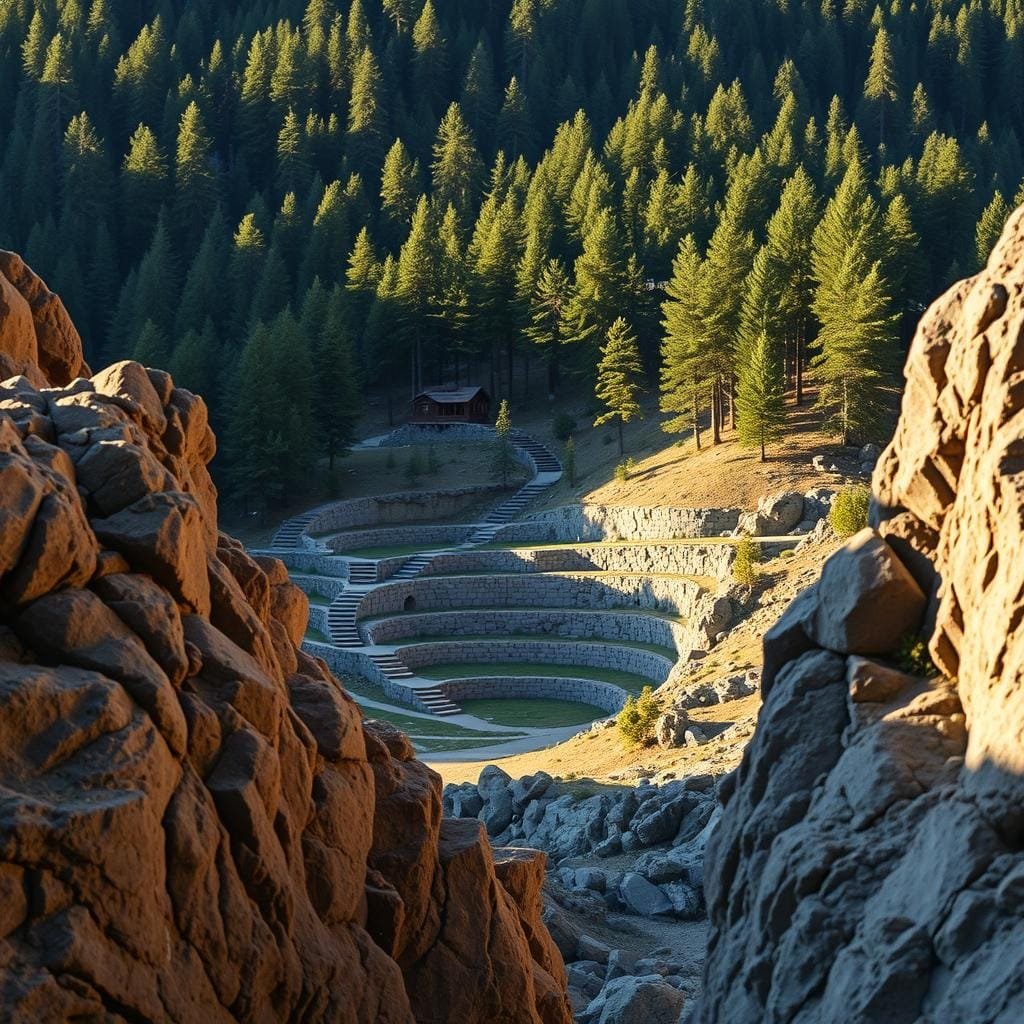
Benching creates stepped levels cut into a hillside, providing stable platforms for roadways. This technique works exceptionally well on very steep terrain where standard cut and fill would require excessive material movement.
Each bench acts as an independent platform, breaking up the slope into manageable sections. The stepped design naturally controls water runoff and reduces erosion risk. Benching also creates more visually appealing results that blend better with mountain landscapes.
The process starts with cutting horizontal shelves into the slope. The back of each bench typically features a slight upward grade for drainage. Spacing between benches depends on soil stability and the intended use of each level.
| Technique | Best Use Case | Advantages | Considerations |
|---|---|---|---|
| Single Bench | Moderate slopes with short driveways | Minimal earthwork, faster construction, lower cost | Limited to slopes under 25%, requires good soil stability |
| Multiple Benches | Very steep terrain with long access routes | Maximum stability, excellent drainage control, reduced erosion | Higher initial cost, more complex planning required |
| Terraced System | Extremely challenging slopes over 35% | Safest option for steep grades, allows equipment access | Most expensive option, longest construction timeline |
Professional mountain excavation contractors often combine benching with retaining structures. This hybrid approach maximizes stability while minimizing the total footprint of disturbance on your property.
Minimizing Soil Disturbance and Environmental Impact
Many cabin owners choose mountain properties for their natural beauty. Smart earthwork techniques preserve that beauty while creating necessary access. Strategic planning reduces environmental impact and often lowers construction costs simultaneously.
Phased construction limits the amount of exposed soil at any given time. Instead of clearing the entire route at once, contractors work in sections. This approach reduces erosion risk and allows revegetation to begin sooner in completed areas.
Timing matters significantly for cabin site grading projects. Scheduling work during dry seasons minimizes soil compaction damage and reduces sediment runoff. Avoiding nesting seasons protects local wildlife populations.
These practices protect the environment during construction:
- Flag trees and vegetation worth preserving before equipment arrives
- Install erosion control measures before earthwork begins
- Stockpile topsoil separately for later use in restoration
- Minimize equipment travel paths to reduce compaction
- Seed exposed areas immediately after rough grading
Balancing Earthwork to Reduce Hauling Costs
Skilled contractors plan cuts and fills so that most excavated material stays on-site. This balance dramatically reduces the expense of hauling dirt away or bringing fill material in. The difference can amount to thousands of dollars on a typical mountain driveway project.
A balanced earthwork plan accounts for several factors. The volume of usable material from cuts must match the volume needed for fills. Not all excavated material works well as fill—rocky or organic material may need to be disposed of separately.
Swell and shrinkage factors also matter. Undisturbed soil expands when excavated but compacts when used as fill. Experienced contractors factor these changes into their calculations. Typically, excavated material swells by 20 to 40 percent but compacts to 90 to 95 percent of its original volume when properly placed.
Strategic planning identifies the best locations for temporary stockpiles of excess material. These stockpiles provide fill for future projects or can reshape other areas of your property. Some owners use excess material to create level building pads, landscaping features, or wildlife habitat improvements.
The financial benefits of balanced earthwork extend beyond hauling savings. Projects that minimize off-site disposal also reduce permit requirements and environmental compliance costs. Your contractor should provide detailed cut and fill calculations before work begins, showing how material will be managed throughout the project.
Permits, Regulations, and Legal Considerations
Building a mountain driveway is more than just moving dirt. It involves navigating a complex web of permits, regulations, and legal requirements. These protect your investment and the environment. Many cabin owners in remote areas think they have fewer rules because they are far from the city. But, the reality is different.
What might seem like bureaucratic obstacles are often lessons learned from past projects. Early contact with your local building department can save you thousands of dollars and months of frustration. These regulations ensure your remote property access remains safe and functional for decades.

Local Jurisdiction Requirements
County and municipal authorities across the United States have different requirements for mountain road construction. Most require building permits for significant grading work, even on your own property. These permits cover excavation, road construction, and work near streams or wetlands.
The permitting process starts with submitting detailed site plans. These plans show your proposed route, grades, and drainage systems. Your local building department reviews these plans to ensure they meet safety standards and local codes. Some counties require professional engineering stamps on plans for roads with grades exceeding 10-12%.
Processing times vary widely depending on your location and project complexity. Simple driveways in straightforward terrain might get approval in 2-3 weeks. More complex projects involving steep slopes or environmental concerns can take several months.
Understanding road regulations and stakeholder feedback processes helps cabin owners anticipate requirements. Many states mandate licensed contractors for certain construction types. Building codes require non-masonry materials to sit at least 8 inches above ground level. Doubling this height protects log walls from rain splash and snow drift damage.
| Permit Type | Typical Cost Range | Processing Time | Key Requirements |
|---|---|---|---|
| Grading Permit | $200-$1,500 | 2-6 weeks | Site plan, erosion control plan, drainage details |
| Road Construction Permit | $300-$2,000 | 3-8 weeks | Engineering drawings, gradient calculations,turnaround specifications |
| Culvert Installation Permit | $150-$800 | 1-4 weeks | Waterway analysis, sizing calculations, environmental clearance |
| Environmental Assessment | $500-$5,000 | 4-12 weeks | Wetland delineation, habitat survey, water quality testing |
Environmental Compliance and Wetland Protection
Federal and state environmental regulations protect wetlands, water quality, and endangered species habitat. These regulations safeguard the natural beauty that attracted you to your cabin site. They also protect your property value long-term.
The U.S. Army Corps of Engineers has jurisdiction over wetlands and navigable waters under the Clean Water Act. If your driveway engineering for cabins involves crossing or filling wetlands, you’ll need their approval. Even small seasonal wet areas may qualify as protected wetlands.
State environmental agencies add another layer of oversight. They regulate stormwater runoff, soil erosion, and impacts to streams and lakes. Most states require erosion and sediment control plans for any project disturbing more than one acre of land. Smaller projects near waterways may also need environmental review.
Violating these regulations carries serious consequences. Fines can reach tens of thousands of dollars per day. You might be required to restore disturbed areas at considerable expense. Worst case, you could face legal action preventing you from completing or using your road.
Property Access Rights and Legal Boundaries
Understanding easements and right-of-way issues prevents future disputes that could block your access. An easement is a legal right to use someone else’s property for a specific purpose—in this case, building and maintaining a road. Right-of-way defines the width and boundaries of that access corridor.
Many remote property access situations involve crossing neighboring land to reach your cabin site. Verbal agreements with friendly neighbors feel sufficient at the moment. But, property changes hands, relationships evolve, and memories differ about what was agreed upon years ago.
Written, recorded easements provide legal protection that survives property transfers. They should specify several key elements:
- Exact location and width of the access corridor, ideally with surveyed boundaries
- Permitted uses including construction traffic, maintenance vehicles, and emergency access
- Maintenance responsibilities clarifying who repairs damage and removes snow
- Cost-sharing arrangements if multiple property owners use the same access route
- Dispute resolution procedures establishing how conflicts will be handled
Working with experienced real estate attorneys and title companies ensures your access rights are properly documented and recorded with the county. This protects your investment and provides peace of mind. Title insurance typically won’t cover properties without clear, legal access.
Some jurisdictions allow prescriptive easements—rights gained through long-term use without formal permission. But, relying on this approach is risky and may not hold up in court. Professional legal advice specific to your situation is worth the investment when dealing with property access issues.
Drainage Solutions for Sloped Property Access
Drainage is key to a long-lasting driveway. Water can wash away gravel and create gullies. For sloped property access, drainage systems are essential, saving money and frustration.
Inadequate drainage leads to mountain driveway failures. A good water management system directs water away from roads. This section covers drainage solutions for mountain access roads.
Installing Culverts and Cross Drains
Culverts are vital for mountain driveways. They intercept water and channel it away. Without them, water can erode the driveway.
The spacing of culverts depends on the slope. For 8-12% slopes, use 150-200 feet spacing. For steeper slopes, space them every 100-150 feet.
Three main culvert materials are available:
| Material | Lifespan | Cost Range | Best Application |
|---|---|---|---|
| Corrugated Metal Pipe | 20-40 years | $8-$15 per foot | Standard installations with moderate water flow |
| HDPE Plastic Pipe | 50-100 years | $12-$25 per foot | High-durability needs and corrosive soil conditions |
| Reinforced Concrete | 50-75 years | $20-$45 per foot | Heavy load areas and permanent installations |
Cross drains are installed at angles across the road. They help water transition smoothly. Install them at 30-45 degrees for best results.
Always extend culverts two feet beyond the road edge. This prevents erosion. Use gravel bedding to prevent settling.
Ditch Design and Water Diversion Systems
The roadside ditch is critical for drainage. It intercepts water before it reaches the road. Proper design is essential.
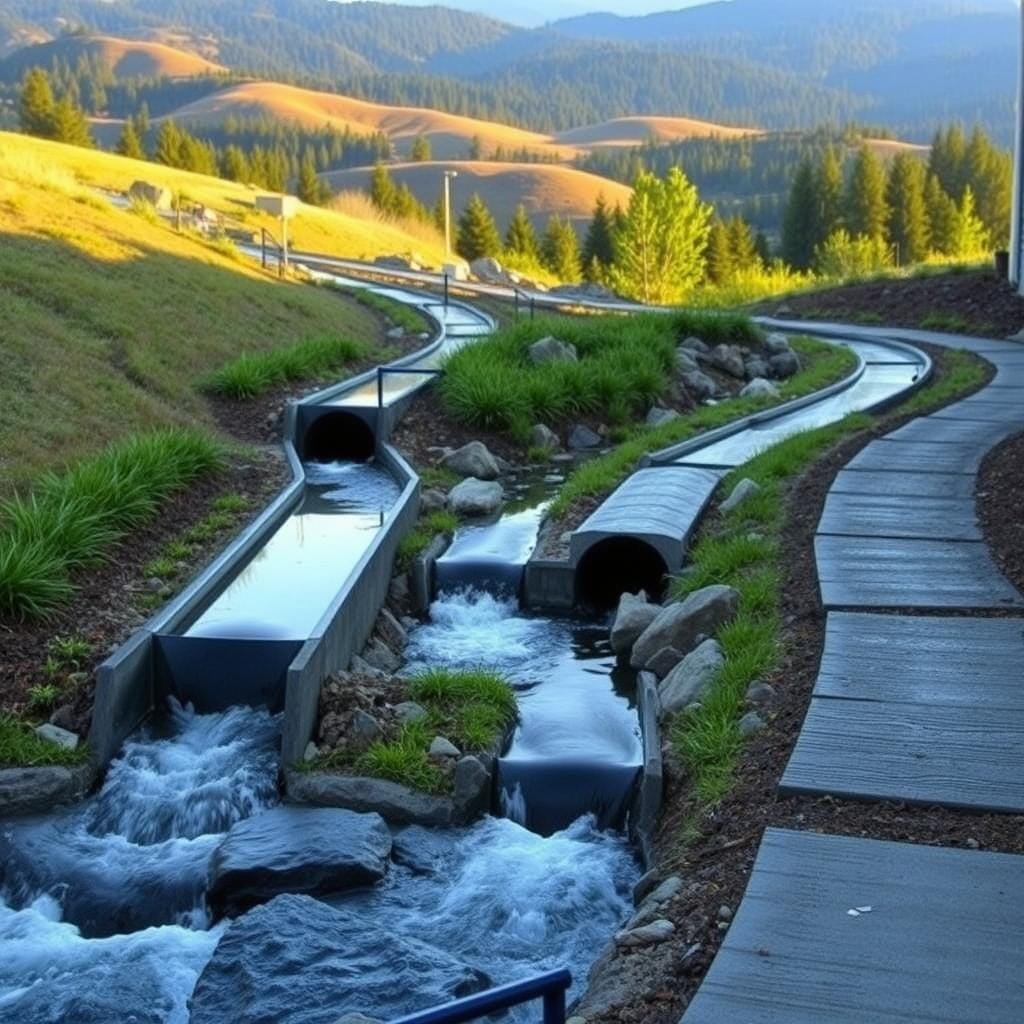
Ditch dimensions are important. For residential roads, dig 18-24 inches deep and 24-36 inches wide. The slope should be 2:1 on the uphill side.
Line ditches with erosion-resistant materials for high water flow. Options include crushed stone, riprap, concrete, and geotextile fabric.
Water bars direct water into ditches. Install them every 50-100 feet on steep grades. Angle them 15-30 degrees for effectiveness.
Connect ditches to natural drainage paths. Never end ditches abruptly. Transition them into vegetated areas or rock-lined channels.
French Drains and Underground Drainage
French drains are great for underground drainage. They use perforated pipe to collect subsurface water. They’re useful near foundations and for clean appearances.
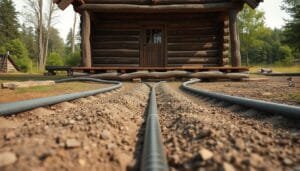
Start by excavating a trench 12-18 inches wide and 18-24 inches deep. The trench bottom should slope toward the discharge point. Line the trench with geotextile fabric.
Add six inches of clean gravel as a base layer. Place perforated drain tile on this gravel. Surround the pipe with gravel until six inches from ground level. Wrap the fabric over the top and backfill with soil.
French drains protect foundations on sloped sites. They intercept water before it reaches the foundation. Building codes require land to slope away from foundations.
Calculating Culvert Size for Peak Water Flow
Proper culvert sizing prevents water buildup. The Rational Method helps calculate peak flow. It considers runoff coefficient, rainfall intensity, and watershed area.
Once you know peak flow, select culvert size from tables. Use 12-inch culverts for up to 2.5 cubic feet per second. For higher flows, use larger sizes.
Size up when unsure. The cost difference is small compared to replacing an inadequate system. Many contractors use 18-inch minimum diameter for mountain applications.
Preventing Roadway Washouts
Washouts result from predictable failure patterns. Preventive measures during construction save money and frustration.
Road surface crowning is a key defense. The center should be 3-4 inches higher than the edges. This causes water to sheet off toward ditches.
Adequate base depth is essential. On steep sections, use 12-18 inches of angular crushed stone. This distributes loads and prevents softening during wet periods.
Place turnouts and drainage relief points to prevent water buildup. Every 200-300 feet, create a low point that directs water toward a reinforced outlet. Armor these outlets to prevent erosion.
Regular maintenance prevents small issues from becoming major washouts. Check for standing water and erosion after heavy rains. Clean culverts and ditches before winter and address minor erosion immediately.
A property owner in the Colorado Rockies initially installed 12-inch culverts. After the first spring melt, three sections washed out, requiring $18,000 in repairs. The rebuild used 18-inch culverts and proper road crowning. Five years later, the road remains intact despite heavier storms.
Erosion Control and Soil Stabilization
Stopping erosion on sloped driveways is a constant fight. But, the right mix of methods can make it easier. Water can wash away soil, causing ruts and dangers. Smart soil stabilization keeps your road safe and working for years.
Effective erosion control uses barriers and plants together. Walls and fabrics protect soil at first. Then, plants grow roots that hold the soil in place.
Choosing the right method depends on your site. Steep slopes need strong solutions. Areas with lots of water need different plans than dry spots.
Structural Support Systems and Rock-Filled Solutions
Retaining walls are needed for very steep slopes. They keep soil back and make the area level. Short walls under 2 feet high are easy to build with timber or stone.
But, taller walls face more pressure. Soil pushes hard on the wall. This means you need strong engineering, like “deadmen” anchors.
Timber walls are good for temporary fixes but don’t last long. Concrete walls are strong but expensive. Natural stone walls are beautiful and last long if built right.
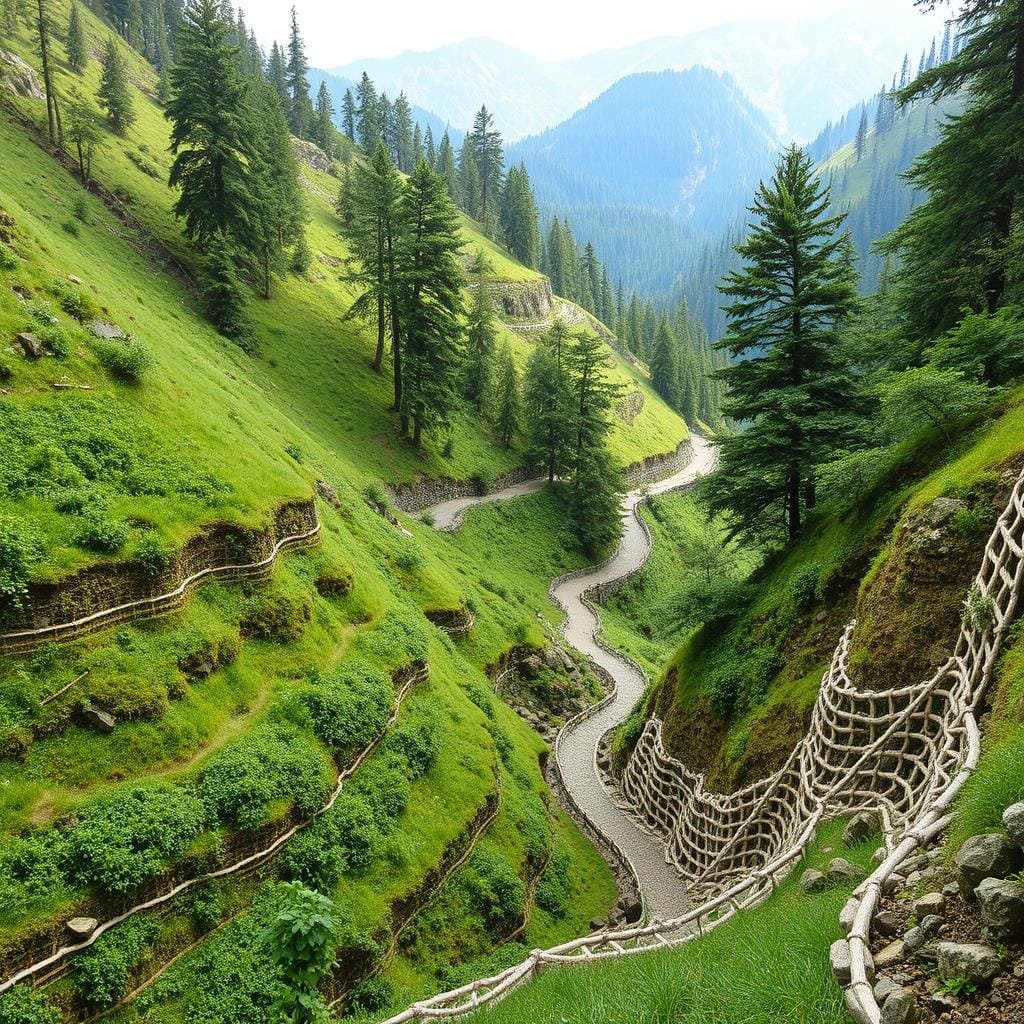
Gabion baskets are a good choice for a balance of cost and strength. They are wire cages filled with rocks. Water flows through, not against, the wall.
Gabions cost less than concrete walls but are just as strong. They move with the ground and blend into the landscape. Over time, they get better as soil and plants fill in.
Installing gabions is easy because you can place the cages by hand. This is great for remote areas where concrete is hard to get.
Living Erosion Barriers Through Strategic Planting
Vegetation is the best long-term solution. Plants hold soil together with their roots. Choosing the right plants is key.
Native plants are the best because they grow fast and need little care. They fit well with local soil and weather.
For quick cover, pick plants based on your area:
- Grasses: Deep-rooted species like switchgrass or native fescues establish quickly and tolerate poor soil
- Shrubs: Woody plants like native willows or serviceberry provide structural stability on steep banks
- Ground covers: Creeping plants such as wild strawberry or native sedges spread to cover bare soil rapidly
- Wildflowers: Deep-taprooted species like native lupines or coneflowers penetrate compacted soil layers
Root depth is as important as surface coverage. Plants with shallow roots stop sheet erosion. Plants with deep roots anchor against slope failure. A mix of both is best.
Sunlight affects plant choice. South-facing slopes get a lot of sun and dry out fast. North-facing slopes are cooler and wetter, needing shade-loving plants. Look at what grows naturally nearby for clues.
Engineered Fabrics and Protective Blankets
Geotextiles act as filters, letting water through but keeping soil in place. They solve many problems in road construction and soil stabilization.
Basic landscape fabric works for light-duty jobs like weed control under decorative rock. For road building, you need heavy-duty nonwoven geotextiles that can handle vehicle loads. These fabrics spread weight evenly, preventing gravel from sinking into soft soil.
The engineering specs for geotextile selection depend on soil and expected loads. Clay soils need different fabrics than sandy soils. Choosing the right fabric prevents road failure and extends your access route’s life.
Erosion control blankets protect soil until plants grow. These biodegradable mats come in materials like straw or synthetic blends. They keep seeds in place, retain moisture, and prevent soil washaway.
The right blanket type depends on your slope and expected growth time:
| Slope Angle | Blanket Type | Typical Longevity | Best Application |
|---|---|---|---|
| 0-15% | Straw/paper | 3-6 months | Gentle grades with quick plant growth |
| 15-33% | Coconut fiber | 12-24 months | Moderate slopes needing extended protection |
| 33-50% | Synthetic mesh | 24-36 months | Steep sections with slower vegetation establishment |
| Over 50% | Turf reinforcement mat | Permanent | Very steep areas with high erosion risk |
Stapling or staking blankets tightly to the soil is key. Overlap edges by 6-12 inches to prevent water from lifting the material. Proper installation is critical for success.
Timing Vegetation Planting for Maximum Effectiveness
Spring planting is best in most climates. Plants get a full growing season before winter. This helps them establish strong roots.
Fall planting works in mild climates. Plants get a head start on spring. But, in cold climates, fall planting often fails due to harsh winters.
Summer planting is risky without constant watering. High temperatures and dry soil stress plants. Without water, summer planting often fails.
Protect new plants with blankets and mulch until they grow strong. Light mulch keeps moisture in. Temporary fencing keeps off equipment and vehicles.
Be realistic about how long it takes for plants to work. Grasses show results in 60-90 days. Shrubs and perennials take a year. It takes 2-3 seasons for plants to fully stabilize the soil.
Road Surface Materials for Steep Grades
The material you choose for your steep cabin access road affects maintenance costs for years. Different materials have their pros and cons, depending on the terrain. Your choice should balance cost, durability, and your property’s needs.
Choosing the right driveway surface depends on several factors. These include the slope, traffic, climate, and your budget. Knowing each material’s characteristics helps you make a smart choice without overspending.
Gravel and Crushed Stone Options
Crushed stone and gravel are popular for steep sites because they’re affordable and flexible. They drain well and adjust to terrain shifts. Unlike solid surfaces, they don’t crack easily.
For gravel success, start with a 3 to 4-inch base of coarser stone. This base layer keeps the finer surface material stable and drains well. It also distributes weight evenly.
Not all stone is created equal for mountain driveways. Crushed stone has angular edges for stability, while rounded gravel rolls and shifts. This makes crushed stone better for driving surfaces.
Rounded river gravel is attractive but not good for driving. It’s better for decorative borders or flat paths.
Stone size is key for performance. Experts recommend 3/4-inch crushed stone for the surface. Larger stones are better as base material. Smaller stones or stone dust fill gaps but shouldn’t be the main surface.
Local stone availability affects cost and look. Limestone, granite, and trap rock work well, but availability varies. Limestone self-binds, making it a good choice.
Binding Agents and Stabilizers
Products like calcium chloride improve gravel performance on slopes. They reduce maintenance by keeping the surface firm. Apply during dry seasons to prevent dust and improve cohesion.
Modern stabilizers bond stone particles together. They include polymer emulsions and organic compounds. These products increase initial costs but reduce maintenance needs.
Some use recycled asphalt millings as a surface material. When compacted, it sticks together while remaining flexible for ground movement.
Asphalt and Concrete for Permanent Solutions
Paved driveways like asphalt and concrete are durable and require less upkeep. They handle heavy use and all weather conditions well. These options are worth considering for year-round cabin access.
Asphalt is better for mountain sites due to its flexibility. It withstands freeze-thaw cycles without immediate cracking. Professional installation costs $3-5 per square foot, depending on site conditions.
Concrete lasts longer but needs good drainage to prevent cracking. Its rigid nature means it’s sensitive to ground movement and water. Proper preparation is key for success on steep terrain.
Both asphalt and concrete face challenges on steep grades. Installation becomes harder, and temperature changes cause cracks. Plan for regular sealing and repair.
Permeable Paving Alternatives
New permeable paving options manage water while being durable. They allow water to infiltrate, reducing runoff and drainage issues. This is great for slopes where water management is a challenge.
Permeable pavers have gaps for water to pass through. Grid systems with gravel or grass also work well. These options cost more than gravel but less than full paving.
Porous asphalt looks like regular asphalt but has void spaces for water. It requires careful installation but offers traditional paving’s look and performance with better environmental benefits.
The main drawback of permeable options is maintenance. The gaps can clog with sediment, requiring cleaning. Heavy sediment or leaf fall can make maintenance hard.
| Surface Material | Initial Cost (per sq ft) | Lifespan (years) | Maintenance Level | Best Application |
|---|---|---|---|---|
| Crushed Stone/Gravel | $1.50-$3.00 | Ongoing | High (annual regrading) | Low-traffic, seasonal access |
| Stabilized Gravel | $2.50-$4.00 | 5-10 | Moderate (periodic refresh) | Moderate traffic, slopes |
| Asphalt | $3.00-$5.00 | 15-20 | Low (sealing, crack repair) | Year-round primary access |
| Concrete | $5.00-$8.00 | 25-30 | Very Low (occasional repair) | Heavy use, permanent structures |
| Permeable Pavers | $4.00-$7.00 | 20-25 | Moderate (cleaning, leveling) | Environmentally sensitive areas |
Your choice should match your situation. Consider use frequency, year-round access needs, maintenance ability, and budget. Many use gravel for secondary roads and paved surfaces for main routes.
Heavy Equipment Requirements for Rugged Site Excavation
Moving earth on steep slopes needs special machinery. The right equipment affects your project’s timeline, budget, and success. Machines for mountainous terrain must handle extreme grades while staying stable and precise.
Steep slopes pose unique access challenges. Standard heavy equipment can’t handle these safely. This means more time and money for cabin site grading.
Mountain road projects often need different machines working together. Each piece of heavy equipment has its role in excavation and grading. It’s important to match the right machinery to each project phase.
Excavators and Bulldozers for Major Earthwork
Excavators are key in mountain road construction. They dig into hillsides, remove stumps and rocks, and place material exactly where needed. Track-mounted excavators are better on uneven terrain than wheeled models, making them great for steep cabin sites.
The digging depth and reach of your excavator affect efficiency. Larger excavators move more material but are heavier and need wider paths. Mid-size excavators, weighing 20,000 to 30,000 pounds, balance power with maneuverability on tough terrain.
Bulldozers do the heavy pushing work that excavators can’t. They move large amounts of earth for rough grading and road base prep. Modern bulldozers with GPS grading systems achieve precise elevations without needing extensive surveying.
Dozer blade configurations are important. Straight blades are good for finish grading and spreading material evenly. Universal blades with curved edges are better for pushing material over long distances. The right blade reduces the number of passes needed.
Skid Steers and Compact Equipment for Tight Spaces
Skid steers are versatile in tight spaces. They handle finish grading, material spreading, and detail work around structures. Their small size lets them operate where bigger machines can’t.
Skid steers’ real power is in their attachment versatility. Grading buckets smooth surfaces, and landscape rakes clear rocks and debris. Compact track loaders offer better traction and lower ground pressure than wheeled skid steers on steep slopes.
Mini excavators work well with skid steers in tight areas. They dig drainage trenches, install culverts, and excavate foundation areas without wide access roads. Their light weight causes less soil disturbance, a big plus on sensitive slopes.
Compact equipment rental is cheaper than full-size machines. Skid steer rental costs $200 to $400 a day. But, operating these machines safely on steep grades requires training and experience.
Specialized Slope Equipment
Some mountain locations need machinery made for extreme terrain. Spider excavators have adjustable legs for uneven ground. These machines work on slopes up to 45 degrees safely. Spider excavators operate safely on grades up to 45 degrees while maintaining full functionality.
Tracked excavators with tilting cabs keep operators level on steep angles. This reduces fatigue and improves precision during long days on slopes. The cab adjusts automatically as the machine moves, keeping the operator comfortable.
Specialized slope mowers manage vegetation on finished roads and pathways. These remote-controlled machines tackle dangerous slopes. They prevent erosion by keeping ground cover without risking workers on steep, unstable areas.
| Equipment Type | Best Applications | Typical Grade Limit | Daily Rental Cost |
|---|---|---|---|
| Standard Excavator | General earthwork, rock removal | 25-30 degrees | $400-$800 |
| Bulldozer | Rough grading, material pushing | 20-25 degrees | $500-$1,000 |
| Track Loader | Finish grading, tight spaces | 30-35 degrees | $300-$500 |
| Spider Excavator | Extreme slopes, precision work | 40-45 degrees | $800-$1,500 |
Rental rates for specialized slope equipment are higher than standard machinery. Spider excavators cost $800 to $1,500 a day, more than conventional excavators. This reflects the specialized engineering and limited availability of these machines.
Renting vs Hiring Professional Contractors
The rent-versus-hire decision depends on your experience and project complexity. Renting seems cheaper at first—a week-long excavator rental costs $2,000 to $4,000. But, this overlooks the learning curve and the risk of expensive mistakes on rugged sites.
Professional operators work faster and make fewer errors than DIYers. An experienced contractor might finish in three days what takes an amateur two weeks, making them more cost-effective. Contractors also have insurance for equipment damage and accidents, something you won’t have with rental equipment.
Many property owners use a hybrid approach. Hire experienced contractors for technical work like road grades and drainage systems. Do simpler tasks yourself, like spreading gravel or clearing brush. This balances cost savings with professional expertise where it matters most.
When evaluating contractors, ask about their experience with mountain roads and specialized equipment. Check if they have references and insurance. The right contractor brings the right equipment, expertise, and problem-solving skills to transform challenging terrain into functional mountain access roads.
Safety Considerations During Mountain Driveway Construction
Building roads on steep slopes is risky. It needs constant safety planning from start to finish. Accidents can be very dangerous, so safety is key.
Check your site during heavy rain to see how water moves. Gentle slopes are usually safe, but steep slopes can be risky. Water may damage your foundation.
If your site is at risk of mudslides, talk to a civil engineer or experienced excavator. Their advice can save lives and prevent costly failures.
Slope Stability Monitoring
Start by recognizing unstable ground signs. Look for cracks, leaning trees, exposed roots, and past slide areas. These signs mean the slope may not be stable.
Construction can make solid slopes unstable. Removing plants and changing water flow weaken the soil. Heavy equipment or fill material can also destabilize slopes.
These factors increase the risk of slope failure. It’s important to watch for signs of instability during road building projects.
Monitor the ground for movement and stop work if you see any. Assign someone to check for signs of instability. Daily checks are critical after rain or during thaw.
Worker Safety Protocols on Steep Terrain
Working on steep terrain is dangerous. Equipment rollover risks are higher on slopes. Falling rocks or equipment are constant threats.
There may be no safe place to go if something goes wrong. This means you need to be very careful and follow strict safety rules.
Make sure there are safe zones for workers. Always communicate with your team. Never work alone on steep slopes—it’s safer to have a buddy.
OSHA rules apply to all road building projects, big or small. Following these rules is not just legal, it’s about keeping everyone safe. Important OSHA standards include:
- Proper equipment check before each shift
- Wearing the right safety gear
- Clear communication systems
- Emergency plans and evacuation routes
- Regular safety meetings
Traffic Control During Construction
Managing access during construction is hard, but it’s essential. You need to plan carefully and communicate well with everyone. This includes delivery trucks, emergency services, and neighbors.
Make a detailed schedule for road access. Share it with emergency services and neighbors. Plan specific times for deliveries and non-construction traffic.
Use clear signs to warn of construction ahead. Modern apps can help with real-time updates on road conditions.
| Traffic Control Measure | Best Application | Typical Cost Range |
|---|---|---|
| Flaggers with two-way radios | Long sight-line roads with periodic closures | $25-40/hour per flagger |
| Temporary traffic signals | Single-lane sections with regular traffic | $800-1,500/month rental |
| Scheduled full closures | Major excavation or blasting operations | Minimal direct cost, coordination intensive |
| Alternate route establishment | Extended construction periods | Variable based on route requirements |
Installing Temporary Barriers and Fencing
Protecting the public is a must. Temporary barriers range from simple to substantial solutions. Choose based on the hazards and risk of unauthorized access.
Use caution tape for low-risk areas. Orange fencing is better for visible barriers. It’s easy to move as work changes.
Chain-link fencing is needed for serious hazards. Jersey barriers offer maximum protection in high-traffic areas.
Consider visibility, height, anchoring, and reflective elements when planning barriers. Regular inspections are also important.
Remember, barriers protect everyone, not just your crew. View safety as essential, not a delay, to prevent tragedies.
Winter Access and All-Weather Driveway Design
For cabin owners in mountainous regions, keeping access safe in winter is key. The challenge grows when snow, ice, and cold hit steep terrain. You must plan for winter from the start, not after construction.
All-weather driveways need careful design for snow, ice, and maintenance. The right materials and methods depend on your climate and land. Some materials, like terra cotta, may not last in freezing ground.
Winter days are short, and snow can block access when you need it most. Your driveway design must tackle these challenges from the beginning.
Snow Removal Considerations for Steep Roads
Removing snow from steep roads is harder than flat areas. You need wider roads for plows, space for turns, and gentle curves. This ensures plow operators can work safely.
Planning for snow storage is critical. Without a place for snow, your driveway can become blocked. This can flood your road when it melts in spring.
Plowing downhill is safer and more effective than uphill. Gravity helps the plow move snow more easily.
Steep grades over 12% are hard to plow. For steeper areas, you might need heated sections or accept seasonal access.
Consider these snow removal planning factors:
- Road width of at least 12-14 feet for single-lane access with plowing
- Turnaround areas measuring minimum 40 feet in diameter
- Snow storage zones positioned to avoid spring drainage problems
- Maximum sustained grades of 10-12% for reliable plowing
- Curve radii generous enough for plow truck maneuvering
Ice Prevention Strategies
Stopping ice needs a multi-layered approach. Start with drainage systems to prevent water from freezing on the road. Keeping water off the road is half the battle.
The right road materials are key in winter. Some materials grip better when frozen, while others become slippery. Your choice affects winter usability.
Aligning roads for more sunlight is another advantage. South-facing slopes get more sun, helping melt ice. Designing for sun exposure reduces maintenance.
Traction Enhancement Materials
Modern alternatives to sand and salt offer better options. Knowing your choices helps you make the best decision for your situation.
Sand provides quick traction but needs frequent reapplication. Rock salt works well but can harm plants and vehicles. Modern options like calcium chloride and magnesium chloride are less corrosive.
For environmental concerns, consider these materials:
- Sand mixed with small amounts of salt for reduced environmental impact
- Calcium magnesium acetate (CMA) as a non-corrosive alternative
- Organic materials like beet juice mixed with salt brine
- Volcanic rock or specialty traction grit for immediate grip
- Pre-wetted salt that sticks better and uses less material
Strategic Placement of Chains Storage
Chains are useless if they’re not where you need them. Place storage boxes at the bottom of icy hills for easy access.
Install a weatherproof box at the steepest part of your road. This ensures chains are ready when you need them. A sturdy box keeps chains dry and organized.
Mark the storage spot clearly with reflective signs. Add a bench for comfortable chain installation. This makes the task less miserable in winter.
Some owners keep multiple chain sets at different points. This ensures you always have options. It’s a safety measure.
Heated Driveway Options for Remote Locations
Heated driveways are a luxury but can be worth it for safety. Understanding the technology and costs helps decide if it’s right for you.
Hydronic heating systems use heated fluid in tubes for efficient heating. They require professional installation and are more expensive for retrofits.
Electric resistance cables are an alternative for smaller areas. They melt snow and ice directly. They’re good for steep curves or the final approach to your cabin.
Heated driveways cost $12 to $25 per square foot. A 500-square-foot section might cost $6,000 to $12,500. Operating costs depend on climate and electricity rates.
For remote areas, consider renewable energy for heating. Options include solar panels, hydroelectric systems, and geothermal heat pumps.
You don’t need to heat the whole driveway. Focus on the steepest or shaded areas. A 20-foot heated section can be enough.
Winter access planning depends on your needs and budget. Consider how often you’ll use the cabin and who will use it. This helps decide between basic solutions and heated sections.
Material choices during construction affect winter options. Avoid materials that crack or become slippery in cold. Proper drainage is essential, no matter the solution.
Cost Estimation and Budget Planning
When it comes to construction costs for steep terrain driveways, sticker shock is common—but proper budgeting can turn a challenging project into a smart investment. Mountain driveway construction typically runs higher than most property owners anticipate, often several times the cost of building on flat land. The good news is that understanding where your money goes helps you make informed decisions and negotiate confidently with contractors.
The financial reality is straightforward: sloping sites often come with bargain price tags. If the premium to build safe remote property access is less than what you saved on land purchase, you’ve found a diamond in the rough. Many cabin owners discover that their spectacular hillside setting was worth every dollar spent on the access road that made it possible.
Breaking Down Construction Costs
Understanding the major expense categories helps you evaluate contractor bids and plan realistic budgets. Every project budgeting exercise for driveway engineering for cabins should account for these essential cost components.
The primary expense categories include planning and engineering fees, which typically run $2,000 to $8,000 depending on site complexity. Permit costs vary by jurisdiction but generally range from $500 to $3,000. Excavation and grading represent the largest line item for most projects, often consuming 40-50% of the total budget.
Additional major costs include drainage installation, road base materials, surface treatments, and erosion control measures. Don’t forget contingency funds—mountain projects demand reserves of 20-30% for unexpected challenges. This isn’t padding; it’s protection against the realities of working with unpredictable terrain.
Detailed home build site preparation costs provide valuable context for understanding how driveway expenses fit into your overall development budget. Site work often represents 15-25% of total construction costs for mountain properties.
Per-Linear-Foot Pricing Factors
Many contractors quote driveway work by the linear foot, but this pricing method can be misleading for steep terrain projects. A linear foot of road on flat ground might cost $10-15, while that same measurement on a challenging slope could run $100-200 or more.
The dramatic variation depends on several factors. Slope steepness directly impacts construction costs because steeper grades require more cut and fill work. Soil conditions matter tremendously—stable soil costs far less to work with than loose or rocky material.
Rock excavation adds $50-150 per cubic yard compared to soil removal. If blasting becomes necessary, expect another $15-30 per cubic yard for rock breaking and removal. Retaining walls can cost $25-75 per square foot of wall face, depending on height and construction method.
| Terrain Condition | Cost Per Linear Foot | Primary Cost Drivers |
|---|---|---|
| Gentle slope (5-8%) | $15-35 | Basic grading, standard drainage |
| Moderate slope (8-15%) | $40-80 | Cut/fill work, culverts, base material |
| Steep slope (15-25%) | $85-150 | Extensive excavation, retaining walls, drainage systems |
| Very steep (25%+) | $150-250+ | Switchbacks, major earthwork, erosion control, specialized equipment |
Impact of Site Accessibility on Costs
Getting equipment to your site can dramatically affect overall expenses. When contractors must transport excavators and bulldozers long distances on difficult roads, mobilization costs climb quickly. Some remote locations require permits just to move heavy equipment through neighboring properties.
Remote property access projects in truly isolated areas may require smaller equipment that fits narrow existing roads. While compact machinery costs less to rent, it accomplishes less work per hour, increasing labor time and total costs. Specialized slope equipment commands premium rental rates—often 50-100% more than standard excavation machinery.
Distance from material suppliers also impacts budgets. Hauling gravel, crushed stone, or concrete additional miles adds fuel surcharges and driver time. Some mountainous regions charge premium rates simply because fewer contractors operate there, reducing competition.
Hidden Expenses to Anticipate
Even well-planned budgets encounter surprise costs on mountain projects. Smart property owners prepare for these common hidden expenses that catch many first-time builders off guard.
Unexpected rock represents one of the most frequent budget busters. Test pits and soil borings help predict subsurface conditions, but rock formations sometimes appear where surveys didn’t detect them. Blasting costs $8,000-15,000 for typical residential driveway obstacles.
Additional drainage requirements often emerge during construction. What looked adequate on paper may prove insufficient when you see actual water flow during the first rain. Installing extra culverts or drainage structures after construction starts costs more than incorporating them in the original plan.
Consider these frequently overlooked expenses:
- Utility relocation: Moving power lines, phone cables, or water lines that interfere with new road alignment ($2,000-8,000)
- Erosion control upgrades: Additional measures required after unexpected heavy rain ($1,500-5,000)
- Engineering stamps and permits: Professional certifications required by building departments ($800-2,500)
- Survey monuments: Marking property boundaries and easements ($500-1,500)
- Existing road repairs: Fixing damage to public or private roads used during construction ($2,000-10,000)
Seasonal weather delays can extend project timelines, increasing costs through equipment rental extensions and additional contractor visits. Winter conditions or spring mud seasons may halt work for weeks or months in some regions.
Financing Options for Remote Property Access Projects
Funding a mountain driveway requires creative thinking because traditional construction loans don’t always cover site access work. Fortunately, several financing options exist for property owners committed to building safe, durable roads.
Home equity loans or lines of credit offer straightforward financing when you own other property. Interest rates typically run lower than personal loans, and the interest may be tax-deductible. Lenders generally view access road construction as property improvement that increases land value, making approval more likely.
Construction loans specific to land development can cover road building as part of overall site preparation. These loans often convert to permanent mortgages after construction completes. Some lenders require that access roads reach certain completion milestones before releasing funds for cabin construction.
Phased construction represents a practical approach for managing cash flow. Build a basic road initially using gravel surfaces and minimal improvements, then upgrade over time as finances allow. This strategy spreads costs across multiple years while providing immediate property access.
Shared cost arrangements work well when roads serve multiple properties. Neighboring landowners can split expenses proportionally, reducing individual financial burden. Written agreements should clearly define ownership, maintenance responsibilities, and cost-sharing formulas to prevent future disputes.
Some property owners leverage personal savings combined with short-term financing for unexpected expenses. Paying cash for planned costs while maintaining credit availability for contingencies provides financial flexibility without excessive interest charges. Project budgeting that anticipates both planned and emergency funding needs creates the most stable financial foundation.
Remember that lenders consider improved access roads as value-adding improvements. Properties with well-constructed driveways appraise higher and sell faster than similar parcels with poor access. This appreciation can make financing more accessible and the investment more justifiable from a long-term wealth-building perspective.
Long-Term Maintenance for Hillside Cabin Access
Keeping your hillside cabin access in top shape is easier than you think. It starts with building your mountain road. But the real test is in keeping it up over time.
Mountain roads need more care than flat ones because of gravity and weather. But, with a little effort, you can avoid big problems. Think of it as protecting your investment, not a never-ending task.
Regular maintenance creates a routine that’s easy to follow. You’ll learn where problems happen and when. This makes keeping your driveway in good shape easier over time.
Regular Inspection Schedules
Having a consistent inspection routine helps catch small issues before they get big. Walk your road twice a year in spring and fall. These seasons are the toughest on mountain roads.
After heavy rain, check your culverts and drainage. Water damage is common on steep roads. A quick check after storms can find problems early.
Watch for erosion control issues during the growing season. Plants and blankets need time to work. Check them monthly the first year to make sure they’re doing their job.
Use a checklist to make sure you don’t miss anything. Keeping a record helps you track problems that might need a pro’s help.
| Inspection Point | Frequency | What to Check | Action Triggers |
|---|---|---|---|
| Road Surface | Twice yearly | Potholes, ruts, loose gravel, surface erosion | Depressions deeper than 2 inches, exposed subgrade |
| Drainage Ditches | After heavy rain | Blockages, sediment buildup, proper flow direction | Standing water, overflow onto road surface |
| Culverts | Spring and fall | Inlet/outlet condition, debris blockage, structural integrity | More than 25% blocked, rust holes, separated joints |
| Retaining Walls | Quarterly | Cracks, bulging, drainage weep holes, vegetation growth | New cracks, wall leaning, blocked drainage |
| Erosion Controls | Monthly first year, then seasonally | Blanket attachment, vegetation establishment, washout areas | Exposed soil, blanket detachment, dead vegetation |
Seasonal Maintenance Tasks
Each season brings its own challenges for road maintenance. Organizing your upkeep by season makes it easier. This way, you’re always ready for what’s coming.
Planning ahead prevents emergencies and keeps your road in good shape. These tasks are key to safe access to your property.
Spring Runoff Management
Spring is the most critical maintenance period for mountain roads. The snowmelt brings high water flows. This tests your drainage systems.
Clear ditches and culverts before the runoff starts. Winter debris can block drainage when you need it most. Do this as soon as the snow melts enough.
Watch for erosion and undercutting during runoff. Walk your road weekly during peak melt. Small problems can grow fast if ignored.
Add gravel to areas with potholes or ruts from winter. Spring is the best time because the ground is moist. Don’t wait until summer when these issues get worse.
Fall Preparation for Winter Weather
Fall maintenance prepares you for winter. The work you do now helps your road handle the cold months. Being ready now prevents emergencies in winter.
Do a final grading before the ground freezes. Water that pools on your road will freeze, making it icy and damaging the pavement.
Clear ditches and culverts of leaves and debris. Leaves block drainage more than you think. A single storm can fill a ditch with leaves.
Mark road edges for winter visibility. Use reflective posts or stakes. When snow covers everything, these markers help prevent accidents.
Put extra gravel on problem areas before winter. Areas with poor drainage or heavy traffic need extra material before winter.
Addressing Washouts and Weather Damage
Severe weather can damage your road, but knowing how to fix it quickly is key. Quick action prevents small problems from becoming big ones.
When a culvert washes out, stabilize the situation immediately. Use traffic barriers to block damaged areas. Use sandbags or berms to redirect water and prevent erosion.
Determine if you can fix the damage yourself or if you need a pro. Small erosion or washouts might be DIY. But, major damage or unstable slopes need experts.
Keep emergency materials ready for quick fixes. Store gravel, sandbags, and spare culvert sections. This lets you fix problems fast, not slow.
Have a list of contractors ready for emergencies. Research and document these contacts before you need them. In a crisis, you don’t want to waste time finding help.
| Damage Type | Immediate Action | DIY Repair Feasibility | Materials Needed |
|---|---|---|---|
| Minor Surface Erosion | Redirect water flow away from area | High – homeowner capable | Gravel, rake, tamper |
| Small Washout (under 2 feet deep) | Block vehicle access, place sandbags | Moderate – requires equipment skill | Gravel, geotextile fabric, compaction equipment |
| Culvert Blockage | Clear debris, ensure water flows | High – manual clearing possible | Shovel, rake, protective gear |
| Major Washout (over 3 feet deep) | Barrier placement, emergency access route | Low – professional required | Professional assessment and repair |
| Retaining Wall Failure | Evacuate area, prevent access | None – engineering required | Professional structural engineer and contractor |
Document damage well with photos before fixing it. This helps with insurance and keeps records for later. Take photos from different angles to show the damage clearly.
Maintenance is not just about keeping your investment safe. It’s about safety. A well-maintained road means safe access all year, including for emergencies. Knowing your road is reliable is worth every maintenance hour.
With regular maintenance, your road care becomes routine. You’ll learn how to handle your property’s specific challenges. This knowledge helps you keep your hillside cabin access safe and functional for years.
Building Safe and Sustainable Mountain Access Routes
Sloped lots offer endless design and building chances. With smart mountain access planning, you can make roads that blend with the land. This approach protects your investment and the area’s beauty.
Safety is the top priority in mountain access projects. No view or savings is worth risking lives. Use proper grading, drainage, and materials to ensure safe access.
Sustainable road building is simple yet effective. It means working with the land, not against it. Assess your site well, plan for drainage, and respect the slope to create low-maintenance roads.
Building mountain roads costs more upfront than flat-land projects. But, done right, they last decades and boost property value. Many cabin owners have overcome these challenges. With the right planning and help, you can too.