
Starting a log home project is an exciting journey. The construction techniques you choose are vital, but the equipment you use is just as important. Your selection can make the difference between a frustrating struggle and a rewarding build.
You have two main paths: modern power equipment or traditional implements. While power tools speed up the process, working with manual instruments offers a unique advantage. It allows for beautiful craftsmanship and a superior finish that honors classic building methods.
This guide focuses on the essential manual instruments needed for a successful project. We will explore their specific purposes and proper usage techniques. You will also learn about viable alternatives for different scenarios.
From specialized log working equipment to general carpentry items, the options are vast. We will narrow it down to the absolute must-haves. This information is valuable for both beginners and experienced builders.
Investing in quality items is a smart decision. They are durable assets that can be reused for future projects and ongoing maintenance. This makes the initial purchase a worthwhile long-term investment.
Overview of Essential Tools for Cabin Construction
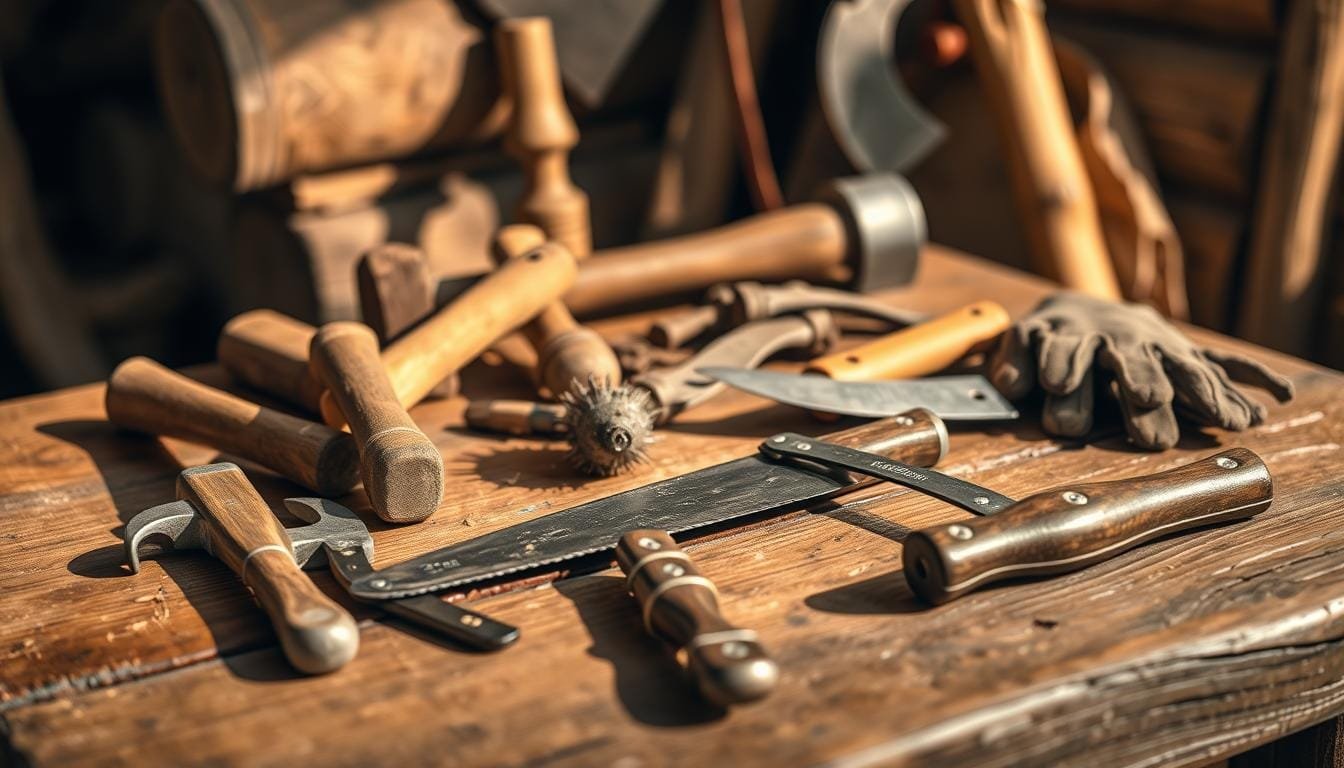
A well-organized toolkit is fundamental to the success of any traditional log construction. This process relies on a core group of primary implements, often called the “super seven.” Each one has a specific, irreplaceable purpose in the workflow.
These vital instruments cover distinct phases of the work. The categories include felling timber, moving heavy logs, debarking, shaping, and precision cutting. Understanding this breakdown helps you see how each piece fits into the larger picture.
Investing in high-quality items is a smart move for your log home. Durable products become long-term assets. They can be maintained and reused for future projects and ongoing maintenance, making the initial cost a wise investment.
Beyond the main seven, you will need supplementary items for accuracy. These accessories ensure professional results in measuring, leveling, and fine detailing.
| Functional Category | Primary Tool Example | Key Purpose |
|---|---|---|
| Felling & Harvesting | Felling Axe | Cutting down trees |
| Moving & Positioning | Peavey | Rolling and lifting logs |
| Debarking & Preparing | Drawknife | Removing bark from timber |
| Hewing & Shaping | Broadaxe | Flattening log surfaces |
While some items may seem specialized, each one significantly impacts the build’s efficiency and the final craftsmanship quality. Knowing the role of each implement before you buy helps you make informed decisions and avoid unnecessary purchases.
Choosing Quality Hand Tools for Log Cabin Projects
The decision between heritage implements and contemporary alternatives requires careful consideration of your project’s specific needs. Superior equipment delivers better results and lasts longer, saving money over time despite higher initial costs.
Investing in Traditional Tools vs. Modern Alternatives
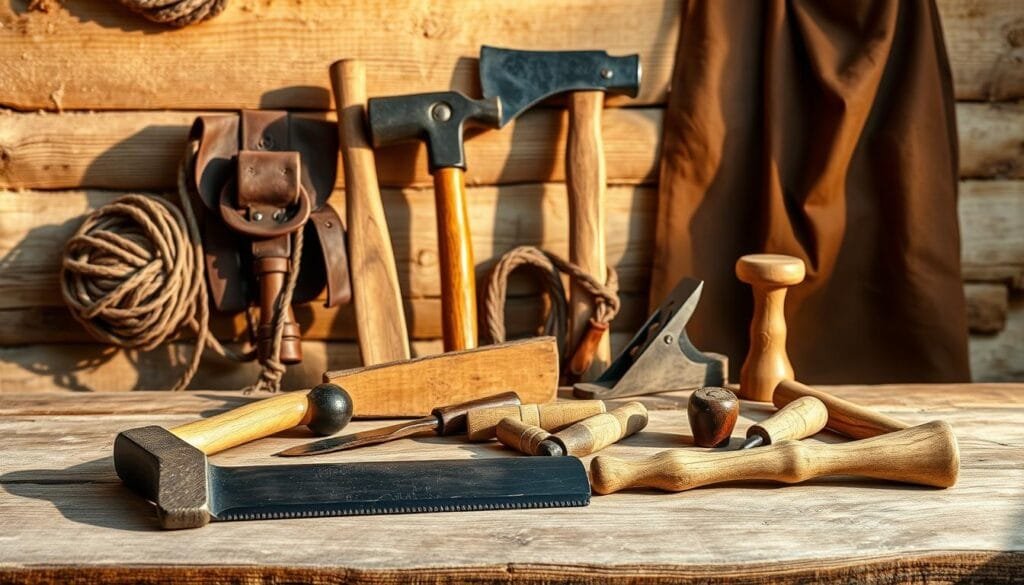
Traditional log building implements often outperform modern options for specific tasks. Heritage designs provide superior control and finish quality for detailed work. However, newer innovations offer genuine improvements for efficiency in certain applications.
A complete set of new quality products typically costs between $2,500 and $3,500. This represents a reasonable investment for a major construction project. Budget-conscious builders have excellent options through second-hand markets like Craigslist and eBay.
Assessing Durability and Craftsmanship
Look for solid construction with forged steel heads and hardwood handles when evaluating durability. Reputable manufacturers like Helko Werk and Hults Bruk are known for exceptional craftsmanship in traditional implements.
Important information: purchases from third-party retailers may not include manufacturer warranties. Evaluate products based on intended purpose, expected use frequency, and long-term durability to select the right options for your specific needs.
Understanding the Role of the Axe in Cabin Construction
When you picture building a log structure, the image of an axe is likely the first to come to mind. This iconic tool has a heritage stretching back to the stone age. Its relevance in modern projects remains strong due to its incredible versatility.
A single axe can perform hundreds of jobs. It is essential from start to finish. Tasks include felling trees, harvesting timber, and precision notching for joints.
The traditional felling technique requires skill. Start with a V-notch cut at waist height, about halfway through the trunk. Make a matching cut on the opposite side, slightly higher. A final cut above the first brings the tree down safely.
For this work, specific specifications are key. A 4-pound head provides the ideal weight for power and control. Long handles between 26 and 32 inches offer crucial leverage for swinging all day.
| Brand | Specialty | Ideal For |
|---|---|---|
| Helko Werk | Forged Steel Heads | General felling and shaping |
| Hults Bruk | Traditional Craftsmanship | Precision notching and hewing |
While an axe excels with smaller logs and detailed work, a chainsaw is more practical for trees over 12 inches in diameter. Mastering this fundamental tool is a core part of traditional craftsmanship. A quality axe is an indispensable asset on any job site.
Mastering the Adze for Effective Hewing
The adze represents one of the oldest woodworking tools still relevant in modern log construction projects. This specialized implement features a unique design with the cutting blade positioned perpendicular to the handle.
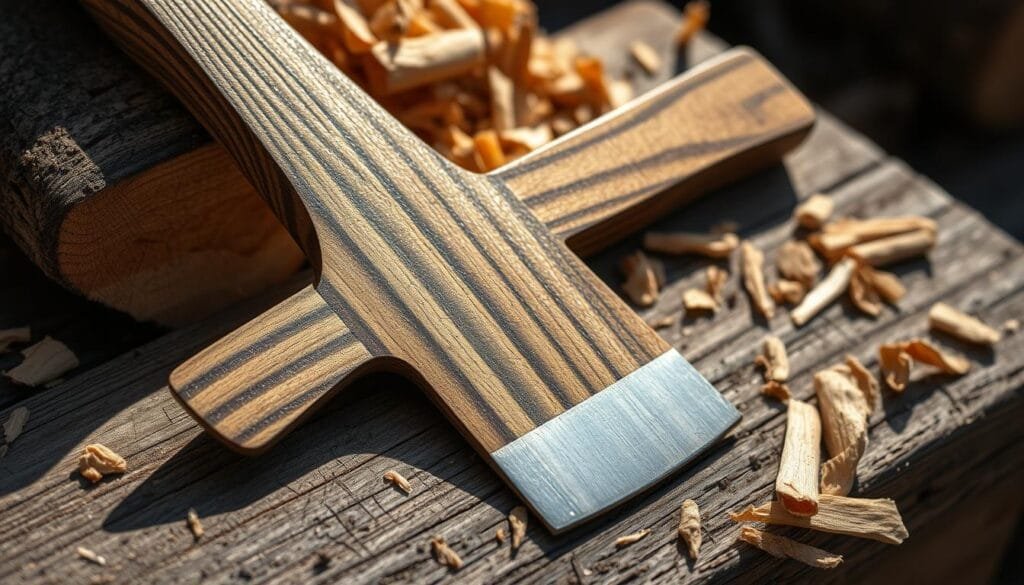
Its appearance resembles a gardening hoe with a long wooden shaft and flat blade. This configuration provides optimal control for smoothing timber surfaces during the hewing process.
Proper Technique for Smoothing Logs
Hewing transforms round timber into flat building surfaces. The process involves straightening log edges after bark removal. This creates level surfaces for stable stacking and joining.
Proper technique requires standing beside or atop the log. Swing the adze between your legs in controlled, powerful strokes. This method efficiently removes wood while maintaining precision.
For optimal performance, select a 3-pound head with a 30-42 inch handle. This specification balances power and maneuverability for extended work sessions. The long handle provides necessary leverage.
While an adze can substitute for debarking tasks, its primary purpose remains precision hewing. A broad axe serves as an alternative for similar smoothing work. Both implements excel at creating flat, smooth surfaces.
Advantages of Double Bit Axes and Bit Axes
Among the specialized implements for timber work, double bit axes stand out for their unique dual-edge design. These axes feature two cutting edges on opposite sides of the head. This configuration offers distinct advantages for woodworkers needing versatility.
The primary benefit of double bit axes lies in their functional separation. You can maintain one sharp bit for precision cutting tasks. The other edge can handle rougher work where contact with dirt might occur.
This dual-edge approach significantly improves workflow efficiency. There’s no need to carry multiple single-bit axes or stop frequently for sharpening. The tool adapts to different tasks without interruption.
The balanced design of double bit axes creates a distinctive swing feel. Weight distribution on both sides of the handle appeals to experienced users. Many prefer this balance for certain cutting applications.
| Feature | Single Bit Axes | Double Bit Axes |
|---|---|---|
| Cutting Edges | One sharp edge | Two opposing edges |
| Versatility | Limited to one edge type | Dedicated edges for different tasks |
| Hammering Capability | Flat poll available | No safe hammering surface |
| Safety Considerations | One safe “back” side | Both sides are sharp |
Proper maintenance is crucial for bit axes with dual edges. Always use protective guards during transport and storage. This prevents damage to both cutting surfaces.
While double bit axes offer excellent versatility, they require experienced technique. Both edges are sharp and demand respect during use. Proper training ensures safe and effective operation.
Exploring the Versatility of Carpentry Tools
Beyond the heavy-duty implements lies the world of fine carpentry instruments. These precision items handle the detailed work that makes timber fit together perfectly. General carpentry equipment plays an essential role in creating tight joints and smooth finishes.
Notching and Scribing Methods for Precision
Proper notching ensures logs fit together tightly with minimal gaps. This creates structurally sound walls with excellent insulation properties. Precision carpentry tools make this possible.
Scribing techniques use specialized equipment to trace one log’s contour onto another. This allows builders to cut perfectly matched joints. The method accommodates natural variations in timber shapes.

Essential accessory items include carpentry squares for checking angles and chisels for fine detail work. Log scribes transfer profiles accurately while measuring tapes ensure proper dimensions. Plumb bobs provide vertical alignment and spirit levels maintain course levelness.
While specialized implements handle rough shaping, carpentry tools deliver the precision needed for professional joinery. They transform basic construction into true craftsmanship with tight joints and plumb walls.
Quality carpentry equipment designed for outdoor work with large timber offers the best results. Mastering these techniques elevates a structure from merely functional to beautifully crafted.
Uncovering the Importance of Hand Tools in Traditional Log Work
There’s a profound difference between constructing a structure and crafting a home. Traditional manual methods bridge this gap beautifully. Many experienced woodworkers choose these time-tested approaches despite modern power alternatives.
The philosophy behind this choice centers on superior craftsmanship. Manual implements allow for a level of precision that power equipment often cannot match. This results in joinery that fits perfectly and surfaces that feel authentic.
The deliberate pace of manual work creates a unique connection between craftsperson and material. You develop an intuitive understanding of wood grain and density. This tactile relationship informs every cut and shaping decision.
| Aspect | Manual Approach | Power Tool Approach |
|---|---|---|
| Work Pace | Slower, deliberate | Faster, efficient |
| Finish Quality | Superior craftsmanship | Consistent but less nuanced |
| Skill Development | Deep wood understanding | Equipment operation focus |
| Sustainability | No electricity or fuel | Requires power sources |
| Remote Site Suitability | Excellent for isolated locations | Limited by power access |
Centuries of refinement have optimized traditional carpentry techniques for manual execution. These methods remain surprisingly efficient when properly applied. The satisfaction of mastering these skills is deeply rewarding.
Many contemporary builders adopt a hybrid strategy. They use power equipment for rough work while reserving manual implements for critical joinery. This approach honors heritage while acknowledging practical realities.
Preserving these traditional carpentry methods maintains important cultural knowledge. The structures created through manual labor possess character that machine processing cannot replicate.
Best Hand Tools for Cabin Building: A Comprehensive List
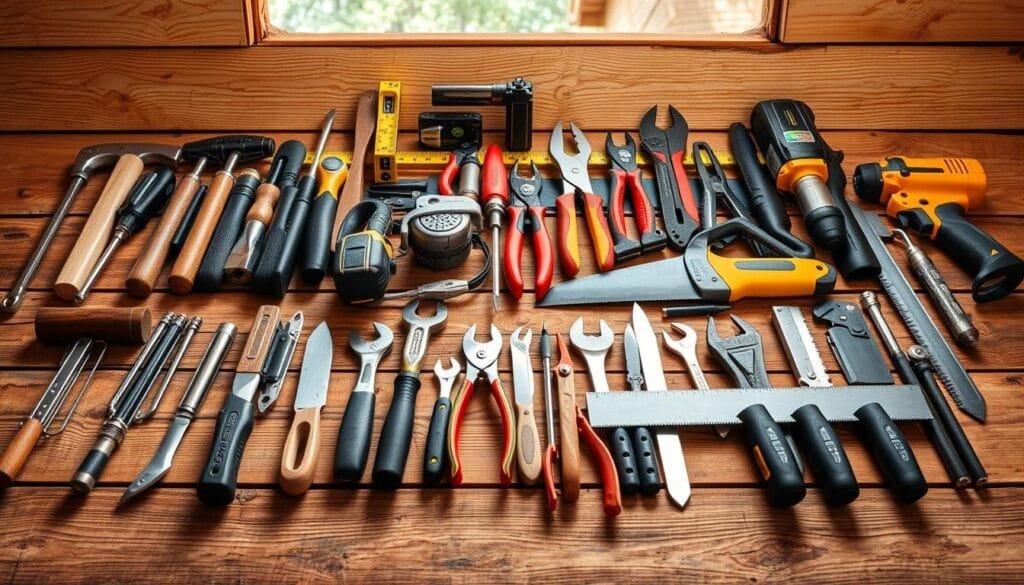
Your investment in quality equipment extends beyond the main seven implements to essential accessories. These supporting items ensure precision work and professional results throughout your project.
Essential Accessories and Alternative Options
The core seven implements form your foundation: adze for hewing, axe for felling, chainsaw for cutting, drawknife for peeling, log dogs for securing, mallet for driving, and peavey for moving logs. Each serves a distinct purpose in the construction process.
Supplementary accessories provide the accuracy needed for quality joinery. These include carpentry squares, chisels, log scribes, measuring tape, plumb bobs, and a 48-inch spirit level.
| Primary Implements | Accessory Tools | Critical Function |
|---|---|---|
| Adze, Axe, Chainsaw | Carpentry Squares, Level | Shaping and alignment |
| Drawknife, Peavey | Measuring Tape, Plumb Bob | Preparation and positioning |
| Log Dogs, Mallet | Chisels, Log Scribe | Securing and detailing |
New quality products typically cost $2,500-$3,500. Budget-conscious builders find excellent second-hand options on Craigslist and eBay.
Maintenance and Quality Control Tips
Regular maintenance keeps your equipment in top condition. Sharpening blades and preventing rust are essential practices. Inspect wooden handles periodically for cracks or wear.
When evaluating products, check steel temper and handle attachment. Look for straight cutting edges without damage. Customization options include handle modification and edge profiling.
Proper storage extends tool life significantly. Well-maintained implements can serve multiple projects over decades. This makes your initial investment particularly valuable.
Spotlight on Specialty Tools: Log Dogs, Peaveys, and Mallets
While axes and adzes handle the heavy cutting and shaping, three specialized implements play crucial roles in the finer details of log work. These items ensure precision and safety during critical construction phases.
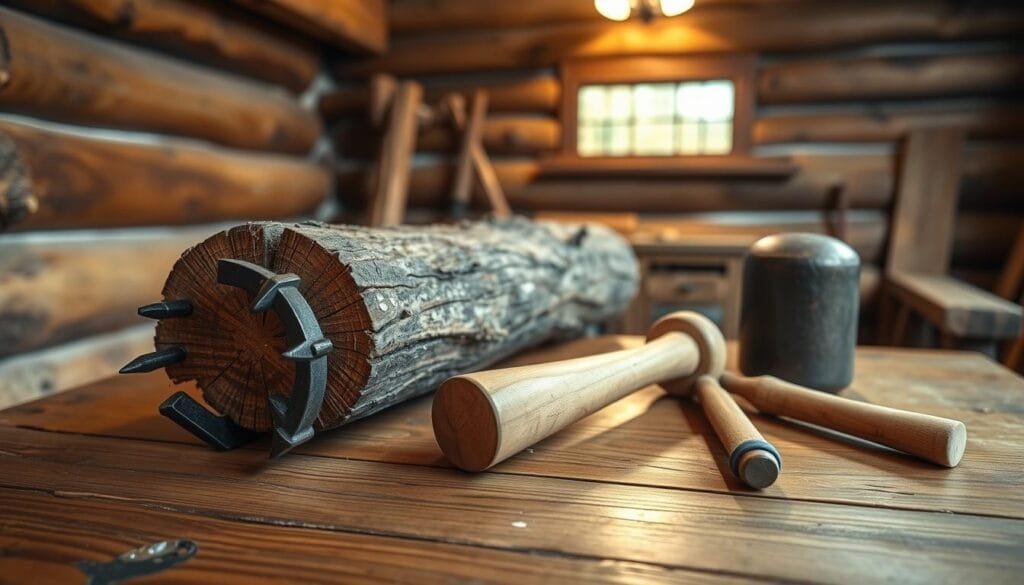
Each tool serves a distinct purpose that enhances workflow efficiency. They work together to secure, position, and move timber effectively.
Using Log Dogs Effectively to Secure Logs
Log dogs are specialized iron products with one clear purpose: holding logs stationary during notching and carving work. Their design prevents movement that could compromise joint precision.
To use a log dog, insert one pointed end into a log and the other into an adjacent piece. This creates a temporary clamp that keeps both pieces secure. Look for heavy-duty models between 20-30 inches long.
Mallets feature large rubber heads designed specifically for woodworking. They position logs and drive joints without splitting timber. These versatile items also support other tool operations.
A peavey excels at moving heavy logs over 12 inches in diameter. Push the spike into the log, then leverage the hook to roll timber efficiently. This tool is invaluable for positioning large pieces.
Proper use of these specialty items ensures professional results in your log home project. They complement the primary implements discussed earlier. For more detailed joinery techniques, explore our guide on crafting sturdy outdoor furniture.
Final Words for a Successful Cabin Build
Having explored the full range of manual implements, you can confidently approach your woodland construction endeavor. You now possess the knowledge to select the right equipment for each specific purpose in your project.
Remember that quality new equipment typically costs $2,500-$3,500. Second-hand options provide excellent alternatives for budget-conscious builders. Consider your specific situation carefully.
If you’re working with pre-cut materials or kits, you may not need certain specialized items. Focus on what serves your particular building needs. This approach prevents unnecessary expenses.
Quality manual equipment becomes a long-term investment. Proper maintenance ensures these items serve future projects and carving work for years. They retain their value beautifully.
We welcome your questions about alternative methods or unique solutions. Share your experiences in the comments below. Your journey toward creating a handcrafted home begins now!