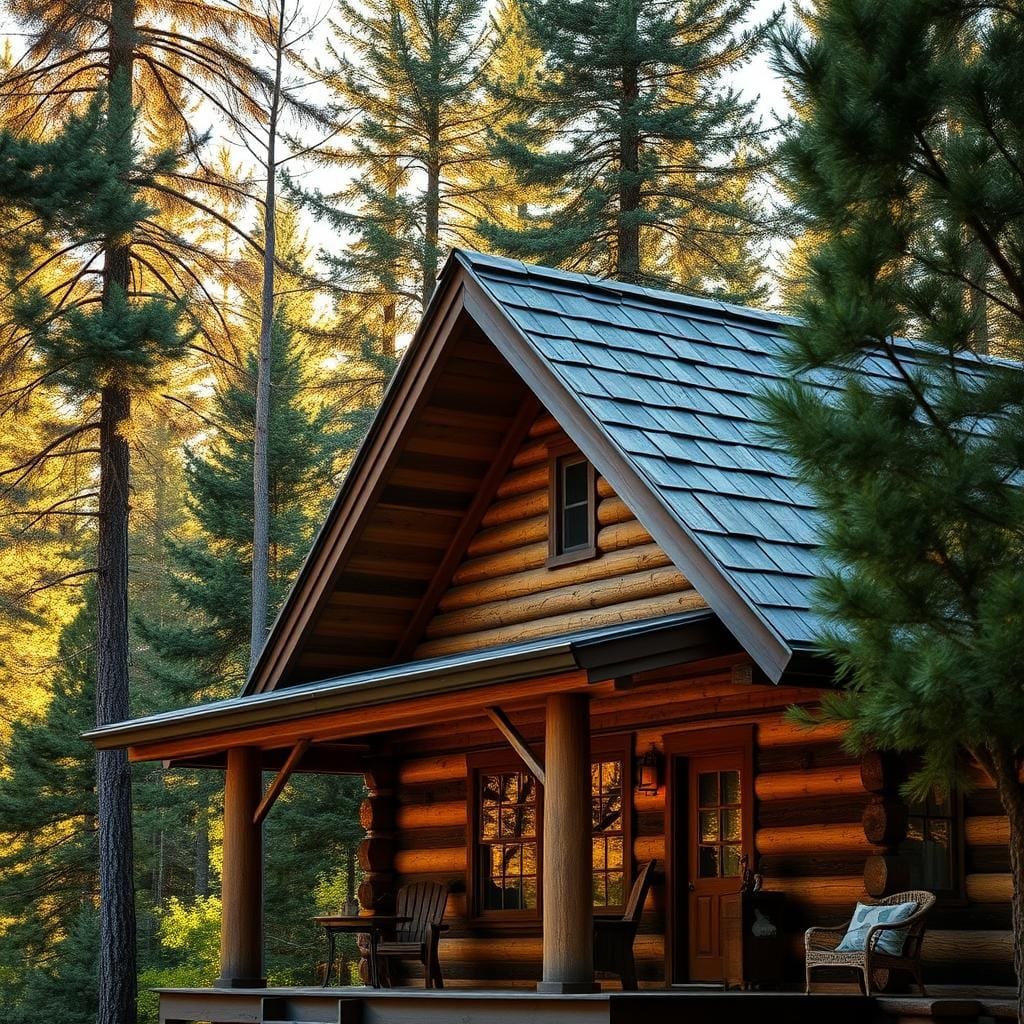

Your cabin is more than just a building. It’s a personal retreat constantly facing nature’s challenges. Rain, snow, wind, and sun test its strength every day. Choosing the right roof is one of the most critical decisions you will make.
A high-quality roof provides long-lasting protection for decades with little upkeep. It also plays a huge role in your home’s energy efficiency. A good roof keeps indoor temperatures stable, which can lower your heating and cooling bills.
This guide will help you understand your options. We cover everything from traditional choices to modern solutions. You’ll learn about durability, weather resistance, and maintenance needs for different climates across the U.S.
We will also discuss cost, aesthetic appeal, and installation. Our goal is to give you the knowledge to make a confident choice. You can select a solution that fits your budget, style, and vision for your special place.
Understanding the Essentials of a Cabin Roof
Think of your cabin’s roof as a dedicated guardian, constantly battling sun, rain, snow, and wind. This first line of defense is crucial for keeping the interior dry, safe, and comfortable. A high-quality overhead structure prevents costly issues like leaks and mold before they can even start.
Why a Quality Roof Matters
Your log cabin’s overhead covering faces relentless exposure. Heavy snow in winter and intense summer sun test its limits. A well-built roof provides essential protection against water infiltration, which is the main cause of structural problems.
It also plays a key role in energy efficiency. A solid roof keeps indoor temperatures stable. This can significantly lower your heating and cooling bills over time.
Key Factors in Roofing Durability
Longevity depends on several important factors. It’s not just about the surface you see. The true strength comes from a complete system working together.
- Material Strength: The composition must resist decay, insects, and UV damage.
- Climate Suitability: It needs to handle your local weather, from hail to wildfires.
- Proper Installation: Correct techniques, ventilation, and slope are non-negotiable.
- Complete System: Underlayment and flashing create a total moisture barrier.
Understanding these points helps you look beyond initial cost. You can assess the true long-term value of your investment.
Exploring the Value of a Long-Lasting Cabin Roof
Choosing a protective covering with exceptional staying power transforms your getaway into a worry-free sanctuary. The initial investment pays off significantly when you consider the long-term advantages of durable options.
Premium selections like metal or synthetic systems can serve your home for 40 to 70 years. Budget-friendly alternatives might require replacement every 15 to 25 years. This difference highlights the true financial benefits over time.
| Material Type | Typical Lifespan | Key Advantage |
|---|---|---|
| Metal Systems | 40-70 years | Extreme weather resistance |
| Architectural Asphalt | 25-35 years | Traditional appearance |
| Cedar Shakes | 30-50 years | Natural rustic charm |
| Synthetic Options | 40-60 years | Low maintenance needs |
| Standing Seam | 50+ years | Premium protection |
A resilient roof safeguards your entire home investment. It prevents water damage to interior spaces and structural components. Repair costs from failure often exceed installing a superior system initially.
The energy efficiency benefits continue throughout the roof’s lifespan. Stable interior temperatures mean lower utility bills year after year. This contributes to the overall value proposition.
Peace of mind is perhaps the greatest reward. Cabin owners can enjoy their retreat without constant worry about leaks or premature deterioration. The reduced maintenance demands free up your time for more enjoyable activities.
When considering resale value, a newer overhead structure with decades of service life remaining is a significant selling point. Buyers recognize the benefits of transferable warranties and proven longevity.
Defining Your Needs for Cabin Roofing
The journey to finding the perfect overhead solution begins with understanding your unique requirements. Every retreat has different demands based on location, climate, and personal style. Taking time to assess these factors ensures you make the right choice.
Climate Considerations
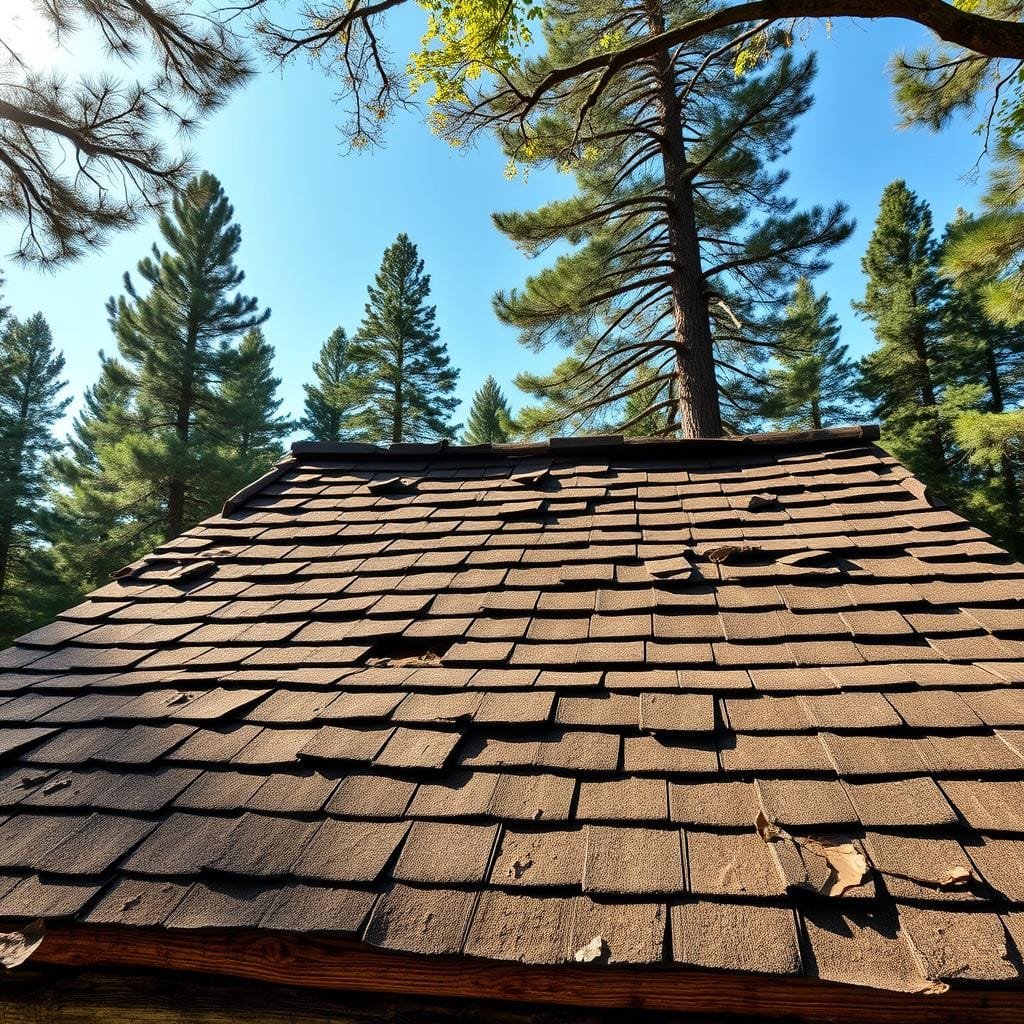
Your local weather patterns play a huge role in choosing the right protective system. Cold, snowy areas need surfaces that shed snow easily to prevent ice dams. Metal systems excel in these conditions.
Hot, sunny regions benefit from materials with high reflectivity. This keeps your cabin cooler and reduces energy costs. Humid climates require rot-resistant options that withstand constant moisture.
Budget and Aesthetic Preferences
Your financial plan should consider both initial cost and long-term value. Premium materials often save money over decades through durability and energy efficiency. Balance your budget with performance needs.
The visual appeal matters greatly since your roof defines your cabin’s character. Traditional log structures often suit natural wood shakes. Modern designs may prefer clean metal panels. Find a solution that matches your desired look while meeting practical requirements.
Diverse Roofing Material Options for Cabins
Today’s cabin owners have an incredible selection of protective coverings to choose from. The market offers solutions for every budget, climate need, and aesthetic preference. Understanding the main categories helps you narrow down your choices effectively.
Types and Characteristics
Natural wood selections like cedar shakes provide authentic rustic charm. They offer natural insulation but require regular maintenance. These traditional options cost around $200 per square for materials.
Asphalt-based choices range from basic 3-tab shingles to premium architectural versions. The economical 3-tab option starts at $60-$70 per square. Architectural shingles cost 20-40% more but deliver enhanced durability.
Metal systems have evolved to include standing seam panels and metal shingles. They average $500 per square with premium copper reaching $1000+. These selections offer exceptional weather resistance.
Innovative synthetic composites mimic wood or slate appearance. They provide lighter weight and lower maintenance than traditional counterparts. Membrane systems like EPDM work well for flat or low-slope designs.
Material Comparisons at a Glance
| Material Type | Cost Range (per square) | Key Feature |
|---|---|---|
| Cedar Shakes | $200 | Natural rustic appeal |
| 3-Tab Asphalt | $60-$70 | Most economical choice |
| Architectural Shingles | $75-$100 | Enhanced texture & warranty |
| Metal Panels | $500+ | Superior durability |
| Synthetic Composite | Varies | Low maintenance alternative |
Each category serves different needs and preferences. Consider composition, installation methods, and expected lifespan when comparing. This helps you identify the ideal solution for your specific project requirements.
Bitumen Shingles: Pros and Cons
When selecting protection for your log home, bitumen shingles often emerge as a top contender. These asphalt-based products balance performance with practical benefits that appeal to many owners.

Advantages: Durability and Easy Installation
Bitumen shingles offer impressive long-lasting protection against water and UV damage. Modern versions feature reinforced fiberglass mats that extend their service life significantly.
The easy install process makes these shingles accessible for DIY projects. Their lightweight nature allows application on various roof pitches. This can help reduce overall installation costs compared to heavier alternatives.
Disadvantages: Weather Sensitivity and Maintenance
These shingles perform best in moderate climates without extreme temperature swings. They can become brittle in severe cold and may suffer wind damage if not properly secured.
Regular maintenance helps identify and replace damaged pieces before leaks develop. While fire-resistant, direct heat exposure can cause gradual deterioration over time.
This roofing material works well for most traditional log structures when installed correctly. Consider your local climate and maintenance commitment when evaluating this popular option.
EPDM Roofing: Durability & Energy Efficiency
EPDM rubber presents a modern solution for cabin overhead protection, blending industrial strength with residential comfort. This single-ply membrane is a synthetic roofing material known for its exceptional performance.
The standout feature is its incredible durability. An EPDM membrane can protect your structure for up to fifty years. Many manufacturers support this with warranties lasting twenty-five years or more.
Energy efficiency is another major benefit. The dark surface is excellent at reflecting heat. This helps maintain stable indoor temperatures, which can lower your energy bills significantly over the years.
This material is also very flexible. It works well on flat, low-slope, and steeply pitched designs. Its ability to expand and contract prevents cracking in changing weather.
| Feature | EPDM Advantage | Consideration |
|---|---|---|
| Lifespan | Up to 50 years | Higher initial cost |
| Installation | Fits complex shapes | Requires professional install |
| Maintenance | Very low | Inspect seams periodically |
| Weather Resistance | Excellent | Superior hail resistance |
For a deep dive into installation and benefits, explore our guide on EPDM rubber roofing for log cabins. The primary drawback is the need for professional installation to ensure a watertight seal, but the long-term payoff in peace of mind is substantial.
Roof Felt: A Cost-Effective Solution
When initial investment is a primary concern, roof felt stands out as one of the most economical roof covering choices available. This material provides basic protection at a fraction of the price of more permanent solutions.
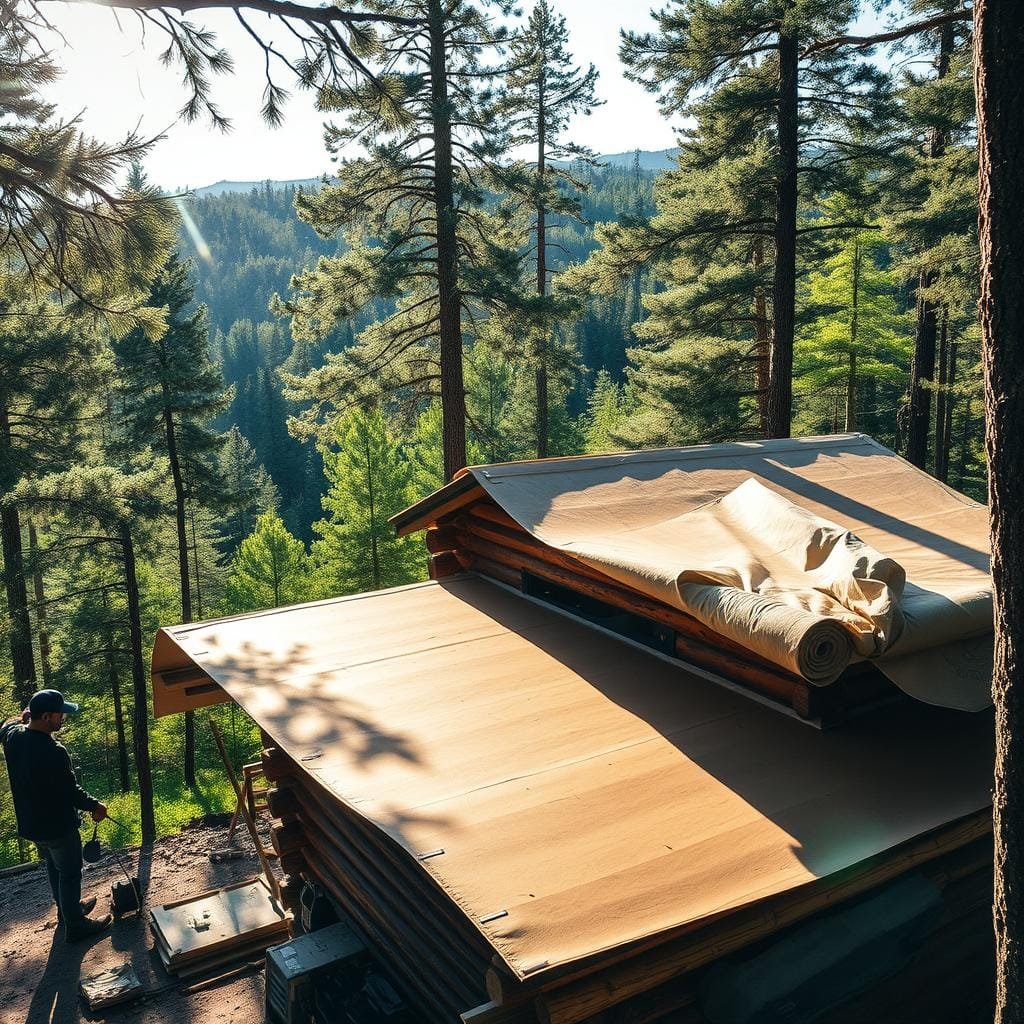
The easy install process makes this option perfect for DIY enthusiasts. You can apply it to flat or pitched surfaces using basic tools. This eliminates the need for professional contractors, further reducing your overall cost.
Breathability is a key advantage for log structures. The roof covering allows moisture vapor to escape from inside your cabin. This prevents condensation buildup that can lead to mold and wood rot.
Roof felt also offers some UV protection for your logs. It absorbs sunlight that might otherwise age or discolor the wood. The surface reflects heat well, helping keep interiors cooler during summer months.
| Feature | Roof Felt | Bitumen Shingles | EPDM Membrane |
|---|---|---|---|
| Lifespan | ~2 years | 25-35 years | Up to 50 years |
| Material Cost | Lowest | Moderate | Higher |
| Installation | DIY-friendly | Moderate skill | Professional needed |
| Weather Resistance | Basic | Good | Excellent |
The main limitation is durability. This roofing solution lasts approximately two years before needing replacement. It’s not as thick or strong as other shingles or membranes.
High winds and heavy precipitation can damage felt more easily than heavier alternatives. Consider it for temporary structures or as an underlayment beneath more permanent roof covering systems.
Metal Roofing: Modern Look with Extreme Durability
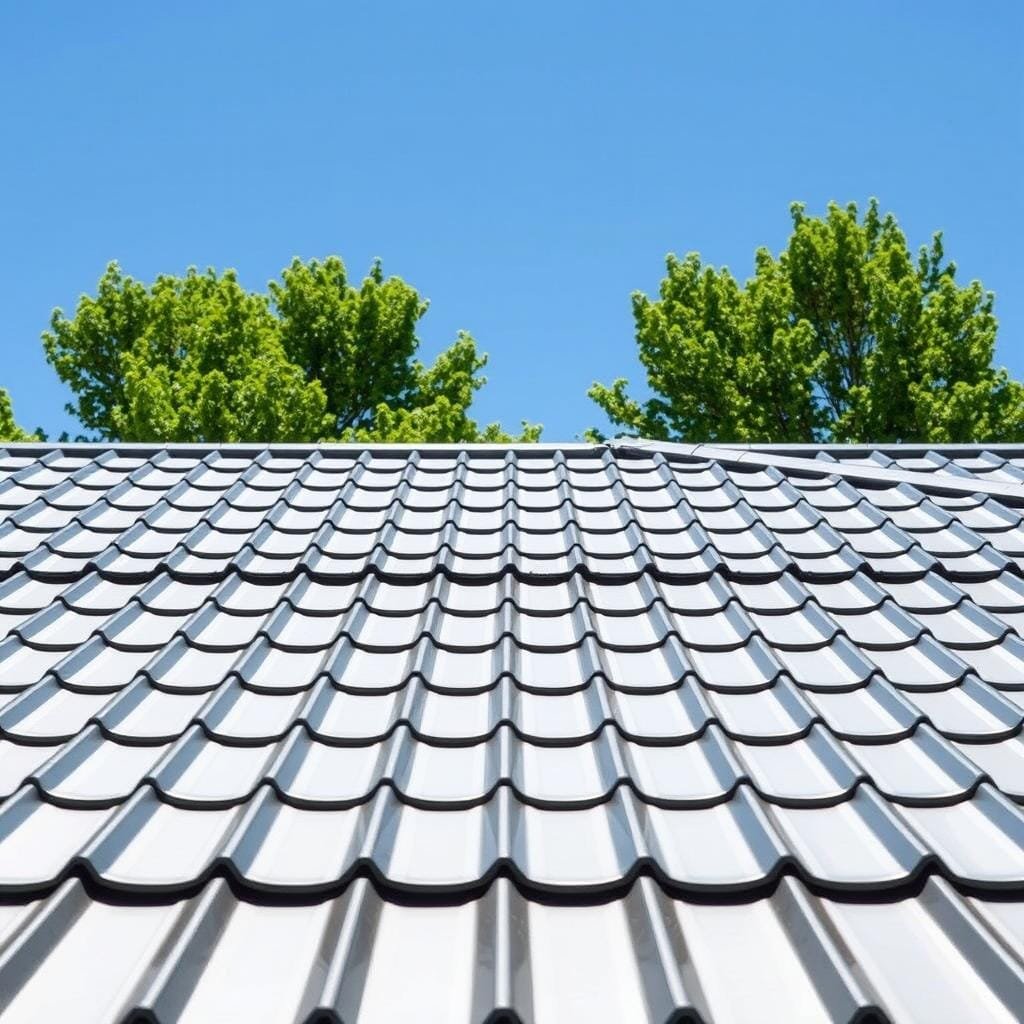
For property owners seeking both modern aesthetics and superior protection, metal systems offer an outstanding combination of style and substance. These overhead solutions have gained popularity for their ability to withstand challenging conditions while maintaining contemporary appeal.
Benefits in Harsh Conditions
Metal excels where other options struggle. It handles heavy snow by allowing accumulation to slide off easily. This prevents dangerous buildup that can damage structures.
The material resists fire, wind, and intense sun exposure. Properly installed systems can withstand hurricane-force conditions. This makes them ideal for properties in demanding climates.
| Weather Challenge | Metal Performance | Key Advantage |
|---|---|---|
| Heavy Snow | Snow slides off easily | Prevents structural stress |
| High Winds | Withstands 120+ mph | Superior wind resistance |
| Intense Sun | Reflective coatings | Reduces heat absorption |
| Fire Exposure | Non-combustible material | Enhanced safety |
Long-Term Cost Savings
While initial material costs average around $500 per square, the long-term value becomes clear. Metal systems typically last 40 to 70 years with minimal maintenance required.
Steel versions can go 30 to 50 years before needing recoating. Many manufacturers offer 50-year warranties. The lightweight nature also reduces stress on your structure’s frame.
Reflective pigments bounce back solar radiation, lowering cooling costs. This energy efficiency, combined with durability, makes metal a smart financial choice over time.
Architectural Asphalt Shingles for a Traditional Appeal
For homeowners seeking traditional aesthetics with modern performance, architectural asphalt shingles deliver an excellent balance. These premium products feature two layers bonded together, creating depth that mimics wood shakes.
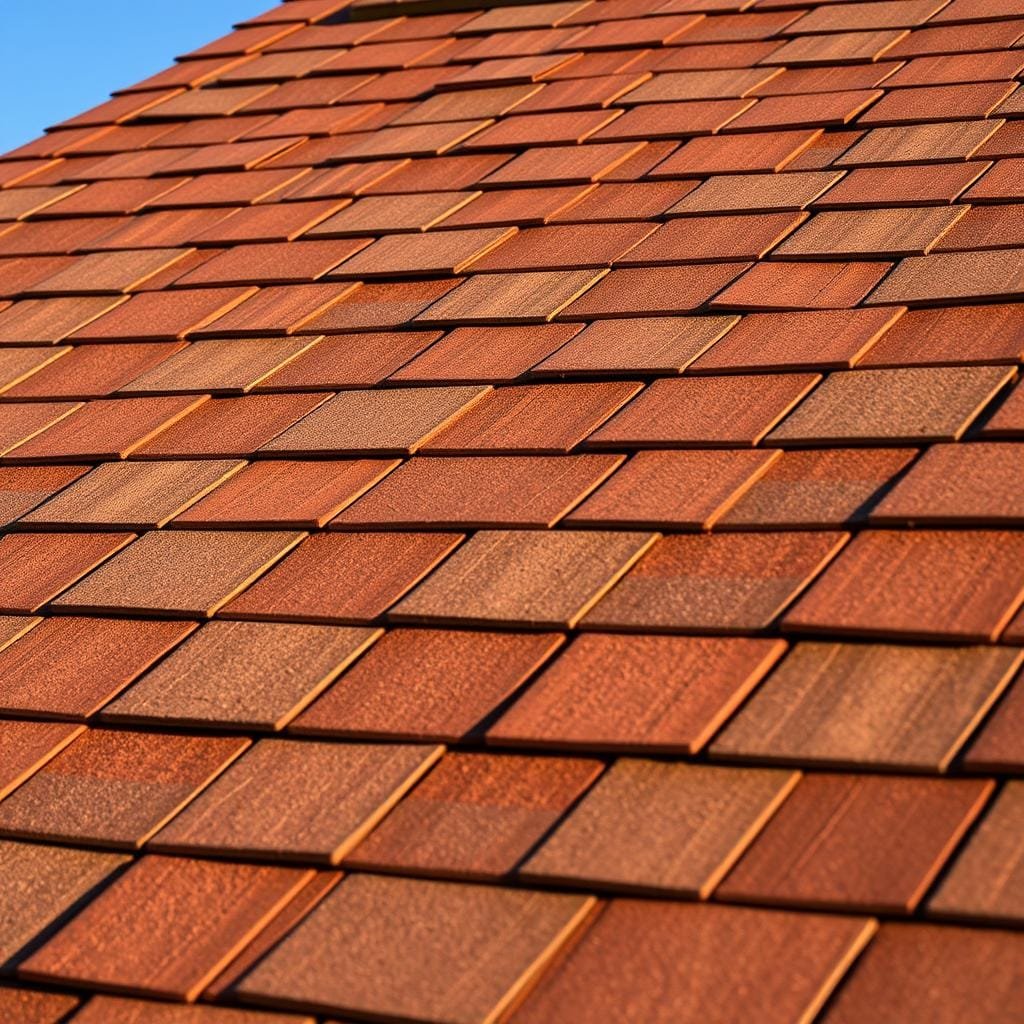
The enhanced texture gives your home sophisticated curb appeal. This look works particularly well for log structures in natural settings.
While costing 20-40% more than basic 3-tab shingles, installation expenses remain similar. The investment brings 25-35 years of reliable protection.
Manufacturers often provide extended warranties, sometimes lifetime coverage. This offers peace of mind for your retreat.
Customization options abound with various colors and textures available. You can match your home’s exterior perfectly. Premium grades offer better wind and impact resistance.
For more detailed guidance on selecting the right shingles for different architectural, explore our comprehensive resource. These asphalt shingles combine beauty with practical benefits beautifully.
Cedar Shakes: Embracing Rustic Charm
Western red cedar offers a solution that feels inherently connected to the natural world. Cedar shakes provide an authentic, handcrafted appearance perfect for a rustic retreat.
They create a warm, textured look that complements log construction beautifully. This choice brings a cohesive traditional aesthetic to your home.

It’s helpful to know the difference between shakes and shingles. Shakes are split from wood bolts for a rugged look. Shingles are sawn, resulting in a smoother, more uniform surface.
Western red cedar is the preferred wood. It naturally resists decay, insects, and moisture. This inherent durability contributes to a long service life.
| Feature | Cedar Shakes for Log Cabins | Consideration |
|---|---|---|
| Lifespan | 30-50 years | Requires proper upkeep |
| Natural Insulation | Regulates temperature | Adds energy efficiency |
| Climate Suitability | Good with ventilation | Sun can cause cracking |
| Maintenance Need | Periodic treatment | Clear debris regularly |
| Material Cost | ~$200 per square | Installation costs are higher |
These materials are a sustainable, biodegradable choice. With proper sealing and ventilation, they handle seasonal changes well. For a deeper look at their longevity and aesthetics, explore our dedicated guide.
The investment in cedar shakes pays off in unmatched charm for your log cabin. It’s a classic selection for those who value natural beauty.
Synthetic Roofing: Combining Innovation and Practicality
Innovative engineered materials are changing expectations for what a durable overhead system can achieve. These advanced polymer composites offer cabin owners a smart balance of traditional aesthetics and modern performance.
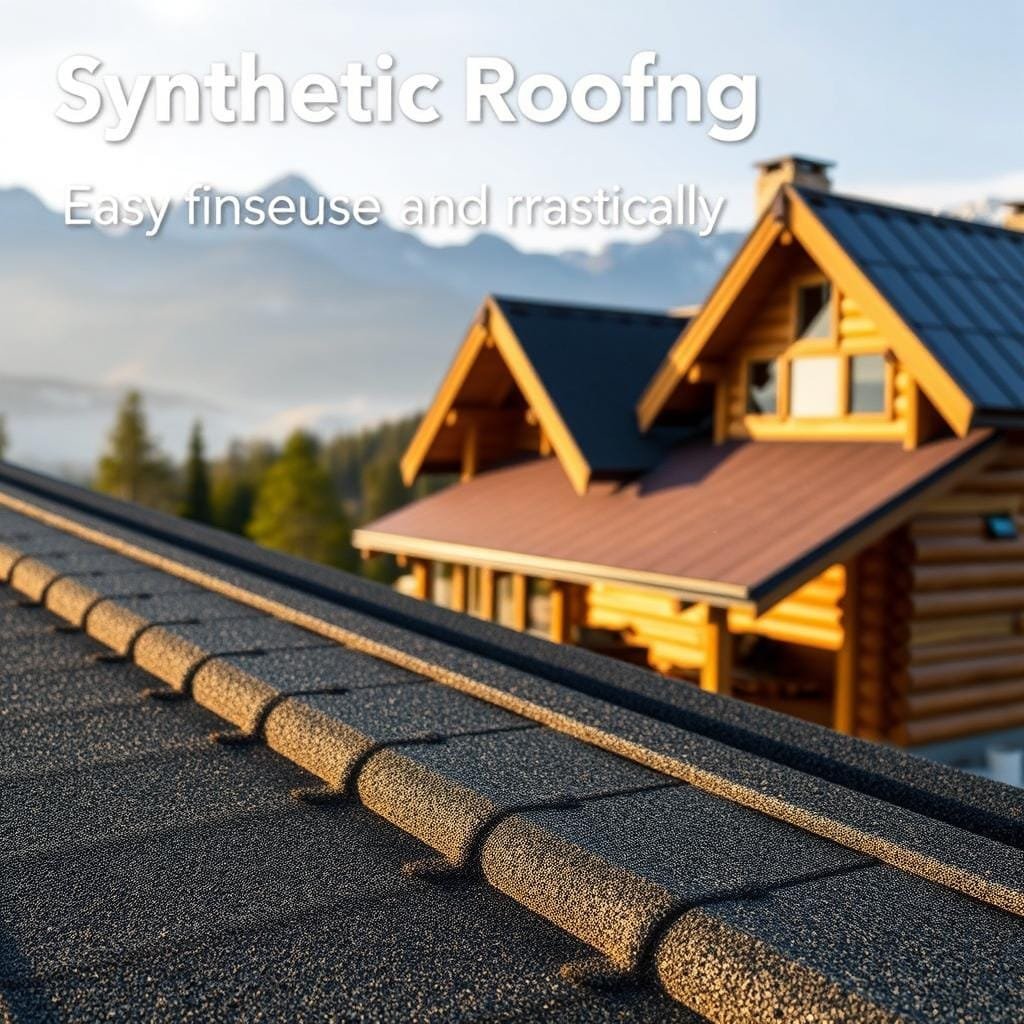
Synthetic solutions provide exceptional versatility while requiring minimal upkeep. Their lightweight nature makes installation straightforward on various structures.
High UV Resistance Characteristics
The advanced polymer composition offers outstanding protection against ultraviolet radiation. This resistance prevents the fading and brittleness that affects natural alternatives.
This feature makes synthetic material ideal for properties with significant sun exposure. Your home maintains its appearance through years of intense sunlight.
| Feature | Synthetic Roofing | Traditional Wood | Standard Asphalt |
|---|---|---|---|
| UV Resistance | Excellent | Poor (requires treatment) | Good |
| Lifespan | 40-60 years | 30-50 years | 25-35 years |
| Maintenance | Minimal | High | Moderate |
| Impact Resistance | Superior | Fair | Good |
These engineered options handle harsh weather conditions with remarkable resilience. They withstand hail, heavy snow, and strong winds without compromising protection.
The design flexibility allows customization to match any architectural style. You get premium aesthetics without the maintenance demands of natural materials.
Standing Seam Roofing: Premium Protection for Cabins
For ultimate durability in challenging environments, standing seam metal roofing delivers superior performance. This system represents the top tier of metal options for your retreat.
Enhanced Weather Resistance
The secret lies in the raised interlocking seams that create a watertight seal. These vertical ribs mechanically crimp together to prevent moisture penetration.
Even during heavy rains or wind-driven storms, this design keeps water out effectively. The concealed fastener system eliminates potential leak points that plague standard panels.
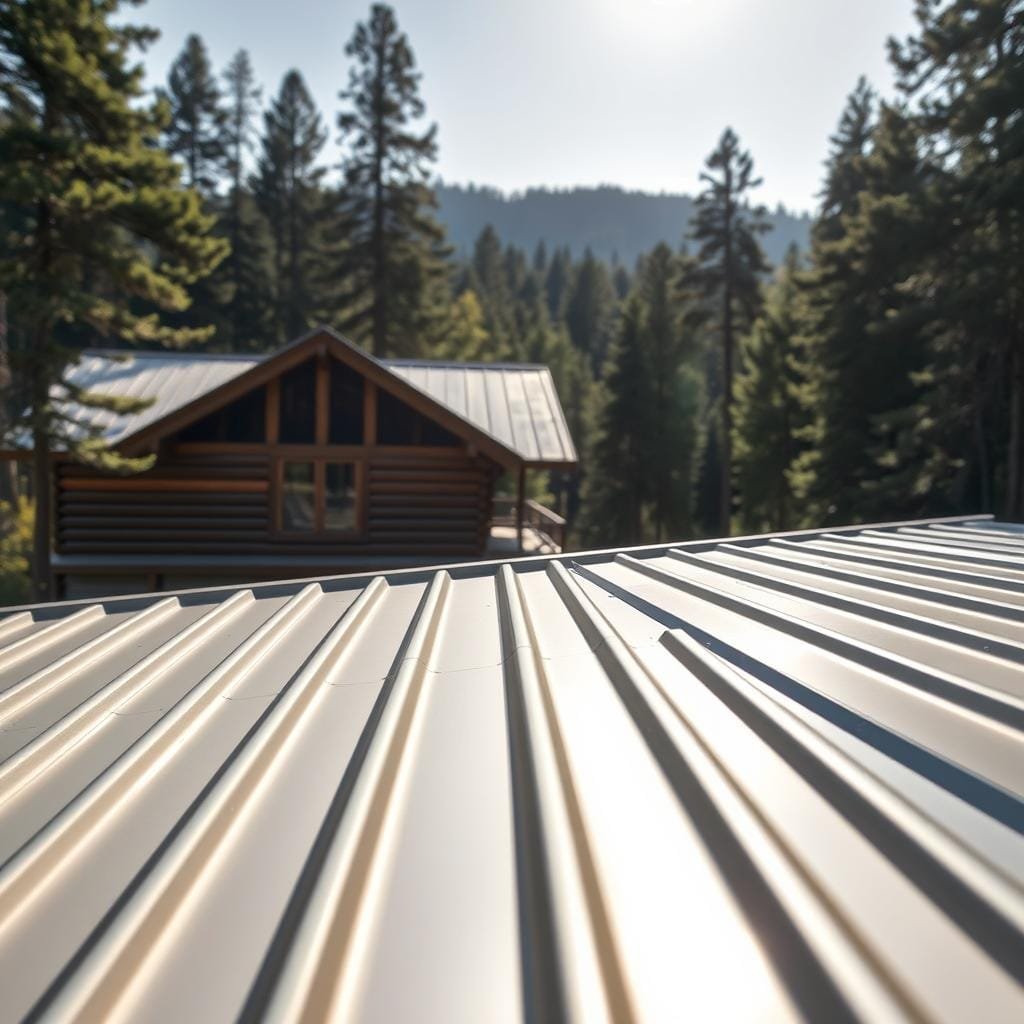
With a lifespan exceeding 50 years, these roofs often outlast the structures they protect. They require minimal maintenance while providing generations of reliable shelter.
In snowy regions, the smooth surface allows accumulation to slide off easily. The raised seams create channels that direct melting snow away from vulnerable areas.
Fire safety is another critical advantage for cabins in wildfire zones. The non-combustible material won’t ignite from embers or direct flame contact.
The panels expand and contract with temperature changes using special clips. This movement prevents cracking or warping while maintaining watertight integrity.
The sleek appearance with clean vertical lines offers a modern finish. It complements both contemporary and traditional home designs beautifully.
How Weather and Climate Shape Your Roof Choice
Your local climate isn’t just background scenery—it actively tests your overhead system every single day. The right choice depends heavily on your specific environmental challenges.
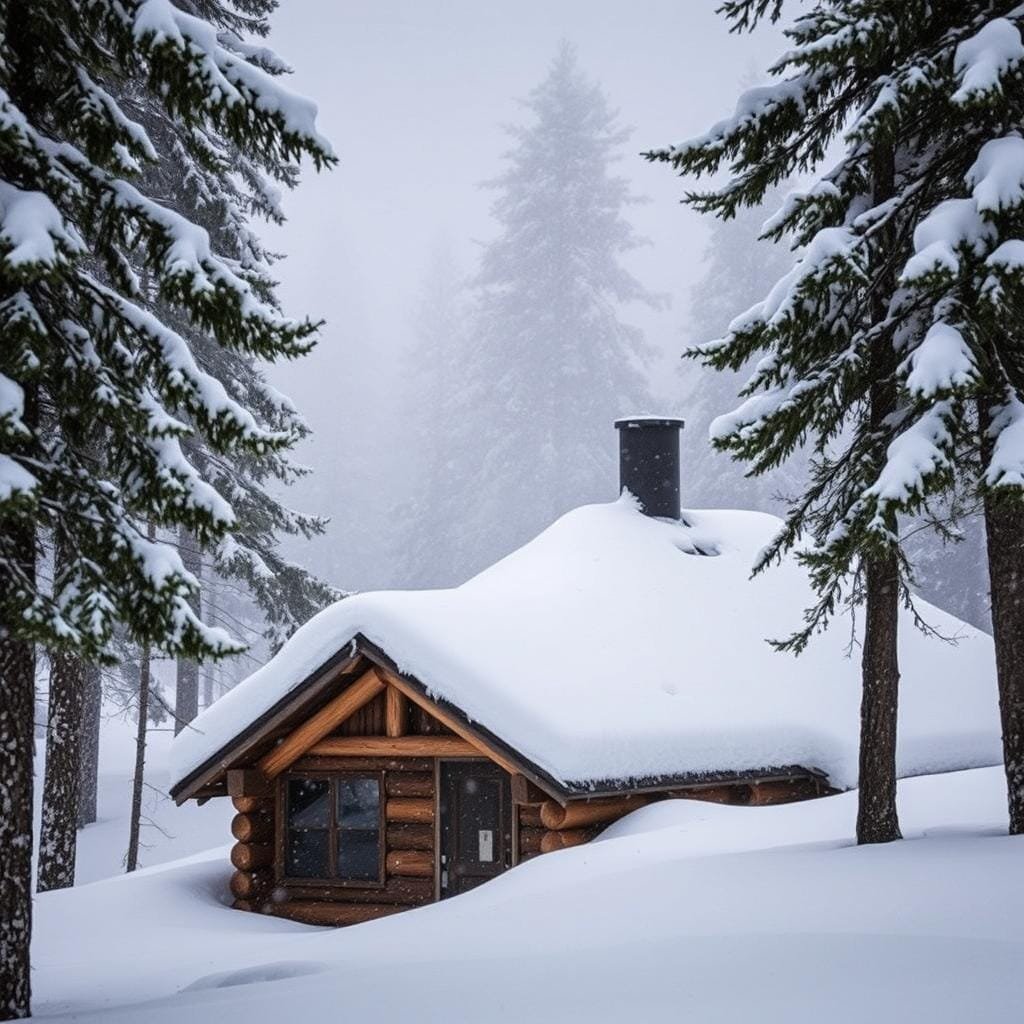
Cold, snowy regions need surfaces that shed accumulation easily. Metal systems excel here, preventing dangerous ice dams. They handle substantial weight without structural stress.
Hot, sunny areas benefit from coverings that reflects heat effectively. Modern metal with special pigments bounces back solar radiation. Light-colored synthetic materials like these also provide excellent cooling benefits.
| Climate Type | Ideal Solution | Key Advantage | Consideration |
|---|---|---|---|
| Snowy Regions | Metal Panels | Snow slides off easily | Prevents ice dam formation |
| Hot/Sunny Areas | Reflective Systems | Reduces cooling costs | EPDM also reflects heat well |
| Humid/Wet Zones | Rot-Resistant Options | Prevents mold growth | Synthetic shakes work well |
| Extreme weather Zones | Impact-Resistant Coverings | Wind and hail protection | Premium architectural shingles |
Humid climates require rot-resistant selections that withstand constant moisture. Synthetic shakes and treated wood prevent deterioration in damp conditions.
Areas prone to extreme weather need impact-resistant roofing options. These protect your home during violent storms. Your cabins deserve specific solutions matched to local challenges.
Understanding temperature extremes and precipitation patterns helps avoid expensive mistakes. Choose coverings specifically suited to your environment’s demands.
Maintenance Considerations for Cabin Roofs
Different roofing systems demand unique care schedules to perform at their peak for decades. Your available time and willingness for upkeep are crucial factors in selecting the right solution for your cabin.
Routine Inspections and Upkeep Tips
Plan inspections for spring and fall. Look for damaged pieces, debris buildup, or early signs of leaks.
Keeping the surface clear of pine needles and leaves is vital. Trapped moisture can lead to rot or mildew.
Care needs vary greatly by roofing material:
- Low-Upkeep: Metal and EPDM need little more than occasional cleaning.
- Hands-On: Cedar shakes require preservative treatments and moss removal in damp climates.
- Vigilant: Roof felt and bitumen shingles need frequent checks for wear and tear.
Long-Term Performance Strategies
Smart habits extend your roof’s life. Ensure proper attic ventilation and keep gutters clean.
Address small issues promptly. This prevents costly repairs later. For detailed guidance on handling problems, see our resource on log cabin roof repair tips.
Choose a system whose maintenance needs fit your lifestyle. This ensures your retreat remains a joy, not a chore, for years to come.
Best Roofing Materials for Cabins: A Comprehensive Buyer’s Guide
Navigating the diverse landscape of overhead protection choices requires careful consideration of multiple factors. Your perfect solution depends on personal priorities and specific circumstances.
There’s no universal “perfect” choice for every situation. The optimal selection comes from matching your needs with available product strengths.
| Priority | Recommended Options | Key Benefits |
|---|---|---|
| Budget-Friendly | Bitumen shingles, Architectural asphalt | Proven performance, Good value |
| Longevity Focus | Metal systems, Synthetic composites | 40-70 year lifespan, Minimal upkeep |
| Rustic Aesthetic | Cedar shakes, Natural wood | Authentic traditional appeal |
| Modern Design | Standing seam metal, Synthetic shakes | Contemporary look, Advanced technology |
Making informed decisions means weighing several factors simultaneously. Consider initial costs against long-term value. Evaluate maintenance needs against your available time.
Climate suitability and energy efficiency also play crucial roles. Your local weather patterns determine which roofing options perform best.
Professional consultation can be invaluable when choosing materials for log cabins. Experienced builders understand how different products perform in various conditions.
They can guide you toward solutions that deliver optimal results for your investment. This ensures your home receives the protection it deserves.
Wrapping Up Your Roofing Decision
Quality installation transforms good materials into exceptional long-term protection for your home. The right roof covering delivers lasting benefits that extend well beyond basic weather resistance.
Your cabin roof represents a significant investment in comfort and security. Taking time to choose wisely ensures you enjoy decades of reliable performance.
Modern options offer impressive longevity with minimal maintenance requirements. Professional craftsmanship ensures your selected solution performs at its peak.
At Sunview Builders, we help you navigate these important choices. Our team provides custom solutions matched to your specific needs and location.
Contact us today to discuss your project with experts who understand quality protection. We’re committed to helping you select the perfect roof for generations of enjoyment.