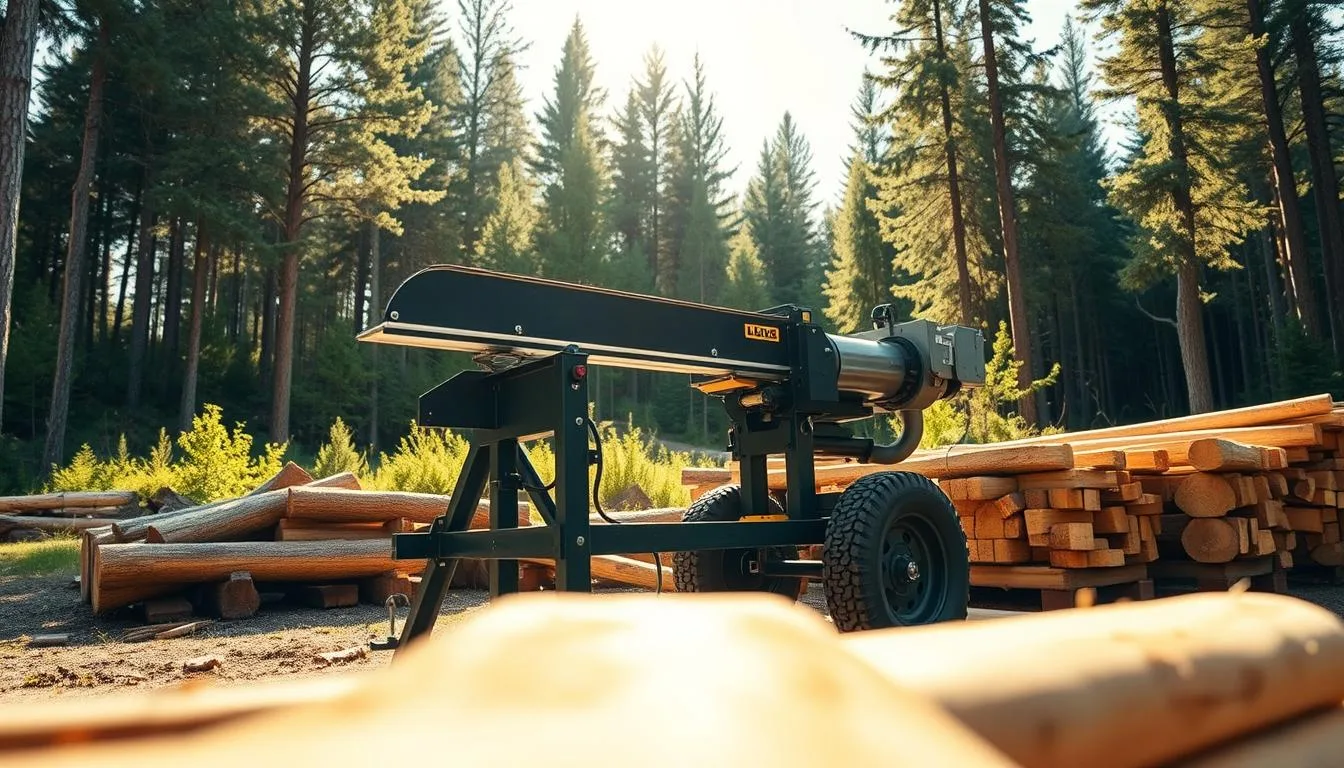

More people are building their own cabins and dream homes. This growing trend puts you in control of your project from the ground up. A key part of this process is turning raw logs into the lumber you need.
Choosing the right equipment is a big decision. It affects the quality of your cuts, how quickly you work, and your overall budget. The right tool makes your construction projects smoother and more successful.
Owning your own mill offers major advantages over buying pre-cut wood. You gain customization options and long-term cost savings. There’s also great satisfaction in working with timber you processed yourself.
Modern portable sawmill technology has evolved to meet various needs. It works for hobbyists on personal jobs and for entrepreneurs creating cabin kits. This guide will help you understand your options.
We will compare models, look at technical specs, and share user experiences. You’ll get practical advice for picking the perfect machine for your goals. Let’s explore the exciting possibilities of milling your own lumber.
Exploring the Evolution of Portable Sawmills
The transformation of portable milling technology has reshaped how individuals process wood. What began as industrial equipment has become accessible to everyone.
A Legacy of Craftsmanship and Innovation
Since 1982, Wood-Mizer has revolutionized the industry. They made professional milling available to individuals and small operations. Over the years, their commitment to quality has remained strong.
These machines are built in the USA using premium steel. Each unit undergoes rigorous manufacturing processes. This ensures durability and reliable performance for customers.
With 21 North American locations, support is always nearby. Access to parts and expert help minimizes downtime. This network has served over 100,000 customers worldwide.
Technological Advances in Modern Sawmilling
Today’s portable sawmills are more efficient than ever. They produce professional-grade lumber in less time. Modern designs focus on user-friendly operation.
Manufacturer confidence shows in generous warranties. A 30-day money-back guarantee and multi-year coverage protect your investment. This support makes starting a wood processing business less risky.
Financing options and comprehensive starter packages lower entry barriers. Digital manuals and included supplies help new owners begin quickly. The evolution continues to create opportunities for entrepreneurs.
Best Sawmills for Cabin Building: Features and Specifications
When selecting equipment to process your own timber, understanding the core specifications is the first step to success. This comparison focuses on popular models to help you make an informed choice.
Model Comparison and Capabilities
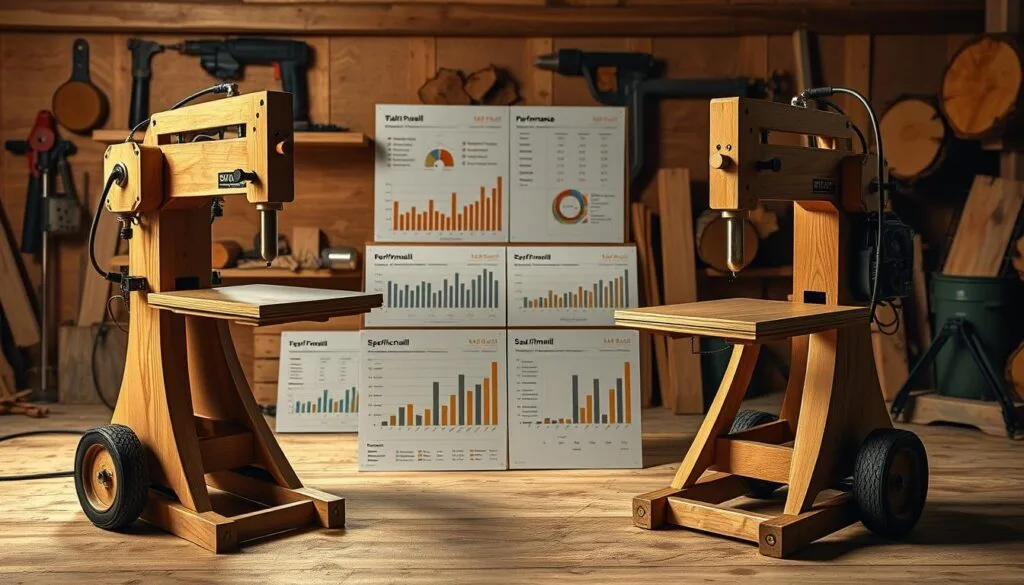
Different projects require different levels of power and capacity. Here’s a look at how some top models stack up against each other.
| Model | Log Diameter | Max Cut Width | Engine Power (HP) |
|---|---|---|---|
| HM122 | 22 inches | 20 inches | 7 – 9.5 |
| HM126 | 26 inches | 24 inches | 9.5 – 14 |
| HM130MAX | 30 inches | 30 inches | 14 |
| HM136MAX | 36 inches | 36 inches | 21 |
The HM122 is a great way to start with smaller logs. The HM126 offers a nice balance for many users.
For larger projects, the HM130MAX handles big logs well. The HM136MAX provides the widest capacity for the largest timber.
Power, Capacity, and Long-Term Care
Engine size determines how fast you can cut, not the log size you can handle. More horsepower saves you a lot of time on big jobs.
A good rule is to pick a portable sawmill with about 20% more capacity than your biggest log. This gives you room to work.
Maintenance is straightforward. The engine needs regular oil changes. The sawmill itself needs very little upkeep.
Blades are a key part of the operation. You can sharpen them several times, making them a smart long-term investment.
User Experiences and Real-World Milling Success Stories
Larry Fleece’s experience demonstrates how innovative milling equipment creates business opportunities. His work with the Norwood LX26 Log Moulder shows practical applications for premium log home construction.
Case Study: Larry Fleece’s Journey with the LX26 Log Moulder
Larry Fleece of Orleans, Ontario chose the LX26 specifically for shaping red pine, white pine, and tamarack logs. The innovative design keeps the log stationary while the cutter-head moves over it.
This approach allows him to work with bigger, heavier material while minimizing physical workload. He uses the same track for both his portable sawmill and log moulder.
The integrated setup with an extended Norwood HD36 log deck and trailer package creates a versatile base. Larry’s process involves milling logs into 6″ x 8″ cants first.
He then uses the LX26 to round the outside edge and add tongue and groove profiles. The “D” face profile technique creates logs that lock together for tight fits.
This premium approach differentiates his lumber from standard offerings. The mill worked perfectly from the first log, producing smooth finishes that met his high standards.
An optional second cutter accessory saves significant time by allowing different profiled knives to work side-by-side. Larry also discovered a valuable byproduct opportunity.
Pine shavings accumulate quickly during milling and can be sold as premium bedding material. This creates an additional revenue stream beyond lumber sales.
His business plan includes building a demo cabin to show prospective customers. The equipment’s versatility opens doors to various woodworking applications beyond log homes.
Wrapping Up Your Sawmill Journey
Selecting your ideal mill is the final step before you start transforming logs into the materials for your project. Remember the core factors: cutting capacity, engine power, and simple maintenance.
Use the 20% rule when choosing your machine’s size. This gives you flexibility for larger logs. From personal hobbyist models to commercial-grade sawmills, there’s a perfect fit.
Larry Fleece’s story shows how a personal sawmill can grow into a thriving business. Your initial investment pays off through lumber savings and new opportunities.
Create a detailed list of your needs for your upcoming projects. Then, visit a manufacturer to see these sawmills in action. Getting hands-on experience is the best way to finalize your list and confidently begin your milling adventure.