
Building your dream retreat starts from the ground up—literally. The earth beneath your structure plays a huge role in determining which support system will keep your place level and secure through every season.
According to Log Cabin Hub, your choice depends on what’s underneath: rock, chalk, gravel, sand, clay, or peat. Each material has unique characteristics that affect how it handles weight and water. Site factors like water tables, drainage patterns, and terrain also matter significantly.
The Off Grid Cabin emphasizes that taking time with this decision prevents major headaches down the road. Gold Star Buildings points out that proper planning creates a more stable structure that’s easier to maintain over time.
Understanding soil bearing capacity helps you match the right system to your specific conditions. Some ground types provide excellent natural support, while others need special attention to avoid problems like sticking doors or uneven floors years later.
Understanding Why Soil Matters for Your Cabin Foundation
Soil is more than just dirt. It’s the living foundation that affects your cabin’s strength. The ground beneath your cabin changes with moisture, temperature, and weight. Getting this right saves you from costly repairs and safety issues later.
Most builders focus on the visible parts of a cabin. But what’s underground is just as important. Your foundation connects your cabin to the earth. When it works well, your cabin stays level and safe through all seasons.
How Foundations and Soil Work Together
Your cabin’s foundation carries every weight from the roof to furniture into the soil. Different soils handle this load differently. Some spread weight evenly, while others create pressure points that can cause cracks.
Soil acts like a support network with varying strengths. Gravel and sand distribute loads well, keeping your foundation stable. But clay soils can shift and compress, weakening your cabin over time.
The Off Grid Cabin shows how small foundation errors can lead to big problems. Even a tiny error at the bottom can cause walls to fail under heavy loads.
Soil drainage is key to your foundation’s performance. Water changes soil behavior. Proper soil drainage prevents water damage and uneven settling.
Protecting Your Cabin from Long-Term Ground Movement
Two major threats face every cabin: subsidence and settlement. Log Cabin Hub explains these dangers. Subsidence happens when soil moves away from your cabin. Settlement occurs when your cabin’s weight compresses the soil, causing it to sink.
Spotting early warning signs of subsidence and settlement is important. Doors sticking, wall cracks, or sloping floors indicate movement. These problems rarely fix themselves and usually get worse with time.
Seasonal soil behavior adds complexity. Winter freezing expands soil, while summer heat and drought contract it. Clay soils are notorious for their dramatic expansion and contraction. This constant movement stresses your foundation unless you’ve built on the right soil or taken corrective measures.
The table below shows how different soil conditions affect foundation performance over time:
| Soil Condition | Movement Risk | Drainage Quality | Foundation Impact |
|---|---|---|---|
| Compacted Gravel | Minimal | Excellent | Stable with consistent support |
| Sandy Loam | Low | Good | Reliable performance year-round |
| Clay Soil | High | Poor | Shifting and cracking possible |
| Organic/Peat | Very High | Variable | Significant settlement concerns |
Prevention starts with proper soil assessment before building. Knowing your soil type helps choose the right foundation design. Ignoring soil characteristics is like building on quicksand—you might not see problems immediately, but they’re coming.
Professional soil testing reveals important details about your soil. This upfront investment protects your cabin and ensures safety. Your cabin’s stability depends on what’s happening inches below the surface.
The Five Main Soil Types You’ll Encounter
Every cabin site has its own soil personality. Knowing which of the five main types you’re working with is key to foundation success. The ground could be rock-solid gravel, sticky clay, or something in between.
Each soil type behaves differently. They handle weight, water, and temperature changes in unique ways. Knowing what you’re dealing with before building saves time, money, and future headaches.
Some soils welcome foundations with open arms, while others need special preparation or designs. Let’s break down each type so you can identify what’s under your feet.
Clay Soil Characteristics
Clay soil is common but tricky for foundation work. It has fine particles that pack together tightly. Understanding clay’s behavior is essential for making smart foundation decisions.
Identification and Texture
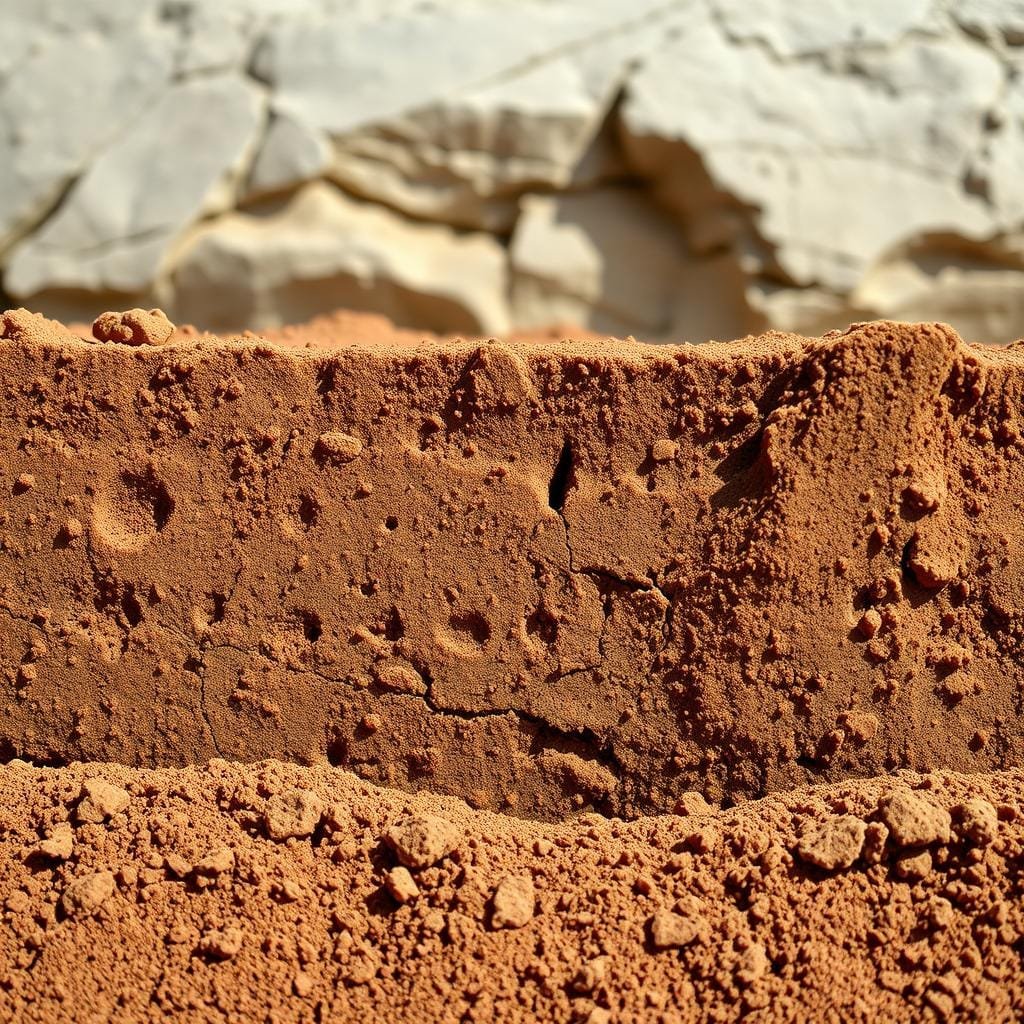
You can spot clay soil easily with a simple hands-on test. When wet, clay feels smooth and sticky like modeling clay. It leaves your hands feeling slick and coated.
During dry conditions, clay becomes rock-hard and develops deep cracks. The color typically ranges from reddish-brown to gray, though this varies by region and mineral content.
Try squeezing a handful of moist soil between your fingers. If it holds together firmly and feels slippery, you’re dealing with clay. Sandy or silty soils will crumble much more easily.
Moisture Behavior
Clay’s relationship with water creates the biggest challenges for clay soil foundation projects. This soil type acts like a sponge but in slow motion. Clay absorbs water gradually and holds onto it for extended periods because the tiny particles create minimal space for drainage.
When clay absorbs moisture, it expands significantly. This expansion can create upward pressure on foundations, causing cracks and structural shifts. During dry spells, clay contracts and pulls away from foundations, leaving gaps and uneven support.
This expansion-contraction cycle repeats with seasonal changes, making clay soil foundation work challenging. Many foundation experts consider clay one of the more problematic soils without proper preparation and design modifications.
Sandy Soil Properties
Sandy soil sits on the opposite end of the spectrum from clay. With large, visible particles that don’t stick together, sandy soil creates a different foundation environment. This soil type offers some advantages but comes with its own set of considerations.
Drainage Capabilities
The standout feature of sandy soil foundation sites is excellent drainage. Large spaces between sand particles allow water to flow through quickly, preventing the pooling and saturation that plagues clay soils. This rapid drainage means less frost heave risk in cold climates.
You’ll notice sandy soil dries out fast after rain. Water doesn’t stick around long enough to cause moisture-related foundation problems. This characteristic makes sandy soil attractive for certain foundation types, even in areas with high rainfall.
Yet, this same drainage capability means sandy soil can’t hold moisture when you need it. The soil may shift and settle more than you’d like without some moisture content to provide cohesion.
Load-Bearing Qualities
Sandy soil’s load-bearing capacity depends heavily on compaction and particle size. Well-compacted, coarse sand can support foundations reasonably well. The particles interlock when properly compressed, creating stable support for moderate loads.
Loose or fine sand presents more challenges for sandy soil foundation projects. Without compaction, sand particles can shift under weight, causing settlement issues. Fine sand behaves almost like a liquid when saturated, a phenomenon called liquefaction that’s concerning in earthquake zones.
The key to working with sandy soil is proper compaction and sometimes adding binding materials. Dense, well-prepared sand can provide adequate foundation support for many cabin designs.
Silt Soil Features
Silt occupies the middle ground between sand and clay in particle size and behavior. These medium-sized particles feel smooth and powdery when dry, almost like flour. When wet, silt feels slippery but not as sticky as clay.
Silt’s drainage falls between sandy and clay soils too. Water moves through silt more slowly than sand but faster than clay. This moderate drainage can be beneficial, though silt retains enough moisture to cause some expansion issues.
One challenge with silt is compaction stability. Silt doesn’t compact as well as sand or clay, making it prone to settlement under foundation loads. When saturated, silt loses much of its bearing capacity and can become unstable.
Foundation work on silt typically requires careful moisture management and often benefits from added gravel base layers. While not the worst soil type, silt demands respect and proper preparation. It’s worth noting that peat soil problems can be even more severe, as peat contains organic matter that decomposes over time, but pure silt is mineral-based.
Loam Soil Qualities
Loam represents the goldilocks option in soil types. This balanced mixture contains roughly equal parts sand, silt, and clay, combining the best characteristics of each. Many builders consider loam soil characteristics ideal for foundation work.
The balanced composition gives loam moderate drainage that prevents both waterlogging and excessive dryness. Loam retains enough moisture to maintain stability without the dramatic expansion-contraction cycles of pure clay. This stability translates to consistent foundation support throughout seasonal changes.
Loam has good bearing capacity when properly compacted. The sand particles provide structural stability, clay adds cohesion, and silt fills in gaps. This combination creates soil that supports weight effectively while resisting erosion.
You can identify loam by its rich, dark appearance and crumbly texture. When squeezed moist, loam holds together but breaks apart with light pressure. It feels neither gritty like sand nor slippery like pure clay.
The loam soil characteristics that make it garden-friendly also benefit foundations. Good drainage prevents water accumulation, while sufficient cohesion maintains stability. Most foundation types perform well on loam with standard preparation methods.
Rock and Gravel Composition
Rock and gravel represent the premium foundation material that most builders hope to find. These large particles provide exceptional stability and drainage, creating ideal conditions for virtually any foundation type. When excavation reveals solid bedrock or dense gravel layers, you’ve hit the jackpot.
Gravel consists of rounded or angular stones ranging from pea-sized to several inches across. These particles pack together with large void spaces that allow water to drain freely. Unlike finer soils, gravel doesn’t expand with moisture or contract when dry.
The load-bearing capacity of rock and gravel exceeds all other soil types by a significant margin. Solid bedrock can support tremendous weight without settlement. Well-graded gravel (containing various particle sizes) compacts into an extremely stable base that distributes loads effectively.
Identifying rock and gravel is straightforward – you can see and feel the individual stones. During excavation, gravel requires more effort to dig than softer soils. Solid bedrock may require specialized equipment to excavate if you need to go deeper.
Foundation work on rock or gravel proceeds with confidence. These materials rarely present the moisture problems, expansion issues, or settlement concerns associated with finer soils. The main consideration is ensuring adequate depth for frost protection and proper load distribution across the surface.
While some sites may require blasting or removal of large boulders, discovering rock or gravel generally means your foundation work will be more straightforward. This is the material mentioned in success stories where excavation reveals “stone, very compact dirt, and solid grey clay” – creating what builders call the best-case scenario for foundation construction.
Key Soil Characteristics That Impact Foundation Stability
Soil behavior might seem complex, but four key traits can make or break your foundation. These traits affect your cabin’s foundation over time. Knowing them helps you choose the right building site and foundation design.
These traits work together to affect your foundation’s performance. One good trait doesn’t mean your foundation will be fine if others cause problems. Let’s look at each trait to understand what to check at your cabin site.
Bearing Capacity Explained
Soil bearing capacity shows how much weight a square foot of ground can handle. It’s like a strength rating for your soil. This number decides if your foundation stays stable or sinks.
Different soils can support different weights. Gravel and rock can handle 3,000 to 5,000 pounds per square foot. Sandy soils can handle 1,500 to 3,000 pounds, depending on how compacted they are. Soft clay might only support 1,000 to 1,500 pounds.
Knowing this is important because your cabin’s weight spreads across the foundation. A small cabin might weigh 30,000 to 50,000 pounds. If your soil bearing capacity is too low, you might need a wider foundation or risk settlement problems.
Drainage and Water Retention Properties
How fast water moves through your soil affects your foundation. Good soil drainage keeps water away from your foundation. This prevents pressure on basement walls or under slabs.
Gravel and sandy soils drain quickly because water can pass through easily. These soils naturally move water away from foundations. Clay soils, on the other hand, hold water longer because their tiny particles block water flow.
Poor soil drainage causes many problems for foundations. Standing water increases pressure on walls. Waterlogged soil loses strength. Moisture trapped under slabs can cause cracking and heaving. The Off Grid Cabin experts say to check for standing water or waterlogging before choosing your foundation type.
You can improve drainage with grading and drainage systems. But naturally well-draining soils need less work and cost less. That’s why gravel and sandy loam are good for foundations.
Soil Expansion and Contraction Rates
Expansive soil changes volume a lot when moisture levels change. Clay soils are known for this, swelling up to 10% in volume when wet. This swelling can cause a lot of pressure on foundations.
This swelling can crack concrete slabs and shift foundation walls. It can also make posts and piers heave upward. When the soil dries out, it shrinks back down, leaving gaps and causing foundations to settle unevenly.
The cycle of expansion and contraction damages foundations over time. Small cracks become larger. Minor shifts become big structural problems. Expansive soil is a major cause of foundation damage in the U.S., costing billions in repairs.
Sandy soils and gravel show little expansion and contraction. These stable materials keep their volume consistent, making them great for foundations without special engineering.
Frost Heave Susceptibility
Frost heave happens when water in soil freezes and expands, lifting foundations. This is common in cold climates where temperatures drop below 32°F for a long time. The damage occurs during winter and early spring freeze-thaw cycles.
Soils most at risk of frost heave have fine particles that hold water—like silts and fine sandy soils. When it gets cold, water trapped in these soils freezes and expands. This expansion can lift foundations several inches, causing damage.
Northern builders must consider frost heave when designing foundations. The frost line—the maximum depth where ground freezes—varies by region. Minnesota’s frost line is 42 inches deep, while Georgia’s is just 6 inches.
Gravel and coarse sand resist frost heave because water drains through before freezing. Proper foundation depth below the frost line also prevents heave damage. Many building codes require footings to extend below the frost line to avoid this problem.
| Soil Characteristic | Best Performance | Worst Performance | Impact on Foundations |
|---|---|---|---|
| Bearing Capacity | Gravel/Rock (3,000-5,000 psf) | Soft Clay (1,000-1,500 psf) | Determines foundation width and settlement risk |
| Drainage Rate | Gravel (rapid drainage) | Clay (poor drainage) | Affects moisture pressure and soil strength |
| Expansion Rate | Sand/Gravel (minimal change) | Clay (up to 10% volume change) | Causes cracking and structural movement |
| Frost Heave Risk | Coarse Sand/Gravel (low risk) | Silt/Fine Sand (high risk) | Creates uplift and seasonal shifting |
These four characteristics determine if your soil is good for a foundation. Ideal soils have high bearing capacity, good drainage, minimal expansion, and low frost heave risk. If your soil is problematic, you might need to change the soil or choose a special foundation design.
Common Cabin Foundation Types Overview
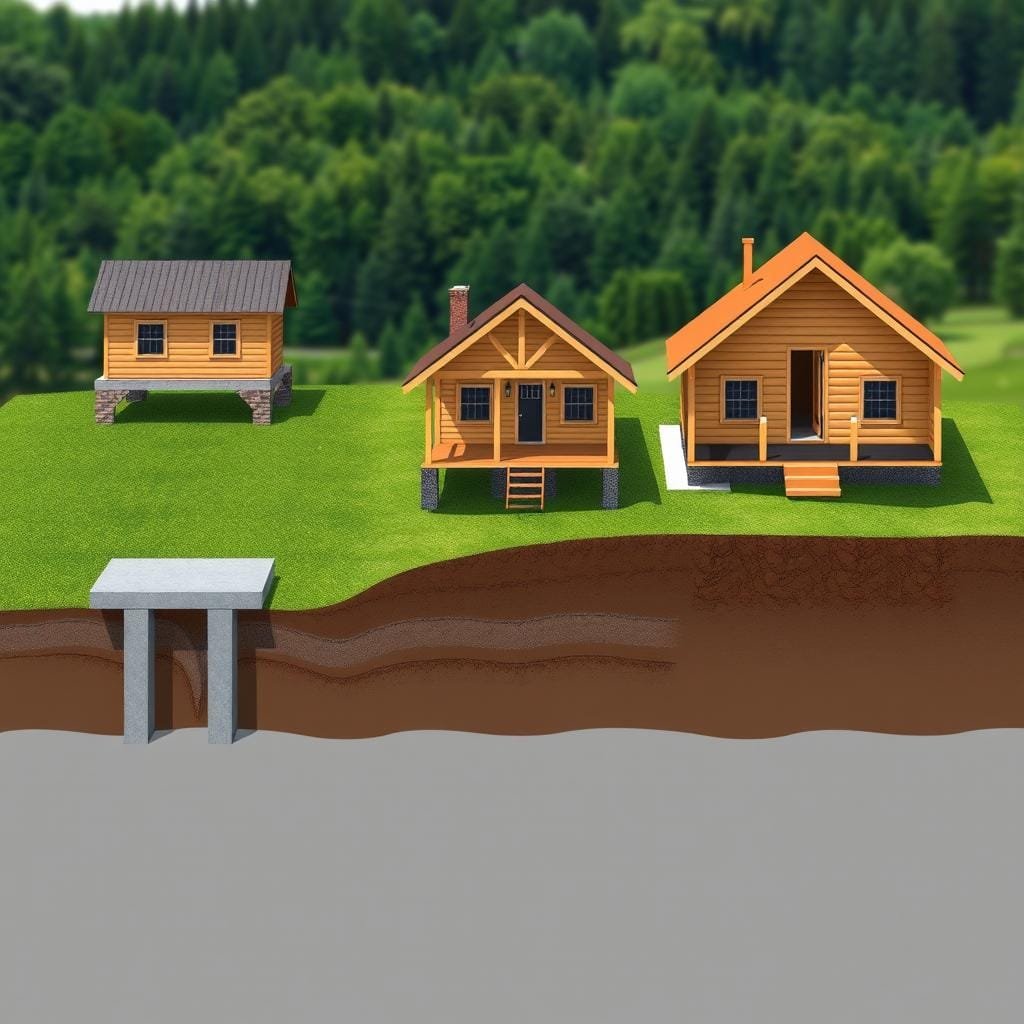
Choosing the right foundation for your cabin is key. There are three main types: slab, pier, and crawl space foundations. Each has its own benefits and works best with certain soil and site conditions. Let’s look at what makes each foundation special for cabin builders.
These three foundation types have been used for decades. They provide strong support and fit different budgets and building needs.
Slab-on-Grade Foundations
A concrete slab foundation makes your cabin floor and foundation one unit. It’s simple yet durable for many sites.
The foundation starts with digging 80-100mm below grade. Then, a 4-inch stone base is compacted to prevent settling.
Next, a 4 to 6 inch thick concrete pad is poured. The concrete mix must be C30 strength for homes. Steel mesh is added to prevent cracks.
Other important parts include:
- Vapor barrier – Plastic sheeting to block moisture
- Edge thickening – Extra concrete for more support
- Gravel base layer – For drainage and support
- Control joints – Planned cracks for expansion
When to Choose Slab Foundations
Slab foundations are best for certain situations. They work well on level sites, making installation easy and cheap.
Choose a slab foundation for stable soil and good drainage. They’re also good for areas with little frost. This type is great for finished floors at ground level.
Slabs are stable in warm climates. They eliminate the need for floor joists and are ready for flooring.
Pier and Post Foundations
A pier foundation uses individual support points. It’s flexible for tough sites and popular among experienced builders.
Design and Construction Basics
Pier foundations have concrete columns or wooden posts deep in the ground. Each pier goes below the frost line to prevent movement. Horizontal beams connect the piers and support the floor.
The design needs proper spacing between piers. Piers are usually 8 to 12 feet apart. Posts must be below the frost line, which varies by region.
Construction involves these steps:
- Mark pier locations on your cabin’s floor plan
- Dig holes to the required depth (usually 36-48 inches in frost-prone areas)
- Pour concrete piers or set treated posts in concrete footings
- Install support beams connecting the piers
- Build floor joists on top of the beam system
Advantages for Cabin Builders
The pier foundation has many benefits. It’s lower in cost than full concrete slabs.
This foundation is great on sloped terrain, saving on grading costs. It promotes drainage and offers space for utilities. Builders like the extra space for utilities.
More advantages include:
- Easier installation on remote sites with limited equipment access
- Better ventilation that reduces moisture problems
- Simpler repairs if foundation adjustments become necessary
- Minimal site disturbance during construction
Crawl Space Foundations
A crawl space foundation combines the stability of walls with accessible space underneath. It’s a middle ground between slabs and pier systems.
Configuration and Access
Crawl space foundations have short walls, 18 to 48 inches tall. They rest on concrete footings below the frost line. The floor sits on top of these walls.
Access points in the walls allow for plumbing, electrical, and structural inspections. The floor is usually bare earth covered with vapor barriers.
Common configurations include vented crawl spaces with screened openings. Some prefer sealed crawl spaces with insulation and conditioning.
Utility and Maintenance Benefits
The crawl space foundation offers practical advantages. Easy access to utilities makes repairs simpler without damaging floors.
It allows for regular inspections of structural elements. You can spot moisture, pest, or foundation issues early. Plumbing and wiring are protected from weather.
Maintenance benefits include better air circulation and lower repair costs. The design also offers extra storage space for seasonal items or mechanical systems.
Best Soil for Cabin Foundation: The Ideal Matches
Your cabin foundation needs soil that’s reliable. Certain soils stand out for their performance. The best soil for cabin foundation work has great bearing capacity and drains well.
Top soils share key traits. They stay stable through seasons, resist moisture issues, and evenly distribute loads.
Why Gravel and Rock Are Top Choices
Gravel and rock are favorites for foundations. Gold Star Buildings says gravel is the best for portable cabins. It’s durable, drains well, and is stable. Builders prefer sites with stone, compact dirt, and grey clay.
A gravel foundation needs 4 to 6 inches for small cabins. Bigger cabins need 6 to 8 inches for support.
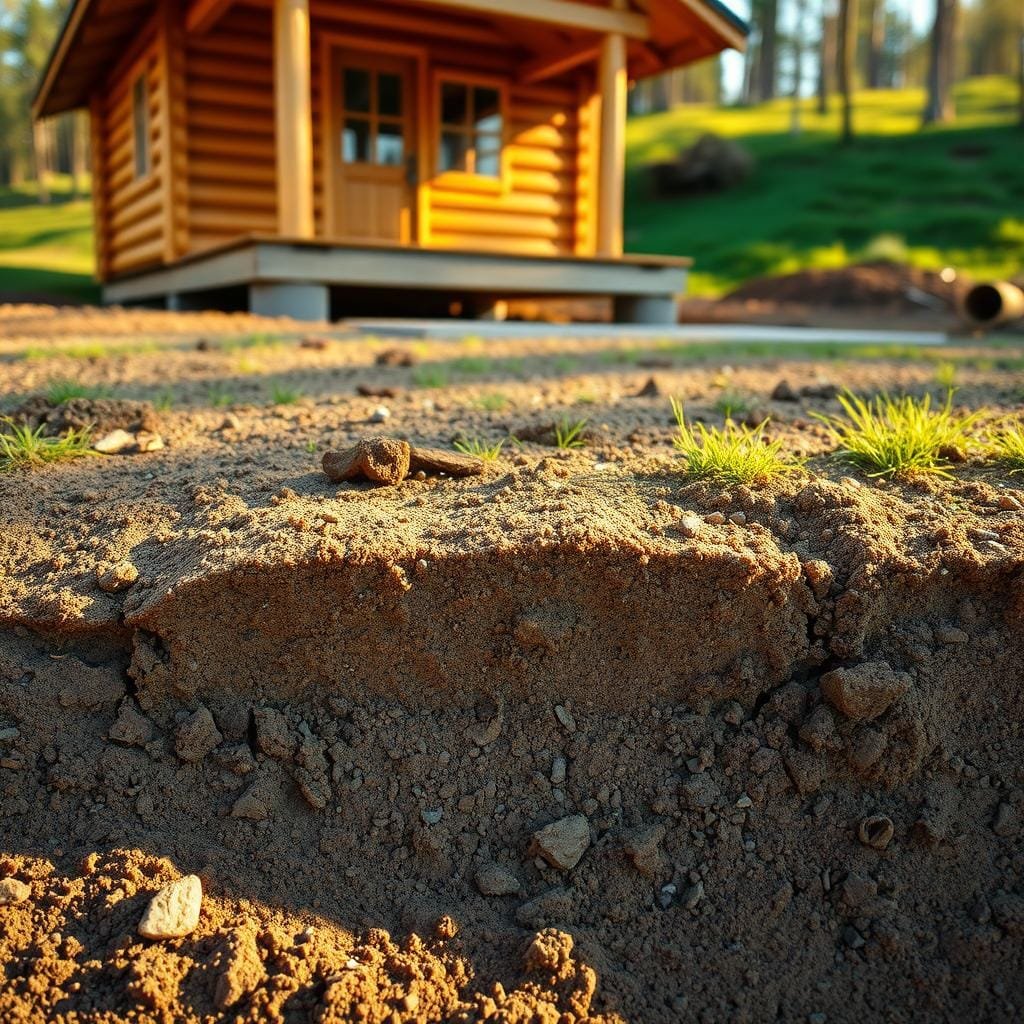
Gravel’s angular shape helps spread weight evenly. Its jagged edges lock together, preventing settlement. This is better than rounded particles that can shift.
Gravel and rock keep their shape, even with moisture. Clay changes size with water, but gravel stays the same. This keeps foundations stable over time.
Natural Drainage Benefits
Water flows easily through gravel and rock. This makes soil drainage simple. The spaces between particles let water move away from your foundation.
This prevents water from freezing and expanding. Your cabin stays level and secure all year without extra effort.
- Zero moisture retention: Water drains right away
- Prevents ice formation: No water means no ice
- Reduces foundation pressure: No water weight against structures
- Maintains consistent support: Performance doesn’t change with rainfall
Sandy Loam as a Close Second
Sandy loam is a close second for foundations. It has sand, silt, and clay for strength and drainage. It has a bearing capacity of 2,000 to 3,000 pounds per square foot.
The sand lets water through, while the silt and clay hold it together. This makes a sandy soil foundation that compacts well and stays stable. It drains well without losing cohesion like pure sand.
Sandy loam is great for slab foundations. It compacts well under equipment, making a firm base that resists settling.
Dense Compacted Sand Considerations
Dense sand is a solid foundation option with the right compaction. It has good bearing capacity and drains water quickly. The key is uniform compaction.
Professional installation is key for sand foundations. Use equipment to compress the sand in 6 to 8 inch lifts. Each layer must be compacted well. Testing ensures the sand is dense enough before building starts.
Sand needs the right amount of moisture during and after installation. Too much water weakens it. The right balance creates a stable foundation that lasts for decades.
Well-Graded Soils for Optimal Performance
Well-graded soils have different particle sizes for exceptional stability. The mix of sizes packs tightly, creating a dense and superior soil drainage foundation.
These soils achieve the highest compaction levels. The mix of sizes prevents uniform spacing. Engineers choose well-graded soil for its many benefits.
| Soil Type | Bearing Capacity | Drainage Rating | Stability Level |
|---|---|---|---|
| Gravel and Rock | 3,000+ PSF | Excellent | Outstanding |
| Sandy Loam | 2,000-3,000 PSF | Good | Very Good |
| Dense Compacted Sand | 2,000-2,500 PSF | Good | Good |
| Well-Graded Mix | 2,500-3,500 PSF | Very Good | Excellent |
Different particle sizes in soils improve drainage. Water moves through easily, preventing saturation. This keeps the soil stable while allowing water to drain.
Matching Slab Foundations with Soil Types
When planning a concrete slab foundation for your cabin, knowing the soil is key. Concrete slabs are durable and many builders prefer them. But, they only work well on the right soil.
The soil under your slab affects moisture, temperature, and stability. Choosing the right soil protects your investment and keeps your cabin stable for years.
Optimal Soil Conditions for Concrete Slabs
The best soils for a concrete slab foundation drain water fast and resist changes. They also support the slab evenly.
Soils like gravel, coarse sand, and sandy loam are ideal. They don’t hold too much water, which prevents swelling and shrinking. This keeps your slab stable and crack-free.
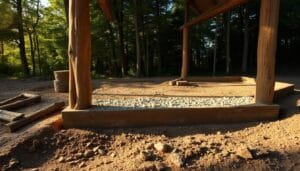
Crushed stone is also great for stability. Gold Star Buildings says a 4-inch stone base, when tamped, is perfect. It spreads weight evenly and keeps moisture out.
Rock and dense gravel are natural advantages. They need little prep and shed water well. Finding these soils is a good sign for slab construction.
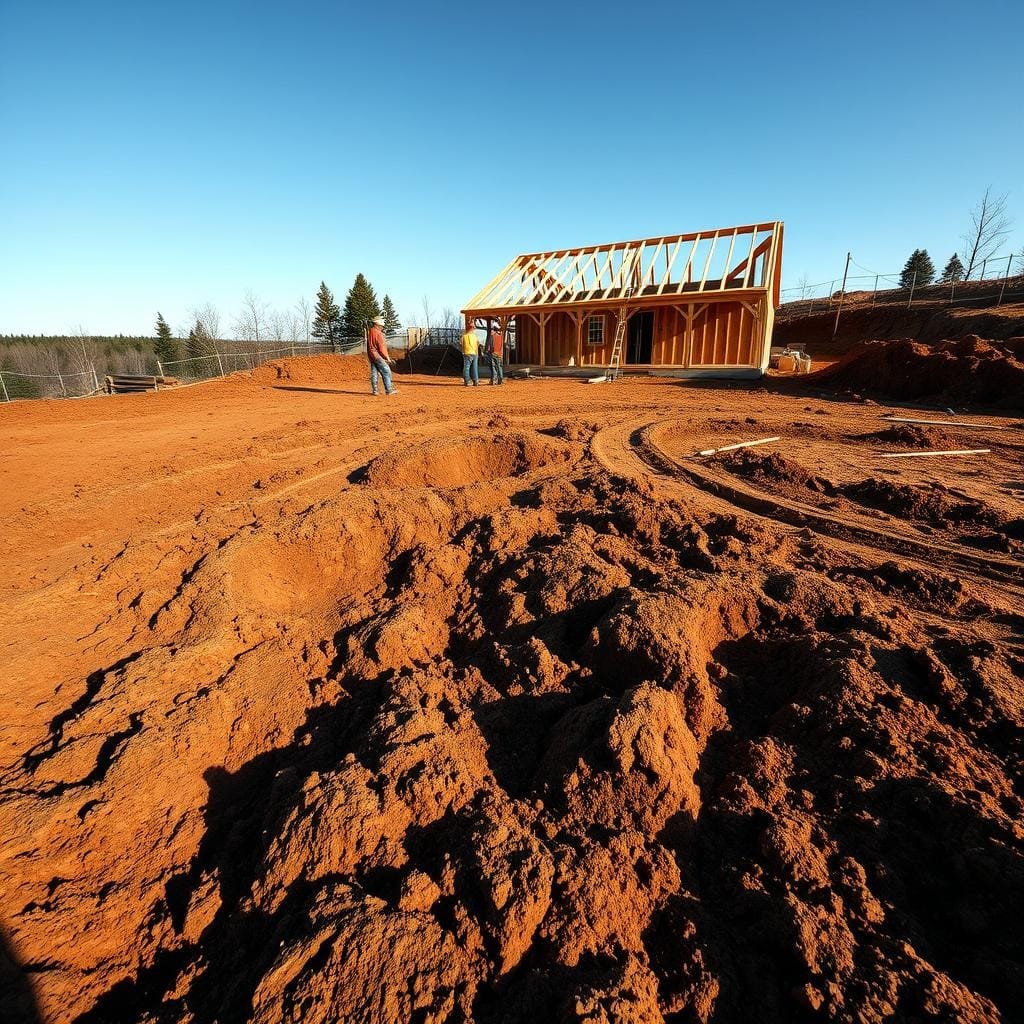
Soils to Avoid with Slab Foundations
Not all soils work with concrete slabs. Some can cause serious problems. Knowing which to avoid helps you choose the right site.
Expansive Clay Problems
Clay soils that change with moisture are a big threat. Expansive soil can swell and shrink, causing concrete to crack. This happens within a few years.
Cracks, sticking doors, and sloping floors are signs of trouble. In bad cases, the slab can break apart.
Expansive clay is sticky when wet and cracks when dry. If you see these signs, a slab foundation might not be the best choice.
Organic Soil Concerns
Soils with decomposing plant matter or peat are also problematic. They create voids under the slab. As they break down, the soil settles, causing cracks.
Dark colors, spongy texture, and plant material indicate organic content. Soils with these signs need to be removed before slab construction.
Necessary Soil Preparations and Base Layers
Proper soil preparation is key for a lasting slab. Following established steps ensures your foundation works as planned.
Start by removing topsoil and organic material. Aim for stable subsoil 80 to 100 millimeters deep, as Log Cabin Hub suggests.
Next, create a base layer of 4 to 6 inches of crushed stone. This layer should not absorb water. Broken bricks or crushed stone are good choices.
Soil compaction is critical. Use a plate compactor to ensure the base is solid. The Off Grid Cabin emphasizes a solid foundation before concrete is placed.
Compaction happens in layers. Spread 2 to 3 inches of material, compact it, then add more. This method eliminates air pockets and ensures even density.
| Preparation Step | Material/Method | Typical Depth/Specification | Purpose |
|---|---|---|---|
| Excavation | Remove topsoil and organics | 80-100mm below grade | Reach stable subsoil |
| Base Layer | Crushed stone or hardcore | 4-6 inches compacted | Drainage and load distribution |
| Compaction | Plate compactor in lifts | 2-3 inch layers | Eliminate voids and settlement |
| Leveling Course | Crusher dust or sand | 1-2 inches | Create smooth, level surface |
| Vapor Barrier | Polyethylene sheeting | 6-10 mil thickness | Prevent moisture migration |
Add a leveling course of fine material over the base. This fills voids and smooths the surface. The Off Grid Cabin uses this method for even results.
Install a vapor barrier over the base. Use 6 to 10 mil polyethylene sheeting to prevent moisture from reaching the concrete. This protects your cabin’s interior.
Each step builds on the last. Skipping or rushing through compaction can lead to problems later. Proper preparation is cheaper than fixing a failed foundation.
Professionals use density testing equipment. DIY builders can check by seeing if the base doesn’t deflect under foot. This is a basic test of compaction.
Pier and Post Foundation Soil Requirements
Pier and post foundations are great for cabin builders, but they need the right soil and setup. Unlike slab foundations, pier systems put weight on specific points. This means the soil at those points must handle a lot of weight without moving.
Knowing how soil works with pier systems helps avoid costly mistakes. The right soil, depth, and pier design create a strong base for your cabin. This base will last for decades.
Best Soils for Pier Stability and Support
Dense, cohesive soils are best for pier and post setups. Compact clay, dense sand, gravel, and bedrock offer excellent lateral support. This support keeps piers from tilting or shifting as your cabin settles.
The soil’s bearing capacity at each pier spot is key. Dense sand can handle 2,000 to 3,000 pounds per square foot. Compact clay ranges from 1,500 to 4,000 pounds per square foot, depending on moisture and density.
Gravel and rock formations are the best for pier foundations. They offer bearing capacities over 5,000 pounds per square foot. They also drain well, preventing water from gathering around pier bases. The Off Grid Cabin shows how proper pier design works with different soils.
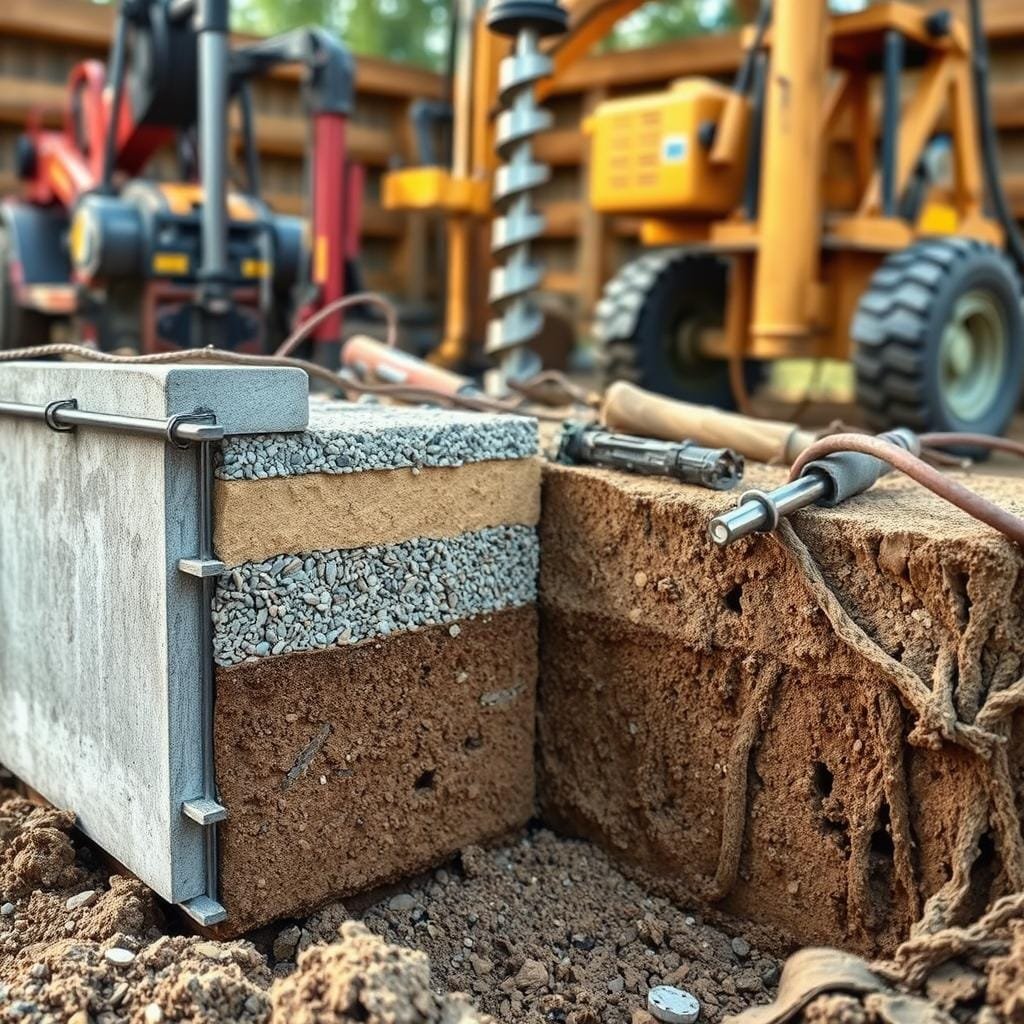
Soils with a mix of particle sizes create great friction and interlocking. This natural grip stabilizes the pier against vertical and horizontal movement during freeze-thaw cycles.
Depth Requirements in Different Soil Types
The depth of your pier installation is critical for a stable cabin. Soil characteristics affect how deep you need to dig for support.
Each soil type presents unique challenges for installation depth. Rocky terrain might need little excavation, while loose sandy areas require deeper pier placement for stability.
Shallow Soil Installations
Shallow pier installations are 2 to 3 feet deep and work in specific conditions. Stable rocky areas with solid bedrock near the surface allow for these shorter pier depths. The rock itself provides exceptional bearing capacity and resistance to movement.
In southern regions with little frost, shallow installations might be possible. But, you must check if your site freezes, as even occasional frost can cause problems with shallow piers over time.
The main limitation of shallow installations is reduced lateral stability. Piers that don’t extend deep enough may shift or tilt under lateral loads from wind, uneven cabin weight, or seasonal soil expansion.
Deep Pier Solutions
Deep pier foundation systems are needed in several scenarios. Gold Star Buildings recommends digging posts below the frost line with concrete or stone footers for each post. This ensures long-term stability regardless of seasonal changes.
Loose or sandy soils need deeper installations to reach denser layers with adequate soil bearing capacity. The pier bypasses unstable surface material to transfer loads to more competent soil below.
Areas with fill material or previously disturbed ground benefit from deep pier solutions. Helical piers are a great alternative for these conditions, reaching down to solid ground by penetrating through recently filled areas until they encounter undisturbed native soil.
The deeper your piers extend, the better they resist both vertical settlement and frost heave forces. This extra depth provides increased friction along the pier sides and reaches soil layers less affected by surface moisture fluctuations and temperature changes.
Frost Line and Seasonal Soil Considerations
Understanding frost heave is critical for pier foundation design in cold climates. When water in soil freezes, it expands with tremendous force—enough to lift your entire cabin structure if piers aren’t installed properly.
The frost line shows the maximum depth that ground freezing penetrates during winter months. This depth varies dramatically across the United States based on regional climate patterns and typical winter temperatures.
| Region | Typical Frost Depth | Minimum Pier Depth | Soil Challenges |
|---|---|---|---|
| Deep South (FL, LA, TX coast) | 0-12 inches | 24-30 inches | High moisture, organic content |
| Mid-Atlantic (VA, NC, TN) | 12-24 inches | 30-36 inches | Clay expansion, moderate frost |
| Midwest (OH, IL, IN) | 30-40 inches | 42-48 inches | Freeze-thaw cycles, clay soils |
| Northern States (MN, WI, ME) | 48-60+ inches | 60-72 inches | Severe frost heave, long winters |
Your piers must extend at least 6 inches below the maximum frost penetration depth to prevent heaving that can lift and damage your cabin. In Minnesota, this might mean digging 5 feet deep, while Florida builders might only need 2.5 feet.
Frost heave doesn’t affect all soils equally. Clay and silt soils hold more water and experience more dramatic frost heave compared to sandy or gravelly soils that drain freely. Log Cabin Hub explains that pad foundations carrying single-point loads work best when they’re square, reinforced with rebar, and placed below the frost line.
Seasonal soil movement extends beyond just frost concerns. Expansive clay soils shrink during dry summer months and swell when moisture returns in spring and fall. This cycling can gradually destabilize shallow piers even in areas without significant frost.
Proper pier design accounts for these seasonal changes by extending deep enough to anchor in stable soil layers that maintain consistent moisture levels year-round. The soil bearing capacity you calculate should reflect the weakest seasonal condition your site will experience, not just current conditions during construction.
Crawl Space Foundations and Soil Compatibility
Building a crawl space foundation protects your cabin from the ground. But, it also brings challenges like soil drainage. This design gives you access to utilities and storage. Yet, it can trap moisture, damaging your structure.
Choosing the right soil is key to avoiding costly repairs. The best soils drain water well, keeping your foundation dry. Problem soils, on the other hand, can lead to moisture issues and damage.
Critical Drainage Requirements for Crawl Spaces
Your crawl space foundation needs great soil drainage. Moisture trapped under your cabin floor can harm your structure. Gold Star Buildings warns that moisture near your foundation is bad for wood.
The soil around your crawl space must drain water away. Standing water causes wood rot, mold, pests, and weakens your foundation. These problems can cost thousands to fix.
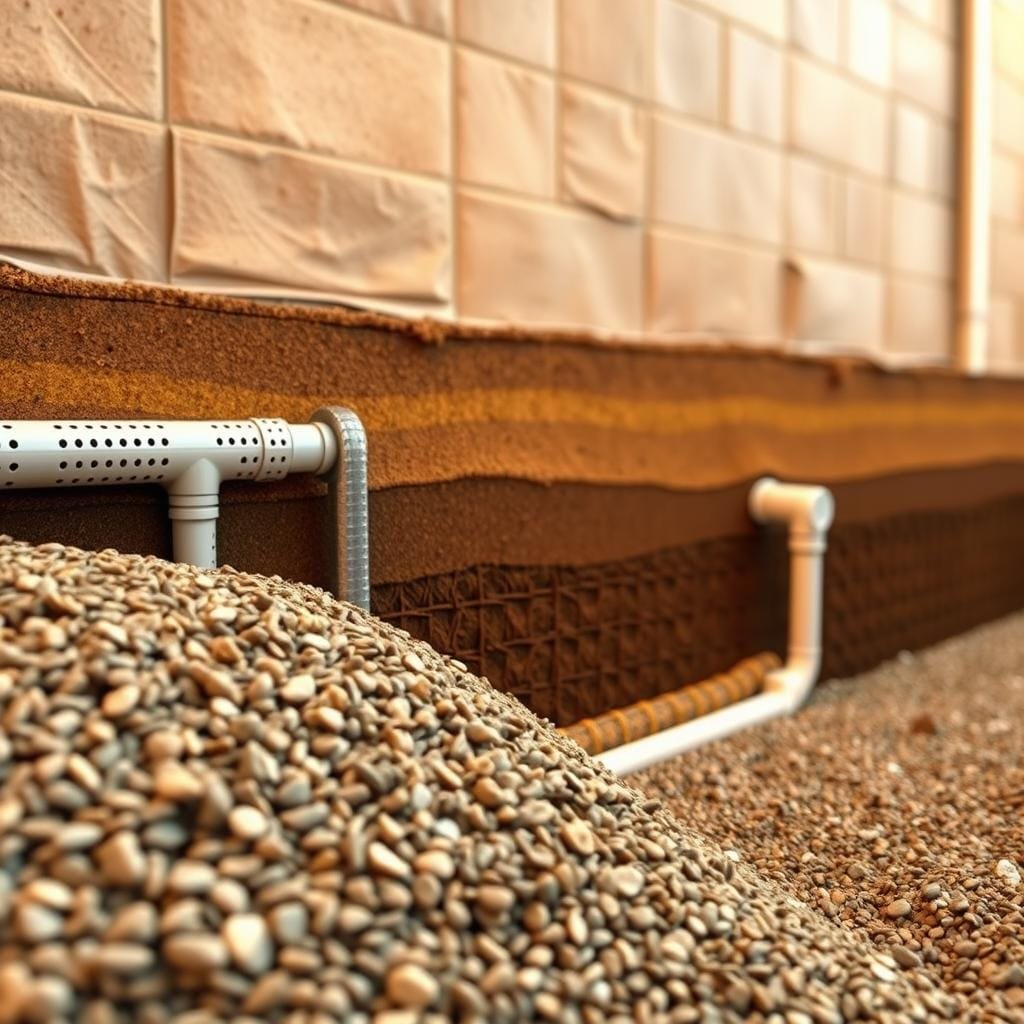
Proper grading helps prevent drainage issues. The ground should slope away from your foundation. Builders also use perimeter drains to keep water out.
Soil Types That Work Best
Granular soils like gravel and coarse sand are best for crawl spaces. They let water pass through quickly. Gold Star Buildings recommends gravel for its effectiveness.
Sandy loam is also good because it drains well and supports weight. The Off Grid Cabin advises building on undisturbed soil and checking for water issues.
Clay soils need extra care. You might need waterproofing and a French drain. It’s important to plan for drainage early to avoid problems.
| Soil Type | Drainage Quality | Crawl Space Suitability | Required Interventions |
|---|---|---|---|
| Coarse Gravel | Excellent | Ideal | Minimal – basic vapor barrier |
| Sandy Loam | Good | Very Suitable | Standard grading and vapor barrier |
| Silt | Moderate | Workable | Enhanced drainage system needed |
| Clay | Poor | Challenging | Extensive waterproofing and perimeter drains |
| Organic Soil | Variable | Not Recommended | Complete soil replacement required |
Moisture Control and Vapor Barrier Needs
Moisture vapor rises from the ground into your crawl space. This can cause humidity problems. Installing a vapor barrier is essential for protecting your foundation.
A 6-mil polyethylene sheeting covers the crawl space floor. Different soils release different amounts of moisture vapor. Clay soils, for example, need more moisture control.
The vapor barrier should go up the walls and be sealed. Some builders add gravel on top for extra protection. This keeps your space dry and protects your investment.
Ventilation and Soil Interaction
The moisture in your soil affects humidity levels. Wet soils release more vapor, which raises humidity. Foundation vents help remove excess moisture.
But, sealed crawl spaces with conditioned air might work better. This is true if you’ve fixed drainage issues first. Poor drainage can’t be solved by ventilation alone.
Soil moisture changes with the seasons. Spring thaws and heavy rains increase vapor emissions. Sandy and gravelly soils dry out faster than clay. Knowing your soil’s behavior helps you manage humidity.
Temperature differences can also cause condensation. Warm, humid air meets cooler surfaces, depositing moisture. Proper ventilation or conditioning prevents this damage.
Problem Soils and Warning Signs to Watch For
Knowing which soils can harm your cabin’s foundation is key to avoiding costly repairs. Not all ground is solid enough to support your dream cabin. Some soils can cause serious structural problems over time.
Spotting these issues before you start building can save you from expensive fixes and safety risks. The signs might not be obvious, but learning to recognize them can protect your investment.
Expansive Clay Soils
Expansive soil is a major enemy of foundations. These soils, rich in clay, swell when wet and shrink when dry. This constant change puts a lot of pressure on structures above.
Every year, thousands of buildings in the U.S. face damage from expansive clay. Many owners find out too late, when cracks appear in walls and floors. Knowing how to spot these soils before building is a big advantage.
Identification Methods
There are simple tests to identify expansive soil. The ribbon test is one. Take a handful of moist soil and roll it between your palms.
If the soil forms a ribbon longer than two inches without breaking, it’s high in clay. The longer the ribbon, the more clay there is. Some soils can make ribbons six inches or longer.
Look for these signs around your cabin site:
- Deep cracks in the ground during dry summer months
- Sticky, slippery texture when wet
- Rock-hard surface when completely dried out
- Gray or dark brown coloration
- Existing structures nearby showing foundation damage
The plasticity test is another way to identify clay soil. Wet the soil until it’s pliable, then try molding it into different shapes. Clay soils often contain minerals like montmorillonite, which absorb water like a sponge.
Seasonal Movement Patterns
Expansive soil moves in predictable ways throughout the year. In spring and wet seasons, it swells up as it absorbs moisture. This creates pressure that pushes structures unevenly.
When summer comes and it rains less, the clay dries and shrinks. Gaps form beneath the foundation as the soil pulls away. This cycle repeats every year.
The damage builds up slowly. Small cracks start, then get bigger over time. Doors and windows get stuck, and floors shift enough to roll marbles across rooms.
A clay soil foundation built without proper engineering faces serious long-term challenges. The seasonal movement can be several inches vertically in severe cases. Standard foundations can’t flex enough to handle this without damage.
Organic and Peat Soils
Organic soils pose their own set of challenges for cabin foundations. These dark, spongy materials feel soft and smell earthy or musty. Peat soil problems are among the worst for foundations.
Building on organic soils without extensive remediation leads to future structural issues. The material compresses under load and changes over time. Most building codes require removing these soils or using specialized deep foundations.
Decomposition Issues
Organic matter breaks down continuously through natural decay. Plant fibers, leaves, and root systems in these soils decompose gradually. As this happens, the soil volume decreases, creating voids beneath your foundation.
The rate of decomposition depends on moisture and temperature. Warmer, wetter conditions speed up the process. Peat soils, with up to 90% water by volume when saturated, worsen the problem.
This ongoing breakdown creates unpredictable support conditions. Areas that seemed stable during construction may fail months or years later as organic matter continues to decompose beneath your cabin.
Settlement Risks
Settlement is the biggest threat from organic soils. These materials can compress 20% to 40% of their original depth under foundation loads. A three-foot thick layer of peat might compress down to less than two feet.
This settlement rarely happens evenly. Different areas compress at different rates, causing severe foundation tilting and cracking. The settlement continues for years as the organic material consolidates.
Professional soil testing usually recommends one of two approaches for peat soil problems:
- Complete removal of all organic material down to stable soil
- Deep pier foundations extending through the peat to bedrock or dense soil layers
- Raft foundations that distribute weight across very large areas (though risky)
Soft clay mixed with organic content requires raft foundations to spread loads effectively. Even then, some sites remain too unstable for conventional cabin construction.
Loose Fill and Previously Disturbed Ground
Recently filled areas pose hidden dangers for cabin foundations. This includes any location where soil has been moved, graded, or deposited in the past few years. The ground hasn’t had enough time to naturally consolidate and stabilize.
Building on undisturbed soil provides more reliable support than filled areas. Disturbed ground settles unpredictably as it compresses under your cabin’s weight. This settlement can continue for five to ten years after filling.
Old construction sites, former dump areas, and graded lots all fall into this problem category. The fill material itself might be quality soil, but the loose, unconsolidated state creates instability.
Signs of previously disturbed ground include:
- Uneven terrain with depressions and mounds
- Vegetation that differs from surrounding natural areas
- Buried debris appearing near the surface
- Obvious grading marks or equipment tracks
- Soft spots that compress easily underfoot
For these situations, helical piers offer a good solution. These specialized foundations screw deep into the ground until reaching solid, undisturbed soil layers. They transfer your cabin’s weight past the problematic fill to stable bearing material below.
Proper compaction of fill materials helps but doesn’t completely eliminate settlement risks. Professional compaction in controlled lifts improves the situation significantly compared to uncompacted fill.
High Water Table Complications
A high water table creates multiple foundation challenges that last all year. When groundwater is close to the surface, it affects foundation performance in several ways. Standing water issues become a constant concern instead of occasional problems.
The water table level changes with seasonal rainfall and drought cycles. During wet periods, rising groundwater can surround foundation elements with saturated soil. This creates hydrostatic pressure pushing against foundation walls and basement spaces.
Buoyancy forces become a real concern with high water tables. Concrete foundations can float in saturated ground, creating uplift pressure that can crack slabs or shift foundation elements. Empty basements or crawl spaces face the greatest buoyancy risks.
Additional complications from high water tables include:
- Perpetual moisture problems encouraging mold and decay
- Reduced soil bearing capacity in saturated conditions
- Frost heave risks in cold climates as water freezes
- Difficulty maintaining dry crawl spaces or basements
- Corrosion of foundation anchors and metal components
Sites with water tables within three feet of the surface need special foundation designs. Slab-on-grade foundations often work better than crawl spaces in these conditions. Proper drainage systems become essential, not optional improvements.
Some high water table locations need sump pump systems running all the time to manage groundwater. Others benefit from exterior drainage tiles and waterproofing measures. The construction costs increase, but these measures protect your cabin from chronic moisture damage.
Professional soil testing identifies water table depth and seasonal variations. This information is critical for choosing the right foundation types and drainage strategies for challenging sites.
How to Test and Evaluate Your Cabin Site Soil
Before you start building your cabin, you need to know what’s under the ground. The soil type affects your foundation design and how much prep work you’ll need. You can do simple tests yourself or get professional help.
Knowing your soil doesn’t have to be hard or expensive. Many builders start with simple tests to understand their soil before getting expert help.
Simple DIY Soil Assessment Methods
You can learn a lot about your soil with a few simple tests. These DIY methods won’t replace expert analysis, but they’re a good start. They help you decide if you need professional help.
These tests are cheap and quick. They give you quick info about your soil’s makeup and how it drains.
The Jar Test for Soil Composition
The jar test is an easy way to figure out your soil. Here’s how to do it step by step.
First, collect soil samples from different spots around your cabin site. Dig down 12 to 18 inches below the topsoil. Mix equal amounts from each spot together in a bucket.
Fill a clear quart jar about one-third full with this soil sample. Add water until it’s nearly full, leaving an inch at the top. Add a teaspoon of dishwashing liquid to help separate the particles.
Screw the lid on tight and shake vigorously for several minutes. Set the jar on a level surface where it won’t be disturbed for 24 hours.
After settling, you’ll see distinct layers. Gravel and coarse sand settle first at the bottom within the first minute. Fine sand settles next over the first hour. Silt takes 4 to 8 hours to settle completely. Clay particles stay suspended longest and form the top layer, while organic matter floats on the water surface.
Measure each layer with a ruler and calculate the percentage of each component. If you have more than 50% sand and gravel combined, you’re in good shape. Clay content above 30% means you should consider professional soil testing to assess the soil bearing capacity accurately.
Percolation Testing for Drainage
Understanding drainage is key for a successful foundation. The percolation test shows how quickly water moves through your soil.
Dig a hole about 12 inches deep and 6 to 8 inches wide at your proposed cabin location. Fill it completely with water and let it drain naturally. This pre-soaks the soil for accurate results.
Once the hole drains, fill it with water again. Measure the water depth immediately, then check it every 15 minutes. Good drainage means water disappears within 30 to 60 minutes.
Sandy soils typically drain in under 10 minutes, which is excellent for most foundations. Clay soils might take several hours, signaling drainage problems you’ll need to address.
Visual and Tactile Inspection
Your eyes and hands are powerful tools for assessing soil. Start by looking at soil color, which tells you a lot about composition.
Dark brown or black soil indicates high organic content, which compresses over time. Red or orange hues suggest iron-rich clay that might expand when wet. Gray soil often means poor drainage and high moisture content.
Squeeze a handful of moist soil in your fist. Sandy soil feels gritty and falls apart immediately when you open your hand. Silt feels smooth like flour and holds its shape briefly. Clay feels sticky, forms a tight ball, and you can roll it into a ribbon between your fingers.
Dig down below the topsoil at several locations across your site. Look for consistency in soil type and watch for any layers of different material. Note any areas where water seems to collect or where the soil stays wet longer.
Professional Soil Testing Services
While DIY methods provide useful info, professional soil testing gives you detailed data. Geotechnical engineering firms specialize in analyzing soil for construction purposes.
You should definitely hire professionals if your DIY tests reveal clay soil, poor drainage, or inconsistent soil types across your site. Larger cabins, sites on slopes, and areas with known soil problems also warrant professional evaluation.
The investment in professional testing often saves thousands of dollars by preventing foundation failures. Engineers provide specific recommendations tailored to your exact site conditions and proposed cabin design.
What Geotechnical Reports Include
A detailed geotechnical report contains everything your foundation contractor needs to know. The report starts with detailed soil classification at various depths using standardized engineering systems.
Soil bearing capacity values tell you exactly how much weight each square foot of soil can safely support. This number directly determines your foundation design options. Most reports test soil at multiple depths to find the best bearing layer.
The report identifies depth to bedrock if it exists within reasonable digging distance. It measures groundwater levels and notes seasonal fluctuations. You’ll also get information about expansion problems with clay soils.
Perhaps most valuable, geotechnical engineering reports include specific foundation recommendations. Engineers suggest which foundation types work best for your soil conditions and what preparations you’ll need to make.
Cost and Timeline Expectations
Professional soil testing is a small part of your cabin budget but offers huge value. Basic geotechnical reports for straightforward sites typically cost between $500 and $1,500.
This basic service includes 2 to 4 soil borings, laboratory analysis, and a written report with foundation recommendations. The entire process takes about 1 to 2 weeks from initial site visit to final report delivery.
More detailed testing for problematic sites runs $2,000 to $5,000. These detailed investigations include additional borings, specialized lab tests, and more extensive analysis. Complex sites might require 3 to 4 weeks for complete evaluation.
Many firms offer preliminary consultations for $200 to $400 where an engineer visits your site and provides initial observations. This helps you decide whether you need full testing before committing to the larger investment.
Understanding and Interpreting Soil Test Results
Reading soil test results doesn’t require an engineering degree once you understand the key numbers. The bearing capacity rating is your most important figure, measured in pounds per square foot (psf).
Excellent soils like gravel and dense sand show bearing capacity above 3,000 psf. Good soils including compact sand and hard clay range from 2,000 to 3,000 psf. Marginal soils such as loose sand or soft clay fall between 1,000 and 2,000 psf. Anything below 1,000 psf requires significant soil improvement.
The plasticity index measures how much clay soil expands and contracts with moisture changes. Low plasticity (below 15) means minimal movement. High plasticity (above 30) signals possible foundation problems without proper design.
Look at the groundwater table depth carefully. Water within 4 feet of your planned foundation level complicates construction and requires additional waterproofing measures.
| Test Parameter | Good Results | Marginal Results | Poor Results |
|---|---|---|---|
| Soil Bearing Capacity | Above 3,000 psf | 1,500-3,000 psf | Below 1,500 psf |
| Percolation Rate | Drains in 30-60 minutes | Drains in 2-4 hours | Takes over 4 hours |
| Clay Content | Below 20% | 20-35% | Above 35% |
| Groundwater Depth | Below 8 feet | 4-8 feet deep | Within 4 feet |
| Organic Content | Below 5% | 5-10% | Above 10% |
Moisture content readings help you understand seasonal soil behavior. High moisture content in summer suggests year-round wetness issues. The report should note whether soil samples came from wet or dry season conditions.
Pay attention to any recommendations about soil improvement or special foundation design requirements. These suggestions come from experienced engineers who’ve seen similar site conditions many times before. Following their guidance prevents expensive problems during and after construction.
If anything in the report concerns you or seems unclear, call the engineering firm and ask questions. Most geotechnical engineers are happy to explain their findings and help you understand what the results mean for your specific cabin plans. This conversation often proves just as valuable as the written report itself.
Soil Improvement and Modification Techniques
Problem soil doesn’t have to stop your cabin project. Soil improvement methods can make your foundation stable. Whether it’s clay that expands, sand that drains too fast, or soil that can’t bear weight, there are proven ways to fix it.
There are many soil modification methods. Each one tackles different problems and works best with certain soils. Knowing your options helps you pick the most cost-effective solution for your site.
The key is to match the improvement technique to your soil issues. Some problems need mechanical solutions, while others require engineered materials or drainage fixes. Many successful cabin projects use a mix of methods for the best results.
Mechanical Soil Compaction Methods
Soil compaction makes soil denser by removing air pockets. This improves its ability to bear weight and reduces settlement that could harm your cabin. Proper compaction can turn loose, unstable soil into a solid foundation base.
The right compaction equipment depends on your soil type and project size. Soil moisture is key – slightly damp soil compacts better than dry or wet soil. Most soils reach optimal compaction at 10-15% moisture content.
Professionals make multiple passes over the same area. Each pass increases density a bit until the soil reaches the desired level, usually 90-95% of maximum density for homes.
Vibratory Compaction
Vibratory plate compactors work great for cohesive soils like clay and silt. These machines use quick vibrations to pack soil particles tighter. The vibrating action breaks bonds between particles, allowing them to settle into denser arrangements.
For cabin foundations, a 200-300 pound plate compactor handles most residential projects. You’ll need to make 4-6 passes over each area, compacting in lifts of 4-6 inches. This avoids deep layer compaction.
Log Cabin Hub suggests using plate compactors to ensure hardcore materials are well-compacted when building raft foundations. This creates a stable base for foundation settling and stability.
Roller Compaction
Larger cabin projects benefit from roller compaction equipment. Smooth drum rollers are best for granular soils like sand and gravel. They use weight and pressure to compress materials. These machines cover ground quickly and work well for access roads and large foundation areas.
Padfoot rollers have protruding feet that penetrate clay soils effectively. The kneading action breaks up clumps and works moisture through the soil mass. This equipment type suits bigger projects where you’re improving substantial areas of clay-heavy ground.
Sheepsfoot rollers are sometimes used for deep compaction work. The concentrated pressure from the feet reaches deeper soil layers than smooth rollers can affect.
Adding Engineered Gravel Base Layers
Installing a properly designed gravel base is a common and effective soil improvement method. This approach creates a stable, well-draining platform even when native soil conditions are poor. The gravel layer redistributes foundation loads and prevents moisture problems.
A standard engineered base consists of 6-12 inches of crushed stone. Gold Star Buildings recommends 4″-6″ of washed, crushed stone for shed foundations. This principle applies to cabin foundations as well.
The best gravel for foundation bases is ¾-inch crushed stone. This size compacts well while maintaining excellent drainage characteristics. Avoid rounded river rock, which doesn’t interlock and shifts under load.
Proper installation follows these essential steps:
- Excavate to design depth below the planned foundation elevation
- Install geotextile fabric to prevent gravel mixing with underlying soil
- Place gravel in lifts of 4-6 inches, compacting each layer thoroughly
- Level and grade the final surface before foundation construction
The Off Grid Cabin emphasizes tamping and leveling gravel carefully, sometimes using crusher dust for final leveling. This creates the flat, stable surface your foundation requires. Geotextile fabric acts as a separation layer that maintains the gravel base’s integrity over time.
Even poor native soil can support substantial structures when topped with a well-constructed gravel base. The improved soil drainage prevents water accumulation that causes settling and frost heave problems.
Chemical Soil Stabilization Options
Chemical treatments modify soil properties at a molecular level. These soil improvement methods work well when mechanical approaches alone can’t solve your soil problems. The right chemicals depend entirely on your specific soil type and the issues you’re addressing.
Lime treatment transforms problematic clay soils. When mixed with clay, lime triggers chemical reactions that reduce plasticity and increase strength. The clay becomes less expansive and more stable. Typical applications use 2-6% lime by soil weight, mixed thoroughly through the top 12-18 inches.
Cement stabilization works better for sandy soils that lack cohesion. Portland cement binds sand particles together, creating a stronger, more stable mass. This technique effectively creates a weak concrete throughout the treated soil zone.
Chemical stabilization offers several advantages:
- Reduces soil expansion and contraction cycles
- Improves bearing capacity significantly
- Creates more uniform soil properties
- Provides long-lasting improvements
Professional application ensures proper chemical distribution and mixing depth. The treated soil typically needs 7-14 days to cure before foundation construction begins. Weather conditions during this curing period affect final results.
Installing Proper Drainage Systems
Effective soil drainage protects your foundation from water damage and maintains soil stability. Even the best soil becomes problematic when saturated. Strategic drainage systems intercept and redirect water before it threatens your cabin’s structural integrity.
Drainage solutions range from simple gravel trenches to sophisticated underground piping networks. The right system depends on your site’s topography, soil type, and water sources. Many successful cabin foundations use multiple drainage approaches working together.
Foundation drainage serves two critical purposes. First, it prevents water accumulation around foundation walls that causes hydrostatic pressure and possible leaks. Second, it maintains stable moisture levels in the soil, preventing expansion and contraction cycles.
French Drains
French drains consist of perforated pipe surrounded by gravel in excavated trenches. These systems intercept groundwater and redirect it away from foundation areas. The gravel allows water to flow freely into the perforated pipe, which carries it to a suitable discharge point.
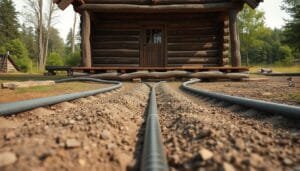
Standard French drain installation places 4-inch perforated pipe in trenches 18-24 inches deep. The trench receives a 3-4 inch gravel base, then the pipe, then more gravel to within 6 inches of ground level. Landscape fabric wrapping prevents soil from clogging the system.
Position French drains along foundation perimeters where they catch water before it reaches the structure. The pipe should slope at least 1% (1 inch per 100 feet) toward the discharge point. This gentle grade maintains steady water flow without excessive velocity.
Curtain Drains
Curtain drains intercept water upslope from your cabin site. These systems work like underground fences that capture groundwater before it flows toward your foundation. This proactive approach prevents drainage problems instead of just managing them.
Install curtain drains 10-20 feet uphill from your foundation area. The trench crosses the slope perpendicular to water flow, catching groundwater as it moves downhill. Construction details mirror French drains, using perforated pipe in gravel-filled trenches.
Curtain drains excel on sloped cabin sites where natural groundwater movement threatens foundation areas. They’re valuable where springs or seepage areas exist uphill from your building location. The intercepted water diverts around your cabin to natural drainage paths downslope.
Both French and curtain drains benefit from proper maintenance access. Plan cleanout points every 50-100 feet along longer runs. These allow you to clear any sediment or root intrusion that might reduce drainage effectiveness over time.
| Improvement Method | Best For | Cost Range | Effectiveness |
|---|---|---|---|
| Vibratory Compaction | Clay and silt soils | Low to moderate | High for cohesive soils |
| Gravel Base Layers | All soil types | Moderate | Excellent drainage and stability |
| Chemical Stabilization | Expansive clay or loose sand | Moderate to high | Very high for targeted problems |
| French Drains | High groundwater areas | Moderate | Excellent for perimeter drainage |
Combining multiple soil improvement techniques often produces the best results. A typical approach might include mechanical soil compaction, a thick gravel base, and perimeter drainage. This layered strategy addresses multiple problems at once, creating the most reliable foundation conditions possible.
Regional Soil Considerations Across the United States
Soil types vary greatly from coast to coast in the United States. What works in Maine might not work in Arizona. Understanding your region’s soil is key to avoiding costly construction surprises.
The country’s soil is shaped by geology, climate, and history. Glaciers left the Northeast with rocky deposits. The Southeast has iron-rich clay from centuries of weathering. The Midwest has deep, rich soils built by prairie grasses.
These differences affect your cabin’s foundation. Frost heave is a big concern in the North but rare in the South. Clay soils in some areas can cause problems, while others have none.
Northeast Rocky Terrain and Glacial Soils
The Northeast has a mix of challenges and advantages for builders. Glacial activity left behind complex soil layers and rocky deposits. You’ll find everything from deep clay pockets to solid ledge just inches below the surface.
Glacial soils have a mix of clay, silt, sand, gravel, and boulders. This mix provides good bearing capacity when compacted. But, the unpredictable nature of these deposits means you need to investigate the site thoroughly before digging.
Ledge and Bedrock Challenges
Shallow bedrock in the Northeast can be both an obstacle and an opportunity. Some sites have solid granite or other rock formations just 12 to 24 inches below the surface. Excavating through ledge requires specialized equipment and can significantly increase construction costs.
Blasting ledge to create level building areas can cost $50 to $150 per cubic yard of rock removed. Rock drilling for pier foundations is a more economical alternative in many situations. Once you reach bedrock, you’ve found the ultimate bearing capacity—solid rock easily supports any cabin foundation without settlement concerns.
Pier foundations work exceptionally well when bedrock lies close to the surface. Drilling holes into the rock and anchoring piers with epoxy creates incredibly stable supports. This approach often costs less than removing large amounts of ledge and provides superior long-term stability.
Frost Depth Requirements
Northern states face serious frost heave challenges that southern builders rarely encounter. Frost lines reach 48 inches or deeper in Maine, Vermont, New Hampshire, and northern New York. This means all footings must extend below this depth to prevent heaving during freeze-thaw cycles.
Frost heave occurs when moisture in the soil freezes and expands, literally pushing foundations upward. When temperatures warm and the ground thaws, foundations settle back down—but rarely in their original position. This cycle creates cracks, uneven floors, and structural damage over time.
Building codes in northeastern states specify minimum footing depths based on local frost lines. Pennsylvania requires 36-inch depths in most areas, while locations in upstate New York may require 60 inches or more. Always check your local building department for specific requirements before digging.
Southeast Clay-Heavy Regions
The southeastern United States presents a completely different soil challenge dominated by clay formations. From Virginia through the Carolinas, Georgia, Alabama, and into parts of Tennessee, red clay soils create unique foundation considerations that require careful planning and proper techniques.
Red Clay Characteristics
Red clay gets its distinctive color from iron oxide content developed over thousands of years of weathering in humid, warm conditions. These iron-rich soils have high plasticity, meaning they expand significantly when wet and shrink dramatically when dry. This expansion-contraction cycle creates enormous pressure on foundations.
When properly managed, clay soil foundation projects can succeed beautifully. The key lies in maintaining consistent moisture levels around your foundation and accounting for movement in your design. Many southeastern builders use deeper foundations with reinforced concrete to resist the pressure from expanding clay.
Red clay typically offers decent bearing capacity when dry—often 2,000 to 3,000 pounds per square foot. But, wet clay loses much of this strength and becomes slippery and unstable. Proper drainage becomes absolutely critical in clay-heavy regions to prevent water accumulation around foundations.
Erosion Control Needs
Despite its sticky, compact nature when dry, red clay washes away surprisingly easily during heavy rain. The southeastern United States receives substantial rainfall, and unprotected clay slopes can erode rapidly, creating deep gullies and undermining foundations.
Erosion control measures become essential before, during, and after construction. Establish vegetation on all disturbed areas as quickly as possible. Grass, ground covers, and shrubs hold soil in place with their root systems. Many builders use erosion control blankets or hydro-seeding to establish vegetation rapidly.
Proper site grading directs water away from your foundation and prevents it from gathering speed as it flows downhill. Create gentle slopes instead of steep cuts whenever possible. Consider installing retaining walls on steep portions of your property to hold soil in place and create level building areas.
Midwest Prairie and Agricultural Soils
The Midwest offers some of the most foundation-friendly soils in the entire country. Deep, fertile loamy soils built up over millennia by prairie grasses provide excellent bearing capacity and relatively stable conditions. States like Iowa, Illinois, Indiana, Kansas, and Nebraska typically feature these favorable soil conditions.
Loamy soil contains a balanced mixture of sand, silt, and clay particles that drains reasonably well while maintaining good cohesion. This combination provides bearing capacities typically ranging from 2,500 to 4,000 pounds per square foot without special preparation. Most cabin foundations perform well in these conditions with standard construction techniques.
Yet, don’t assume all Midwestern soils are perfect. Some areas contain expansive clay deposits that require attention. Parts of Kansas, Oklahoma, and Texas feature clay soils with high shrink-swell potentials. Agricultural soils may also contain high organic content in the topsoil layer, which must be removed before building.
Frost depth considerations apply throughout much of the Midwest, though not as severely as in the Northeast. Northern portions of the region require footings 42 to 48 inches deep, while southern areas may only require 24 to 30 inches. The relatively stable soil conditions make meeting these depth requirements straightforward.
Western Mountain and Desert Soils
Western United States soil conditions vary more dramatically than any other region. You’ll encounter everything from thin mountain soils over bedrock to deep desert sands, cement-like caliche layers, and volcanic deposits. Each subregion presents unique challenges requiring specific approaches.
Rocky Mountain Conditions
Mountain building sites typically feature thin soil layers over bedrock with excellent natural drainage. The rocky terrain provides outstanding bearing capacity but creates excavation challenges similar to the Northeast. Steep slopes add complexity to foundation planning and construction access.
High elevation sites face extreme frost heave risks in winter. Mountain valleys and higher elevations may experience frost depths of 60 inches or more. The freeze-thaw cycle operates intensely in mountain climates, making proper footing depth absolutely essential for long-term stability.
Rocky Mountain soils often drain so effectively that moisture retention becomes a concern. Spring snowmelt can create temporary drainage challenges. Plan for seasonal water management even in areas that appear bone-dry most of the year.
Desert Caliche Layers
Desert soils in Arizona, New Mexico, Nevada, and parts of California often contain caliche layers—cement-like deposits of calcium carbonate that form hardpan layers underground. Caliche develops over thousands of years as mineral-rich water evaporates, leaving behind crystallized deposits that bind soil particles together.
These layers provide exceptional bearing capacity, often exceeding 5,000 pounds per square foot. Once you build on top of caliche, your foundation won’t settle. But, excavating through caliche requires specialized equipment—jackhammers, rock saws, or even small explosives for thick deposits. Expect excavation costs to increase significantly when caliche is present.
Caliche can interfere with drainage if the layer remains intact under your foundation. Water can’t penetrate these impermeable layers, potentially creating pooling issues. Many builders drill through or break up caliche layers to ensure proper drainage, then backfill with gravel to create drainage paths.
Desert soils away from caliche layers often consist of sand and decomposed granite. These materials typically provide good drainage and adequate bearing capacity. But, loose desert soils may require compaction before foundation construction to prevent settlement over time.
Working with Engineers and Soil Specialists
When building a cabin, working with soil specialists and contractors is key. DIY might work for some, but experts are vital for tricky terrain or unknown conditions. Log Cabin Hub advises getting a structural engineer’s opinion on your foundation choice.
Getting professional advice is cheaper than fixing foundation problems later. Spending $500 to $2,000 on soil testing and expert advice can save you from costly failures.
Recognizing When Professional Help Becomes Essential
Some situations need a geotechnical engineering pro for a site check. Knowing when to ask for help is important.
Look for signs like cracks in nearby buildings or soft ground. These signs mean your soil might be unstable.
Hilly sites or areas near water need special foundations. Experts handle these challenges best.
Local building codes often require soil tests for permanent buildings. Check with your county to see if you need this.
Trust your instincts about your soil. If you’re unsure, get a pro to check. It’s worth the peace of mind.
Building Productive Relationships with Contractors
Good communication and vetting are key when working with foundation contractors. The right contractor knows your local soil challenges.
Get quotes from licensed pros. Gold Star Buildings says hiring contractors is easier for most builders.
Check a contractor’s credentials before choosing. Look for:
- Current licensing and insurance
- References from recent projects
- Local soil experience
- Workmanship warranties
- Clear contracts
Local contractors know your area’s challenges. They understand seasonal patterns and drainage needs.
Make sure contracts are clear. Quality contractors want detailed contracts to avoid misunderstandings.
Critical Questions for Site Evaluation
Before starting your cabin foundation, ask important questions. This checklist helps you get all the info you need:
| Question Category | Specific Questions | Why It Matters |
|---|---|---|
| Soil Composition | What soil type do we have? What’s the bearing capacity at different depths? | Determines appropriate foundation type and depth requirements |
| Water Management | Is drainage adequate? What’s the water table level? Does water pool after rain? | Prevents moisture damage and foundation settling issues |
| Climate Factors | What’s the frost depth here? How does soil behave seasonally? | Ensures foundation extends below frost line to prevent heaving |
| Local History | Have adjacent properties experienced foundation problems? What worked well nearby? | Reveals patterns and proven solutions for your specific area |
| Cost Breakdown | What’s included in your quote? What could add unexpected costs? What’s the timeline? | Helps budget accurately and avoid financial surprises |
Ask contractors about their foundation choice and why it fits your soil. Understanding their reasoning helps you decide if it’s right for you.
Ask about possible problems they see. Honest contractors talk about challenges upfront. This builds trust and helps plan better.
Find out about the foundation’s expected lifespan. Different soils affect how long it lasts, and knowing maintenance needs helps plan for the future.
Making Sense of Technical Recommendations
Reports from geotechnical engineering specialists can seem hard to understand. Learning to read them helps you make better decisions.
Engineers use specific terms for soil properties. “Bearing capacity” is how much weight soil can handle. “Plasticity index” shows how clay soil acts with moisture changes. “Permeability” is how fast water drains through soil.
Engineers might suggest more than you think you need. They add safety margins to protect everyone from problems. This cautious approach is wise.
Know the difference between must-haves and nice-to-haves in proposals. Ask contractors to separate these. This helps you focus your spending if needed.
Ask for explanations in simple terms when you don’t understand technical terms. Good professionals are happy to explain things clearly. Their willingness to help shows they’re experts.
Understanding professional advice also means knowing there are often several solutions. Soil tests might show different foundation options. Discuss the pros and cons of each, considering cost, time, and maintenance.
Keep all reports, recommendations, and talks with professionals. These documents are useful later, proving you did your homework. They show you took the right steps in building your cabin.
Making the Right Foundation Choice for Your Cabin Site
Choosing the right foundation for your cabin depends on your soil type. The best soils for foundations are gravel, rock, sandy loam, and well-compacted sand. These materials ensure good drainage and support.
Log Cabin Hub advises against over-engineering the foundation. Log cabins need less support than brick homes. The Off Grid Cabin suggests taking your time during site preparation. This patience will benefit your cabin for years.
Start by testing your soil. Look at drainage, bearing capacity, and expansion risks. Consider your cabin’s size, weight, and use. The best portable cabin foundation balances durability, drainage, and cost.
Foundation stability is more important than saving money. Fixing problems after construction is much more expensive. Be flexible and adapt to site conditions. With this knowledge, you can make a solid choice for your cabin’s foundation.