
Welcome to your guide on creating a solid start for your dream retreat. The base of your structure is its silent supporter. It carries the entire load down into the earth, ensuring everything stays safe and level for years.
Getting this first step correct is about more than just holding up walls. It’s about understanding how the ground, weight, and design work together. Choosing the right base means creating a lasting home.
This guide simplifies the process. We will walk you through understanding ground composition and your options. You will learn about two main worries: subsidence and settlement. Key factors like location and site prep will also be covered. By the end, you’ll feel confident making informed decisions for your project.
Understanding Soil Quality for Cabin Foundations
Before you pour a single ounce of concrete, it’s vital to look down and understand what’s under your feet. The ground is a living, complex system that directly influences your project’s success.
What Is Soil Quality and Why It Matters?
Ground quality isn’t just dirt. It’s a precise blend of minerals, organic matter, water, and air. This mix determines how the earth will behave under pressure.
The composition, texture, and structure of your lot dictate its ability to bear weight, manage moisture, and resist shifting. Sandy or gravelly earth typically drains well and offers solid support. In contrast, clay-rich ground holds water and often needs special attention.
Implications for Cabin Stability and Longevity
A structure’s stability is deeply tied to these ground characteristics. Ignoring them can lead to settling, cracking, or other long-term issues.
Proper analysis looks at key factors. These include pH levels (ideally 6.0 to 7.5), drainage capacity, and the frost line depth in cold climates. Excellent drainage is non-negotiable to prevent water from weakening the base.
Understanding your lot’s natural traits is the essential first step. It guides your choices and impacts the maintenance your retreat will need for decades.
Choosing the Best Soil Type for Cabin Foundation
The success of your structure begins with understanding the earth that will support it. Different ground compositions behave uniquely under pressure and moisture.
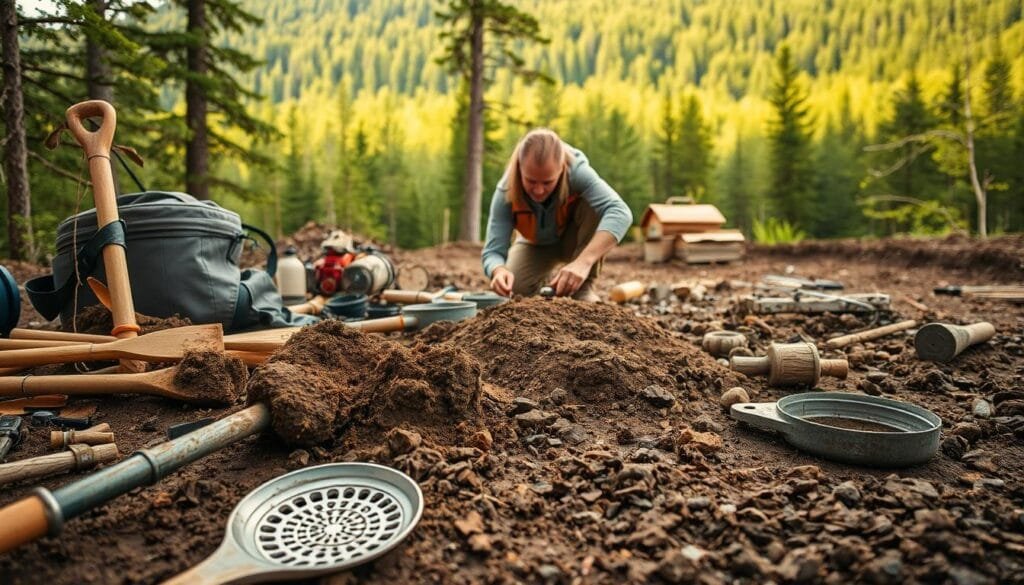
Evaluating Soil Composition and Texture
You’ll typically encounter four main ground varieties. Clay feels sticky when wet and expands with moisture. Sandy earth is loose and grainy with excellent drainage.
Silt has fine particles that retain water moderately. Loam combines clay, sand, and silt for balanced properties.
Try the simple handful test on your property. Grab some earth and feel its texture. Gritty indicates sand, sticky suggests clay, while smooth points to silt.
Assessing the Load-Bearing Capacity
This measurement determines how much weight your ground can safely support. It influences whether you need stabilization measures.
Proper site preparation is essential regardless of your earth composition. Understanding bearing capacity helps you select the right approach for lasting stability.
Comparing Foundation Options for Cabins
Three distinct approaches exist for creating a stable platform for your woodland home. Each method serves different project requirements and site conditions. Your choice depends on factors like budget, structure size, and local regulations.
Concrete, Gravel, and Pad Foundations
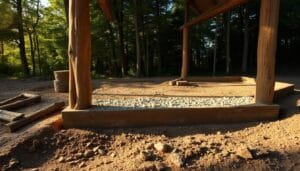
Gravel foundations use tightly packed stones to form a solid base. This traditional method works well for smaller buildings and shed structures. It offers natural drainage and cost savings.
Concrete systems provide exceptional strength and durability. They’re ideal for larger retreats needing year-round climate control. This option handles various structural demands effectively.
Pad foundations use concrete piers at key support points. They’re the most affordable choice for sites with strong ground composition. These work perfectly for medium-sized constructions.
https://www.youtube.com/watch?v=Q9nvYpOcjfc
Pros and Cons of Each Foundation Type
Each supporting system has distinct advantages and limitations. Gravel offers low maintenance and costs $3-12 per square foot. However, it lacks insulation and may settle over time.
Concrete provides longevity and minimal upkeep but costs $6-10+ per square foot. It requires extensive site preparation and has environmental impacts. Understanding your ground composition helps determine the right fit.
| Foundation Type | Cost Range (per sq ft) | Best For | Key Considerations |
|---|---|---|---|
| Gravel/Stone Pad | $3-12 | Smaller structures, budget projects | Excellent drainage, potential settling |
| Concrete Slab | $6-10+ | Larger buildings, year-round use | Superior strength, higher environmental impact |
| Concrete Piers | Most affordable | Medium-sized cabins, strong soil sites | Single-point loading, minimal site disturbance |
Your final selection should consider local building codes and intended use. Some constructions like double-wide buildings require specific supporting systems by regulation.
Site Preparation and Soil Testing Tips
The initial phase of preparing your building location determines the long-term stability of your structure. This crucial first step involves thorough assessment and careful planning.
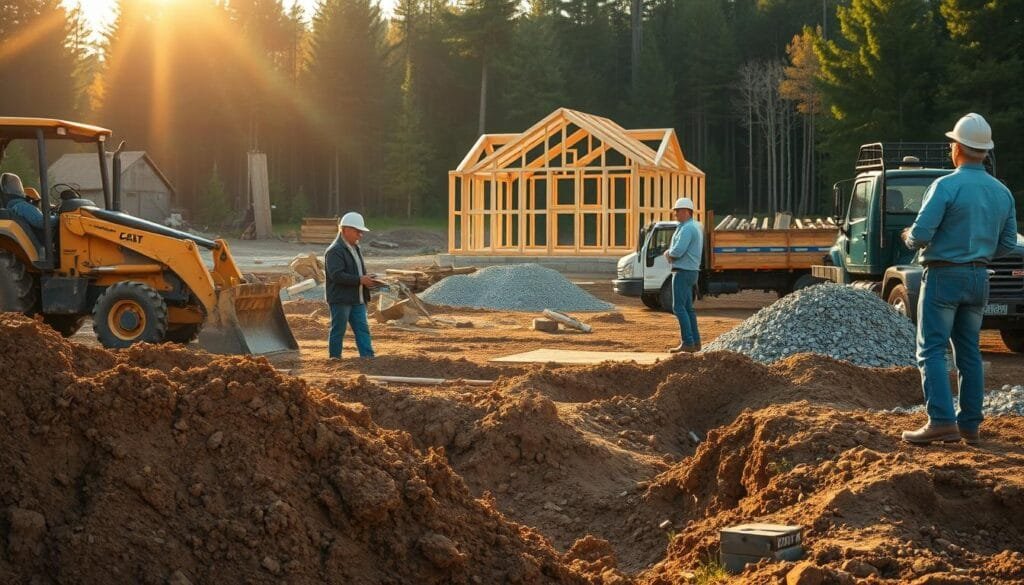
For your site preparation, you’ll need basic tools to conduct initial analysis. A clear glass jar, water, ruler, and pH strips costing around $12 provide essential insights.
DIY Soil Testing Methods and Tools
The jar test reveals composition layers. Fill a jar one-third with earth from your property, add water, shake vigorously, and wait 24-48 hours. Sand settles at bottom, silt forms the middle layer, and clay rises to the top.
pH testing checks acidity levels using strips or digital meters. Ideal readings range from 6.0 to 7.5 for most construction projects. Texture analysis involves wetting a handful of earth to feel its characteristics.
For more detailed soil testing, consider advanced tools like soil augers and penetrometers. These provide deeper sampling and compaction measurements.
When to Rely on Professional Testing
Professional analysis becomes necessary for large structures or when local codes require certified results. If your DIY tests reveal potential issues, seek expert evaluation.
Comprehensive soil test services range from $434 for basic analysis to $3,000+ for detailed geotechnical surveys. These provide certified data for permit applications and engineering design.
Enhancing Soil Stability and Drainage
The ground beneath your cabin plays a crucial role in preventing structural issues over time. Proper management of earth conditions ensures your retreat remains safe and stable for decades.
Three main challenges threaten structural integrity. Poor drainage allows water to pool, causing moisture damage. Erosion exposes and weakens the base, especially on slopes. Compaction issues create either blocked drainage or settling problems.
Techniques for Improving Soil Stability
Adding organic matter enhances earth structure in both sandy and clay-rich compositions. It helps sandy areas retain moisture while improving clay drainage.
Chemical stabilization uses lime or cement to control moisture in clay-heavy earth. Mechanical compaction increases density and load-bearing capacity. Sometimes bringing in better quality material or using geotextiles creates a stable base.
Managing Moisture, Erosion, and Drainage Issues
Water management is critical for all foundation systems. Ensure proper flow away from your building’s perimeter to prevent accumulation.
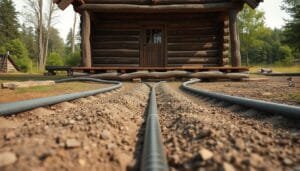
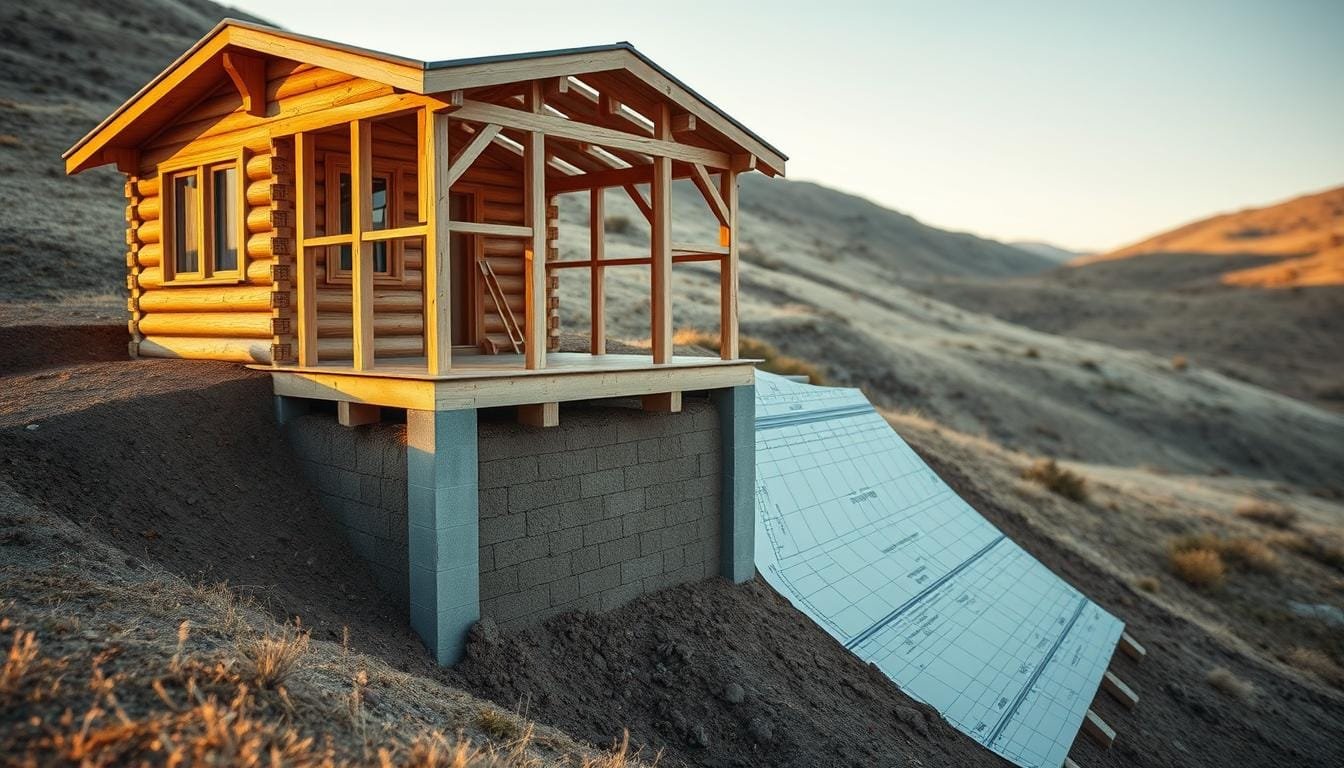
Practical solutions include French drains to redirect water. Retaining walls help on sloped sites. Strategic planting controls erosion around the construction area.
Cost Considerations for Cabin Foundations
Understanding the cost factors involved helps you make informed decisions about your building’s foundation. Financial planning ensures your project stays within budget while meeting structural requirements.
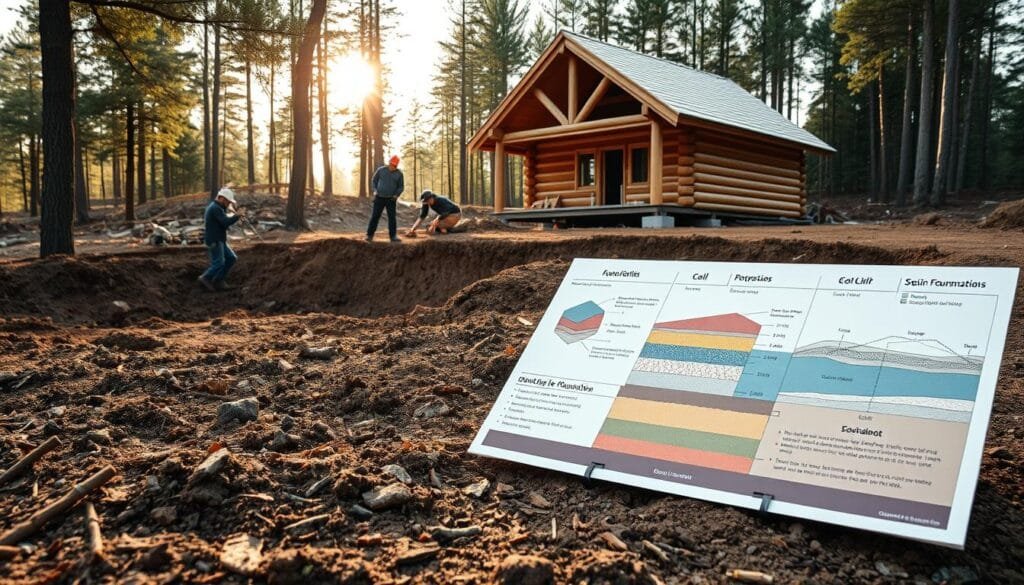
Understanding Budget Factors and Material Costs
Gravel foundations offer an affordable starting point. Basic projects with straightforward site preparation typically cost $3-5 per square foot. More complex construction involving larger structures can reach $8-12 per square foot.
Concrete systems begin around $6-10 per square foot for basic slabs. Prices increase with excavation depth and reinforcing steel requirements. These foundations provide superior durability for year-round buildings.
Several elements influence your final investment. Site preparation needs vary based on terrain and drainage solutions. Labor expenses depend on your geographic area and project complexity.
Local building codes may require specific approaches for certain structures. Permit and inspection fees add to the overall construction budget. Soil conditions discovered during testing might need remediation.
While gravel appears cost-effective initially, concrete offers better long-term value for larger cabins. Obtain multiple quotes and consider lifetime costs rather than just initial expenses.
Final Steps to a Solid Cabin Foundation
Your cabin’s stability journey culminates with these final implementation steps. The right foundation choice, guided by your soil test results, is now ready for construction.
Final site preparation is critical. Secure all necessary building permits and schedule inspections. This ensures your project meets local codes. Proper drainage is non-negotiable; always direct water away from the structure.
Pour and cure the base according to your plans. Allow adequate time for materials to set. A proper cure prevents future issues. Understanding the soil type impact on cabin foundation pays long-term dividends.
View this process holistically. Investing in quality preparation and materials creates a lasting base. Consider professional testing every few years for ongoing peace of mind. Your careful work now supports your retreat for decades.