
Welcome! If you own a home with a deck, siding, or any timber structure, you’ve likely thought about its long-term health. Wood is a fantastic material, prized for its strength, beauty, and eco-friendly nature. Yet, it faces a constant threat that can silently cause major damage.
This guide is your first step toward protecting your investment. We’ll explore how to stop decay before it starts. Understanding the causes is crucial. For a deep dive into the science, check out this resource on wood decay and how to prevent.
Our goal is simple: give you practical, actionable strategies. You will learn to spot early warning signs and apply effective protection methods. These principles work for both indoor and outdoor projects.
With the right knowledge, you can keep your timber structures sound for many years. This saves you from expensive repairs down the line. Let’s begin building your complete defense system.
Understanding Wood Rot and Its Causes
At its core, wood rot is a simple process with a very specific requirement. Knowing what causes this decay is the first step in protecting your valuable timber investments.
What Exactly Is Wood Rot?
Wood rot is a specific type of decay caused by fungi. These organisms break down the fibers that give timber its strength. A crucial fact often misunderstood is the moisture requirement.
For fungi to become active, the timber must have a moisture content of at least 20%. This is why the term “dry rot” is misleading. Truly dry wood is safe from this threat.
Lumber kept indoors and dry can last for centuries. In contrast, outdoor structures face constant exposure, creating the perfect environment for rot to take hold.
Moisture Sources and Environmental Factors
Moisture is the primary catalyst for rot development. It creates the conditions fungi need to thrive. Common sources include direct rain, snow, and high humidity.
Other contributors are condensation, ground moisture, and even sprinkler systems. Any situation that keeps wood damp for extended periods increases the risk.
Understanding this link between moisture and decay is foundational. Managing environmental conditions is the central theme of all effective protection strategies. Different types of rot exist, but they all share this same basic need for a wet environment.
Recognizing the Signs of Rotten Timber
Your home’s timber structures can silently develop problems that aren’t always obvious at first glance. Learning to spot the early warnings of decay is crucial for maintaining your property’s integrity. This knowledge allows you to act before minor issues become major headaches.
Visual and Textural Indicators
Discoloration is a primary red flag. Look for patches that appear off-white, unusually dark, or even have yellowish or purple hues. These color shifts often signal active fungal growth beneath the surface.
The feel of the lumber is just as important. Healthy timber is firm. Affected areas may feel spongy or crumble easily. You might notice a stringy texture or a pattern of small cracks, known as cubical fracture.
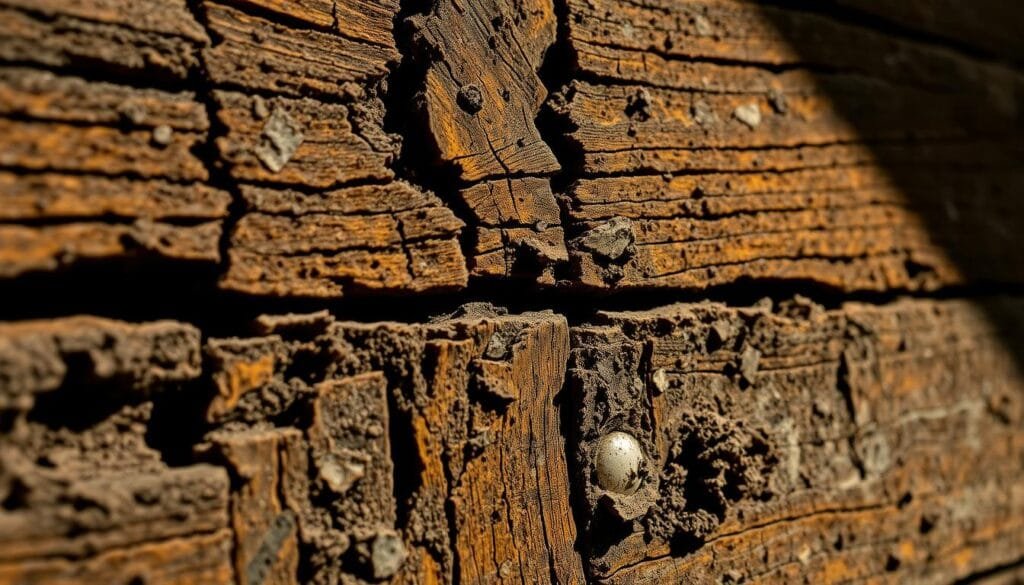
In advanced stages, the material can turn powdery, like sawdust. A simple test confirms suspicions. Press a screwdriver into a suspect spot. If it sinks in with little resistance, you’ve found active decay.
| Characteristic | Healthy Timber | Rotten Timber |
|---|---|---|
| Color | Consistent, natural hue | Discolored; white, dark, or purple spots |
| Texture | Hard and solid | Spongy, stringy, or crumbly |
| Structural Integrity | Resists pressure | Easily punctured; breaks into cubes |
When to Seek Professional Help
If your inspection reveals any of these signs, it’s time to consider expert help. This is especially true for load-bearing structures like decks or support beams.
A handyman or contractor can assess the full extent of the damage. They ensure rotten sections are properly replaced, preventing further structural compromise. Addressing the problem promptly saves you money and preserves your home’s safety over time.
Best Ways to Prevent Wood Rot
Long-term timber health hinges on two core principles: routine checks and moisture control. A reactive approach often leads to costly repairs. Being proactive is the real key to preserving your home’s structure.
This strategy forms a powerful barrier against decay. It focuses on stopping problems before they even begin.
Routine Maintenance Measures
Consistency is your greatest ally. Establish a simple annual schedule to inspect all lumber around your property. This dedicated time investment pays off enormously.
Focus your checks on critical areas. Look closely at window sills, door frames, and areas near plumbing. Don’t forget hidden spaces like crawl spaces and under decks.
Early detection is crucial. It allows for a simple repair before minor moisture issues escalate into major rot.
Moisture Prevention Strategies
Since fungi need water to thrive, keeping timber dry is the ultimate goal. Your mission is to manage every potential water source.
Check for leaks around pipes, appliances, and gutters. Look for signs of condensation or poor drainage that could dampen wood. Addressing these issues promptly is non-negotiable.
Combining regular inspections with immediate action creates a strong defense. This layered system effectively helps stop wood decay. For a deeper understanding of the science, explore this comprehensive guide to wood decay.
Effective Protective Treatments for Wood
The right protective treatments can dramatically extend the life of your outdoor structures. Applying the correct coatings creates a critical barrier between your timber and the elements.
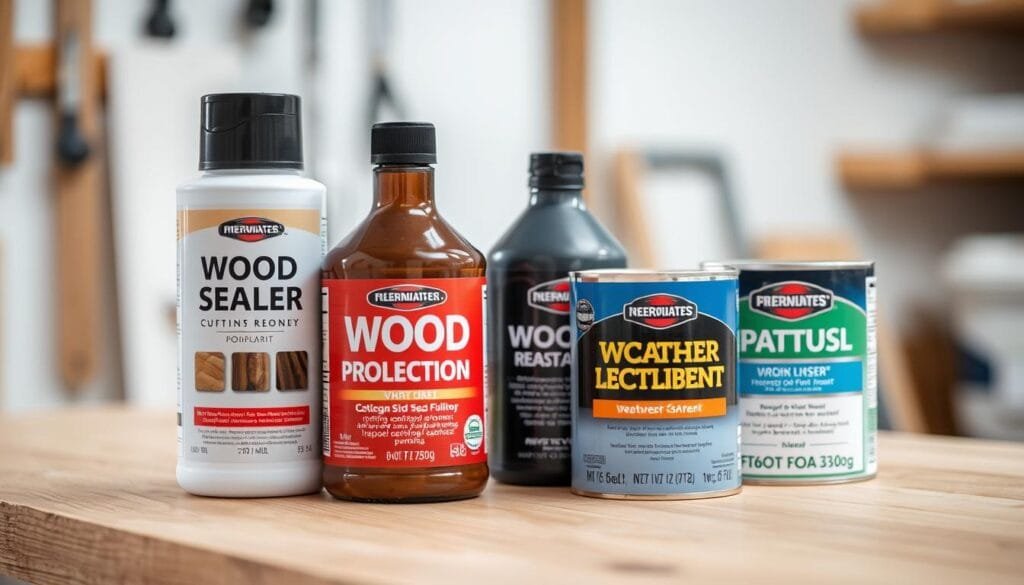
This proactive approach stops moisture infiltration before it becomes a problem. Proper application makes all the difference in long-term protection.
Stain, Paint, and Sealant Applications
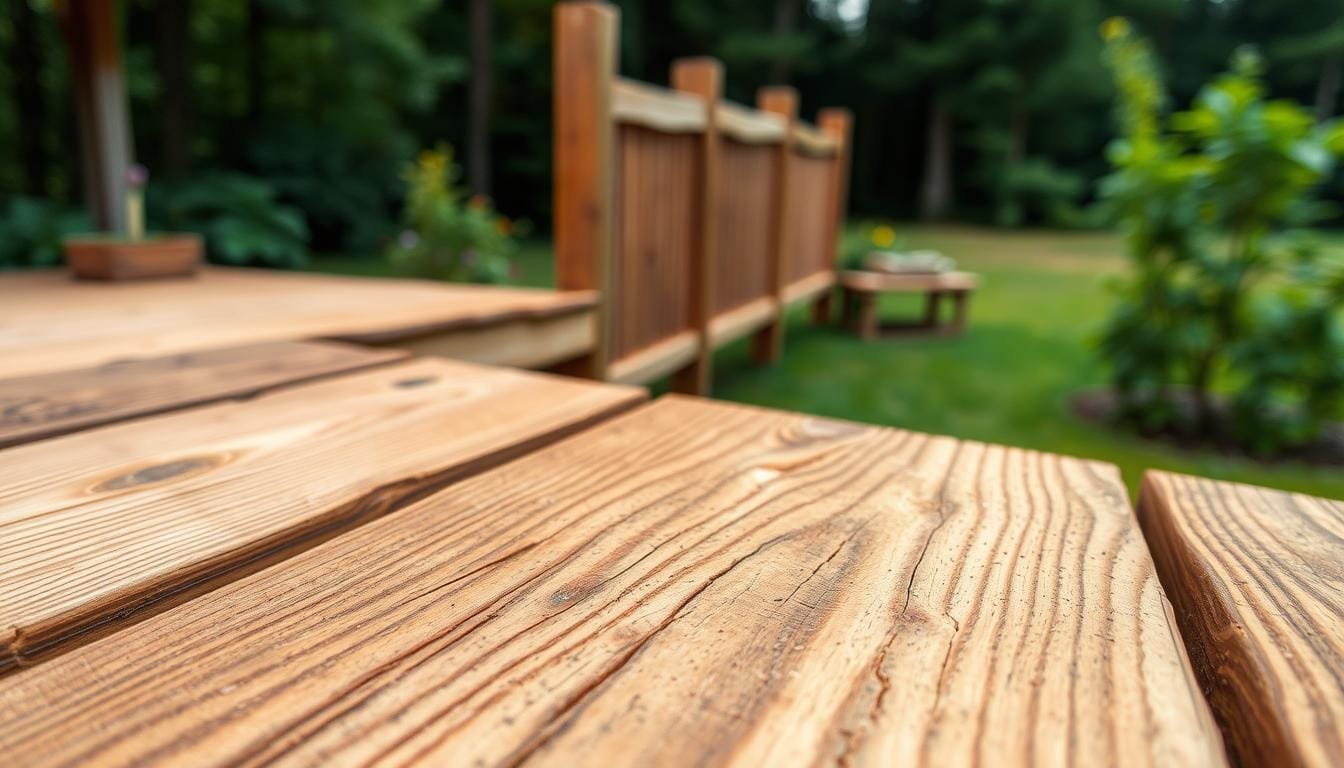
Surface treatments serve as your first line of defense against water damage. When building decks or outdoor projects, apply protective coatings to all sides of each piece.
Don’t just cover visible surfaces. Complete coverage ensures moisture cannot penetrate from any angle. After staining or painting, add a quality sealant for enhanced water resistance.
Choose the right type of coating for your specific needs. Exterior paint works well for siding, while transparent stains preserve natural grain visibility.
Choosing Decay-Resistant Lumber
Starting with the right materials provides built-in protection. Decay-resistant species like cedar and redwood offer natural advantages against moisture issues.
Pressure-treated wood undergoes a special process where preservatives penetrate deep into the fibers. This chemical treatment significantly boosts resistance to rot compared to untreated timber.
While protective treatments aren’t permanent, quality products applied correctly can last for years. Investing in proper materials and application saves money on future repairs.
Proper Ventilation and Moisture Control Indoors
Many homeowners focus on outdoor threats, but indoor moisture can be just as damaging to your home’s timber. Water vapor from daily activities creates hidden risks in enclosed spaces.
High-humidity areas need special attention. Bathrooms, kitchens, and laundry rooms generate significant water vapor. Attics, basements, and crawl spaces often lack proper air circulation.
Improving Air Flow in High-Humidity Areas
Proper ventilation systems exchange damp indoor air with drier outdoor air. This prevents moisture accumulation that could lead to structural issues. Continuous airflow is essential for maintaining safe humidity levels.
Install exhaust fans in bathrooms and kitchens that vent directly outside. Avoid routing moisture into attic spaces where it can affect roof framing. Attic ventilation through ridge or soffit vents prevents heat and humidity buildup.
Crawl spaces benefit from foundation vents or mechanical systems. These prevent ground moisture from damaging floor joists. Controlling indoor humidity through proper ventilation creates a healthier living environment.
| Area | Ventilation Solution | Key Benefit |
|---|---|---|
| Bathrooms | Exhaust fans vented outside | Removes steam quickly |
| Kitchens | Range hoods with exterior venting | Eliminates cooking moisture |
| Attics | Ridge and soffit vent systems | Prevents heat/moisture buildup |
| Crawl Spaces | Foundation vents or fans | Controls ground moisture |
During humid seasons, consider using dehumidifiers in problematic areas. This additional measure helps maintain optimal moisture levels. It protects your home’s wooden structures from potential damage.
Outdoor Strategies to Guard Against Wood Rot
Often overlooked, gutter maintenance plays a critical role in protecting your property’s wooden structures. When functioning properly, these systems channel rainwater safely away from vulnerable areas.
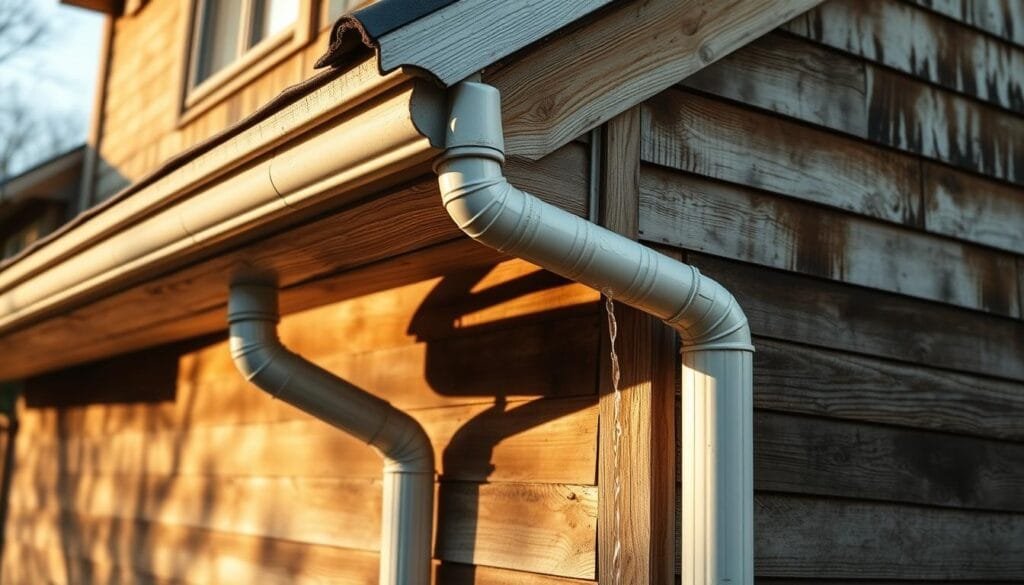
Clogged gutters become a major problem. They force water to overflow down exterior walls, soaking siding and foundation areas. This creates constant moisture exposure that can lead to serious issues.
Gutter Maintenance and Weatherproofing
Establish a regular cleaning schedule for your gutters. Aim for at least twice yearly, plus after major storms. Remove leaves and debris that block proper water flow.
Check for leaks at joints and connections. Even small drips can create persistent moisture sources near timber structures. Properly functioning downspouts should direct water several feet away from your home’s foundation.
Don’t forget about caulking around windows and doors. Use high-quality acrylic latex exterior caulk to seal gaps. Reapply when you notice cracking or separation to maintain protection.
Landscaping and Environmental Adjustments
Keep plants trimmed back from wooden surfaces. Maintain at least two feet of clearance between foliage and your deck, siding, or porch. This prevents moisture from being trapped against timber.
Avoid placing moisture-trapping items directly on wooden surfaces. Natural fiber rugs on decks hold water against the material. If you need coverage, choose plastic alternatives that allow better drainage.
Prevent soil contact with wooden structures. Sweep away dirt buildup around deck posts and under fences. Ground moisture can wick upward, causing damage from below.
Final Thoughts on Maintaining Durable Timber
Your journey to protecting your home’s timber structures has equipped you with essential knowledge. The core principle remains straightforward: moisture control through consistent care is your strongest defense against decay.
While the term “dry rot” sounds intimidating, you now understand the simple conditions that cause this problem. Pay special attention to window frames where caulking failures create ideal environments for damage to begin.
Catching issues early makes repair far more affordable than major timber replacement. View this as an ongoing relationship with your home rather than a one-time fix.
Remember that professional help is always available when needed. With these strategies, you can confidently preserve the beauty and strength of your wood investments for years to come.