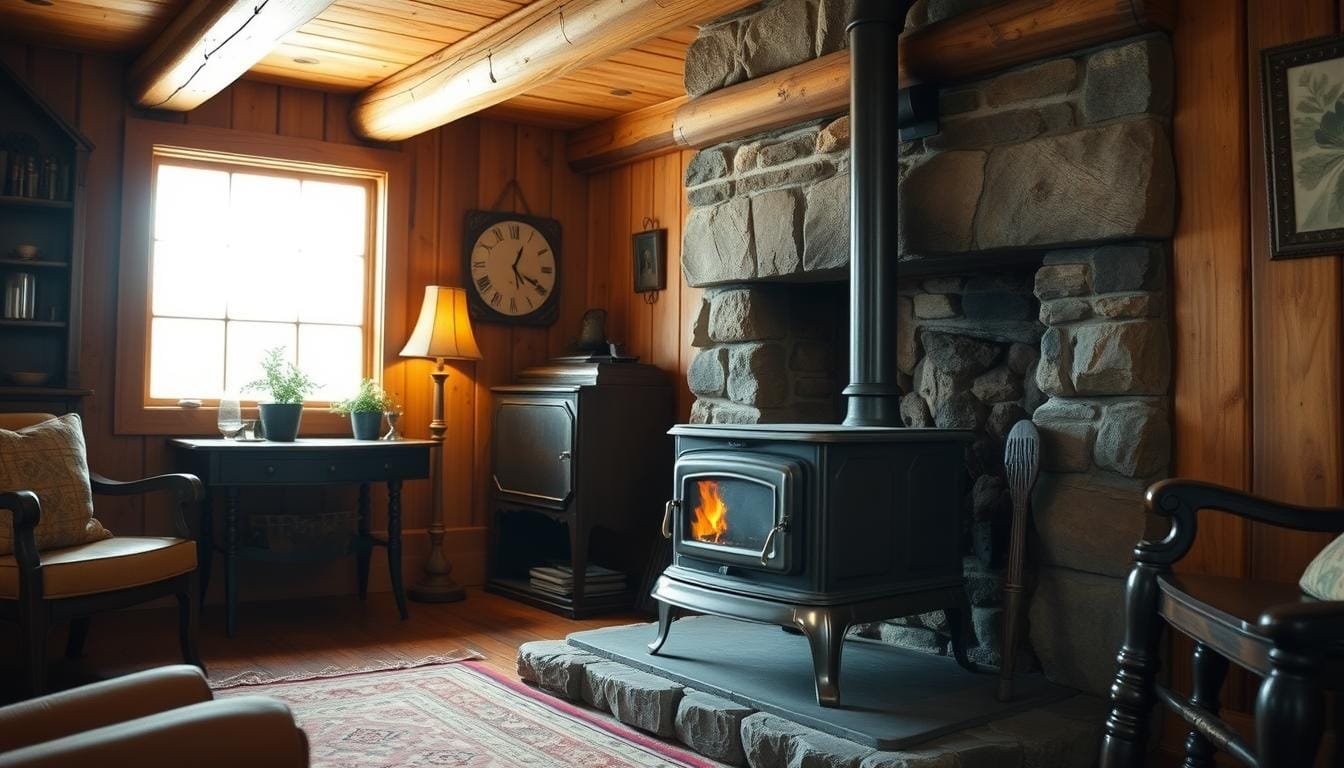

Finding the right cabin heating solutions is key to a cozy cabin. If you own a cabin and want it warm, you’re in the right spot. This guide will help you pick the best heating for your cabin.
A wood burning stove for cabin use has big benefits. They work without electricity, giving you freedom from the grid. You’ll save money and use a green fuel source that’s often nearby.
Today’s stoves mix old charm with new tech. Every cabin wood stove meets EPA standards, burning well and clean. You get eco-friendly and effective heating in one.
In this detailed guide, we’ll cover stove types, sizes, top picks, and how to install and maintain them. By the end, you’ll know how to choose the best stove for your cabin’s warmth.
Why Choosing the Right Wood Stove Matters for Your Cabin
Your cabin’s wood stove is more than a heater. It’s about comfort, safety, and saving money. The right stove keeps you warm, saves wood, and keeps your family safe.
Off-grid cabins rely on wood stoves for warmth. Without electricity or gas, your stove is your only defense against cold. It keeps your cabin warm even when the power is out.
Wood stoves are very reliable. They don’t need electricity or gas. This means no worries about frozen pipes or gas shortages.
Knowing a stove’s efficiency rating helps you save money. Modern stoves use 33% less wood and heat better. This means less wood to buy and less work to keep your cabin warm.
Wood is a stable heating fuel. Its price doesn’t change much. This is different from oil, propane, and gas, whose prices can change a lot.
Using wood for heat is even better if you get it locally or cut it yourself. Many owners save a lot of money by doing this. It’s cheaper than using propane or oil.
| Heating Method | Annual Fuel Cost | Electricity Required | Carbon Emissions | Fuel Price Stability |
|---|---|---|---|---|
| Wood Stove | $300-$900 | None | Carbon Neutral | High |
| Propane Furnace | $2,000-$4,000 | Yes | High | Low |
| Electric Heating | $1,500-$3,500 | Yes | Medium-High | Medium |
| Heating Oil | $2,200-$4,500 | Yes | Very High | Very Low |
Many cabin owners care about the environment. Wood is a renewable heating resource if harvested right. It’s better for the planet than fossil fuels.
Choosing the wrong stove size is a big problem. A small stove can’t heat well, and a big one wastes wood and can be dangerous.
The wrong stove type is also a hassle. Some stoves need more work but are more efficient. Others are easier to use but use more wood.
Installing the wrong stove can be dangerous. It can start fires or let smoke back into your home. These are serious risks.
Finding the right stove takes knowing your needs and cabin details. The next sections will help you choose the right stove for your cabin. This makes heating your cabin easy and affordable for years.
How to Determine the Right Size Wood Stove for Your Cabin
Choosing the right wood stove is key. An oversized stove makes your cabin too hot and wastes fuel. An undersized one leaves you cold, no matter how much wood you burn. A wood stove sizing guide helps pick the perfect size for comfort.
Don’t worry, sizing a wood stove is easy. With basic measurements and a simple formula, you can find the right heating capacity. Let’s go through it step by step.
Measuring Your Cabin’s Square Footage
First, calculate your cabin’s total square footage. For a simple cabin, multiply length by width. If your cabin has many rooms, measure each and add them together.
Only measure areas you want to heat. Ignore rooms you’ll close off in winter. This method, called zone heating, helps choose a small cabin wood stove just right for your living space.
For cabins with odd shapes, break the floor into rectangles. Then, add all areas together for your total square footage. Don’t forget lofts or second-story spaces.
Understanding BTU Requirements
BTU stands for British Thermal Unit. It measures heating power. The higher the BTU rating, the more space a stove can heat.
The formula for a wood stove BTU calculator is simple: multiply your square footage by 20 BTUs. For example, a 1,500 square foot cabin needs about 30,000 BTUs.
Here are some common cabin sizes and their BTU needs:
| Cabin Size (Square Feet) | Required BTUs | Recommended Stove Category | Typical Heating Coverage |
|---|---|---|---|
| 800 sq ft | 16,000 BTUs | Small | 600-1,000 sq ft |
| 1,200 sq ft | 24,000 BTUs | Medium | 1,000-1,800 sq ft |
| 1,800 sq ft | 36,000 BTUs | Large | 1,500-2,400 sq ft |
| 2,500 sq ft | 50,000 BTUs | Extra-Large | 2,200-3,000 sq ft |
Manufacturers like Drolet offer stoves in various sizes. Look for models with BTU ratings that match your needs.
The 20 BTU per square foot formula is a starting point. Your actual needs may vary based on several factors we’ll discuss next.
Accounting for Ceiling Height and Insulation
Standard BTU calculations assume an 8-foot ceiling. If your cabin has higher ceilings, you’ll need more heating power. Taller ceilings mean more air to heat.
To adjust for high ceilings, add 25-30% more heating capacity. For example, a 1,500 square foot cabin with 14-foot ceilings might need 38,000-39,000 BTUs.
Insulation quality also affects heating needs. A well-insulated cabin with modern windows needs less heating than an older cabin. If your cabin is poorly insulated, increase your BTU requirements by 10-20%.
Climate zone is important too. Cabins in very cold areas need more heating than those in milder climates. If it’s very cold where you live, choose a stove with more BTUs.
Your cabin’s layout also affects heating efficiency. Open-concept cabins heat better than those with many closed rooms. Cabins with lots of windows lose heat faster and might need a larger stove.
Considering ceiling height, insulation, climate, and layout will help you find the right wood stove size. This careful approach avoids the mistakes of buying too much or too little heating capacity.
Understanding Different Types of Wood Stoves
Modern wood stoves come in three main types. Each uses different technology to heat your cabin. The type you choose affects how often you need to reload fuel and how much maintenance you’ll do each season. Most quality models are an EPA certified wood stove, but the combustion system inside varies a lot.
These differences matter because they affect your daily life. Some systems need more attention, while others are easier to use. Knowing what happens inside the firebox helps you choose the right stove for your cabin.
How Catalytic Combustion Systems Work
Catalytic wood stoves use a ceramic honeycomb catalyst like your car’s exhaust converter. This component sits in the stove’s smoke path. It ignites gases at lower temperatures than normal combustion.
This technology gives great results for serious cabin users. Catalytic models can heat for 10 to 12 hours or longer on one load of wood. They burn very clean, often producing barely visible smoke from the chimney once the catalyst engages.
The debate between catalytic and non-catalytic stoves often focuses on maintenance. Catalytic models need their honeycomb element checked often and replaced every 6 to 8 years. You also need to watch the catalyst thermometer and use the bypass damper correctly during startup and reloading.
How Non-Catalytic Systems Create Heat
Non-catalytic wood stoves don’t use a ceramic element. Instead, they use internal baffles, air channels, and insulated fireboxes to create hot conditions. This burns smoke and gases naturally.
These stoves are simple. There’s no catalyst to replace or monitor, making them great for weekend cabin owners. They cost less upfront and have fewer parts that need attention.
Advanced systems like Quadra-Fire’s patented Four-Point Burn System take non-catalytic design further. This technology burns and re-burns wood, gases, and fumes four times. It keeps fires going longer and produces steady, rolling flames with less wood. It’s perfect for overnight burns without the complexity of a catalyst.
Hybrid Systems Combine Both Approaches
Hybrid wood stoves are the newest in wood stove technology. They combine a catalyst and secondary combustion chambers. This gives you the extended burn times of catalytic units and the robust heat output and simplicity of non-catalytic designs.
Many EPA certified wood stove models now use hybrid technology. They deliver exceptional efficiency ratings. These stoves can switch between combustion modes depending on how you’re running them. During low, steady burns, the catalyst does most of the work. At higher heat output, the secondary air system takes over.
The trade-off is price and complexity. Hybrid models cost more than either pure catalytic or non-catalytic options. But they offer maximum flexibility for cabin owners who want both all-night burns and quick, intense heat when needed.
| Stove Type | Best For | Burn Time | Maintenance Level | Price Range |
|---|---|---|---|---|
| Catalytic | Full-time cabin living, overnight heating | 10-12+ hours | Moderate to high | $2,000-$4,500 |
| Non-Catalytic | Weekend use, simple operation | 6-8 hours | Low | $1,200-$3,000 |
| Hybrid | Variable heating needs, maximum efficiency | 8-10 hours | Moderate | $2,500-$5,000 |
Your choice between these systems depends on how you use your cabin. Full-time residents who value long, unattended burns often prefer catalytic or hybrid models. Weekend users who want reliable heat without complicated maintenance typically lean toward non-catalytic designs. All three types can heat your space effectively when properly sized and operated.
Essential Features to Consider Before Buying
When looking at wood stoves online or at a local dealer, knowing what matters most is key. It’s not just about how much heat it can make. Important features affect how well it heats, how often you need to add wood, and how long it lasts. Knowing these before you buy helps you find the best deal and avoid regret.
This section is your guide. We’ll explain the technical stuff in simple terms. This way, you can compare models with confidence. Whether it’s your first time or you’re upgrading, these features are important to check.
Efficiency Ratings and EPA Certification
All wood stoves sold in the U.S. must be EPA certified. This means they meet strict rules for less smoke and more heat. It’s a must for all new stoves.
But not all EPA-certified stoves are the same. Some just meet the minimum, while others do much better. Look for stoves with efficiency ratings above 75%. This means they use more of the wood’s energy for heat.
Higher efficiency means burning less wood and saving money. You’ll also have cleaner burns and less creosote in your chimney. This makes your stove safer and cleaner.
Burn Time and Firebox Capacity
Nothing ruins a cozy evening like needing to reload your stove too often. The wood stove burn time shows how long one load of wood will keep your cabin warm. Good stoves can burn for 8 to 12 hours or more, so you can sleep warm without waking up to tend the fire.
The wood stove firebox capacity affects burn time. A bigger firebox can hold more wood, so you don’t need to reload as often. Fireboxes range from 1.5 to 4.0 cubic feet, depending on the stove.
Larger fireboxes have many benefits:
- Fewer nighttime interruptions – Load your stove before bed and sleep through the night
- Ability to burn larger logs – No need to split everything into kindling-sized pieces
- More consistent heat output – Steady warmth instead of hot-and-cold cycles
- Less time tending the fire – More time enjoying your cabin activities
Many modern stoves have Automatic Combustion Control (ACC). This makes using the stove easy. You load wood, light it, set the temperature, and the stove adjusts airflow for you. It’s simple and lets you enjoy your cabin more.
Material Construction: Cast Iron vs. Steel
Wood stoves are made from cast iron or steel. Each has its own benefits. Knowing these helps you choose the right one for your needs.
A cast iron wood stove holds heat well. It keeps your cabin warm for a long time. Cast iron also looks great, with classic designs. But, cast iron stoves are heavy and cost more.
A steel wood stove heats up fast. It makes your cabin warm quickly. Steel stoves are lighter, easier to move, and cost less. But, they don’t hold heat as long.
Here’s a comparison to help you decide:
| Feature | Cast Iron | Steel |
|---|---|---|
| Heat-up Time | Slower to reach temperature | Heats cabin quickly |
| Heat Retention | Excellent – radiates heat longer | Moderate – cools faster |
| Weight | Heavy (300-600+ lbs) | Lighter (150-400 lbs) |
| Cost | Generally more expensive | More budget-friendly |
| Aesthetic | Traditional, ornate designs | Modern, clean lines |
Choosing between cast iron and steel depends on your needs. Cast iron is great for steady warmth and classic looks. Steel is better for quick heat and is easier to install and less expensive.
Think about how you’ll use your cabin. If you have weekend guests who want fast warmth, steel might be best. But, if you live there full-time and want warmth all night, cast iron is better. Both materials can last for decades if you choose a good quality stove and take care of it.
Jotul F 45 Greenville: Top Choice for Medium to Large Cabins
The Jotul F 45 Greenville is perfect for those who want the best. It’s a medium cabin wood stove with over 160 years of Norwegian skill. It heats spaces from 1,600 to 2,400 square feet very well.
Jotul is known for making stoves that last for decades. The F 45 Greenville keeps this tradition alive with modern tech. It’s great for those who want durability and the latest in heating.
Technical Specifications and Heating Capacity
The Jotul F 45 V2 Carrabassett has impressive specs. It heats well and burns clean. This makes it a top pick for large cabin heating.
This stove can heat up to 2,400 square feet. It’s perfect for big cabins or those with many rooms. It also holds logs up to 20 inches long, saving you time.
| Specification | Performance Detail | Practical Benefit |
|---|---|---|
| BTU Output Range | 15,600 – 55,000 BTU/hr | Adjustable heat for mild to severe winter conditions |
| Efficiency Rating | 78% LHV | More heat from less wood, lower fuel costs |
| EPA Certification | 2020 EPA Certified | Clean burning, meets strictest emission standards |
| Firebox Volume | 2.6 cubic feet | Holds substantial wood loads for extended burns |
| Maximum Log Length | 20 inches | Accepts standard firewood without extra cutting |
The stove needs 16-inch clearance to the sides and 12 inches to the back. This makes it easy to fit in most cabins. It weighs about 475 pounds, so make sure your floor can handle it.
Burn times vary, but you can get 8-10 hours on low. This means less need to refuel in the middle of the night. The large ash pan makes cleaning up easy.
What Makes This Model Stand Out
The Jotul wood stove is made with top-quality cast iron. This material keeps heat for a long time. It makes your cabin warmer and more comfortable.
The stove’s design is thanks to Norwegian engineers. It has a special air wash system that keeps the glass clean. You can watch the fire without worrying about cleaning.
The stove looks great in any cabin. Its classic design and matte black finish fit well with rustic interiors. The large viewing window makes it a beautiful centerpiece.
This stove is perfect for those who live in their cabin year-round. It’s built to last and heats well. It’s also great for weekenders who want quick heat when they arrive.
It’s a bit pricey and heavy. But, it’s worth it for the quality and savings on fuel. You’ll save money in the long run.
Getting it installed needs a pro because of its weight and size. The cast iron is good for heat but hard to move. Plan where you’ll put it carefully.
The Jotul F 45 Greenville is a top choice for cabin owners. It’s great for heating 1,600 to 2,400 square feet. Its quality and performance make it a wise investment for your cabin.
Drolet Escape 1800: Best Value Wood Stove for Cabins
Finding a good wood stove on a budget is hard. But the Drolet Escape 1800 makes it easy. This budget wood stove heats well without costing too much. It’s made in Canada and is loved by cabin owners for its value.
Drolet focuses on what cabin owners really need. They skip fancy features for stoves that heat well and last long. You can choose from different styles without paying more.
Performance Specs That Matter
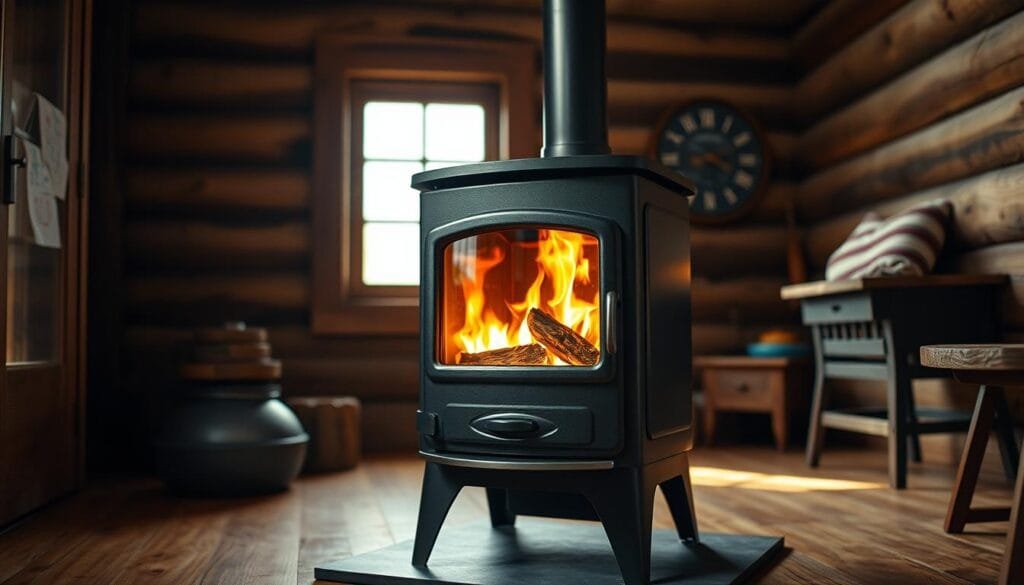
The Escape 1800 heats up to 1,800 square feet. It has a high heat output of 65,000 BTUs. This means it keeps your cabin warm even when it’s very cold.
This stove is EPA certified, which means it burns clean and efficient. It has an efficiency rating of 75%. This means you get more heat from less wood.
| Specification | Details | Benefit |
|---|---|---|
| Heating Capacity | Up to 1,800 sq ft | Covers most small to medium cabins |
| Maximum BTU Output | 65,000 BTU/hr | Powerful heat for cold climates |
| Efficiency Rating | 75% EPA certified | Burns less wood, saves money |
| Firebox Size | 1.8 cubic feet | Accepts 18-inch logs easily |
| Burn Time | 6-8 hours | Sleep through the night without refueling |
The stove is well-made despite its affordable price. It’s made of heavy-gauge steel and cast iron. The large glass window lets you see the fire.
Why Cabin Owners Love This Stove
The Escape 1800 is smartly designed. It has a simple air control. Adjusting the heat is easy.
The stove’s secondary combustion system burns smoke and gases. This keeps your chimney clean and uses all the heat from your wood. You’ll split less wood and clean your chimney less often.
This budget wood stove makes some compromises. It doesn’t burn as long as more expensive stoves. The design options are limited. But it’s well-built and doesn’t cost too much.
The stove heats well and fast. It’s great for weekend cabins. The air controls let you adjust the heat quickly.
It’s easy to install and comes in different styles. You can choose legs or a pedestal base. The pedestal base has wood storage underneath.
Drolet offers good warranty coverage and a wide dealer network. Getting help or parts is easy. This is important for your main heat source.
The price is a big plus. While other stoves cost over $2,500, the Escape 1800 is under $1,200. This saves you money for other things.
This stove is perfect for seasonal or weekend cabins. It offers quality heating without breaking the bank. It’s a great choice for those who don’t need it all year.
Vermont Castings Defiant: Premium Catalytic Performance
If you’re looking for a catalytic wood stove, the Vermont Castings Defiant is a top choice. It combines old-world craftsmanship with modern efficiency. This Vermont Castings wood stove is known for its quality and performance.
Vermont Castings has been making stoves for over 40 years. The Defiant shows their expertise in creating efficient premium cabin heating solutions.
Heating Capacity and Technical Specifications
The Vermont Castings Defiant heats well and looks good doing it. It can warm up to 2,800 square feet. This makes it perfect for big cabins or homes.
This stove can produce up to 55,000 BTUs of heat. That’s enough to keep your cabin warm all night.
Here’s what the technical specs say:
- Firebox capacity: 2.75 cubic feet, great for big wood loads
- Efficiency rating: 81% efficient in catalytic mode
- EPA certification: Meets strict emission standards at just 1.1 grams per hour
- Burn time: Up to 12+ hours on a single load with the catalytic combustor engaged
- Construction: Heavy-duty cast iron for better heat retention
The Defiant weighs about 510 pounds. This shows its quality and heat retention.
It’s 34 inches wide, 27 inches deep, and 31 inches tall. You’ll need space around it for safety.
Standout Features That Justify the Investment
What makes the Vermont Castings Defiant special? It’s the premium features that improve performance and use.
The catalytic combustor is key to its efficiency. It burns smoke and gases at lower temperatures, saving fuel and reducing emissions.
The Defiant has a unique dual-door design. Load wood through the front door or use the side door for big logs. This makes it easy to keep the fire going all day.
Managing the stove’s temperature is easy with the air control system. Adjust the air intake with one lever. The catalytic combustor keeps the heat steady.
This stove burns wood for over 12 hours in catalytic mode. Load it before bed and wake up to a warm cabin.
Cleaning up is easy with the ash management system. A built-in ash pan slides out for easy ash removal.
The Defiant looks great in any cabin. Its cast iron details and classic design add elegance. Choose from several enamel colors to match your cabin’s style.
Who should buy this premium cabin heating solution? It’s perfect for:
- Full-time cabin residents who rely on wood heat
- Cold climate locations to prevent frozen pipes
- Quality-conscious buyers who value American craftsmanship
- Larger cabins over 2,000 square feet
Catalytic wood stoves need more upkeep than others. The combustor should be checked yearly and replaced every 5-8 years. But, the fuel savings and longer burn times make it worth it.
The Vermont Castings Defiant costs between $3,500 to $4,500. It’s a big investment, but many find it’s worth it for the quality and longevity.
Vogelzang TR007 Ponderosa: Best Wood Stove for Cabin Spaces Under 1,500 Square Feet
The Vogelzang TR007 Ponderosa is perfect for cabins under 1,500 square feet. It offers reliable warmth without taking up too much space or money. It’s the ideal size for small cabins, solving the problem of stoves being too big or too small.
Smaller cabins need a special heating approach. A right-sized stove keeps the cabin warm without constantly turning on and off. The TR007 Ponderosa is made for these spaces, great for hunting camps, weekend homes, and cozy cabins all year.
Performance Specifications and Coverage Area
The Vogelzang TR007 Ponderosa heats up to 68,000 BTU. It warms spaces from 1,000 to 1,500 square feet. Its firebox can hold logs up to 21 inches long.
This stove is EPA-certified, saving on heating costs. It burns for up to 8 hours on a single load of hardwood. This means you don’t have to reload fuel as often during cold nights.
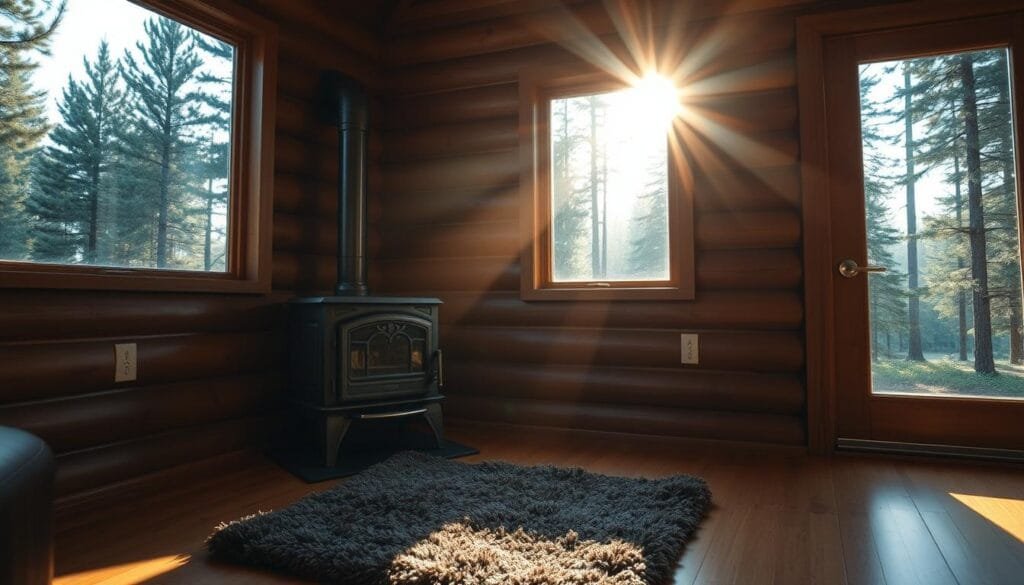
The stove is 27 inches wide, 30 inches deep, and 31 inches tall. It fits well in small spaces without taking over the room. It weighs about 385 pounds, making it stable and secure.
Installing the stove is easy in most cabins. You need 16 inches from side walls and 16 inches from the back. The front needs 36 inches of clearance for safety and maintenance.
| Specification | Measurement | Benefit |
|---|---|---|
| Heating Capacity | 1,000-1,500 sq ft | Perfect for small cabins and camps |
| BTU Output | 68,000 BTU | Consistent, powerful warmth |
| Firebox Volume | 2.2 cubic feet | Holds logs up to 21 inches |
| Burn Time | Up to 8 hours | Fewer refueling interruptions |
| Dimensions | 27″ W x 30″ D x 31″ H | Compact design saves space |
Key Advantages for Small Space Heating
The Vogelzang wood stove is great for small cabins. It’s the right size to avoid overheating. A stove that’s too big forces you to burn small fires, wasting fuel and causing creosote buildup.
The stove is small but doesn’t lack important features. It has a built-in ash drawer for easy cleaning. This means you get a lot of value without sacrificing important features.
The TR007 Ponderosa is affordable for cabin owners. It’s priced lower than many other stoves but offers strong heating. It’s made of durable steel, lasting for years.
The stove is easy to use, even for those who don’t use wood stoves often. The air controls are simple, and the large door makes adding wood easy. This makes it perfect for occasional visitors.
Getting the right-sized stove is key for efficient heating. It burns less fuel and keeps your cabin warm and even. This means you save money and stay cozy without the hassle of a big stove.
Small cabin owners often think they have limited heating options. But the Vogelzang TR007 Ponderosa shows this isn’t true. With the right stove, your cabin can be warm and welcoming, without wasting fuel or causing installation headaches.
Blaze King Ashford 30.2: Longest Burn Time Champion
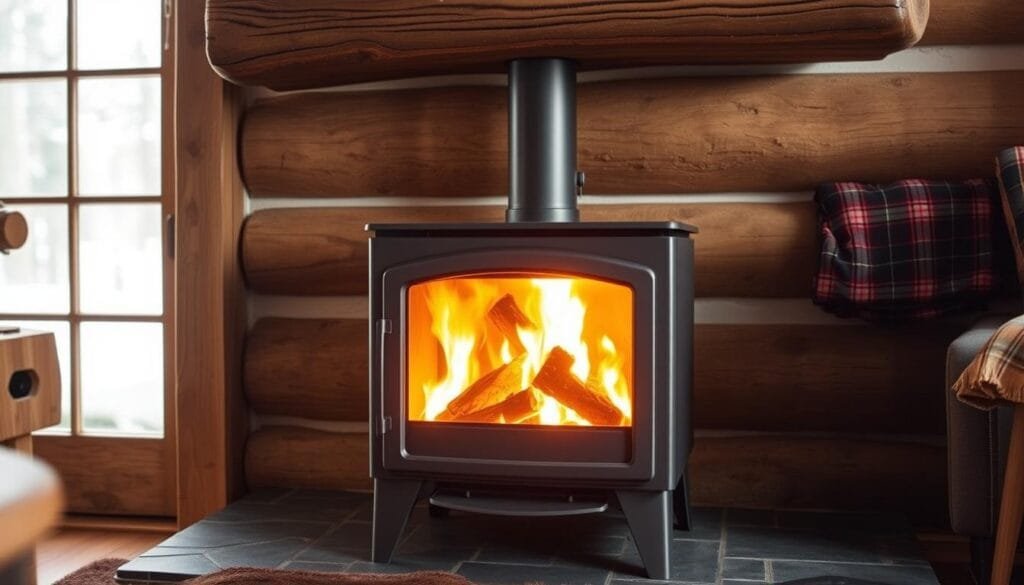
The longest burning wood stove, the Blaze King Ashford 30.2, burns for over 30 hours. It changes cabin heating by letting you load once and forget for a day or more. No more middle-of-the-night reloads or constant fire-tending.
The Blaze King wood stove line is famous among serious cabin owners. The Ashford 30.2 has advanced technology and precise thermostat control. It gives consistent warmth without needing constant attention.
Performance Specifications and Heating Power
The Ashford 30.2 heats cabins from 1,000 to 2,500 square feet. You can run it hot for quick warmth or dial it down for steady heat. Its large 3.0 cubic foot firebox holds enough wood for long burns.
It’s very efficient, burning up to 81% of the wood’s energy. It’s EPA-certified, keeping emissions low at 0.97 grams per hour. This means you use less wood and are good for the environment.
The stove is 29 inches wide, 27 inches deep, and 29 inches tall. It’s big and powerful. You can burn logs up to 20 inches long. It needs standard clearances for installation.
| Specification | Measurement | Performance Impact |
|---|---|---|
| Heating Coverage | 1,000-2,500 sq ft | Handles medium to large cabins |
| Maximum Burn Time | 30+ hours | Load once per day on low settings |
| Firebox Capacity | 3.0 cubic feet | Holds large wood loads overnight |
| Efficiency Rating | 81% LHV | Less wood needed per heating season |
| Emissions Rate | 0.97 g/hr | Clean burning and EPA compliant |
Unique Features That Set It Apart
The Ashford 30.2 has a thermostat control system like your home furnace. You set the temperature, and it adjusts airflow for consistent heat. No more guessing or constant adjustments.
The catalytic combustor burns smoke for maximum heat before it exits the chimney. This creates steady flames and burns wood slowly. You get consistent warmth without temperature swings.
This stove can burn for days, so you can load it before bed. Wake up to a warm cabin without needing to reload. It’s perfect for working cabin owners who can’t tend fires all day.
The stove is made of heavy-gauge steel with a cast iron door and decorative details. The large ceramic glass window lets you see the fire. It has a convection deck for efficient air circulation. Choose from painted black, brown enamel, or pewter to match your cabin.
Cold climate residents will love how this stove handles harsh winters. It keeps temperatures even during storms. You won’t worry about fires dying out or temperatures dropping dangerously low when you’re away.
The cost is high, between $3,200 and $3,800, depending on finish and dealer. The catalytic combustor needs replacement every 10,000-12,000 hours. But, the wood savings from its efficiency make up for these costs over time.
This stove is best for full-time cabin dwellers, remote workers, and those in cold climates. If you value convenience and don’t mind the premium price, the Blaze King Ashford 30.2 is worth every dollar.
Installing Your Cabin Wood Stove: Step-by-Step Process
Getting your cabin wood stove installed safely means following specific steps from permits to final connection. The process might seem straightforward, but safety is key. Hiring a certified professional installer is strongly recommended for warranty protection and insurance compliance.
Wood stoves cost between $2,000 and $4,000. You’ll also need to budget for venting systems, hearth materials, and professional labor. Installation costs add another $1,000 to $3,000 or more, depending on your cabin’s layout and chimney needs.
Working with certified local dealers provides accurate estimates of total project costs. They can also navigate the technical requirements specific to your area, making the entire process smoother and safer.
Verify Building Codes and Secure Proper Permits
Before purchasing materials or beginning any work, contact your local building department to understand the regulations in your area. Building codes for wood-burning appliances vary significantly by county and municipality, and what’s acceptable in one location might not meet standards elsewhere.
Your local authority will explain permit requirements and inspection schedules. Most jurisdictions require at least one inspection after installation is complete, though some mandate multiple checkpoints throughout the process.
Permits serve several important purposes beyond legal compliance. They ensure your installation meets fire safety standards that protect your cabin. They also maintain your homeowner’s insurance coverage, as many policies require permitted installations for wood-burning appliances.
Certified dealers and professional installers typically handle permit applications as part of their service. This expertise proves valuable as they understand local requirements and can expedite the approval process.
Select and Prepare the Installation Site
Choosing the right location for your stove dramatically affects both heating efficiency and safety. The ideal spot provides adequate clearances from combustible materials while distributing heat effectively throughout your cabin.
Central locations work best for whole-cabin heating, allowing warm air to circulate naturally to all rooms. Corner installations can work well in smaller cabins or when heating a specific zone.
Check your cabin’s structural support in the proposed location. Wood stoves are heavy—specifically cast iron models—and your floor must handle the weight safely. Older cabins or those with pier-and-beam foundations may need additional support beams installed before the stove.
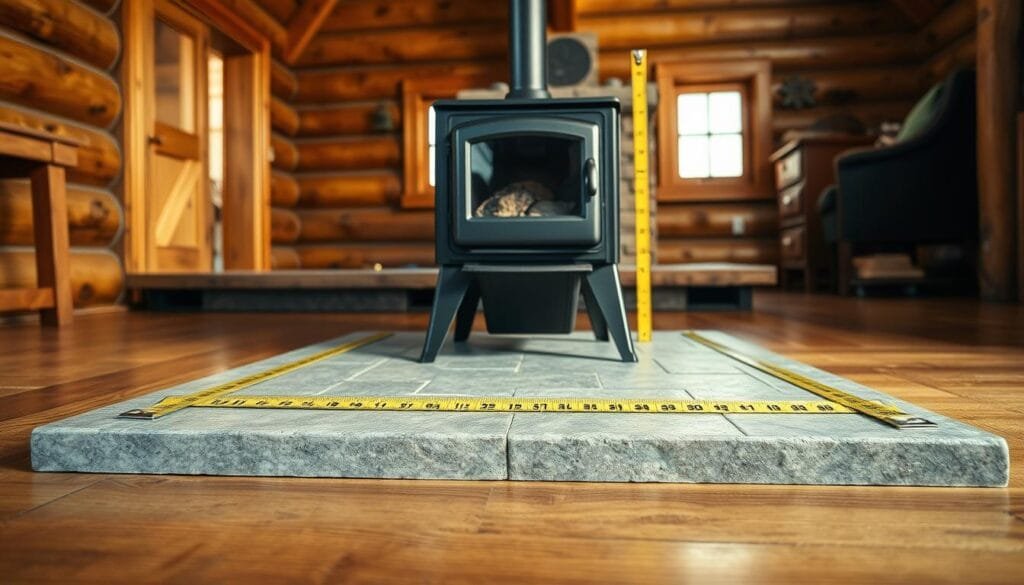
Measure and mark clearance distances from walls, furniture, and other combustible materials. These specifications appear in your stove’s manual and local building codes. Don’t assume manufacturer minimums are sufficient—always follow the stricter requirement if codes differ.
Install Floor Protection and Hearth Pad
Proper floor protection is one of the most critical hearth pad requirements for safe operation. The hearth pad creates a non-combustible barrier between your stove’s intense heat and your cabin’s flooring.
Approved hearth pad materials include ceramic tile, stone, brick, or manufactured hearth boards rated for wood stove use. The pad must extend beyond your stove’s footprint in all directions—typically 16 to 18 inches in front for ember protection and 8 inches on the sides and rear.
Your stove’s manual specifies exact hearth pad requirements based on its leg height and design. Some models with taller legs require less floor protection, while others sitting closer to the floor need more substantial barriers.
Installation involves several layers for proper thermal protection:
- Base layer of cement board or similar non-combustible material
- Air gap spacers if required by your stove model
- Thermal barrier layer rated for high temperatures
- Decorative surface layer of tile, stone, or approved hearth board
Many homeowners choose attractive materials like slate or ceramic tile that complement their cabin’s interior. Whatever you select, ensure it meets the thermal protection standards specified in your installation manual.
Set Up Your Chimney System
The chimney installation represents the most complex and critical part of the entire project. This component requires expertise to ensure proper draft, prevent dangerous creosote buildup, and maintain safe operation.
Existing chimneys must be thoroughly inspected and cleaned before connecting a new stove. A certified chimney sweep can assess whether your current chimney meets modern safety standards and works with your new appliance.
If you’re installing a new chimney system, you’ll choose between two main types:
- Manufactured chimney systems: Pre-fabricated stainless steel pipes designed for wood stoves, easier to install, and often more cost-effective
- Masonry chimneys: Traditional brick or stone construction, longer lasting but significantly more expensive and labor-intensive
Proper chimney sizing is critical for adequate draft. The chimney diameter must match your stove’s flue outlet—typically 6 or 8 inches for most cabin stoves. Too small creates poor draft and smoking problems, while oversized chimneys can reduce draft efficiency.
Chimney height requirements follow the “3-2-10 rule” in most areas. The chimney must extend at least 3 feet above the roof penetration point and stand 2 feet higher than any roof surface within 10 feet horizontally. This height ensures proper draft and keeps sparks away from your cabin’s roof.
Interior chimney installations retain more heat and provide better draft than exterior systems. Exterior installations are sometimes necessary based on your cabin’s layout and may cost less as they don’t require interior framing modifications.
Position and Connect Your Stove
With permits approved, hearth pad installed, and chimney system ready, you’re prepared for the final wood stove installation steps. This phase requires precision and patience to ensure everything connects properly and safely.
Carefully position your stove on the prepared hearth pad, ensuring it sits level in all directions. Use shims if necessary to eliminate any rocking or tilting. A level stove ensures doors seal properly and internal components function as designed.
Verify all clearance measurements one final time before connecting the chimney. Once satisfied with placement, you’ll connect the stove pipe sections from the stove’s flue collar to the chimney system.
Stove pipe connections require careful attention:
- Install sections with the crimped end pointing down to prevent creosote drips
- Secure each joint with appropriate screws—typically three screws per connection
- Apply high-temperature stove pipe cement to joints if required by your installation manual
- Support horizontal pipe runs every few feet to prevent sagging
- Maintain proper clearances from walls and ceilings throughout the entire pipe run
Seal penetrations through walls, ceilings, or roofs with appropriate thimbles and fire-safe materials. These protective sleeves create required clearances from combustible framing materials.
After completing all connections, perform initial safety checks before lighting your first fire. Verify that all doors close and seal properly, dampers move freely, and no gaps exist in pipe connections. Check that your chimney cap is securely installed and bird screens are in place.
Schedule your final inspection with local building officials. They’ll verify that your wood stove installation meets all code requirements and issue an approval certificate. This documentation protects your insurance coverage and confirms your installation is safe for operation.
Most manufacturers require professional installation to maintain warranty coverage. Even if you have construction experience, consider hiring certified installers for this critical work. The investment in professional expertise provides peace of mind and ensures your cabin heating system operates safely for years to come.
Safety Requirements and Clearance Guidelines
Knowing wood stove clearance requirements and safety rules is key. It keeps your cabin, family, and peace of mind safe. Installing a wood stove is more than just picking a spot and hooking up a chimney. You must follow safety standards to avoid fires, ensure good ventilation, and create a safe heating area.
Wood stove safety is not about being too careful. It’s about respecting fire and heat transfer. Each rule is based on real incidents that taught us important lessons. Following these rules protects your insurance, warranty, and most importantly, keeps your family safe during the heating season.
Maintaining Proper Distances From Walls
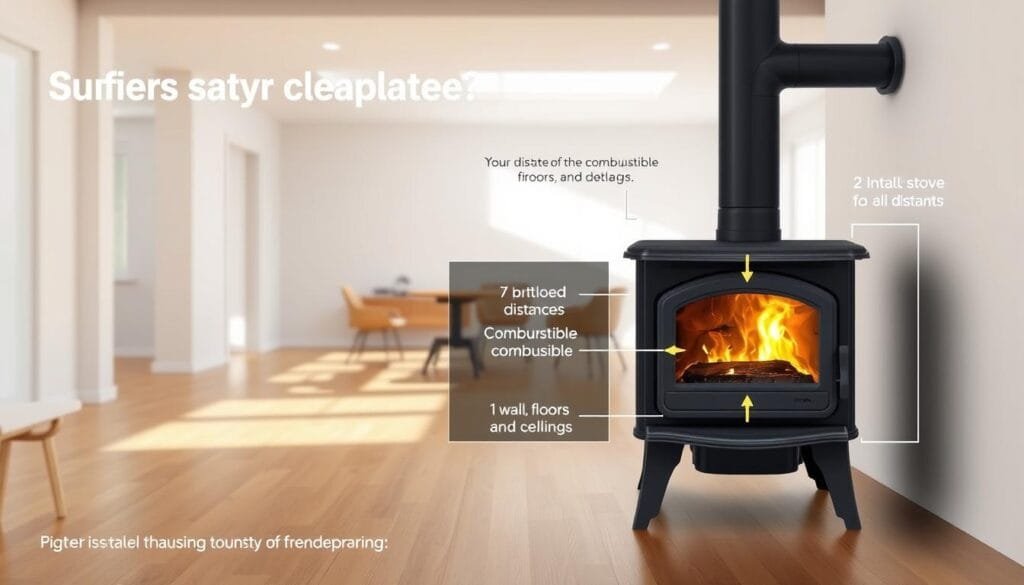
The space between your wood stove and flammable materials is your first defense against fires. Most stoves need at least 36 inches of clearance from walls and flammable surfaces. This space lets heat spread out safely without starting fires.
Using approved heat shields can reduce these clearances. A well-installed heat shield with air space behind it can cut clearances to 12-18 inches. The shield stops direct heat from reaching the wall.
Knowing how much space you need around a small wood stove depends on several things. Your stove model, wall protection, and local codes all play a part in the final clearance.
Floor protection is more than just the area under your stove. You need a non-flammable hearth pad that extends 16-18 inches in front of the loading door. This catches any sparks or embers that might escape when loading wood.
Key clearance considerations include:
- Side and rear clearances from flammable walls must meet manufacturer specs
- Stovepipe clearances usually need 18 inches from flammable materials
- Corner installations need special attention to diagonal clearances
- Furniture and curtains should stay outside the minimum clearance zone
Ensuring Adequate Chimney Performance
Chimney height affects your stove’s performance and safety. The chimney draft requirements for wood stoves say the chimney should be at least 10-15 feet tall. This height creates the draft needed to pull smoke up and out.
The “10-2 rule” guides chimney height relative to your roof. Your chimney must be at least 10 feet above the stove outlet and 2 feet higher than any roof within 10 feet. This prevents downdrafts and ensures smoke clears the roofline safely.
Poor draft causes many problems, like smoky cabins, incomplete combustion, and creosote buildup. If you see these issues, your chimney system needs checking and might need extension.
Chimney draft also depends on pipe size and layout. Never make the flue smaller than what your stove maker says. Each bend or horizontal section in your chimney system reduces draft, so keep it as straight as possible.
Installing Essential Safety Devices
Carbon monoxide detectors are a must for any cabin with a wood stove. Carbon monoxide is a silent, odorless killer from incomplete combustion. Put detectors on every floor, and near sleeping areas.
Place carbon monoxide detectors at knee height, not near the ceiling. Carbon monoxide mixes with air, so mid-level placement gives the earliest warning. Test them monthly and change batteries twice a year.
Smoke detectors also play a role by alerting you to visible smoke and fire. Install them on ceilings in main living areas and hallways leading to bedrooms. Don’t put them directly above your wood stove to avoid false alarms.
Your wood stove safety system should include:
- Multiple carbon monoxide detectors with battery backup power
- Interconnected smoke alarms that trigger at the same time throughout the cabin
- Fire extinguisher rated for wood fires (Class A) within easy reach
- Regular testing schedule documented and followed consistently
Never cut corners on safety to save money or time. Ignoring clearance rules or skipping detectors risks everything. Insurance might not cover claims if your installation doesn’t meet code, and warranties could be void.
Local building codes might be stricter than manufacturer minimums. Always check with your building department before starting. A professional inspection after installation proves your system meets all safety standards, giving you confidence in your heating setup.
Selecting and Preparing Firewood for Optimal Performance
Even the best wood stove won’t heat well if you burn bad firewood. The wood you choose affects how much heat you get and how clean your stove burns. It also affects how often you need to clean your chimney.
Many cabin owners burn whatever wood they find. This leads to bad results and safety issues. Choosing good firewood and preparing it right saves money and keeps your cabin warm.
Choosing Dense Hardwoods for Maximum Heat Output
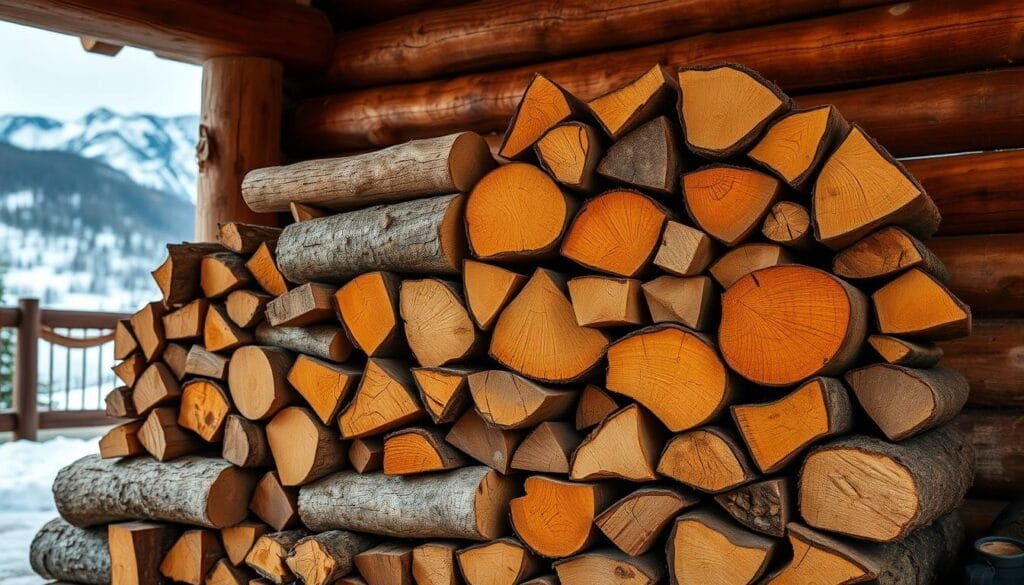
Hardwoods are the best firewood for heating because they’re denser and burn longer. Oak, maple, ash, and birch are the top choices for cabin heating. They pack more energy per log, so you need fewer trips to the woodpile at night.
Oak is the top choice for wood heating. White oak and red oak both give about 24-28 million BTUs per cord. They burn hot and create long-lasting coals that keep your cabin warm for hours.
Maple is a close second with great burning qualities. Sugar maple gives about 24 million BTUs per cord and splits easily. It makes less smoke than many hardwoods when burned right.
Ash is special because it burns well even when fresh. While it should be seasoned, ash naturally has lower moisture content. Learn more about selecting quality heating firewood for your climate.
Softwoods like pine and spruce are good for kindling or shoulder-season heating. But don’t rely on them for main heating fuel.
| Hardwood Species | BTUs per Cord | Splitting Difficulty | Seasoning Time |
|---|---|---|---|
| White Oak | 26.5 million | Difficult | 12-18 months |
| Sugar Maple | 24 million | Easy | 6-12 months |
| White Ash | 23.6 million | Easy | 6-12 months |
| Yellow Birch | 21.8 million | Moderate | 8-12 months |
Understanding Proper Seasoning and Moisture Testing
Seasoned firewood has 20% moisture content or less. This drying takes time but greatly improves burning quality. Wet wood makes too much smoke, builds dangerous creosote, and gives less heat.
Burning unseasoned wood wastes energy on evaporating water instead of heating. You’ll hear hissing, struggle to keep the fire, and see blackened glass on your stove door. These signs mean your firewood moisture content is too high.
Different woods need different drying times. Oak takes 12-18 months to dry because it’s dense. Maple and ash season faster, ready in 6-12 months. Splitting your wood speeds up drying.
Testing moisture content is easy with a $20-40 moisture meter. Insert the pins into a split surface, not the log’s outside. Test several pieces for a reliable average.
Your seasoned firewood should read below 20% moisture. Wood between 15-20% burns best. Anything above 20% needs more drying before use.
Storing Your Wood Supply Correctly
Proper storage keeps your firewood dry and ready. Keep it off the ground with good airflow and protect the top from rain and snow. This prevents moisture absorption and lets it dry further.
Start by placing your woodpile on pallets or a raised rack. Ground contact draws moisture up into the wood, undoing months of drying. Even a few inches of elevation makes a big difference.
Stack your wood loosely for air to circulate between pieces. Tight stacking traps moisture. Leave small gaps as you stack to promote airflow on all sides.
Location is key. Store your woodpile away from your cabin walls to avoid pests. Mice, termites, and other pests love woodpiles. A 20-30 feet distance works well.
Cover only the top of your stack with a tarp or roofing material. Leave the sides exposed for air movement. Wrapping the whole pile in plastic traps moisture and prevents drying.
Organize your wood by age, keeping older, better-seasoned wood accessible. Mark your stacks with the date you cut or purchased them. This ensures you always burn the driest wood first.
Calculate your seasonal needs based on several factors:
- Your cabin’s square footage and insulation quality
- Your climate zone and typical winter severity
- How often you use the cabin during heating season
- Your wood stove’s efficiency rating
- The type of hardwood you’re burning
Most cabin owners need 3-5 cords per winter for full-time heating in moderate climates. Colder regions or larger spaces may need 6-8 cords. Stock up more than you think you’ll need. Extra wood just continues seasoning and rolls over to next year.
Operating Your Wood Stove for Maximum Efficiency
Learning to use your wood stove well is easy. Knowing how to build your fire, manage airflow, and load wood is key. This way, you’ll use less wood and keep your cabin warm all winter.
Modern wood stoves have features like Automatic Combustion Control (ACC) for easy start-up. They let you control the fire precisely. So, you can load wood, light it, and then relax while your stove works.
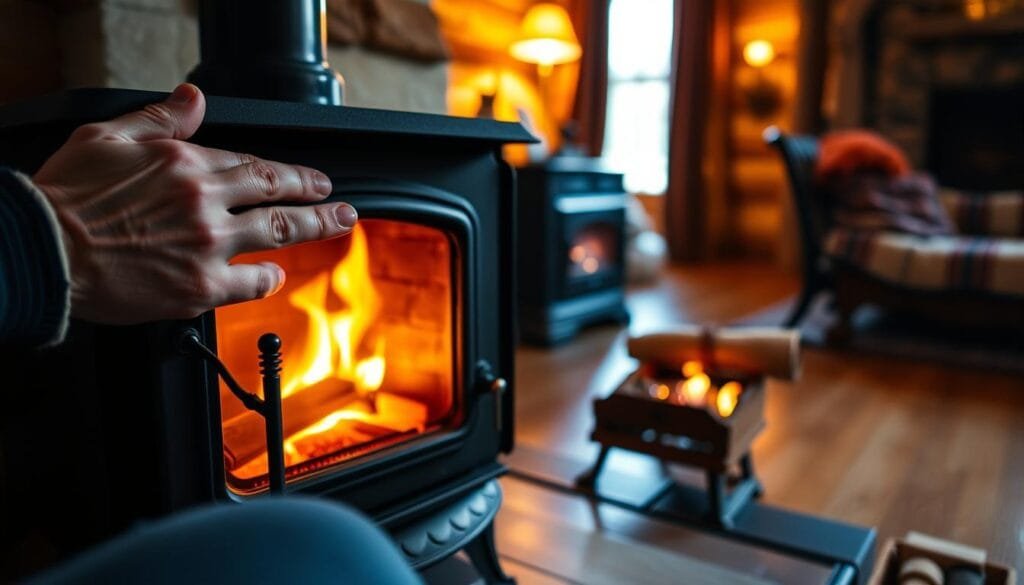
How to Start and Build a Clean-Burning Fire
Start your fire from the top for the cleanest burn. Put big logs at the bottom, with small gaps for air. Then, add medium splits and top with small kindling.
Use newspaper, fire starter cubes, or fatwood sticks at the top. Light it and let it burn down. This method burns wood more completely, making less smoke.
Open all air controls when starting the fire. Make sure your wood is dry. Dry wood lights fast and burns well.
Adjusting Air Controls for Temperature Management
Knowing how to use air controls makes your stove more efficient. Most stoves have controls for primary and secondary air. Some have the Four-Point Burn System for better airflow.
Start with all controls open when lighting the fire. Once it’s burning well, start closing the primary air control. Find the right balance for steady flames.
For long burns, adjust controls for steady flames. For overnight, close air controls to 25-30% open. Watch your fire to know when to adjust.
| Burn Stage | Air Control Setting | Expected Flame Appearance | Best Use Case |
|---|---|---|---|
| Start-up | 100% Open | Active, growing flames | Getting fire established |
| Active Heating | 50-75% Open | Steady, rolling flames | Maximum heat output |
| Sustained Burn | 30-50% Open | Moderate, consistent flames | Maintaining cabin temperature |
| Extended Burn | 25-30% Open | Low flames, glowing coals | Overnight or while away |
Loading Techniques for Extended Burn Times
How you load wood affects burn time. Use small splits for quick heat but less burn time. For longer burns, reload when coals are active.
Load wood tightly in the back for longer burns. Leave space for gases to escape. Arrange logs to match your stove’s air intake.
Use larger logs for longer burns. Leave the door open for 1-2 minutes after loading. Then, adjust air controls for the right burn rate.
Accessories like optional fan kit accessories spread heat without electricity. They mount on the stove and use convection to warm your cabin.
Keeping Your Cabin Warm and Cozy All Winter Long
Choosing the right stove is just the start of keeping your cabin warm. Your cabin’s energy efficiency is key to staying cozy and using less firewood. Start by doing a simple energy audit to find where heat escapes.
Check windows and doors for drafts. Seal gaps with caulking or weatherstripping. These small fixes help a lot in keeping warmth in.
Think about upgrading insulation in your attic or walls if your cabin feels drafty. Better insulation means your stove works less hard. Zone heating is also smart—warm only the rooms you use most. This saves firewood and money all season.
To keep your wood stove in top shape, clean out ash often and check door gaskets. Get your chimney cleaned yearly to avoid creosote buildup and ensure safety. Modern wood stoves can be 70-80% efficient with the right care and seasoned firewood.
With the right stove, quality fuel, and a well-sealed cabin, you’ll stay warm all winter. Measure your space, visit local dealers, and plan your installation. Your investment in cabin heating will bring cozy evenings and self-sufficient comfort for years.
FAQ
How do I calculate what size wood stove I need for my cabin?
What’s the difference between catalytic and non-catalytic wood stoves?
Why does EPA certification matter when choosing a wood stove?
How much does professional wood stove installation typically cost?
FAQ
How do I calculate what size wood stove I need for my cabin?
First, measure your cabin’s square footage you want to heat. Use 20 BTUs per square foot as a starting point. For example, a 1,500 square foot cabin needs about 30,000 BTUs.
Remember, ceiling height and insulation quality also matter. Poor insulation means you need more heat. Climate, cabin layout, and window quality also play a role.
While these tips help, talking to a certified dealer can fine-tune your choice.
What’s the difference between catalytic and non-catalytic wood stoves?
Catalytic stoves burn smoke and gases at lower temperatures. They’re very efficient and can burn for a long time. But, they need more maintenance.
Non-catalytic stoves are simpler and need less upkeep. They’re often more affordable. Some stoves combine both systems for the best of both worlds.
Why does EPA certification matter when choosing a wood stove?
EPA-certified stoves burn cleaner and use less wood. They heat more efficiently. This means you’ll save money and use less firewood.
They also produce fewer emissions and less creosote buildup. This is good for the air and your chimney.
How much does professional wood stove installation typically cost?
Installation costs
FAQ
How do I calculate what size wood stove I need for my cabin?
First, measure your cabin’s square footage you want to heat. Use 20 BTUs per square foot as a starting point. For example, a 1,500 square foot cabin needs about 30,000 BTUs.
Remember, ceiling height and insulation quality also matter. Poor insulation means you need more heat. Climate, cabin layout, and window quality also play a role.
While these tips help, talking to a certified dealer can fine-tune your choice.
What’s the difference between catalytic and non-catalytic wood stoves?
Catalytic stoves burn smoke and gases at lower temperatures. They’re very efficient and can burn for a long time. But, they need more maintenance.
Non-catalytic stoves are simpler and need less upkeep. They’re often more affordable. Some stoves combine both systems for the best of both worlds.
Why does EPA certification matter when choosing a wood stove?
EPA-certified stoves burn cleaner and use less wood. They heat more efficiently. This means you’ll save money and use less firewood.
They also produce fewer emissions and less creosote buildup. This is good for the air and your chimney.
How much does professional wood stove installation typically cost?
Installation costs $1,000 to $3,000 or more. It depends on the complexity of your situation. Factors like chimney installation and local labor rates affect the cost.
Professional installation ensures your stove meets safety codes. It also keeps your warranty valid and protects your cabin and family.
What moisture content should firewood have before burning?
Firewood should be seasoned to 20% moisture content or less. Burning wet wood causes smoke, creosote buildup, and poor heating efficiency.
Test moisture content with a moisture meter. Most hardwoods need 6-18 months to season properly. Split wood to speed drying and stack it with good airflow.
Can a wood stove heat my entire cabin, or will I need supplemental heat?
A well-sized wood stove can heat your entire cabin. But, several factors affect this. These include cabin layout, insulation, and climate.
Many cabin owners use a wood stove as their main heat source. Small electric heaters can provide extra warmth for bedrooms or distant rooms.
How often do I need to clean my wood stove chimney?
Clean your chimney at least once a year, before heating season starts. If you burn a lot of wood, you might need more frequent cleanings.
Regular maintenance prevents chimney fires and ensures efficient burning. Many cabin owners schedule cleanings in late summer or early fall.
What’s the difference between cast iron and steel wood stoves?
Cast iron stoves retain heat well and have a traditional look. They’re durable but can crack if shocked by temperature changes.
Steel stoves heat up faster and are lighter. They’re often more affordable and have modern designs. The choice depends on your priorities.
How long can modern wood stoves burn on a single load of wood?
Burn times vary by stove type and size. Non-catalytic stoves burn for 6-8 hours. Catalytic stoves can burn for 10-12+ hours.
Factors like firebox size, wood type, and moisture content affect burn time. Features like Automatic Combustion Control help optimize burn times.
Do I need a permit to install a wood stove in my cabin?
Yes, you need a permit in most places. Requirements vary by location. You’ll need to submit plans and have the work inspected.
Getting proper permits ensures safety and maintains your insurance coverage. Certified dealers can help with the process.
What’s the best way to distribute heat from a wood stove throughout my cabin?
Place your stove in a central location for natural heat circulation. Use ceiling fans to prevent heat from collecting at the ceiling.
Stove fans or blowers can actively move warm air. For multi-story cabins, leave interior doors open and use fans to encourage airflow. Registering your floors or installing cold air return pathways helps create natural convection loops.
Which wood stove offers the best value for cabin owners on a budget?
The Drolet Escape 1800 is a great value for budget-conscious owners. It heats up to 1,800 square feet and is EPA-certified. It’s more affordable than premium brands.
While it doesn’t offer extended burn times, it provides reliable heat without breaking the bank. It’s popular among those watching their budget.
How much firewood will I need for an entire winter season?
Firewood needs vary by cabin size, climate, insulation, and usage. A general guideline is 3-5 cords per season for moderate climates.
Factors like insulation quality and climate affect consumption. Start with a conservative estimate for your first season. Track your usage to refine estimates for future years.
Is it safe to leave a wood stove burning overnight or when I’m away?
It’s safe to leave a well-maintained stove burning overnight with precautions. Ensure it’s loaded properly and air controls are set right.
Modern EPA-certified stoves are designed for safe overnight operation. But, never leave a fire burning if you’re not there to check on it. Always follow safety guidelines.
What are the minimum clearances required between my wood stove and walls?
Most stoves need 36 inches from combustible walls. But, heat shields can reduce this to 12-18 inches. Always follow your stove’s manual for specific clearances.
Clearances prevent fires by keeping combustible materials away from heat. Never cut corners on clearances for safety and warranty reasons.
,000 to ,000 or more. It depends on the complexity of your situation. Factors like chimney installation and local labor rates affect the cost.
Professional installation ensures your stove meets safety codes. It also keeps your warranty valid and protects your cabin and family.
What moisture content should firewood have before burning?
Firewood should be seasoned to 20% moisture content or less. Burning wet wood causes smoke, creosote buildup, and poor heating efficiency.
Test moisture content with a moisture meter. Most hardwoods need 6-18 months to season properly. Split wood to speed drying and stack it with good airflow.
Can a wood stove heat my entire cabin, or will I need supplemental heat?
A well-sized wood stove can heat your entire cabin. But, several factors affect this. These include cabin layout, insulation, and climate.
Many cabin owners use a wood stove as their main heat source. Small electric heaters can provide extra warmth for bedrooms or distant rooms.
How often do I need to clean my wood stove chimney?
Clean your chimney at least once a year, before heating season starts. If you burn a lot of wood, you might need more frequent cleanings.
Regular maintenance prevents chimney fires and ensures efficient burning. Many cabin owners schedule cleanings in late summer or early fall.
What’s the difference between cast iron and steel wood stoves?
Cast iron stoves retain heat well and have a traditional look. They’re durable but can crack if shocked by temperature changes.
Steel stoves heat up faster and are lighter. They’re often more affordable and have modern designs. The choice depends on your priorities.
How long can modern wood stoves burn on a single load of wood?
Burn times vary by stove type and size. Non-catalytic stoves burn for 6-8 hours. Catalytic stoves can burn for 10-12+ hours.
Factors like firebox size, wood type, and moisture content affect burn time. Features like Automatic Combustion Control help optimize burn times.
Do I need a permit to install a wood stove in my cabin?
Yes, you need a permit in most places. Requirements vary by location. You’ll need to submit plans and have the work inspected.
Getting proper permits ensures safety and maintains your insurance coverage. Certified dealers can help with the process.
What’s the best way to distribute heat from a wood stove throughout my cabin?
Place your stove in a central location for natural heat circulation. Use ceiling fans to prevent heat from collecting at the ceiling.
Stove fans or blowers can actively move warm air. For multi-story cabins, leave interior doors open and use fans to encourage airflow. Registering your floors or installing cold air return pathways helps create natural convection loops.
Which wood stove offers the best value for cabin owners on a budget?
The Drolet Escape 1800 is a great value for budget-conscious owners. It heats up to 1,800 square feet and is EPA-certified. It’s more affordable than premium brands.
While it doesn’t offer extended burn times, it provides reliable heat without breaking the bank. It’s popular among those watching their budget.
How much firewood will I need for an entire winter season?
Firewood needs vary by cabin size, climate, insulation, and usage. A general guideline is 3-5 cords per season for moderate climates.
Factors like insulation quality and climate affect consumption. Start with a conservative estimate for your first season. Track your usage to refine estimates for future years.
Is it safe to leave a wood stove burning overnight or when I’m away?
It’s safe to leave a well-maintained stove burning overnight with precautions. Ensure it’s loaded properly and air controls are set right.
Modern EPA-certified stoves are designed for safe overnight operation. But, never leave a fire burning if you’re not there to check on it. Always follow safety guidelines.
What are the minimum clearances required between my wood stove and walls?
Most stoves need 36 inches from combustible walls. But, heat shields can reduce this to 12-18 inches. Always follow your stove’s manual for specific clearances.
Clearances prevent fires by keeping combustible materials away from heat. Never cut corners on clearances for safety and warranty reasons.