
Welcome to your go-to guide for creating a mountain retreat on sloped land. Many people find the idea of construction on uneven ground intimidating, especially if they are used to flat lots. But this unique location offers incredible opportunities for a one-of-a-kind home.
Hillside properties provide breathtaking views, enhanced privacy, and exciting design possibilities that flat land simply cannot match. While there are certainly challenges, proper planning turns potential problems into manageable steps.
Common concerns include foundation stability and water management. These issues require careful consideration, but they are far from impossible to solve. For a deeper look at coping with steep slopes, we have resources that cover the logistical details.
This guide will walk you through understanding your terrain, evaluating your site, and exploring foundation options. We will also cover key strategies for water control and outline your next steps. With the right knowledge and professional help, your dream project is absolutely achievable.
Understanding the Terrain, Privacy, and Views
The initial planning phase requires choosing between maximum privacy and optimal mountain views. This decision shapes your entire project from the ground up.
Balancing Privacy with Breathtaking Views
Your ideal location depends on whether you value seclusion or scenery more. Some properties offer both advantages, but many require trade-offs.
A hidden cabin away from the road might sacrifice some view potential. Meanwhile, positioning for panoramic views could mean less privacy. Each lot has natural building spots that work with the terrain.
Navigating the Unique Challenges of Sloping Land
Working with your slope prevents future problems. Steep grades and varying elevation require customized approaches.
Proper building slope understanding creates a solid foundation for all decisions. For detailed guidance on homes on sloped surfaces, consult experienced resources.
Different slopes present unique opportunities. Your land characteristics should guide your planning rather than fight against them.
Site Evaluation, Planning, and Design Considerations
A successful project starts with a detailed evaluation of your specific site. This initial step shapes your entire plan. Understanding the land’s unique factors prevents costly errors later.
Careful planning ensures your house is safe, functional, and beautiful. It connects your vision with the realities of the ground.
Assessing Slope Stability and Soil Conditions
Your first task is to check the ground’s strength. The slope angle and soil type are critical factors.
Testing the soil composition tells you if it can support the structure’s weight. Unstable ground can lead to shifting or settling over time.
Also, look for hidden water sources like springs. Water issues are a common cause of foundation problems on sloped lots.

This table summarizes the key checks for your site evaluation process.
| Evaluation Factor | What to Look For | Why It Matters |
|---|---|---|
| Slope Angle | Steepness of the building slope | Determines foundation type and cost |
| Soil Composition | Type of soil and its compaction | Ensures the ground can bear the load |
| Water Drainage | Presence of springs or water flow | Prevents future water damage |
Designing with Access, Lighting, and Outdoor Spaces in Mind
Good design works with the slope, not against it. Think about how you will access the property from the road.
Orient the house to capture optimal natural light. This improves energy efficiency and comfort.
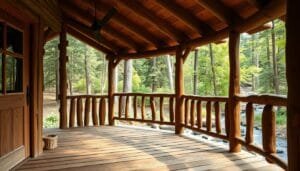
Creating level areas for decks and patios maximizes outdoor living. It’s one of the key benefits of a hillside location.
A comprehensive site plan considers the house, pathways, and outdoor spaces. This holistic view is vital for a project of any size.
Foundation Options for Building a Cabin on a Slope
Selecting the right foundation is the most critical decision for your hillside home. The method you choose must provide a stable, level base that works with your land’s specific grade.
You have three primary foundation options. Each offers distinct advantages and cost considerations depending on your slope conditions and design goals.
Exploring Post-Tension Slab and Concrete Stem Wall Methods
A post-tension slab uses steel cables embedded in thick concrete. After pouring, crews tighten the cables to create exceptional strength on challenging terrain.
This method requires careful leveling and often needs retaining walls. The result is a solid, level floor for virtually any design.
The concrete stem wall approach lifts your home on structured footings. This is ideal for creating extra space like a garage or basement underneath.
Construction involves digging deep footings below the frost line. Then, crews build the wall up to meet your main floor level.
Benefits of Stilted Pier and Beam Techniques
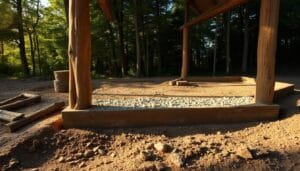
Pier and beam foundations are extremely popular for sloped lots. Large concrete piers support the structure above the ground.
This technique offers fantastic design flexibility and spectacular elevated views. Piers can be positioned in almost any configuration.
The elevated design naturally helps with water drainage. It is particularly well-suited for steep slopes and extreme terrain.
For a gentle slope, a simple slab-on-grade might work. This option becomes impractical as the angle increases.
Never cut corners to save on cost. Your foundation’s quality directly impacts your home’s safety, longevity, and maintenance.
Strategies for Effective Water Control and Drainage
Water control represents the most critical consideration for maintaining structural integrity on slopes. Improper drainage causes more structural damage than any other hillside construction issue. It leads to foundation failures and expensive repairs that can be avoided.
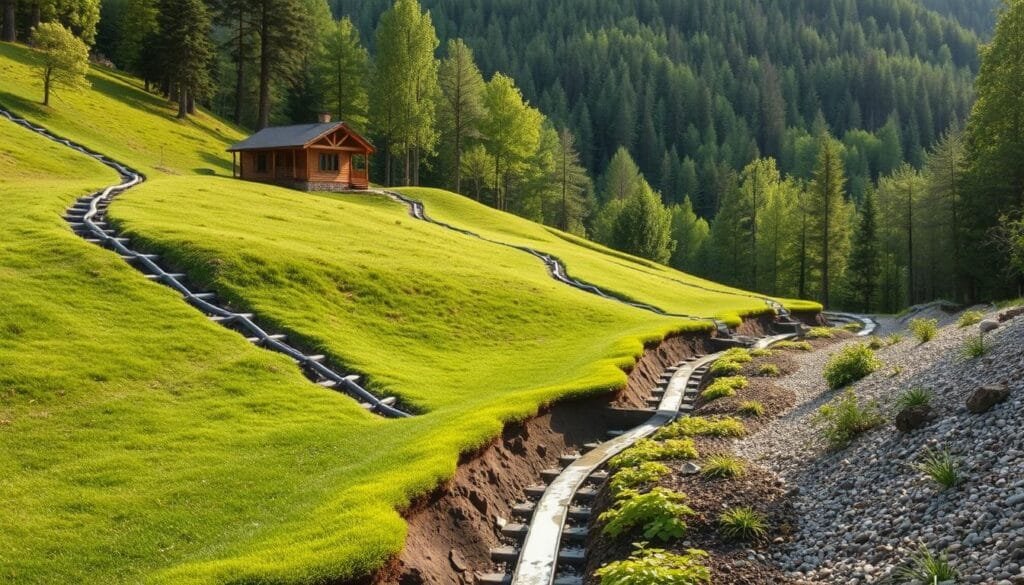
In rainy regions, careful water management planning is essential. The goal is to keep water away from your home and surrounding infrastructure. This protects roads, driveways, and utilities on your lot.
Implementing French Drains and Proper Grading Solutions
Smart construction uses the slope to its advantage. Gravity naturally directs water away from your foundation when planned correctly. This prevents pooling and soil saturation near your structure.
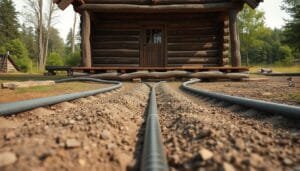
French drains are perforated pipes surrounded by gravel. They intercept groundwater below the footing level. This system channels water safely away before problems occur.
Proper grading involves shaping the terrain around your site. Surface water naturally flows away from your property. This prevents collection near walls and foundation undermining.
Combining multiple approaches creates redundant protection systems. For challenging slopes, comprehensive proper drainage planning is non-negotiable. Never cut corners on water management to save money.
Key Takeaways and Next Steps for Your Cabin Project
As you move forward with your hillside construction plans, remember that quality should never be compromised for short-term savings. Skimping on essential elements like your foundation or drainage systems will lead to costly repairs later. These are critical factors to consider when planning your project.
A comprehensive site plan is vital for success. Consult with professionals to ensure your desired location works with the terrain. This process helps you avoid common challenges that affect many houses on sloped lots.
The rewards of creating a cabin on a slope are worth the effort. You’ll enjoy stunning views and unique design options unavailable on flat land. Your dream home will stand the test of time when you prioritize proper planning and quality construction.
Start by evaluating your site thoroughly. Consider your priorities for privacy versus panoramic scenery. Work with experienced contractors who understand slope construction. Your beautiful mountain retreat awaits with careful preparation.