
Welcome to your essential guide on protecting your beloved retreat. A well-protected home offers incredible peace of mind, standing strong against rain, snow, wind, and sun for many years.
That rustic charm from natural wood is irresistible. But these structures face constant threats from the elements. Without proper care, weather conditions can lead to serious damage over time.
Whether you own a classic log home in the mountains or a cozy park model, understanding how the environment affects your structure is the first step. This knowledge is key to effective cabin maintenance for weatherproofing.
We will walk you through practical steps to shield your investment. You’ll learn how to fight moisture, wood rot, and UV weathering. Our advice is straightforward and friendly, with no confusing jargon.
By following these strategies, you’ll extend your cabin‘s life. You will also reduce future repair costs and preserve that beautiful, cozy feel for generations to come.
Understanding Weather Threats to Your Cabin
Nature’s elements present ongoing challenges that can slowly degrade the structural integrity of your woodland home. Being aware of these risks helps you take proactive measures.
Identifying Common Weathering Issues
Constant exposure to sun, rain, and temperature changes creates various damage issues. UV rays break down wood fibers, while rain seeps into cracks. Freeze-thaw cycles cause materials to expand and contract.
Different sides of your structure face unique challenges. South-facing walls get the most sun punishment. Northern exposures in shaded areas retain moisture longer.
https://www.youtube.com/watch?v=gncCfLg30b8
Recognizing Moisture, Rot, and Decay Risks
Water is the biggest enemy of log structures. When wood absorbs too much water, its moisture content rises above safe levels. This leads to serious damage over time.
Watch for early warning signs like discolored wood, soft spots, or musty odors. Catching these issues early prevents expensive repairs. Hot, humid climates make moisture particularly aggressive.
| Moisture Content | Effect on Wood | Risk Level |
|---|---|---|
| 14-15% | Ideal range | Low |
| Above 18% | Mildew and mold growth | Medium |
| Above 20% | Blistering and rot | High |
Understanding these weather-related issues helps prioritize your efforts. It’s essential for effective protection strategies that address specific elements in your area.
Essential Elements of Cabin Maintenance for Weatherproofing
A successful defense plan for your retreat combines robust external barriers with smart internal controls. This layered approach ensures every part of your structure works in harmony.
Think of it as a team effort. The exterior team’s job is to block rain, sun, and wind. The interior team manages humidity and air flow. When they work together, your home stays dry and healthy.
Your home’s construction type matters a lot. A handcrafted log cabin has different needs than a modern park model. The right strategy focuses on your specific weak points.
All these elements form a complete system. Good sealing keeps water out. Proper ventilation lets any trapped moisture escape. This stops damage before it starts.
| Focus Area | Primary Goal | Key Actions |
|---|---|---|
| Exterior Protection | Create a water-shedding envelope | Quality stains, roof overhangs, gutters, foundation sealing |
| Interior Preservation | Control humidity and air flow | Ventilation fans, dehumidifiers, protecting wood surfaces |
Regular maintenance is the final piece. It keeps this protective system strong against all kinds of weather. A little care now prevents big problems later.
Whether you own a classic log home or another style, the core idea is simple. Keep water away from wood and let the building breathe. Your cabin will thank you for years to come.
Effective Methods for Sealing Doors, Windows, and Gaps
The smallest openings around your doors and windows can become major entry points for damaging elements. Sealing these gaps and cracks is a critical step. It blocks wind, moisture, and cold air, saving on energy costs and preventing rot.
This process relies on two main tools: caulk for stationary seams and weather stripping for moving parts. Using the right products for each job ensures long-lasting protection.
Choosing the Right Caulk and Sealant Options
Not all caulk is the same. You have several options. The right type depends on the location.
Pure silicone sealant is great for extreme conditions and sticks well to glass and metal. Polyurethane is very durable and adheres to almost anything, perfect for joints. For a general-purpose, paintable caulking, consider siliconized acrylic latex.
Make sure the product has an ASTM C920 rating. This means it’s designed for exterior use and can handle temperature changes.
Integrating Weather Stripping for Enhanced Protection
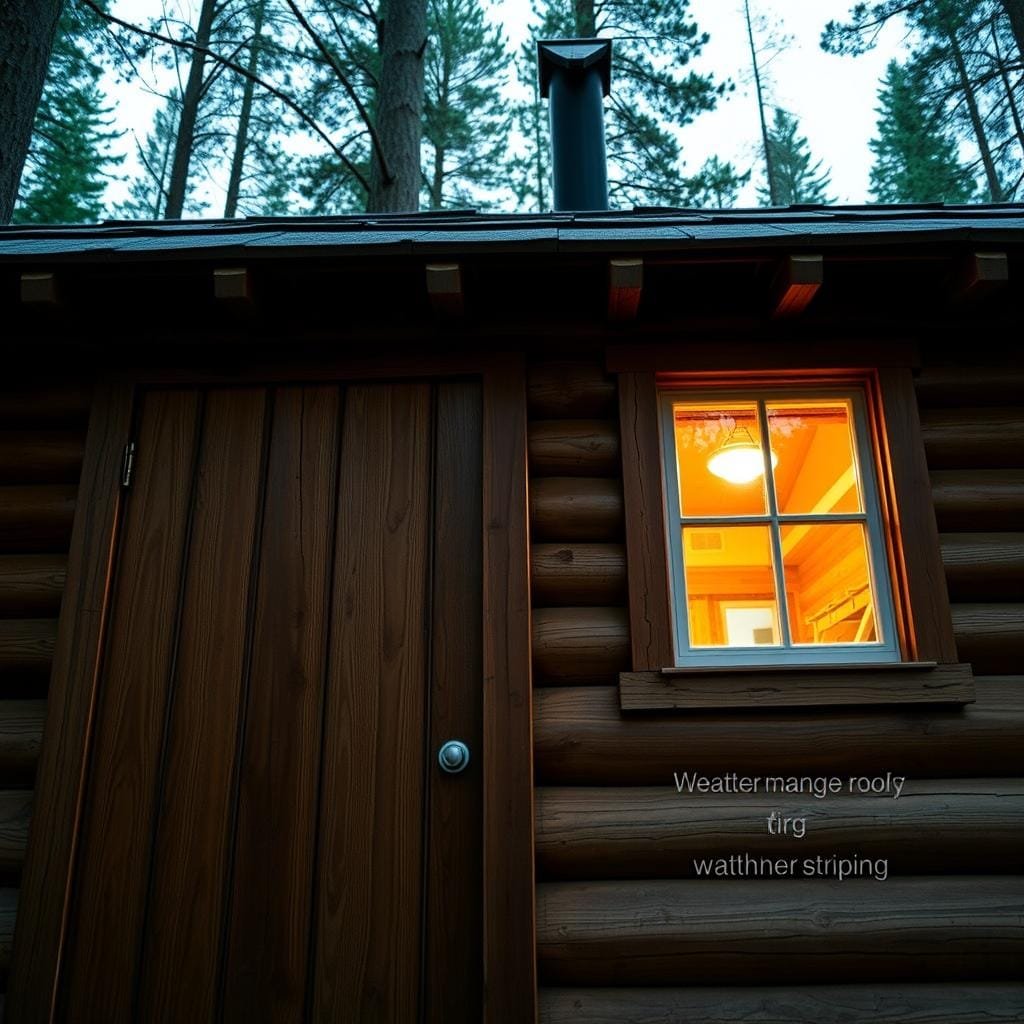
Weather stripping seals the moving edges of your windows doors. It completes the barrier that caulking starts.
Adhesive-backed foam tape is an easy, affordable choice. For larger, irregular gaps around old doors windows, tubular gaskets work well. A door sweep with a flexible flap seals the bottom gap effectively.
Installation is simple. The strip should fit snugly without making the doors or windows hard to open and close. A proper seal makes a huge difference in comfort and protection.
Protecting Your Cabin’s Foundation and Roof from Moisture
The areas above and below your structure require special attention to keep moisture at bay. Your roof and foundation work together as the primary defense against water intrusion.

Getting these two elements right from the start prevents massive headaches later. Proper design saves you from expensive repairs down the road.
Utilizing Overhangs, Gutters, and Proper Foundation Techniques
Large roof overhangs are absolutely essential for protection. Aim for a minimum 36-inch overhang on gable ends. This keeps rain and snow from hitting your exterior logs directly.
Short overhangs lead to repeated wetting that disrupts moisture content in wood. This causes premature timber failure and increases maintenance costs.
Rain gutters are non-negotiable for complete protection. Properly installed gutters channel water away from your foundation and walls. They prevent the accumulation that leads to rot and structural damage.
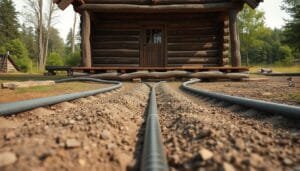
Your foundation can transmit dampness into base logs if not properly waterproofed. Create a barrier between the concrete pad and your first course of log materials.
The best approach involves placing a membrane on the outside where water pressure exists. Use rigid insulation boards or heavy plastic sheeting as an effective barrier. This blocks moisture transmission before it starts.
Combining generous overhangs with functional gutters and proper foundation techniques creates comprehensive protection. This system keeps water away from vulnerable areas and extends your structure’s life by decades.
Insider Tips: Construction Types and Ventilation Solutions
Your retreat’s long-term health depends heavily on two key factors: its original construction and how well it breathes. Getting these right from the start saves you lots of effort later.
Let’s look at how the building type you choose sets the stage for its durability.
Comparing Handmade vs. Kit-Cabin Approaches
Handmade log cabins have a unique, rustic beauty. The timber is often harvested and shaped on-site. This process can leave small gaps between the logs that need careful sealing.
Products like Permachink are perfect for this job. They fill spaces to block air, water, and heat loss.
Pre-cut kit-cabin models use a different approach. Their logs are precision-milled with tongue-and-groove joints. This design creates a tighter fit, offering natural resistance to the elements.
| Construction Type | Key Characteristic | Primary Sealing Need |
|---|---|---|
| Handmade | Authentic, rustic charm with imperfect log fits | Extensive gap sealing with specialized chinking |
| Kit-Cabin Model | Precision-milled logs with interlocking joints | Minimal sealing, focused on joints and potential shrinkage |
Optimizing Air Flow and Natural Ventilation
Good air movement is crucial for any log structure. It allows the wood to dry naturally and prevents problems.
If you use your place year-round, opening doors and windows often provides enough air flow. Seasonal getaways that sit closed for months need a dedicated plan.
Installing vents is a simple and effective fix. You can buy natural air vents at any hardware store.
The best setup uses two vents on opposite walls. Place one low and one high to create a cross-flow. This continuous movement is one of the most effective ventilation solutions.
Without this, internal pressure and moisture can build up. This trapped dampness gets forced through tiny cracks, causing damage over time. Proper ventilation stops this cycle before it starts.
Regular Upkeep: Cleaning, Caulking, and Staining Best Practices
Consistent care is what transforms a simple getaway into a cherished family heirloom, enjoyed for decades. A smart routine keeps major repairs at bay and protects your investment.
Your strategy should tackle the main threats: sun, water, and pests. A seasonal schedule makes this manageable.
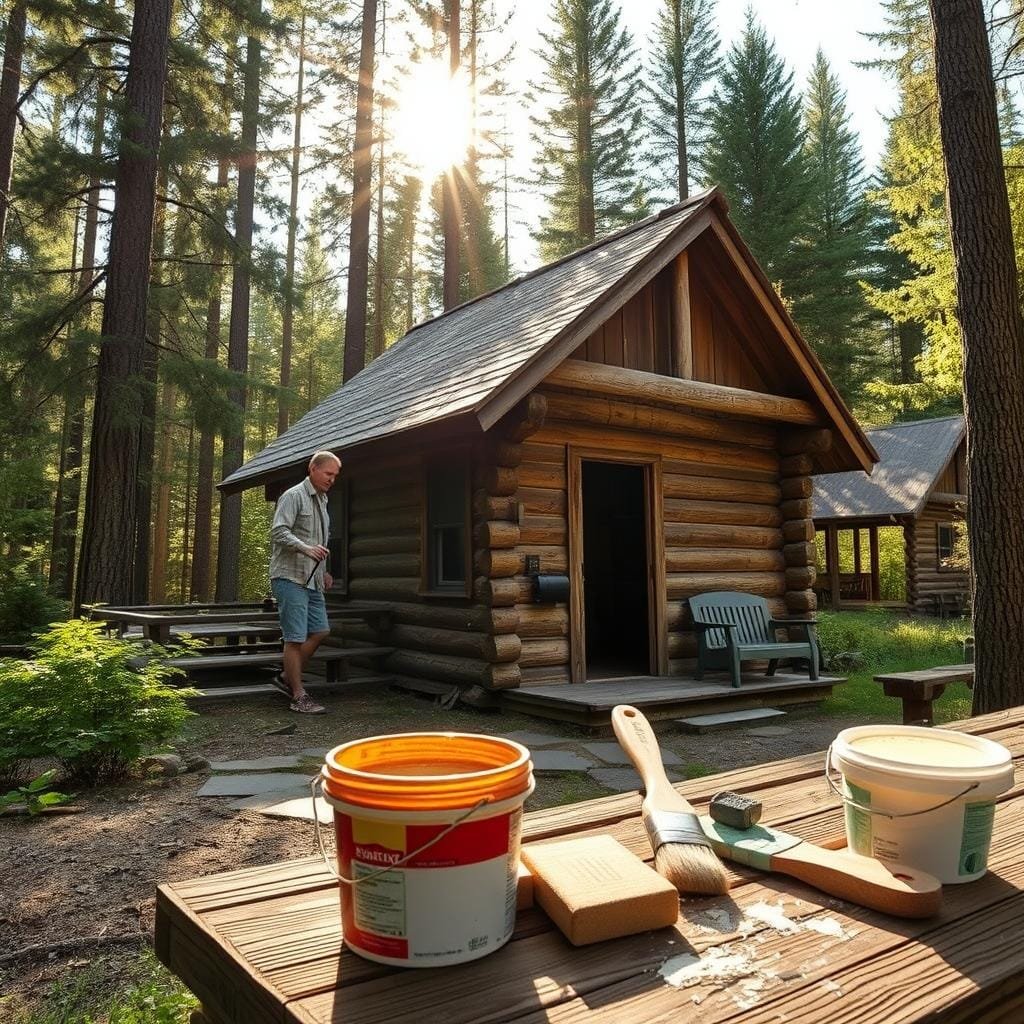
Seasonal Maintenance for Interiors and Exteriors
Start each season by gently cleaning the exterior logs. Remove pollen, dust, and dirt. Focus extra attention on the south-facing side, which gets the most sun exposure.
Annual staining is not a one-time task. Reapplying protective stain every year or two dramatically cuts long-term costs. Timing is critical. Apply the first coat soon after construction, and another after six months once the wood has settled.
Always clean before you stain. Use a mild oxygen bleach solution. Apply from the bottom up and rinse from the top down. Make sure to test a small patch first. Never use a pressure washer, as it can force water deep into the wood.
Inspect all caulking during your checks. If you find gaps, cut out the old material. Let the timber dry completely before applying a fresh bead. This ensures a tight seal against the weather.
Don’t neglect the interior. High-humidity areas like bathrooms need staining and good ventilation to prevent internal moisture damage. For more detailed tips, see this comprehensive log home maintenance guide.
This proactive approach to maintaining log structures ensures they stand strong for many years.
Wrapping Up Your Weatherproofing Strategy
Your weather protection journey transforms your property into a lasting legacy through smart, consistent care. This ongoing commitment prevents wood rot and water damage, saving you significant repair costs over many years.
Whether you own handmade log cabins or a kit-built model, the core principles remain universal. Keep moisture away from wood, seal all gaps, and ensure proper air circulation. Your approach will vary based on construction type and local weather patterns.
Focus on areas facing harsh elements, particularly south-facing sections. Remember that protection works as an integrated system where each component supports others. Quality caulk and sealant options pay for themselves by reducing future maintenance needs.
Break tasks into seasonal routines rather than overwhelming projects. Address issues promptly when you spot them around doors, windows, or foundation areas. This proactive approach makes care a satisfying habit rather than a burden.
Start today by walking around your structure with fresh eyes. Identify spaces needing attention and create a calendar spreading tasks across months. Your dedication now ensures beautiful, functional retreats for generations to come.