
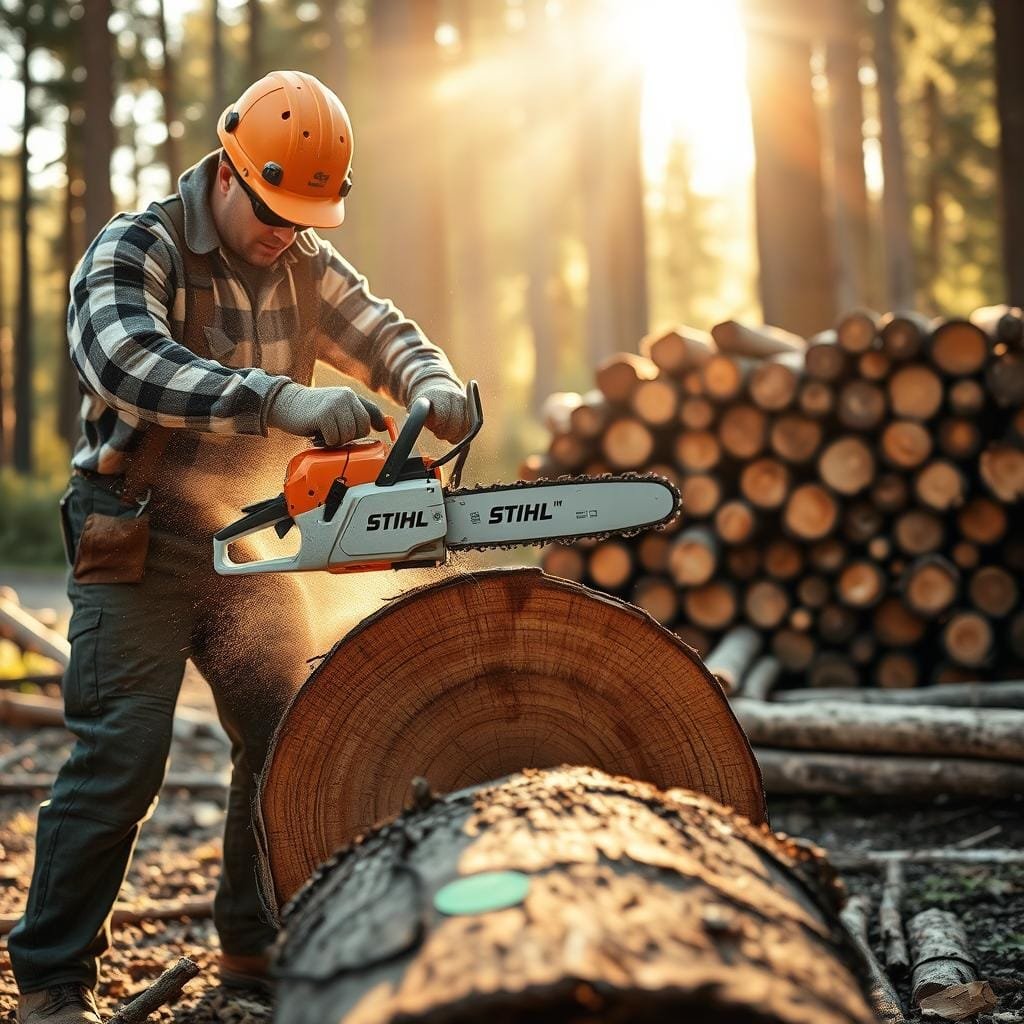

Learning the right way to handle your saw is key. It makes all the difference between frustration and success. Whether you’re managing your woodlot, processing firewood, or exploring urban logging, proper techniques keep you safe and get better results. The good news? Anyone can master these skills with the right guidance and practice.
Different jobs need different approaches. Felling trees, bucking logs, limbing branches, and milling lumber each demand specific methods. Cutting logs safely means understanding what you’re doing before you rev up that engine.
Logs and beams face different physical forces like compression, tension, and shear. These forces affect how you should approach each cut. Professional-grade workhorses like the Stihl 661 handle demanding tasks, but even the best equipment won’t help without solid wood cutting methods.
Chainsaw milling transforms trees into beautiful slabs and boards for building projects. Urban logging saves valuable timber from becoming mulch. This guide takes you from beginner to confident operator, building your chainsaw skills step by step.
Essential Safety Gear and Precautions Before You Start
Chainsaw safety equipment is not just a good idea—it’s a must-have to avoid serious injuries. Before you start your chainsaw, make sure you have the right protective gear. It’s like wearing armor for one of the most powerful tools you’ll use.
Ignoring safety precautions can lead to serious problems. Chainsaws move at over 60 miles per hour. A single mistake can cause severe cuts that need immediate medical help.
https://www.youtube.com/watch?v=ibYEqz5tsn4
Head and Face Protection is your first step. A good helmet system protects your head, face, and ears. These systems are made for chainsaw work and cover everything you need.
Your ears need protection too. Chainsaws are very loud, and hearing damage can happen quickly. Good ear protection keeps your hearing safe while letting you hear important sounds.
Chainsaw chaps are a must for your legs. They have fibers that stop the chain if it touches you. This can save your leg from serious injury.
When cutting trees, your legs need extra protection. Chainsaw chaps should go from your waist to your boots. They also help when you’re on your knees for a long time.
| Safety Gear Item | Primary Protection | Key Feature | Why It Matters |
|---|---|---|---|
| Helmet System | Head, face, ears | 3-in-1 integrated design | Protects against falling debris and noise damage |
| Chainsaw Chaps | Legs and thighs | Fiber-jamming technology | Stops chain in milliseconds on contact |
| Steel-Toed Boots | Feet and ankles | Cut-resistant upper material | Prevents crushing and cutting injuries |
| Heavy-Duty Gloves | Hands and fingers | Cut-resistant with grip enhancement | Protects while maintaining control |
Your hands need special protection too. Heavy-duty gloves are cut-resistant and help you grip the saw. They also reduce vibration fatigue.
Respiratory protection is key during long cutting sessions. Sawdust and exhaust fumes can harm you. A proper respirator or mask keeps you safe.
Steel-toed boots with cut-resistant uppers protect your lower body. They offer ankle support and stability. You need boots made for chainsaw work, not regular boots.
Before cutting, always check your work area for hazards. Make sure you have a safe way out. This is important for felling trees safely.
Keep a safe area around your work. People should stay at least two tree lengths away. This keeps them safe from falling trees and debris.
Weather affects chainsaw safety. Don’t work in bad weather. Check the forecast and wait if it’s not good.
Always have a first aid kit nearby. Accidents can happen, and quick access to medical supplies is important. Your kit should have bandages, gauze, and emergency contact info. For more on chainsaw safety equipment and procedures, check safety standards.
Here’s your essential pre-operation safety checklist:
- Inspect all chainsaw safety equipment for damage or wear
- Verify that protective gear for chainsaw use fits properly and securely
- Clear the work area of trip hazards and debris
- Identify and mark escape routes for tree felling
- Ensure bystanders are at a safe distance
- Check weather conditions and visibility
- Position first aid kit within immediate reach
- Have communication device available for emergencies
Wearing safety gear might feel awkward at first, but it gets easier. The slight hassle is worth the safety and protection it offers.
Remember, even experienced operators wear safety gear every time they use a chainsaw. It shows you’re serious about safety, not just a beginner.
Understanding Your Chainsaw: Components and Functions
Before you start using your chainsaw, it’s important to know how it works. Knowing the parts of your chainsaw helps you cut better and avoid damage. Each part is key to smooth, efficient cutting.
Choosing the right chainsaw for your job is key. You need to understand the bar and chain, the power source, and safety features. Let’s look at each part to help you make the best choice.
Bar and Chain Specifications
The bar is the long piece that guides the chain. Each saw has a recommended bar length. This is because the saw can only pump so much bar oil.
Longer bars need more oil to avoid overheating and wear. A 36-inch bar is good for milling logs. Some use extra oil pumps for longer bars.
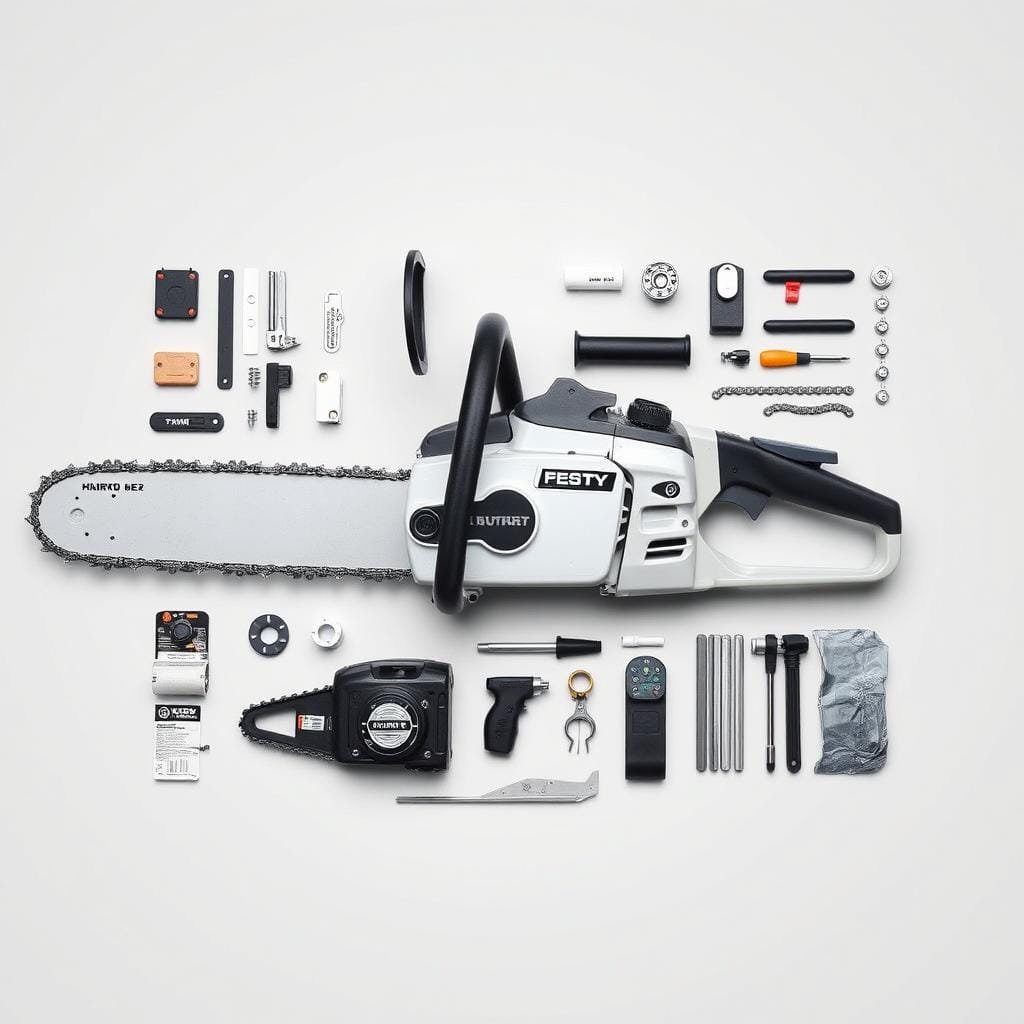
Choosing the right bar size is important. For milling, the bar size limits how big a log you can cut. A 36-inch bar might only cut a 30-inch log well.
Chain type is also important. Ripping chains are made for fast cutting with the grain. They make smoother cuts when milling lumber. Regular chains are slower but can work.
Chain specifications include pitch and gauge. These must match your bar. Using the wrong parts can cause poor performance and safety risks.
Engine Types and Power Requirements
Chainsaws have gas or electric engines. Gas saws are more powerful and last longer. Electric saws are quieter and need less maintenance but are less powerful.
Engine size affects cutting power. Knowing this helps avoid using a saw that’s too small. A small saw might cut through big timber, but it takes longer.
Professional saws like the Stihl 661 are built for tough jobs. They have bigger engines for consistent power. Investing in a good saw means faster cuts and reliability.
Lighter saws are easier to use for long times. But very light saws might lack power. Finding the right balance is key.
Safety Features You Should Know
Modern chainsaws have many safety features. The chain brake stops the chain quickly in case of kickback. It stops the chain in milliseconds.
Throttle lockouts prevent accidental starts. You need to squeeze a lever before the saw starts. This prevents many injuries.
Anti-vibration systems reduce hand fatigue and prevent nerve damage. Good saws have springs or dampeners to absorb vibrations. Without these, you risk Hand-Arm Vibration Syndrome.
The chain catcher catches a chain if it derails. It’s a small metal piece under the bar. It’s a backup safety feature.
Bar oiling systems keep the chain and bar cool. They prevent overheating and mechanical failure. Always check your oiler before cutting.
Proper Chainsaw Operation and Handling
Using a chainsaw safely is more than just pulling the trigger. It’s about using the right technique and standing in the right position. Learning these basics is key to avoiding accidents and making your work easier.
Think of chainsaw handling as building blocks. Each part works together for a safe and controlled cut. With practice, these techniques will become second nature.
Correct Grip and Stance
Your grip on the chainsaw is key to controlling it. Always place your left hand on the front handle with your thumb wrapped completely around the bottom. This grip helps prevent serious injury if kickback happens.
Your right hand should grip the rear handle with your thumb wrapped around underneath. This grip gives you control and prevents the saw from being torn from your hands during kickback.
Standing correctly is also important. Stand with your feet shoulder-width apart for stability. Keep your knees slightly bent to adjust smoothly and absorb vibrations.
Never stand directly behind the chainsaw—instead, position your body to the side of the cutting line. This stance keeps you out of the kickback zone and gives you better visibility of your cut. Maintain your balance by keeping your weight centered over both feet.
These techniques protect you and reduce fatigue. Holding the saw correctly and standing balanced makes your muscles work more efficiently. This lets you cut for longer without getting tired.
Starting Your Chainsaw Safely
The starting procedure is critical for safe chainsaw use. Always engage the chain brake by pushing the front hand guard forward before starting. This prevents the chain from moving during the starting process.
For cold starts, set the choke to the closed position and press the primer bulb several times if your model has one. The ground starting method is the safest approach for most users. Place the saw on flat, bare ground and put your right foot through the rear handle to stabilize it.
Hold the front handle firmly with your left hand and pull the starter cord smoothly with your right hand. Never wrap the starter cord around your hand—this can cause serious injury if the engine kicks back. Pull firmly and steadily until the engine fires, then adjust the choke as needed.
The leg-support method works well for experienced users with smaller saws. Trap the rear handle between your thighs just above your knees while holding the front handle with your left hand. This technique requires good balance and isn’t recommended for beginners or when using larger chainsaws.
One critical safety rule deserves emphasis: never drop-start a chainsaw. This dangerous practice involves holding the saw with one hand while pulling the starter cord with the other, often while the saw dangles in the air. Drop-starting damages your saw, violates safety protocols, and puts you at serious risk of injury.
Throttle Control and Chain Speed Management
Mastering throttle control is key to efficient cutting. Smooth throttle application reduces kickback risk and extends your chain’s lifespan. When you’re ready to make a cut, squeeze the throttle gradually until the chain reaches full speed before touching wood.
Never accelerate the throttle while the chain is already engaged in wood. This practice increases wear on your chain and creates unpredictable cutting behavior. Instead, bring the saw to full throttle, then smoothly guide it into the material you’re cutting.
Maintaining consistent chain speed throughout your cut produces cleaner results and prevents the saw from bogging down. If you feel the engine starting to labor or slow down, ease off slightly. Let the chain do the cutting work—your job is simply to guide the saw and maintain proper speed.
Throttle control becomes even more important near the end of a cut. As you approach the breakthrough point, be ready to ease off the throttle to prevent the saw from jumping forward unexpectedly. This technique gives you better control and protects against accidental contact with the chain.
| Operation Element | Correct Technique | Common Mistake | Safety Impact |
|---|---|---|---|
| Hand Grip | Thumbs wrapped around both handles | Loose grip or fingers on top | Loss of control during kickback |
| Body Position | To the side of cutting line, balanced stance | Standing directly behind saw | Increased injury risk from kickback |
| Starting Method | Ground or leg-support with chain brake engaged | Drop-starting technique | Equipment damage and injury risk |
| Throttle Application | Full speed before entering wood | Accelerating during cut | Increased kickback and chain wear |
Knowing when to ease off the throttle improves both safety and cutting efficiency. Release the throttle whenever you need to reposition the saw, clear debris from your work area, or take a break. Running the saw at idle unnecessarily wastes fuel and adds wear to components.
These fundamental chainsaw handling techniques might feel like a lot to remember initially. But stick with them, and they’ll become automatic reflexes. Your body will naturally assume the proper cutting stance, your hands will grip correctly without thought, and your throttle control will become smooth and precise.
Chainsaw Maintenance for Optimal Cutting Performance
Keeping your chainsaw in top shape turns it into a precision tool. It makes your cuts professional. Most maintenance tasks are easy and can be done in your workshop or in the field.
Maintenance is like preventive medicine for your saw. A few minutes of care after each use saves hours of frustration and costly repairs.
Chain Sharpening Techniques
A sharp chain makes cutting effortless. Knowing when to sharpen is key to maintaining peak performance.
Your chain is dull when it produces fine sawdust instead of wood chips, needs too much pressure, cuts at an angle, or smokes. These signs mean it’s time to sharpen.
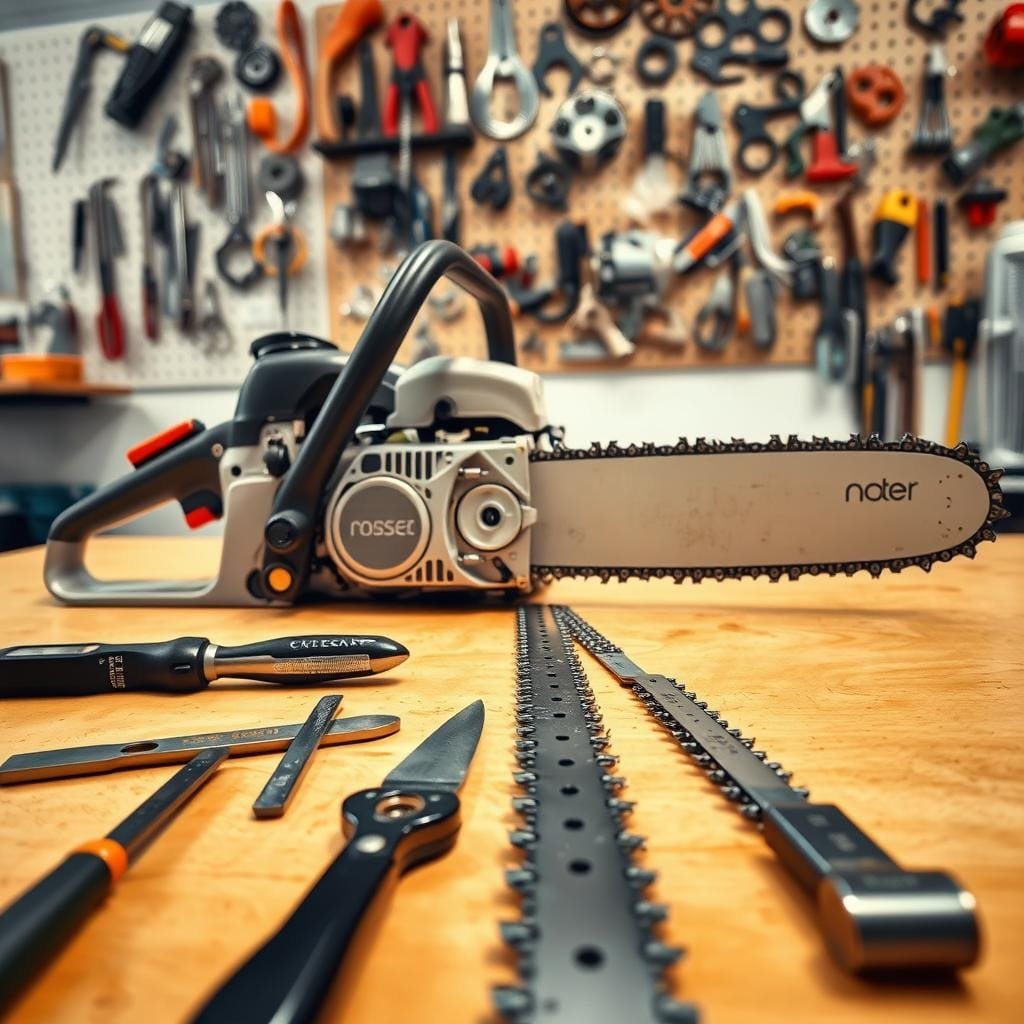
Hand filing is the best method for chain sharpening in the field. Use a round file that matches your chain’s pitch. A file guide helps keep the correct angle, usually 25 to 35 degrees.
File each cutter with smooth, forward strokes. Keep consistent pressure and angle. Count your strokes and give each tooth the same number for uniform sharpness.
For intensive work like milling, touch up your chain often. Many operators keep a hand file ready because conditions can dull a chain quickly. Learning can mean damaging a chain or two, but that’s okay.
Professional sharpening services or bench-mounted sharpeners offer precision. Consider these options for significant restoration or uniform results.
Tension Adjustment and Bar Maintenance
Proper chain tension is critical for safe operation and clean cuts. A correctly tensioned chain pulls away from the bar slightly but snaps back into the groove. Check tension before each use and during extended cutting sessions.
New chains stretch during their first few uses, needing more frequent adjustments. Loosen the bar nuts, adjust the tensioning screw, and then retighten the nuts while holding the bar tip upward. Always have a chainsaw wrench ready for these adjustments.
Bar maintenance is as important as the chain. Inspect your bar for cracks, burrs, or excessive wear. Flip your bar every time you sharpen the chain to ensure even wear. This simple habit can double your bar’s lifespan.
Clean the bar groove thoroughly to remove sawdust and debris. Use a small screwdriver or bar groove cleaner to remove compacted material. Check that the oil delivery holes aren’t blocked, as proper chainsaw lubrication depends on clear passages.
Lubrication and Fuel Mix Guidelines
Automatic chain oiling keeps your chain and bar cool. During demanding tasks like milling, adjust your saw’s oil output to the maximum setting. This type of work is taxing on equipment and requires generous lubrication.
You’ll go through nearly as much bar oil as gasoline during milling operations. Make it a habit to refill both simultaneously so you never run dry on either. Running a chain without adequate oil generates excessive heat that can ruin your chain and bar in minutes.
Use bar and chain oil formulated for chainsaws. In cold weather, switch to winter-grade oil that flows better at low temperatures. Verify that oil is flowing properly by holding the bar tip near a light surface and running the saw briefly—you should see a fine oil spray.
Two-stroke chainsaw engines require a precise fuel mixture, typically 50:1 (gasoline to oil) for modern saws, though some older models use 40:1. Always follow your manufacturer’s specifications exactly. Use fresh fuel and proper two-stroke oil—never automotive motor oil.
Fuel degrades over time, so mix only what you’ll use within a month. Old fuel causes starting problems and poor performance. Store fuel in approved containers away from direct sunlight and extreme temperatures.
| Maintenance Task | Frequency | Time Required | Impact on Performance |
|---|---|---|---|
| Chain sharpening | Every 3-5 hours of use | 10-15 minutes | Cutting speed and smoothness |
| Chain tension adjustment | Before each use | 2-3 minutes | Safety and cutting accuracy |
| Bar groove cleaning | Every tank of fuel | 5 minutes | Oil distribution and chain life |
| Bar flipping | Every sharpening | 2 minutes | Even wear and extended bar life |
| Oil system check | Daily before operation | 1 minute | Prevents overheating and damage |
Regular maintenance is essential for the best performance from your chainsaw. These routines become second nature quickly and reward you with consistently excellent cutting results. Your saw will run smoother, cut faster, and last years longer when you invest a few minutes in proper care after each use.
Fundamental Chainsaw Cutting Techniques
Every chainsaw user needs to learn a few basic cutting techniques. These basic cutting techniques are key to working efficiently and safely. Knowing when and how to use each method is vital for professional-quality work.
These techniques are the foundation for all wood cutting tasks, from simple log cutting to complex tree felling. Once you master these methods, you’ll be ready for more challenging projects. Let’s look at the essential cutting approaches every chainsaw user should know.
The Boring Cut Method
The boring cut technique involves inserting the chainsaw bar into the wood to make an internal cut. It’s essential for felling trees with a heavy lean or when creating a safe hinge before the back cut. Arborists often use this method for controlled tree felling.
To safely do a boring cut, stand stably and hold the saw firmly. Start the bore with the lower portion of the bar tip, avoiding the kickback zone. Push the bar straight into the wood while keeping the throttle steady.
This method lets you create the hinge wood before finishing the back cut, giving you control over the tree’s fall. Start with smaller trees and always be cautious of kickback risk when using the upper tip quadrant.
Plunge Cutting Basics
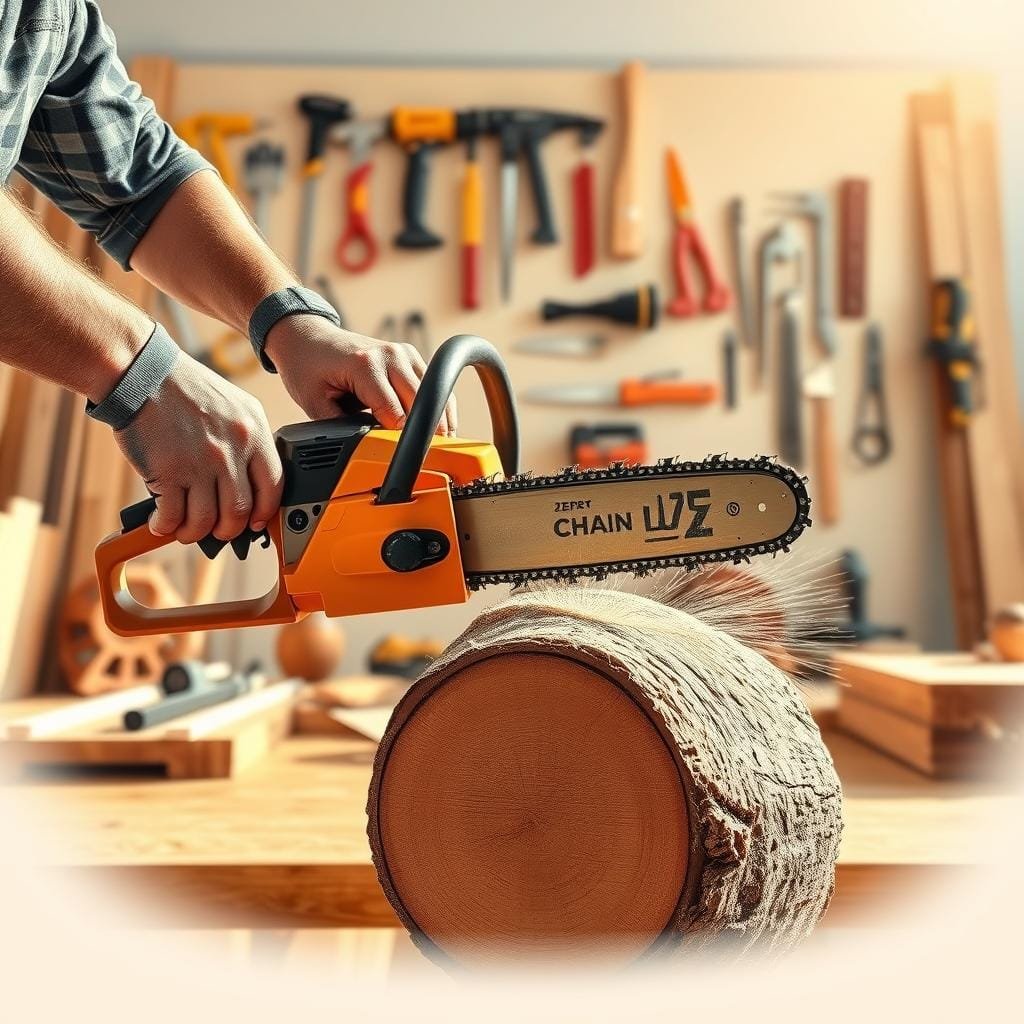
Plunge cutting is about entering wood with the bar tip to cut out sections without starting from an edge. It’s used for notches or removing damaged wood. This technique requires respect and proper training.
The main danger is kickback risk when the bar tip hits wood. Always use the lower quarter of the bar tip for entry. Keep your body to the side of the cutting plane, never behind the saw.
Start with the saw at full throttle before touching the wood. Push the tip in slowly while controlling the saw. Once through, pivot the bar to extend the cut in either direction.
Beginners should avoid plunge cutting until they’ve mastered simpler cuts. Start with basic felling limbing and bucking techniques before moving to plunge cuts. Practice basic operations to build confidence and control.
Ripping vs. Cross-Cutting
Knowing the difference between ripping and crosscutting changes how you approach sawing tasks. These methods need different techniques and chains. Recognizing which method you’re using helps you work more efficiently.
Cross-cutting means cutting across the wood grain, the most common chainsaw operation. It’s used for bucking logs and cutting firewood. Standard chains are best for crosscutting because they’re designed to cut across the grain.
Ripping is cutting parallel to the grain, along the tree’s length. It’s mainly for milling logs into dimensional lumber. Ripping cuts are slower than crosscuts with standard chains because you’re cutting with the grain.
For serious ripping, use a dedicated ripping chain. These chains have teeth filed at different angles, making them better for cutting parallel to the grain.
| Cutting Method | Grain Direction | Optimal Chain Type | Common Applications | Cutting Speed |
|---|---|---|---|---|
| Cross-Cutting | Perpendicular to grain | Standard chain (25-35° angle) | Bucking logs, firewood, general cutting | Fast |
| Ripping | Parallel to grain | Ripping chain (10° angle) | Milling lumber, plank cutting | Moderate |
| Cross-Cutting with Ripping Chain | Perpendicular to grain | Ripping chain (10° angle) | Not recommended | Very slow |
| Ripping with Standard Chain | Parallel to grain | Standard chain (25-35° angle) | Occasional ripping only | Slow |
While you can use a standard chain for ripping, it’s slower and harder. The chain will also dull faster. For milling or frequent ripping, a proper ripping chain saves time and effort.
The difference in cutting orientations affects your technique. Crosscutting needs less pressure because the chain teeth cut fibers well. Ripping requires consistent pressure to cut through longer fibers.
Most users will do crosscutting most of the time. But for milling or creating beams, knowing ripping versus crosscutting is key. The right chain for your cutting direction makes projects more efficient and produces better results.
Notch Cutting Methods for Controlled Drops
Before a tree falls, your notch cut decides its path. This wedge-shaped opening is key in tree felling. It’s cut on the tree’s side facing your fall direction. It works with the back cut to guide the tree safely.
The notch acts like a hinge, controlling the tree’s fall. Done right, it gives you control over the tree’s direction and keeps you safe. Different notch methods suit different needs and skills.
Choosing the right notch technique is vital. It can make a drop safe and controlled. Let’s look at three main methods used in tree work.
Wide-Angle Face Cut for Better Control
The open face notch is modern tree felling’s standard. It uses a wide angle between cuts, 70 to 90 degrees. This creates a large wedge for better control.
This method is great because the tree stays in contact with the stump longer. This gives you more control and keeps the hinge wood intact. It makes the tree’s fall more predictable.
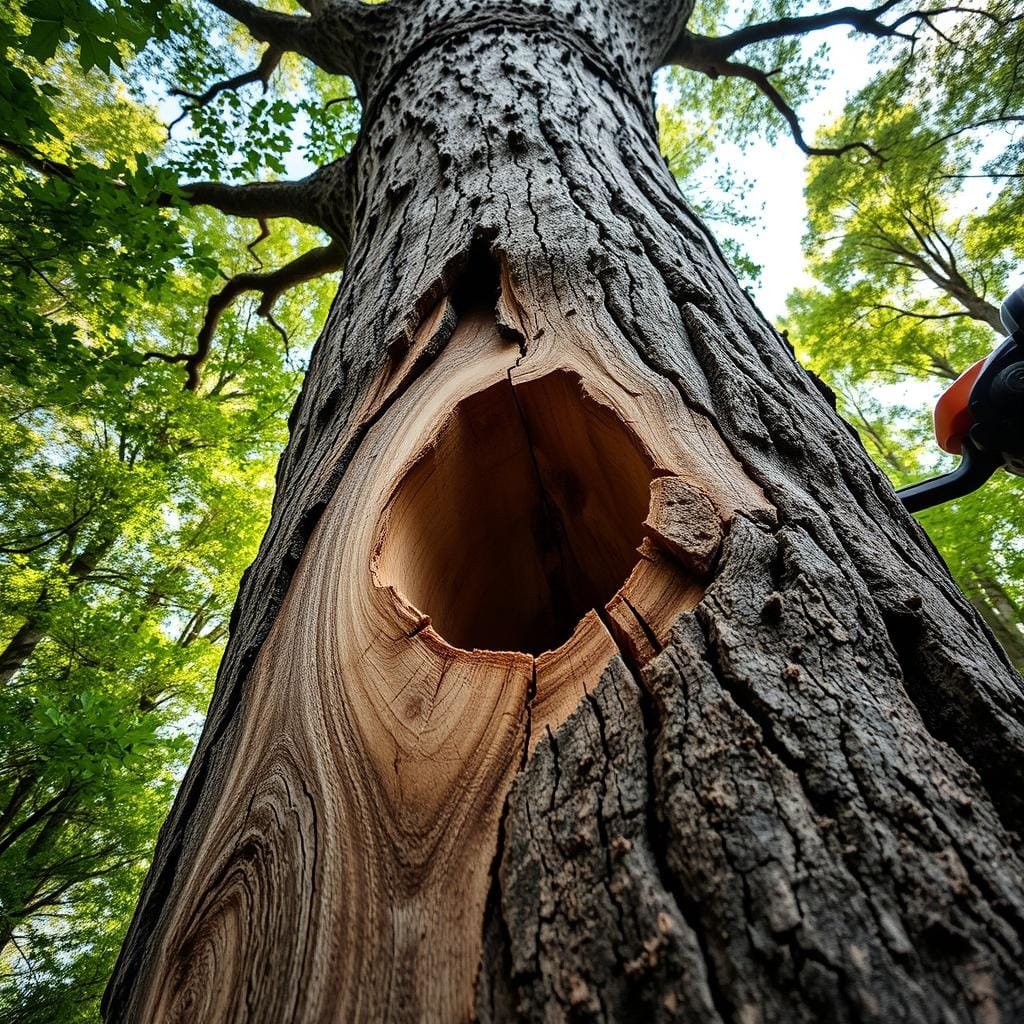
To make an open face notch, start with a top cut at 70 degrees. Make it deep, to one-quarter to one-third of the tree’s diameter. Then, cut the bottom horizontally, meeting the top cut precisely.
It’s important for both cuts to meet at one point. Any gap or overlap is unsafe. Practice on smaller trees until your cuts are perfect.
Traditional 45-Degree Method
The conventional notch has been used for years. It has a 45-degree top cut and a horizontal bottom cut. This creates a 45-degree wedge, a staple in tree work.
This method is good for quick cuts or smaller trees. The tree breaks away from the stump sooner. This is useful when you need the tree to clear the stump fast.
Many experts use this method for certain jobs. It’s fast, simple, and works well for most situations. It’s a balance of speed and safety.
But, it means less control time than the open face method. You need to be sure of your cuts.
Reversed Cut for Lumber Maximization
The Humboldt notch is different. It cuts from below and above, not down. It’s used for getting more lumber from a tree.
This method is good because the notch wedge falls away, leaving more lumber. For big operations, this adds up to a lot of value.
This technique is harder and requires skill. You need to control your saw at awkward angles. The stump will have a unique look.
It also helps prevent the tree from sliding backward. This is useful on slopes or with heavy trees.
| Notch Type | Angle Configuration | Best For | Key Advantage |
|---|---|---|---|
| Open Face | 70-90 degrees | Beginners, precise control needs | Extended hinge contact time |
| Conventional | 45 degrees | Smaller trees, faster operations | Speed and simplicity |
| Humboldt | Reversed angle cuts | Commercial logging, maximum yield | Increased lumber recovery |
Learning notch cutting takes time. Start with the open face notch. As you get better, try the conventional and Humboldt cuts. The right techniques make tree felling precise and controlled.
Backcut Techniques for Safe Tree Felling
After making your notch, the backcut is key for controlling the tree’s fall. It’s made on the opposite side of the notch. Knowing how to use backcut techniques is vital for safe tree felling. Most accidents happen when people rush or make mistakes.
The backcut lets gravity take over. But it’s more than just cutting wood. It’s about leaving the right amount of material in the right place for control.
Creating the Hinge: Your Safety Controller
The hinge wood between your notch and backcut is critical. It acts like a door hinge, controlling the tree’s fall. Without a proper hinge, you lose control over the tree’s direction.
A good hinge is about 10% of the tree’s diameter. For example, a 20-inch tree needs a 2-inch hinge. But never go below 1 inch, that’s your safety margin.
The hinge must be even across the tree. An uneven hinge can make the tree fall unpredictably. Always check your backcut’s depth on both sides.
Too much hinge wood means the tree can fall anywhere, even backward. Too little, and the tree might not fall or could split vertically. This is dangerous.
Think of the hinge as bending, not breaking, as the tree falls. This bending gives you time to move to safety while controlling the fall.
Getting the Height Right on Your Backcut
The backcut’s height is key for a safe fall. It should be 1 to 2 inches above the notch. Never level with or below the notch.
This height prevents the tree from sliding backward. Sliding back is called a barber chair, and it’s dangerous. The butt can shoot up violently, posing a risk to anyone nearby.
To set the height, use your thumb or a marked spot on your saw bar. Start your backcut and check the height on both sides. It’s easier to adjust early than to fix later.
Keep the height consistent as you work across the tree. Don’t let your saw blade dip or angle. If on sloped ground, adjust your stance, not your angle.
For large trees, you might need to go around to complete the backcut. Always maintain the same height. Mark the bark with chalk or a scratch if needed.
Wedges: Your Insurance Policy
Using felling wedges is like having insurance for your cut. They prevent saw pinch, counteract backward lean, and help guide the tree.
Here’s when you need wedges:
- Any tree with backward lean (leaning opposite to your intended fall direction)
- Trees with questionable balance where wind might be a factor
- Large diameter trees where you’re making deeper cuts
- Situations where you need extra control for property protection
Stop your backcut when you’ve gone about one-third of the way through. Insert your first wedge into the kerf behind your saw bar. Tap it gently with your axe or sledgehammer.
Continue cutting deeper, then add a second wedge. For trees over 20 inches in diameter, use two or three wedges spaced evenly. This distributes pressure and prevents twisting.
Felling wedges don’t have to be expensive. Many professionals use 2×4 lumber cut at an angle. Plastic wedges last longer but wooden ones work fine and cost almost nothing.
As the tree leans, hammer your wedges progressively. You’ll feel it start to fall. Never stand directly behind the tree when hammering wedges—always work from the side with a clear escape route.
Directional Felling for Precision Control
Learning directional felling makes chainsaw work precise, giving you control over where trees fall. It’s about careful observation and planning. This ensures trees fall exactly where you want them to.
Proper directional felling means analyzing the tree, your surroundings, and weather before cutting. This approach prevents accidents and damage. Let’s look at the key elements for precision in tree felling.
Reading Natural Lean and Crown Weight
Start by assessing the tree’s natural lean before cutting. Stand back and observe from different angles. Look for the natural lean of the trunk to see where it wants to fall.
Use tools like an axe handle or plumb bob to measure tree lean. Hold it at arm’s length and compare it to the tree trunk. Even a small lean is important when dealing with heavy timber.
Also, check the crown weight distribution. Walk around the tree and see which side has more branches and foliage. This extra weight can pull the tree in that direction during the fall.
- Visible cracks or splits in the trunk that indicate weakness
- Decay or hollow sections that reduce structural integrity
- Dead branches concentrated on one side affecting balance
- Previous storm damage that created hidden weak points
- Root damage from construction or erosion
You can fell a tree against its natural lean with the right techniques and wedges. But, this needs more skill and careful execution. Beginners should work with the tree’s natural lean for safety.
Selecting Your Target Falling Zone
Choosing the right felling direction involves balancing many factors. Your ideal direction might not always match the tree’s natural lean. This decision-making is what separates experienced operators from novices.
Consider these critical factors when determining felling direction:
- Available landing space free from obstacles, buildings, or other trees
- Terrain slope and how it affects the tree’s roll after landing
- Property boundaries and legal restrictions on where timber can fall
- Access routes for removing the felled tree afterward
- Value preservation by avoiding rocks, stumps, or hard surfaces
The best felling direction is often a compromise between safety and convenience. Safety always comes first. If the safest direction means more cleanup work, choose that one.
Examine your landing zone carefully for hidden obstacles. Walk the area and remove debris, small saplings, or anything that might deflect the falling tree unpredictably. A clear landing zone gives you confidence in your directional felling plan.
Establishing Safe Exit Paths
Planning your escape route is the most critical safety step. Before cutting, establish two clear escape routes at 45-degree angles away from your expected fall direction. These paths could save your life if something goes wrong.
Your escape routes need thorough preparation:
- Clear all debris, vines, and obstacles from both paths
- Remove trip hazards like roots, branches, or rocks
- Ensure paths extend at least 15 feet from the tree base
- Test walking each route while looking over your shoulder
- Identify a safe observation point beyond the escape zone
Plan your movement sequence before the tree starts falling. Know exactly which escape route you’ll use based on how the tree begins to move. Keep your chainsaw at your side or set it down safely—never run with a running chainsaw.
The 45-degree angle is essential because trees can kick backward off the stump as they fall. Moving straight back puts you in the danger zone. Your angled escape routes keep you clear of this kickback area and any side-to-side movement.
Never turn your back on a falling tree. Move quickly along your escape route while maintaining visual contact with the tree. This awareness lets you react if the fall doesn’t go as planned.
Accounting for Wind and Weather Conditions
Wind and environmental factors can dramatically alter your tree’s falling path. Understanding these influences helps you choose the right conditions for felling operations and adjust your approach.
Wind direction and speed directly affect directional felling success. Even moderate winds of 10-15 mph can push a falling tree several feet off target. Strong winds create unpredictable and dangerous conditions that demand postponing your work.
Check wind conditions throughout the day before felling:
- Morning calm periods typically offer the most stable conditions
- Afternoon gusts often increase with temperature changes
- Storm systems create turbulent, shifting wind patterns
- Coastal or mountain areas experience unique wind behaviors
Watch the tree’s crown movement before cutting. If branches sway significantly or you hear wind rushing through the canopy, conditions are too dangerous for felling. Wait for calmer weather instead of risking an uncontrolled fall.
Other environmental factors influence the felling process beyond wind alone. Frozen ground provides less grip for felling wedges and changes how the tree base responds to cutting. Wet bark becomes slippery, affecting your footing and saw control.
Recent storms may have damaged the tree internally or shifted its balance without visible external signs. Heavy rain can saturate one side of the crown, adding unexpected weight that pulls the tree off your planned felling direction.
Temperature extremes affect both you and your equipment. Cold weather makes trees more brittle and prone to splitting unexpectedly. Heat causes fatigue that leads to mistakes in judgment or execution.
The key to successful directional felling lies in this careful planning phase. By thoroughly assessing your tree, choosing the optimal direction, preparing escape routes, and accounting for environmental factors, you create conditions for safe, controlled tree felling. This preparation prevents most accidents and gives you confidence in your cutting technique.
Bucking Timber: Cutting Felled Trees into Logs
Bucking is where your chainsaw shines, turning a fallen tree into firewood or lumber. It’s the main part of the job for woodworkers and firewood processors. Knowing how to buck timber safely and efficiently is key.
When cutting felled trees, remember that your log is under stress. It faces compression, tension, torsion, and shear forces. Understanding these forces helps you predict how each cut will go.
Top and Bottom Cutting Methods
Overbucking means cutting down from the top, while underbucking is cutting up from the bottom. Each method has its time and place. Knowing when to use each prevents bar pinch.
Use overbucking when the log is supported below the cut. The weight of the log sections opens the kerf as you cut. This is best for logs on the ground or supported by branches.
For logs supported beyond the cut point, use underbucking. Gravity pulls the middle section down, opening the kerf from below. Cut up from the bottom to avoid bar pinch.
Combine both techniques for the best results. Cut two-thirds through from the right side, then finish from the left. This avoids cutting into dirt, which dulls chains fast. For more on these methods, see this resource on basic felling, limbing, and bucking.
Reading Force Indicators in Your Log
Before cutting, study your log. Look at its support and any bends. Tensioned areas will spread, while compressed areas will pinch.
Imagine a log with the middle suspended. The top is stretched, and the bottom is squeezed. Cutting down from the top will hit the compression zone hard.
Here’s how to spot these forces:
- Sagging sections show tension on top and compression on bottom
- Logs resting flat have compression on top and tension on bottom
- Upward bends reverse this, with bottom tensioned and top compressed
- Multiple support points create zones of tension and compression
Grasping these physics turns bucking into a predictable, efficient task. You’ll know exactly where to start each cut and when to switch sides.
Strategies for Preventing Bar Pinch
Preventing bar pinch needs technique and the right tools. A pinched bar slows you down and can damage your saw.
Start with a small relief cut on the compression side. This allows the wood to collapse slightly without grabbing your bar. Then, cut from the tension side, and the kerf will open naturally.
If unsure, cut partway through and reassess. It’s better to make shallow cuts than one deep cut that pinches your bar. You can also reposition the log with a cant hook if needed.
For efficiency, cut as deep as you can all around the log, then use a cant hook to roll it. This method keeps your chain sharp and gives you better control.
Felling wedges are great for keeping the kerf open during long cuts. Tap a wedge into the kerf behind your bar as you cut deeper. This eliminates pinch risk, even in tricky spots. Keep plastic wedges handy—they won’t damage your chain.
Developing the habit of thinking through each cut before making it is key. Ask yourself: Where is this log supported? Which direction will gravity pull? Will this kerf open or close? A few seconds of analysis can make all the difference.
Limbing with Chainsaw: Removing Branches Safely
After felling a tree, removing branches safely is a key task. Limbing with chainsaw operations can be hazardous. It involves making many cuts in quick succession, which can lead to mistakes.
Working from unstable positions or rushing through cuts is dangerous. Taking a systematic approach to limbing reduces risks and improves efficiency.
Starting at the Base and Moving Methodically
The safest way to limbing is starting at the base and moving up. This keeps you on solid ground and uses the trunk as a barrier. Always be on the uphill side of the log on sloped terrain to avoid rolling hazards.
Starting from the bottom has advantages. Branches near the base have less tension. You work with gravity as you move up.
Here’s the proper sequence for removing branches methodically:
- Clear your work area of debris and establish firm footing before making any cuts
- Keep the trunk between you and the saw whenever physically possible during each cut
- Remove branches progressively as you move toward the crown, clearing your path as you advance
- Maintain three points of contact with the ground or log to ensure stability
- Reposition frequently to avoid overreaching for difficult cuts
This method prevents standing on cluttered areas that could shift or roll unexpectedly.
Identifying and Cutting the Compression Side
Understanding compression versus tension forces is critical for safe branch removal. Compression forces are on the underside of the log, while tension forces are on the upper side. Cutting on the compression side prevents the chainsaw bar from getting pinched.
Always identify which side is under compression before starting your cut. This prevents the chainsaw bar from getting pinched.
The table below helps you quickly identify compression and tension characteristics:
| Branch Position | Force Type | Cutting Approach | Warning Signs |
|---|---|---|---|
| Underside of log | Compression | Cut from top downward | Wood fibers tight together |
| Top side of log | Tension | Small relief cut first, then compression side | Visible gaps in bark or wood |
| Side branches | Mixed forces | Assess carefully, cut in stages | Branch bending or twisting |
| Trapped under weight | Extreme tension | Spring pole protocol required | Severe bending, visible stress |
For complex tension scenarios, make a shallow relief cut on the tension side first. This releases some pressure before you complete the cut from the compression side. Never position yourself in the path where a branch might spring back after being released from tension.
Recognizing and Managing Spring Pole Hazards
Spring poles are dangerous when removing branches from downed trees. These are saplings or branches trapped under the log’s weight. When cut improperly, they can whip violently, causing serious injury or death.
Spring pole safety begins with recognition. Look for bent branches or small trees pinned beneath your log. The greater the bend, the more dangerous the release will be. These trapped branches demand extreme caution and a specific approach to tension release.
Safe techniques for handling spring poles include:
- Assess the energy level by observing how severely the branch is bent and how much weight is pinning it
- Plan your escape route perpendicular to the direction the pole will spring when released
- Use the log as a shield by positioning yourself on the opposite side while cutting
- Cut in stages from the side, not directly at the point of maximum bend
- Consider alternative methods like bucking the log into sections to release pressure safely
Sometimes the safest approach to spring pole safety is avoiding the direct cut entirely. If a trapped branch seems extremely dangerous, cutting the log into sections on either side of the trapped point will release the tension without the violent whipping action. Patience and caution during limbing with chainsaw operations prevent the injuries that come from rushing through this repetitive work.
Remember that fatigue increases danger during branch removal. Take regular breaks to maintain focus, and never let the routine nature of the work lull you into careless habits.
Techniques for Cutting Large Logs
Working with big logs means using smart strategies with your chainsaw. When logs are wider than your bar, you can’t just cut them like usual. You need special techniques, patience, and planning to cut safely and avoid damage.
Big logs are tough on mistakes. Their weight can pinch your bar, and their size makes it hard to see what’s happening on the other side. But with the right methods, cutting large logs becomes manageable instead of frustrating.
Using the Wedge Method for Thick Logs
The wedge cutting method is key for logs wider than your bar. It lets you cut through timber that’s too big for one pass.
Start by cutting from one side, as deep as your bar allows. Keep the cut straight and level for the second cut. Note the bar’s angle and position before pulling out.
Once cut as deep as possible, insert plastic or wooden wedges into the kerf to keep it open. This stops the log’s weight from closing the cut and trapping your bar. Tap the wedges in firmly but carefully.
Move to the opposite side and line up your second cut carefully. Aim to meet your first cut in the middle. Watch your bar angle and listen to the saw as you approach the center. If done right, the cuts will meet cleanly, and the log will separate.
Key points for wedge cutting success:
- Use multiple wedges as the cut deepens to prevent binding
- Check alignment frequently by looking at both sides of the log
- Keep your chain sharp to avoid wandering and alignment issues
- Work slowly and don’t force the saw
- Add wedges before you feel resistance, not after
Sequential Cutting for Oversized Timber
Breaking oversized timber into smaller cuts is sometimes the best approach. This reduces risk and can save time.
The circumference method works well for very large logs. Cut as deep as comfortable around the log’s circumference. Then, use a cant hook or peavey to roll the log, exposing uncut wood. Continue cutting and rolling until you’ve worked through the entire diameter.
This rolling technique has several advantages. You’re always cutting at a comfortable depth. You can inspect each cut before continuing. And you avoid the alignment challenges of trying to meet cuts from opposite sides.
For logs in depressions or holes, you might need to cut by feel. Watch the chip color to understand where your bar is positioned. Lighter-colored chips mean fresh wood, while darker chips or dirt indicate you’re getting close to the ground.
Strategic sequential cutting options:
- Quarter large logs with relief cuts before making final cuts
- Cut the top section first, roll, then cut the bottom
- Make shallow scoring cuts to map your cutting path
- Remove sections progressively, not all at once
Relief cuts release tension before your main cut, preventing unexpected movement. Make small cuts perpendicular to your main cutting line, where you see compression stress building up.
Preventing Bar Binding in Deep Cuts
Bar binding is a common problem when cutting large logs. The bar gets stuck, and you’re left with a trapped saw. Understanding why binding happens helps you prevent it.
As you cut deeper, the log’s weight shifts, creating compression forces that can close the kerf. Preventing bar binding starts with reading the log before you cut. Look for cracks, lean direction, and how the log is supported.
Place wedges strategically before the kerf closes. Don’t wait until you feel resistance. If making a cut more than halfway through, insert a wedge as soon as your bar clears the kerf opening.
Here’s a clever trick for cutting the last sections: prop one end of the log up. This creates a downward angle where gravity works in your favor. The angled position gives you extra clearance, preventing the saw from dragging on the ground.
Binding prevention checklist:
- Assess how the log will shift before starting your cut
- Insert wedges early, not after feeling resistance
- Minimize side pressure on the bar during cutting
- Stop and reposition if you feel the bar beginning to pinch
- Use the log’s angle to your advantage by propping one end
- Keep your chain properly tensioned to reduce friction
If your bar gets stuck, don’t try to force it out by revving the engine. Instead, shut off the saw, insert wedges to open the kerf, and gently work the saw free. Sometimes, you’ll need to make a relief cut from another angle to release the pressure.
The combination of wedges, proper technique, and smart positioning makes cutting large logs safer and more efficient. Remember that big timber just requires patience and the willingness to work in stages, not rushing through in one aggressive cut.
Specialized Techniques for Cutting Beams
Milling your own beams and lumber from logs is easier than you think. With the right attachments, your chainsaw turns into a portable sawmill. This is great for DIY fans and those who want to use wood from fallen trees.
The process of cutting beams needs patience and the right setup. You’ll save money and get lumber just the right size. You’ll need special equipment and techniques for top-notch results.
Cutting Squared Timber and Dimensional Lumber
To turn a round log into squared beams, use an Alaskan-style chainsaw mill. These mills attach to your chainsaw bar, leaving room for the sprocket to spin. The clamping must be tight but not block the chain.
Setting up guide rails for the first cut is key. You can use store-bought rails, extension ladder sections, or homemade guides from 2x4s. These rails must be straight and level for all cuts.
The mill moves on these rails for the first cut, making a flat surface. This cut takes the longest. After that, all cuts are made on this surface without rails.
Adjusting slab thickness depends on your project. The Granberg MKIV mill, for example, adjusts from short lengths to 32 inches. Most operators cut 2.5-inch slabs, balancing material and weight.
Thicker slabs give more material after drying but are heavier. A 12-foot beam that’s 4 inches thick is much heavier than one at 2 inches. Think about your strength and help when choosing sizes.
Making Precise Straight Cuts
For precise cuts, focus on setup before starting. Use a spirit level to check your guide rails. Any unevenness in the rails affects every cut.
Keep a steady feed rate for quality and efficiency. Moving too fast or slow wastes time and fuel. It’s better to take your time.
Keep the mill against the reference surface for even boards. Guide steadily without forcing the saw. This ensures even cuts.
Each milling cut takes 10 to 15 minutes with a strong chainsaw. Smaller saws take longer. Don’t rush to avoid mistakes and waste.
Using Guides and Jigs for Accuracy
For more than basic cuts, use chainsaw guides and jigs. Edge guides help rip boards to consistent width. Angle guides make bevels or tapers. Depth stops keep cut depth consistent.
Quality guides save money and improve results. Purpose-built attachments are better than DIY for serious cutting beams projects. Cheap or homemade jigs lack the precision needed.
| Guide Type | Primary Application | Accuracy Level | Setup Complexity |
|---|---|---|---|
| Alaskan Mill | Initial slab cuts from round logs | High with proper rails | Moderate – requires level rails |
| Edge Guide | Ripping slabs to width | Very High | Low – quick clamp attachment |
| Angle Jig | Bevels and tapered cuts | High | Moderate – angle adjustment needed |
| Depth Stop | Consistent depth dadoes | Very High | Low – simple attachment |
Using different guides lets you tackle complex projects. A well-equipped portable setup can make custom beams and lumber. It’s all about knowing which guide to use for each cut.
Remember, precise cuts come from technique and equipment. Even the best guides need steady hands and sharp chains. Practice on less valuable logs before working on expensive timber.
Efficient Wood Cutting Strategies
Efficient wood cutting is more than just speed. It’s about working smarter to save energy and stay safe. Chainsaw work is hard, and poor planning can make it even tougher. By using smart strategies, you can do more and stay fresh and safe.
The best operators seem to cut wood effortlessly. They plan ahead and move efficiently. This is key when you’re working for a long time and getting tired.
Planning Your Cuts for Maximum Efficiency
Planning before you start is key to smooth work. Think through the whole cutting sequence before you start. This helps you spot problems and plan the best order.
Start with smaller, easier cuts first. This builds momentum and lets you tackle harder cuts when you’re more focused. Save the tricky cuts for when you’re in the zone but not too tired.
Position logs for easy access to improve cutting efficiency. Use tools like cant hooks to make logs easier to work on. This saves you from awkward positions and bending.
Group similar cuts together to keep your rhythm going. Do all crosscuts in one area before moving on. This saves time and keeps you in a productive flow.
Milling cuts take about 10-15 minutes each. This makes planning even more important. Check each log before cutting to find the best strategy for getting the most lumber.
Reducing Physical Fatigue
Chainsaw work is hard on your body. Using tools to help you saves your energy for cutting. Tools like log lifters make hard tasks easier.
Working at the right height is important. Position logs so you can work comfortably without straining. This helps you avoid back pain and stay focused longer.
Take breaks before you get too tired. Cutting while tired is dangerous. Short breaks keep you alert and safe.
Stay hydrated and eat well during long sessions. Dehydration and low blood sugar hurt your focus and performance. Keep water and snacks handy, even more so in warm weather.
Use proper lifting techniques to avoid injuries. Bend at the knees, keep loads close, and don’t twist. These steps prevent injuries that can keep you out for weeks.
Let the saw do the work instead of forcing it. Pushing too hard doesn’t speed up cutting. It just wears you out and might damage your saw. A sharp chain cuts well with little effort, while a dull one needs too much force.
Optimal Cutting Speed and Feed Rate
Finding the right cutting speed is key. Feed the saw through wood at a rate that keeps it cutting chips, not dust. Chips mean you’re cutting right, while dust means the chain is rubbing.
Listen to your engine’s sound as you cut. The saw should run smoothly without slowing down or speeding up too much. This tells you if your speed is right for the wood and the saw.
Adjust your speed based on the wood’s hardness and moisture. Hardwoods need slower cuts than softwoods. Green wood cuts faster than dry wood because it’s wetter.
Remember, faster cutting isn’t always better. It can dull your chain too fast or make rough cuts that need extra work. A steady, moderate speed often gets the job done faster than rushing.
Refilling gas and bar oil after each cut gives you breaks. Use these times to check your progress, equipment, and plan your next cuts. This helps you stay efficient and focused.
Common Chainsaw Cutting Mistakes to Avoid
Learning from common chainsaw cutting errors helps you avoid painful lessons. Every operator makes mistakes while learning. Experienced users say they’ll “gnarf a chain or 3” during the learning process, even in tough conditions. Knowing these chainsaw mistakes before they happen can prevent serious accidents.
Knowing what not to do is as important as knowing how to do it right. These common errors lead to injuries, damage to equipment, and poor cutting results. By spotting these pitfalls early, you’ll develop safer habits and protect yourself and your tools.
Cutting Above Shoulder Height
Operating your chainsaw above shoulder level is very dangerous. When you cut overhead, you lose the stable stance and firm grip that keeps you safe. This makes you more vulnerable to accidents.
This position also makes it hard to control the saw. If kickback happens at this height, the injuries can be much worse. The saw can whip back toward your head and upper body.
Visibility is also a problem when cutting overhead. You can’t see your cutting line well, and sawdust and debris fall into your face. Holding a heavy tool above your shoulders quickly leads to tired hands and poor decisions.
Safer alternatives eliminate the need for overhead cutting:
- Use an appropriate ladder or elevated platform to bring yourself to the work level
- Consider a pole saw for high branches instead of a chainsaw
- Fell the entire tree first, then limb it safely on the ground
- Reposition logs to comfortable working heights before cutting
- Break large jobs into sections that can be handled at chest level or below
Ignoring Kickback Zones
The kickback zone is the most hazardous area of your chainsaw bar—the upper quadrant of the bar tip. Many operators fail to track where this danger zone points during cutting operations. This leads to one of the most common causes of chainsaw injuries.
Avoiding kickback requires constant awareness of bar tip position. Kickback occurs when the upper tip section contacts wood, another object, or pinches during a cut. This contact causes the bar to violently rotate upward and backward toward you faster than you can react—often in less than one-tenth of a second.
Understanding kickback mechanics helps you prevent it:
- Always know where your bar tip is pointing before starting any cut
- Never let the kickback zone contact wood during routine cutting
- Maintain a firm grip with both hands wrapped around the handles
- Keep the chain brake engaged until you’re ready to cut
- Use proper cutting techniques that avoid the tip zone
Specialized cuts like plunge cutting do use the bar tip, but only the lower portion below the kickback zone. These advanced techniques require specific training and experience. For general cutting work, treating the upper tip quadrant as off-limits dramatically reduces your risk.
Poor Chain Maintenance
Neglecting chain sharpening and maintenance creates a cascade of problems. A dull chain forces you to push harder on the saw, which increases fatigue and kickback risk while producing disappointing results.
You can identify a dull chain by several warning signs. Instead of producing wood chips, it creates fine dust. Cuts wander and become crooked instead of tracking straight. The saw bogs down in wood that should cut easily, and you smell burning wood or notice smoke from excessive friction.
| Maintenance Issue | Immediate Effect | Long-Term Consequence |
|---|---|---|
| Dull cutting teeth | Excessive pressure needed, crooked cuts | Increased kickback risk, operator fatigue |
| Improper chain tension | Chain derailment, poor cutting performance | Bar and sprocket damage, safety hazards |
| Inadequate lubrication | Overheating, rapid wear | Permanent bar damage, chain failure |
| Mismatched depth gauges | Grabby cutting or ineffective bite | Uncontrolled saw behavior, inconsistent results |
Experienced operators accept that you’ll damage chains while learning. Cutting in difficult conditions like trees settled into depressions sometimes requires working by feel, which leads to occasional contact with dirt or rocks. This is part of the learning curve. But starting with good chain maintenance habits minimizes unnecessary damage and keeps your saw performing safely.
Remember this fundamental principle: a sharp chain is a safe chain. Properly maintained equipment cuts efficiently with less effort, giving you better control and reducing the physical strain that leads to accidents.
Inadequate Tree Assessment
Rushing into tree felling without thorough evaluation causes more accidents than almost any other mistake. The few minutes spent on careful tree assessment prevent the majority of felling-related injuries and property damage.
Proper tree assessment involves multiple factors that determine cutting strategy. Failing to identify lean and balance issues can cause unexpected directional changes during the fall. Missing dead branches overhead—called widowmakers—puts you at risk of falling debris during cutting operations.
Complete your pre-cutting evaluation with this checklist:
- Check for natural lean and determine the tree’s center of gravity
- Scan the entire canopy for dead branches, vines, or other hazards
- Look for signs of internal rot, hollow sections, or structural defects
- Identify nearby obstacles like buildings, fences, power lines, or other trees
- Plan your felling direction based on all factors, not just convenience
- Establish clear escape routes at 45-degree angles from the felling direction
- Assess wind speed and direction—never fell in strong or gusty conditions
- Evaluate ground conditions for stable footing during cutting
Tree assessment mistakes compound quickly. A tree with hidden rot may not have enough sound wood for a proper hinge. One leaning heavily toward a building can’t safely be felled in the opposite direction without specialized equipment. Power lines near the drop zone require professional assistance.
Don’t let eagerness to start cutting override the need for patient evaluation. The most skilled operators spend proportionally more time on assessment than beginners do because they understand how many variables affect the outcome. This thorough approach transforms potentially dangerous situations into controlled, predictable operations.
Mastering Professional Chainsaw Cutting Skills
Learning to use a chainsaw is a journey filled with growth. Every log you cut and beam you shape brings new skills. It’s a path that takes time, practice, and a focus on safety.
Begin with simple cuts and move to harder tasks as you get more confident. Each time you use your saw, you learn something new. Even seasoned pros find new techniques years later.
Learning comes from many sources. Hands-on practice is key, but watching experts and joining woodworking groups helps too. Companies like Stihl and Husqvarna provide training and safety tips.
Find what you love in chainsaw work. Some enjoy cutting down trees, while others like milling wood or making firewood. As one miller says, “do it because it’s fun!” The joy of turning logs into useful items is rewarding.
Keep track of your progress by noting your projects and new skills. Improving means learning from your successes and failures. Always follow safety rules and stay cautious, even when you’re confident.
You now know everything from basic use to advanced techniques. With safety, well-maintained equipment, and regular practice, you’re ready for any chainsaw project.


