

Building your own cabin is an exciting project that brings you closer to nature. When working with powerful tools, understanding proper techniques is essential for success. This guide focuses on responsible operation of cutting equipment during your construction journey.
Each year, thousands of people visit emergency rooms due to accidents with wood-cutting tools. Learning correct handling methods helps prevent injuries while you create your dream retreat. Proper knowledge transforms a potentially dangerous tool into your most valuable building partner.
We’ll walk you through professional techniques used by experienced builders. You’ll discover the right protective gear and step-by-step procedures that keep projects moving smoothly. Whether you’re new to cabin building or refreshing your skills, this information builds confidence.
By the end, you’ll approach your project with greater awareness and skill. This isn’t just about following rules—it’s about working efficiently while protecting yourself and others. Let’s begin your journey toward mastering this essential construction tool.
Understanding the Importance of Chainsaw Safety for Cabin Construction
Grasping the potential dangers involved is the foundation of responsible tool use for your cabin project. In the United States, emergency rooms treat around 36,000 people annually for injuries related to this powerful equipment. This high number highlights the real risk every person faces during this type of work.
Being aware helps you make smarter choices from the start. It’s about building confidently and securely.
Recognizing the Occupational and Environmental Risks
The hazards go far beyond simple cuts. The most sudden danger is kickback. This happens when the tip of the guide bar hits an object, violently throwing the tool upward and backward toward the operator.
Injuries from this event often affect the head, face, and neck. These can be disfiguring or even fatal. Your worksite adds another layer of risk. Uneven ground, hidden nails in wood, and unstable logs all increase the chance of an accident.
The table below summarizes key hazards:
| Hazard Type | Common Cause | Potential Outcome |
|---|---|---|
| Kickback | Using the guide bar’s nose | Violent saw recoil; head/face trauma |
| Environmental | Uneven terrain, hidden obstacles | Loss of control; serious injury |
| Operator Error | Poor technique, fatigue | Increased likelihood of all accidents |
Why Proper Training and Awareness Matter
Learning on your own can lead to bad habits that increase the risk of a serious injury. A trained saw operator learns to read the wood and anticipate problems. They know how to position their body safely.
This knowledge is especially vital after storms, when rushed work leads to more accidents. Proper instruction is your best defense. As experts from Penn State note in their research on injury prevention, awareness and correct technique are non-negotiable for safe operation.
Essential Safety Equipment and Features
Before you power up your equipment, a thorough check of its built-in safeguards is essential. Modern tools come with specific mechanisms designed to prevent accidents.
Knowing how each feature works builds confidence and ensures you are properly protected.
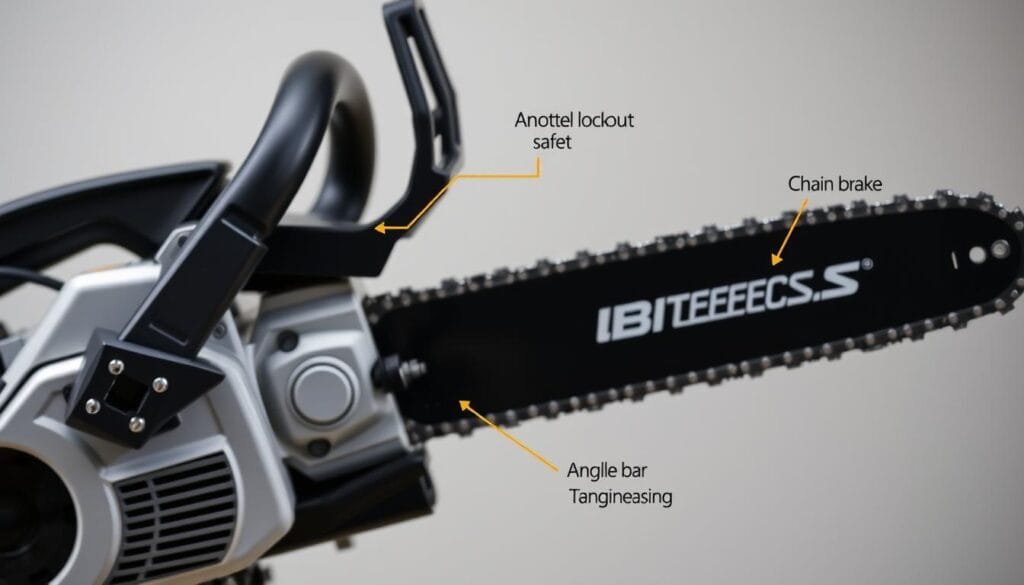
Chain Brake, Chain Catcher, and Other Safety Mechanisms
The chain brake is a vital feature. It uses a steel band to stop the chain instantly if kickback occurs.
This brake can be activated manually or automatically. It is your primary defense.
Another key component is the chain catcher. This part grabs a broken chain before it can whip back.
The throttle lock is also important. It prevents accidental acceleration unless you firmly grip the rear handle.
An easy-to-reach stop control lets you shut off the engine quickly in any situation.
| Safety Feature | Primary Function | Activation Method |
|---|---|---|
| Chain Brake | Stops chain movement instantly | Manual or automatic during kickback |
| Chain Catcher | Traps broken or derailed chain | Automatic upon chain failure |
| Throttle Lock | Prevents accidental throttle advance | Requires firm grip on rear handle |
| Right-Hand Guard | Shields hand from chain contact | Passive, always in place |
Personal Protective Equipment and Gear Requirements
Your protective clothing is just as critical as the tool’s features. Never operate without the full set of gear.
This includes a hard hat, safety glasses, and hearing protection. Heavy-duty gloves provide a secure grip.
Cut-resistant chaps are non-negotiable. They extend from your waist to your feet and can jam the chain on contact.
Boots that cover your ankles protect against cuts and provide stable footing. If any gear is missing or damaged, do not start your work.
Proper Handling and Operation Techniques
Your physical interaction with the tool is the most critical factor in preventing accidents. Mastering a few fundamental techniques builds a strong foundation for secure and efficient work.
These methods give you better control and significantly reduce the chance of a dangerous event.
Correct Grip, Stance, and Movement for Stability
Start with a firm, proper grip. Wrap all your fingers and thumbs completely around both handles.
Place the thumb of your left hand firmly under the front handle. This “thumb grip” helps you maintain control if kickback occurs.
Hold the saw close to your body for better balance. Stand with your feet apart, left foot slightly forward.
Bend your knees for low cuts instead of curving your spine. This protects your back and keeps you stable.
Techniques to Minimize Kickback and Control the Saw
Understanding the kickback zone is vital. This is the upper quarter of the guide bar nose.
Kickback can occur when this zone makes contact with an object. The chain grips the wood, throwing the bar upward with great force.
Always cut at waist level or below. Never operate the saw above your shoulders.
Keep your body out of the cutting plane. A simple tip: if you can’t read the logo on the bar, lean left to stay safe.
| Technique | Key Action | Primary Benefit |
|---|---|---|
| Thumb Grip | Wrap thumb under front handle | Maintains control during kickback |
| Stable Stance | Feet apart, knees bent | Improves balance and reduces fatigue |
| Awareness of Kickback Zone | Avoid contact with bar nose | Dramatically lowers kickback risk |
| Body Positioning | Cut below shoulders, stay left of bar | Keeps operator out of danger path |
Chainsaw Safety for Cabin Construction
Working on cabin construction requires specialized approaches to woodcutting that differ significantly from general forestry tasks. You often handle green timber and manage multiple trees in close proximity throughout the building process.
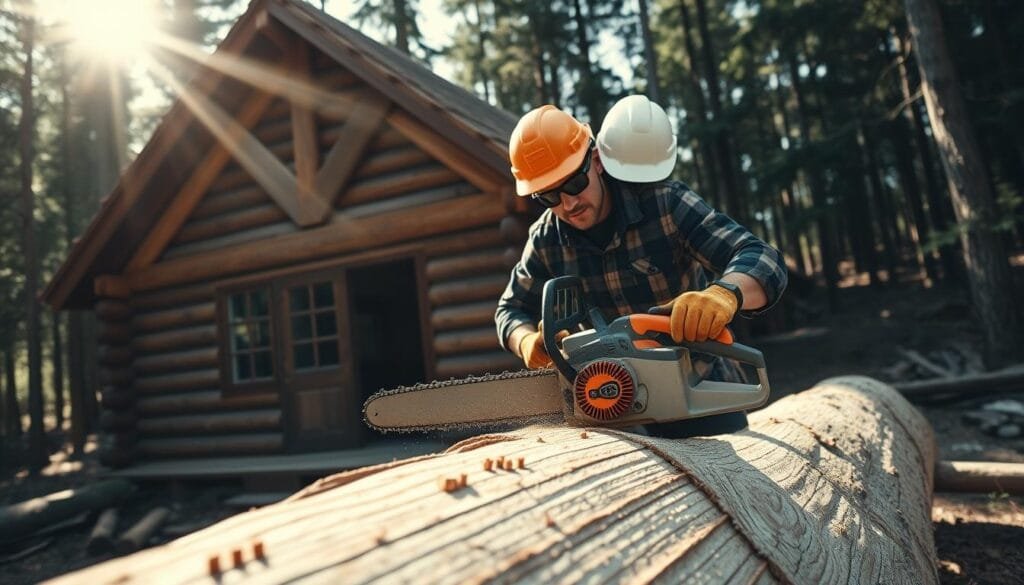
Establish proper safety distances from the start. Keep bystanders at least 150 feet away during tree felling. Maintain a 30-foot buffer around the operator when limbing or processing fallen trees.
Always inspect your cutting area thoroughly before beginning work. Look for hidden hazards like nails, cables, or metal debris in the wood and surrounding area. These can cause dangerous reactions if contacted by the running chain.
Manage your workspace carefully by clearing away cut branches and debris as you work. This maintains safe footing and creates clear escape paths if trees or large branches move unexpectedly.
Spring poles present extreme danger during cabin wood preparation. These bent or trapped tree sections can release explosively when cut. Identify the maximum tension point and slowly shave the underside to allow gradual release.
Different cutting scenarios demand specific approaches. Felling standing trees requires different protocols than bucking logs on the ground. Maintain constant awareness of how falling timber interacts with your environment.
Professional builders understand that proper saw handling varies by task. The techniques for limbing branches differ from those used when cutting construction-length timber. Always adapt your methods to the specific challenge.
Step-by-Step Guide to Using Chainsaws Safely
Following a systematic routine transforms powerful equipment into a reliable partner for your project. This guide walks you through essential procedures from setup to shutdown.
Proper preparation prevents most problems. Always consult your manual for specific features and maintenance schedules.
Pre-Operation Checks and Setup Procedures
Begin with a thorough inspection before each use. Check the chain tension; it should snap back into the guide bar groove.
Verify oil levels and sharpen teeth for clean cutting. Test the chain brake and throttle lock to make sure they function.
| Checkpoint | Action Required | Importance Level |
|---|---|---|
| Chain Tension | Adjust until chain snaps back to bar | Critical |
| Safety Features | Test brake, throttle lock, stop switch | Critical |
| Sharpness & Lubrication | Sharpen teeth, fill oil reservoir | High |
| Tool Size | Match saw size to your project tasks | High |
Safe Cutting Methods and Worksite Practices
Start your tool with the brake engaged. Never begin with the chain touching wood.
When moving, engage the chain brake or turn off the engine. The chain must not rotate during transport.
Establish communication plans with a contact person. Share your location and check in regularly.
For detailed safe operation procedures, always follow established guidelines. This ensures every operator remains protected.
Keep both hands on the handles during work. Maintain a stable stance and let the tool do the cutting.
Parting Thoughts on Safe Cabin Building with Chainsaws
Your cabin-building adventure culminates in the rewarding application of responsible tool handling that protects both you and your project. The skills you develop now will serve you well throughout your construction journey and beyond.
Remember that proper equipment use involves more than just technique. Your saw’s built-in features like the chain brake and hand guards provide critical protection when maintained correctly. Always keep both hands firmly on the handles with your thumb wrapped securely.
Consistent awareness of potential hazards prevents serious injury. Whether you’re an experienced operator or new to this work, never rush your cuts. Your dream cabin deserves the care that comes from mindful, deliberate work with powerful tools.