
Welcome to your go-to guide for selecting the best wood for your next big project. Picking the right materials is one of the most important decisions you will make. It directly impacts the strength, look, and longevity of your work.
Are you a professional contractor, an architect, or a dedicated DIYer? Understanding the options available is crucial for success. This guide will help you navigate the choices with confidence.
We will explore the main categories of lumber used today. You’ll learn about the unique traits of hardwoods, softwoods, and modern engineered products. We’ll look at their common uses and how they perform.
Our goal is to give you a clear understanding of strength, durability, and cost. You’ll see how different materials fit various structural and aesthetic needs. Let’s get started and find the perfect fit for your plans.
Understanding Construction Wood Fundamentals
Let’s start by looking at the science behind the two main categories of lumber. The difference between hardwood and softwood isn’t just about how hard they feel. It’s actually based on the biology of the trees they come from.
Defining Hardwoods and Softwoods
Hardwood trees are angiosperms, which are flowering plants. Many are deciduous, losing their broad leaves each fall. Their seeds are enclosed, like inside an acorn or a cherry pit.
Softwood trees are gymnosperms, typically conifers like pine and fir. They usually have needles that stay green year-round. Their seeds are “naked” or revealed, often found in cones.
Inside the timber, you can see these differences. Hardwoods have a complex structure with visible pores for moving water. Softwoods use a simpler system of cells called tracheids.
Key Properties: Strength, Durability, and Grain
Growth rate is a major factor. Hardwood trees grow slowly, often taking over a century to mature. This slow growth typically creates a denser, stronger material.
Softwood species grow much faster, maturing in about 40 years. This generally results in a lighter, less dense timber. Density is the true indicator of strength, not the name. Some softwoods can be harder than certain hardwoods.
| Characteristic | Hardwood | Softwood |
|---|---|---|
| Tree Type | Angiosperm (Flowering) | Gymnosperm (Conifer) |
| Typical Density | High | Low to Medium |
| Grain Pattern | Prominent and varied | Softer and simpler |
| Common Uses | Furniture, flooring, fine detail | Framing, structural work, decking |
Exploring the Diversity of Softwoods for Construction
When you think of building materials, softwoods are likely the first that come to mind, and for good reason. These versatile materials account for a huge portion of global timber use. They offer a fantastic blend of performance, availability, and value.
This variety means there’s a perfect softwood for almost every part of a project. From the structural skeleton to the finishing touches, these species get the job done.
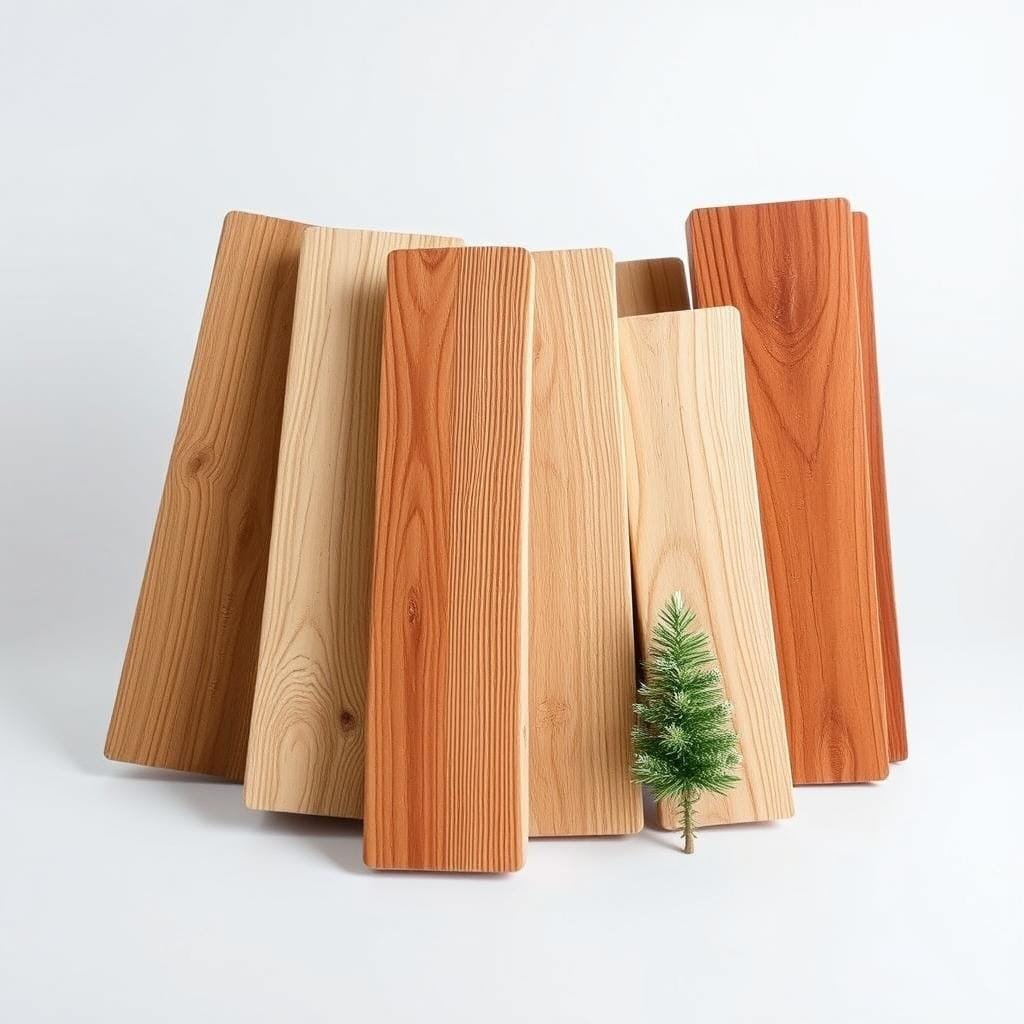
Popular Softwood Species: Pine, Fir, Spruce, and Cedar
Each softwood brings its own strengths to the table. Pine is the most common choice, prized for its light color, straight grain, and affordability. It’s a top pick for framing and general carpentry.
Douglas fir is known for its impressive strength and resilience. It’s often used for heavy-duty structural applications like beams and trusses. Spruce offers excellent stiffness and durability, making it a key component in quality timber.
Cedar stands out for its natural resistance to insects and decay. This makes it ideal for exterior projects like siding, decking, and fencing without needing chemical treatments.
A popular and cost-effective option is SPF lumber. This combination of spruce, pine, and fir provides consistent quality and reliable structural properties for residential framing.
Applications and Environmental Benefits
The uses for these materials are extensive. You’ll find them in:
- Structural framing for homes and buildings.
- Interior details like window frames and moldings.
- Exterior features such as decks and fences.
Beyond their practical applications, softwoods are an environmentally smart choice. They are renewable resources that grow relatively quickly.
Most importantly, they act as carbon stores. Trees absorb carbon dioxide as they grow, and the harvested lumber continues to hold that carbon. This gives them a lower carbon footprint than many alternative materials.
A Detailed Look at Hardwoods in Construction
Moving beyond the practical softwoods, we now explore the world of hardwoods—materials prized for their strength and aesthetic appeal. These premium options bring unmatched beauty and longevity to projects where appearance and durability matter most.
Common Hardwood Varieties: Oak, Maple, Cherry, and Walnut
Oak stands out as a classic choice among hardwoods. Its exceptional strength and distinctive grain patterns make it perfect for furniture and flooring. White oak offers natural water resistance, expanding its applications.
Maple provides a lighter alternative with high density and wear resistance. Its smooth appearance comes from less prominent grain, ideal for cabinetry and luxury furniture.
Cherry wood undergoes a fascinating transformation. Freshly cut, it appears light pink but deepens to rich reddish-brown over time. This aging process adds character to furniture pieces.
Walnut boasts a dark, rich color with fine texture. Its natural resistance to rotting and insects makes it superior for outdoor applications compared to many other woods.
Performance, Aesthetics, and Cost Considerations
Hardwoods generally offer superior performance characteristics. They excel in fire resistance and weathering capabilities. Their increased density contributes to better durability under heavy use.
The investment in hardwoods reflects their slower growth rates—some species take over 150 years to mature. This premium cost is justified for projects where longevity and aesthetics are priorities. Understanding the key differences between hardwood and softwood helps determine when this investment makes sense.
Unique Characteristics of Exotic Hardwoods
Beyond common domestic species, exotic hardwoods offer distinctive options. African varieties like Zebrano feature striking striped appearances. These specialty woods add unique character to custom projects.
Each exotic species brings specific advantages. Their unique grain patterns and colors create one-of-a-kind finishes that elevate any design.
Engineered Wood and Framing Timber Solutions
Modern building has been reshaped by innovative materials that offer superior performance and consistency. These advanced products combine the best qualities of natural timber with engineered precision.
They provide solutions for both structural needs and finished appearances. This approach maximizes strength while minimizing waste.
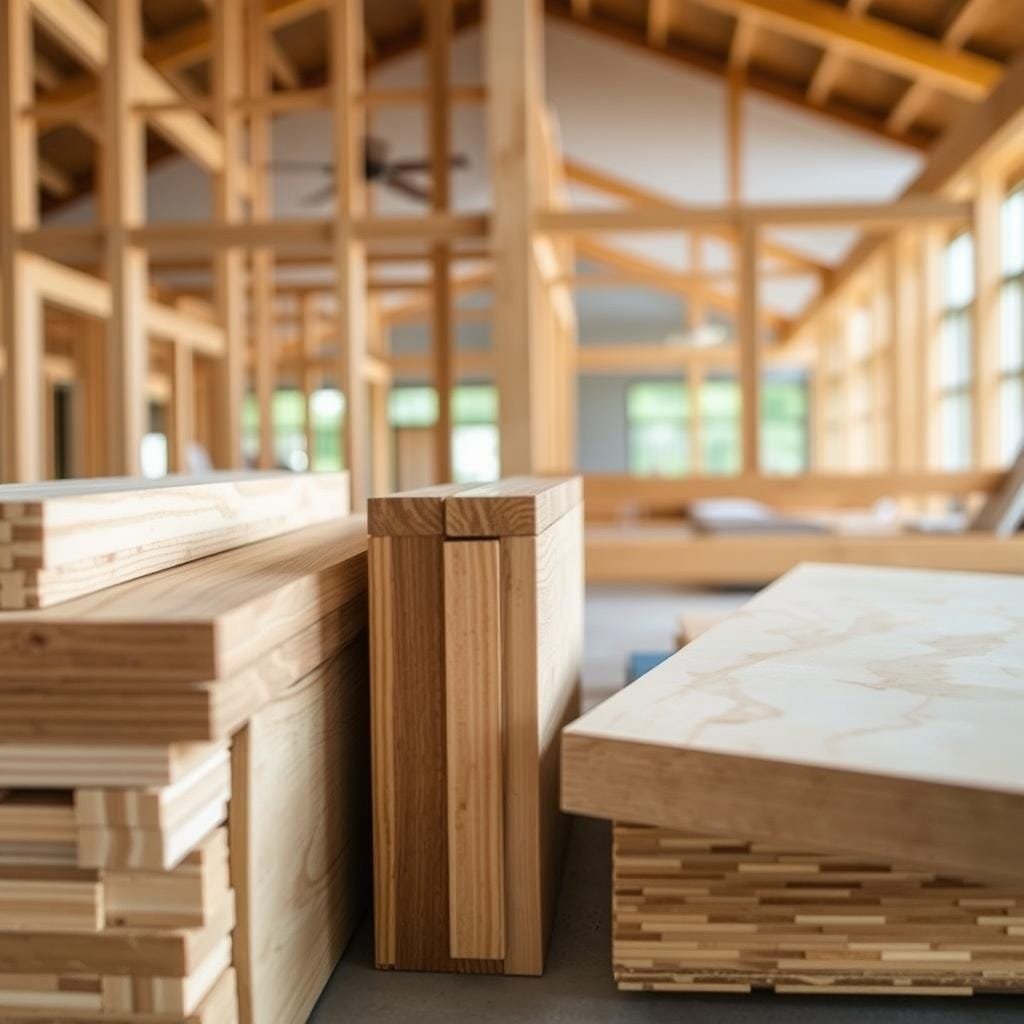
Advantages of Engineered Wood in Modern Projects
Manufacturers create these materials by bonding layers of wood veneer or strands. This process results in a product with enhanced strength and remarkable stability.
Common examples include plywood, cross-laminated timber (CLT), and glue-laminated beams (glulam). Each serves a unique purpose in the overall structure.
These products excel in challenging environments. For flooring in kitchens or basements, they resist moisture damage better than solid timber.
| Product | Primary Use | Key Benefit |
|---|---|---|
| Plywood | Sheathing, Subflooring | High dimensional stability |
| CLT Panels | Walls, Floors (Mass Timber) | Exceptional strength for large spans |
| Glulam Beams | Structural Beams, Arches | Can create long, curved shapes |
Role of Timber Framing in Structural Stability
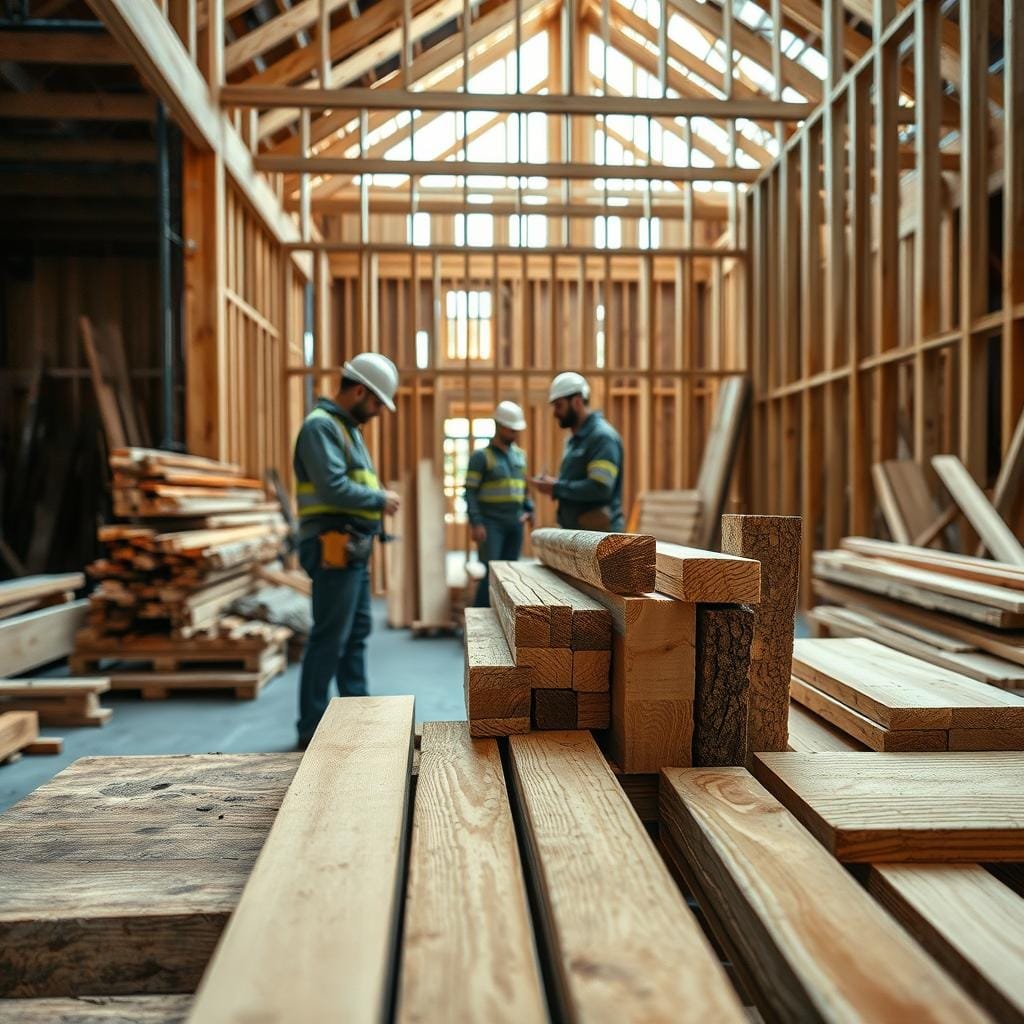
Framing timber forms the essential skeleton of a building. It provides the critical strength and stability for walls, roofs, and floors.
This method is popular for its efficiency and sustainability. Frames allow for ample insulation, boosting energy performance naturally.
Mass timber projects, like those using glue-laminated Douglas fir, showcase the potential of modern timber framing. They create strong, beautiful, and sustainable structures. Understanding what to select for your project is key to leveraging these advantages.
Wood frame building remains a dominant choice due to its proven combination of cost-effectiveness, versatility, and resilience.
Practical Construction Wood Types Comparison for Your Next Project
Putting all the pieces together, let’s examine how different materials stack up against each other for real-world applications. This practical guide helps you match the right material to your specific needs.
Comparing Hardwoods, Softwoods, and Engineered Options
Your material choice depends heavily on the project’s location and intended use. For standard residential framing, softwoods like pine and fir offer excellent value. They’re lightweight, affordable, and easy to work with.
Hardwoods become the better option when dealing with harsh weather conditions or high humidity. Their natural density provides superior resistance to wear and moisture damage. Species like oak and maple also offer better fire performance.
For exterior applications, consider the material’s natural weather resistance. Western Red Cedar performs exceptionally well without treatment. Most softwoods need protective coatings for outdoor use.
Budget often guides the final decision. Softwoods provide cost-effective solutions for many projects. When longevity and aesthetics matter most, hardwoods justify their higher price. Explore different wood options and their best to make an informed choice.
Balance your requirements against practical constraints. Consider availability in your region and the time you can dedicate to the work. The right selection ensures your project stands the test of time.
Wrapping Up Your Journey Through Wood Selections
This guide has illuminated the path from ancient log cabins to modern high-rises, all built with timber. The enduring strength and natural beauty of this material have stood the test of time.
You now understand the fundamental traits of different species. You can distinguish the straight grain of pine from the rich density of oak. This knowledge empowers you to match the perfect material to your project’s needs, whether it’s sturdy framing or elegant furniture.
The best choice always balances your budget, the project’s demands, and environmental impact. Timber is a renewable resource with a lower carbon footprint than alternatives like steel or concrete.
You are now equipped to select materials that offer both functionality and timeless appeal. Go forward and build something remarkable.