
Planning your dream cabin? You might spend hours on the kitchen layout or finishes. But don’t overlook what’s beneath your cabin.
The choice of understructure impacts your budget and maintenance needs. The National Association of Home Builders notes 14% of new homes have crawl space designs. In places like Alabama, Kentucky, Mississippi, and Tennessee, this number is nearly 47%, the highest on record.
So, why is a crawl space foundation so appealing? It’s a middle option between expensive basements and limited slab foundations.
This guide will cover the pros and cons to aid your decision. We’ll look at costs, maintenance, and more. This will give you a full view before starting your cabin project.
Understanding Crawl Space Foundations for Your Cabin
Imagine the space under your cabin, not a basement but more than dirt. It’s your crawl space foundation. This structure keeps your living area separate from the ground. It’s a smart choice for many cabin builders.
Before deciding on a crawl space foundation, it’s key to know what it is. Let’s cover the basics so you can choose wisely for your cabin.
What Defines a Crawl Space Foundation
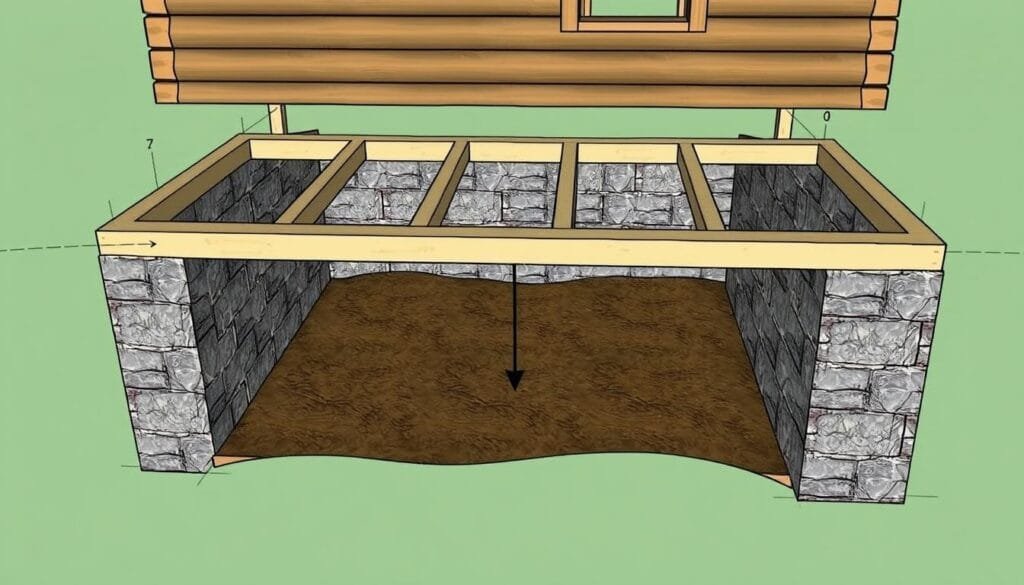
A crawl space foundation is a shallow area under your cabin. It’s usually 1.5 to 3 feet high. You can crawl through it for upkeep, but standing upright is not possible.
This foundation raises your cabin off the ground. It’s perfect for running utilities like plumbing and wiring without concrete or underground.
Typical Height and Access Requirements
Building codes set foundation height requirements for safety and function. The minimum crawl space height is 18 inches from the floor joists to the ground.
For HVAC equipment, codes require a 44-inch minimum height. This allows safe servicing of heating and cooling systems.
Access is also critical. Codes demand a door that’s at least 18 inches high by 24 inches wide. This size ensures workers can enter with tools for repairs.
How They Differ from Slab and Basement Foundations
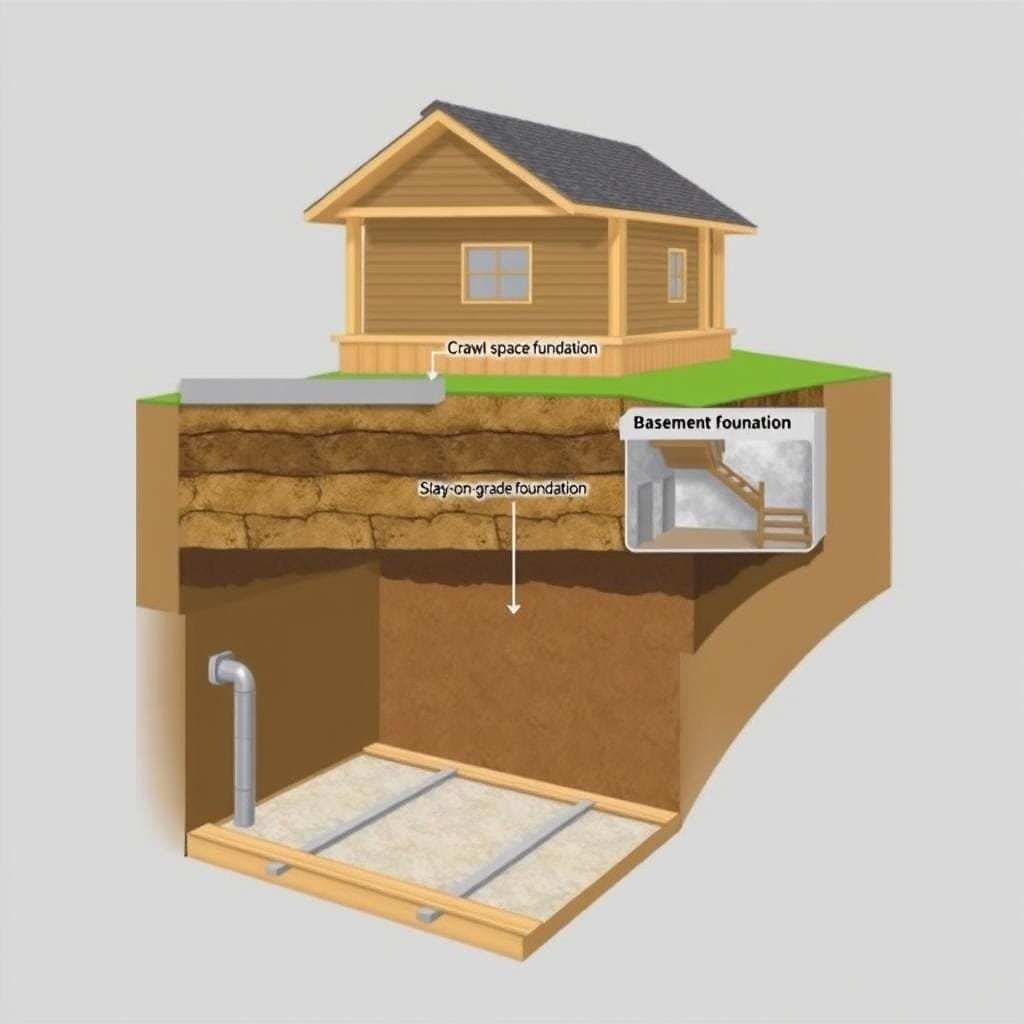
When choosing a cabin foundation, you have three main options. Each has its own use and benefits.
Slab foundations sit directly on the ground. Your cabin floor is a thick concrete pad. This is good for flat areas but lacks utility access.
Basement foundations offer full height below your cabin, often 8 feet or more. They can be living space, storage, or utility areas. But, they’re expensive and require deep excavation.
Crawl spaces offer a middle ground. They provide access without the cost of full basements.
Why Cabins Often Use This Foundation Type
Cabins face special challenges that make crawl spaces appealing. Sloped terrain, rocky soil, or remote sites make slabs and basements hard to use.
The elevated foundation structure works well on uneven ground. It saves natural features like trees and rocks while creating a level space.
Cost is another factor. Crawl space foundations are cheaper than basements but better than slabs. They’re a smart choice for cabins where basement space isn’t needed.
Superior Access to Plumbing and Electrical Systems
Crawl space foundations offer a great work area under your cabin. They make it easier to install and maintain plumbing and electrical systems. Unlike slab foundations, crawl spaces let you access every pipe, wire, and duct easily. This saves money and gives you flexibility over time.
When repairs are needed, contractors can easily get to the crawl space. This avoids the need to tear up your floors to fix a problem.
Easy Installation During Construction
During construction, crawl spaces give contractors a lot of room to work. They can easily install pipes, electrical conduits, and HVAC ductwork. This makes the job easier and reduces the chance of mistakes.
Having more space also means better quality work. Plumbers can ensure drain lines are sloped right, and electricians can organize wiring neatly. This leads to fewer problems later on.
Simplified Repairs and Maintenance
Fixing leaks or faulty wiring is easy with crawl space foundations. Technicians can find and fix problems without damaging your cabin’s interior. This saves money and avoids the need for big restoration projects.
Regular checks on utilities are also easier. You or a professional can inspect them often. This helps catch small issues before they turn into big problems.
Adding New Utilities Without Major Renovations
As your needs change, your cabin can too. With crawl space foundations, adding new features like a second bathroom or moving your kitchen is easier. Plumbers and electricians can make the necessary changes without a full rebuild.
This flexibility means your cabin can grow with you. You can make changes without having to start from scratch.
Cost Advantages Over Full Basement Foundations
Building your dream cabin can be expensive, but crawl spaces offer a cost-effective solution. They save a lot of money compared to full basements. Knowing where these savings come from helps you stay within your budget while getting a strong foundation.
A crawl space foundation for an average cabin costs between $8,000 to $25,000. In contrast, a full basement can cost between $75,000 and $150,000. This difference can fund your interior, premium features, or a deck.
Reduced Excavation and Material Costs
Full basements need a lot of digging, but crawl spaces only need a perimeter trench that’s 3 to 4 feet deep. This saves a lot on excavation costs.
Less digging also means using fewer materials. Crawl space walls are shorter, so they need less concrete and reinforcement. When comparing slab vs crawl space foundations, crawl spaces are more affordable and easier to access utilities.
Shorter Construction Timeline
Crawl space foundations can be finished in one to two weeks. Full basements take four to six weeks or more.
This quick completion saves on labor costs. It also means you can move in sooner. Weather delays are less likely to cause problems.
Lower Labor Requirements
Crawl spaces are simpler to build, requiring less labor. They don’t need the special equipment, formwork, or waterproofing that basements do.
This simplicity reduces the chance of unexpected problems that can increase costs. It makes building an affordable cabin foundation easier, even with a small budget.
Typical Cost Range for Cabin Crawl Spaces
For a small cabin (800-1,200 square feet), expect to pay $8,000 to $15,000. Medium-sized cabins (1,200-2,000 square feet) cost $15,000 to $22,000. Larger cabins might cost up to $25,000.
Regional Price Variations
Your location affects the cost of crawl spaces versus basements. Rocky soil and high water tables can increase costs. Labor rates also vary, with remote areas often being more expensive.
Perfect Solution for Sloped and Challenging Terrain
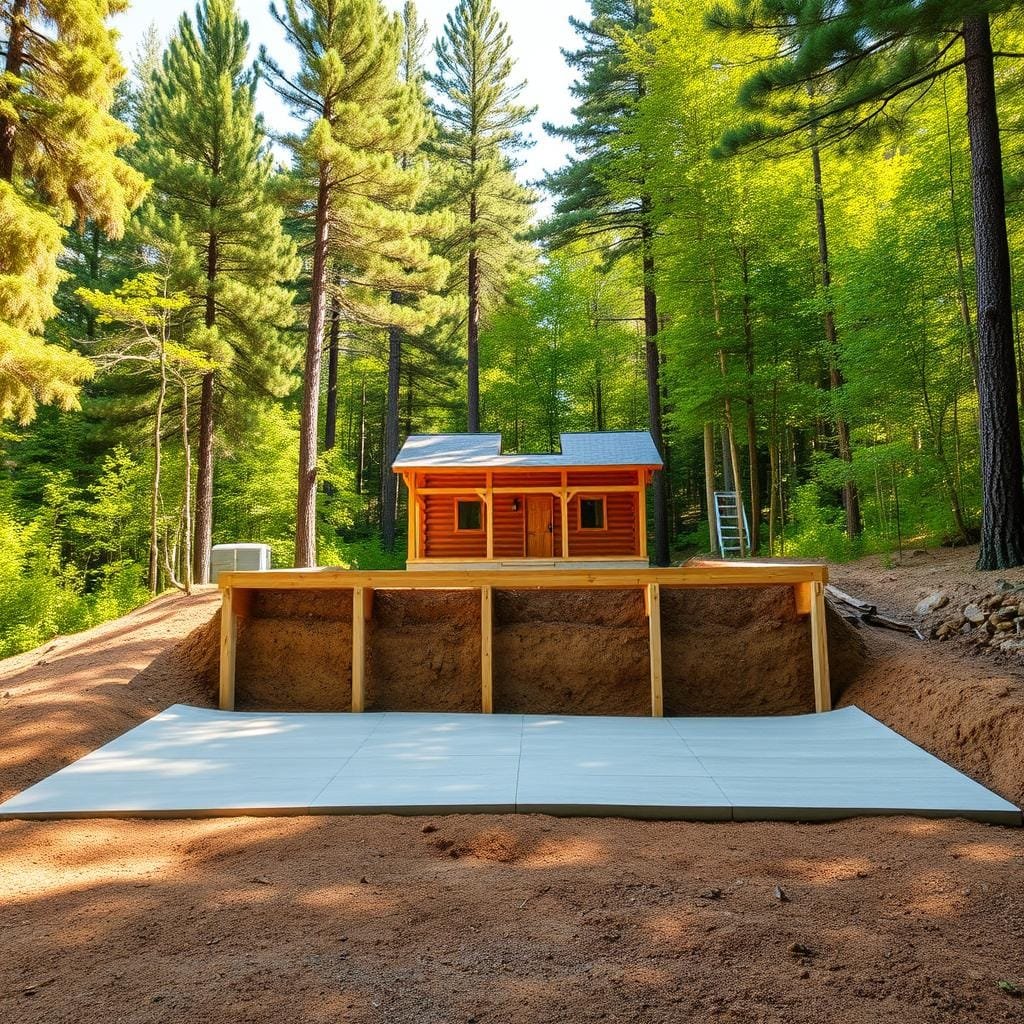
If you’ve fallen in love with a sloped lot foundation site for your cabin, a crawl space foundation might be your best friend. Unlike slab foundations that demand nearly flat properties, crawl spaces adapt beautifully to hills, slopes, and uneven ground. This flexibility opens up building opportunities on properties that would be expensive or unbuildable.
The secret lies in how crawl spaces handle elevation changes. On the downhill side of your property, you might need a four- or five-foot foundation wall. The uphill side might only require a two-foot wall. This adaptability makes uneven terrain construction far more manageable and cost-effective than you might expect.
Building on Hillsides and Uneven Ground
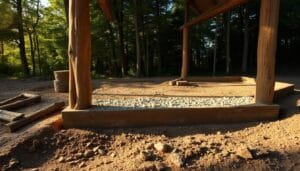
A hillside cabin foundation using crawl space construction requires minimal excavation. You’ll only need trenches about two feet wide, regardless of the slope. This approach creates a level platform for your cabin while following the natural contours of the land.
The foundation walls adjust to accommodate the terrain’s natural rise and fall. Shorter walls anchor into the uphill side, while taller walls support the downhill portion. This system distributes weight evenly and provides the same structural integrity as foundations on flat lots.
Minimizing Site Preparation and Grading
Traditional slab foundations require extensive grading to create flat building pads. This process involves heavy equipment, significant earth removal, and often expensive retaining walls. Crawl spaces eliminate most of these requirements.
You’ll save money by avoiding the costs of moving large amounts of soil. The minimal excavation needed for crawl space trenches also means less environmental disturbance. Your construction timeline shortens because you’re not waiting for grading contractors and settling periods.
Preserving Trees and Natural Features
Many cabin owners choose their properties for mature trees, natural rock formations, and scenic views. Extensive grading destroys these features that attracted you to the land in the first place. Crawl space foundations preserve the natural character of your property.
The limited excavation footprint allows you to build around existing trees without damaging root systems. You can incorporate natural rock outcroppings into your landscape design. This environmentally sensitive approach maintains the wilderness aesthetic that makes cabin living special.
Stepped Foundation Options
Particularly steep slopes benefit from stepped foundation design techniques. This approach creates terraced foundation sections that descend the hillside in manageable increments. Each step provides a stable platform while following the natural grade.
Stepped foundations work by dividing the structure into horizontal sections at different elevations. Each section maintains proper footing depth while adapting to the slope. This method is valuable on properties where a single-level foundation would require excessively tall walls on the downhill side.
| Terrain Type | Best Foundation Approach | Excavation Depth Range | Key Advantage |
|---|---|---|---|
| Gentle slope (5-10%) | Standard crawl space | 2-4 feet | Minimal site disturbance |
| Moderate slope (10-20%) | Variable height walls | 2-6 feet | Follows natural contours |
| Steep slope (20%+) | Stepped foundation design | 2-8 feet per section | Manages extreme elevation changes |
| Uneven with rock | Adaptive placement | Varies by location | Preserves natural features |
Natural Elevation Protects Against Flooding
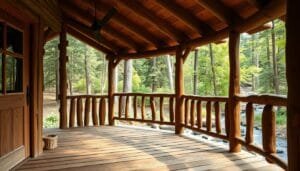
Elevating your cabin with a crawl space foundation offers natural flood protection. This is very helpful for cabins near lakes or in rainy areas. It guards against both big floods and small water threats that can damage your cabin over time.
Raising Your Cabin Above Ground Moisture
An elevated cabin foundation raises your home 18 to 44 inches off the ground. This space stops water from the ground from reaching your cabin. Unlike slab foundations, crawl spaces act as a buffer.
Ground moisture is a problem all year, not just during floods. Spring, summer, and fall rains can make your cabin damp. The space under your cabin lets moisture escape, keeping your floors and walls dry.
Benefits in Flood-Prone Areas
A flood protection foundation is key in areas where water often gathers. It keeps your cabin dry during small floods or heavy rains. This helps your foundation last longer and saves you from expensive repairs.
In FEMA flood zones, an elevated cabin meets building rules easily. Your cabin stays dry while water flows under it during floods.
Insurance Considerations
Insurance companies often give discounts to elevated homes. This can save you hundreds of dollars a year on flood insurance. Elevated homes might even be cheaper to insure in flood zones.
Some places in flood zones need elevated homes for affordable insurance. A crawl space foundation can make a big difference in insurance costs. Talk to your insurance provider about possible discounts for your cabin’s elevation.
| Protection Feature | How Crawl Spaces Help | Long-Term Benefit |
|---|---|---|
| Ground Moisture Barrier | 18-44 inch elevation creates air gap | Prevents wood rot and structural damage |
| Flood Protection Foundation | Raises living space above water levels | Avoids costly flood damage repairs |
| Moisture Protection System | Allows water to flow beneath structure | Extends foundation and flooring lifespan |
| Insurance Advantages | Meets elevation requirements naturally | Reduces annual flood insurance premiums |
Temperature Regulation and Insulation Benefits
Crawl space foundations help keep your cabin cozy all year. They create a natural insulating layer under your floor. This thermal protection keeps your cabin warm, even in cold weather.
Crawl space insulation turns this layer into a strong temperature barrier. You’ll have steadier indoor temperatures and save on heating costs. This is better than foundations without this air gap.
Creating a Natural Buffer Zone
The space under your cabin’s floor acts as a warm blanket. It stops cold from moving up through concrete, unlike slab foundations. This makes your cabin feel warmer.
This air gap keeps temperatures stable. It keeps your floors warm in winter and cool in summer. It also keeps moisture out.
Adding insulation to your floor joists or walls boosts this natural benefit. The air space and insulation work together to fight off temperature changes.
Preventing Frozen Ground Problems
In cold areas, ground freezing prevention is key to protect your cabin. Crawl spaces shield plumbing and electrical systems from freezing.
The air space keeps these systems warm, even when it’s freezing outside. This stops pipes from freezing and bursting, saving you from costly water damage.
It also protects your floor joists and subflooring from frost damage. This makes these important parts last longer.
Superior Floor Comfort Compared to Slabs
Walking barefoot on a concrete slab in winter is very cold. Floor temperature control is where crawl spaces beat slab foundations.
With crawl spaces, your floors are warmer. The insulated air gap blocks cold from reaching your floors. This makes your floors feel much warmer.
This comfort isn’t just for bare feet. Warmer floors mean your heating system works less. This can lower your energy bills all winter.
Flexibility for Future Cabin Expansions
Your cabin’s crawl space is more than just a utility area. It’s a space that can grow and change with you. This foundation type offers future expansion options that other foundations can’t. It’s perfect for now or later, without needing big renovations.
Crawl spaces are easy to access. You can upgrade systems, add storage, or even change the space as your needs change. This cabin renovation flexibility helps protect your investment and keeps your options open.
Adding Storage Space
A well-kept crawl space is great for crawl space storage. With a vapor barrier and good moisture control, it’s perfect for seasonal items, tools, and outdoor gear.
This extra space is great for things you don’t use every day but want to keep handy. Think holiday decorations, camping gear, and maintenance supplies. They won’t clutter your living areas.
Installing Additional Systems
Crawl spaces are super handy for utility system upgrades years later. You can add new pipes, wiring, or ductwork without damaging your floors or walls.
Here are some common upgrades for crawl spaces:
- Central air conditioning systems when they weren’t originally installed
- Water filtration or softening equipment
- Upgraded electrical panels for increased capacity
- Additional plumbing for bathrooms or outdoor fixtures
- Smart home technology and network cabling
Converting to Conditioned Space
Some cabin owners decide to fully encapsulate and condition their crawl spaces. This means sealing vents, adding insulation, and connecting it to your HVAC system.
This turns your crawl space into a semi-finished basement. It increases your usable space. This option is always there, even if you never use it.
The Crawl Space Foundation Pros and Cons: Complete Analysis
Understanding the crawl space foundation pros and cons is key to making a smart choice for your cabin. This foundation type has its benefits but also comes with challenges. The right choice depends on your budget, circumstances, and long-term plans.
Before starting your cabin project, it’s important to compare crawl spaces with other options. This detailed analysis will help you consider all the factors.
Summarizing the Key Advantages
Crawl space foundations save a lot of money compared to full basements. They can cut construction costs by $50,000 to $100,000. This makes owning a cabin more affordable for many people.
Accessing utilities is another big plus. You can easily fix or upgrade plumbing, electrical, and HVAC systems. This saves money and hassle over time.
The elevated design keeps your cabin safe from ground moisture and flooding. It’s a great choice for areas prone to flooding or high water tables.
Crawl spaces are also great for challenging terrain. They work well on sloped lots, uneven ground, and rocky soil. This lets you build on difficult sites without major problems.
Understanding the Major Drawbacks
Moisture management is a big challenge with crawl space foundations. Without proper encapsulation and vapor barriers, humidity can cause mold and rot. This can damage your cabin.
Pests like rodents, insects, and snakes can also be a problem. They find crawl spaces attractive if not sealed properly. You’ll need to stay vigilant to keep them out.
Heat loss through crawl spaces can increase energy costs. Cold floors make your cabin uncomfortable in winter. Good insulation is essential to avoid this.
Regular maintenance is a must. Crawl spaces need inspections to catch problems early. This requires time and effort, which can be hard for busy owners.
Balancing Your Specific Cabin Needs
Your situation determines if a crawl space is right for you. Consider your budget and the property’s conditions. Think about the climate and your maintenance commitment.
Climate plays a big role in foundation performance. High humidity areas need better moisture control. Cold climates require good insulation to prevent frozen pipes.
Be honest about your maintenance commitment. Can you inspect the crawl space twice a year? Will you address moisture issues quickly? Your answers are important for long-term success.
| Consideration | Favors Crawl Space | Favors Alternative |
|---|---|---|
| Budget | Limited funds, seeking cost efficiency | Larger budget, want maximum space |
| Terrain | Sloped, rocky, or uneven ground | Flat, stable building site |
| Climate | Moderate conditions, manageable humidity | Extreme cold or very high humidity |
| Maintenance | Willing to perform regular inspections | Prefer minimal ongoing attention |
When Crawl Spaces Make the Most Sense
The best foundation for cabins on hillsides or sloped properties is a crawl space. It adapts well to elevation changes. This saves on excavation costs and maintains structural integrity.
For budget-conscious builders, crawl spaces are a great choice. They help manage construction costs. The saved money can go toward cabin features or land improvements.
Properties where preserving trees and natural landscaping is important benefit from crawl space construction. It minimizes site disturbance. Your cabin will blend well with its surroundings.
Seasonal cabins used mostly in warmer months work well with crawl space foundations. Maintenance demands are less when you’re there regularly. You can catch problems before they get serious.
Moisture and Humidity Management Challenges
Managing moisture and humidity in crawl spaces is key. It’s important to understand crawl space moisture control to keep your cabin healthy and strong.
Today, controlling moisture is possible with modern materials and methods. It’s better to tackle issues early on than to wait for them to arise.
Why Crawl Spaces Trap Moisture
Crawl spaces collect moisture because they touch damp soil. The earth always releases water vapor, which goes into the crawl space.
There’s little air movement in crawl spaces. Unlike open areas, where air carries moisture away, crawl spaces trap it. This leads to humidity problems over time.
Temperature differences also add to moisture. When warm air meets cooler surfaces, it condenses. This happens on floor joists, beams, and walls.
Condensation Problems in Different Seasons
Summer is the toughest time for humidity problems in crawl spaces. Warm, moist air from outside enters the cooler crawl space. It then drops water on every cool surface it touches.
In winter, moisture challenges change. As the ground thaws and temperatures swing, moisture moves through walls. This can harm your cabin’s structure.
Knowing these seasonal challenges helps you plan better ventilation and climate control. This protects your cabin all year.
Required Vapor Barriers and Encapsulation
Crawl space encapsulation is the best way to fight moisture. It involves covering the crawl space with heavy-duty sheeting, at least six-mil thick.
Proper vapor barrier installation means sealing seams with tape. The barrier should also go up foundation walls. This creates a moisture-proof capsule that stops dampness from entering the air.
Investing in crawl space encapsulation saves money and improves air quality. It’s a smart choice for your cabin’s long-term health.
Standing Water Issues
Standing water in crawl spaces is a big problem. It’s a sign of bad drainage and can lead to mold and wood damage.
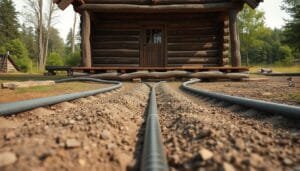
Fixing this involves installing drain pipes with gravel. This directs water away from your foundation before it causes problems.
Ground Water Seepage
If your property has a high water table, you need strong crawl space moisture control. Interior drainage systems with sump pumps remove groundwater that seeps through walls.
These systems work hard during wet seasons. They pump water away from your cabin, keeping it dry and preventing dampness.
Mold, Mildew, and Wood Rot Risks
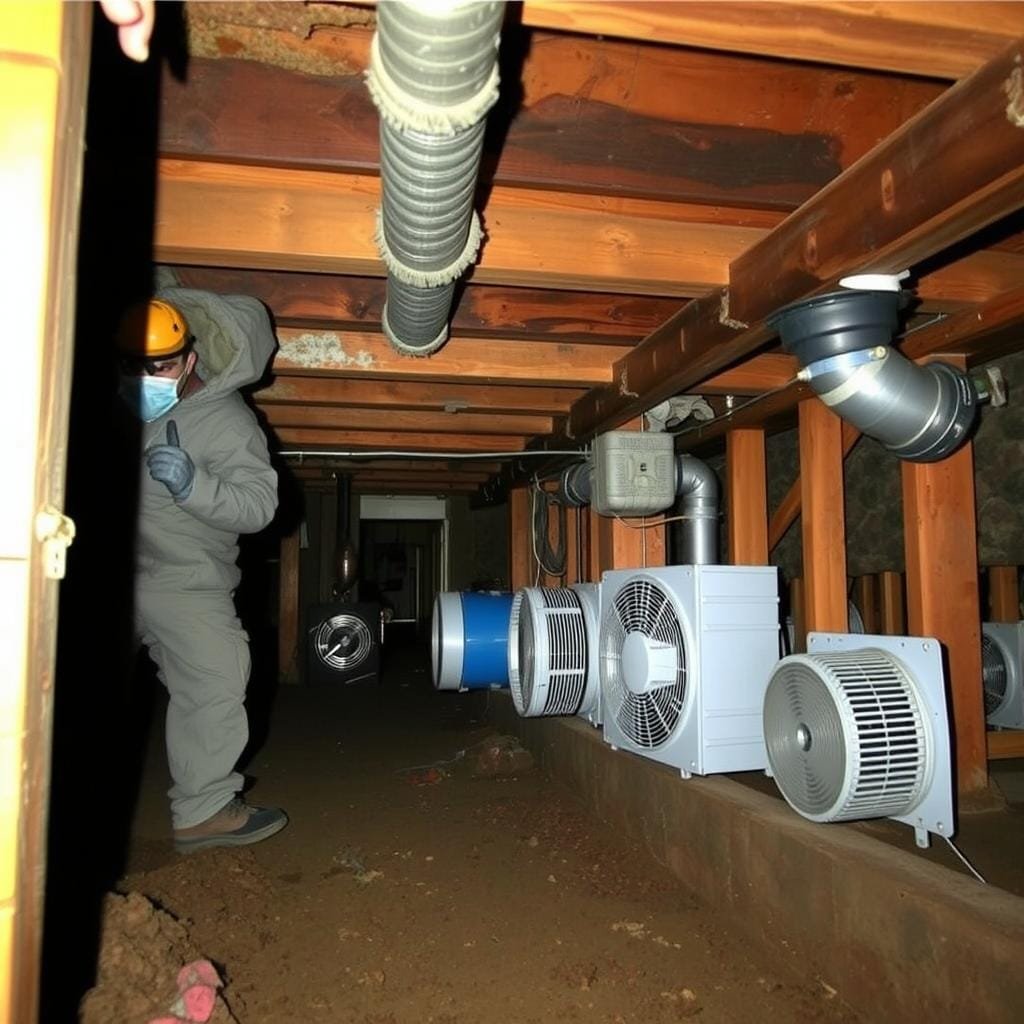
Mold and wood rot don’t just appear overnight. They are the result of uncontrolled moisture in your crawl space. High humidity levels can harm your cabin’s structure and pose health risks to everyone inside. Knowing these risks helps you prevent damage before it starts.
How Moisture Leads to Structural Damage
Moisture is a breeding ground for fungi that eat away at your cabin’s foundation. When humidity is over 60% in your crawl space, mold spores quickly grow on damp surfaces. This includes wood, insulation, and other organic materials.
Wood-destroying fungi cause wet and dry rot. They eat the cellulose in wood, weakening it. This can harm your cabin’s structure over time.
Wood rot problems often hide until damage is severe. Affected wood feels soft or crumbly. In bad cases, floors can sag or even collapse.
Health Concerns for Cabin Occupants
Mold health risks are serious for anyone in your cabin. Many mold species release toxic compounds into the air. These can cause breathing problems, allergies, headaches, and fatigue.
People with asthma, allergies, or weak immune systems are at higher risk. Children and the elderly are also more vulnerable.
The musty smell from mold is a warning. It means spores are growing and releasing toxins into the air. This can affect your cabin’s air quality long after you leave, lowering its value.
Prevention and Remediation Strategies
Effective crawl space mold prevention starts with controlling moisture. Use quality vapor barriers to block moisture from the soil. Professional encapsulation seals walls, floors, and vents for a controlled environment.
Keep humidity below 60% to stop fungi growth. Install a dehumidifier for crawl spaces, and fix any leaks quickly. Good drainage and ventilation systems are also key.
Proper air circulation is vital. Some suggest sealed crawl spaces with conditioned air, while others recommend ventilation. The best method depends on your climate and site conditions.
Identifying Early Warning Signs
Regular checks can catch wood rot problems early. Trust your nose for musty smells that signal mold. Look for visible mold and wood discoloration.
Check wood for softness with a screwdriver. Soft wood means decay. Also, watch for efflorescence on walls and damp soil. Address these signs quickly to avoid major damage.
Pest Control and Wildlife Intrusion Problems
Your cabin’s crawl space might seem empty to you. But pests and wildlife see it as a cozy home. It’s dark, safe from weather, and warm. Without pest control, you’ll get unwanted guests, from tiny bugs to big animals.
Pests can damage your cabin, harm your health, and make your home less comfy. It’s not just a nuisance.
Identifying Unwanted Crawl Space Residents
Many pests like crawl spaces for different reasons. Knowing who’s there helps you keep them out.
Rodents like mice and rats are common. They sneak in through tiny holes. Squirrels also find their way in, more so in wooded areas.
Snakes follow rodents for shelter and food. While most snakes are harmless, their presence worries many.
Insects cause the most variety of problems. Termites, carpenter ants, spiders, and beetles make homes in crawl spaces.
The Real Damage from Rodents and Insects
Pests do more than just creep you out. Rodent prevention is key to avoiding real dangers.
Mice and rats chew on everything to keep their teeth short. They damage insulation and wiring, risking fires. Their droppings can spread diseases.
Termites weaken your cabin’s structure by eating wood. By the time you notice, it’s too late.
| Pest Type | Primary Damage | Health Risks | Detection Signs |
|---|---|---|---|
| Mice and Rats | Chewed wiring, damaged insulation, structural gnawing | Disease transmission, allergens from droppings | Droppings, gnaw marks, scratching sounds |
| Termites | Wood consumption, weakened supports, structural compromise | Minimal direct health impact | Mud tubes, wood damage, discarded wings |
| Snakes | Minimal structural damage | Bite risk (rare), psychological distress | Shed skins, visual sightings, reduced rodent activity |
| Larger Wildlife | Torn insulation, damaged vapor barriers, extensive waste | Disease from feces, aggressive behavior when cornered | Large droppings, torn materials, strong odors |
Proven Protection Through Sealing and Exclusion
Keeping pests out needs a solid plan. Use wildlife exclusion and insect infestation prevention methods. A mix of strategies works best.
Put hardware cloth over vents. Use mesh with small holes to keep out rodents. Make sure it’s tight and secure.
Seal all gaps around pipes and utilities. Rodents can fit through tiny openings. Use steel wool and foam for small gaps, and metal flashing for bigger ones.
Pay extra attention to your crawl space door. Choose a sturdy door with weatherstripping and a secure latch. Wildlife can’t open it.
Surround your cabin with gravel. This barrier keeps burrowing animals away. It also helps with moisture issues that attract pests.
When Pest Pressure Peaks Throughout the Year
Knowing when pests are most active helps you stay ahead. Fall is the peak time as animals seek shelter. Rodents and raccoons get aggressive looking for warm spots.
Inspect your crawl space in late summer or early fall. Fix any gaps before animals start looking for shelter. This way, you prevent problems before they start.
Spring is another busy time for pests. Many species breed and look for safe places for their young. Insects, including termites, become more active as it gets warmer.
Regular checks and seasonal inspections are key to keeping pests out. Most problems can be prevented with the right sealing, monitoring, and quick action when you see signs of pests.
Heat Loss and Cold Floor Issues
Keeping your cabin’s temperature right is key to comfort and saving on energy bills. Without the right insulation, your crawl space can lose a lot of heat. This heat loss affects your floors and your energy costs.
Understanding how your crawl space temperature affects your cabin is important. It helps you make smart choices about insulation and keeping your cabin warm.
The Connection Between Crawl Space Temperature and Cabin Comfort
The temperature in your crawl space affects your floors above. In winter, cold air in the crawl space makes your floors feel cold, even if your thermostat is set right.
This cold air pulls warmth from your living areas. So, your floors can feel chilly, even when it’s warm inside.
Without insulation, your crawl space acts like a heat sink. It pulls heat from your warm spaces, making your heating system work harder. This leads to cold floors and higher energy bills.
How Crawl Spaces Affect Your Heating Bills
Poor insulation in your crawl space can really increase your heating costs. Studies show that without good insulation, heating bills can go up by 15-25%.
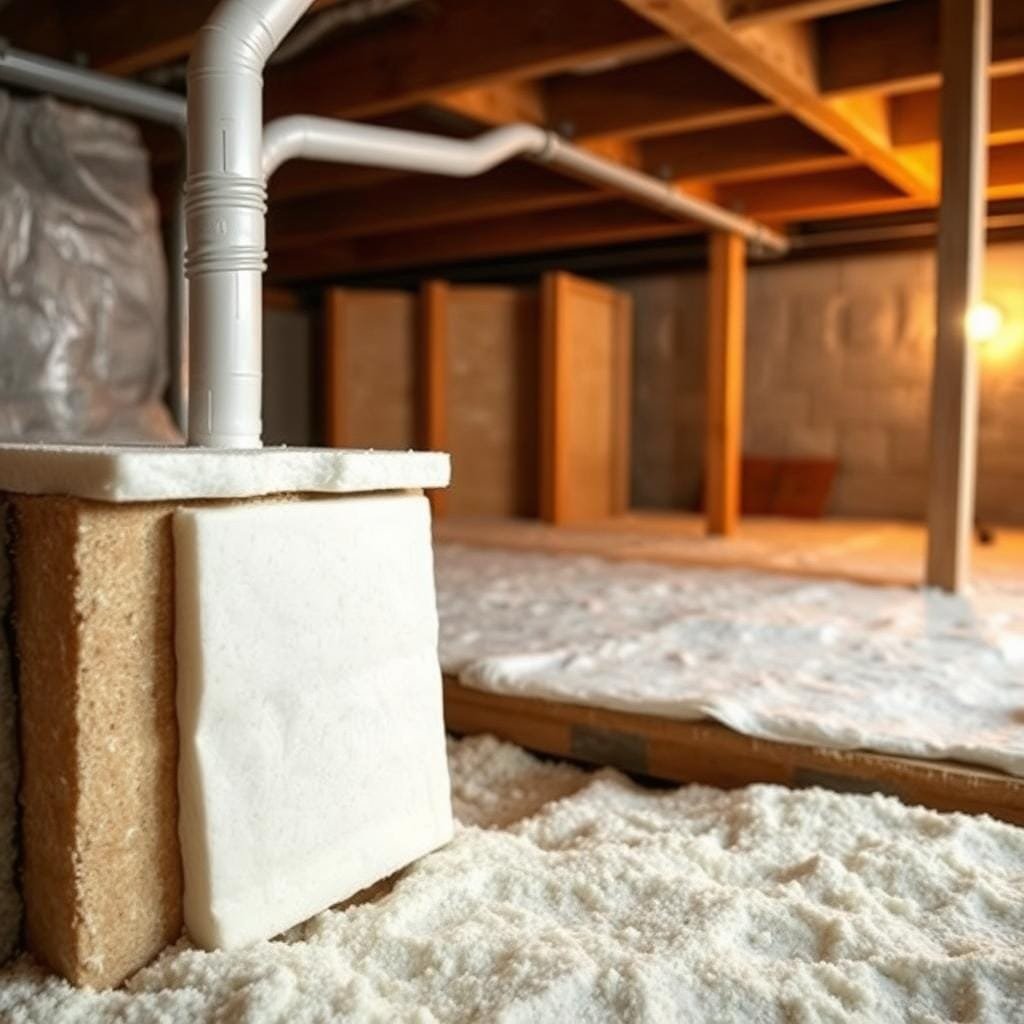
Without insulation, cold air can easily get under your cabin. This makes your heating system work harder, using more energy.
But, with the right insulation, your heating costs can drop. Good insulation keeps your floors warm and your heating system efficient, saving you money.
Effective Insulation Strategies for Crawl Spaces
Choosing the right insulation for your crawl space is important. There are two main options, each with its own benefits. Your budget, climate, and cabin needs will help decide which one is best.
The right insulation turns your crawl space into a warm asset. Both floor and wall insulation methods can work well if done right.
Insulating Between Floor Joists
One way to insulate is by putting insulation between the floor joists. Fiberglass batts are a common and affordable choice, coming in different R-values for different climates.
It’s important to install the insulation correctly. The vapor barrier should face the heated space above. Make sure the insulation fits snugly against the subfloor without getting compressed. Wire mesh or supports can help keep the insulation in place.
Spray foam insulation is another option. It fills gaps and seals the space tightly. Rigid foam boards are also effective, best when sealed well at all joints and openings.
Insulating Foundation Perimeter Walls
Another method is to insulate the foundation walls. This makes the crawl space semi-conditioned and can be part of a full encapsulation system.
Rigid foam boards on the interior walls make a great barrier and don’t get damaged by moisture. Spray foam is also good, working well around complex shapes and openings.
This method protects pipes from freezing and makes ductwork easier if you’re adding HVAC. Quality insulation in the foundation walls saves money and makes your cabin more comfortable.
Ongoing Maintenance and Inspection Needs
Crawl spaces are often overlooked, but regular care is key to protecting your cabin. Many think their foundation is fine after it’s built. But ignoring it can lead to costly repairs later on.
Creating a crawl space maintenance schedule helps avoid big problems. Spending a few hours each year on inspections can save you from expensive damage. The trick is to stick to your maintenance plan.
Recommended Inspection Schedule
Your cabin needs thorough crawl space checks twice a year. Do one in spring and another in fall. These checks help spot issues before they get worse.
After heavy rains or floods, do extra inspections. Extreme weather can damage your crawl space in ways you might not see during regular checks. Places with harsh winters or humid summers should check their crawl spaces every three months.
What to Look for During Crawl Space Checks
A detailed inspection checklist covers five key areas. Use this checklist to ensure you don’t miss anything when inspecting your crawl space.
- Moisture signs: Standing water, damp soil, condensation on surfaces, or musty odors indicate humidity problems
- Structural concerns: Foundation cracks, sagging floor joists, or damaged sill plates require immediate attention
- Pest evidence: Droppings, nesting materials, gnaw marks, or insect tunnels signal unwanted visitors
- Insulation condition: Sagging, moisture damage, or displacement reduces thermal efficiency
- Vapor barrier integrity: Tears, gaps, or wall separation allows ground moisture to enter
Ventilation System Maintenance
Vented crawl spaces need regular care. Clean vent screens every few months to prevent blockages. Make sure exterior vents aren’t covered by debris or plants.
Some cabin owners close vents in winter. This is a topic of debate. Always check with local foundation experts for advice.
Dehumidifier Upkeep
Proper dehumidifier maintenance keeps humidity levels right. Clean or replace filters monthly. Empty collection buckets regularly or check that drain lines are clear.
Annual coil cleaning prevents performance issues. Check humidity levels weekly to ensure your unit is working correctly.
Sump Pump Maintenance
Sump pump upkeep stops flooding in your crawl space. Test your pump every three months by pouring water into the pit. Check the discharge line for blockages.
Make sure the float mechanism moves freely. Consider a battery backup for power outages. This adds peace of mind during storms.
Total Cost of Ownership for Cabin Crawl Spaces
Investing in a crawl space foundation is more than just the construction cost. While they save money upfront compared to basements, it’s important to consider all costs over time. This includes construction, moisture protection upgrades, and maintenance. Understanding these costs helps you budget better and avoid surprises.
Smart cabin owners know that foundation costs include three main parts: initial construction, moisture protection upgrades, and ongoing maintenance. Each is vital for keeping your cabin safe, comfortable, and structurally sound for years.
Breaking Down Your Initial Construction Investment
Building a basic crawl space foundation costs between $8,000 and $25,000. This is a big savings compared to basements, which can cost $75,000 to $150,000. Your costs depend on your cabin’s size, site conditions, and where you live.
The construction budget has several parts. Excavation and site prep cost $2,000 to $5,000. Foundation footings and walls cost $4,000 to $12,000. Floor framing and joists add another $2,000 to $8,000.
These costs create a basic crawl space. But, they might not include all the features needed for long-term performance. Many builders keep costs low by delaying moisture management upgrades.
Understanding Encapsulation and Waterproofing Expenses
Moisture control requires more than just basic construction. Professional vapor barrier installation costs between $1,500 and $3,500. This creates a moisture barrier that protects your cabin’s structure.
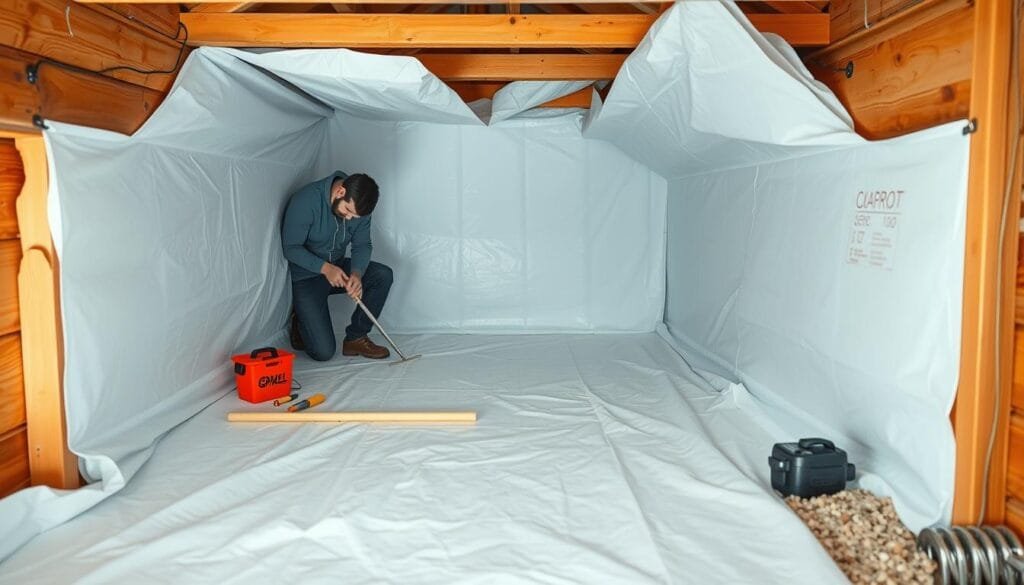
Drainage systems, including perimeter drains and sump pumps, cost $2,000 to $5,000. Foundation wall insulation costs $1,500 to $4,000. Upgraded crawl space doors and access improvements cost $500 to $1,500. These expenses increase your initial investment but save money long-term by preventing moisture damage.
Calculating Annual Maintenance and Utility Costs
Being a crawl space owner means regular expenses to keep your foundation in good shape. Professional inspections cost $200 to $400 a year. Pest control treatments in vulnerable areas cost $300 to $600 annually. Minor repairs and upkeep average $200 to $500 a year.
These maintenance investments prevent small problems from becoming big headaches. Regular care keeps your crawl space dry, pest-free, and structurally sound.
Dehumidification Energy Costs
Running a crawl space dehumidifier adds $20 to $50 monthly to your electric bill during humid months. This totals $150 to $400 a year. This energy investment keeps humidity levels right and prevents moisture damage that’s much more expensive to fix.
Long-Term Repair Budgeting
Plan for occasional major expenses over your cabin’s lifetime. Vapor barriers need replacement every 15 to 20 years at $1,000 to $3,000. Sump pumps last 7 to 10 years before needing $500 to $1,200 replacements. Foundation drainage repairs can cost $2,000 to $10,000 or more, depending on the problem.
While these costs may seem high, they’re similar to maintenance needs for any foundation type. Quality initial construction and proper encapsulation actually save money long-term. They prevent the tens of thousands in damage costs that poorly maintained crawl spaces can require.
| Cost Category | Initial Investment | Annual Expenses | Replacement Cycle |
|---|---|---|---|
| Basic Construction | $8,000 – $25,000 | N/A | Lifetime structure |
| Encapsulation System | $5,500 – $14,000 | N/A | 15-20 years |
| Maintenance & Inspections | N/A | $700 – $1,500 | Ongoing annually |
| Dehumidification | $200 – $400 (unit) | $150 – $400 | 10-12 years |
| Sump Pump System | $800 – $2,500 | $50 – $100 | 7-10 years |
Climate and Geographic Considerations
Choosing where to build your cabin is as important as how you build it. Climate foundation considerations affect your crawl space’s performance and maintenance needs. They also impact the cost-effectiveness of your location.
Across the United States, different climates lead to varied foundation choices. The East South Central region, for example, has 47% of new homes with crawl space foundations. In contrast, colder areas like New England and the Midwest often have basements. Warmer regions prefer slab and crawl space combinations.
Freezing Temperatures and Frost Protection
Cold weather crawl spaces face unique challenges. Frost heave can damage foundations by expanding frozen ground. This is common in northern states where temperatures drop below freezing for long periods.
Footings must go below the frost line to prevent movement. Frost depth varies, from 12 inches in the south to 48 inches or more in the north. Unheated crawl spaces risk frozen pipes, needing insulation or heat.
With the right design, cold climate crawl spaces can work well. Proper insulation, heat, and footings are key. But, these needs can make basements more appealing in very cold areas.
Managing Moisture in High Humidity Areas
The Southeast, Gulf Coast, and Pacific Northwest face big moisture challenges for humid climate foundations. High humidity causes condensation, needing strong dehumidifiers and good ventilation. Many choose full encapsulation with conditioning to manage moisture.
Despite these challenges, crawl spaces are popular in humid areas. They offer flood protection due to their elevation. This makes the extra moisture control worth it for many cabin owners.
Optimal Performance in Arid Regions
Dry climates offer ideal conditions for crawl space foundations. The Southwest and parts of the Mountain West have low humidity, reducing moisture concerns. Crawl spaces in these areas need less maintenance and rarely require dehumidification.
In dry areas, crawl spaces are a good middle option. They cost less than basements but avoid the temperature extremes that affect slab foundations. They also provide insulation without the moisture risks of humid climates.
Regional Building Code Requirements
Local building codes reflect regional climate needs and set specific requirements. They dictate insulation R-values, vapor barrier specs, and ventilation needs based on climate zone. Some areas require specific foundation types or extra protection measures based on local climate data and history.
Knowing your local code requirements early can save you from costly redesigns. Building inspectors enforce these standards to ensure foundations meet local conditions. This protects both the structure and the people living there.
| Climate Region | Crawl Space Performance | Primary Challenges | Required Investments |
|---|---|---|---|
| Cold Climate (Northern States) | Good with proper design | Frost heave, frozen pipes, heat loss | Deep footings, insulation, heating systems |
| High Humidity (Southeast, Gulf Coast) | Moderate (requires management) | Moisture control, condensation, mold risks | Dehumidification, encapsulation, ventilation |
| Dry Climate (Southwest, Mountain West) | Excellent | Minimal moisture concerns | Standard construction, basic insulation |
| Moderate Climate (Mid-Atlantic, Pacific) | Very good | Seasonal moisture, temperature fluctuation | Standard vapor barriers, moderate insulation |
Choosing the Best Foundation for Your Cabin Project
Choosing the right foundation for your cabin is a big decision. It depends on your property, budget, and future plans.
Things like your cabin’s design, where it’s located, the weather, soil, and moisture levels matter. Your budget is also key. Crawl spaces are a good middle choice between slabs and basements in cost.
The shape of your land and soil conditions are very important. Sloped land often means crawl spaces are best. Climate and soil can make some foundations better than others.
Building crawl spaces right is important. Every property is different. Getting expert advice helps pick the right foundation for your area.
Local engineers can assess your site well. Contractors with experience know local building rules. Talk to realtors, contractors, and designers who know your area.
This article helps you talk to your construction team. Crawl spaces are great for many cabins, like those on sloped land or in moderate climates. With this info, you can choose a foundation that lasts for years.