
More homeowners are discovering the satisfaction of tackling their own property preparation projects. Transforming an overgrown space into usable ground can be incredibly rewarding. This hands-on approach gives you complete control over how your property develops.
Preparing a site involves several important tasks. You’ll need to remove trees, brush, and other vegetation. Dealing with stubborn stumps and leveling the terrain are also crucial parts of the process. Proper preparation creates a clean slate for whatever you have planned.
While this type of work requires physical effort and careful planning, it’s absolutely achievable for many people. The significant cost savings make this approach appealing. You also gain the personal satisfaction of transforming your space with your own hands.
Our comprehensive guide walks you through everything you need to know. We cover planning strategies, essential tools, effective techniques, and crucial safety measures. You’ll also learn when it might be wise to hire professional help.
Whether you’re working on a small backyard or a larger area, this information will help you succeed. Take a moment today to consider your specific situation and goals. With the right approach, you can create the perfect foundation for your vision.
Understanding Land Clearing: Purpose and Methods
Land preparation serves many functions, from creating space for a new home to improving land for farming. This type of work is essential for new construction, expanding lawns, or starting a garden. It’s all about creating a usable blank canvas for your vision.
Several primary techniques exist for this work. Each has its own style and set of challenges. Your choice will depend on your budget, timeline, and the specific characteristics of your property.
Overview of Land Clearing Techniques
Grubbing and dozing is a fast way to clear land. Heavy equipment removes trees and vegetation quickly. However, this method can leave holes that need filling and may disturb the soil.
Controlled burning is another rapid method. It efficiently clears large areas but doesn’t allow you to save specific trees. This approach carries fire risk and can impact soil health. It’s crucial to understand local regulations and safety protocols before considering this option.
Grubbing, Burning, Hand Clearing, and Mulching
Hand clearing is the most affordable and least damaging method. It involves using manual tools to remove brush and small trees. This is very time-intensive but offers maximum control, making it ideal for smaller projects.
Mulching is an excellent middle-ground. Specialized machinery grinds vegetation into fine wood chips. This allows for selective removal and returns organic matter to the soil, benefiting future planting.
Selecting the best method depends on your project’s scale and goals. Consider your timeline, budget, and how you plan to use the space afterward.
Planning Your Land Clearing Project
The foundation of any successful outdoor project lies in creating a comprehensive roadmap before work begins. Taking time to plan properly prevents costly mistakes and keeps your efforts moving smoothly.

Assessing Your Property and Setting Goals
Start by walking your entire property with a clear vision of your end goal. Identify what vegetation needs to be removed and which features you want to preserve. Mark larger trees and shrubs that may require special equipment for removal.
Evaluate your soil quality and check for large rocks that might complicate your project. This assessment helps you understand the true scope of work ahead. Always contact utility companies to mark underground lines before any digging.
Don’t forget to check local regulations with county administrators. Permits and zoning rules can significantly impact your timeline. For complex lot clearing situations, professional guidance may be essential.
Creating a Detailed Work Plan and Schedule
Develop a realistic timeline that matches your available time and physical capabilities. Underestimating the effort required is a common mistake many property owners make.
Your schedule should account for weather delays and equipment availability. Plan for any necessary engineering work and resolve all legal issues before starting. A well-structured plan turns a daunting project into manageable steps.
Essential Tools and Equipment for Successful Land Clearing
Having the proper gear can transform a challenging outdoor project into a manageable task that saves both time and effort. The right selection of implements makes all the difference in how smoothly your work progresses.
Hand Tools and Safety Gear
Start with a quality 16-20 inch chainsaw for basic tree removal work. Don’t forget a chain sharpening tool and extra chains. You’ll also need several wedges to control tree fall and a large hammer.
Safety gear is non-negotiable. Wear safety goggles, long pants, long-sleeve shirts, and work gloves. This protects against flying debris and sharp branches.
Additional hand tools like hedge trimmers and pruning clippers help with smaller vegetation. Rakes, shovels, and backpack sprayers assist with cleanup after trees come down.
Heavy Equipment, Rental Options, and DIY Resources
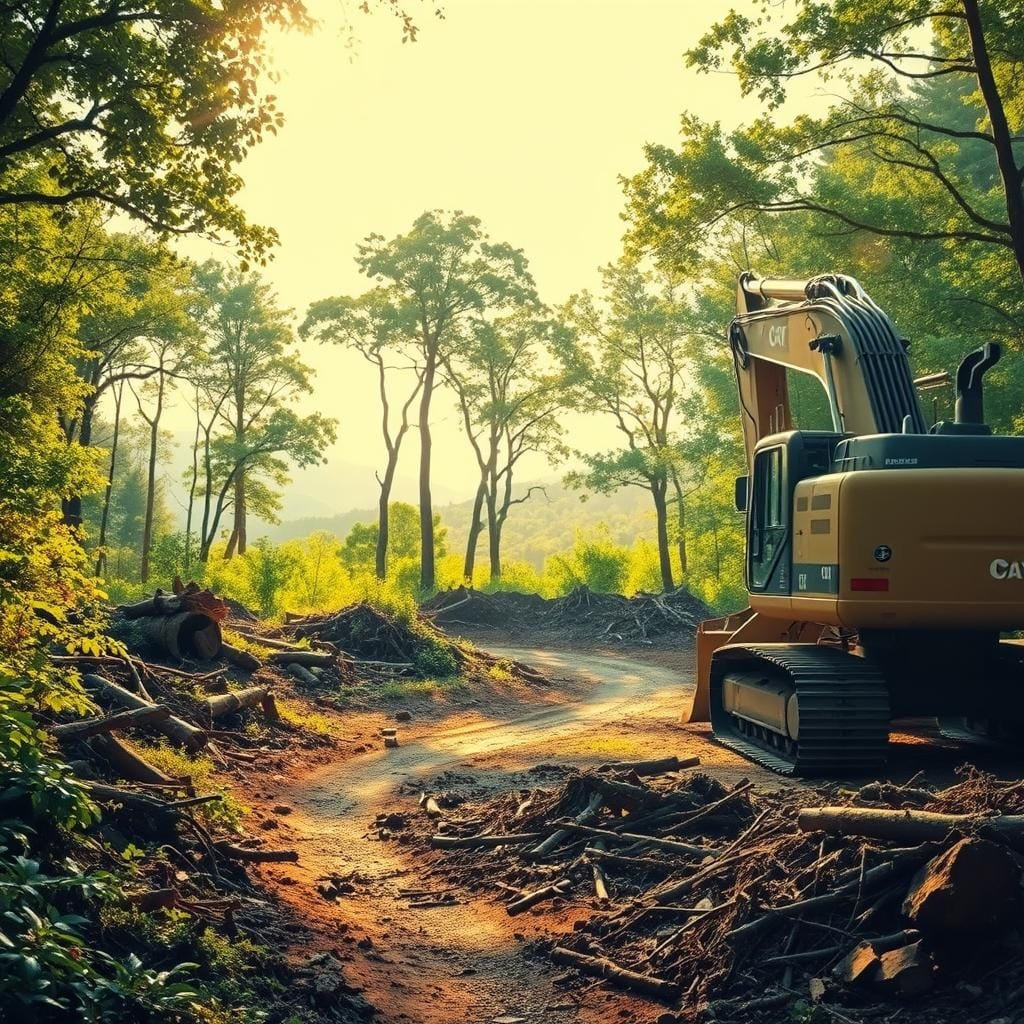
For larger projects, heavy equipment can significantly speed up the process. Excavators, disc mulchers, and stump grinders handle tough jobs efficiently.
| Equipment Type | Primary Use | Rental Cost Range | Best For |
|---|---|---|---|
| Skid Steer | Brush moving | $200-400/day | Medium projects |
| Mini Excavator | Stump removal | $250-450/day | Precise work |
| Stump Grinder | Tree stump removal | $150-300/day | Final cleanup |
For one-time projects, renting equipment often makes more financial sense than buying. Professional tree removal services can help with particularly large or dangerous trees.
Roll-off dumpsters are invaluable for managing yard waste. Proper tools aren’t just about convenience—they’re about safety and completing the work efficiently.
diy land clearing steps: A Step-by-Step Process
A methodical sequence of actions transforms overgrown areas into usable spaces. Following the right order prevents accidents and saves valuable time.
Creating a Plan and Marking Key Areas
Begin by walking your property with your final vision in mind. Identify which trees and structures to keep or remove. Mark preservation zones clearly.
Contact utility companies to locate underground lines before digging. This prevents dangerous accidents and costly repairs. Assess soil quality and note any large rocks.
Removing Structures, Trees, Brush, and Stumps
Start by demolishing old sheds or barns that create safety hazards. Clear brush pathways before tackling larger vegetation. This prevents tripping when operating equipment.
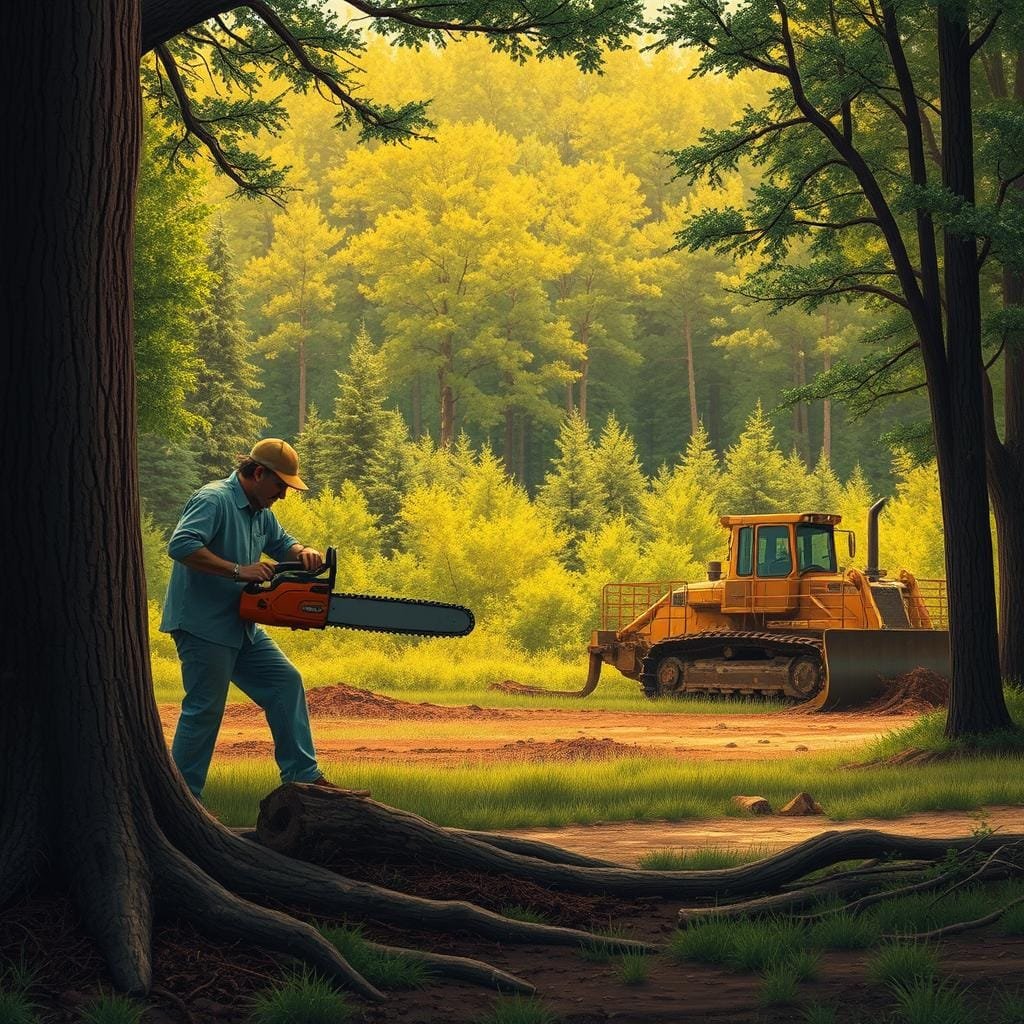
For tree removal, trim branches first then make proper notch cuts. Control the fall direction carefully. Remember that even small logs can weigh hundreds of pounds.
Stump removal options include grinders for large specimens or chemical treatments for smaller ones. Finally, level the terrain and dispose of all yard waste properly.
Safety Considerations and Environmental Impact
Your personal well-being and environmental responsibility form the dual foundation of any property preparation project. Both aspects require careful thought before you begin work on your outdoor space.
Personal Safety and Proper Equipment Use
Always wear protective clothing when working outdoors. Long pants and sleeves shield you from poison ivy, thorny brush, and ticks common in overgrown yard areas.
Proper equipment operation is crucial for safety. Inexperience with chainsaws or heavy machinery can lead to serious injury. Consider training or professional help if you’re unfamiliar with these tools.
Timing your project wisely makes a big difference. Late fall or early spring work allows you to identify vegetation type more easily. You’ll avoid poison plants and work without competing against new growth.
Minimizing Environmental Concerns and Legal Checks
Removing too many plants at once can harm your property. Tree roots naturally prevent soil erosion and absorb excess water. Strategic preservation maintains drainage and prevents flooding.
Always check local regulations before beginning work. County offices can explain environmental protection laws and zoning rules. This prevents legal issues and protects your land.
Keep valuable trees safe with bright fencing during clearing. Also mind underground utilities when deciding which plants to remove near your home.
Managing Costs and Time on Your Land Clearing Project
Smart financial planning separates successful property projects from those that stall due to unexpected expenses. Understanding the financial commitment upfront helps you allocate resources wisely.

Budgeting for Labor and Equipment
Most homeowners spend between $1,200 and $4,000 on property preparation work. The average cost sits around $2,500 for typical residential jobs.
Project scale dramatically affects your budget. Small areas might start around $550, while large-scale work can reach $8,000 or more.
| Project Scale | Vegetation Type | Cost Range | Time Estimate |
|---|---|---|---|
| Small Area | Light Brush | $550 – $1,500 | 1-3 days |
| Medium Area | Mixed Trees | $1,500 – $4,000 | 3-7 days |
| Large Area | Heavy Forest | $4,000 – $8,000+ | 1-2 weeks |
Hardwood trees take significantly longer to process than softwood varieties. Always account for equipment rental, disposal fees, and potential stump grinding costs.
Proper planning prevents budget overruns. Accurate property assessment upfront saves both money and time during execution.
Final Thoughts and Getting Started Today
The journey from overgrown wilderness to usable ground requires careful consideration of your approach. With proper planning and the right tools, transforming your space is an achievable goal that brings personal satisfaction.
Remember that professional help often makes sense for complex situations. As Garrett Graff notes, experts bring efficiency and safety to challenging projects. Consider a hybrid approach where you handle smaller vegetation while hiring services for large trees or heavy equipment.
Don’t forget about soil preparation after removing unwanted vegetation. Proper amendment ensures healthy future growth. Plan your yard waste disposal method before beginning.
Take that first step today by walking your property and creating a realistic plan. Whether you choose a full DIY approach or selective professional assistance, prioritize safety and adjust your timeline as needed.