
Planning your dream getaway in the woods brings up many important questions. One of the biggest is about the land itself. The height and slope of your property are not just minor details. They are central to your entire project’s success.
Your choice of location impacts almost everything. It influences construction costs, how easy it is to get to your home, and the beautiful views you’ll enjoy. It also affects your privacy and how utilities like water and power are installed.
For those new to this process, especially from flat areas, these factors can be surprising. Understanding how to handle a sloped lot from the start is crucial. It helps you avoid expensive errors and ensures your special place meets all your goals.
This guide will walk you through the key steps. We’ll cover evaluating the terrain, picking the perfect spot, and building a cabin on a slope. Our goal is to make these complex ideas easy to grasp, no matter your experience level.
Assessing Terrain and Environmental Conditions
Every piece of land tells a story through its contours and drainage patterns that you need to understand. Taking time to study these natural features helps you identify the perfect spot for your structure. This careful assessment prevents expensive mistakes down the road.
Understanding Slope and Land Topography
Start by walking your entire property to note the different slope percentages. Gentle slopes might need minimal preparation work. Steeper grades often require specialized foundation types.
Look for flat areas that could serve as ideal building sites. These spots reduce the amount of ground leveling needed. Understanding the topography helps you work with the land rather than against it.
Evaluating Water Drainage and Rainfall Patterns
Water management is crucial, especially in rainy regions. Observe how water flows across your site after a good rain. Look for signs of erosion or standing water.
Identify natural drainage channels that can guide water away from your foundation. Proper drainage is the single most important factor for long-term stability. This assessment informs your entire construction plan in the right order.
A thorough site evaluation sets the stage for everything that follows. It ensures your project works harmoniously with the natural environment.
Elevation When Building a Cabin: Key Considerations
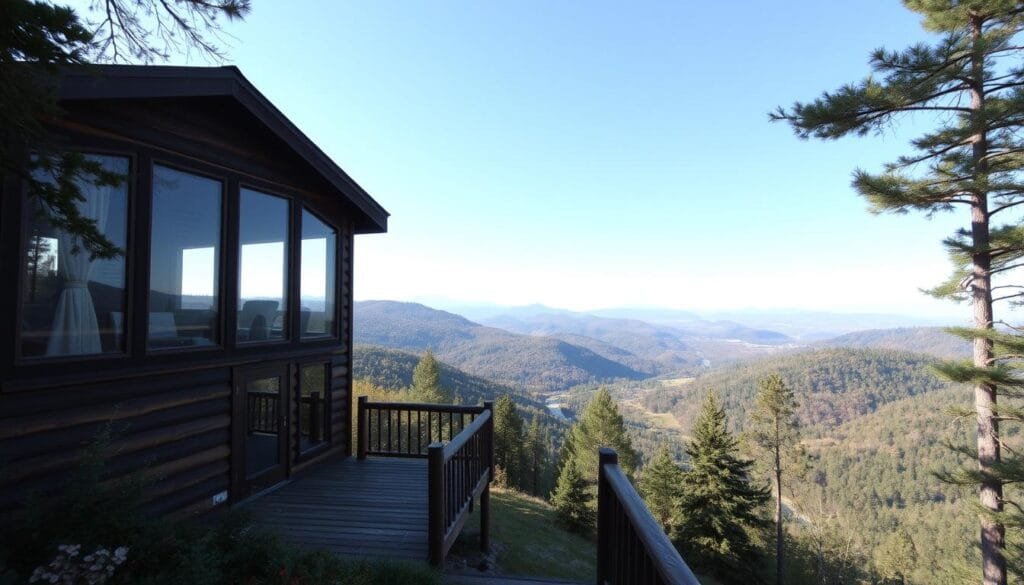
One of the most significant decisions you’ll make centers on the trade-off between seclusion and scenery. Do you want a hidden sanctuary or a home with breathtaking panoramas? This choice directly influences where you place your structure.
Balancing Privacy with Scenic Views
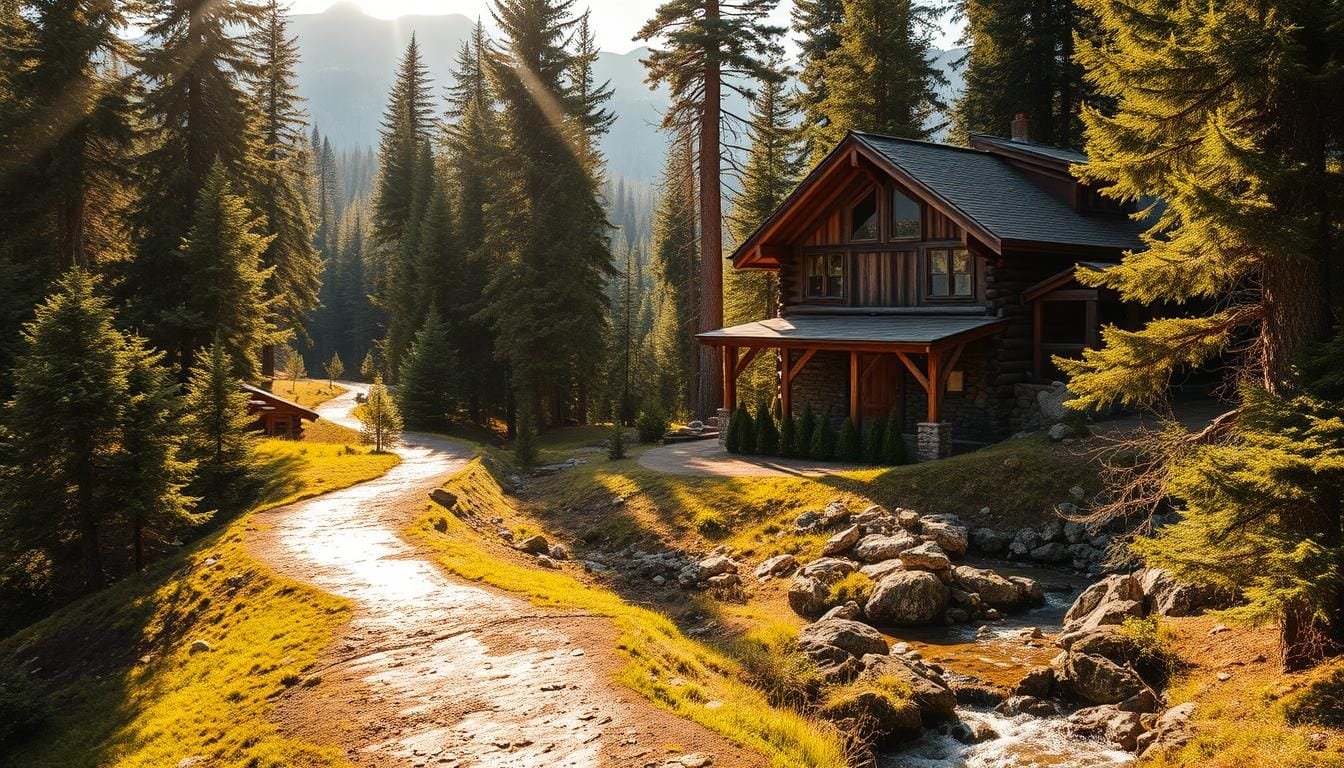
A higher position often grants sweeping views of valleys and mountains. However, it can also make your retreat more visible from roads below. A lower, nestled spot offers more natural cover from trees but might block the vista.
Creative design can help you get the best of both worlds. Strategic window placement focuses on the scenery you want to see. Landscaping with native plants can create privacy screens without completely obscuring your outlook.
Remember that seasons change your perspective. Deciduous trees provide a leafy curtain in summer but reveal more in winter. Visiting your potential site at different times of year is crucial.
This understanding affects your long-term happiness with the space. It also guides the initial work of preparing the land. Think carefully about the experience you want every day in your special place.
Selecting Your Ideal Cabin Site
Smart site selection goes beyond beautiful views to include practical considerations that affect daily use. The right location makes your retreat enjoyable rather than burdensome.
Think about how often you’ll visit this special place. A great spot balances seclusion with reasonable travel time from your primary home.
Parcel Location and Accessibility
Consider road quality and seasonal access. Heavy winters can block routes for extended periods. Delivery trucks need clear paths for materials.
Modular units require significant clearance. Large transport vehicles may need crane access. Plan for adequate space from the start.
Proximity to favorite activities matters too. Easy lake access or nearby trails increase enjoyment. These things make your retreat truly valuable.
Utility and Infrastructure Readiness
Check what utilities exist on-site. Bringing in electric service, water, and sewage systems adds considerable cost. The more remote the location, the higher the number.
Working with local experts helps avoid surprises. They understand regional challenges and opportunities. This guidance saves both time and money.
Thorough planning at this stage prevents complications later. It sets the foundation for a smooth building process. Consider all factors before finalizing your choice, including the pros and cons of different site.
Navigating Foundation Options and Water Management
Proper foundation selection and water management are critical components that determine long-term structural integrity. These elements work together to protect your investment from ground-level challenges.
Comparing Post-Tension Slab, Stem Wall, and Pier Foundations
Three main foundation types suit different terrain conditions. Post-tension slab foundations use steel cables tightened after concrete pouring. This creates a stable base on challenging ground.
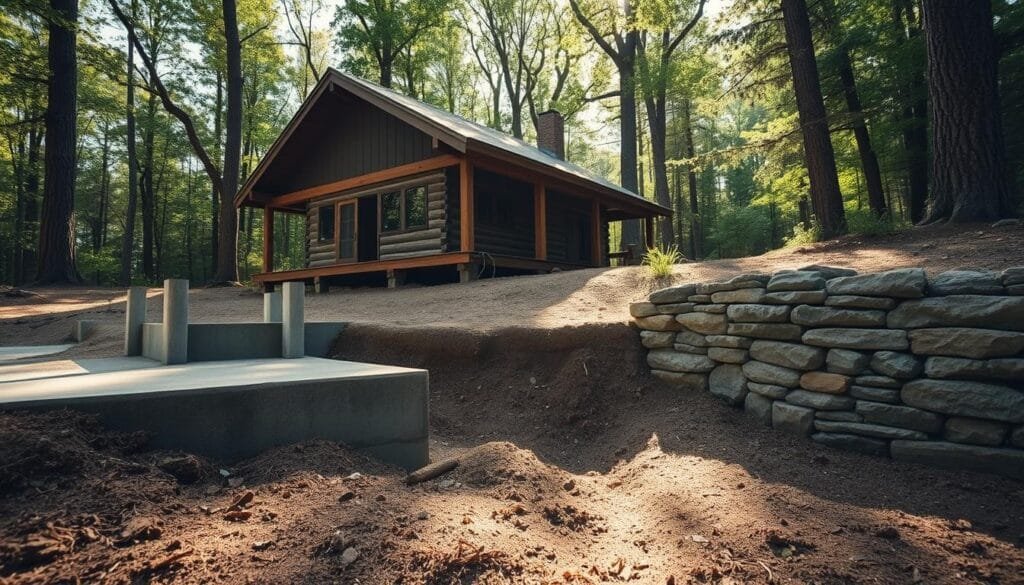
Concrete stem wall foundations combine footing with slab construction. This two-part system allows for crawl space or basement areas. It provides excellent protection against water damage.
Pier and beam foundations offer flexibility for steep slopes. Large piers set in concrete footings accommodate almost any terrain. This type provides inherent drainage advantages.
Effective Techniques for Water Control and Drainage
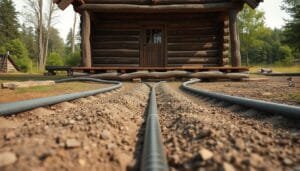
Water management begins with proper grading around your foundation. Direct water away from the base using drainage systems. This prevents erosion and structural issues.
Footings must reach undisturbed ground below the frost line. This prevents freeze-thaw cycle damage. Never cut corners on foundation or drainage work.
Initial savings on these elements lead to expensive repairs later. Quality foundation and water control work ensure your project stands the test of time.
Designing and Customizing Your Cabin Project
Personalizing your mountain getaway requires balancing practical needs with aesthetic preferences. This phase transforms your vision into a functional layout that matches your lifestyle perfectly.
Floor Plans and Interior Layout Options
Start by considering how many people will use your retreat regularly. This determines bedroom count and living area size. Think about storage needs for extended stays.
Many builders begin with standard floor plan packages. Professional designers can create detailed drawings showing specific layouts. Adding furniture to these drawings helps visualize the space effectively.
Small adjustments during the design phase can significantly improve functionality. Moving a wall just a few inches might create better bathroom flow without reducing living area. This careful planning prevents costly changes during construction.
Incorporating Modern Materials with Rustic Charm
Blend traditional cabin aesthetics with contemporary comforts. Modern insulation and energy-efficient windows maintain rustic charm while improving comfort. These choices reduce long-term maintenance needs.
Consider specialized storage spaces for outdoor equipment. Well-designed closets and cabinets keep your retreat organized during longer visits. The right material selections ensure your home feels authentic yet modern.
Investing time in the design process pays dividends later. Thoughtful planning creates a space that truly meets your needs and vision for years to come.
Step-by-Step Guide to Constructing on a Slope
Proper site preparation lays the foundation for a successful build on challenging topography. Following a logical sequence prevents costly errors and ensures each phase supports the next.
Planning the Build Process and Site Preparation
Begin with thorough site clearing and preparation. This initial work accounts for terrain challenges and establishes a stable base. The right order of operations minimizes disturbance and manages material flow effectively.
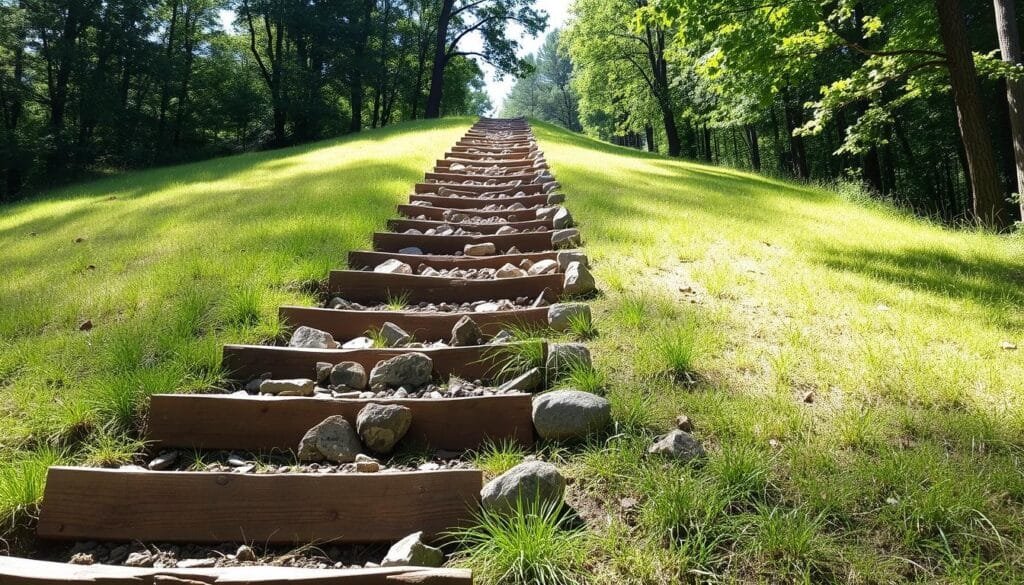
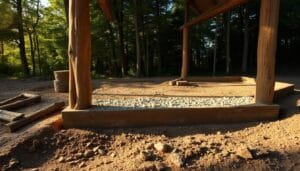
The foundation represents the first construction stage. Dig approximately 12 inches deep and fill with stone and concrete. Build a small base wall about 12 inches high on top. This creates crucial elevation that prevents direct ground contact.
This moisture barrier protects your structure from rot and water damage. Place thicker, higher-quality logs at the bottom since they face greater exposure. Inside your retreat and on balconies, use broken tiles and bricks as a base layer.
Create a comprehensive site plan before starting construction. Map out the entire property including outdoor living areas and pathways. Professional consultation during planning helps make decisions specific to your homesite.
Systematic execution following a detailed plan ensures structural integrity throughout the entire process. Each step properly supports the next when you work with the slope rather than against it.
Construction Techniques and Material Selection
Selecting the right construction methods and materials is where your vision truly takes physical form. This stage combines traditional craftsmanship with modern innovations.
Choosing Quality Logs and Treatment Methods
Wood selection makes a huge difference in your project’s outcome. Pine, eucalyptus, chestnut, and oak each offer unique benefits. Eucalyptus stands out for easy peeling and natural durability.
Complete debarking is essential. Bark removal prevents parasite infestation and allows preservatives to penetrate properly. This critical step extends the life of your walls significantly.
Traditional horizontal stacking with interlocking corners creates sturdy construction. This method provides security with minimal nail use. However, it requires careful fitting of each log.
Integrating Traditional and Modern Building Practices
Blending old and new techniques yields the best results. Traditional log placement ensures authentic character. Modern materials enhance durability and comfort.
For openings, sawn log halves create proper door and window frames. Roof construction can incorporate recycled materials while maintaining traditional appearance. Insulation boards provide modern temperature control.
This thoughtful integration creates a retreat that honors tradition while meeting contemporary standards. Each construction step builds toward a lasting, beautiful result.
Final Touches for a Successful Cabin Project
The final phase of your cabin project brings everything together with precision and care. This is where thoughtful plans become a comfortable reality. Paying close attention to these last steps ensures your retreat stands strong for years.
Sealing gaps between logs is crucial for weather protection. Modern cement mixtures offer a clean, effective solution. For the interior floor, a smooth concrete finish provides a durable base.
Doors and windows need robust installation. Proper sealing keeps out drafts and small animals. Using quality materials here enhances security and energy efficiency.
Wood preservation is the final protective step. Commercial treatments offer longevity, while economical alternatives can work well for budget-conscious projects. Applying thorough coverage is key.
Your journey from initial concept to finished home is complete. This careful process results in a special place for making memories. Enjoy your well-built retreat by the lake.