
Dreaming of a cozy retreat far from city life? Living off the grid offers incredible freedom and a deep connection with nature. It means your home operates completely independently.
This independence hinges on having the right gear. Specialized appliances are the heart of a comfortable, functional remote home. They run on alternative sources like solar or propane instead of public utilities.
Choosing the correct equipment is crucial. It transforms a basic shelter into a true year-round haven. You gain reliable performance for daily needs like keeping food cold and having light.
This guide will walk you through the top options. We focus on gear that provides long-term value and minimal upkeep. Our goal is to help you create a self-sufficient sanctuary with smart, dependable tools.
Introduction to Off-Grid Cabin Living
Stepping away from the public utility grid opens up a world of autonomy and a closer bond with the natural environment. This choice means your home operates on its own terms.
Understanding the Off-Grid Lifestyle
This way of life is about balance. You gain incredible freedom from monthly bills and the ability to live almost anywhere.
It also comes with real responsibilities. You become the manager of your own power and water systems. Careful energy use is not just a suggestion—it’s essential for making everything work smoothly.
The Appeal of Self-Sufficiency
The satisfaction of providing for yourself is immense. It builds resilience and a deep sense of accomplishment. You are actively caring for your environment.
Successful living grid-free hinges on having the right tools. Your appliances for a remote home must be reliable partners within your independent system.
| Aspect | On-Grid Living | Off-Grid Living |
|---|---|---|
| Power Source | Public Utility Grid | Solar, Generator, Propane |
| Monthly Costs | Fixed Utility Bills | Initial System Investment |
| Location Freedom | Limited to Utility Access | True Remote Homestead Potential |
| System Control | Managed by Utility Company | Full Personal Responsibility |
Understanding Energy Efficient Appliances for Cabin
The right gear for a remote home isn’t just about features; it’s about a fundamental shift in how things are powered. Standard household equipment often gulps down more electricity than an independent system can provide.
Specialized tools for off-grid living are built differently. They are designed to run on alternative sources like solar panels, propane tanks, or DC battery banks. This direct compatibility is a game-changer for sustainability.
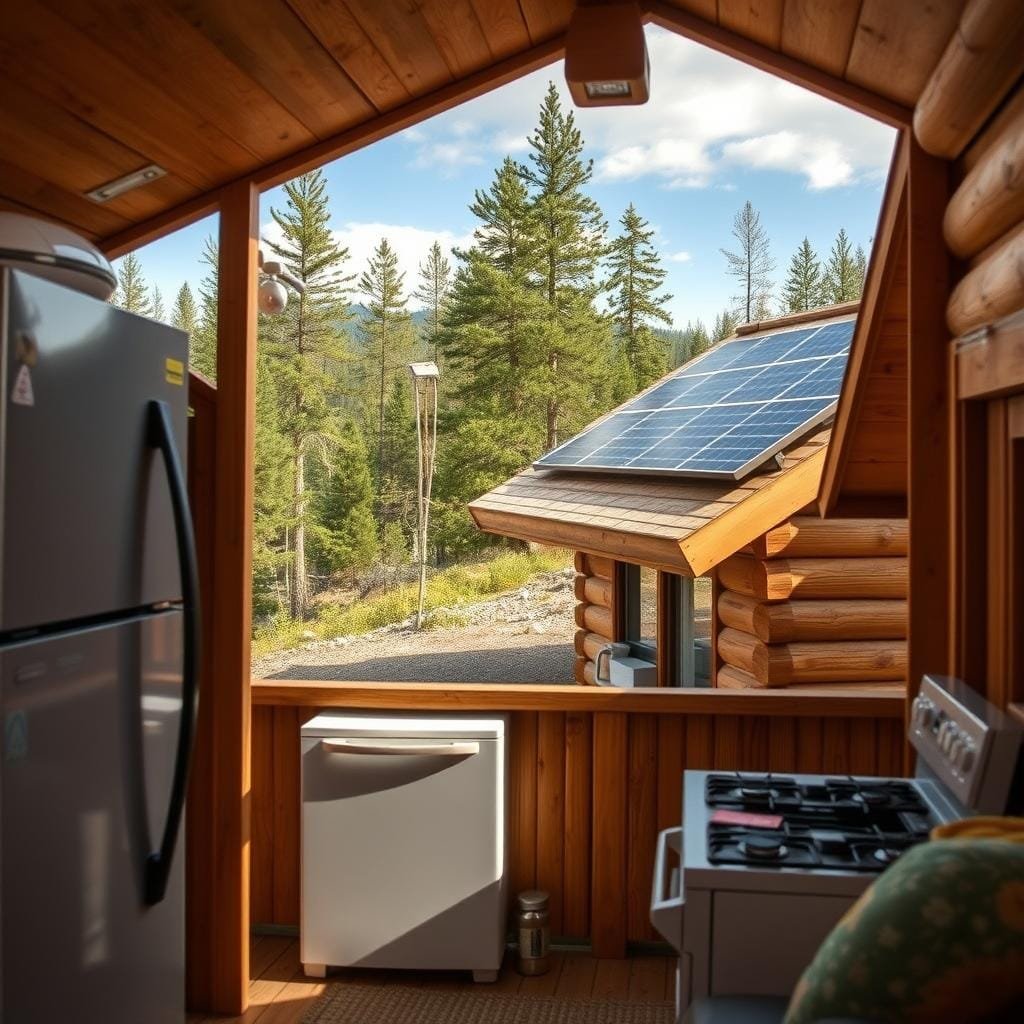
Evaluating performance here means looking at total power draw, measured in watts. Low consumption is the top priority. You need gear that delivers results without straining your limited supply.
The best options have minimal standby drain and operate efficiently on renewable sources. This avoids the need for power-wasting converters. Your system runs smoother and more reliably.
It’s vital to balance your daily usage with what your system can produce. Total consumption should never exceed your generation capacity. This balance is the key to long-term success.
By selecting the right grid appliances, you gain modern comforts while respecting your power budget. It’s about smart choices for a truly autonomous lifestyle.
| Feature | Standard Home Appliance | Off-Grid Homestead Gear |
|---|---|---|
| Primary Power Source | AC from Utility Grid | DC, Solar, Propane |
| Average Power Draw | High | Low to Moderate |
| Standby Consumption | Often Significant | Minimal or Zero |
| System Compatibility | Requires Stable Grid Power | Built for Fluctuating Sources |
Enhancing Self-Sufficiency with Off-Grid Appliances
The heart of a self-sufficient lifestyle lies in choosing equipment that operates independently from municipal services. These specialized tools let you enjoy modern living standards while maintaining complete autonomy.
Living remotely doesn’t mean giving up the comforts you appreciate. The right selection can provide refrigeration, lighting, and climate control without external connections.
Modern Comforts Without the Grid
Today’s specialized grid appliances deliver performance comparable to traditional models. They consume significantly less electricity while offering multiple fuel options.
These appliances transform a simple shelter into a fully functional home. You can preserve food, prepare meals, and maintain comfortable temperatures using only renewable resources.
The best grid appliances eliminate dependency on external service providers. This reduces logistical challenges like frequent fuel deliveries or generator maintenance.
By matching your equipment to your power generation capacity, you create a balanced system. Your appliances work reliably throughout all seasons without straining your resources.
This approach ensures your electricity usage stays within sustainable limits. You maintain independence from the main grid while enjoying modern conveniences.
Strategic selection of these appliances provides essential services using available local resources. It’s the key to long-term success away from the conventional grid.
Key Considerations for Selecting Off-Grid Appliances
Choosing the right gear for an autonomous lifestyle involves more than just comparing features—it’s about long-term reliability and system compatibility. The right selection ensures your independent setup runs smoothly for years.
Low Power Draw and Energy Consumption
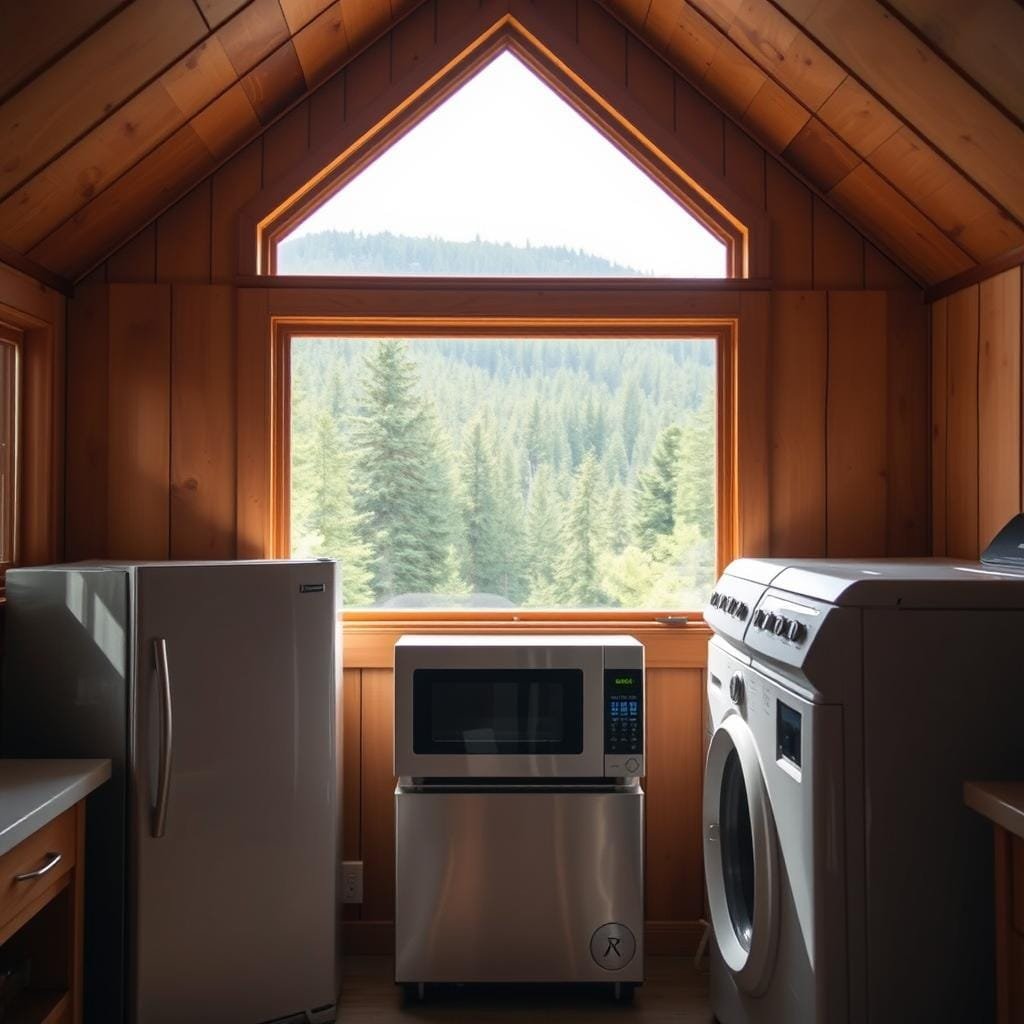
Your equipment’s power requirements measured in watts are the most critical factor. Look for tools with minimal consumption that won’t strain your limited supply.
Low power options prevent battery depletion during cloudy periods. Some units have high startup watts but run efficiently afterward.
Durability and Maintenance
Remote locations demand rugged construction that withstands extreme conditions. Simple designs with user-replaceable parts prevent minor issues from becoming major problems.
Field-tested equipment handles rough access roads and temperature variations better. Easy maintenance keeps your system running when professional help is far away.
Fuel and Solar Compatibility
Versatile units that run on multiple fuel sources provide operational flexibility. DC power, propane, and direct solar inputs reduce dependency on any single energy type.
Native DC operation and solar-ready features optimize renewable power use. This eliminates the need for energy-wasting converters.
Solar Generators & Portable Power Stations
Modern solar generators have revolutionized how we approach electricity in locations far from traditional infrastructure. These compact units serve as the complete electrical heart of your remote setup.
Core Electricity Supply for Remote Cabins
These integrated systems combine lithium battery storage with smart electronics in one portable package. They capture solar energy through panels and distribute it through multiple output ports.
Most quality units offer 1-2 kWh capacity. This provides enough power for essentials like lighting and refrigeration for 24-48 hours. The technology has evolved from heavy lead-acid to lightweight lithium iron phosphate (batteries).
Top Models and Features
Premium options like the EcoFlow DELTA 2 Max and Jackery Explorer 1000 V2 stand out. They feature fast solar charging and support for both AC and DC devices.
When selecting a solar generator, consider both battery capacity and maximum solar input wattage. This determines how quickly the system recharges during daylight.
Compact power station options like the Marbero Portable Power Station work well for weekend use. They provide sufficient power for lighting and small electronics without larger system expenses.
The main advantage of any quality power station is its silent operation. Unlike gasoline generators, they eliminate noise, fumes, and ongoing fuel costs while providing clean power.
Refrigeration Options for Off-Grid Living
The challenge of preserving perishables in remote locations demands refrigeration systems designed for off-grid operation. Your choice impacts food safety, shopping frequency, and overall independence.
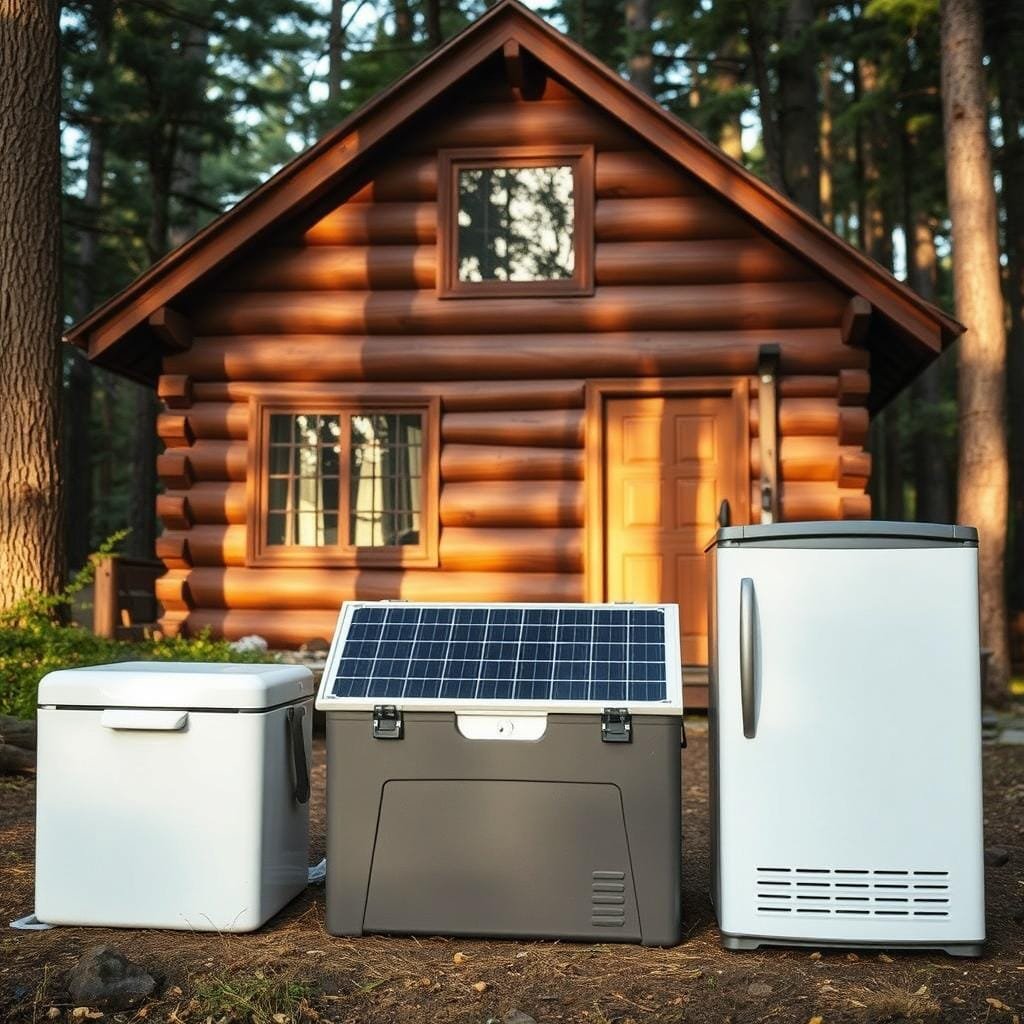
Two main approaches dominate remote cooling: propane-powered units and solar-compatible DC models. Each offers distinct advantages depending on your setup and priorities.
Propane Refrigerators and Long-Term Reliability
Propane models provide exceptional reliability regardless of weather conditions. The Smad Off-Grid Propane Refrigerator exemplifies this approach with 6.1 cubic feet capacity.
These units use absorption cooling technology with no moving parts. They operate silently and can last over 20 years with minimal upkeep.
Fuel consumption averages 1.5-2 pounds daily. A standard 20-pound tank typically lasts 10-14 days, making supply planning straightforward.
Solar-Powered 12V Fridges for Compact Setups
For smaller cabins with adequate solar capacity, 12-volt refrigerators offer flexible cooling. The Bougerv 12V Portable Refrigerator runs efficiently on battery systems.
These DC units integrate seamlessly with solar panels and power stations. They’re ideal for seasonal use or dual-purpose applications in vehicles.
The Danby apartment-sized fridge provides 11.6 cubic feet with separate freezer space. It consumes 310 kWh annually, requiring substantial solar investment for year-round operation.
Propane units offer fuel independence, while solar-powered models provide quiet operation. Your choice depends on climate, power generation, and food storage needs.
Comparing Wood-Burning and Propane Cook Stoves
Cooking without grid power presents unique challenges that can be met with either traditional wood-burning or modern propane stove options. Each type offers distinct benefits depending on your location and lifestyle preferences.
Efficiency and Fuel Considerations
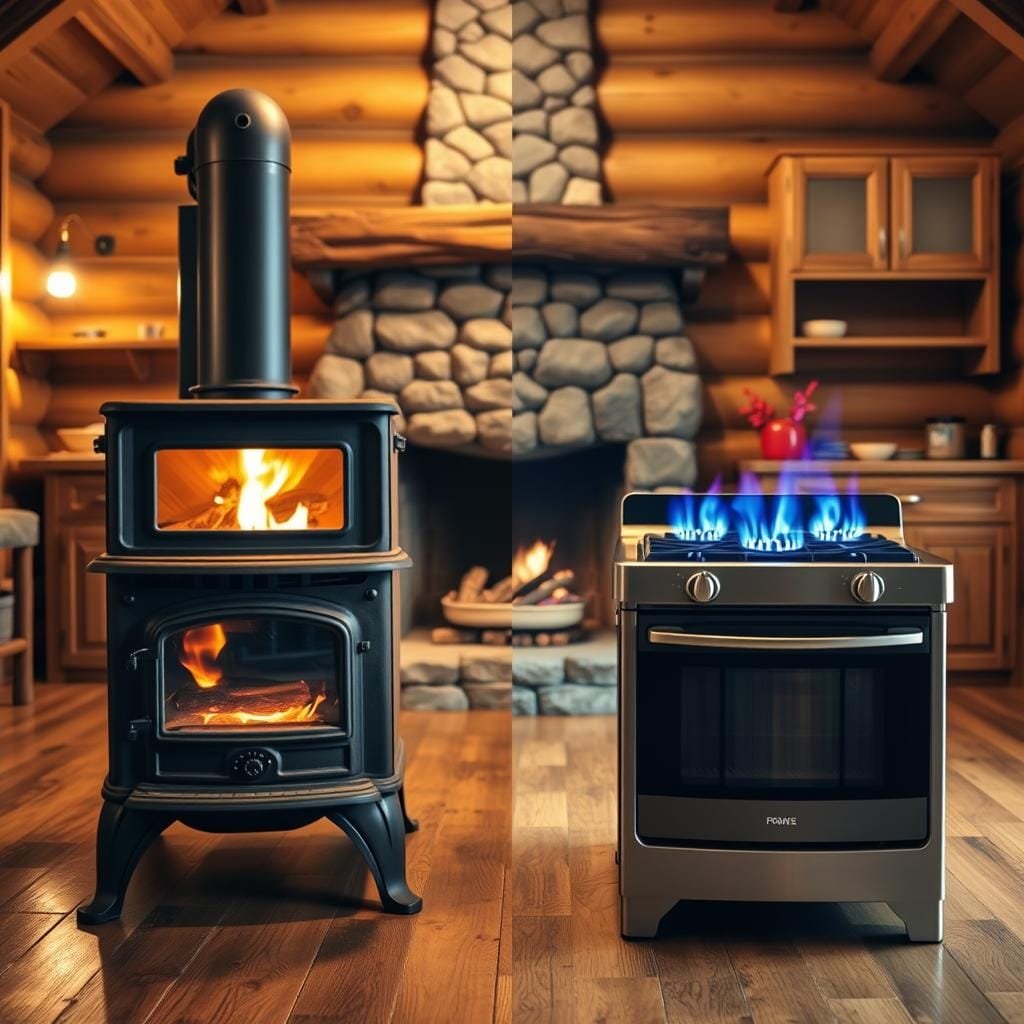
Wood stoves excel in forested areas where firewood is abundant. The Drolet PyroPak model serves as both a heat source and cooking surface. It provides warmth while preparing meals without electricity.
Propane stoves like the Unique Prestige 24″ range offer instant heat control. They feature battery ignition and multiple burners for precise cooking. A simple Coleman stove connected to a 30lb tank provides reliable meal preparation.
Your choice depends on available resources. Wood requires labor but costs little if you have trees. Propane needs regular supply but offers cleaner operation. Comparing heating options shows similar fuel efficiency patterns for cooking applications.
Maintenance and Usage Tips
Wood stove upkeep includes daily ash removal and chimney cleaning. Propane units need periodic burner maintenance and gas line checks. Both systems benefit from regular inspections.
Smart usage strategies maximize efficiency. Use wood stoves for batch cooking during heating seasons. Reserve propane for quick summer meals. Maintaining both systems provides valuable backup options during fuel shortages.
Battery-Powered Water Pumps and Their Benefits
One of the most practical upgrades for any remote setup is automating water transfer using modern battery technology. These tools handle the heavy lifting of moving liquid from wells, streams, or storage tanks to where you need it most.
Efficient Water Transfer for Daily Needs
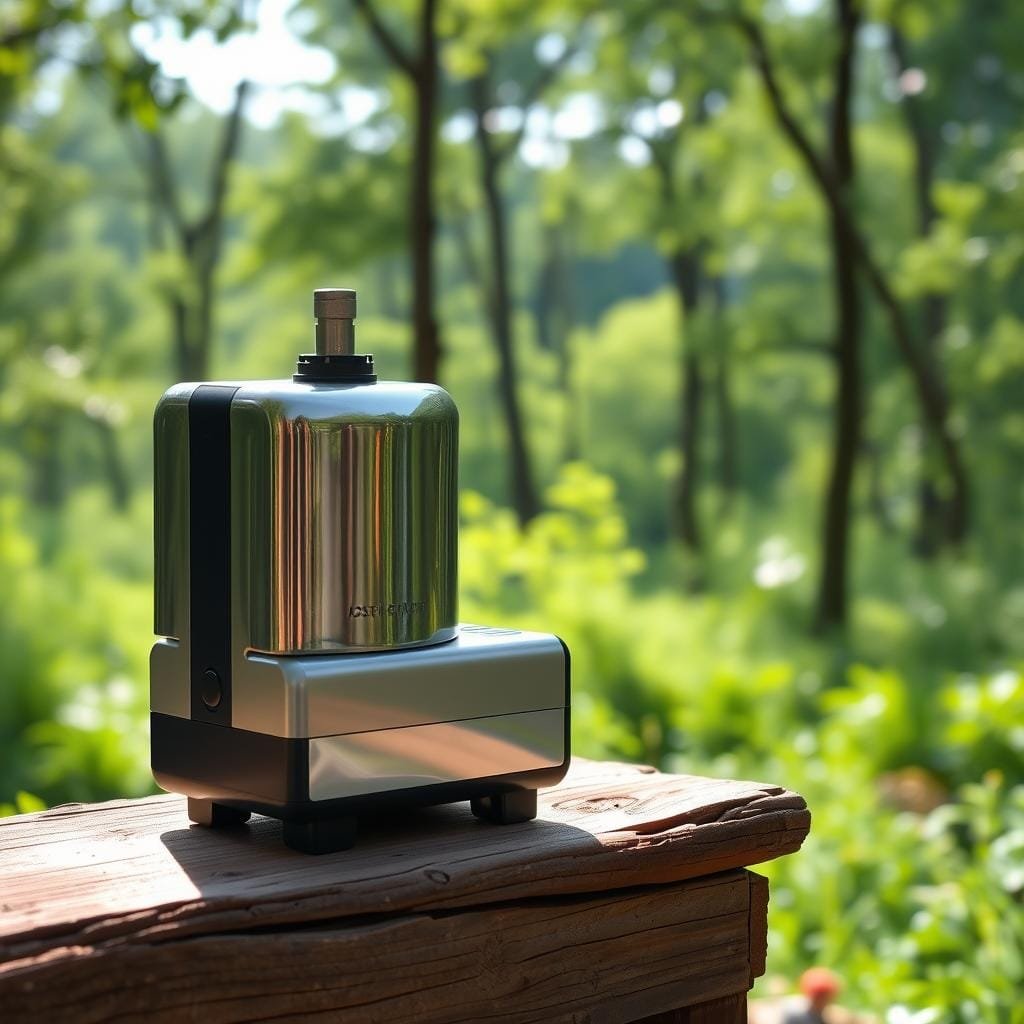
Modern 20V battery-operated pumps make daily tasks remarkably simple. They quickly fill drinking containers, supply garden irrigation, and transfer liquid to elevated tanks for gravity-fed distribution.
The cordless design works anywhere on your property without extension cords. This flexibility is perfect for filling livestock troughs or remote garden beds. Most units draw just 50-100 watts during operation.
These pumps move 5-10 gallons per minute compared to manual pumping’s 1-2 gallons. This saves hours of daily effort when handling typical household needs of 50-100 gallons.
A single charge typically provides 30-60 minutes of runtime. This modest power requirement makes them compatible with small solar setups when batteries recharge during sunny periods.
Despite their convenience, maintaining a manual hand pump as backup ensures access during battery failures or extreme cold. A smart water management strategy combines battery pumps for daily use with manual backups for emergencies.
Lighting Solutions: Solar LED and Energy-Saving Fixtures
Good lighting transforms a remote space from a simple shelter into a safe and welcoming home. Modern options provide brilliant illumination while using a fraction of the electricity of old bulbs.
This is one of the simplest upgrades for dramatic savings. LED bulbs use 75-85% less power than incandescent ones. They give you the same bright light for a tiny draw on your system.
Outdoor and Indoor Application Advantages
Solar-powered lights are perfect for outside areas. They charge their own batteries using solar panels during the day. At night, they turn on automatically, lighting paths and entryways without using your main power supply.
For inside your home, low-voltage DC LEDs are the best choice. A single 10-watt LED bulb can replace a 60-watt incandescent. This means you can light your entire space for less electricity than some single appliances use.
Smart features make these systems even better:
- Motion sensors ensure lights are only on when needed.
- Dimmers and timers give you precise control to prevent waste.
- A layered approach using both solar and DC lights offers total reliability.
Even with small solar panels in winter, LED lighting needs so little power that you can maintain essential illumination. It’s a smart foundation for any independent setup.
Heating and Cooling: DC Fans & Mini-Split Systems
Maintaining comfortable temperatures in your remote retreat requires smart climate solutions. Traditional systems often demand too much electricity for independent setups.
Simple 12V fans offer excellent cooling during warmer months. They move air effectively while using minimal electricity. This creates a breeze that makes spaces feel significantly cooler.
Optimizing Air Circulation with Low Power
Strategic placement maximizes fan effectiveness. Ceiling units should rotate counterclockwise in summer to push cool air down. Floor models near windows create cross-ventilation.
These systems consume only 10-30 watts. That’s a fraction of what air conditioning requires. They help reduce heat buildup naturally.
Installation and Climate Control Tips
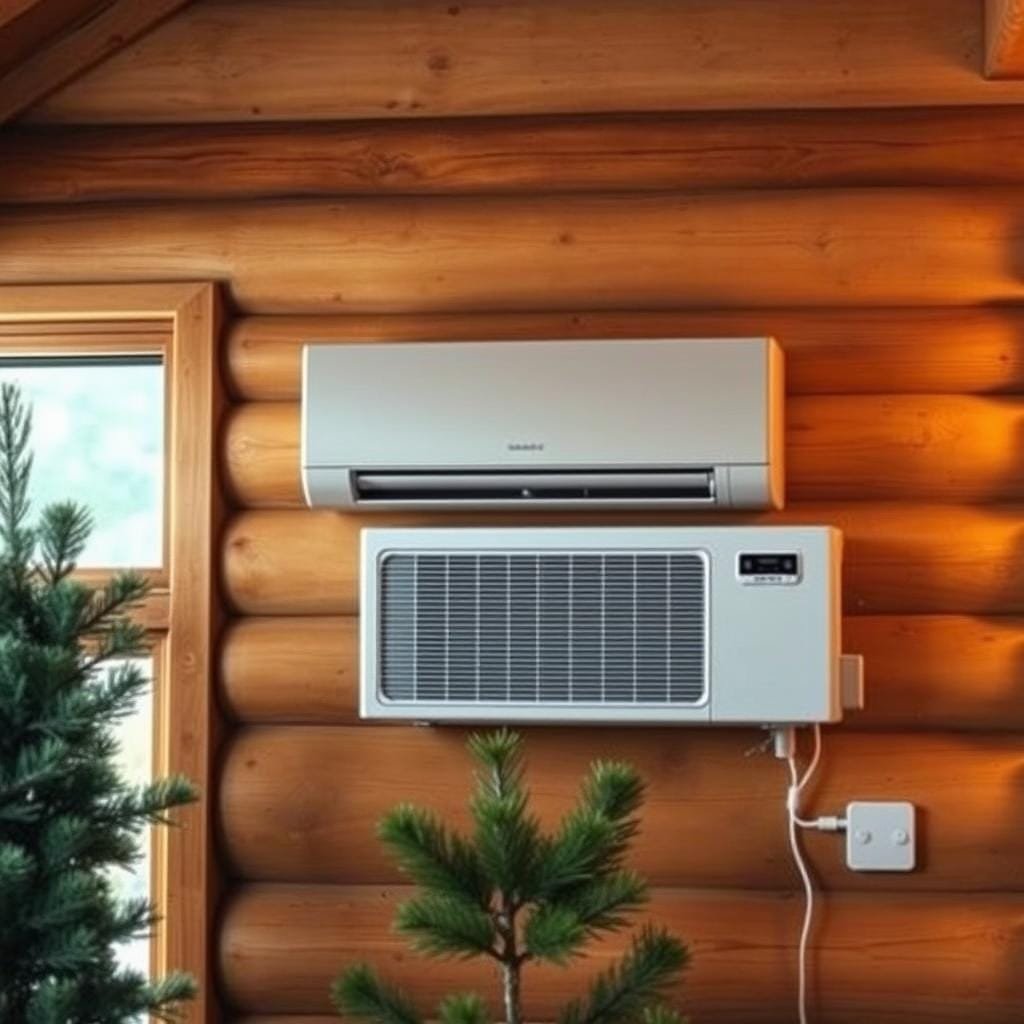
For serious temperature management, DC mini-split systems provide full climate control. They run directly from solar panels or battery banks.
These units handle both heating and cooling needs. They work efficiently without power conversion losses. Proper sizing is crucial for your space.
| System Type | Power Consumption | Best For | Seasonal Use |
|---|---|---|---|
| 12V DC Fans | 10-30 watts | Summer cooling | Warm months |
| DC Mini-Splits | 500-1500 watts | Year-round control | All seasons |
| Wood Stoves | 0 watts | Winter heating | Cold months |
Mini-split systems extend your retreat’s usability throughout the year. They perform well in extreme desert heat or mountain winter conditions. This investment transforms seasonal use into year-round comfort.
Combine approaches for best results. Use passive solar heating in winter through south-facing windows. Reserve mini-split operation for peak temperature days only.
Innovative Cooking Gear: Thermal Cookers and Rocket Ovens
Beyond conventional stoves, thermal cookers and rocket ovens represent the cutting edge of sustainable cooking solutions. These technologies deliver remarkable performance while minimizing resource consumption.
Energy Savings for Emergency Cooking
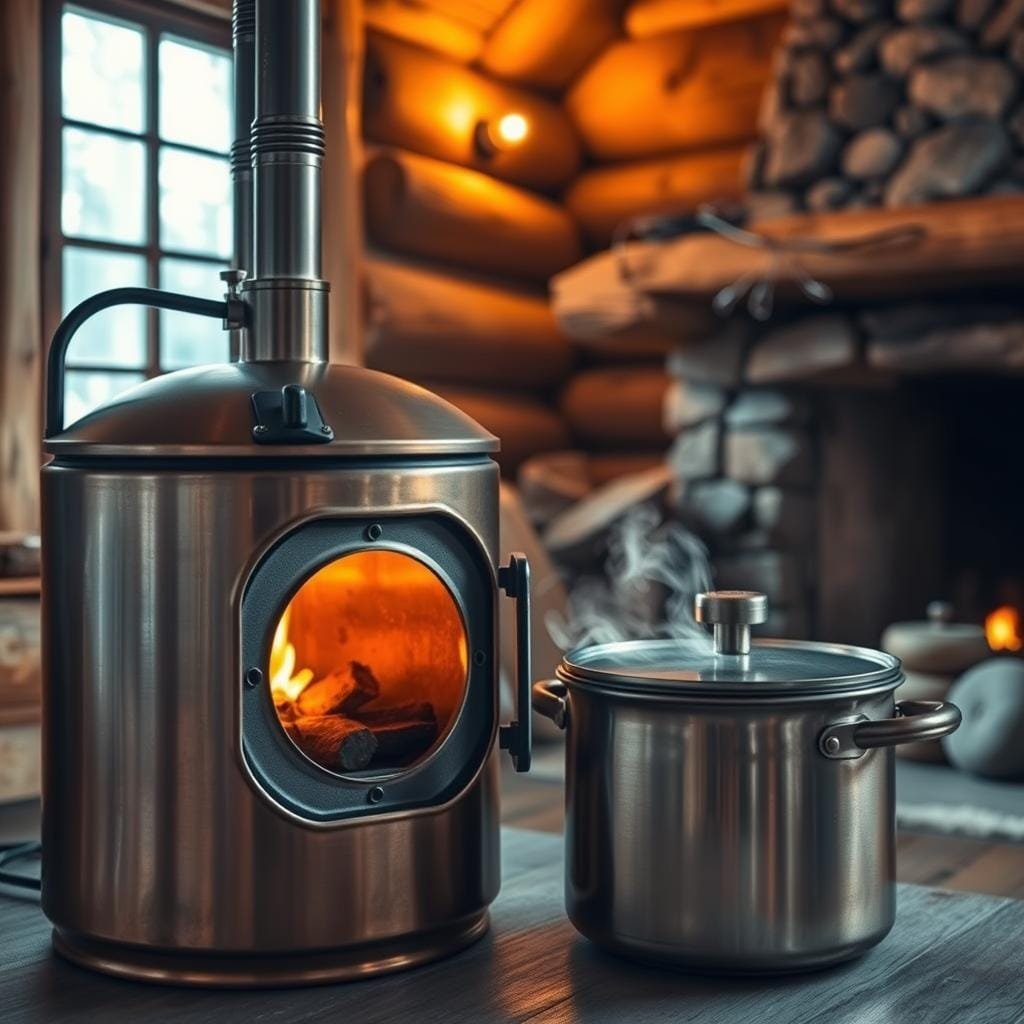
Thermal cookers use vacuum insulation to continue cooking after brief heating. You only need 10-15 minutes of active fuel to bring food to a boil. The insulation then completes hours of slow cooking without additional energy input.
Rocket ovens utilize small wood scraps with exceptional efficiency. Their combustion chamber design creates intense heat from twigs and branches. This lets you prepare meals using wood gathered around your property.
The Coleman Revolution 3-burner BBQ offers 58,000 BTU for outdoor cooking. It captures 75% more grease with flare-free technology. This versatile unit handles grilling and baking while keeping heat outside.
Maintaining multiple cooking methods ensures emergency preparedness. These innovative approaches provide significant fuel savings and reliable meal preparation in any situation.
Multi-Purpose Appliances: Instant Pot and Electric Pressure Cookers
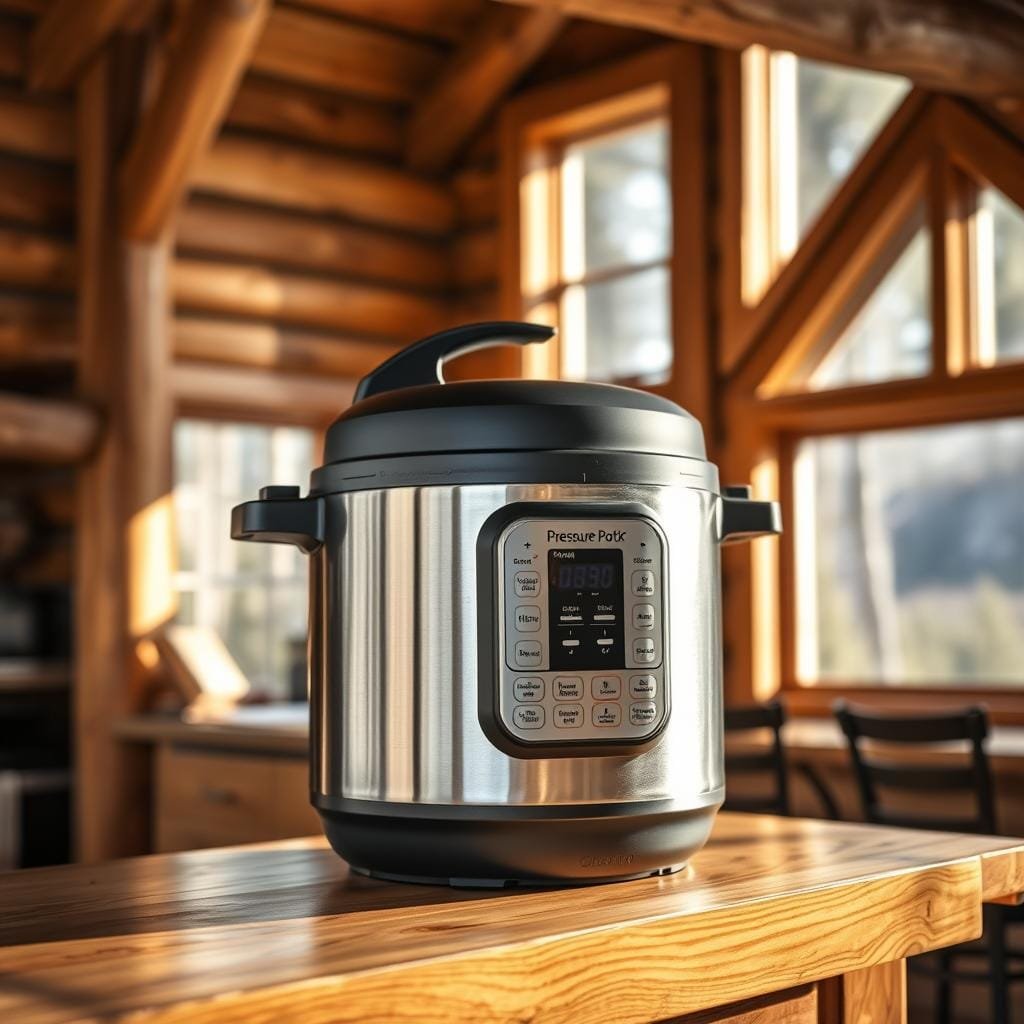
Imagine preparing multiple types of meals with just one compact device that uses minimal electricity. Electric pressure cookers like the Instant Pot transform remote kitchen setups with their incredible versatility.
Low Wattage, High Efficiency Cooking
The Instant Pot Mini 3 Qt version demonstrates smart power management. It draws 670 watts for just 3-10 minutes to build pressure.
Then it drops to nearly zero watts while cooking. This saves many watts compared to traditional stovetop methods.
Beans that need 2-3 hours on a regular stove cook in minutes. The device runs efficiently from small power stations.
Versatility in a Compact Appliance
This single unit replaces several specialized appliances. It handles pressure cooking, slow cooking, rice preparation, and even yogurt making.
The mini size is perfect for smaller spaces. You get restaurant-quality results without consuming many watts.
These multi-function appliances simplify your off-grid kitchen. They provide cooking flexibility regardless of weather conditions.
Maintenance and Energy Management Strategies
Without the safety net of public utilities, proactive maintenance becomes your most valuable tool for uninterrupted comfort. Consistent upkeep prevents small issues from becoming major problems when help is far away.
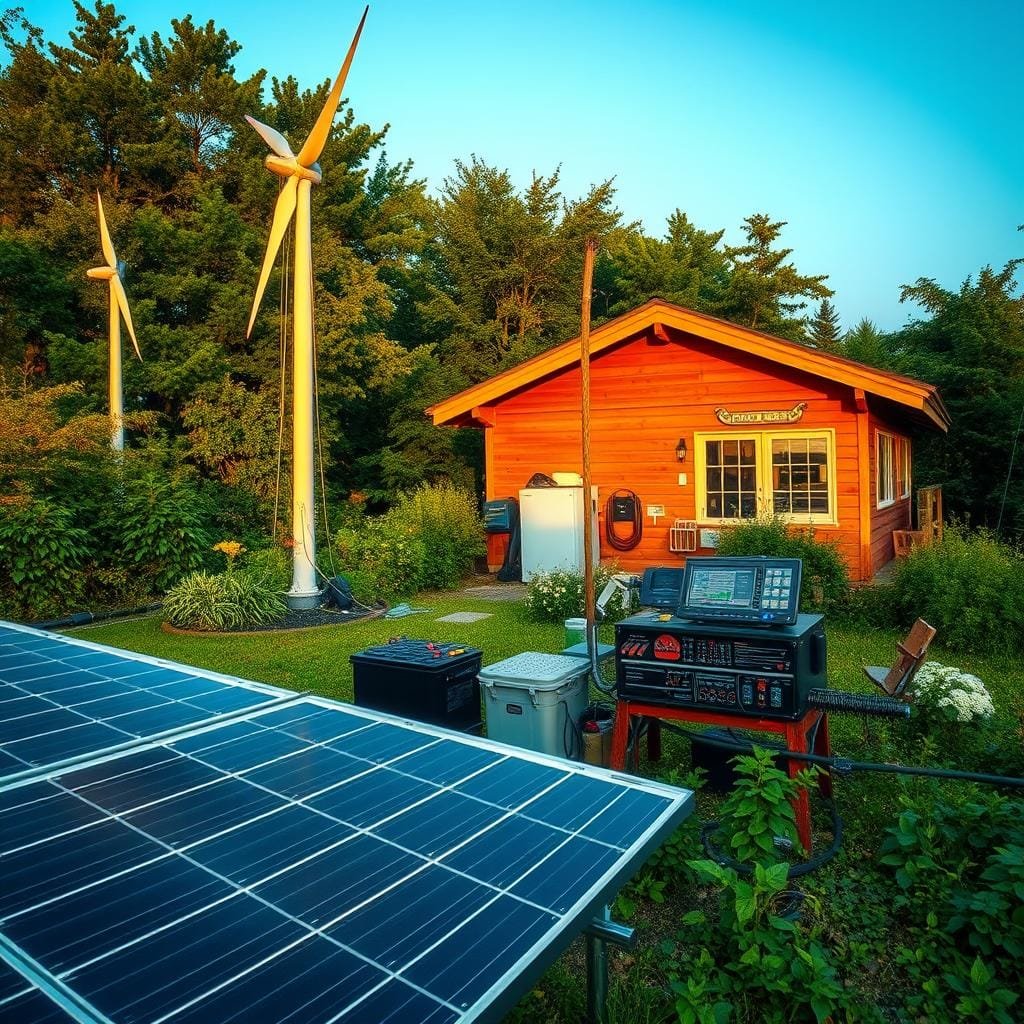
Smart management involves both routine checks and understanding your system’s performance. This dual approach keeps everything running smoothly throughout the year.
Regular Check-Ups and Seasonal Prep
Create a simple schedule for essential maintenance tasks. Check propane connections monthly for leaks and clean solar panels seasonally.
Winter preparation involves insulating pipes and adjusting panel angles. Summer requires ventilation planning and shade management.
Store extra propane and firewood in dry, ventilated spaces. Keep spare battery packs for critical tools and pumps.
Tools for Monitoring Power Consumption
Invest in monitoring tools that track your system’s health. Battery monitors show daily consumption patterns and charge levels.
Watt meters help identify which devices use the most power. This data guides smarter usage decisions day by day.
Regular safety inspections should occur multiple times each year. Test detectors and check electrical connections for corrosion.
Your Path to a Sustainable Off-Grid Cabin Retreat
Your path to true independence starts with a clear vision and the equipment to make it real. This guide has shown that successful living grid-free is entirely achievable. It transforms a simple cabin into a comfortable, resilient homestead.
Begin with your core needs. A reliable stove for cooking and a source of solar power are excellent foundations. You can then add other appliances over time.
This layered approach helps manage costs and learn your actual usage. You will see significant savings while gaining freedom. For more ideas on specific gear, explore this list of off-grid appliances.
Every day brings the satisfaction of true self-sufficiency. Your retreat will provide comfort and convenience for all times of the year.