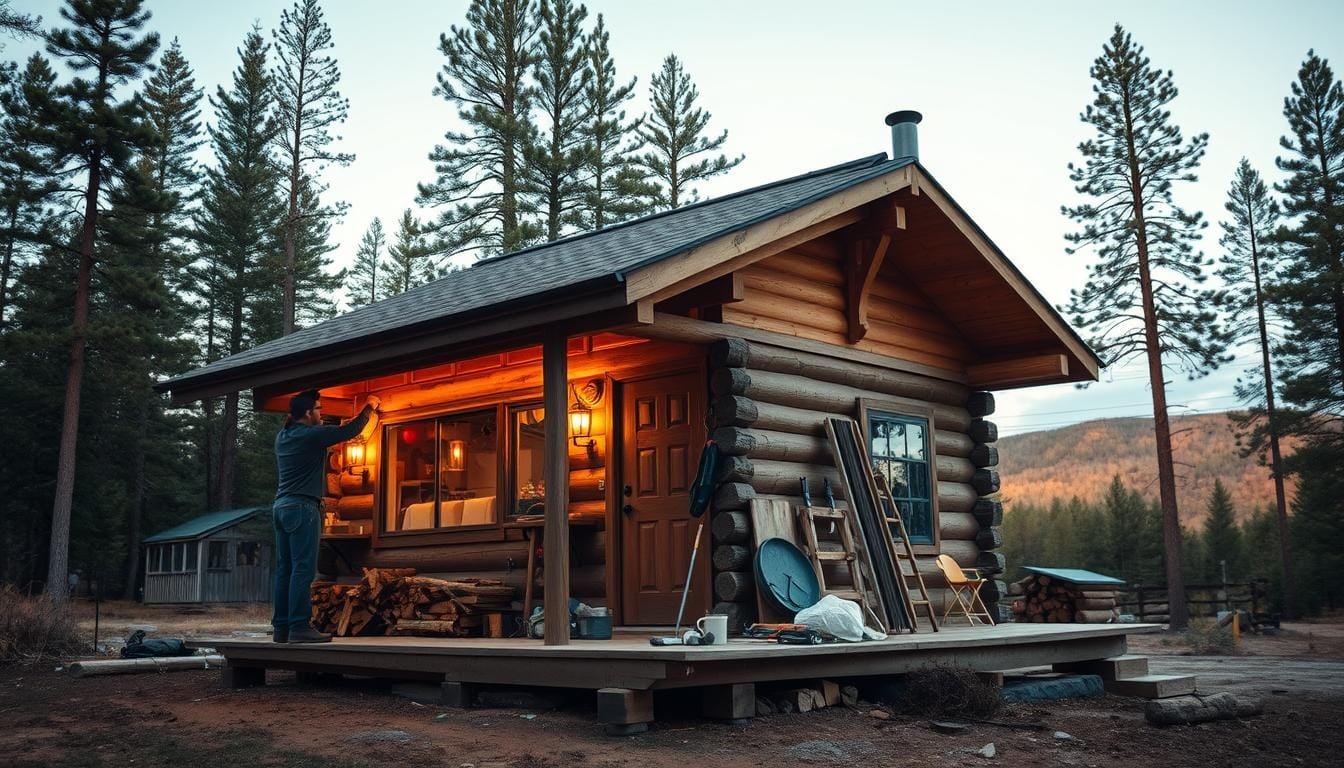

Building a self-sufficient home in a remote location is an empowering project. Success comes from smart planning and wise decisions from the very start. This lifestyle demands you handle your own power, water, and security without traditional utility connections.
Keeping your retreat in top shape all year requires a unique mindset. You are in charge of every system, with no municipal backup. This guide covers the essentials, from solar power and water management to seasonal checks and budgeting.
Proper care prevents expensive breakdowns and keeps your home a safe, comfortable haven. It’s especially important for preventing damage from extreme weather. The right knowledge protects your investment for many years.
While this way of living needs commitment, the rewards are great. You gain peace of mind, a lower environmental impact, and true independence. Our practical advice helps both newcomers and seasoned owners improve their system’s reliability immediately.
Understanding Off-Grid Cabin Living
The decision to live independently from municipal grids is a commitment to personal resourcefulness. This way of life means you handle everything, from electricity to water, on your own terms.
The Allure of Self-Sufficiency
Many are drawn to this lifestyle for powerful reasons. The appeal includes freedom from monthly bills and a smaller environmental footprint.
You gain a deep connection with nature and unparalleled privacy. The satisfaction of providing for your own basic needs is a major reward.
Challenges and Rewards
It’s important to balance the dream with reality. This life requires significant practical knowledge and a willingness to solve problems.
You must dedicate time to manage various systems. Yet, the payoff is true energy independence and a profound sense of accomplishment.
Successful living here uses modern technology for comfort, not primitive hardship. A supportive community exists to share valuable knowledge, making the journey easier.
Key Components of Your Off-Grid System
A reliable remote home rests on three core systems that function independently. These are the pillars that support your daily life without outside help.
You’ll need a plan for Energy, Water, and Waste Management. Getting these right from the start is the key to comfort and independence.
Energy, Water, and Waste Management
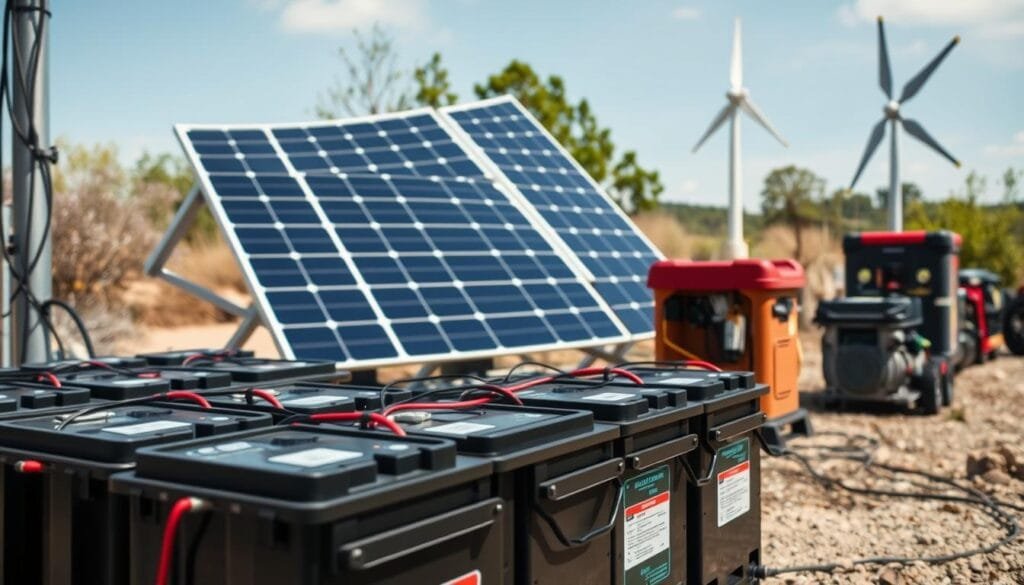
Your energy setup often mixes solar panels with a battery bank for electricity. This provides clean power for lights and devices.
Many people also use propane for cooking and backup heat. This dual approach means you’re not relying on just one source of power.
| Energy Source | Primary Use | Key Component |
|---|---|---|
| Solar | Electricity | Battery Bank |
| Propane | Cooking & Heating | Tanks |
Water systems involve sourcing, storage, and cleaning. You might get water from a well, a spring, or by collecting rain.
Large tanks hold your supply. Filters and pumps make it safe and easy to use, just like in a city home.
For waste, composting toilets are a popular choice. They don’t need a complex septic system. Traditional septic tanks are another option if you prefer standard plumbing.
Infrastructure Essentials for Remote Living
It’s smart to focus on water and basic energy first. Comfort items can come later. Think of it this way: you need water before you need a fancy appliance.
Remember, these systems are connected. Your solar energy must power the water pump. How much water you use affects your waste setup.
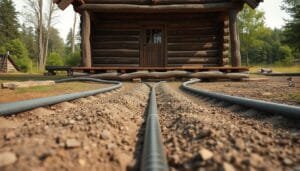
Other infrastructure is vital too. A good access road is crucial for deliveries. Proper drainage protects your home’s foundation from water damage.
Understanding how each part works alone and together is essential. This knowledge helps you fix problems quickly and keep everything running smoothly all year.
Essential Off-Grid Cabin Maintenance Tips
The key to uninterrupted self-sufficient living lies in establishing consistent care routines. A proactive approach prevents minor issues from becoming major headaches when you’re miles from help.
Routine System Inspections
Create a simple schedule that fits your lifestyle. Daily checks take just minutes but catch problems early. Monitor your battery levels and water supply each day.
Weekly tasks include testing backup power and cleaning filters. Monthly inspections let you spot wear before it causes breakdowns. This regular attention saves time and money on emergency repairs.
Seasonal Adjustments and Checks
Each season brings different demands on your systems. Spring is perfect for cleaning solar panels and tuning up generators. Adjust panel angles as the sun’s position changes.
Winter preparation is crucial for preventing frozen pipes and ensuring heating systems work properly. Seasonal adjustments keep everything running smoothly year-round.
Keeping detailed logs helps you track patterns and plan for future needs. This organized approach makes remote living more reliable and enjoyable.
Optimizing Solar Panel Performance
Your photovoltaic system’s performance directly determines your daily power availability. Keeping your energy source at peak condition ensures reliable electricity throughout the seasons.
Cleaning Techniques and Best Practices
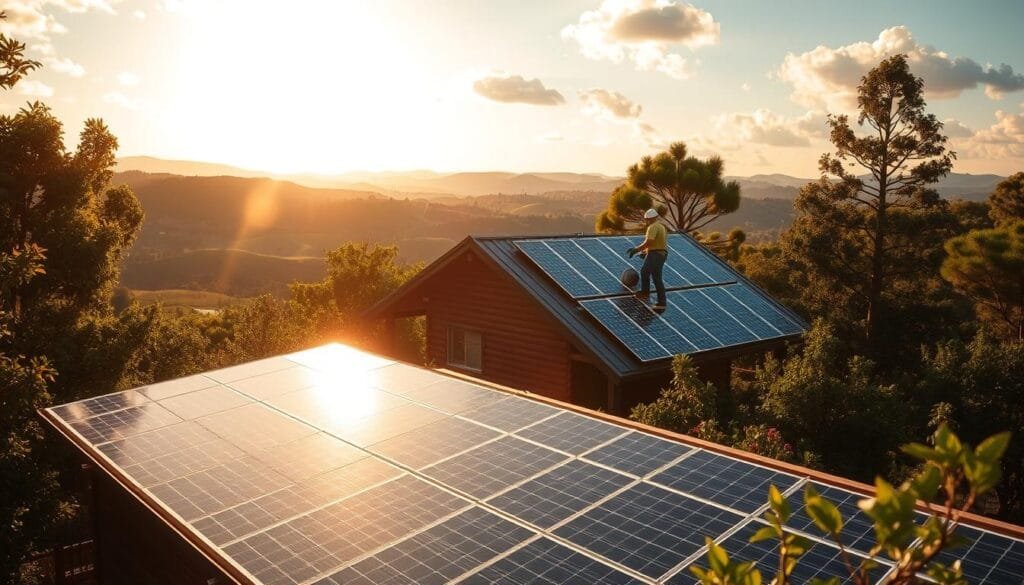
Dirt accumulation can reduce your system’s output significantly. Even thin layers of pollen or dust can cut efficiency by 20% or more.
Clean your panels with soft brushes and mild soap. Choose early morning or evening when surfaces are cool. This prevents thermal shock from cold water on hot glass.
Regular cleaning is essential for solar system maintenance. It maintains optimal energy production throughout the day.
Adjusting Panel Angles for Maximum Sunlight
Seasonal angle adjustments capture more sunlight as the sun’s position changes. This simple technique boosts your annual energy harvest.
Ground or pole-mounted systems offer the best flexibility. You can optimize their tilt every few months for maximum solar capture.
| Season | Optimal Tilt Angle | Sun Position |
|---|---|---|
| Spring & Fall | Your Latitude | Medium Height |
| Summer | Latitude – 15° | High in Sky |
| Winter | Latitude + 15° | Low on Horizon |
Monitor your charge controller daily. This helps establish performance baselines. You’ll quickly notice when cleaning or adjustments are needed.
Proper care extends your system’s lifespan beyond 25 years. It maximizes your return on this crucial energy investment.
Maintaining a Reliable Power Supply
A consistent electricity flow is the heartbeat of a comfortable remote home. Smart planning combines solar energy with storage and backup options. This approach ensures lights stay on during night use and cloudy weather.
Generator Tune-Up and Maintenance
Your backup generator needs regular attention to stay ready. Follow a simple schedule for best performance.
Change the oil every 50-60 hours of operation. Replace the air filter after about 100 hours. This prevents dust from damaging the engine.
Keep a detailed log to track service intervals. Test your unit monthly under load. This ensures it works when you need it most.
Propane units offer long fuel shelf life and reliable cold-weather starting. Maintain fuel lines and connections regularly.
Exploring Solar Battery and Backup Options
Your battery bank stores solar energy for night use. Modern options like the EcoFlow DELTA 2 Max provide expandable storage up to 6kWh.
Lithium batteries offer maintenance-free operation and longer lifespan. They outperform traditional lead-acid models.
Proper management extends battery life significantly. Avoid deep discharges and maintain stable temperatures. Quality charge controllers prevent overcharging damage.
This system makes your solar panels useful 24 hours per day. It provides clean energy when the sun isn’t shining.
Enhancing Insulation and Heating Strategies
Effective temperature control transforms your seasonal getaway into a year-round sanctuary. Quality insulation serves as your primary defense against extreme weather. It prevents heat loss more economically than oversized heating systems.
High-Performance Insulation Options
Aim for R-20 in walls and R-30+ in ceilings for optimal thermal performance. Spray foam provides excellent air sealing while insulating. Rigid foam boards work well for exterior applications.
Mineral wool offers fire resistance alongside thermal protection. Proper installation ensures long-term efficiency. Air sealing prevents significant energy loss through cracks.
Winter-Proofing Your Cabin
Propane heaters deliver reliable, controllable warmth during cold months. Wood stoves provide renewable heating with charming ambiance. Radiant floor systems offer comfortable heat using minimal energy.
Protect water pipes from freezing with adequate insulation. Thermal curtains improve window efficiency. These strategies reduce heating demands and lower ongoing costs.
Smart insulation investments pay dividends through every season. They make your retreat comfortable regardless of outdoor conditions.
Managing Water Systems Effectively
Clean, reliable water access determines your quality of life more than any other system. Humans can adapt to limited power but cannot survive without this essential resource. Proper planning ensures drinking, cooking, and sanitation needs are always met.
Ensuring Reliable Water Sources
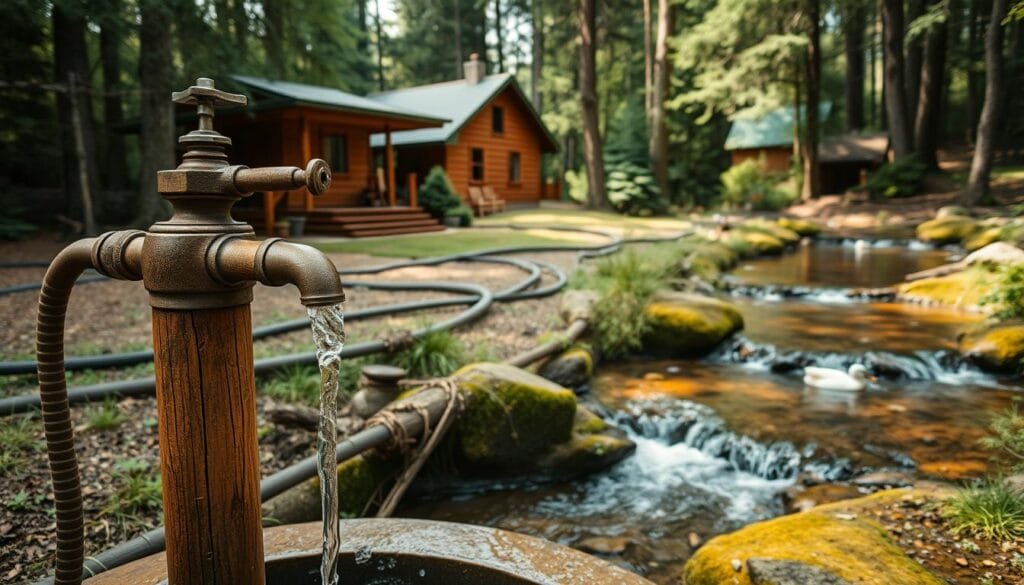
Drilled wells provide consistent year-round supply with minimal filtration. Spring developments capture natural water flow from underground sources. Surface water from streams requires extensive treatment before use.
Rainwater catchment systems can supplement or provide complete water needs. Assess your location carefully before building your retreat. Each source has unique advantages and requirements.
Tips for Quality and Storage
Food-grade storage containers maintain at least a one-week reserve supply. Larger capacity provides security against seasonal variations. Multi-stage filtration removes sediment and contaminants effectively.
UV sterilization eliminates harmful bacteria from your water supply. Regular testing ensures quality remains high for daily consumption. Pressure systems using DC pumps provide comfortable flow throughout your home.
Freeze protection becomes critical during cold months. Proper insulation and winterizing your water system prevent costly damage. Simple conservation habits make limited supplies last longer each day.
Upkeeping Waste Management Systems
Handling human waste responsibly is a critical aspect of self-sufficient living that many newcomers overlook. Your choice here impacts both daily comfort and environmental health.
Options range from traditional setups to innovative waterless solutions. Each approach serves the same essential purpose with different requirements.
Composting Toilets and Septic Solutions
Composting toilets offer a sustainable alternative to conventional plumbing. They separate solid and liquid waste for natural decomposition.
This process converts material into safe compost over time. It eliminates water use and avoids expensive septic tank installations.
Traditional septic systems work well for those preferring flush toilets. The tank holds waste where solids break down naturally.
Liquid then filters through a drain field. Both options have distinct advantages for remote living situations.
Regular Maintenance Schedules
Proper maintenance ensures your waste system functions reliably. Composting toilets need carbon material added after each use.
Empty liquid containers regularly and manage composted material periodically. Good ventilation controls odors effectively.
Septic systems require professional pumping every few years. Avoid harsh chemicals that disrupt natural bacterial processes.
Regular care protects groundwater and prevents expensive emergencies. It keeps your retreat sanitary for extended time periods.
Proper Land and Site Preparation
Your land’s characteristics will influence every aspect of your build. Making smart choices now prevents expensive corrections later. This careful approach saves both time and money.
Evaluating Location and Terrain
Your property selection affects everything from energy production to daily comfort. Choose a location with excellent sun exposure for your solar panels. Ensure reliable water access and stable soil conditions.
Consider how you’ll reach your rural area property during all seasons. Proper drainage patterns prevent foundation issues. These factors directly impact construction difficulty and long-term livability.
| Evaluation Factor | Importance Level | Key Considerations | Cost Impact |
|---|---|---|---|
| Sun Exposure | Critical | Year-round solar access without shading | High – affects energy system efficiency |
| Water Source | Essential | Well, stream, or rainwater catchment viability | Medium – determines water system complexity |
| Soil Conditions | High | Stability for foundation and septic systems | Medium – affects excavation requirements |
| Accessibility | High | All-season road access for materials | High – impacts delivery and equipment costs |
| Drainage Patterns | Medium | Natural water flow away from building site | Low – prevents future water damage repairs |
Clearing and Leveling the Build Site
Begin with selective tree removal to open your building area. Balance clearing space for your cabin with preserving natural windbreaks. This maintains the beautiful character of your rural area setting.
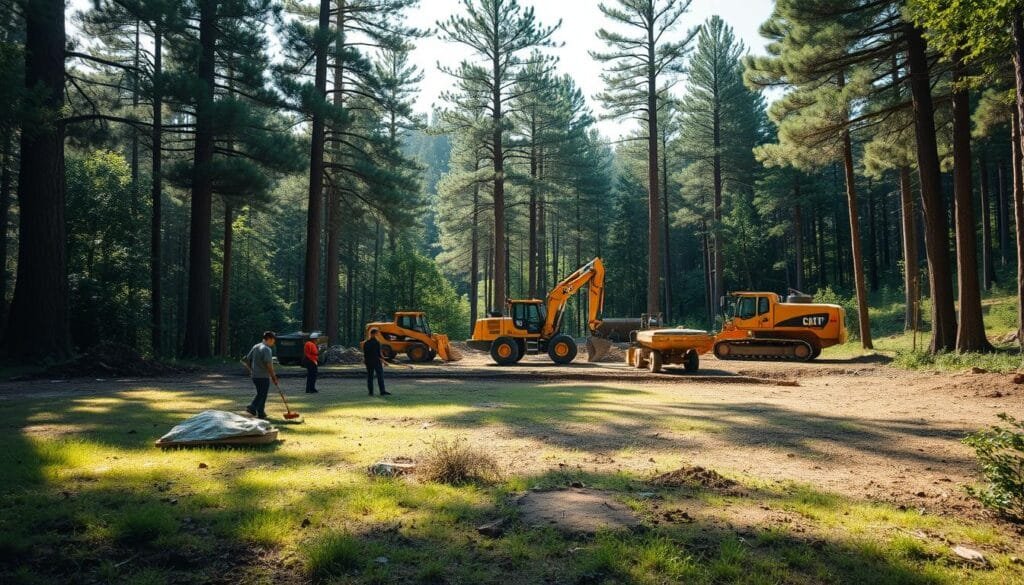
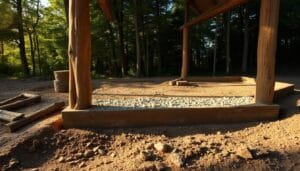
Excavation creates a stable platform for construction. Proper grading ensures water drains away from structures. These steps provide a solid foundation for your future cabin.
Investing in thorough site preparation prevents countless problems. It establishes reliable infrastructure for years of comfortable living. This upfront work pays dividends throughout your property’s lifetime.
Balancing DIY with Professional Help
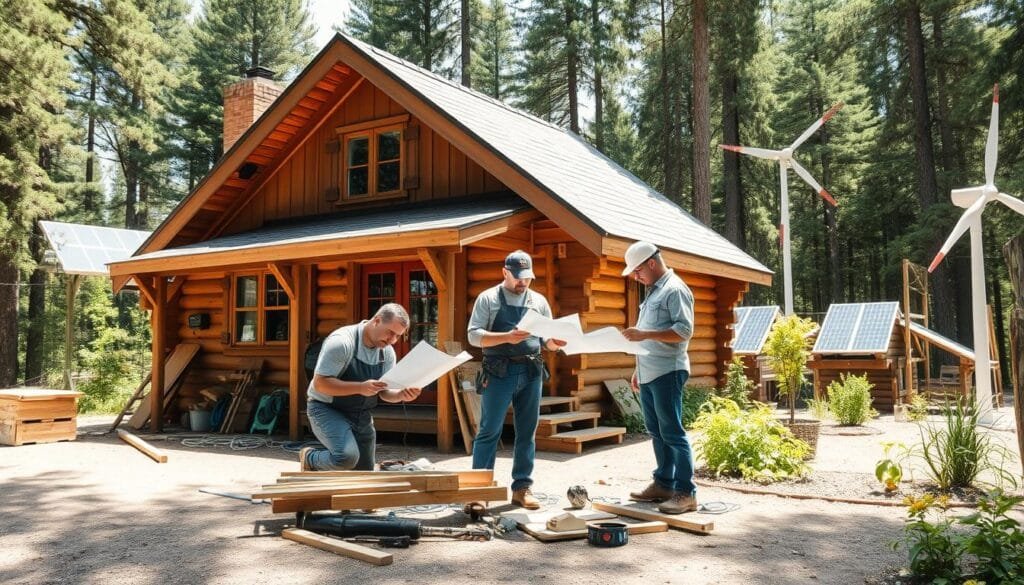
Smart builders understand that some tasks demand expert hands while others are perfect for DIY enthusiasts. Getting this balance right protects your investment and prevents safety issues.
When to Tackle Projects Yourself
Many homeowners want to save money by doing work themselves. This approach works well for interior finishing, painting, and basic carpentry.
Simple plumbing connections and landscaping are also DIY-friendly. Pre-engineered solar kits with clear instructions let you save money safely. These tasks have minimal risk if mistakes occur.
Identifying Tasks for the Experts
Some projects require professional knowledge to avoid serious problems. Electrical system design needs licensed expertise for safety and code compliance.
Foundation work and septic installation have legal requirements. Structural engineering prevents costly repairs from building failures. Hiring experts for complex tasks actually save money long-term by preventing expensive repairs.
Assess your skills honestly before taking on major projects. The goal is a safe, functional retreat that serves your needs for years.
Implementing Security Measures
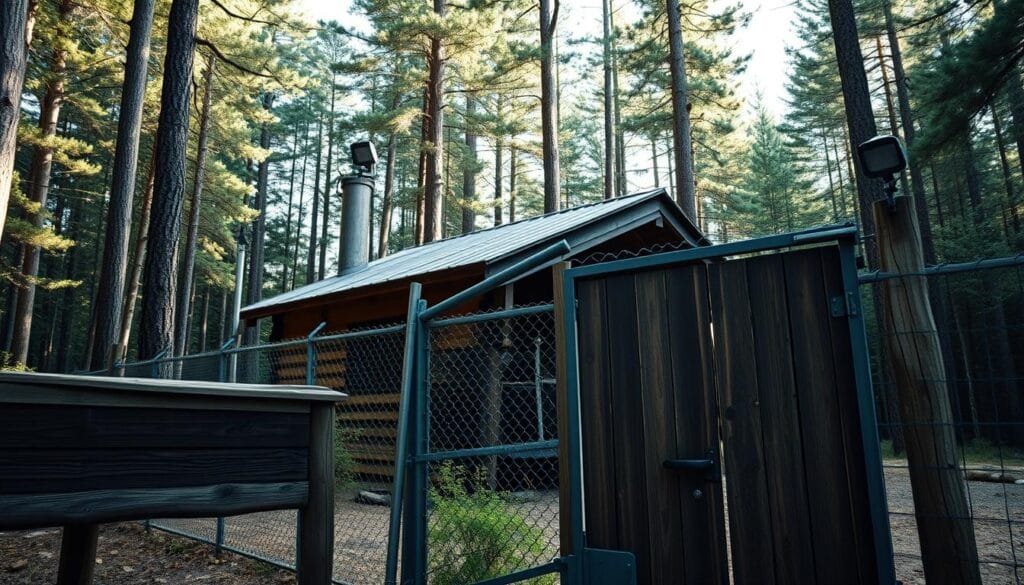
Feeling truly secure in your remote retreat involves more than just strong locks and sturdy doors. Good protection addresses property safety, personal well-being, and wildlife concerns. It gives you true peace mind whether you’re home or away.
Solar-Powered Surveillance Options
Modern cameras run on independent solar power with built-in battery storage. They provide 24-hour monitoring without draining your main system.
Look for models with motion detection and night vision. Cellular connections allow remote viewing from anywhere. This technology offers reliable oversight day and night.
Building a Safe Perimeter Around Your Cabin
Motion-activated LED lights create a protective barrier. They deter intruders and curious animals while saving battery power.
Reinforce doors with deadbolts and secure window openings. Don’t forget propane tank safety—anchor them properly and install gas detectors.
| Security Feature | Primary Benefit | Power Source | Installation Level |
|---|---|---|---|
| Solar Cameras | 24/7 Monitoring | Solar + Battery | Moderate |
| Motion Lights | Deterrence & Safety | Solar Power | Easy |
| Reinforced Doors | Physical Barrier | None Required | Advanced |
| Propane Safeguards | Fire Prevention | Propane System | Essential |
These layers of protection work together seamlessly. They create a secure environment that enhances your enjoyment of rural living.
Seasonal Upkeep for Year-Round Efficiency
Each quarter of the year presents unique opportunities to optimize your independent living systems. Following nature’s calendar helps you stay ahead of changing conditions.
This approach prevents surprises and keeps everything running smoothly. It transforms routine work into strategic improvements.
Spring Cleaning and Solar Adjustments
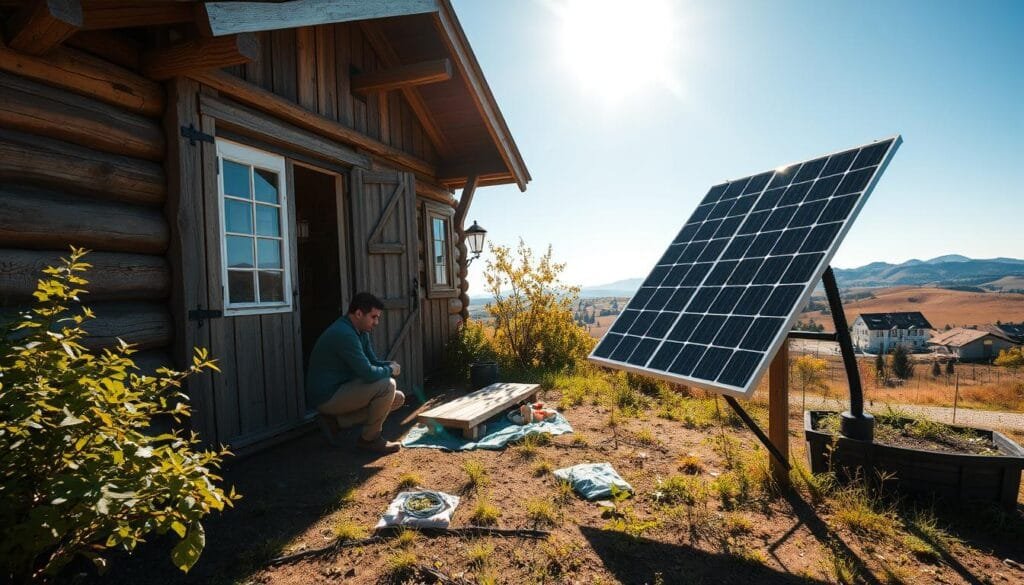
Spring brings longer days and perfect conditions for system refresh. Start by cleaning your solar panels from winter buildup.
Adjust their angles to capture the higher sun position. This simple change boosts energy production throughout the day.
Test all systems after the heavy heating season. Check for any winter damage that needs attention.
Preparing Your Cabin for Winter Challenges
Fall is the ideal time to get ready for cold months. Service your heating system before you need it most.
Stock up on fuel and complete outdoor projects. Protect exposed pipes from freezing temperatures.
Adjust solar panels to capture low-angle winter sun. This ensures power during shorter day light hours.
Proper preparation makes every year more comfortable. Your cabin will handle winter challenges with ease.
Navigating Zoning Laws and Permitting
Before you even purchase land for your retreat, understanding local zoning regulations becomes your most critical first step. These legal requirements vary dramatically between different jurisdictions.
Some rural area locations actively support self-sufficient development. Others impose restrictions that can make building difficult or impossible.
Understanding Local Regulations
Start your research by contacting county planning departments. Review zoning ordinances and understand minimum building size requirements.
Verify that alternative utilities like composting toilets and solar power are legally permitted. Cabins often face unique regulatory challenges that traditional homes don’t encounter.
Staying Compliant with Off-Grid Build Codes
The permit process typically requires submitting detailed plans and demonstrating code compliance. You’ll need to pass inspections at various construction stages.
Inspectors may be unfamiliar with non-traditional approaches. This makes clear documentation essential for smooth approvals.
| Common Challenge | Potential Impact | Solution Approach |
|---|---|---|
| Minimum Dwelling Size | Forces larger building than desired | Research jurisdictions with flexible rules |
| Mandatory Grid Connection | Defeats self-sufficiency goals | Seek areas with renewable energy support |
| Septic System Requirements | Prohibits composting alternatives | Verify local acceptance before purchase |
Working with local professionals familiar with these regulations saves time and prevents costly mistakes. Proper compliance protects your investment and ensures long-term enjoyment of your property.
Long-Term Budgeting and Cost Management
Smart financial planning makes the difference between a sustainable retreat and a financial burden. Many builders focus only on construction costs, forgetting essential systems. These ongoing expenses require careful management over many years.

Your initial budget should include a 50% buffer for surprises. Material prices often increase, and hidden site conditions appear. This contingency fund prevents financial stress during construction.
Allocating Funds for Unexpected Repairs
Create separate accounts for predictable and emergency repairs. Regular upkeep includes generator servicing and roof work. These predictable costs help you plan your money effectively.
Emergency funds cover sudden system failures like damaged equipment. A cracked water tank or failed pump needs immediate attention. Having reserves prevents small problems from becoming crises.
Investing in Energy Efficiency Upgrades
Quality insulation and efficient appliances reduce long-term costs. They lower heating expenses and decrease power demands. This smart investment pays for itself within a few years.
Track all expenses to understand your true ownership costs. This helps identify where your money goes each year. You can then make informed decisions about future upgrades.
While you eliminate utility bills, you fund your own systems. Disciplined budgeting ensures reliable operation for decades. This approach protects your property investment and maintains comfort.
Staying Updated with Off-Grid Innovations
Keeping pace with technological advancements ensures your energy system remains efficient and cost-effective over time. The renewable technology field moves quickly, offering exciting opportunities to upgrade your setup.
Emerging Technologies in Renewable Energy
Modern solar panels deliver significantly more power from the same space. This improved efficiency makes smaller arrays practical for meeting your energy needs.
Lithium iron phosphate battery technology represents a major leap forward. These units offer maintenance-free operation and decade-long lifespans. They provide safer chemistry than traditional options.
Integrated power stations combine multiple components into single units. The EcoFlow DELTA 2 Max exemplifies this approach with expandable capacity. It simplifies installation while growing with your requirements.
Smart management systems monitor production and consumption automatically. They optimize battery charging and provide remote control via apps. This gives you unprecedented oversight of your power.
Propane innovations include high-efficiency appliances and improved tank designs. Emerging fuel cell technology may offer better backup generation options.
The best way to approach upgrades focuses on components with clear benefits. Prioritize reliability over cutting-edge features for critical systems. Connect with communities to learn from real-world experiences.
Your Future Off-Grid Journey Awaits
Armed with essential knowledge, you’re now prepared to create or improve your self-sufficient retreat. You have what you need to approach this lifestyle with confidence.
Remember that successful independent living isn’t about perfection. It’s about consistent care and learning over time. Your home will evolve as you gain experience through each season.
The best way forward is to start where you are today. Whether planning a new build or optimizing your current cabin, every step counts. Connect with the supportive community when you need advice.
Embrace both the peaceful day light hours and quiet night skies. This journey offers deep satisfaction for many years to come. Your future in independent living starts now.