
Dreaming of a peaceful retreat? Choosing the right energy setup is a big part of your plan. Your decision will shape your daily life, your budget, and your overall experience.
Cabin owners have unique needs. Whether it’s a weekend escape or a full-time home, your location and lifestyle demand a tailored solution.
The core difference is simple. One system provides complete energy independence. The other stays connected to the utility grid for backup and supplemental power.
There is no single right answer for everyone. The best choice depends on your location, budget, and how much energy you use. Your personal values about self-sufficiency also play a key role.
This guide will help you understand how each option works. We’ll cover the pros, cons, and costs. You’ll learn the practical factors to make a confident decision for your property.
By the end, you’ll have the knowledge to pick the perfect setup. Both paths lead to cleaner power and a smaller environmental footprint. For a deeper dive, explore our guide on understanding these energy systems.
Introduction to Cabin Energy Solutions
Modern cabin living brings a unique set of energy requirements that demand a smart, tailored approach. Solar power has become a leading choice for property owners seeking cleaner, more self-sufficient electricity.
An Overview of Solar Options for Cabins
The foundation of any solar setup is the panel. These devices capture sunlight and convert it into direct current (DC) electricity. An inverter then changes this DC power into the alternating current (AC) that runs standard home appliances.
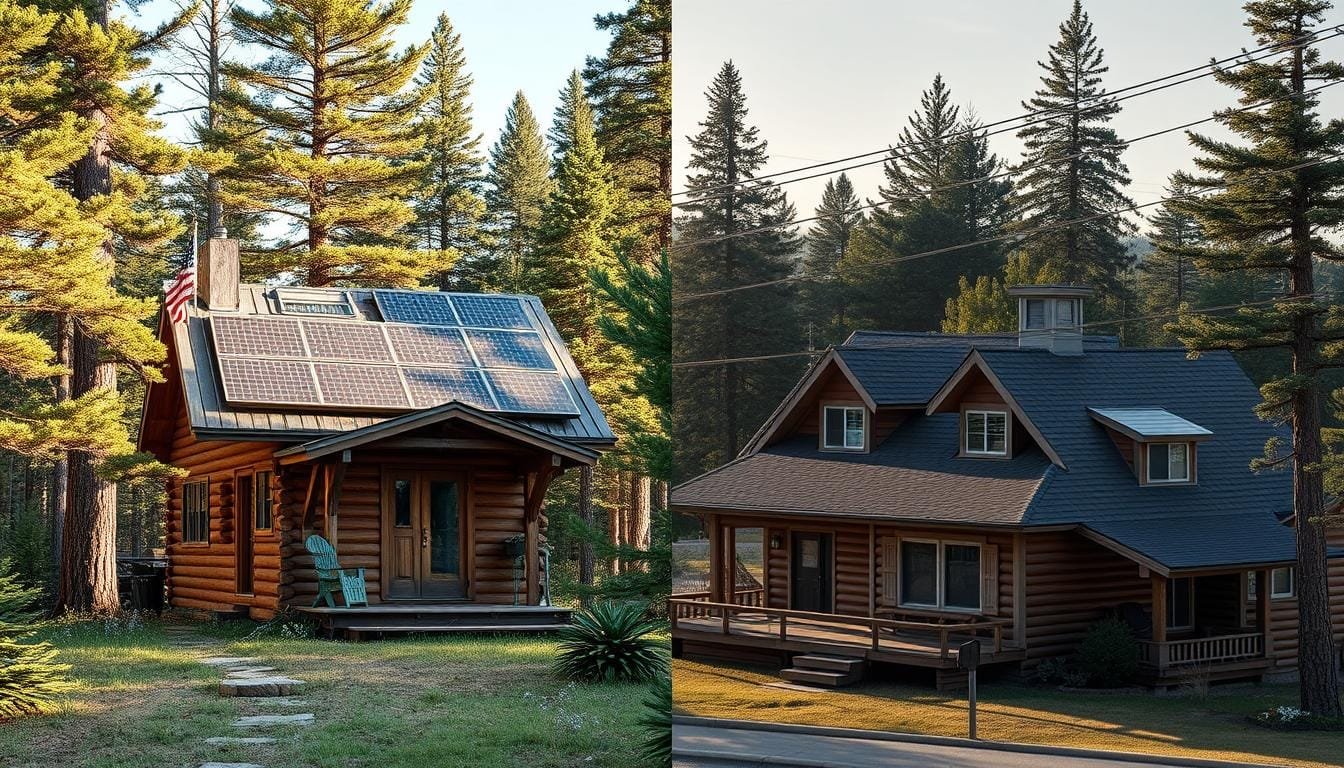
For your property, you’ll primarily consider two configurations. One type remains connected to the public utility grid. The other operates with complete independence, using battery banks for storage. Understanding this core difference is essential.
Why Energy Choice Matters for Your Cabin Lifestyle
Your retreat’s usage patterns are likely different from a primary residence. It might be a seasonal getaway or a year-round home. Location also plays a huge role; some areas have easy grid access, while others are remote.
Your final choice impacts your budget, daily comfort, and long-term satisfaction. Selecting the right power systems upfront prevents future issues with insufficient energy or unexpected costs. Both paths offer distinct advantages, and the best fit depends entirely on your specific needs.
Off-Grid Cabins: Embracing Energy Independence
For those seeking true autonomy in their energy supply, completely independent power systems offer a compelling solution. These setups provide total control over your electricity generation and consumption.
How Independent Solar Systems Work
These standalone configurations operate through a straightforward process. Solar panels capture sunlight and convert it into usable electricity.
The energy flows through a charge controller that protects the battery bank. Then an inverter converts the stored power for household appliances.
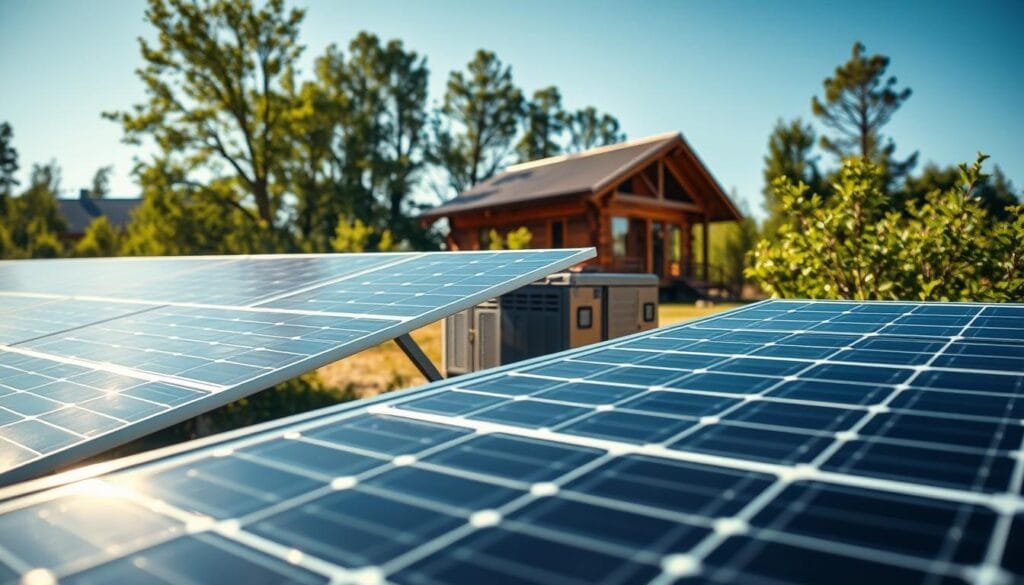
Benefits of Battery Storage and Self-Sufficiency
Battery storage provides reliable electricity day and night. You gain complete energy independence from utility companies.
These systems continue functioning during widespread power outages. You eliminate monthly electricity bills while using clean energy.
Considerations for Remote Locations
Remote properties often benefit most from these independent setups. The initial investment focuses heavily on battery capacity.
Proper planning ensures adequate storage for cloudy periods. Modern lithium-iron-phosphate batteries offer superior longevity with minimal maintenance.
| Component | Function | Key Consideration |
|---|---|---|
| Solar Panels | Capture sunlight energy | Sized for energy needs |
| Charge Controller | Regulates battery charging | Prevents overcharging damage |
| Battery Bank | Stores energy for use | Lithium-ion preferred |
| Inverter | Converts DC to AC power | Matches appliance requirements |
On-Grid Cabins: Reliability Through Connection
When consistent power access is your top priority, grid-connected solar systems provide an excellent solution. These setups maintain a link to the public utility network while harnessing solar energy.
Understanding Grid-Tied Solar Systems
Grid-tied systems work by generating electricity during daylight hours. Your solar panels capture sunlight and convert it to power for immediate use.
An inverter changes this energy to the type needed for household appliances. The system seamlessly connects to your main electrical panel. This creates a balanced approach to energy management.
Key components include panels, a grid-tie inverter, and a bidirectional meter. The utility grid acts as a massive battery backup. This eliminates the need for expensive battery banks.
Utilizing Net Metering and Grid Backups
Net metering programs offer significant financial benefits. When your panels produce excess energy, it flows back to the grid.
Your meter runs backward, earning credits with your utility company. These credits offset power drawn during nighttime or cloudy periods.
The grid provides reliable backup during high consumption times. You maintain electricity supply regardless of solar production. This safety feature protects utility workers during outages.
For properties with reliable grid access, these systems offer cost-effective operation with minimal maintenance requirements.
off-grid vs on-grid cabin: Key Comparison Factors
The practical realities of daily energy management differ significantly between connected and independent systems. Understanding these distinctions helps you anticipate how each option will impact your lifestyle and budget.
Energy Production and Consumption Dynamics
Connected systems offer unlimited electricity access through the utility network. You can use as much power as needed without worrying about storage limitations.
Independent setups require careful energy management to match consumption with production. Battery capacity determines how long you can operate during cloudy periods or at night.
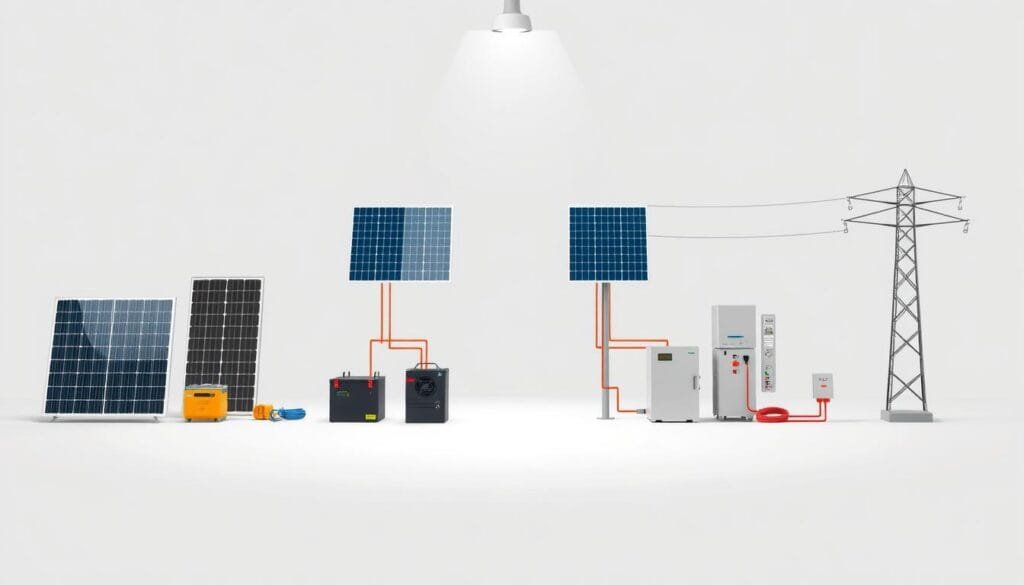
Excess energy handling represents another key difference. Grid-tied installations can send surplus electricity back for credits. Standalone systems store extra power in batteries until they reach capacity.
During utility failures, independent systems continue providing electricity uninterrupted. Connected installations typically shut down for safety reasons unless equipped with backup batteries.
Investment, Maintenance, and Long-Term Costs
Initial investment varies considerably between these approaches. Independent solar systems require larger upfront spending primarily due to battery storage needs.
Connected installations have lower startup costs since they don’t need extensive battery banks. Both options benefit from reduced electricity bills, though independent systems can eliminate them entirely.
Maintenance requirements are generally minimal for modern solar equipment. Panels typically last over 25 years with little attention needed. Battery technology has improved significantly, offering longer lifespans with less maintenance.
The better financial choice depends on your location, local electricity rates, and how much you value energy independence. Each path offers distinct advantages for different situations.
Selecting the Ideal Solar System for Your Cabin
Before committing to any energy setup, it’s crucial to evaluate your specific situation from multiple angles. The perfect choice depends on your unique circumstances and priorities.
Factors to Consider: Location, Budget, and Energy Needs
Your property’s location often dictates the most practical option. If you’re close to utility lines, grid-tied systems offer convenience and cost savings. Remote properties may find independent power solutions more economical than extending grid access.
Budget considerations play a major role in your decision. Connected systems require less upfront investment while still reducing electricity bills. Independent setups have higher initial costs but eliminate monthly payments entirely.
Your energy consumption patterns determine system sizing. High-usage properties benefit from unlimited grid supply during low production periods. Efficient homes can thrive with properly sized battery storage.
There’s no universal right answer for every situation. Your ideal system emerges from honestly assessing these three factors. For detailed guidance, explore our comprehensive energy system comparison.
Final Reflections on Your Cabin Energy Journey
Your journey toward a solar-powered retreat is a personal path shaped by your unique priorities. The best choice balances your location, budget, and desire for energy independence.
Completely independent systems provide freedom from the utility grid and immunity from outages, a key advantage for remote properties. Grid-connected setups offer a cost-effective entry into solar power with reliable access. For a detailed comparison of solar systems, more information is available.
Both paths harness the sun‘s clean energy, reducing your carbon footprint. This makes either option a win for the environment.
Take your next steps confidently. Get quotes tailored to your needs and review financing. This investment pays off for years with reliable electricity and potential savings. Energy independence can also be crucial for protecting your property from severe weather.
Whichever system you select, you are joining a community powering their homes sustainably, day and night.