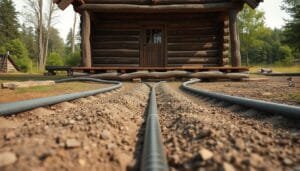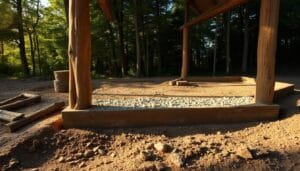

When I plan my camping trips, I always think about staying clean and safe. It’s important to know where to go when nature calls. That’s why I’m sharing how to make a simple camping toilet.
Many new campers worry about not having a bathroom. But with the right skills, you can stay clean and safe outdoors. This article will teach you how to make a safe toilet, what materials you need, and how to keep clean and safe.

Whether you’re experienced or new to camping, a good toilet is key. This guide will help you make a simple toilet. It will keep you healthy and protect the environment, all while following outdoor rules.
Why Outdoor Sanitation Matters
When I go outside, I see that outdoor sanitation is key. It’s not just about staying clean. It also helps keep the environment safe and stops diseases from spreading. We must follow the rules for outdoor sanitation.
Poor sanitation and hygiene cause over 800,000 deaths from diarrhea each year. This shows how vital good outdoor sanitation is. In rural areas, where basic sanitation is scarce, it’s even more critical.
Most people who don’t use toilets live in rural areas. This is a big problem for health and environmental safety.
Important things for outdoor sanitation include:
- Following local rules for waste and toilet building
- Choosing eco-friendly toilets like composting or portable ones
- Keeping clean, washing hands, and disposing waste properly
By focusing on outdoor sanitation and using best practices, we protect the environment. We also stop diseases and make camping safer. Next, we’ll look at tools and materials for a survival toilet. We’ll see how health and environmental care are key in our outdoor fun.
Tools and Materials You’ll Need
For a camping survival toilet, the right tools and materials are key. A good outdoor toilet toolkit keeps you clean and comfy. Make sure to have a shovel, toilet paper, and biodegradable bags.
Also, get a portable camping gear set with a toilet seat and waste container. Experts say you need an empty 5-gallon bucket, 10 or 13-gallon garbage bags, and something like sawdust or pine chips for absorption.
Your Outdoor Toilet Toolkit
A great outdoor toilet toolkit should have:
- A shovel for digging a hole
- Toilet paper and hand sanitizer
- Biodegradable bags for waste disposal
- A portable toilet seat and container
Go Biodegradable
Choosing biodegradable camping gear cuts down waste and protects nature. Look for biodegradable bags, toilet paper, and other essentials. These choices help keep nature beautiful for others to enjoy.
Choosing the Best Spot for Your Camp Toilet
When setting up a camp toilet, safety and privacy are key. You need a spot that’s easy to reach but also safe and private. Experts say to place your toilet at least 50 meters from paths and water to keep things private and clean.
To stay safe, think about the land and any dangers like animals or steep areas. Also, keep your toilet far from caves, shelters, and old buildings. For women, using a SheWee product or a pee cloth is a good choice for outdoor bathroom needs.
Here are some tips for picking the best spot for your camp toilet:
- Position your camp toilet at least 50 meters away from the path and any water sources.
- Consider the terrain and any dangers like animals or steep slopes.
- Keep your camp toilet away from caves, shelters, and old buildings.

By following these tips, you can have a safe and private camp toilet experience. Always put safety and privacy first when setting up your toilet. And don’t forget to look into eco-friendly options like biodegradable toilet paper and pee cloths.
Measure, Mark, and Dig
Creating a safe outdoor toilet starts with measuring, marking, and digging a hole. This step is key in a digging guide. It ensures safety and follows camping tips.
Size Matters
The hole’s size is vital for safety and proper waste breakdown. Leave No Trace suggests a hole six to eight inches deep and four to six inches wide. It should also be 200 feet away from any water.
Step-by-Step Digging Guide
Here’s how to dig a hole:
- Find a spot with good soil, avoiding rocky or grassy areas.
- Mark the hole’s center with a stick or rock.
- Start digging with a shovel or trowel, aiming for the right depth.
Safety First
Always prioritize safety when digging. Wear gloves and wash your hands with biodegradable soap or hand sanitizer after use. These camping tips and digging guide help make a safe outdoor toilet.
DIY Toilet Seat and Shelter
Cleanliness is very important when making a DIY toilet seat and shelter. A good shelter keeps your toilet seat clean and free from dirt. You can use a plastic lawn chair, a box from scrap lumber, or a pre-made toilet seat. I find pre-made seats easier to install and keep up.
A shelter is also key for keeping things clean and private. Use branches 4 to 6 inches thick for your shelter’s frame. Building a makeshift outdoor toilet can cost as little as $50, which is great for campers.

Keep It Clean
To keep your DIY toilet and shelter clean, use biodegradable stuff and cut down on waste. Coffee grounds, cat litter, and sawdust are good for this. They help cut down on smells and make cleaning simpler. A Cleanwaste bag kit can also help keep things sanitary and leak-free.
Fight the Funk
It’s important to fight off bad smells with DIY toilets and shelters. Cedar or composite decking can help with this. Regular cleaning and upkeep will also keep things fresh and clean.
Bug Off!
Keeping bugs away is also key for a good DIY toilet experience. Use natural bug repellents or screens to keep them out. By following these tips, you can make a DIY toilet seat and shelter that’s clean, works well, and is comfy to use.
Handle Waste
Managing waste properly is key to prevent disease spread. This is very important when camping. Improper waste disposal can pollute water and harm nature. By following good camping tips, you can reduce your impact and stay healthy.
Good waste management is more than just throwing away trash. It means using eco-friendly bags and reducing waste. This helps keep the environment clean and keeps everyone healthy while camping.
Some important things to think about for waste management are:
- Using biodegradable bags to collect waste
- Minimizing waste by reducing packaging and avoiding single-use items
- Disposing of waste in a sanitary and environmentally responsible manner

By following these camping tips and focusing on sanitation, you can have a safe and healthy camping trip. Remember, proper waste management is key to good health and keeping nature beautiful.
Protect Nature While You Camp
As I go camping, I learn how vital environmental protection and wildlife conservation are. It’s key to stay far from wildlife and not throw trash. This helps the environment and the animals living there.
To lessen my impact, I follow some important camping tips. For instance, I bury waste 200 feet from trails and water. I use a hole that’s 4 inches wide and 6 inches deep. I also carry human waste in backcountry areas with sealable bags, like WAG Bags.
Guard the Water
Keeping water sources clean is a must. I stay 200 feet away from water when burying waste. This stops disease spread and keeps water safe for all.
Wildlife-Friendly Toileting
To be wildlife-friendly with toileting, I follow some easy rules. I don’t use toilet paper that takes long to break down. Instead, I use biodegradable options. I also take all waste, including toilet paper, out to protect the environment.
By sticking to these camping tips, I help protect the environment. This way, I can enjoy camping safely and respect the wildlife and nature.
What NOT to Do
When camping, making a survival toilet can go wrong. I’ve learned from my outdoor experiences. These mistakes can harm your health and the environment. Knowing these mistakes helps keep your camping trip safe and fun.
Rookie Mistakes
Here are some common errors to steer clear of:
- Not digging a deep enough hole, which can lead to unsanitary conditions and contamination of the surrounding environment.
- Not using biodegradable bags, which can take up to twelve months to biodegrade and pose a significant risk to outdoor sanitation.
- Not keeping the area clean, which can attract pests and create safety hazards.
By avoiding these camping mistakes, you can have a better camping trip. Always put safety and outdoor sanitation first when making a survival toilet.
Closing Up Your Campsite
Our outdoor adventure is ending, and it’s time to clean up our campsite. We must leave the area as we found it. This helps us respect the nature we’ve enjoyed.
Restore It Right
First, let’s fill in the campsite toilet hole we dug. By filling it back up and tamping the soil, we restore the area. Then, we’ll pick up all litter and waste for a clean exit.
We must also take down any toilet shelter and remove it. This keeps the area looking natural and prevents pollution.
Next, we’ll check the ground for any signs of us. We’ll smooth out any soil or plants we disturbed. Our goal is to make the campsite look like the surrounding nature.
By doing these steps, we can close up our campsite with care. It’s our duty to minimize our impact and keep nature beautiful for others to see.