
Your cabin is more than just a building; it’s a sanctuary. Protecting its structural integrity is essential for long-term safety and value. A key part of this protection involves managing moisture around your property’s base.
Moisture is the biggest enemy of a stable home foundation. When the ground around your cabin becomes saturated, it can lead to serious problems. This saturation creates pressure and movement that weakens the entire structure.
Ignoring proper drainage can have costly consequences. Issues like cracks, uneven settling, and soil erosion are common results. Over time, these problems can compromise your cabin’s safety and require extensive repairs.
The good news is that proactive care is both simple and affordable. Small maintenance tasks can save you from massive repair bills later. Investing a little effort now helps ensure your cabin remains a safe haven for years to come.
Establishing a Solid Drainage System
Your roof’s drainage system is your property’s primary shield against moisture issues. A well-maintained setup directs rainfall away from the base of your structure, protecting its stability.
Clean Gutters and Direct Downspouts Away from the Home
Clogged gutters are a major hazard. When filled with leaves, they overflow, sending cascades down your siding and pooling near the base. This is why routine cleaning is non-negotiable.
Your downspouts must channel water 5 to 10 feet away from the house. For optimal protection, aim for a full 10 feet. You can use extensions or flexible drain pipes to achieve this crucial distance.
This simple maintenance, which can cost $50-$250 professionally or be a DIY project, is a small price to pay for ensuring good foundation health.
Maintain Proper Yard Grading and Soil Moisture
The slope of your yard is equally important. The ground should slope downward at least 6 inches over the first 10 feet moving away from your home. This grade effectively keeps moisture from settling near the base.
Balance is key for the soil around your property. Soil that is too dry can shrink, while overly saturated soil expands. Both extremes create pressure. Maintaining consistent moisture helps keep water away from vulnerable areas.
Utilize Flexible Drainage Solutions for Hard-to-Reach Areas
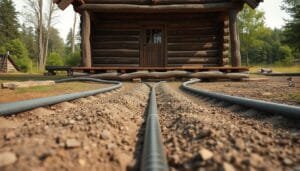
Not every area has ideal grading. For spots where water collects, flexible drainage solutions are excellent. Products like flex-drain pipes attach to downspouts, routing water to a safer discharge point.
These tools help you manage runoff in tricky landscapes, completing your comprehensive drainage around the foundation strategy. A proactive approach saves you from future headaches.
How to Prevent Water Damage to Foundation with Proactive Home Maintenance
While exterior systems handle rainwater, interior maintenance provides critical backup protection for your cabin’s stability. These indoor strategies work alongside your gutter system for comprehensive moisture control.

Install and Test Your Sump Pump Regularly
Your sump pump is a basement’s best friend during heavy storms. It activates automatically to remove excess moisture before problems develop.
Test this essential equipment annually. Simply fill the pit with water and watch the float rise. The pump should turn on and lower the water level effectively.
Don’t forget your backup system. Unplug the main unit first, then test the secondary pump. This ensures protection during power outages.
Address and Repair Leaks Promptly
Small drips can create big issues over time. Even minor leaks under sinks or around toilets allow moisture accumulation.
Regular inspections help catch problems early. Look for dark spots under pipes and check for rocking toilets. Roof inspections for missing shingles are equally important.
Quick repair of these issues is cost-effective. It stops minor concerns from becoming major home headaches. Following these foundation protection strategies maintains your property’s value.
| Pump Type | Best For | Cost Range | Installation |
|---|---|---|---|
| Water-Powered Backup | Municipal Water Homes | $150-$350 | Professional Recommended |
| Battery-Operated | Well Water Systems | $200+ (battery) | DIY Possible |
| Standard Sump Pump | All Home Types | $100-$300 | Varied Options |
Choosing the right equipment depends on your specific setup. Each option offers reliable protection for different situations.
Inspecting and Repairing Foundation Vulnerabilities
Regular inspections can reveal early warning signs before minor foundation issues become major structural concerns. Catching problems early makes repairs more manageable and affordable.
Recognizing Early Signs of Foundation Damage
Look for hairline cracks in your foundation walls or floors. These small fractures often indicate shifting soil beneath your property.
Mold growth in your basement signals moisture problems. Sticking doors and windows suggest your home foundation is moving unevenly.
Bowing walls show significant pressure from outside forces. Dark moisture spots and leaning walls require immediate attention.
Scheduling Timely Repairs to Safeguard Structural Integrity
Minor seepage after storms calls for gutter maintenance first. Ensure downspouts direct water at least 10 feet from your foundation.
Major structural damage needs professional assessment quickly. Foundation problems worsen over time without proper intervention.
A thorough home foundation inspection helps determine the right approach. Early action protects your cabin’s long-term stability.
| Issue Severity | Common Signs | Recommended Action |
|---|---|---|
| Minor | Hairline cracks, slight sticking doors | Improve drainage, monitor closely |
| Moderate | Visible cracks, mold growth, bowing | Professional assessment needed |
| Severe | Leaning walls, major cracks, buckling | Immediate repair specialist contact |
Final Takeaways for a Dry and Secure Cabin
Turning foundation protection into a routine practice ensures your cabin remains secure through every season. The strategies we’ve covered—from gutter maintenance to sump pump testing—work together to keep water away from your home effectively.
Consider the dramatic difference: regular maintenance costs just a few hundred dollars each year. Major structural repairs, however, can reach $40,000. This investment in your property’s health pays off over time.
These measures do more than protect your structure. They preserve your property’s value and create a healthier living environment. Following comprehensive property protection strategies gives you peace of mind during heavy weather.
Create a simple seasonal schedule for these tasks. This approach makes cabin care automatic rather than reactive. Your consistent efforts will protect your sanctuary for many years to come.