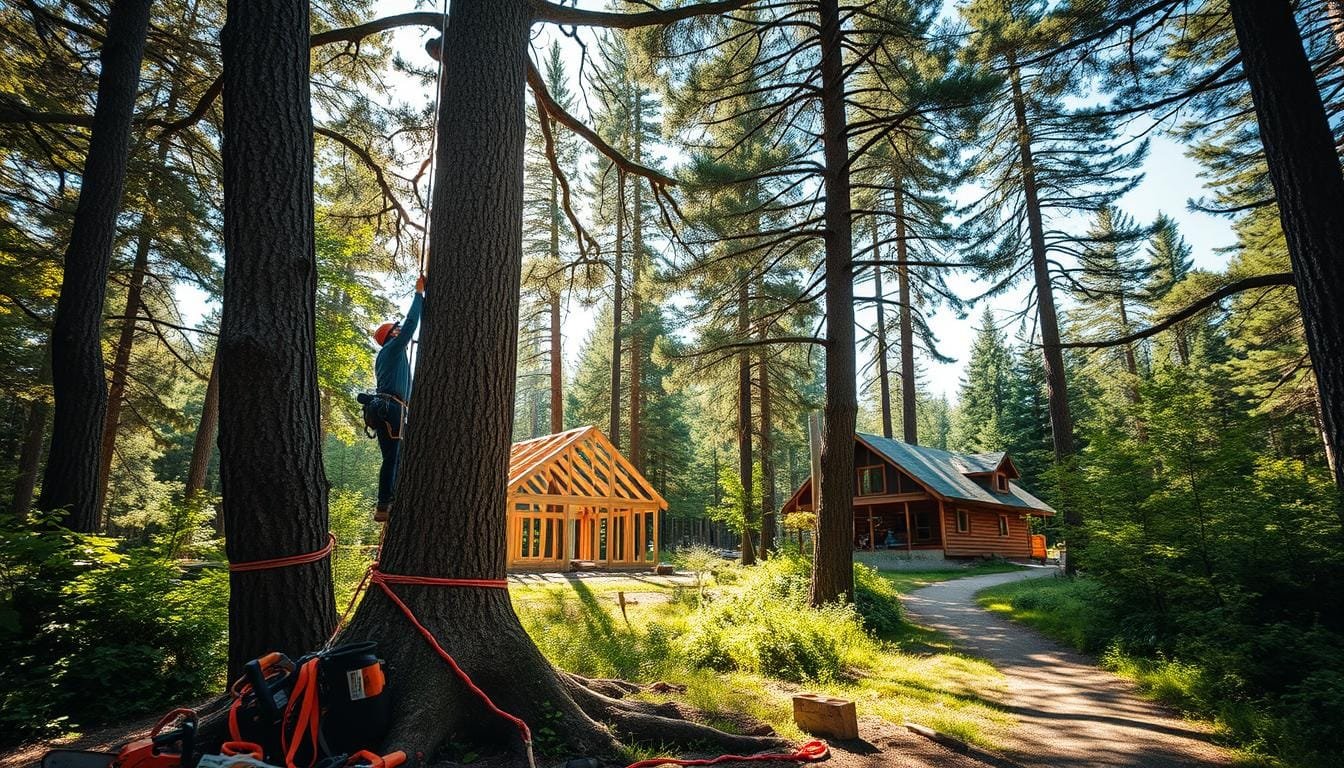

Getting ready to build your dream cabin is an exciting time. A key first step is preparing your property. This process often involves making decisions about the vegetation on your land.
Experts in lot preparation emphasize that not every tree needs to be taken down. This is a significant choice, as once a tree is gone, it’s gone for good. A thoughtful approach helps preserve the natural beauty of your land while creating space for your project.
This guide will walk you through the entire land clearing process. We cover everything from the initial professional survey to the final cleanup. Understanding each phase helps you make smart choices, whether you hire pros or do some work yourself.
A proper survey is highly recommended. It pinpoints exactly what work is needed. It also checks for hidden hazards and determines if permits are required for roads and utilities.
Strategic clearing creates a stable foundation for your cabin. It also minimizes environmental impact. Good planning from the start prevents costly mistakes and gets your build off to a solid, efficient start.
Understanding the Importance of Safe Tree Removal
Strategic land preparation involves more than just clearing space for construction. It requires balancing immediate needs with long-term property health. Proper planning prevents costly mistakes down the line.
Environmental and Safety Considerations
Safety hazards extend beyond falling branches. Unstable ground conditions can develop when too much vegetation is taken out at once. Underground utility lines need protection during any work on the property.
Environmental factors play a crucial role in land stability. Plant roots help absorb excess water and prevent soil erosion. Removing too many plants quickly can lead to drainage issues and flooding concerns.
Benefits for Cabin Construction Projects
Preserving some vegetation offers significant advantages. Natural shade from branches reduces cooling costs for your future cabin. Strategic placement of plants creates windbreaks that protect the structure.
Flagging the proposed water line helps visualize the horizontal plane. Vegetation near water features may not need immediate attention. Waiting until final shore lines are established allows for better decisions.
| Approach | Key Benefits | Considerations |
|---|---|---|
| Complete Clearing | Maximum construction space | Higher erosion risk, increased water management needs |
| Strategic Preservation | Natural shade, wind protection, soil stability | Requires careful planning, ongoing maintenance |
| Minimal Intervention | Lowest environmental impact, natural aesthetics | Limited construction area, potential root interference |
Thoughtful vegetation management creates a stable foundation while maintaining ecological balance. This approach ensures your property remains healthy and functional for years to come.
Planning Your Project with Remove Trees for Building Site in Mind
Effective land management begins with comprehensive planning that addresses both property features and regulatory requirements. This phase sets the foundation for your entire cabin construction journey.
Assessing Property, Land, and Water Conditions
Start by walking your entire property to visualize how you’ll use each area. Identify which vegetation genuinely obstructs your construction plans versus what can be preserved.
Mark larger specimens with complex root systems that need specialized equipment. Evaluate soil quality and check for rocks or unsuitable ground conditions.

Contact utility companies to mark underground lines before any digging begins. This prevents dangerous accidents and costly repairs to electricity, gas, and water infrastructure.
Budgeting and Permitting Requirements
Check with local County Administrators and the Department of Natural Resources to ensure your property isn’t in a protected zone. Proper permissions prevent project shutdowns or delays.
Permit costs can consume a quarter to half of your budget before equipment even arrives. States with stricter environmental protections often have higher regulatory expenses.
Creating a realistic budget requires understanding all variables including professional surveys and potential engineering work. Thorough planning at this stage saves considerable time and money later. For detailed guidance on preserving vegetation during construction, consult this comprehensive resource on tree protection.
Preparing Your Land and Gathering the Right Equipment
Before the first branch is cut, assembling the correct tools and equipment lays the groundwork for a smooth project. The right gear makes the difference between a safe, efficient operation and a dangerous, time-consuming ordeal.
This phase is all about matching your equipment to the specific demands of your property.
Choosing Tools for Tree Removal and Land Clearing
Start with essential hand tools for smaller jobs. A chainsaw, pruning clippers, a rake, and a shovel handle vegetation and cleanup work effectively.
Safety supplies are non-negotiable for any land clearing task. You need safety goggles, long pants, a long-sleeve shirt, and heavy-duty work gloves. This protective clothing guards your skin from poisonous plants and pests.
For serious work on larger specimens, you’ll need heavy machinery. Land excavators, bulldozers, and stump grinders are essential for major projects. A roll-off dumpster is crucial for hauling away debris.
Consider whether to rent this equipment or hire a professional tree service. A professional crew brings decades of experience and specialized machinery like disc mulchers. This eliminates the stress of learning to operate unfamiliar equipment.
Setting Up a Safe Work Area
Establishing a proper staging area is a key part of the job. This is a dedicated spot to park machinery and organize materials. It ensures workers have clear access to all parts of the lot.
A well-planned work area prevents additional hazards. Final surveying at this stage depends on the project’s size.
Preparation costs for this setup are often included in the overall dirt work expenses. Understanding this helps create an accurate budget for your property development.
Effective Tree Removal Techniques for Cabin Construction
Selecting the right approach for vegetation management is crucial for your cabin project’s success. Different methods work better for various property conditions and project goals.
Understanding your options helps you choose the most efficient way to prepare your land. The best technique depends on your timeline, budget, and the types of vegetation present.
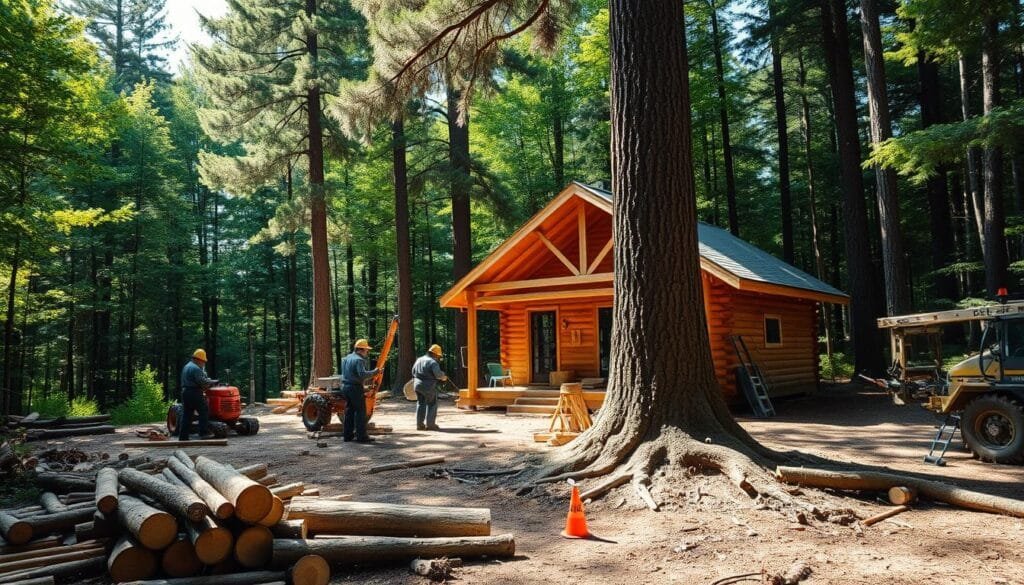
Hand Removal Versus Heavy Machinery
Manual clearing with chainsaws offers precision for smaller areas. This method lets you carefully select which specimens to preserve. However, it requires significant time and effort.
Heavy equipment like bulldozers can quickly clear large tracts. The grubbing and dozing process pushes over unwanted growth and extracts roots. This creates a clean slate but leaves large holes that need filling with dirt.
The cut and grind technique provides a neater finish. Specialized equipment processes stumps into mulch. This material can be spread on the ground or hauled away.
| Method | Best For | Considerations |
|---|---|---|
| Hand Clearing | Small lots, selective preservation | Time-consuming, still needs debris removal |
| Grubbing & Dozing | Large properties, fast results | Creates holes, massive debris piles |
| Cut & Grind | Neat finish, mulch production | Roots near structure may need extra work |
Step-by-Step Process for Cutting and Stump Grinding
Begin by trimming all branches working upward from the bottom. This prepares the trunk for safe felling. Always prioritize safety during this work.
Cut a 45-degree notch into the trunk on your chosen fall side. Make this cut about one-third of the trunk’s diameter. Create a second cut slightly higher to guide the fall direction.
For stump management, grinding is often the cleanest solution. Professional equipment reduces stumps to sawdust below ground level. This prevents regrowth and creates a smooth surface.
Hardwood specimens take more time to process than softer varieties. Factor this into your project timeline. A qualified contractor can ensure the job is done correctly.
Managing Debris and Ensuring a Clean Build Site
The final phase of your land preparation transforms a messy work zone into a pristine canvas for your cabin. Proper management of leftover materials is crucial for a smooth transition to construction.
Start by sorting everything into categories. Separate reusable topsoil, burnable brush, recyclable timber, and waste that requires professional disposal.
Proper Disposal of Tree Debris and Vegetation
Handle your fertile topsoil with care. Stockpile this valuable dirt separately for later use in landscaping or stabilizing slopes. This saves money and prevents future maintenance headaches.
For disposal, burning small piles of brush is efficient where permitted. Haul larger timber to recycling centers. Rent a dumpster for stumps and roots that need removed professionally.
Hand labor is key for a thorough final cleanup. People can rake up small debris that machinery misses. This ensures a solid foundation for your structure.
Completely clear all organic material from the foundation area. Decomposing wood underground can create holes and settling issues years later.
Evaluate materials before you get rid of everything. Some timber can become firewood or landscaping features. Coordinate disposal with your construction schedule to avoid hazards.
Following local regulations for burning and dumping is essential. This prevents fines and keeps your project on track.
Final Thoughts for a Successful Cabin Build
The decisions you make during land preparation will shape your cabin experience for years to come. This process requires balancing efficiency, safety, and environmental care.
While DIY might seem cost-effective, hiring a professional tree service often delivers better results. Their expertise and proper equipment prevent costly mistakes.
Timing matters too. Late fall or early spring offers ideal conditions for land clearing when plants are dormant. This makes hazardous vegetation easier to identify.
Honestly assess your skills and the job scope. Taking down a few small trees differs from clearing dense forest. There’s no shame in calling professionals when the work exceeds your capabilities.
The right approach creates more than just space—it establishes proper drainage and preserves your property’s natural beauty. Your dream cabin deserves this solid foundation.