
Building your dream cabin starts from the ground up. One of your first and most critical decisions is choosing the right base. This choice affects your budget, your home’s long-term health, and even how you access utilities.
You might not have a completely free choice, however. Your local building codes, soil type, and climate play a huge role. Factors like frost depth and land slope often dictate which foundation types are even possible for your specific lot.
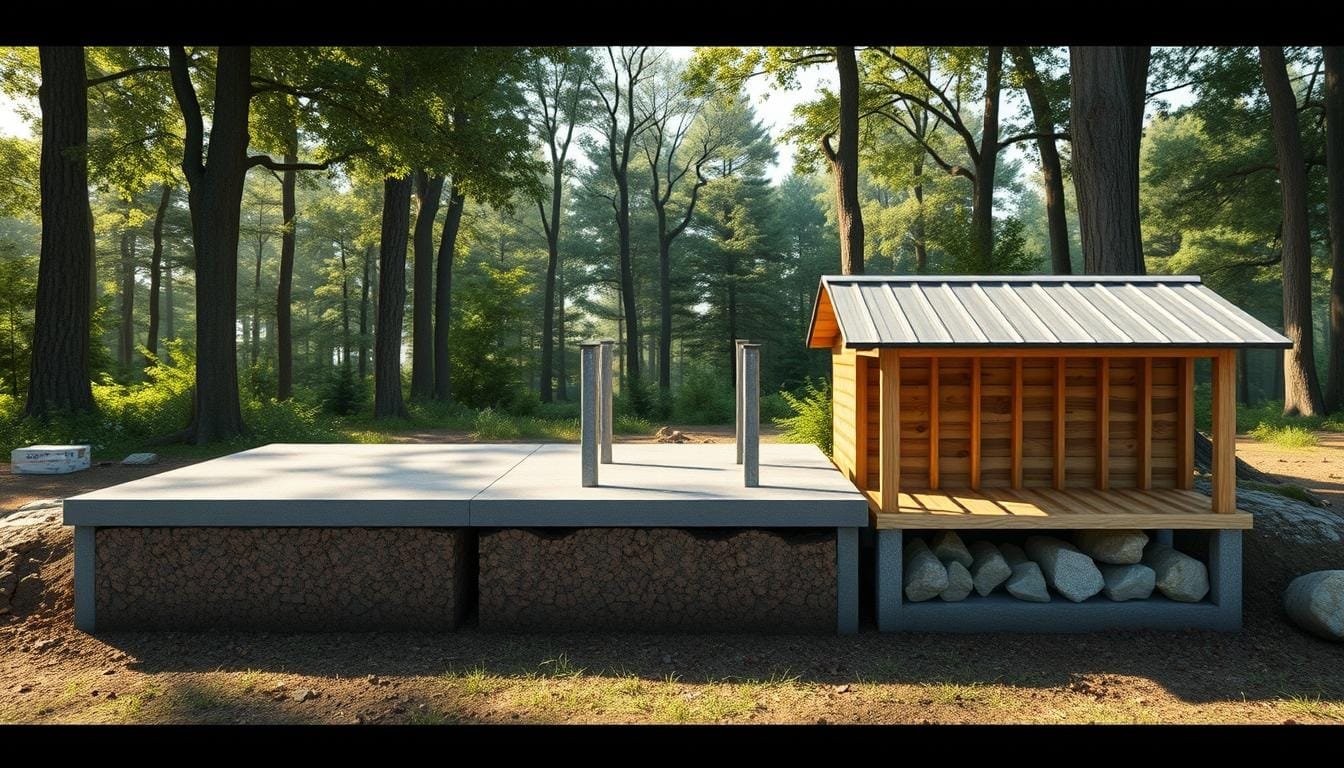
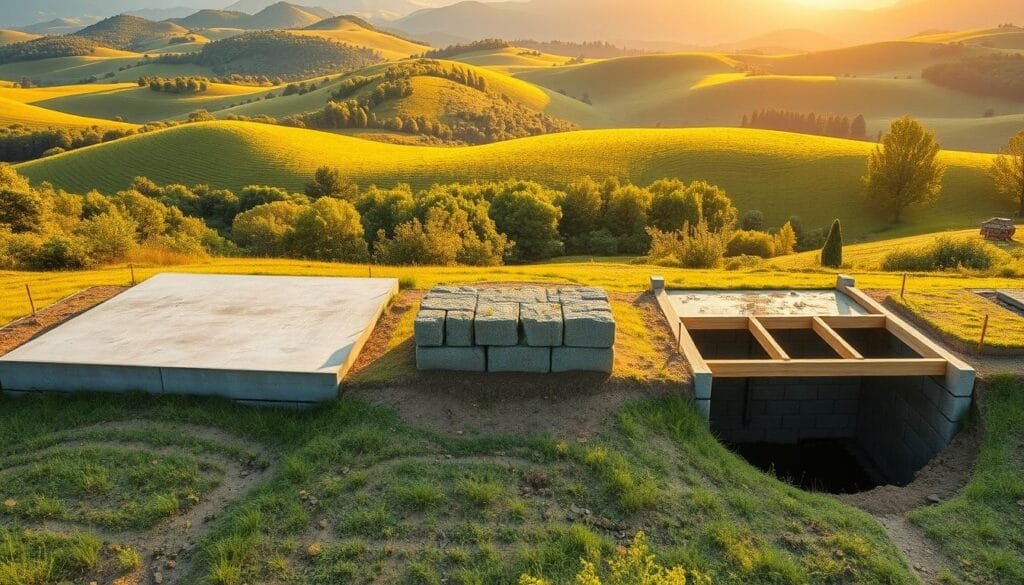
While full-sized homes often use basements, cabin builders typically focus on three main options. We will compare the concrete slab, pier and beam, and crawl space foundations. This guide will cover initial costs, labor needs, maintenance, and performance in different environments.
Understanding these foundation characteristics is vital. Your cabin’s base supports everything else. It impacts energy efficiency, structural longevity, and your overall investment.
Understanding the Basics of Each Foundation Type
The foundation you choose serves as the critical interface between your structure and the earth. Each option has distinct characteristics that affect construction, maintenance, and performance.
Overview of Slab Foundations
Monolithic concrete structures form the basis of slab foundations. These typically measure 6-8 inches thick with reinforced edges for extra strength. The entire home rests directly on this solid surface.
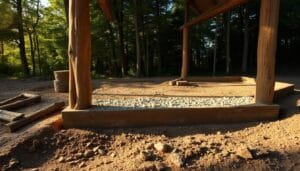
Construction begins with a gravel or sand base for proper drainage. Steel rebar provides reinforcement while expansion joints control cracking. Utility lines often run within the concrete itself.
Key Characteristics of Crawl Space Foundations
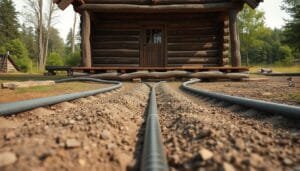
These systems elevate buildings 18 inches to 4 feet above ground level. This creates accessible space beneath for storage and maintenance access. Two main types exist: stem wall and pier systems.
Stem wall designs use continuous concrete walls around the perimeter. Pier systems distribute weight through strategically placed supports. Both require proper ventilation and moisture control measures.
| Feature | Slab Foundation | Crawl Space Foundation |
|---|---|---|
| Height Above Ground | Direct contact | 18 inches to 4 feet |
| Utility Access | Embedded in concrete | Easy access below |
| Soil Adaptation | Best for stable soils | Good for uneven terrain |
| Moisture Control | Inherent resistance | Requires vapor barriers |
| Construction Time | Faster installation | More complex setup |
Understanding these house foundations helps you make informed decisions. Each system offers unique advantages for different building scenarios and site conditions.
For specific crawl space construction techniques, consult professional resources. Proper installation ensures long-term structural integrity and performance.
Exploring slab vs pier vs crawl space for cabin: Costs and Considerations
The economic aspect of foundation selection significantly impacts your overall investment. Understanding the financial implications helps you make informed decisions that balance upfront expenses with long-term value.
Material and Labor Costs
Foundation expenses vary dramatically across different types. The monolithic concrete option typically offers the most budget-friendly approach.
Labor requirements differ substantially. Simple designs require minimal excavation and can be completed quickly. More complex systems need specialized skills and extended construction time.
| Cost Factor | Monolithic Design | Elevated Space | Support System |
|---|---|---|---|
| Material Expenses | Lowest | Moderate | Highest |
| Labor Intensity | Minimal | Medium | High |
| Construction Time | 1-2 days | 3-5 days | 5-7 days |
| Site Preparation | Level ground needed | Moderate grading | Adapts to terrain |
Site Requirements and Local Building Codes
Your property’s characteristics heavily influence suitable foundation choices. Soil composition and land slope determine which options work best.
Local regulations often mandate specific foundation requirements. These rules consider frost depth, drainage patterns, and seismic activity in your area.
Insights into Construction, Maintenance, and Longevity
Beyond the upfront cost, the construction process, maintenance needs, and overall lifespan of your foundation are critical factors.
These elements determine your long-term satisfaction and the health of your structure.
Construction Methods and Timeframes
The monolithic option is the fastest to build. Site preparation and pouring often finish in a single day.
This involves grading the ground, laying a gravel base for drainage, and pouring a single concrete layer.
Elevated foundations take more time. They require setting individual footings and building walls or installing piers before the floor system can be added.
This multi-step process needs careful coordination. For specific techniques, see this guide on mono-slab construction.
Maintenance Requirements and Durability
The solid concrete base offers excellent durability with very little maintenance.
It resists pest damage and mold growth. However, accessing utilities embedded within it is difficult.
Elevated systems need regular checks for moisture and pest intrusion. Wooden components can be susceptible to rot over time.
Proper pier and beam installation is key to maximizing its lifespan.
Impact of Soil Conditions and Climate
Your local soil and climate heavily influence performance. Clay-rich ground can cause settling issues for some types.
Unstable soil often requires the distributed support of a pier beam system.
In cold regions, freeze-thaw cycles can damage certain foundations. Humid areas increase the risk of moisture problems in enclosed spaces.
Always ensure excellent site drainage to protect your investment, regardless of the type you choose.
Final Thoughts on Selecting the Ideal Foundation for Your Cabin
Making the right foundation decision protects your investment and your peace of mind. Your choice should balance budget with long-term performance.
Site conditions often dictate the best option. Soil testing and professional consultation are essential first steps. Local experts understand building codes and climate factors.
Think beyond initial costs to future maintenance needs. Some foundation types offer easier access for repairs. This can save money over your home’s lifetime.
If your dream plan specifies an unsuitable base, modifications are usually possible. Builders can adapt designs to meet local requirements.
The ideal selection matches your specific conditions. For detailed information on one popular option, explore this resource on slab foundations. Your perfect choice ensures decades of stable enjoyment.