
Welcome to your essential guide on the ground beneath your feet. Understanding what lies below is the first step to ensuring your retreat stands strong for years. The composition of the earth plays a huge role in the stability of any structure.
Did you know that in drought-prone regions, a shocking 25% of homes face structural damage? This is often due to shifts in ground moisture. The earth is a blend of minerals, water, air, and organic material. This specific mix dictates how well it can support a building’s weight.
A vast majority of structural issues, around 60%, actually start with problematic ground conditions. For example, clay needs a lot of moisture to stay stable. When it gets wet, it can swell significantly. When it dries out, it shrinks. This constant movement creates immense pressure.
Getting to know your land before you build is a powerful way to prevent future headaches and costly repairs. A great first step is to learn how to test soil quality for a cabin. This guide will walk you through identifying different earth materials, managing moisture, and best practices for a solid, lasting base for your home.
Understanding Different Soil Types and Their Properties
Before breaking ground, understanding your property’s earth composition can save you from future headaches. The ground beneath your structure behaves differently based on its makeup.
Exploring Clay, Sandy, and Loamy Soils
Clay earth holds substantial amounts of water. It swells when wet and shrinks dramatically when dry. This creates pressure that can damage walls.
About 40% of homes on clay experience movement within ten years. Proper design is essential for these conditions.
Sandy materials drain water excellently. This reduces accumulation around your structure. However, their loose nature makes them prone to erosion.
Loamy earth is considered ideal for building. It’s a balanced mixture that provides good drainage while retaining adequate moisture. This offers natural strength with minimal issues.
Soil Composition and Performance
The specific percentages of sand, silt, and clay determine how earth responds to moisture changes. This affects drainage capacity and load-bearing strength.
| Soil Type | Key Characteristics | Main Challenges |
|---|---|---|
| Clay | Holds water, expands and contracts | Cyclical pressure, cracking risk |
| Sandy | Excellent drainage, loose texture | Erosion, settlement concerns |
| Loamy | Balanced mix, stable performance | Minimal issues when properly prepared |
You can identify your earth material through simple field tests or professional analysis. Knowing your ground composition helps choose the right foundation approach.
The Soil Type Impact on Cabin Foundation
Your cabin’s long-term stability depends heavily on the characteristics of the earth it rests upon. Different ground compositions react uniquely to moisture and environmental changes. This directly affects how well your home’s base withstands movement over time.
Earth with high clay content presents specific risks. It absorbs water during rainy periods, causing significant swelling. When dry conditions return, the same material shrinks dramatically. This constant expansion and contraction creates pressure that can lead to sinking and settling foundations.
Sandy materials behave quite differently. Their loose consistency makes them prone to excessive settlement. They lack the compactness needed to properly support structural weight. This can result in displacement issues that compromise integrity.
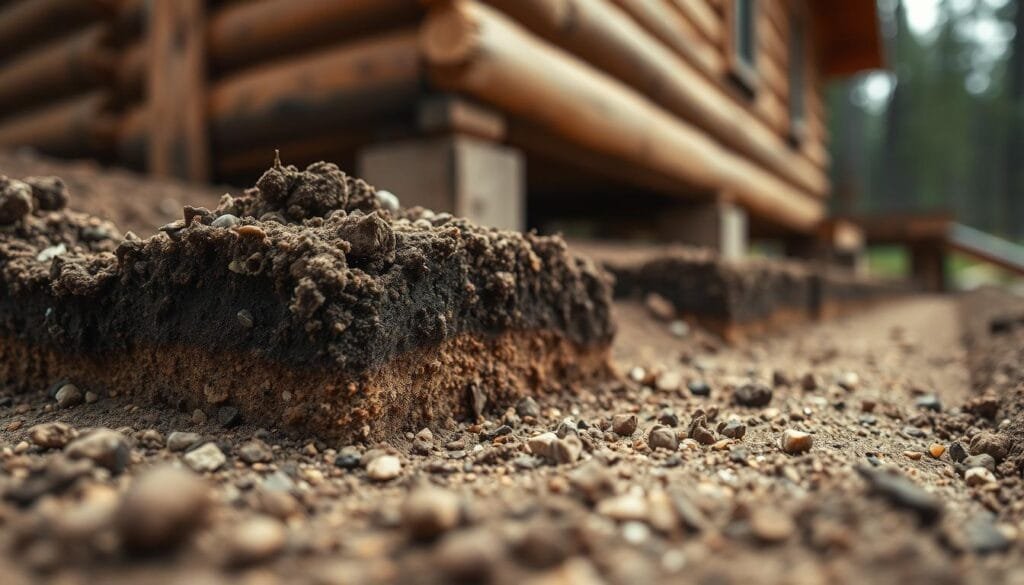
The active zone is the critical layer immediately around and beneath your structure. This area is most affected by moisture changes and climate variations. It’s typically the source of most foundation problems homeowners encounter.
This zone can range from just a few feet below surface level to over thirty feet deep. The depth depends on your geographic location and local conditions. Understanding this relationship helps prevent common issues like cracking and structural movement.
Proper identification and testing before construction are essential. This allows builders to design foundations specifically suited to handle unique earth characteristics. Different ground conditions require tailored approaches—one-size-fits-all solutions don’t work. Learning how soil affects foundation settling and stability is crucial for any building project.
Moisture’s Role in Soil and Foundation Stability
Managing moisture around your property is one of the most critical factors for maintaining a stable structural foundation. Water content directly influences how the ground behaves and supports your home.
Effects of Drought and Heavy Rainfall
In hot regions like Plano, Texas, summer temperatures regularly exceed 100°F. This extreme heat causes significant contraction in the earth material. The resulting settlement can lead to structural issues.
Clay-based earth can shrink up to 25% when completely dry. This creates hollow spaces beneath the base of your structure. You may notice diagonal cracks in walls or uneven floors throughout your home.
The opposite problem occurs with heavy rainfall. Wet conditions cause clay to expand by 15%, pushing against foundation walls. Poor drainage systems worsen this pressure, potentially causing severe damage.
Nearby trees also affect moisture levels. Root systems often extend twice the canopy’s size. If branches reach over your home, roots likely draw water from beneath it. Winter brings another challenge with freeze-thaw cycles weakening stability.
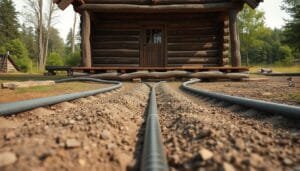
Proper drainage and grading help maintain consistent moisture conditions. Monitoring changes around your property allows early detection of potential issues. This proactive approach protects your investment from water-related damage.
Soil Compaction and Preparation Techniques
Before pouring concrete, the most important step is ensuring the ground can properly support the weight. Proper preparation creates a stable base that prevents future settling issues.
Compaction Methods and Testing Procedures
Compaction presses earth particles together to increase density. This process fills air pockets, creating a solid base for building.
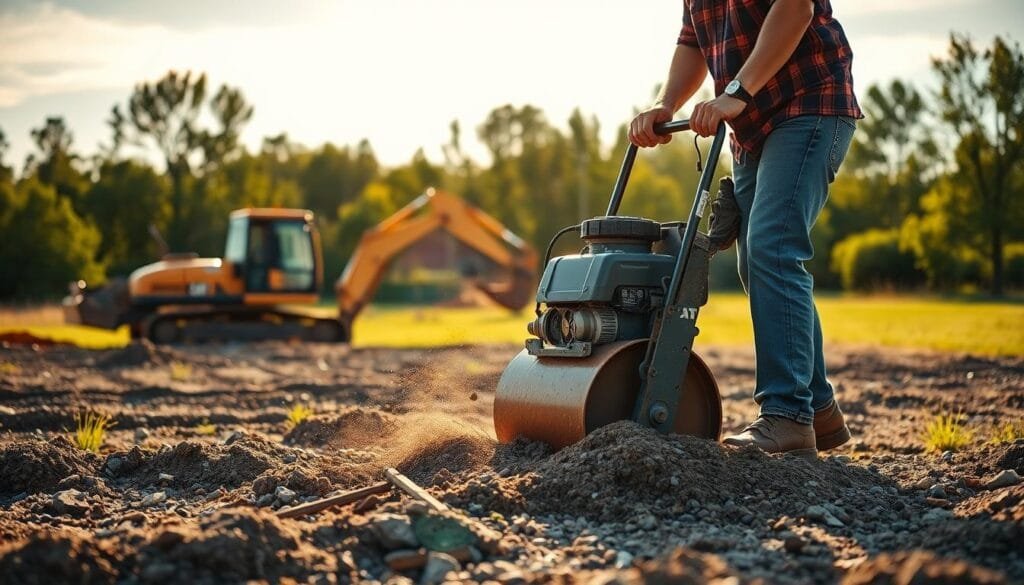
Working in layers creates the hardest, most stable results. Common equipment includes vibratory plate compactors for small areas. Rammers work well in tight spaces, while roller compactors handle larger sites.
Testing verifies adequate density has been achieved. Professionals use density tests and penetrometers. Proper compaction typically reaches 95% of maximum density.
Steps for Proper Soil Preparation
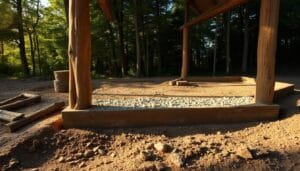
The preparation process begins with excavation. Using compactable pit run instead of sand creates firmer conditions.
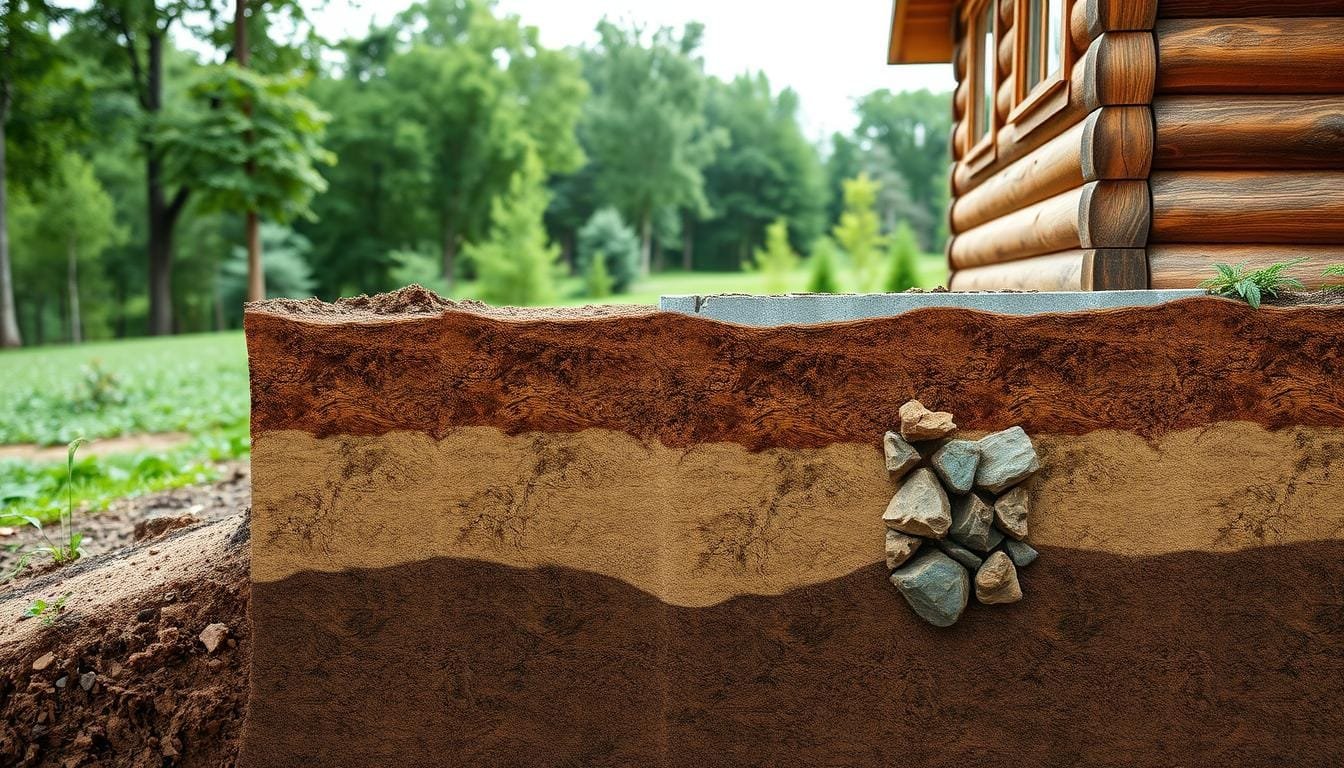
Your home rests on many different layers. These strata have formed over thousands of years. They gain stability and load-bearing capacity with depth.
Deep below surface layers lies bedrock. This rock or densely packed earth provides ultimate support.
| Compaction Method | Best For | Density Achieved | Testing Equipment |
|---|---|---|---|
| Vibratory Plate | Small areas, shallow layers | 90-95% | Hand penetrometer |
| Rammers | Tight spaces, trenches | 92-96% | Nuclear density gauge |
| Roller Compactors | Large sites, deep layers | 94-98% | Proctor density test |
Following these techniques ensures your structure has the solid base it needs. Proper preparation at this stage prevents costly repairs later.
Regional Soil Concerns and Best Foundation Practices
Different regions across the United States present unique ground challenges that require specialized solutions. What works in one area may cause serious issues in another.
Challenges in Expansive Clay Regions
In places like Dallas-Fort Worth, clay-rich earth creates significant movement. During rainy seasons, this material can swell up to 15%, pushing against structural bases.
Dry periods cause contraction, leaving voids that lead to uneven settling. In Waco, Texas, Blackland Prairie conditions affect about 60% of properties.
Issues with Sandy Coastal Soils
Coastal areas like Florida face different problems. Sandy materials drain quickly but are prone to erosion. High water tables add to instability concerns.
Murfreesboro, Tennessee demonstrates how mixed compositions need careful water management. Proper drainage systems are essential in both clay and sandy regions.
Research your local ground conditions before building. Work with professionals who understand area-specific challenges to prevent future repairs.
Vegetation, Landscaping, and Their Effect on Soil Integrity
Your landscaping choices do more than just beautify your property—they directly affect the ground supporting your home. Plants and trees can either protect or threaten your foundation’s stability.
Strategic vegetation placement creates a natural defense system. Tree roots bind earth particles together, reducing erosion risks on sloped areas.
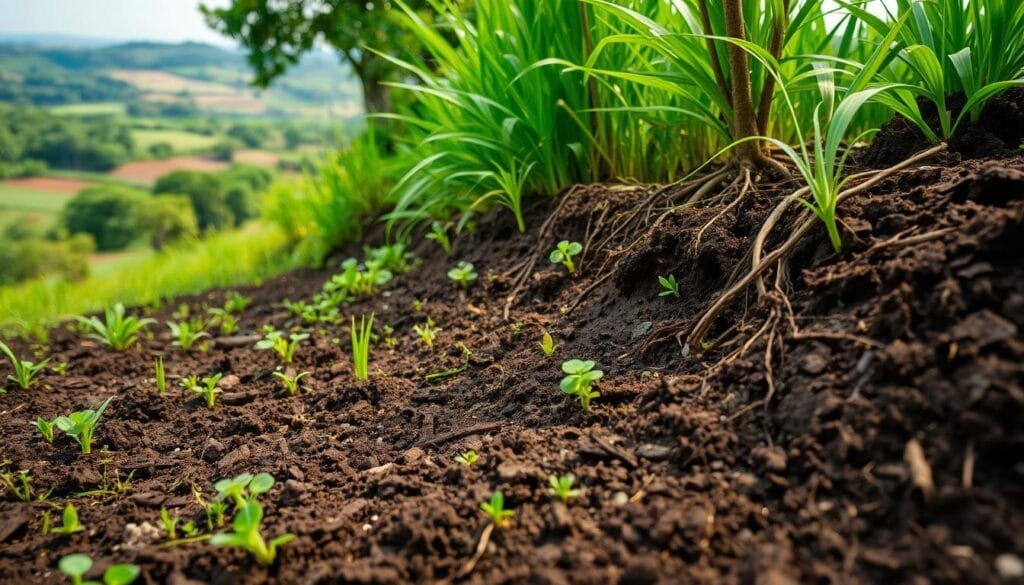
Role of Trees and Ground Cover in Erosion Control
Properly placed trees offer multiple benefits. They provide shade that cuts cooling costs by 25% in summer. They also block winter winds to reduce heating expenses.
However, trees planted too close to your structure can cause serious issues. Roots may invade foundation areas or extract too much moisture from surrounding soils. This creates unstable conditions.
Plant trees at distances equal to their mature height from your home. This prevents root-related foundation problems while enjoying natural benefits.
Smart landscaping improves both appearance and ground stability. Native plants adapt well to local moisture conditions. Ground cover plants protect the surface from erosion.
| Landscaping Element | Positive Effects | Potential Issues | Recommended Distance |
|---|---|---|---|
| Large Trees | Erosion control, energy savings | Root intrusion, moisture competition | Equal to mature height |
| Ground Cover Plants | Surface protection, moisture retention | Maintenance requirements | 2-3 feet from foundation |
| Rain Gardens | Water management, drainage improvement | Improper placement | 10+ feet from structure |
Good drainage systems directing water away from foundations can lower problems by 40%. Proper grading prevents accumulation around your home. Before planting, test your ground quality to make informed decisions.
These strategies maintain consistent moisture in upper layers. They protect your investment while creating an attractive property.
Final Thoughts on Building a Stable Cabin Foundation
Building your retreat is a huge investment. Protecting it starts from the ground up. The earth beneath your home is a living, changing system. Your understanding of it should be ongoing.
Different ground compositions like clay, sand, and loam each have unique needs. Addressing these through smart design and maintenance is key. A small investment in professional testing before you build can prevent massive repair bills later.
Stay vigilant. Regularly check for warning signs like new cracks, settling, or doors that stick. These small issues can grow into big problems if ignored. Prompt action saves money and preserves your home’s value.
Even with challenging conditions, solutions exist. Techniques like underpinning can restore stability. For a detailed guide on getting started, explore how to build the best foundation for an off-grid.
Your knowledge is your best tool. Use it to create a safe, lasting sanctuary for years to come.