
Dreaming of a peaceful retreat nestled in nature? The lay of the land plays a huge role in your project’s success. This guide explores why the ground’s angle is a top factor for your cabin.
It influences your foundation, budget, and the final look of your home. Proper planning from the very start is absolutely essential for a great outcome.
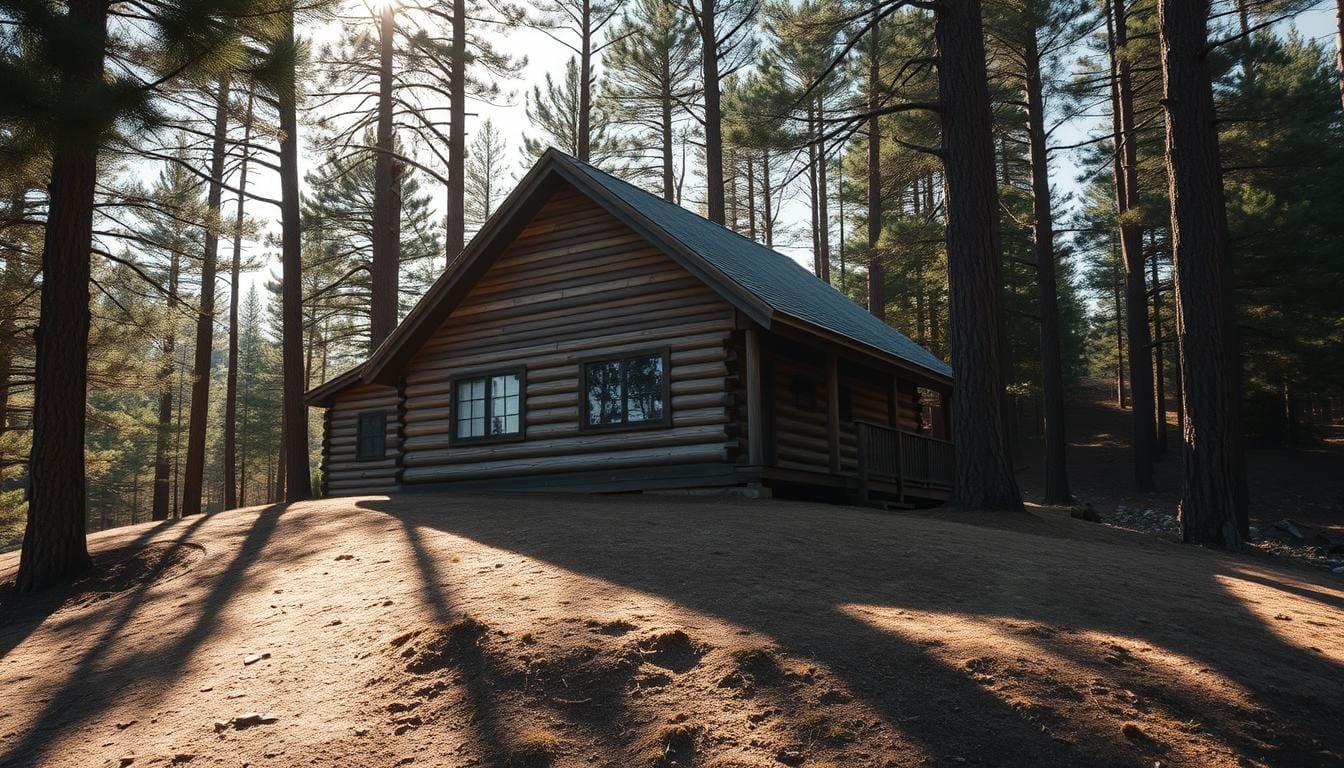
Constructing on sloped terrain offers amazing rewards. You can unlock stunning views and create a unique design that blends with the environment.
However, it also brings specific challenges that flat land does not. This guide walks you through the entire process, from assessing your property to final construction methods.
You will learn how to work with your land’s natural shape. Discover design solutions that turn potential problems into beautiful, safe, and sturdy architectural features.
We will cover practical steps like managing water drainage, choosing a foundation, and understanding local rules. With the right knowledge, you can avoid costly errors and build a secure, beautiful cabin.
Understanding the Impact of Slope on Cabin Building
Working with nature’s design means reading the story your land tells through its contours. Each property has unique characteristics that influence construction decisions.
Assessing Natural Contours and Landscape Features
The shape of your ground reveals important information about stability and water flow. Observing existing trees and rock formations helps identify the best building spots.
Steeper angles increase construction complexity. Gradients above 30% often need specialized techniques for proper foundation support.
Evaluating Drainage, Erosion, and Safety Factors
Water naturally moves downhill, creating potential erosion risks. Proper drainage planning prevents soil loss around your foundation.
Safety considerations extend beyond erosion control. Landslide potential and proper setbacks from steep edges require careful evaluation during planning.
| Slope Angle | Construction Complexity | Key Considerations | Recommended Approach |
|---|---|---|---|
| 0-15% | Low | Standard foundations work well | Conventional building methods |
| 15-30% | Moderate | Enhanced drainage needed | Terracing or stepped foundations |
| 30-40% | High | Specialized engineering required | Retaining walls or stilts |
| 40%+ | Very High | May be unbuildable | Consult geotechnical experts |
Understanding these factors helps you make informed decisions about your cabin project. Proper assessment from the start prevents costly issues later.
The Role of Land Surveys for Sloped Sites
A professional land survey transforms guesswork into a clear, actionable plan for your build. This initial step provides the accurate documentation needed for safe and efficient planning.
It forms the foundation for every decision that follows on your unique site.
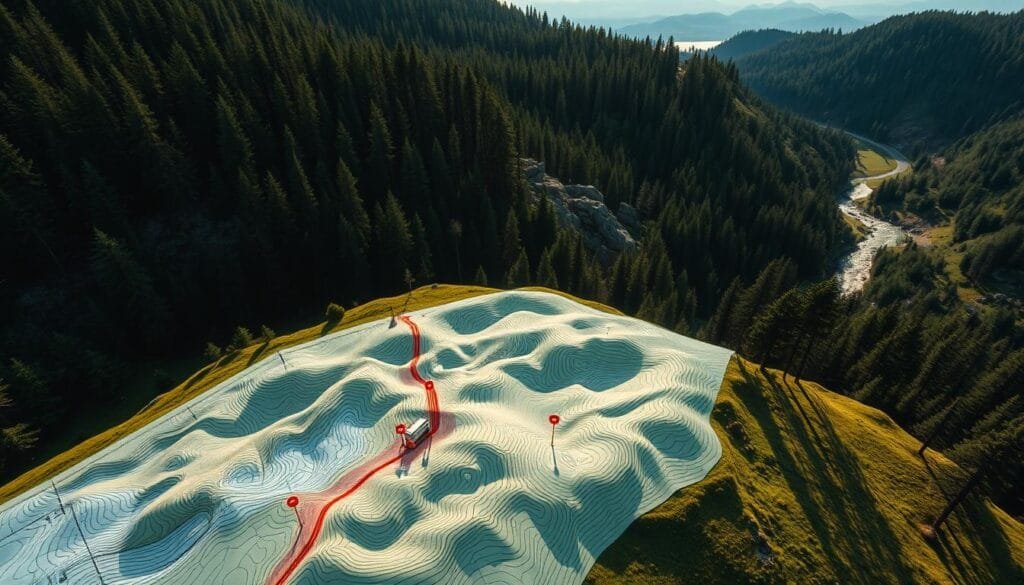
Topographic Surveys: Mapping Elevation and Contours
This specific type of survey maps the exact shape of your land. It details all elevation changes, contours, and natural slopes.
The data reveals drainage paths, rock outcrops, and optimal spots for your cabin’s placement. Your architect uses this map to create a design that works harmoniously with the property.
Without this crucial information, you are essentially building blind. Assumptions about the sloped site can lead to expensive mistakes during construction.
Investing in a thorough survey upfront prevents surprises and ensures a smooth building process from start to finish.
Geotechnical Considerations for Stabilizing Your Cabin
The true strength of your cabin starts with the ground it stands on. A professional geotechnical survey is your first step toward a safe and lasting structure. It reveals exactly what’s beneath the surface.
This analysis prevents major risks like settling or shifting. Knowing your soil composition is essential for a stable building.
Soil Analysis and Foundation Recommendations
Different soil types behave uniquely. Clay expands with moisture, while sandy ground drains well but offers less support.
Rocky areas provide excellent stability but can be costly to excavate. Your foundation design must match these conditions perfectly.
Engineers use survey data to recommend the best foundation system. Options include stepped footings or pile systems that anchor into stable layers.
This proactive planning ensures your cabin rests on a secure base. It’s a crucial investment for your site.
Water Runoff Management and Erosion Control
Managing water flow is non-negotiable on angled land. Gravity pulls water downhill, directly toward your foundation.
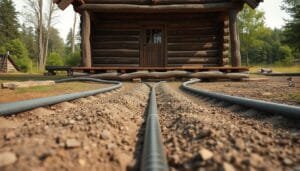
Smart drainage plans use gutters, swales, and French drains. These systems channel water away safely.
Effective erosion control protects your investment. Retaining walls and strategic planting stabilize the ground.
Ignoring these factors can lead to serious erosion and drainage issues. Proper planning from the start saves money and stress later.
| Soil Type | Key Characteristics | Foundation Impact | Drainage Needs |
|---|---|---|---|
| Clay | Expands and contracts with moisture | Requires deep, stable footings | High – needs excellent perimeter drainage |
| Sandy Loam | Good drainage, lower bearing capacity | May need wider footings or mat foundation | Moderate – water dissipates quickly |
| Rocky | High stability, difficult excavation | Pinning to bedrock is often ideal | Low – water runs over surface |
Integrating Natural Contours into Your Cabin Design
Great cabin architecture doesn’t fight the landscape—it becomes part of it. This approach creates a home that feels naturally rooted in its surroundings while offering practical advantages.
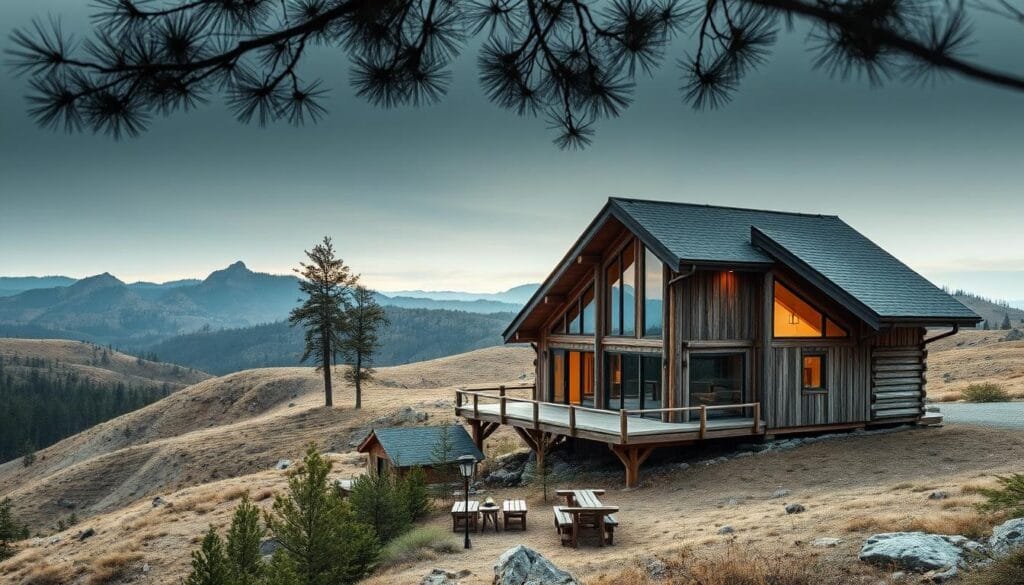
Design Strategies that Embrace the Terrain
Smart design works with your property’s natural shape. Split-level layouts are particularly effective for angled sites.
This architecture positions different living areas at varying elevations. You gain interesting interior spaces with short stair connections.
The strategy reduces excavation compared to flattening large areas. It preserves more of the natural landscapes around your cabin.
Working with the slope unlocks dramatic architectural features. Double-height spaces and walkout basements become possible design elements.
Views become a major advantage on elevated sites. Strategic window placement captures panoramic vistas impossible on flat land.
Natural light improves with terraced layouts. Sunlight reaches more areas of your home from multiple directions.
This design creates seamless indoor-outdoor connections. Multiple decks and patios at different levels access surrounding landscapes.
Early collaboration with your architect ensures the building layout responds to your specific topography. Understanding the pros and cons of building a cabin on a helps guide these design decisions for optimal results.
terrain slope when building: Strategies and Best Practices
Your property’s natural incline presents unique opportunities for innovative architectural design. Choosing the right construction approach makes all the difference between a successful project and costly complications.
Different methods suit various angle grades and soil conditions. Your survey data guides these critical decisions.
Utilizing Retaining Walls and Cut-and-Fill Techniques
Cut-and-fill strategies create level building pads on moderate inclines. Workers excavate soil from the uphill side to fill the lower area.
This method minimizes soil import and export needs. Proper compaction ensures stability for your foundation.
Retaining walls become essential components in this approach. They hold back earth and support filled sections effectively.
These walls require careful engineering based on height and soil pressure. Local codes often mandate specific distances from main structures.
Exploring Stilt and Cantilever Construction Methods
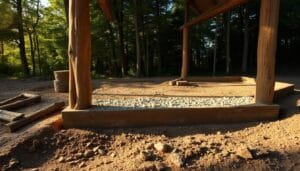
Stilt construction elevates your cabin above the ground on sturdy columns. This approach minimizes site disturbance dramatically.
It works exceptionally well on steep grades or rocky ground. The method preserves natural drainage patterns and vegetation.
Cantilever techniques allow portions to extend over the slope. Strong foundations anchor these dramatic architectural statements.
This reduces the building footprint needing modification. Both methods offer creative solutions for challenging cabin foundation types on difficult sites.
Managing Construction Challenges on Sloped Land
The physical movement of people and supplies presents distinct hurdles on angled properties. These logistical challenges impact your timeline and budget significantly.
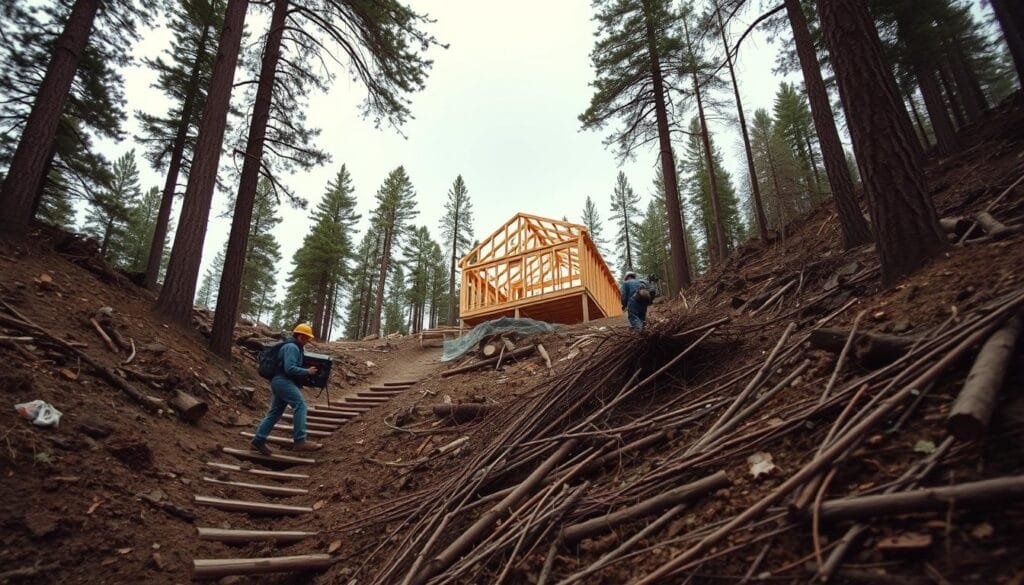
Overcoming Access, Material Delivery, and Logistic Issues
Getting trucks and equipment onto your property is the first major test. A single, steep entry point creates serious access problems for delivery vehicles.
Workers often build temporary stairs and pathways. This adds time and cost to every phase of construction.
Moving heavy materials like lumber and concrete becomes a complex task. Contractors may need to stage supplies in specific areas.
Special equipment like pump trucks might be necessary for concrete work. These solutions add expense but ensure the job gets done correctly.
Planning for these logistics before breaking ground helps control costs. It minimizes delays on your unique sloped site.
Budgeting and Cost Implications for Slope Projects
The initial appeal of an affordable, scenic lot often comes with hidden construction expenses that must be carefully considered. What seems like a bargain property may ultimately cost as much as a pricier flat site once building begins.
Your foundation choice dramatically affects the overall project cost. Simple slab foundations work on flat ground, but angled sites need specialized systems.
Steeper grades require more complex solutions like stepped footings or pile systems. Each option carries different price tags and installation challenges.
Comparing Excavation, Terracing, and Stilt Options
Excavation costs vary wildly depending on your ground composition. Soft soil is relatively inexpensive to move, while rock excavation can cost ten times more.
Cut-and-fill methods involve substantial earth moving and retaining walls. Engineered walls for soil retention range from $50-150+ per square foot.
Stilt construction avoids major excavation but requires engineered columns. This approach often costs 20-40% more than standard foundations.
Utility installation adds another layer of expense. Level differences may require pumps, and longer pipe runs increase material costs.
Realistic planning should include a 30-60% contingency above flat-site estimates. This buffer prevents financial surprises during construction.
Navigating Local Regulations and Permitting for Sloped Builds
Before breaking ground on your dream cabin, understanding local building codes is essential for a smooth approval process. These rules aren’t just paperwork—they’re safety systems designed to protect your investment and the environment.
Understanding Zoning, Setbacks, and Approval Requirements
Each municipality has unique rules for construction on challenging land. Zoning ordinances often include specific provisions based on ground angle.
Setback requirements extend beyond property lines. Structures may need specific distances from slope crests and drainage channels.
Permit applications require extensive documentation. Topographic surveys and geotechnical reports are typically mandatory.
| Slope Percentage | Building Restrictions | Required Documentation | Common Limitations |
|---|---|---|---|
| 0-15% | Standard regulations apply | Basic site plans | Minimal restrictions |
| 15-30% | Enhanced safety requirements | Engineered drainage plans | Height and footprint limits |
| 30-40% | Strict construction methods | Slope stability analysis | Possible method mandates |
| 40%+ | Often prohibited | Expert consultation required | Extreme limitations |
Early consultation with local building departments helps identify requirements before design work begins. This proactive approach saves time and prevents costly redesigns.
Leveraging Survey Data for Innovative Architectural Solutions
Accurate land measurements unlock innovative approaches to cabin construction on varied topography. Comprehensive survey data transforms potential challenges into creative opportunities for distinctive home designs.
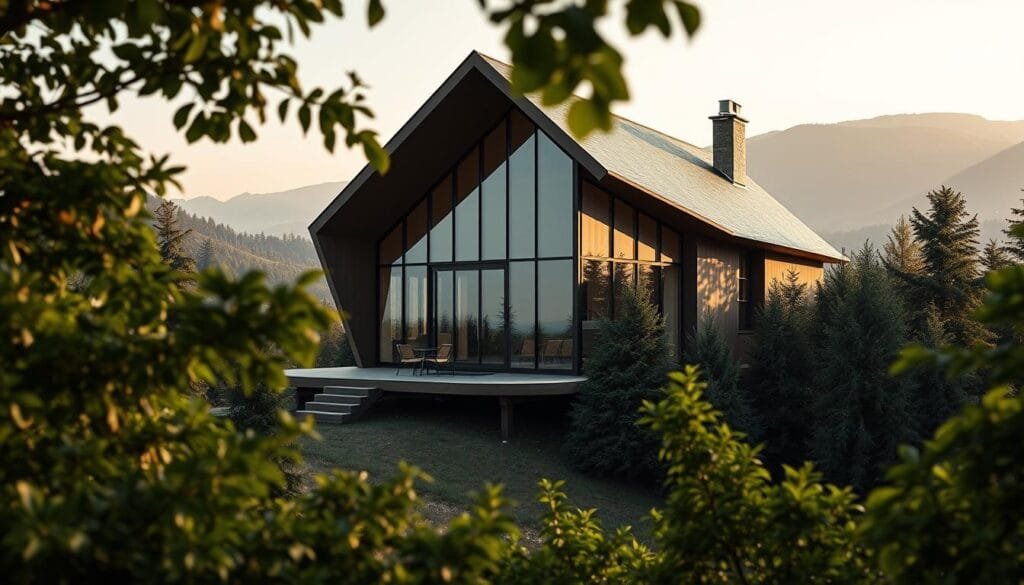
Real projects demonstrate how thorough analysis leads to smarter decisions. This data-driven approach ensures your investment delivers both safety and beauty.
Real-World Case Studies and Practical Examples
One hillside villa project revealed unexpected bedrock through detailed surveys. The architect pivoted from cut-and-fill to a hybrid stilt design with proper drainage.
This adaptation prevented potential six-figure foundation failures. Another eco-retreat uncovered hidden water risks on seemingly gentle grades.
Early survey intervention allowed foundation redesign before construction. Both examples show how data turns limitations into architectural assets.
Optimizing Views and Enhancing Interior Space
Survey information helps architects position living areas for maximum panoramic views. Strategic window placement captures breathtaking vistas impossible on flat sites.
Split-level layouts create visual interest and improve natural light penetration. Multiple outdoor living areas at different levels connect with the landscape.
This approach works exceptionally well with crawl space foundations on challenging sites. The result is a home that feels uniquely connected to its surroundings.
Wrapping Up Your Cabin Project on Sloping Terrain
Your sloped site holds the key to creating a home that feels uniquely connected to its natural surroundings. This approach transforms potential construction challenges into distinctive design opportunities that flat land simply cannot offer.
The foundation of success lies in comprehensive planning that begins with professional surveys. Understanding your soil type impact on cabin foundation ensures proper drainage and stability for your project.
Working with your land’s character rather than against it creates homes that blend beautifully with their landscapes. Smart strategies like split levels and retaining walls turn angled ground into architectural advantages.
While hillside construction requires extra effort, the rewards justify the investment. You gain breathtaking views, enhanced privacy, and living spaces that celebrate their elevated position in nature.