
Choosing the right approach for your next project is a big decision. Builders and homeowners often weigh two popular methods. Each offers a unique path to creating a solid and beautiful structure.
This guide will explore these distinct construction styles in detail. We will look at their strength, durability, and overall value. Understanding the core differences helps you make the best choice for your needs.
We will cover everything from historical roots to modern applications. Topics include design flexibility, timelines, and budget considerations. Our goal is to provide a clear comparison to guide your building plans.
Whether you’re planning a custom home or a commercial space, this knowledge is essential. The “stronger” option depends on your specific goals for the project.
Introduction to Timber Frame and Stick-Built Construction
The history of building with wood reveals two distinct paths that have shaped our landscapes. These approaches represent different eras and philosophies in construction.
Historical Context and Evolution
Traditional timber framing is an ancient technique dating back centuries. Structures built this way still stand across Europe, Asia, and early America.
This method uses large, exposed beams joined by interlocking joints. Wooden pegs secure the connections, creating a durable skeleton.
Stick framing emerged during the Industrial Revolution as a faster alternative. It uses smaller, uniform lumber nailed together with metal fasteners.
While timber framing remained a specialized craft, stick building became America’s standard. Its speed and accessibility made it popular for growing communities.
Modern Applications and Trends
Today, timber construction appears in custom homes, barns, and commercial buildings. Architectural character and aesthetic appeal are key reasons people choose it.
Stick framing dominates residential construction because most builders know this method. Materials are readily available, allowing quick timelines.
A growing trend sees homeowners seeking unique, handcrafted homes with exposed wood features. Both methods evolve with technology like CNC processing and engineered lumber.
Advantages and Drawbacks of Timber Framing and Stick Building
When comparing these two construction styles, their visual impact and long-term value become central to the decision. Each method offers a distinct set of benefits and trade-offs.
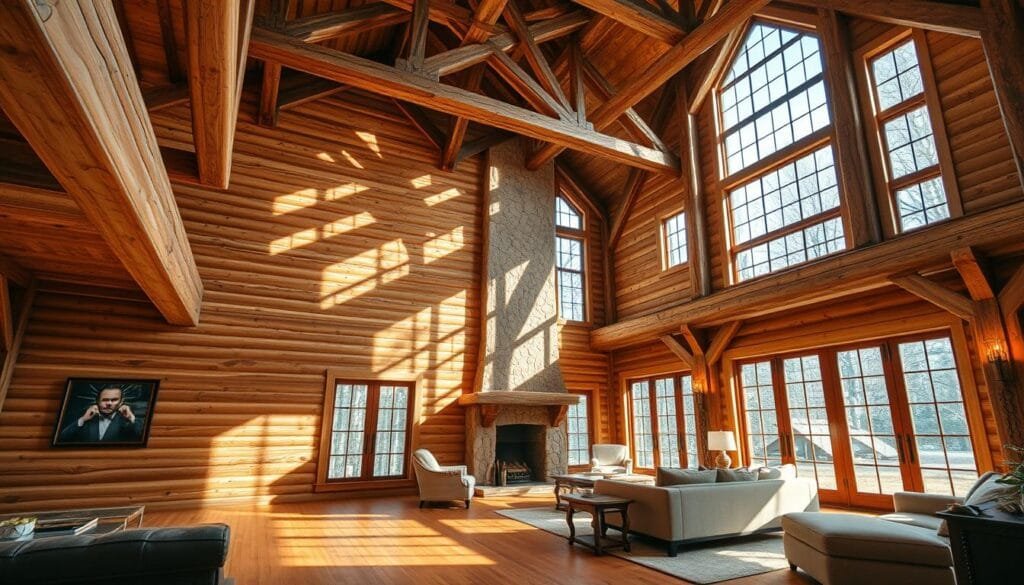
Aesthetic Appeal and Longevity
The visual character of these homes differs greatly. One style turns the structure itself into the main feature.
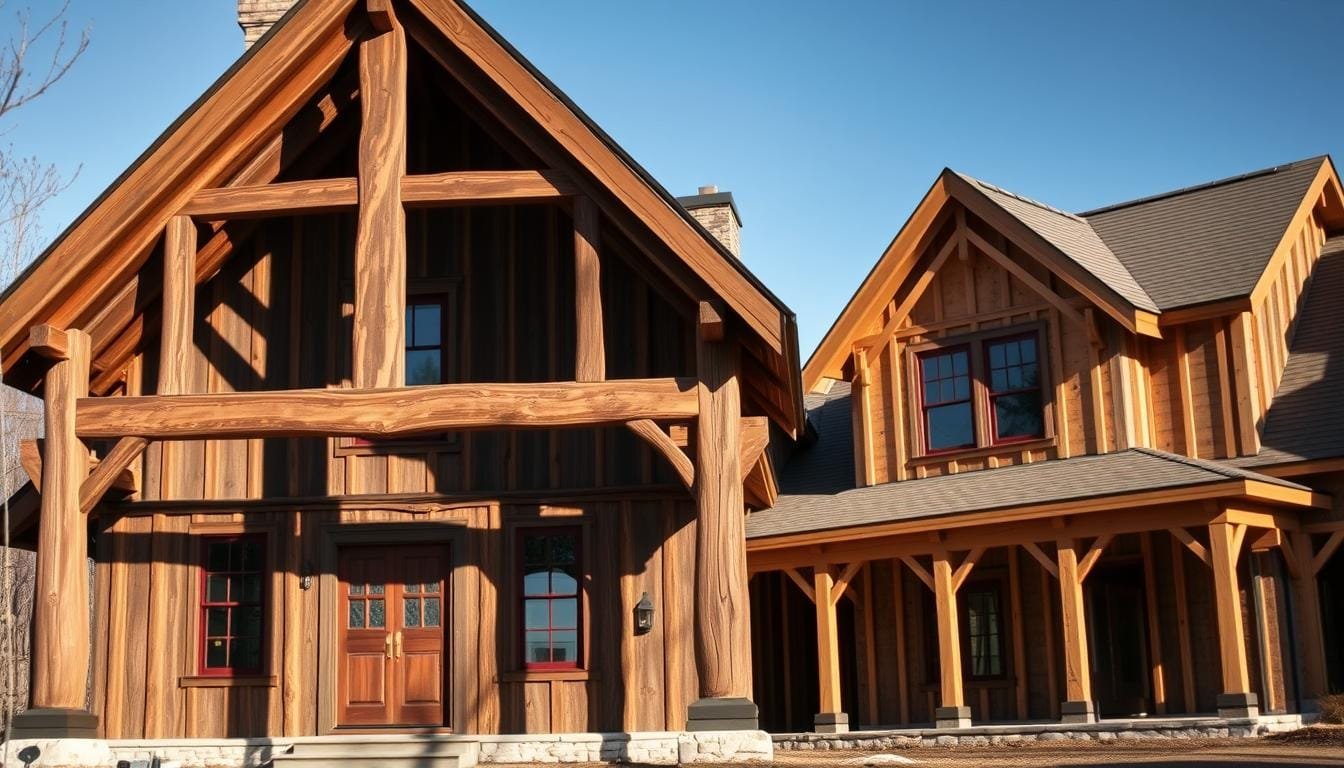
- Exposed beams and joinery create a stunning, handcrafted look with open, vaulted spaces.
- Standard construction hides the lumber behind walls, offering a clean, blank canvas for decor.
This difference extends to durability. The massive wood pieces in the first method are known for exceptional longevity. Many historic buildings stand as proof.
Conventional homes are durable but can be more vulnerable to pests and decay over many decades.
Cost, Sustainability, and Labor
Initial expenses are a major factor. The specialized technique typically costs 15-20% more upfront.
This is due to premium materials and the need for highly skilled labor. The investment is often justified by the unique result.
From a green perspective, the traditional method often uses natural, renewable resources with less waste. It can have a lower energy footprint.
Standard building relies more on metal fasteners and processed components. The time investment also varies, with fabrication and assembly happening in different stages.
Exploring timber frame vs stick-built walls: Structural Strength and Design Impact
At the heart of every building lies a framework that determines both strength and spatial possibilities. The way weight is distributed affects everything from room layouts to long-term durability.
Strength, Durability, and Material Choices
The traditional method uses massive wooden posts and beams that form a self-supporting skeleton. These large components carry the entire load, making interior partitions non-structural.
This approach selects premium species like Douglas fir and cedar for their exceptional strength and visual appeal. Each piece is carefully chosen since it remains exposed in the finished space.
Conventional construction relies on standardized dimensional lumber. The strength comes from many smaller studs working together with sheathing and fasteners.
| Aspect | Traditional Method | Conventional Method |
|---|---|---|
| Primary Support | Large posts & beams | Multiple stud walls |
| Material Size | 6×6 to 8×8 inches | 2×4 to 2×6 inches |
| Connection Type | Mortise & tenon joints | Nails & metal brackets |
| Load Distribution | Frame carries all weight | Walls share structural load |
Visual Design and Interior Flexibility
The freedom to place interior partitions anywhere is a significant advantage of the traditional system. Since walls don’t bear weight, you can create open floor plans or change layouts later.
This method creates dramatic spaces with exposed wooden elements as focal points. Vaulted ceilings and open areas define the architectural character.
Standard construction requires certain walls to remain in place for structural support. This limits remodeling options but works well for traditional room divisions. For more on different framing approaches, explore how each method suits various project needs.
Both systems create sound buildings, but they offer different strengths for specific applications and design preferences.
Practical Considerations in Design, Insulation, and Construction Processes
Moving from theory to practice, the actual building process reveals critical differences in how these two methods unfold. The journey to a completed home involves distinct timelines, insulation choices, and flexibility.
Customization and Layout Flexibility
One method allows for on-site adjustments. If you want to add a window before a section is closed up, changes are often simple. This offers adaptability during the project.
The other approach requires finalizing plans before fabrication begins. The entire skeleton and its panels are precision-cut off-site. This means last-minute changes are difficult, but it provides unmatched interior freedom later. Since no interior partitions are load-bearing, you can redesign rooms anytime.
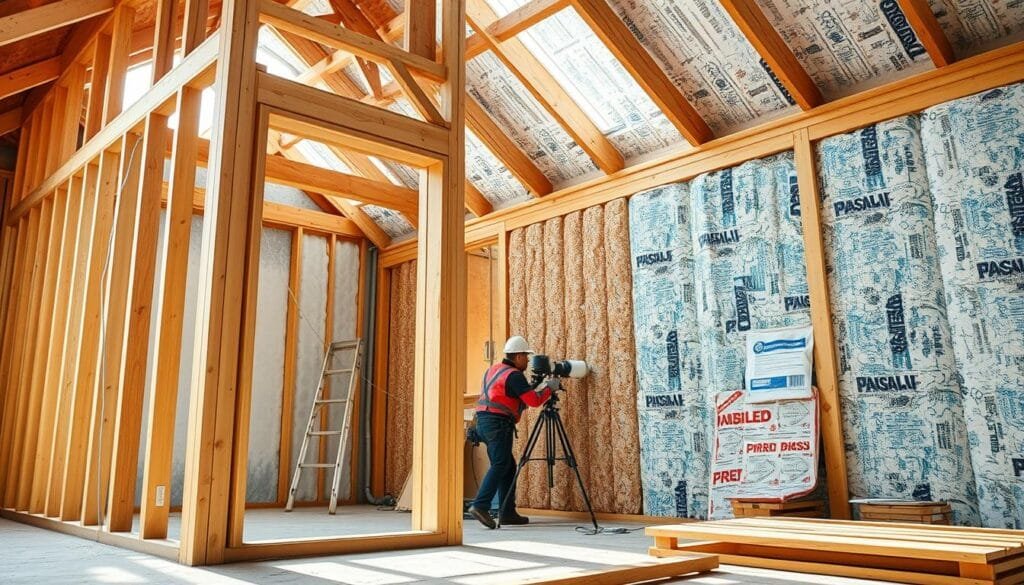
Insulation options also vary. Conventional builds use batts or spray foam installed in the cavity. The other technique typically employs Structural Insulated Panels (SIPs). These panels combine structure and insulation into one unit, creating a very tight seal.
Building Timelines and Code Requirements
The speed of getting a structure weather-tight differs significantly. The table below compares key aspects of the construction phase.
| Consideration | Method A (On-Site) | Method B (Prefabricated) |
|---|---|---|
| Framing Timeline | Approximately 7-8 days | Approximately 9 days for fabrication & raising |
| Design Changes | Easier during early construction | Must be finalized before build starts |
| Insulation System | Multiple material choices | Often uses pre-cut SIP panels |
| Wall Assembly | Multiple layers built sequentially | Combined structure/insulation panels |
Both methods must meet the same local building codes. Your project plans will need approval regardless of the path you choose. The right choice depends on your priorities for time, flexibility, and energy performance.
Final Thoughts on Making the Best Construction Choice
Ultimately, the strongest choice for your structure depends on balancing practical needs with aesthetic desires. This decision isn’t about finding one objectively superior method but selecting what aligns with your vision, budget, and timeline.
The traditional approach offers stunning visual character with exposed wooden elements that showcase craftsmanship. These structures have proven exceptional durability over centuries. The conventional method provides speed and accessibility that works well for many residential projects.
Many homeowners find value in hybrid solutions that blend both techniques. Consult experienced builders who understand both styles to get accurate estimates. Your perfect home emerges when construction method matches your personal priorities.