
Owning a mountain getaway or lakeside retreat has its own challenges. Heavy rain and snow can damage wood structures if not protected properly.
Wood structures are at risk from moisture damage. This can come from high humidity, rain, or freezing temperatures. Water can cause mold, fungus, staining, and rotting. These issues harm both looks and structure.
Seasons change, bringing new challenges. Winter tests every part of your property with freezing conditions. Strong winds, dampness, and temperature changes can cause damage.
This guide will teach you about waterproofing a cabin for rain and snow. You’ll learn about roof protection, foundation sealing, and drainage. We’ll also cover winter maintenance schedules. We’ve made it easy to understand, with steps you can do yourself and when to call experts.
Think of this as your guide to keeping your cabin dry, comfortable, and safe all year.
1. Understanding How Rain and Snow Damage Your Cabin
Weather damage to cabins doesn’t happen overnight. But knowing how rain and snow attack your structure is key. Before you start sealing every crack, you need to understand what you’re defending against. The science behind cabin structural damage shows why some areas are more vulnerable.
Water and wood are natural enemies. When moisture gets into wood fibers, it creates a perfect environment for deterioration. This knowledge helps you focus your waterproofing efforts and see why each step is important.
The Real Cost of Water Intrusion
Moisture damage cabin owners face big financial losses. Water intrusion can cost thousands of dollars in repairs. Plus, there are health risks from mold exposure. Experts say repairing significant water damage can cost between $3,000 and $7,000.
When water gets into your cabin, it starts a chain reaction. The wood swells as it absorbs moisture. Then, as conditions change, the wood contracts and expands, causing cracks and separations.
The worst consequence is rot. Fungi thrive in damp wood, breaking it down. Wood rot prevention is critical because once rot sets in, the wood must be replaced.
Mold growth is another expensive problem. It causes musty smells and health issues. Professional mold remediation can cost between $500 and $6,000, depending on the extent of contamination.
Water damage also ruins insulation, destroys belongings, damages electrical systems, and lowers your cabin’s value. Like preparing homes for heavy rain and, protecting your cabin requires early action.
How Snow Load Threatens Structural Integrity
Snow load is the weight of snow and ice on your roof. It’s not just a winter annoyance—it’s a serious threat. Snow load damage can range from minor sagging to catastrophic roof collapse.
Fresh, powdery snow weighs about 5-7 pounds per cubic foot. But when you calculate the volume on your roof, the numbers are scary. Wet, heavy snow can weigh 12-20 pounds per cubic foot, and solid ice weighs even more.
Consider a typical cabin roof measuring 30 feet by 40 feet (1,200 square feet). Just two feet of wet snow could add 24,000 to 48,000 pounds. That’s 12 to 24 tons of weight your roof must support. If your cabin wasn’t built for heavy snow load damage, you’re at risk.
The danger increases with uneven snow accumulation. Drifting snow creates concentrated weight on specific roof sections. Areas near valleys, dormers, and where rooflines meet can face triple the load.
Ice dams also worsen the problem. These ridges of ice form at roof edges when melting snow refreezes. They trap water, causing water intrusion problems that wouldn’t occur without them.
Recognizing the Warning Signs Early
Catching weather damage early can save you from big expenses and safety hazards. Your cabin sends out distress signals before problems become obvious. Learning to read these signs means you can act before minor issues become cabin structural damage requiring extensive repairs.
Watch for these critical indicators inside your cabin:
- Water stains on ceilings or walls, appearing as yellowish-brown discoloration
- Musty, damp odors that persist even when the cabin seems dry
- Peeling paint or wallpaper, specially in corners or along ceiling lines
- Warped or buckling floorboards that weren’t uneven before
- Doors and windows that suddenly stick or won’t close properly
- Visible mold growth, specially in bathrooms, kitchens, or basements
- Condensation forming on windows during cold weather
Exterior warning signs require equal attention:
- Missing, cracked, or curling roof shingles
- Sagging rooflines or sections that appear to dip
- Ice dams forming along roof edges during winter
- Discolored or darkened wood siding indicating moisture absorption
- Cracked or crumbling foundation mortar
- Gutters pulling away from fascia boards
- Standing water near your foundation after rainfall
Pay special attention after major weather events. Heavy rain or significant snowfall can reveal vulnerabilities in your cabin’s weather protection. Document any issues with photos and note their locations—this creates a record of developing problems.
The key to avoiding expensive water intrusion problems is regular inspection. Walk around your cabin at least four times per year, ideally at the start of each season. Look up at your roof, check your foundation, and examine your siding carefully.
Don’t ignore small signs hoping they’ll resolve themselves. That tiny water stain will grow. That minor roof sag will worsen. Early intervention can prevent a $7,000 disaster.
2. Gathering Your Waterproofing Tools and Materials
Having the right tools makes a DIY project easier. You wouldn’t start building a deck without the right stuff. Protecting your cabin from the elements is the same.
This section will guide you on what to buy before starting. We’ll cover the products that keep moisture out, safety gear, and tools that make work easier. Think of this as your complete list for cabin protection.
Essential Waterproofing Products
Quality products are key for a successful waterproofing project. Different materials serve different purposes. Knowing what to buy is important.
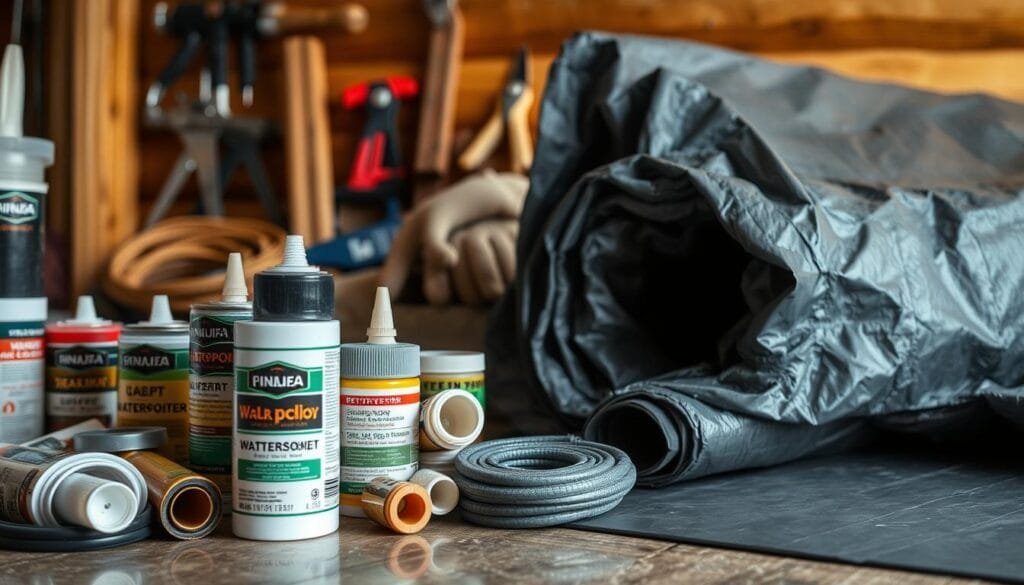
Sealants and Caulks
Weather stripping and caulk keep your home warm and your heating bill low. The right sealants depend on the surface and weather.
Polyurethane sealants are great for wood joints and trim. They handle temperature changes well. Expect to pay $8 to $12 per tube.
Silicone caulk is best for windows, doors, and metal flashing. It’s waterproof but doesn’t paint well. Look for 100% silicone for exterior use.
Acrylic latex caulk is good for general sealing and painting. It’s perfect for small cracks in siding and trim. Choose a formula with at least a 25-year warranty.
Membranes and Barriers
Waterproof membranes shield your cabin from moisture. They work behind the scenes but are critical.
Rubberized asphalt membrane protects foundation walls from groundwater. It comes in rolls for easy application. This is best for below-grade foundation waterproofing.
House wrap goes behind siding to let moisture vapor escape while blocking liquid water. Tyvek and Typar are proven brands. You’ll need enough for your entire exterior wall.
Ice-and-water shield protects roof areas like valleys and eaves. It seals around nail penetrations automatically. Install it on the bottom three feet of your roof slope at minimum.
Safety Gear You’ll Need
Protecting yourself is as important as protecting your cabin. Waterproofing involves heights, chemicals, and power tools. Don’t skip safety equipment—medical bills are expensive.
Start with heavy-duty work gloves for cuts and chemical protection. Nitrile-coated gloves are best for sealants.
Safety glasses with side shields keep debris out of your eyes. Choose a comfortable pair for all-day wear. Anti-fog coating is helpful in humid conditions.
Respirators or N95 masks filter out harmful fumes. Many waterproofing materials release harmful compounds. A fitted respirator makes a big difference.
Sturdy work boots with slip-resistant soles provide stable footing. Steel or composite toes protect against drops. Ankle support prevents injuries on uneven ground.
Fall protection equipment is essential on roofs. A quality harness with a roof anchor point is lifesaving. If your roof pitch is over 6:12, fall protection is required.
Recommended Power Tools and Equipment
The right tools make your work faster and better. You don’t need professional-grade equipment for a cabin project. Reliable tools make everything easier.
A pressure washer (2,000-3,000 PSI) cleans surfaces before sealing. Gas models offer more power, while electric works fine for most projects. This tool is essential for surface prep.
Heavy-duty caulking guns apply sealants smoothly. Spring-loaded models cost less but require more strength. Battery-powered guns eliminate fatigue on big projects.
Cordless drills with bits help with removing old materials and installing new ones. Get a 20-volt model with two batteries for power. Impact drivers work even better for driving screws.
Utility knives with retractable blades cut membrane materials and trim excess sealant. Stock up on extra blades—dull blades create ragged cuts.
A circular saw handles cutting damaged siding and trim boards. A 7¼-inch model with a carbide blade cuts most exterior materials. Cordless versions offer better maneuverability.
Extension ladders rated for 250+ pounds provide safe roof access. Get one that extends at least three feet above your roof edge. Ladder stabilizers prevent damage and improve stability.
| Tool Category | Recommended Model Type | Typical Price Range | Primary Use |
|---|---|---|---|
| Pressure Washer | 2,500 PSI Electric | $150-$300 | Surface cleaning and prep |
| Caulking Gun | Battery-powered or heavy-duty manual | $25-$120 | Applying sealants smoothly |
| Cordless Drill | 20V lithium-ion with two batteries | $100-$180 | Drilling and fastening tasks |
| Extension Ladder | Fiberglass, 24-28 feet | $200-$400 | Safe roof and upper wall access |
Having everything ready before you start means you’ll work more efficiently. Make a checklist and cross off items as you get them. Your future self will thank you when you’re not scrambling for supplies.
3. Conducting a Thorough Cabin Inspection
Knowing your cabin’s current state is key to a successful waterproofing project. Before starting, you must understand where your cabin stands today. A detailed cabin inspection checklist helps spot problems early, avoiding costly repairs later.
Start by checking the outside, looking for areas where water and snow can get in. Examine every part of the cabin, from visible surfaces to hidden corners. The goal is to find damage early, not wait for it to get worse.
Use a notebook and your phone for photos. Set aside a few hours for this important task. The info you gather will guide your next steps.
Step 1: Walk the Exterior Perimeter
Begin your exterior inspection by walking around your cabin slowly. Look at every wall, focusing on areas near the ground. These spots are most at risk from rain and snow.
Check your log siding and trim closely. Logs should show their original stain color or shine if they have a clear finish. If they’re black, gray, or faded, the finish is gone, leaving the wood vulnerable.
Look for these specific problems during your walk:
- Cracks or gaps between logs or in corner joints where water can seep through
- Peeling or bubbling paint that signals moisture trapped beneath the surface
- Soft or spongy wood when you press firmly with your thumb—a clear sign of rot
- Discolored patches that appear darker or have unusual staining patterns
- Missing or damaged caulking around windows, doors, and where different materials meet
- Vegetation growing too close to walls, which traps moisture against the wood
Pay extra attention to corners, where two walls meet at angles. These joints often develop problems first because they’re exposed to weather from multiple directions. Also examine areas under windows and doors where water tends to collect.
Step 2: Check Your Roof from Ground Level
You don’t need to climb onto your roof to conduct an effective roof damage assessment. Stand back from your cabin and examine the entire roofline from different angles. A good pair of binoculars helps you spot details that aren’t visible from ground level.
Scan systematically from one end to the other, looking for obvious issues. Missing or damaged shingles appear as dark spots or irregular patterns where the underlying material shows through. Sagging areas indicate structural problems that need immediate attention—these spots can’t support heavy snow loads properly.
Check these critical roof elements during your inspection:
- Shingle condition: Look for curling edges, missing pieces, or granule loss that exposes the black underlayment
- Roof valleys: These V-shaped channels should be clear of debris and show no signs of water pooling
- Flashing around chimneys and vents: Metal flashing should lay flat with no gaps or rust spots
- Moss or algae growth: Green or black streaks indicate moisture retention that damages roofing materials
- Debris accumulation: Leaves, branches, and pine needles trap moisture and accelerate deterioration
Walk around your cabin to view the roof from all sides. Problems on one slope don’t always appear on others, so a complete circuit gives you the full picture.
Step 3: Inspect Interior Ceilings and Walls
Your moisture inspection continues inside, where water damage often shows up before you notice exterior problems. Start in the attic if you have access, then work through each room systematically. This interior assessment reveals leaks that haven’t yet caused visible exterior damage.
Look at ceilings first, focusing on areas directly under roof spots you identified as questionable from outside. Water stains appear as yellow, brown, or gray discoloration, often with irregular edges. Fresh stains feel damp to the touch, while old stains remain dry but show where water entered previously.
Check walls thoroughly, paying special attention to areas around windows and doors. Run your hand along surfaces to feel for soft spots that indicate hidden moisture. Peeling paint or wallpaper often signals water problems behind the surface. Don’t forget to inspect basements and crawl spaces—these below-grade areas face the highest risk of moisture intrusion.
Watch for these interior warning signs:
- Musty odors that indicate hidden mold growth from ongoing moisture problems
- Warped floorboards near exterior walls where ground moisture seeps through
- Condensation on windows that suggests ventilation issues contributing to moisture buildup
- Rust stains below heating vents or around pipe penetrations
- Efflorescence—white, chalky deposits on concrete that show water moving through the foundation
Touch suspect areas gently. Soft or spongy drywall means water damage has compromised the material’s integrity. These sections need replacement, not just cosmetic repair.
Step 4: Document Everything with Photos
This final step transforms your cabin condition evaluation from mental notes into concrete documentation. Pull out your smartphone and photograph every problem area you’ve identified, plus representative shots of areas in good condition for comparison. These photos serve multiple critical purposes throughout your waterproofing project.
Take both close-up and wide-angle shots of each issue. Close-ups show specific damage details clearly, while wider shots provide context about location and surrounding conditions. For example, photograph a cracked log in detail, then step back and capture which wall and how high from the ground that crack appears.
Make sure your photos capture:
- Clear images of damage with good lighting that shows the problem accurately
- Reference points like windows, doors, or corners that help you relocate the spot later
- Scale indicators—place a ruler, coin, or your hand near smaller defects to show size
- Before conditions that you’ll compare with after-repair photos to track progress
- Date stamps enabled in your camera settings to create a chronological record
Organize photos immediately into folders labeled by location: “North Wall,” “Roof East Side,” “Basement South Corner.” This organization prevents confusion when you’re ready to start repairs weeks or months later. Your photo documentation also provides valuable evidence for insurance claims if severe weather causes damage, and helps contractors understand exactly what needs fixing if you decide to hire professional help.
Back up these photos to cloud storage or email them to yourself. Losing this documentation means repeating the entire inspection process from scratch.
4. Waterproofing a Cabin for Rain and Snow: Starting with the Roof
Your roof takes the brunt of rain and snow. So, it’s the first place to protect. A weak spot can let water in, causing damage inside. A good roof keeps you safe and dry.
Start by clearing debris and applying protective coatings. Fix every spot where water might leak. It’s hard work, but it’s worth it to stay cozy inside while it rains outside.
Make sure you’re safe before you start. Never work on a wet or icy roof. If your roof is steep, get a pro to do it.
Step 1: Remove Debris and Clean the Roof Surface
Get rid of leaves, pine needles, and dirt on your roof. They trap moisture and cause damage. This makes your roof rot and leak.
Use a roof rake or soft-bristle broom to clean. Start at the top and work down. Pay extra attention to valleys and around chimneys.
After sweeping, hose down the roof. This shows hidden problems and washes away dirt. For tough moss, use a roof cleaning solution, not a pressure washer.
Step 2: Inspect and Replace Damaged Shingles
Check your roof for damaged shingles. Look for cracks, curls, or missing shingles. These spots let water in.
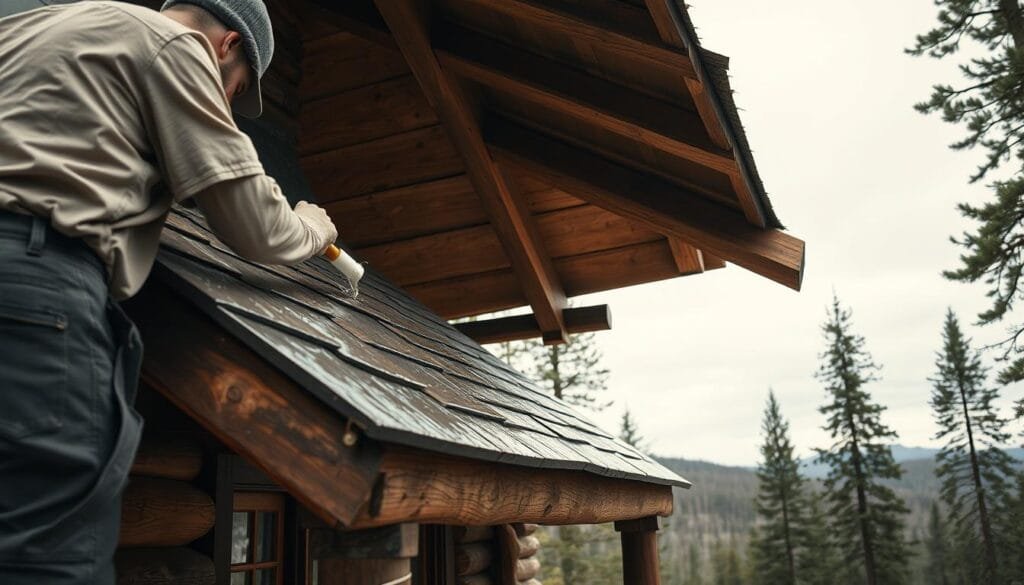
You don’t have to replace the whole roof. Just fix the bad shingles. Lift the ones around it, remove the nails, and put in a new one. Seal the edges with roofing cement.
Choose strong roofing materials. They can handle wind and snow. Asphalt shingles are good, but architectural shingles last longer.
| Roofing Material | Snow Load Capacity | Average Lifespan | Best For |
|---|---|---|---|
| 3-Tab Asphalt Shingles | Good (standard weight) | 15-20 years | Budget-conscious projects |
| Architectural Shingles | Excellent (heavier weight) | 25-30 years | Heavy snow regions |
| Metal Roofing | Excellent (snow slides off) | 40-70 years | Steep-pitch cabins |
| Cedar Shakes | Good (requires maintenance) | 20-30 years | Traditional cabin aesthetics |
Step 3: Seal All Roof Penetrations
Roof penetrations like chimneys and vents are leaky spots. They need proper roof flashing to keep water out. Even small gaps can let in a lot of water.
Each penetration needs its own fix. Chimneys need metal flashing, vents rubber boots, and skylights need flashing and sealant.
Chimney Flashing
Check your chimney for damage before fixing the flashing. Cracked mortar lets water in. Fix the mortar first, then the flashing.
Look for rust, gaps, or loose flashing. Remove old caulk and apply new roofing cement or sealant. Make sure the flashing goes up the chimney wall and overlaps the shingles.
Counter-flashing should overlap the base flashing. If it’s damaged, replace it for good protection.
Vent Pipes and Skylights
Vent pipe boots wear out over time. Check for cracks or separation. If it’s damaged, replace it.
Replacing a vent boot is easy. Remove shingles, pull out nails, and slide off the old boot. Put on a new one, reinstall shingles, and seal with roofing cement.
Skylights need sealing on all four sides. Check corners where flashing meets the skylight frame. Apply silicone or polyurethane sealant around the perimeter, ensuring the flashing overlaps the shingles.
Step 4: Install Ice and Water Shield in Critical Areas
Ice and water shield is a rubberized membrane for vulnerable areas. It protects against ice dams and wind-driven rain. It greatly reduces leak risk.
Focus on high-risk areas:
- Eaves and overhangs: Apply it along the bottom three to six feet of your roof to prevent ice dam damage
- Valleys: These channels where two roof planes meet handle concentrated water flow
- Around penetrations: Create a waterproof barrier around chimneys, vents, and skylights
- Rake edges: The sides of your roof where wind can drive rain underneath shingles
Installation is simple but needs detail. Clean the roof deck before applying. Peel off the release paper and press the membrane firmly onto the surface. Overlap seams by at least six inches for continuous protection.
For more weatherproof your log cabin tips, use ice and water shield with other methods for extra defense.
Step 5: Apply Roof Coating for Extra Protection
Roof coating is the last step. It creates a reflective surface that extends your roof’s lifespan by five to ten years. It fills cracks, protects from UV, and saves energy by reflecting sunlight.
Choose a coating for your roofing material. Acrylic works for asphalt shingles and offers UV resistance. Silicone provides better waterproofing, even in wet areas.
Apply when it’s dry and mild. Avoid rain for 24 hours. Clean the roof first to remove dust or debris. Use a roller or sprayer for even coverage. Most need two coats, with drying time in between.
Focus on seams, edges, and water pooling areas. A thicker application here offers extra protection. The coating should be even and without thin spots.
Regular checks keep your roof in good shape. Inspect twice a year and after storms. Fix small problems fast to avoid big costs. With care, your roof will keep you dry and warm all year.
5. Installing a High-Performance Gutter System
Installing a reliable gutter system is a smart way to prevent water damage. It keeps your cabin’s foundation and walls safe. Overhangs and gutters move rainwater away from your home.
Without a good gutter system, water can pool around your foundation. This can lead to expensive repairs. A good gutter system can handle thousands of gallons of water during storms.
Clean gutters and downspouts keep water away from your cabin. This protects your walls and basement from water damage. This section will guide you on choosing and installing gutters for your cabin.
Choosing Between 5-Inch and 6-Inch Gutters
The size of your gutters matters for handling rain and snow. Most cabins use 5-inch or 6-inch gutters. The right size depends on your cabin’s size and location.
5-inch gutters are good for smaller cabins with average rain. They fit roofs under 1,500 square feet. They’re cheaper and easier to find.
6-inch gutters are better for bigger cabins or areas with heavy rain. They handle roofs over 1,500 square feet and steep pitches. They also handle heavy rain better.
Consider your roof’s pitch too. Steeper roofs need gutters that can handle fast water. A 6-inch system is better for this.
Step 1: Remove Old or Damaged Gutters
Start by removing old or damaged gutters. This gives you a clean start. It also lets you check the fascia boards underneath.
Use a sturdy ladder and wear safety gloves. Remove downspouts first. Work from bottom to top to avoid accidents.
Then, take out the gutter sections. Most gutters attach with spikes or hidden hangers. Use a pry bar gently to avoid damaging the wood. Mark any rotted fascia boards for repair later.
Save the old hardware for now. Looking at how the old system was installed helps you avoid mistakes. This is important if you find leaks or damage.
Step 2: Install Seamless Aluminum Gutters
Seamless gutters are a big upgrade. They have fewer leaks than sectional gutters. They’re custom-made for your cabin’s exact size.
If you’re hiring someone, make sure they know about slope. Gutters should drop about 1/4 inch for every 10 feet toward downspouts. This ensures water flows well without pooling.
For DIY, here’s how to install:
- Mark a level line along your fascia where the back of the gutter will sit
- Adjust the line downward 1/4 inch per 10 feet toward downspout locations
- Install hidden hangers every 24 inches for proper support
- Attach end caps with high-quality sealant rated for outdoor use
- Connect corner pieces with rivets and waterproof caulk
Aluminum is the best material because it doesn’t rust. It handles temperature changes well and is light but strong. Seamless gutters cost more but last longer and need less maintenance.
Step 3: Add Gutter Guards to Prevent Clogs
Gutter guards make maintenance easy and keep your system working. Heavy rain and snow can clog gutters. Good guards prevent this.
There are many types of gutter guards:
- Mesh screens: Fine metal mesh that blocks debris while allowing water through; affordable and effective for most situations
- Reverse-curve guards: Solid covers that use surface tension to guide water into gutters while debris falls off; excellent for heavy leaf coverage
- Foam inserts: Porous foam blocks that fit inside gutters; budget-friendly but may need replacement every few years
- Brush guards: Bristle-filled tubes that catch debris while letting water flow; easy to install but require occasional cleaning
For cabins with trees, mesh or reverse-curve guards work best. They handle pine needles well, which are hard to stop.
Put guards on after installing seamless gutters. Most systems snap or clip into place without screws. Make sure guards don’t block water flow during heavy rain.
Step 4: Position Downspouts for Maximum Drainage
Downspout placement is key for effective rain drainage. Wrong placement can lead to moisture problems. Strategic placement is essential.
Calculate downspout needs based on this formula: one downspout for every 30 to 40 feet of gutter. Big roofs need more downspouts to handle storms. Don’t skimp on downspouts to save money.
Place downspouts where water naturally flows. Use corners when possible for less visual impact. Avoid areas where water can harm walkways or foundations.
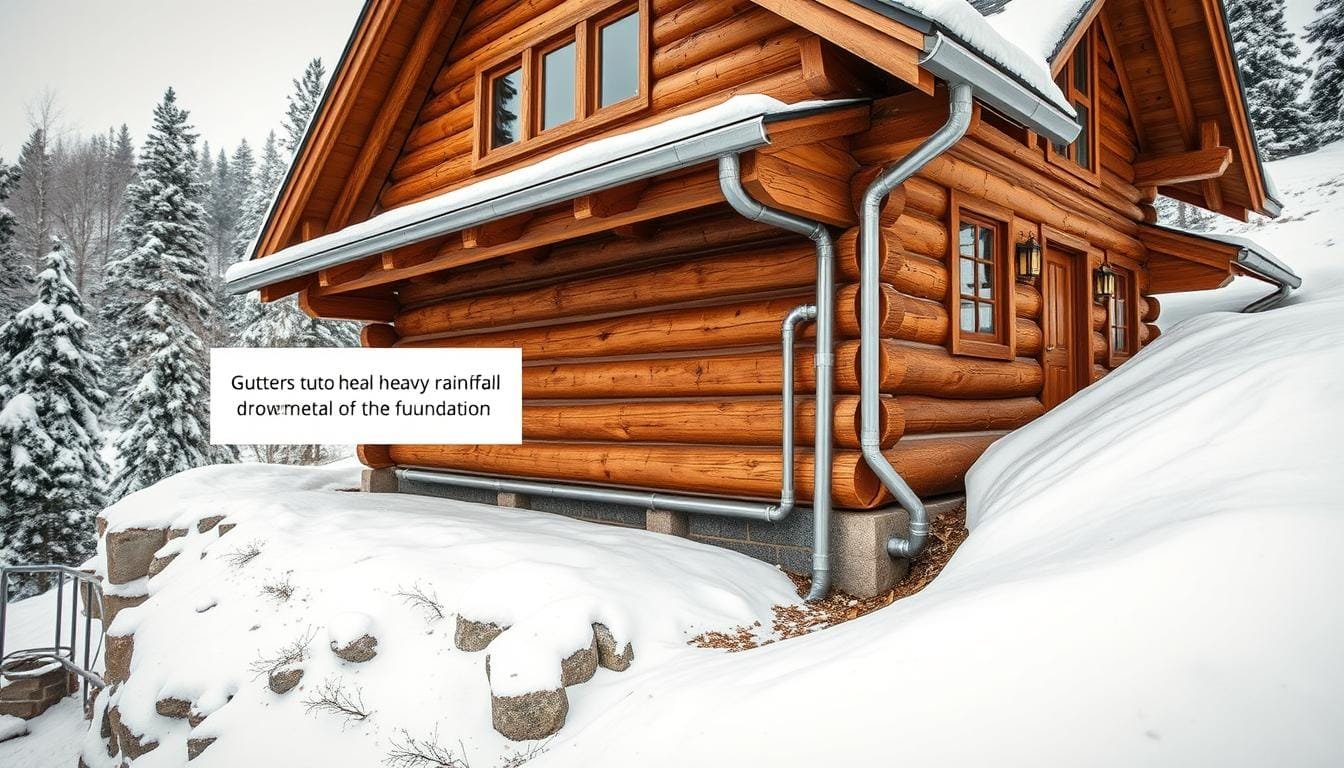
Secure downspouts to walls with brackets every 6 feet. Make sure the bottom section is 4 to 6 feet away from the foundation. Use extensions or connect to buried pipes to carry water further.
Check local building codes for downspout water discharge rules. Some areas have strict rules. Your installation must follow these to avoid issues.
Test your gutter system with a garden hose. Check for proper flow and no leaks. Make any needed adjustments while you can.
6. Foundation Waterproofing from Top to Bottom
Building your cabin on a solid, waterproofed foundation prevents many problems. Moisture, mold, and structural damage are common issues. A good approach is to build on an elevated foundation, about two feet high.
This height naturally keeps the lower logs dry. Adding waterproofing techniques gives extra protection against water.
Regular maintenance is key to prevent damage. Clean the logs at the bottom of your cabin often. Dirt and moss trap moisture and cause rot.
Foundation work is a big investment but it pays off for decades. We’ll look at both exterior and interior methods to keep your foundation dry.
When to Waterproof from the Outside
Exterior foundation waterproofing offers the best protection. It stops water before it hits your foundation walls. This method tackles the problem at its source.
Choose exterior waterproofing if your cabin has basement dampness or visible cracks. These signs mean water is getting in from outside. Exterior methods can’t fully fix these problems.
Cabins in areas with high water tables need exterior waterproofing. If your property has clay soil or slopes toward your cabin, it’s even more important. The upfront cost saves you from expensive repairs later.
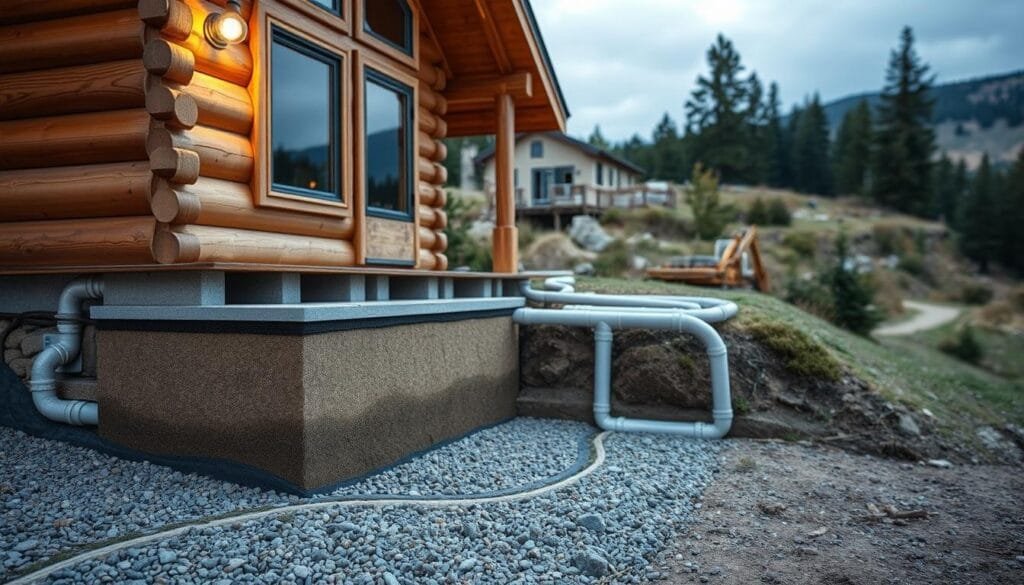
Step 1: Excavate Around the Foundation
Excavation is the hardest part of exterior waterproofing. You’ll dig a trench around your foundation, down to the footing level. This is usually 6-8 feet below ground.
Use a small excavator for this job, unless you have easy access and enjoy hard work. Make the trench 3 feet wide to have enough room. Slope the sides to prevent cave-ins.
Remove all soil at least 10 feet from the foundation. You’ll fill it back in later. Be careful not to hit utility lines during excavation. Call 811 before digging to mark underground utilities.
Step 2: Clean and Repair Foundation Walls
Before waterproofing, clean the foundation walls well. Use a stiff wire brush to remove dirt, old coatings, and mineral deposits.
Power wash the walls with a 2000-3000 PSI pressure washer. This removes stubborn debris and shows any cracks or damage. Let the walls dry for at least 48 hours before going further.
Fill wide cracks with hydraulic cement. This expands as it cures, sealing the wall. For big cracks, use epoxy resin to strengthen the wall. Smooth out all repairs.
Step 3: Apply Rubberized Asphalt Membrane
The rubberized membrane is your main waterproof barrier. It sticks to concrete or masonry walls and stays flexible as the foundation shifts.
Apply the membrane with a trowel or brush, from bottom to top. Make it at least 1/8 inch thick over the whole surface. Extend it 6 inches above the final grade.
Work in sections about 4 feet wide to keep the membrane wet. It should look black and even, with no thin spots. Apply a second coat after the first dries to add extra protection.
Step 4: Install Drainage Board
Drainage board makes your waterproofing even better by creating an air gap. This dimpled plastic sheeting lets water drain down to your drainage system instead of pressing against the walls.
Roll the drainage board vertically against your foundation, dimpled side facing the wall. Overlap seams by at least 6 inches and secure the top edge with fasteners.
Extend the drainage board from your footing level to just below final grade. This setup channels water down to your French drain. Some boards have a filter fabric to keep soil out of the drainage channels.
Step 5: Add a French Drain System
French drain installation completes your exterior drainage. It collects water at the footing level and directs it away from your cabin. This system uses gravity to move water to a safe place.
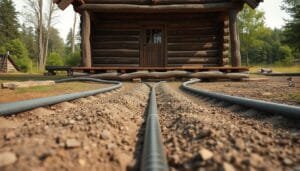
Start with a 2-inch layer of washed gravel at the footing level. Place 4-inch perforated drain pipe on this gravel, with holes facing down. Slope the pipe at least 1/4 inch per foot toward your discharge point.
Cover the pipe with 6-8 inches of gravel before backfilling. Wrap the gravel and pipe in landscape fabric to keep soil out. Connect the pipe to a daylight outlet or a dry well if you don’t have a good slope.
| Waterproofing Method | Best Application | Approximate Cost | Lifespan |
|---|---|---|---|
| Exterior Rubberized Membrane | New construction or major foundation problems | $8,000-$15,000 for average cabin | 50+ years |
| Exterior Drainage Board System | High water table areas with persistent moisture | $10,000-$18,000 complete installation | Lifetime of structure |
| French Drain Installation | Properties with poor natural drainage | $3,000-$7,000 depending on length | 30-40 years |
| Interior Drainage Channel | Impossible exterior access or budget constraints | $4,000-$8,000 with sump pump | 25-30 years |
Interior Basement Waterproofing Alternatives
Interior basement waterproofing is a good choice when you can’t do exterior work. These methods manage water that gets in, but they don’t stop it from entering. They work well for many situations.
Install an interior drainage channel around your basement if you can’t excavate outside. This system catches water as it enters through the foundation walls and floor joint. It connects to a sump pump that removes water automatically.
Crystalline waterproofing products are another interior option. They penetrate into concrete and block water pathways. Apply them to the interior foundation walls as directed by the manufacturer.
Use vapor barriers on interior walls for humidity issues. These plastic sheets keep moisture out while letting the foundation breathe. Use interior methods with exterior drainage for the best results.
Interior waterproofing costs less but only fixes symptoms. Use these techniques when you can’t access the outside or as a temporary fix until you can do exterior work.
7. Sealing Cabin Walls and Exterior Siding
Your cabin’s siding is like a shield against water. When it fails, water can get inside. Walls face rain, snow, and temperature changes that make wood expand and contract. Sealing your walls keeps your cabin dry and comfortable all year.
Before starting, check your property’s plants. Plants too close to walls trap moisture, causing rot and mold. Trim back plants to at least six feet from your cabin walls for better air flow and drying.
This section teaches you to make your walls waterproof. Each step is important for lasting protection.
Pressure Wash All Exterior Surfaces
Clean walls are key for sealing. Dirt, mildew, and old finish prevent new products from sticking. A thorough pressure wash prepares the surface for treatments.
Use 1,200 to 1,500 PSI for wood siding. A 25-degree or 40-degree spray tip is better than zero-degree. Hold the nozzle 12 to 18 inches away and move smoothly.
Start from top to bottom to avoid dirty water. Pay extra attention to shaded sides where mildew grows. Use a mildew-killing cleaner if needed.
Let your cabin dry for at least 48 hours before the next step. Wood must be dry for sealants to stick. Choose dry, warm days for this project.
Fill Cracks and Gaps with Exterior Caulk
Check for gaps where water can enter. These small openings can lead to big problems. Caulking seals these vulnerabilities.
Use a good exterior caulk for your climate. Look for “paintable” and “flexible” products. Silicone caulk is great for water but can’t be painted.
Focus on these areas:
- Where siding boards meet corners or trim
- Around windows and doors
- Where materials join, like wood and stone
- Cracks or splits in siding boards
- Utility entry points
Cut the caulk tube tip at 45 degrees for better control. Apply steady pressure and smooth the bead with a wet finger or tool. A neat caulk line sheds water better.
Check caulk lines twice a year and touch up as needed. This prevents big water problems.
Replace Rotted or Damaged Siding
Badly damaged siding needs to be replaced. Test for soft wood with a screwdriver. If it sinks in, replace it.
Replacing boards is easier than you think. Cut out the bad section with a circular saw. Make cuts over studs for a solid nailing surface. For log siding, you might need a chainsaw and more skills—consider a pro.
Before installing new siding, coat the wall sheathing with a moisture barrier. This prevents water from reaching the framing if sealants fail.
Match the new siding to the old as closely as possible. Use saved pieces if you have them. If not, find a match at a siding yard. New wood will look different at first, but stain or sealer will help it blend.
Nail the new siding according to the manufacturer’s specs. Use one nail every 16 inches into studs. Don’t nail too close to edges. Countersink nail heads and fill holes with wood filler before sealing.
Apply Water-Repellent Wood Sealer
The final step is applying a good exterior wood sealer or stain. This protects against moisture, UV damage, and weathering. Black, gray, or faded logs have lost their protective finish, exposing wood to rot and damage.
Choose between clear sealers and stains based on your preference:
| Sealer Type | Best For | Reapplication Frequency | Key Benefits |
|---|---|---|---|
| Clear Water-Repellent Sealer | New wood, natural appearance | Every 1-2 years | Shows wood grain, easy to apply, quick drying |
| Semi-Transparent Stain | Most cabins, balanced protection | Every 3-4 years | Adds color, better UV protection, hides minor flaws |
| Solid Stain | Older cabins, maximum coverage | Every 5-7 years | Longest lasting, covers all imperfections, widest color range |
| Oil-Based Wood Preservative | Log homes, untreated timber | Every 2-3 years | Deep penetration, natural mildew resistance, rustic finish |
Oil-based products last longer but need mineral spirits for cleanup. Water-based products clean up with soap and water, dry faster, and have fewer fumes.
Apply your chosen product when it’s between 50°F and 85°F with no rain for 24 hours. Use a brush for corners, a roller for large areas, or a sprayer for logs. Work from top to bottom to catch drips and maintain a wet edge to avoid lap marks.
Most products need two coats for full protection. Apply the first coat generously and let it dry. The second coat seals the surface and protects your cabin.
Pay extra attention to horizontal surfaces like windowsills and the bottom edges of siding. These areas need an extra-thick coat of wood preservative.
Mark your calendar for reapplication based on the product and your climate. South-facing walls need more treatment than north-facing ones. Regular reapplication prevents costly repairs.
Use weather-resistant materials when building or renovating. Choose siding that can handle wind and rain, and ensure all untreated timbers have protective applications before installation. This saves time and money in the long run.
8. Making Windows and Doors Weathertight
Windows and doors in your cabin need careful attention to keep out rain, snow, and drafts. They let in light and air but are weak spots in your weather protection. A small gap can let gallons of water in during storms.
Improving window and door sealing is easy with basic tools and materials from any hardware store. You’ll feel the difference in comfort and save on energy costs.
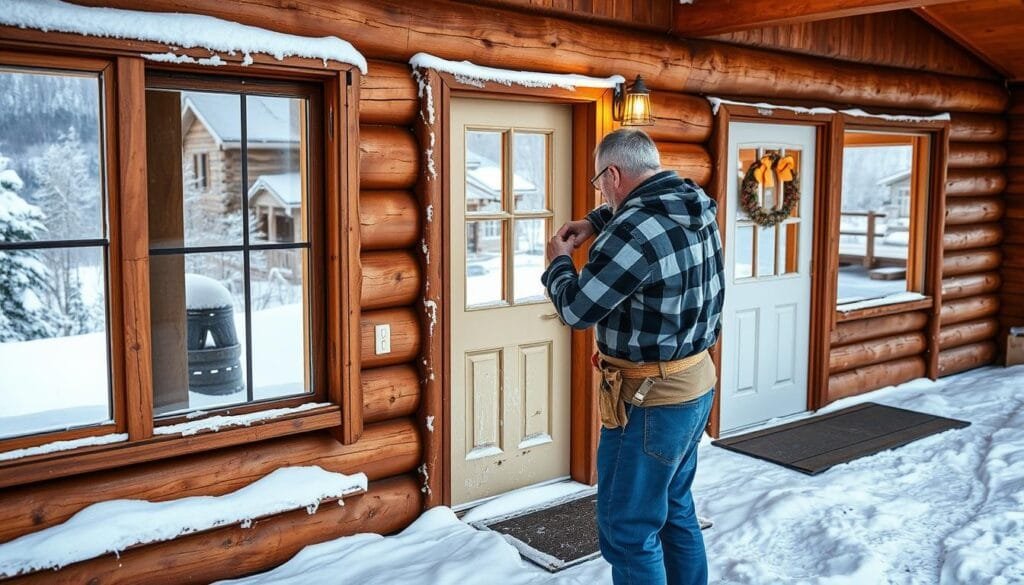
Step 1: Remove Old Weatherstripping
Start by checking all windows and doors for old weatherstripping. Look for foam, V-strips, or gaskets that may not work well anymore. Old weatherstripping can’t seal properly.
Use a putty knife or your hands to remove the old material. Some types come off easily, while others may leave residue. Clean the surfaces with rubbing alcohol or mineral spirits to remove any leftover adhesive or dirt.
Also, check the frames for damage. Any rot or metal damage needs fixing before you can install new weatherstripping. Small cracks can be filled, but bigger damage might need new parts.
Step 2: Apply Fresh Weatherstripping Tape
Choose the right weatherstripping for your needs. V-strip works well for double-hung windows because it compresses when closed. Foam tape is better for stationary windows and door tops.
Measure each section carefully before cutting. Cut pieces a bit longer than needed. For doors, apply the material to the jamb for better results.
Press the adhesive-backed weatherstripping firmly into place. Start at one end and work along the frame. Avoid stretching it to prevent it from coming loose. Test the windows and doors to make sure they close well.
Step 3: Seal Window and Door Frames with Caulk
The gaps between frames and the cabin’s framing let water in. This can cause rot and damage. Exterior caulk creates a waterproof barrier to stop this.
Use a paintable acrylic latex caulk with silicone for sealing. This type stays flexible and sticks well to various surfaces. Cut the caulk tube tip at a 45-degree angle for smooth application.
Apply caulk around the entire perimeter of the frame. Work from top to bottom on vertical sections. Use your finger or a tool dipped in soapy water to smooth the caulk. Wipe away excess with a damp cloth.
Pay extra attention to bottom corners where water tends to collect. These areas need more caulk to prevent leaks. Let the caulk cure for 24 hours before exposing it to rain or snow.
Step 4: Install Storm Windows for Winter Protection
Storm windows add an extra layer of protection against winter weather. They reduce heat loss and block rain and snow. Many see a 10-20% drop in heating costs after installing them.
You can choose between exterior storm windows or interior panels. Exterior models offer better protection, while interior ones are easier to install and remove. Aluminum-frame storm windows with low-E glass are the most energy-efficient.
Measure each window opening carefully. Most stores offer custom sizing for a small extra cost. Mount exterior storm windows with corrosion-resistant screws for a tight seal.
For removable interior storm windows, use magnetic strips or compression channels. These hold panels securely while allowing easy removal. Test all storm windows before winter to ensure a proper fit.
Adding Door Sweeps and Thresholds
The bottom of your cabin doors is a challenge for sealing. A half-inch gap can let in water, snow, insects, and cold drafts. Door sweeps attach to the door, while thresholds raise the seal point.
Door sweeps come in various styles, including brush, vinyl, and automatic models. Heavy-duty aluminum door sweeps with replaceable vinyl inserts are best for exterior doors because they last long and withstand harsh weather. Measure your door width and cut the sweep to fit.
Attach the door sweep to the door’s exterior bottom using screws. Position it so the seal just touches the threshold when the door is closed. Test the door’s operation and adjust the sweep’s position if needed.
Thresholds should rise slightly above the floor level for a proper seal. Replace old thresholds with new ones designed for exterior doors. Some thresholds have adjustable height features for fine-tuning the seal.
Check every entry door for proper clearance and seal. Weather can change quickly in cabin country. These simple improvements keep your interior comfortable, no matter the weather outside. Your windows and doors will now face whatever Mother Nature sends your way.
9. Preventing Ice Dams Through Attic Improvements
Winter brings snow to your cabin, but it also leads to ice dams. These can cause water damage. The good news is that ice dam prevention starts in your attic, not on your roof. Improving your attic insulation and ventilation can stop ice dams before they form.
Quality insulation keeps your cabin warm and prevents heat loss. Sealing and insulating your cabin protects it from winter’s damage. It also saves you money on energy bills.
Understanding Why Ice Dams Form
Ice dams don’t just appear on your roof. They form when heat escapes into the attic. This warm air melts the snow on your roof.
The melted water runs down until it hits the cold eaves. There, it freezes, creating a ridge of ice. This ice blocks more meltwater, causing problems.
This backed-up water can damage your cabin. It causes stains, wall damage, and insulation problems. Knowing this helps you see why roof ice problems aren’t solved by removing ice.
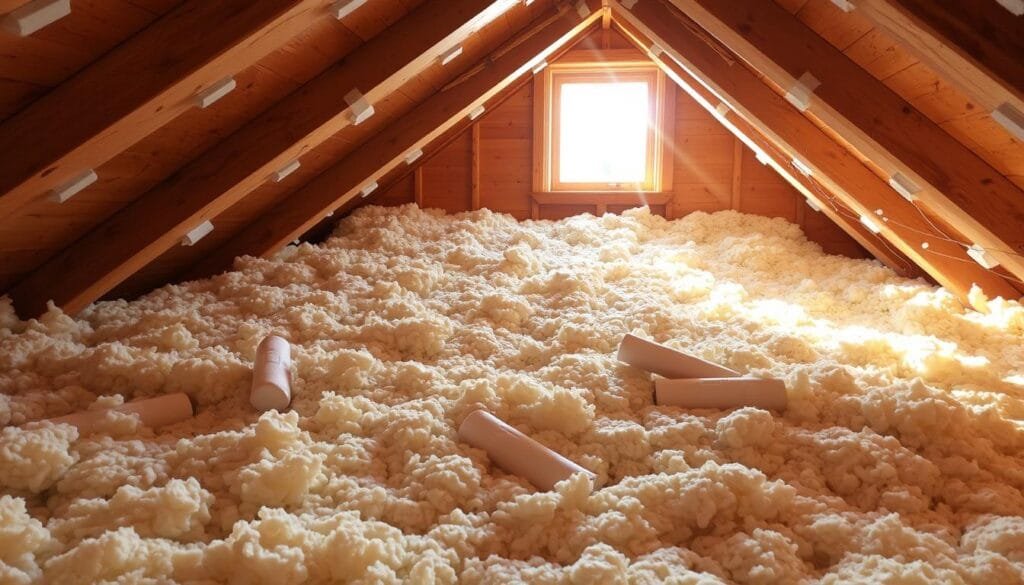
Step 1: Measure Your Current Insulation Levels
Before adding more insulation, check what you have. Go to your attic with a tape measure and flashlight. Measure insulation depth in several spots.
Different insulation materials have different R-values. Fiberglass batts offer R-3 to R-4 per inch. Blown-in cellulose is about R-3.5 per inch. Six inches of fiberglass batts is only R-19, which is not enough.
Most cabins need R-49 insulation or higher. Take photos and notes about your attic. This will help you plan your insulation upgrade.
Step 2: Add R-49 Insulation to Attic Floor
To reach R-49, you’ll need 16 to 20 inches of insulation, depending on the material. You have three main options:
- Fiberglass batts: Affordable and DIY-friendly, but requires careful installation to avoid gaps and compression
- Blown-in cellulose: Fills gaps effectively and provides excellent coverage, though it requires rental equipment
- Spray foam: The most expensive option but provides the best air sealing and highest R-value per inch
When installing batts over existing insulation, run the new layer perpendicular to the old one. This covers any gaps. Make sure you don’t compress the insulation—squashing it reduces its R-value significantly. Leave space above the insulation for air to flow if you have soffit and ridge vents.
Never cover recessed lighting fixtures or exhaust fans with insulation unless they’re rated for insulation contact (IC-rated). This creates a fire hazard. Instead, build a dam around these fixtures using rigid foam board to keep insulation at a safe distance.
Step 3: Install Ridge and Soffit Vents
Insulation alone won’t prevent ice dams—you also need proper cabin ventilation. A balanced ventilation system requires both intake vents at the eaves and exhaust vents at the roof peak. This creates continuous airflow that carries heat and moisture out of your attic.
Soffit vents installed along your eaves allow cool outdoor air to enter the attic. Ridge vents running along your roof peak let warm air escape naturally through convection. Together, they maintain an attic temperature close to the outdoor temperature, preventing snow from melting on your roof.
For soffit vents, you’ll need about one square foot of intake area for every 150 square feet of attic space. Drill holes in your soffits and install continuous vent strips or individual circular vents. Make sure insulation doesn’t block the airflow path from soffit vents into the attic.
Ridge vents require cutting a slot along your roof peak and installing a special vented cap. This job is more complex and might warrant professional help if you’re not comfortable working on your roof. The investment in proper attic air sealing and ventilation pays off by eliminating roof ice problems completely.
Step 4: Seal Air Leaks Around Penetrations
Even with perfect insulation and ventilation, air leaks can allow warm air into your attic and create ice dams. Your attic has dozens of possible leak points where pipes, wires, chimneys, and ducts pass through the ceiling below.
Start by sealing around your attic access hatch or pull-down stairs. Add weatherstripping around the edges and install a foam insulation cover on top. This single improvement can make a noticeable difference in preventing heat loss.
Use expanding spray foam to seal around plumbing stacks, electrical wires, and any other small penetrations. For larger gaps around chimneys or furnace flues, use high-temperature caulk or metal flashing. Standard foam can be a fire hazard near heat sources.
Pay special attention to walls that don’t extend all the way to the roof, called “kneewall” areas. These often have significant air leakage paths. Seal the top plates of interior walls where they meet the attic floor using caulk or foam. This detailed attic air sealing work completes your three-part strategy: insulation stops heat conduction, ventilation removes heat buildup, and air sealing prevents heat from entering the attic in the first place.
Together, these attic improvements create a cold roof system that eliminates the conditions needed for ice dams to form. You’ll notice lower heating bills, fewer drafts, and most importantly, a dry cabin all winter long without the destructive cycle of melting and refreezing that damages so many structures.
10. Creating Proper Drainage Around Your Cabin
Keeping water away from your cabin is key. Waterproofing walls and foundation isn’t enough if water pools around your cabin. Using cabin drainage solutions is vital to protect against rain and snow damage.
The terrain around your cabin affects water flow. Think about how wind and rain hit your property. Look for low spots or slopes that could lead water to your foundation.
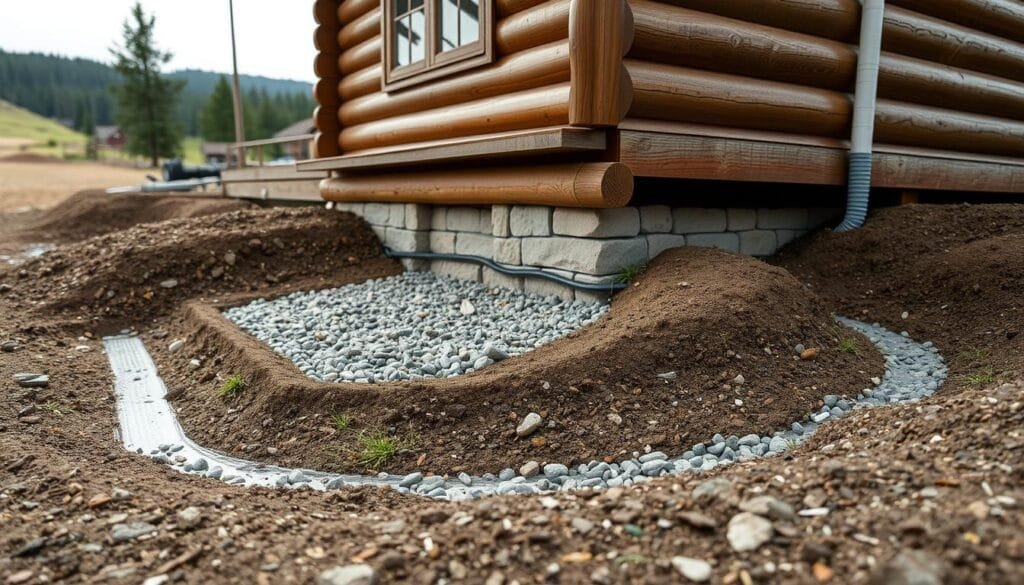
Step 1: Grade Soil Away from Foundation
Yard grading is your first defense against water. The ground around your cabin should slope down 6 inches over 10 feet. This helps water flow away from your foundation.
Walk around your cabin to find puddles after rain. Use stakes and string to mark your slope. Add soil where needed to slope away from your foundation.
Fill areas with clean fill dirt or clay-based soil. Compact each layer well. This stops soil from settling and creating new puddles.
After grading, cover with topsoil and seed it. Grass or ground cover prevents erosion. Like protecting your basement from spring thaw, grading keeps water away from your foundation.
Step 2: Install Drainage Swales
Drainage swales are channels to manage water flow. They work well on sloped land. They catch runoff and direct it away from your cabin.
Map water flow on your property after a rainstorm. Find where water converges or flows in streams. These spots are great for swale placement.
Dig swales 12 to 18 inches deep and 3 to 4 feet wide. Make the sides gentle and the bottom slope 1 to 2 percent. Line with landscape fabric to stop weeds.
Fill with river rock or pea gravel. Plant water-tolerant grasses or native plants along the edges. This stabilizes the soil and looks natural.
Step 3: Add River Rock or Gravel Beds
Permeable surfaces help water soak into the ground. River rock and gravel beds prevent erosion and reduce mud. They also let water soak into the earth.
Put a 3 to 4-foot-wide gravel bed around your foundation. This catches water from your roof before it reaches your walls. Dig 4 to 6 inches deep and line with landscape fabric.
Fill with 1 to 2-inch-diameter crushed stone or river rock. Smaller gravel doesn’t drain well. The bed should slope away from your foundation.
Use gravel beds in other areas where water collects or erosion happens. Areas under roof drip lines, downspout discharge points, and low spots benefit from this.
Extending Downspouts with Buried Drainpipes
Downspout extensions move roof water away from your foundation. Splash blocks don’t move water far enough. Buried pipes carry water at least 10 feet away.
Find a good place for your roof water to go. Look for areas downslope where water can flow or soak in. Avoid directing water to neighbors, septic systems, or erosion-prone areas.
Dig trenches 6 to 8 inches deep from each downspout to your chosen point. The trench should slope at least 1 percent. Use a 4-inch diameter pipe for the underground extension.
Connect the pipe to your downspout with an adapter. Some systems have a pop-up emitter at the end. Backfill and compact the soil to prevent settling.
| Drainage Method | Best Application | Installation Difficulty | Cost Range |
|---|---|---|---|
| Soil Grading | Foundation perimeter protection | Moderate (labor intensive) | $300-$800 DIY |
| Drainage Swales | Sloped properties with natural runoff | Moderate to difficult | $500-$1,500 DIY |
| Gravel Beds | Foundation buffer zones and erosion control | Easy to moderate | $200-$600 DIY |
| Buried Downspout Extensions | Roof water management | Easy to moderate | $100-$400 per downspout |
Test your drainage system by running water through your gutters and downspouts. Watch how water flows. Make adjustments where needed.
Using yard grading techniques with waterproofing creates a strong defense. Proper drainage keeps moisture away from your cabin. This approach helps your foundation last longer.
11. Year-Round Maintenance Schedule
Keeping your cabin safe all year is a big job. It changes with each season. A cabin maintenance schedule helps catch small problems early. This way, you avoid big, expensive fixes later.
Preventive maintenance is like an investment. It pays off every time a storm passes without damage. Regular checks and quick fixes keep your protection systems working well.
Post-Winter Inspection
Spring brings relief from winter’s cold. But it also shows damage that happened during the cold months. Your spring cabin inspection should start when snow melts and it’s not freezing anymore. This lets you fix problems before spring rains make winter damage worse.
Walk your whole property with a checklist. Focus on these important areas:
- Roof assessment: Look for lifted, cracked, or missing shingles caused by ice expansion and freeze-thaw cycles
- Gutter cleaning: Remove winter debris, pine needles, and sediment that accumulated during snow melt
- Caulk and weatherstripping: Check all window and door seals for deterioration from temperature fluctuations
- Foundation inspection: Search for new cracks or gaps where water may have penetrated during freeze cycles
- Interior water stains: Document any new discoloration on ceilings or walls that appeared over winter
- Drainage paths: Verify that snowmelt didn’t create erosion or redirect water toward your foundation
Take photos of every issue you find. These pictures help you make a repair list and track problems over time.
Repairs and Upgrades
Summer is the best time for big waterproofing projects. The warm weather and low humidity let sealants and paints dry properly. This is when you move from checking to fixing things.
Plan your biggest projects for summer:
- Exterior painting: Apply fresh coats of water-repellent sealer to wood siding and trim
- Roof repairs: Replace damaged shingles and reseal penetrations while weather cooperates
- Siding replacement: Remove and replace any rotted boards or damaged panels
- Drainage improvements: Install French drains or extend downspouts before fall rains arrive
- Foundation work: Apply waterproof membranes or repair cracks while ground is dry
Don’t try to do everything in one summer. Prioritize repairs that stop water damage first. Then, do upgrades based on your budget and time.

Winterizing Your Cabin
Fall is for getting ready for winter. Start winterizing cabin systems in late September or early October. Do all outdoor work before it gets too cold. Sealants need warm weather to work right.
Your fall checklist should include these key tasks:
- Final gutter cleaning: Clear all leaves and debris after deciduous trees finish dropping foliage
- Roof verification: Conduct one last inspection to confirm all repairs are complete before snow arrives
- Seal inspection: Test every caulk line and weatherstrip for gaps that could let cold air and moisture penetrate
- Tree trimming: Remove dead branches hanging over your cabin that could fall during winter storms
- Heating system check: Verify your heating works properly to prevent interior moisture and frozen pipes
For detailed winterization tips, check out these guides on how to maintain your over winter. Proper fall prep stops most winter emergencies before they start.
What to Watch For
Winter monitoring stops small problems from getting big. Even if you visit your cabin less in winter, check key systems each time.
Watch for these warning signs during winter visits:
- Ice dam formation: Thick ice ridges along your roof edge indicate heat loss through your attic
- Icicle patterns: Large icicles hanging from specific areas reveal where warm air escapes
- Active leaks: Check ceilings and walls after each major storm for new water stains
- Snow accumulation: Measure snow depth on your roof if it exceeds 12 inches
- Drainage issues: Verify that snowmelt flows away from your foundation during thaw periods
Keep emergency repair supplies ready in winter. Tarps, plastic sheeting, and roofing cement help fix things until spring.
| Season | Primary Focus | Key Tasks | Timing |
|---|---|---|---|
| Spring | Damage Assessment | Inspect roof, gutters, foundation; document winter damage | March-April |
| Summer | Major Repairs | Paint, seal, replace damaged materials; upgrade systems | June-August |
| Fall | Winterization | Final cleaning, sealing, tree trimming; prepare heating | September-October |
| Winter | Monitoring | Check for ice dams, leaks, excessive snow; make emergency repairs | December-February |
Following this cabin maintenance schedule keeps your cabin safe all year. Most cabin owners find seasonal tasks become routine after the first year. Year-round care prevents costly surprises from neglect.
12. Handling Emergency Weather Damage
Emergency weather damage can happen fast. Knowing how to act quickly can save you a lot of money. Even with good preventive steps, extreme storms can overwhelm your cabin.
Having a clear plan for emergency cabin repairs helps protect your property. This way, you can fix things until the storm passes.
Keep emergency supplies ready at your cabin all year. A well-stocked repair kit means you won’t waste time looking for materials during a storm.
Immediate Response for Roof Leaks
When you see water dripping through your ceiling, act fast. A proper roof leak fix using tarps can protect your cabin for weeks until you can make permanent repairs.
First, find where the leak is from inside. Put buckets under drips and move furniture away from wet spots right away.
Use a heavy-duty polyethylene tarp that goes at least 4 feet beyond the damaged area. A 20×30-foot tarp is usually big enough for most roof sections.
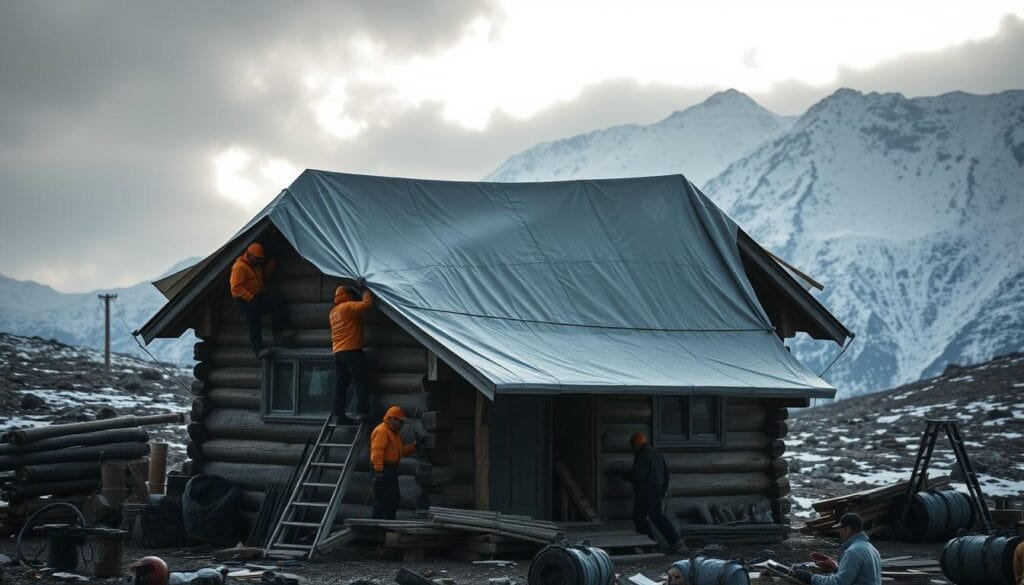
Wait for safe weather before going on your roof. Rainy shingles are too slippery and dangerous. If it’s too stormy, focus on stopping water damage inside first.
When it’s safe, secure the tarp with these steps:
- Anchor the top edge: Extend the tarp over the ridge and down the opposite side at least 4 feet
- Use 2×4 boards: Sandwich the tarp edges between boards and the roof surface
- Add weight strategically: Place sandbags or weighted boards every 3 feet along the edges
- Avoid nailing through: Never puncture the tarp, as this creates new leak points
These temporary weather repairs can handle moderate winds and rain for weeks. Check your tarp after each storm and adjust as needed.
Controlling Foundation Water Problems
Water flowing into your basement or crawl space needs quick water damage response. First, stop water from getting in.
Put a submersible pump in the lowest spot where water gathers. Make sure the hose is at least 20 feet from your foundation to avoid water cycling back.
Build temporary barriers with these materials:
- Stack sandbags along the foundation wall where water enters
- Create a shallow channel directing water toward your pump
- Use plastic sheeting to guide water flow away from vulnerable areas
- Place absorbent materials like towels at smaller seepage points
For leaks through foundation cracks, use hydraulic cement for quick emergency waterproofing. Mix it thick and push it into the crack. It sets in 3-5 minutes, even when wet.
Keep pumps running all the time until water levels go down. Check the situation every few hours and empty buckets often.
Securing Broken Windows and Doors
Broken windows and doors let rain, snow, and wildlife in. Quick action stops more storm damage repair needs.
For broken windows, remove loose glass carefully with gloves. Sweep up all fragments to avoid injuries during repairs.
Create temporary window protection with these steps:
- Cut plywood panels: Measure the window opening and cut exterior-grade plywood to fit
- Seal edges thoroughly: Apply exterior caulk around the window frame before installing the board
- Secure from inside: Screw the plywood to the interior window frame using 2-inch screws every 8 inches
- Add weather barrier: Tape heavy plastic sheeting over the exterior for extra protection
Damaged doors that won’t close need quick attention. If hinges are torn loose, use longer screws (3-inch minimum) to reattach them into solid wood.
For doors that won’t latch, install a temporary slide bolt on the interior. This gives security until you can fix or replace the door hardware.
| Emergency Situation | Immediate Action | Materials Needed | Expected Duration |
|---|---|---|---|
| Roof leak during storm | Contain interior water, wait for safe conditions | Buckets, towels, tarp, boards, weights | 2-4 weeks |
| Basement flooding | Pump water out, redirect flow | Submersible pump, sandbags, hydraulic cement | Until storm passes |
| Broken window | Remove glass, seal opening | Plywood, screws, caulk, plastic sheeting | 1-3 weeks |
| Damaged door | Secure closure, prevent entry | Long screws, slide bolt, shims | Until replacement |
Knowing When to Contact Professionals
Some problems are too big for DIY fixes and need professional help. Knowing when to call for help prevents injuries and avoids making things worse with bad emergency cabin repairs.
Call professionals right away for these situations:
- Extensive roof damage: When more than 30% of your roof is damaged or you see structural problems
- Electrical hazards: Any situation with water near electrical panels, outlets, or wiring
- Structural instability: Sagging ceilings, cracked support beams, or foundation movement
- Major flooding: When water levels are over 6 inches or rise faster than pumps can remove it
- Dangerous access: If reaching the damage means working at heights over 12 feet or in unstable conditions
Professional restoration companies have special tools like industrial pumps, moisture meters, and drying systems. They can handle big damage better than DIY methods.
Take photos of all damage before starting any temporary weather repairs. This helps with insurance claims and lets professionals know what repairs are needed.
Keep a list of emergency contacts in your cabin. Include local roofers, foundation specialists, and 24-hour water damage restoration services. Having these numbers ready saves time in emergencies.
Your safety is always the most important thing. If you’re unsure or feel unsafe, waiting for professional help is best. Temporary damage is better than getting hurt.
13. Maintaining Your Weather Protection Investment
Your cabin’s waterproofing doesn’t stop after the first job. Keeping up with weather protection upkeep is key. It keeps your cabin dry and strong for years.
Follow the maker’s advice for when to reapply products. Most wood sealers need a new coat every 2-3 years. Roof coatings last 5-10 years before needing a refresh. Check caulking around windows and doors yearly for any cracks.
Make a maintenance log to track your work. Write down the date, product, and areas treated. This log helps you stay on track and is useful if you sell your cabin.
Keep gutters clean all year. Trim trees back from your roof and walls. Make sure drainage systems are clear and working right. These steps stop small problems from becoming big ones.
Think about getting professional inspections every few years. Experts can find issues you might miss. They also check if your maintenance is working well.
Stay up-to-date with new waterproofing products. The field is always improving. Using the latest materials during maintenance can make your cabin last longer.
Your hard work in weather protection upkeep keeps your cabin a peaceful place. Regular care protects your investment and your peace of mind.