
Building your dream retreat on a hill offers amazing views but comes with big challenges. Water flows downhill, wind hits harder, and uneven ground traps moisture. These hillside construction challenges need special solutions to keep your mountain home dry and cozy.
This guide will teach you all about weatherproofing a cabin on a slope. You’ll find out about foundation waterproofing, drainage systems, and slope-specific insulation. These techniques are perfect for building on hills, whether it’s new construction or upgrading an old place.
The right methods protect your investment and ensure comfort all year. You’ll learn how to manage runoff, prevent moisture, and save energy. These proven strategies help avoid costly repairs and keep your mountain home strong for years.
Understanding the Unique Challenges of Hillside Cabin Construction
Building a cabin on a hill is romantic but comes with real challenges. Unlike flat land, hills introduce slope construction challenges that affect your project. These challenges need special knowledge and techniques.
Working with gravity means understanding how water, soil, and weather affect your cabin. Each hill is unique, shaped by its slope, soil, and weather. Knowing these challenges helps plan effective solutions.
Water Seeks the Path of Least Resistance
Water always flows downhill, and your cabin is in its path. Rainstorms send water cascading down, creating pressure against your walls and foundation.
Without proper waterproofing, moisture finds every weak spot in your cabin. The upslope side is most at risk. Water pools against walls, seeps into crawl spaces, and can damage your building.
Groundwater also moves through soil beneath your foundation. This can saturate the ground, pushing moisture through concrete and masonry. Smart drainage systems are key.
The Foundation Bears Unequal Burdens
Your cabin’s foundation doesn’t rest evenly. The upslope side may be close to grade, while the downslope side extends further. This creates uneven ground pressure and settling issues.
Different sections of your foundation face different loads and conditions. The upslope side has more earth pressure, while the downslope side supports more weight with less ground support. Soil composition varies, adding another factor.
Understanding these foundation differences is key to proper insulation. Areas with more moisture need better protection. Sections with more earth contact require different insulation than exposed areas. The table below shows how foundation conditions vary:
| Foundation Location | Primary Challenges | Moisture Risk Level | Settling Potentail |
|---|---|---|---|
| Upslope Section | Lateral earth pressure, water accumulation, limited air circulation | High | Moderate |
| Mid-Slope Section | Transitional pressures, variable soil contact, drainage flow path | Moderate to High | High |
| Downslope Section | Wind exposure, extended structural support, temperature fluctuations | Low to Moderate | Low |
| Side Sections | Cross-slope water movement, differential settling, varied sun exposure | Moderate | Moderate to High |
Differential settling happens when parts of your foundation move differently. This is because soil compresses at different rates. Clay soils behave differently than sandy or rocky soils, and moisture affects compression.
Wind and Weather Hit Harder at Elevation
Hillside locations face more wind and weather. Your cabin is exposed, with fewer natural windbreaks. Trees and terrain that shelter flat-site cabins may not be as effective on slopes.
Wind speeds increase with elevation and on exposed hillsides. This means rain hits your walls harder, finding weak points in your weatherproofing. Wind also accelerates heat loss in cold months, making insulation critical for energy efficiency.
The downslope side of your cabin faces the most wind. This can be beautiful but means your siding, windows, and doors take a beating. Wind-driven rain penetrates deeper into wall cavities and around openings than gentle rainfall.
Temperature swings are more dramatic on hillsides. Cold air drains downhill at night, creating microclimates. The upslope side may stay warmer, while the downslope side is colder. These variations affect moisture condensation and heating system performance.
Understanding these challenges helps focus your weatherproofing efforts. Each challenge needs specific solutions—drainage systems for water, engineered foundations for settling, and robust exterior protection for wind. The next sections will explore practical strategies for these hillside-specific issues.
Foundation Waterproofing for Sloped Terrain
Foundation waterproofing on sloped terrain is different from flat ground. The uneven land creates varying water pressure on your foundation. Knowing this helps you protect the right areas.
Your foundation is the first line of defense against water damage. If water breaches this barrier, it can harm your structure. But, the right waterproofing can stop these problems before they start.
Hillside construction needs a special plan for moisture protection. This plan must consider gravity, drainage, and soil type. Each side of your foundation faces different water levels, so your plan must address these differences.
Protecting Different Foundation Sides
The upslope side of your foundation faces constant water pressure. This pressure comes from groundwater and surface runoff. You need heavy-duty waterproofing solutions to handle this moisture.
Use rubberized asphalt membranes or bentonite clay panels on upslope walls. These materials block water well. Many builders also add dimple boards for better drainage.
The downslope side has less water pressure but needs protection too. Standard waterproof coatings work well here. But, don’t choose low-quality options just because the pressure is lower.
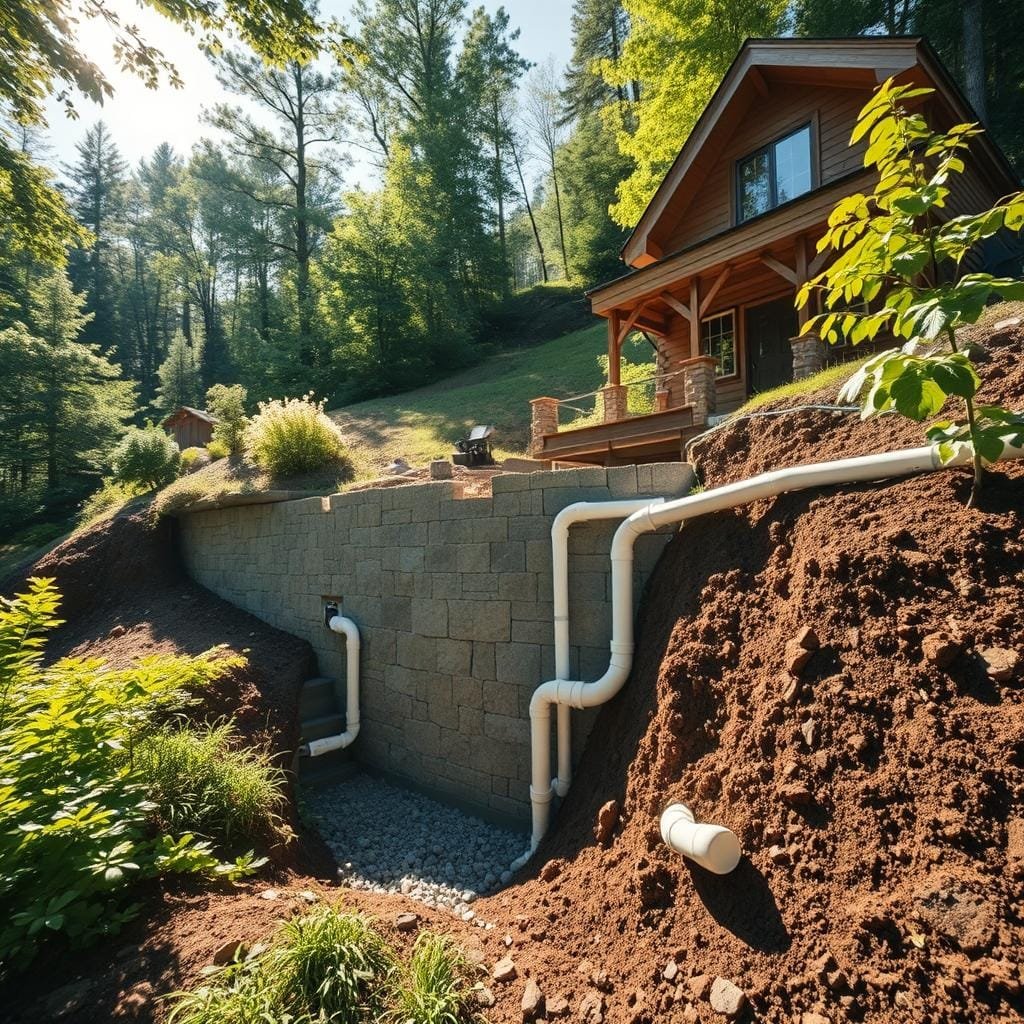
Side walls perpendicular to the slope need special attention. Consider wind direction, tree cover, and water flow patterns. Each wall is different, so evaluate them individually.
Building Effective Foundation Drainage Systems
Foundation drainage systems work with waterproofing membranes to keep your cabin dry. Even the best waterproofing can fail if water pools against your foundation. Drainage systems move water away before it becomes a problem.
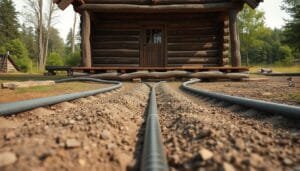
Perimeter drains, or footer drains, are essential components of hillside cabin waterproofing. These drains collect water and channel it away from your structure. They follow the natural slope.
Here’s what a complete foundation drainage system includes:
- Perforated drainage pipes wrapped in filter fabric
- Gravel backfill that promotes water movement
- Proper slope directing water to daylight or catch basins
- Connection points to downspout drainage systems
- Clean-out access points for maintenance
Install your drainage pipes at the footer level or slightly below. Surround them with at least 6 inches of clean gravel. This gravel helps water reach the pipes quickly.
Make sure your drainage connects to an outlet point downslope from your cabin. Water should discharge at least 10 feet away from your foundation. Never let drainage pipes terminate near your structure or upslope where water might flow back.
Selecting Waterproof Membranes and Coatings
Waterproof membranes create a barrier between your foundation and soil. Different products offer varying levels of protection. Choose materials rated for below-grade use in moisture protection for sloped cabins.
Rubberized asphalt membranes are popular because they’re flexible and durable. They conform to foundation irregularities and resist punctures well. Apply these membranes in overlapping sheets with sealed seams for complete coverage.
Bentonite clay panels offer unique advantages for hillside applications. When these panels contact water, the clay expands to create a waterproof seal. They’re self-healing, meaning small punctures seal themselves automatically.
| Waterproofing Material | Best Application | Durability Rating | Cost Level |
|---|---|---|---|
| Rubberized Asphalt Membrane | High-pressure upslope walls | 25-30 years | Moderate to High |
| Bentonite Clay Panels | Difficult access areas | Life of structure | High |
| Liquid-Applied Membrane | Complex foundation shapes | 15-20 years | Moderate |
| Cementitious Coating | Downslope lower-pressure areas | 10-15 years | Low to Moderate |
Liquid-applied waterproofing systems work well for complex foundation shapes. These coatings spray or roll onto foundation walls. They create a seamless barrier without seams that might leak.
Many hillside builders install waterproof boards directly on foundation frames. These boards shield against ground moisture that could affect wooden structural elements. This approach extends the life of your cabin’s frame considerably.
Don’t forget to waterproof foundation penetrations where pipes, utilities, and anchors pass through walls. Use specialized boots, collars, or sealants designed for these applications. These small details prevent water from finding entry points through your solid waterproofing system.
Apply waterproofing materials according to manufacturer specifications. Pay attention to temperature requirements during application. Most membranes and coatings require specific temperature ranges for proper adhesion and curing.
Consider hiring professionals for foundation waterproofing if you’re unsure about proper techniques. This investment protects your entire structure. Getting foundation drainage and waterproofing right prevents costly repairs later and ensures your hillside cabin remains dry and comfortable for decades.
Comprehensive Slope Drainage Solutions for Cabins
Effective slope drainage for cabins is key to avoiding costly renovations. Water is a major enemy when building on sloped land. It can gather around your foundation or flow towards your walls, no matter how well-insulated or weatherproofed they are.
The secret to protecting your cabin is to understand that water always follows the path of least resistance. You need to create paths that safely guide water away from your structure. This involves addressing both surface runoff and subsurface groundwater.
Think of your drainage system as a network working together. Each part plays a specific role in managing water flow. When designed well, these techniques protect your cabin for decades.
Installing Underground French Drain Systems
French drains are the backbone of most drainage plans for hillside cabins. They intercept water before it reaches your foundation and redirect it to safe points. The basic design includes a perforated pipe surrounded by gravel in a sloped trench.
Positioning is key on hillside properties. Install your French drain upslope from your cabin to catch groundwater. The trench should have a consistent grade of at least 1% to ensure proper flow.
- Landscape fabric to wrap the gravel and prevent soil clogging
- 4-inch perforated drainage pipe with holes facing downward
- Clean gravel or drainage rock (not crushed stone with fines)
- Solid pipe sections for the final discharge area
The drain should extend at least 10 feet beyond your foundation on either side. Connect multiple French drains if your cabin is wide or if water comes from multiple directions. The discharge point must be far enough downslope to avoid water circling back.
Directing Surface Water Away from Structures
While French drains handle subsurface water, managing visible runoff is also essential. Surface water management during heavy rains can overwhelm underground systems if not addressed properly. This is where techniques focused on the ground surface become critical.
Grading around your cabin should slope away from the foundation at a minimum 5% grade for the first 10 feet. This creates a watershed effect that pushes water away from your walls. Even a slight depression near your foundation can pool water and cause problems.
Channel systems add another layer of protection. These can be simple landscape trenches lined with river rock or more formal solutions like:
- Trench drains with grated tops across driveways or walkways
- Catch basins positioned at low points to collect and redirect flow
- Downspout extensions that carry roof water at least 10 feet from the foundation
- Splash blocks or underground pipes at downspout discharge points
For steeper slopes, consider installing drainage channels at strategic intervals running perpendicular to the slope. These intercept sheet flow and direct it to controlled discharge points, preventing it from building velocity as it rushes downhill.
Building Retaining Walls with Drainage Features
Retaining walls on hillside properties do more than create level building pads—they’re essential water management tools when designed correctly. A retaining wall without proper drainage will eventually fail as water pressure builds up behind it. This hydrostatic pressure can crack even the strongest walls.
Weep holes are your first line of defense in retaining wall drainage. These openings, typically placed every 4-6 feet along the wall base, allow water to escape before pressure accumulates. Behind the wall, install a gravel drainage layer at least 12 inches wide running the full height of the wall.
A perforated drain pipe at the wall base completes the system. This pipe, similar to a French drain, collects water that filters through the gravel layer and carries it to designated outlets at the wall ends. Wrap the pipe and gravel in landscape fabric to prevent soil infiltration over time.
| Wall Height | Drainage Rock Width | Pipe Size | Weep Hole Spacing |
|---|---|---|---|
| 3-4 feet | 12 inches minimum | 4-inch diameter | Every 6 feet |
| 5-6 feet | 18 inches minimum | 4-inch diameter | Every 4-5 feet |
| 7-8 feet | 24 inches minimum | 6-inch diameter | Every 4 feet |
| Over 8 feet | Professional design | Engineering required | Engineering required |
For walls supporting significant soil loads near your cabin, consider installing a geocomposite drainage mat against the back of the wall. These engineered products combine filtration fabric with a drainage core that efficiently channels water downward to the drain pipe.
Creating Swale and Berm Water Control Systems
Swales and berms work as a team to manage large volumes of water across your hillside property. A swale is a shallow, vegetated channel designed to slow down and direct water flow. A berm is a raised ridge of soil that blocks or redirects water. Together, they give you flexible control over drainage patterns without extensive excavation.
Swales are effective on moderate slopes where you want to prevent erosion while guiding water. The channel should run along contour lines (perpendicular to the slope) with a very gentle grade—typically 0.5% to 2%—so water moves slowly. Plant the swale bottom with erosion-resistant grasses or place river rock for a more permanent solution.
Position swales upslope from your cabin to intercept water before it gains speed heading downhill. The swale redirects this flow to a safe discharge point on the property edge or into a controlled drainage system. A properly sized swale can handle significant runoff during storms while remaining nearly invisible during dry periods.
Berms complement swales by creating barriers that redirect water flow. Build a berm on the downslope side of your cabin’s foundation area to prevent water from flowing toward the structure. The berm should be at least 12-18 inches high and compacted to prevent settling.
Here’s how to maximize your swale and berm effectiveness:
- Survey your property’s natural drainage patterns before designing systems
- Connect multiple swales with gentle transitions to handle water from different areas
- Maintain proper depth ratios—swales should be 2-4 times wider than they are deep
- Plant berms with deep-rooted vegetation to stabilize soil and prevent erosion
- Monitor and maintain systems annually by removing sediment and debris
The beauty of swale and berm systems is their adaptability. You can start with a basic design and expand it over time as you observe how water moves across your property during different seasons and weather conditions. This flexibility makes them an excellent choice for surface water management on complex hillside terrain.
Remember that all these drainage solutions work best as an integrated system. Your French drains handle subsurface groundwater, surface diversion techniques manage runoff, retaining walls provide structural support with drainage, and swales with berms control large-scale water movement. When you implement these slope drainage for cabins strategies together, you create multiple layers of protection that keep your hillside retreat dry and stable for years to come.
Choosing the Right Insulation for Sloped Property Cabin Construction
Weatherizing a mountain cabin starts with picking the right insulation. Sloped terrain brings unique challenges like extreme temperatures and moisture. You also need creative solutions for irregular foundations.
Today, there are many insulation options to fit your needs and budget. Most builders use a mix of insulation types for different areas. This approach boosts performance while keeping costs down.
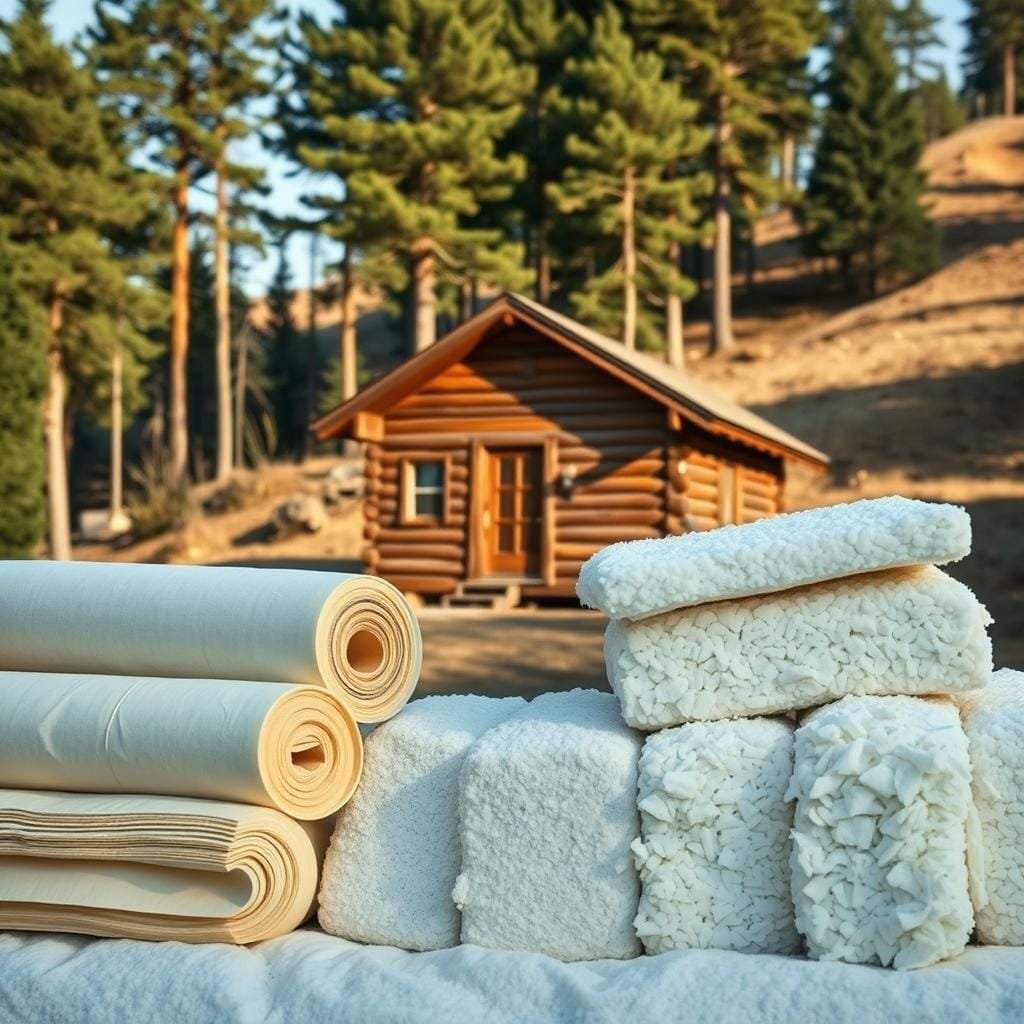
Cost-Effective Fiberglass Batt Options
Fiberglass batt insulation is popular for hillside cabins. It’s affordable, easy to find, and simple to install. It fits well in standard framed walls and between floor joists.
This insulation works best in areas with consistent cavity depths and little moisture. It’s great for main walls, ceiling joists, and upper floors. Make sure it fits well to avoid gaps and compression.
But, fiberglass has its limits on sloped properties. It doesn’t seal air well and moisture can lower its R-value. Use it in drier areas, not below-grade spaces.
Spray Foam for Hard-to-Reach Areas
Spray foam is perfect for tricky spots in hillside construction. It fits any shape and insulates and air seals well. This makes it great for rim joists, irregular foundations, and cathedral ceilings.
Closed-cell spray foam is top-notch for sloped cabins. It has a high R-value, acts as a vapor barrier, and adds strength. It’s ideal for the underside of roof decking in unvented attics.
Open-cell spray foam is cheaper but has a lower R-value and needs a vapor barrier. It’s good for interior cavity fills where air sealing is key. Builders often use closed-cell foam outside and open-cell for interior walls to save money.
Rigid Foam Board for Continuous Protection
Rigid foam board is great for continuous exterior insulation. It installs over sheathing, under siding, or on foundation walls. This creates a solid thermal barrier, essential for hillside cabins.
You can layer these boards in two-inch-thick sections for better thermal performance. This method prevents air leaks and boosts R-value. Just keep the total thickness under 10 inches in windy areas to avoid damage.
Rigid foam is also excellent for foundation insulation and roof applications above the deck. It protects structural elements without ruining the cabin’s look. You won’t see pink insulation in your log walls or timber ceiling.
Moisture-Resistant Mineral Wool Solutions
Mineral wool (rock wool) offers unique benefits for mountain cabins. It naturally resists moisture and won’t support mold growth. This makes it perfect for below-grade areas and humid spots.
It’s the best choice for basement walls and crawl spaces on sloped properties. Unlike fiberglass, mineral wool keeps its R-value even when damp. It dries out without losing effectiveness.
Fire resistance is another plus. Mineral wool can withstand temperatures over 1,800°F without melting or releasing toxic fumes. It’s great for areas near wood stoves, chimneys, and other heat sources.
While it costs more than fiberglass but less than spray foam, mineral wool is worth it for targeted applications. Builders often use it for foundation walls, mechanical rooms, and the upslope side of hillside cabins where moisture is a big concern.
For the best results, mix these insulation types throughout your cabin. Use spray foam for air sealing, rigid foam for exterior protection, fiberglass for standard walls, and mineral wool for moisture resistance. This combination offers top performance at a good price.
Weatherproofing a Cabin on a Slope: Essential Exterior Techniques
Weatherproofing a cabin on a slope is all about the exterior. It’s your first line of defense against water and wind. Slope cabins face more rain, runoff, and wind than flat ones. Your exterior must work together to keep out the elements.
Understanding how water moves on slopes is key. Slope cabins get water from all sides. This section will show you how to protect your cabin from the ground up.
Creating Effective Moisture Barriers with House Wrap
House wrap is your cabin’s weather-resistant barrier. It sheds water and lets vapor escape. This prevents moisture damage over time. On slopes, it’s even more important to keep water out.
Start house wrap installation from the bottom, overlapping like shingles. Use 6-inch overlaps for horizontal seams and 12 inches for vertical ones. This helps water flow down and off the surface.
Choose vapor-permeable membranes for slope applications. They resist water but let air pass through. Use tape approved by the manufacturer to seal seams, ensuring a tight seal through temperature changes and UV exposure.
Remember, your vapor barrier strategy depends on your climate. In cold climates, the vapor barrier goes on the warm side of insulation. This allows drying outward.
Selecting Durable Siding for Hillside Exposure
Your siding choice is critical for slope cabins. They face harsher weather than valley cabins. Choose siding that lasts decades and resists wind and rain.
| Siding Material | Durability Rating | Weather Resistance | Maintenance Needs | Best Application |
|---|---|---|---|---|
| Fiber Cement | 50+ years | Excellent moisture and wind resistance | Repaint every 10-15 years | High-exposure walls, all climate zones |
| Engineered Wood | 30-40 years | Good with proper sealing and finish | Inspect annually, refinish as needed | Protected areas, moderate climates |
| Metal Panels | 40-60 years | Superior water shedding, wind resistant | Minimal, check fasteners annually | Grade-side walls, high-wind areas |
| Cedar Shingles | 25-35 years | Moderate, requires proper treatment | Regular sealing, replace damaged shingles | Traditional aesthetic, sheltered locations |
For upslope walls, consider metal siding or fiber cement. They shed water well and resist hydrostatic pressure. Make sure to install ventilation channels behind the siding for air circulation.
When picking siding, think about the wall’s exposure. North walls get less sun, while south walls face more UV. Mix materials for different areas, using premium options where needed.
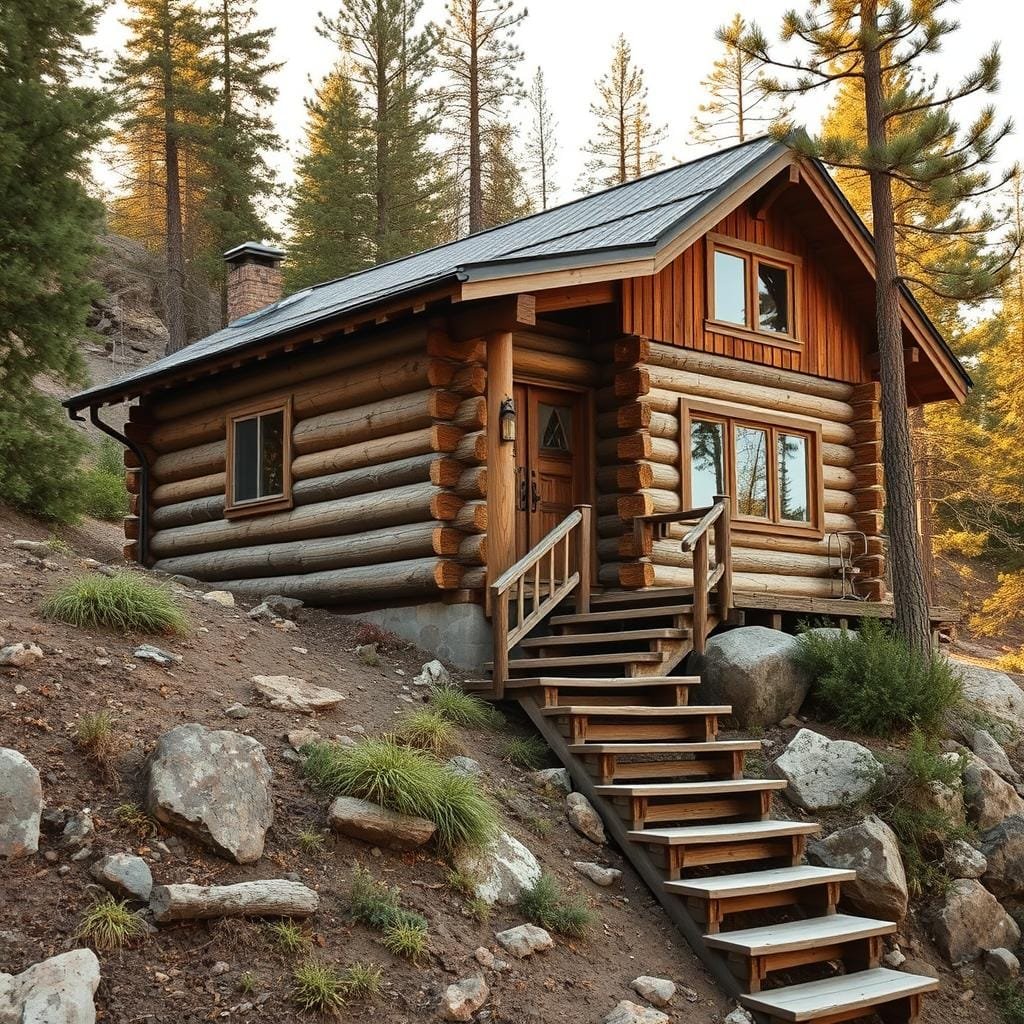
Mastering Flashing and Trim Sealing Methods
Flashing is the most critical detail work in exterior weatherproofing. It directs water away from vulnerable spots. On slopes, it’s even more important because of the increased water volume.
Install step flashing at wall-to-roof transitions, overlapping each piece. Use sill pans at windows and doors, along with head and jamb flashing. This creates a drainage system around openings.
The shingling principle is key for sealing at penetrations. Each flashing piece must overlap the one below it. This directs water down and outward. Pay special attention to electrical, plumbing, and HVAC penetrations.
- Electrical service entrances and meter boxes
- Plumbing vents and exhaust pipes
- Deck ledger board connections
- HVAC line penetrations
- Outdoor lighting fixtures and outlets
Use high-quality sealants at trim connections. Sealant is your secondary defense, not your primary one. Proper flashing and lapping handle bulk water, while sealant fills minor gaps.
Protecting Grade-Side Walls from Ground Moisture
Upslope walls face unique challenges where they meet the ground. They endure direct earth contact and moisture. Your wall protection strategy must combine foundation waterproofing with above-grade weatherproofing.
Extend your foundation waterproofing membrane at least three feet above the highest grade point. This creates a continuous moisture barrier. Apply a drainage board over the membrane to relieve hydrostatic pressure and provide drainage.
Consider these additional protection measures for grade-side walls:
- Install a gravel drainage zone between the wall and the slope face to create separation and improve drainage
- Apply protective coatings rated for below-grade use on the lower portions of grade-side walls
- Extend your perimeter drain system along grade-side walls to capture water before it reaches the structure
- Create a concrete or stone splash barrier at the base of grade-side walls to prevent soil splash and erosion
Transitioning from below-grade to above-grade waterproofing requires careful detailing. Overlap your house wrap over the foundation membrane by at least 6 inches, sealing the connection with compatible tape. This ensures no gap exists where water can penetrate.
Remember, exterior protection systems work together as an integrated whole. Your house wrap sheds bulk water, your siding provides the first line of defense, your flashing directs water away from vulnerable joints, and your grade-side protection handles the unique challenges of earth contact. When you pay attention to each component and ensure they connect properly, you create a weatherproof envelope that protects your hillside cabin for generations.
Roof Weatherproofing for Inclined Terrain Structures
The roof of your mountain retreat faces tough weather challenges. It needs more than just basic protection. Building a weathertight cabin on inclined terrain means your roof must handle high winds, heavy snow, and rain from all sides. Hillside locations get hit harder by weather, making good roof weatherproofing key for lasting durability and comfort.
Your roof can lose up to 70% of your cabin’s heat if not well-insulated. This shows why investing in quality roof weatherproofing is smart. It saves energy and keeps your cabin strong. Let’s look at the important parts that keep your hillside cabin dry and safe all year.
Enhanced Underlayment Systems
Going beyond basic felt paper is key for mountain cabin weatherizing. Modern synthetic underlayments are stronger and better at keeping out weather than old ones. They act as a strong second defense under your shingles.
In areas with strong winds, underlayments stick directly to your roof deck. This steep slope roof underlayment stops rain from getting in under your shingles. Even if shingles blow off, the membrane keeps your cabin safe.
- Superior water resistance that lasts longer than felt
- Excellent tear strength during installation and extreme weather
- UV resistance if roof installation is delayed
- Reduced air pressure differentials that cause roof failures during storms
- Better temperature stability in both hot summers and cold winters
These underlayment systems work harder in mountain environments. They seal the roof and give peace of mind during bad weather.
Ice and Water Shield Placement
Cold climate cabins need special protection against ice dams and water. Self-adhering ice and water shield membranes create watertight barriers in vulnerable roof areas. These roof protection systems stop moisture from getting under shingles when ice forms at roof edges.
Where to place ice and water shield is very important. Install it at all eaves, extending at least 24 inches beyond the interior wall line. Make sure to cover all valleys completely where water concentrates during runoff. Seal around every roof penetration, including vents, chimneys, and skylights.
The membrane’s self-sealing properties work with roofing nails to keep the roof waterproof. When nails penetrate the material, it seals around the fastener automatically. This stops tiny entry points that let water in over time.
Roof Pitch Considerations on Slopes
Choosing the right roof pitch balances weather protection with cost. Steeper pitches shed water and snow better, preventing leaks and structural stress. But, steeper roofs need more materials and are harder to install on hillside sites.
Most builders suggest roof pitches between 6:12 and 9:12 for hillside cabins. This range sheds water well without being too steep. A 6:12 pitch rises 6 inches vertically for every 12 inches of horizontal run, creating good drainage without being too steep.
Higher pitches above 9:12 shed snow better but face more wind. Wind can lift steep roofs, making them more exposed. Your roof weatherproofing strategy must handle these forces with proper fastening and underlayment systems.
Consider these factors when choosing the best roof pitch:
- Local snow loads and average accumulation depths
- Prevailing wind directions and typical wind speeds
- Roof material requirements (some need minimum pitches)
- Interior headspace needs and ceiling height preferences
- Budget constraints for materials and labor
Combining the right pitch with quality underlayment and ice protection makes a strong weatherproofing system. This approach keeps your hillside cabin dry and comfortable for decades of mountain weather.
Moisture Barriers and Vapor Control Systems
Water can be liquid or vapor in your hillside cabin. Rain and groundwater are obvious threats. But water vapor can also damage your cabin, moving through walls without being seen.
To protect your cabin, you need to stop both liquid and vapor water. The right barriers and control systems are key. This keeps your cabin safe from moisture.
Moisture in your cabin can cause big problems. It can rot wood, grow mold, and damage the structure. Knowing how moisture moves on sloped land helps you pick the best protection.
How Moisture Moves Through Hillside Structures
Vapor drive is how water vapor moves from warm to cool areas. In cold weather, your cabin’s warm air pushes moisture out. But in hot weather, moisture can move back in.
Hillside cabins face different conditions on each side. The upslope side is cooler and more protected. The downslope side gets more sun and wind. These differences create different moisture pressures.
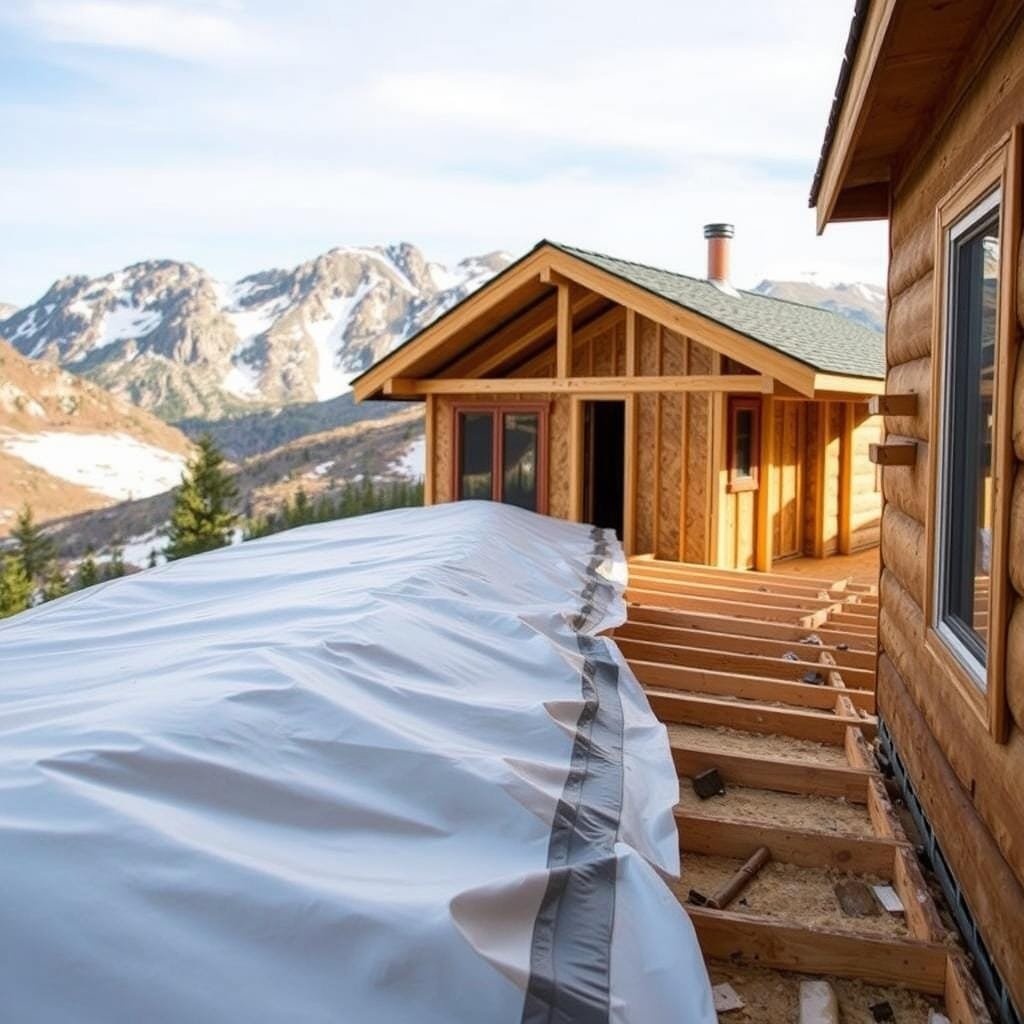
The slope of your cabin also affects moisture movement. Cold air settles downslope at night. This changes how moisture moves through your cabin.
Smart strategies for controlling vapor take these differences into account. You might need different barriers on each side to handle moisture pressure.
Sealing Where Air Leaks Happen
Air-sealing stops moist air from getting into cavities. Even small gaps can let a lot of humid air through.
Seal these key areas:
- Window and door frames where they meet trim
- Electrical boxes and wiring through exterior walls
- Plumbing penetrations for water lines and vents
- Rim joists where floor meets foundation
- Material transitions where parts connect
Caulk and spray foam are your main tools for sealing. Use flexible caulk for joints that might move. Spray foam for bigger gaps, but don’t overdo it.
Pay extra attention to the upslope side. It’s more exposed to moisture from runoff and wet soil.
Weather-resistant barriers like house wrap add extra protection. Make sure to tape all seams well. This helps keep your cabin dry even if sealants fail.
Choosing the Right Barrier System
Breathable barriers let water vapor pass through but block liquid. Materials like house wrap and synthetic underlayment fit this category. They let walls dry if moisture gets trapped.
Non-breathable barriers block both liquid and vapor. Polyethylene sheeting and certain foam products are examples. They stop moisture but can trap it if water enters the wall.
The best approach often combines both types. Use breathable barriers on exterior walls to shed rain and allow drying. Use vapor retarders on interior walls in cold climates to limit moisture from inside.
| Barrier Type | Best Application | Key Advantage | Limitation |
|---|---|---|---|
| House Wrap | Exterior walls under siding | Breathable protection | Requires proper installation |
| Polyethylene Sheet | Interior vapor barrier (cold climates) | Complete vapor block | Prevents wall drying |
| Peel-and-Stick Membrane | Foundation and critical areas | Self-sealing around penetrations | Higher cost |
| Kraft Paper Facing | Attached to batt insulation | Integrated vapor retarder | Less durable than membranes |
Avoid creating vapor barrier “sandwiches” that trap moisture. This mistake stops drying and causes moisture problems.
Choose barriers based on your climate. In cold areas, use interior vapor retarders to stop indoor moisture. In hot, humid places, you might not need them.
In mixed climates, choose smart retarders that adjust to humidity. This flexibility is key.
The side of your cabin facing the weather needs stronger protection. Use premium membranes on the downslope side and standard house wrap elsewhere.
Proper installation is as important as the right materials. Seal seams well, maintain coverage, and integrate barriers with flashing systems. These details are critical for effective moisture control.
Ventilation Strategies for Mountain Cabin Weatherizing
Fresh air is key for your cabin’s health and value. Without it, moisture can cause mold, rot, and damage. On hillsides, the challenge is greater because different sides face different weather.
The right ventilation systems are vital. They help your cabin last for generations. You can choose between traditional vented attics or unvented designs, each with its own benefits for hillside construction.
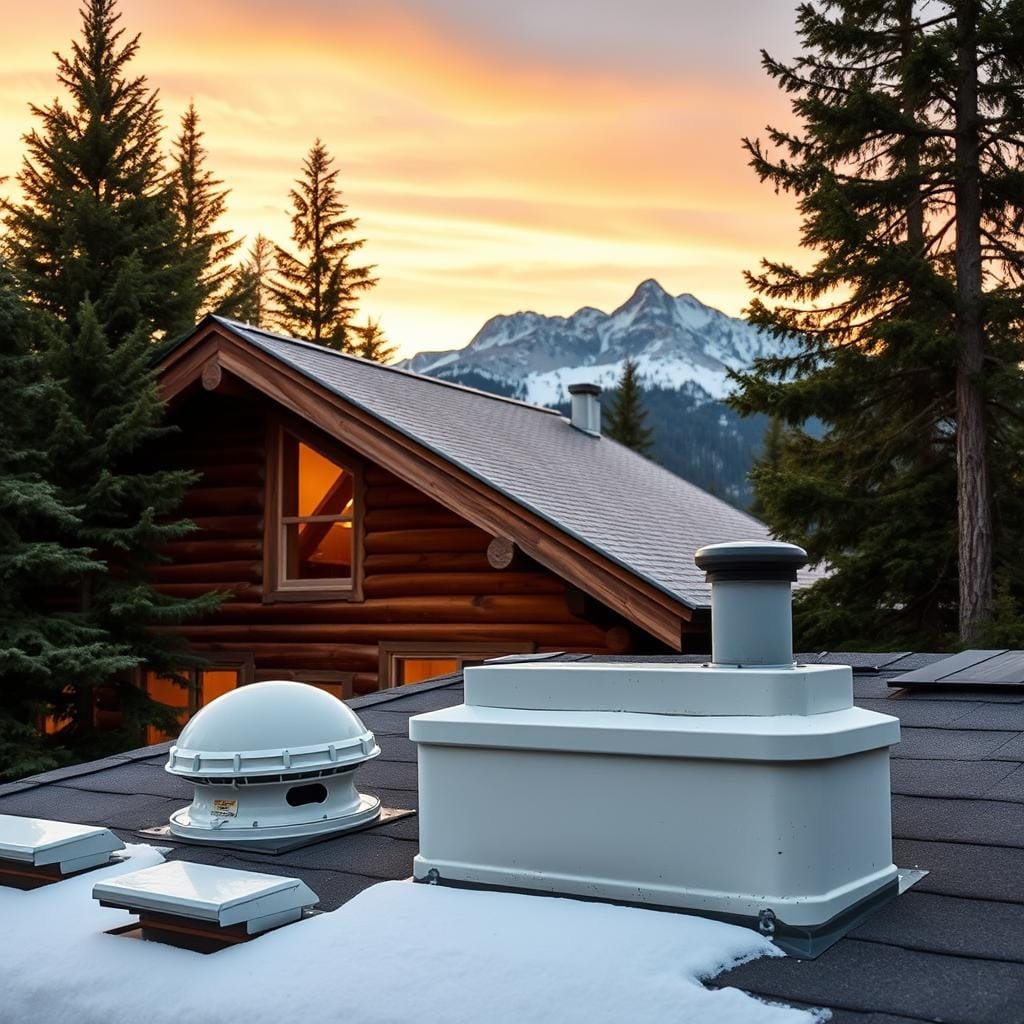
Continuous Airflow Through Roof Assemblies
Traditional attics use the stack effect to move air. Cool air enters at the eaves, rises through the attic, and exits at the peak. This keeps moisture-laden air from condensing on cold surfaces.
This system works well if installed right. You need at least 1 square foot of net free area for every 150 square feet of attic. Half should come from intake vents, and half from exhaust vents.
Hillside cabins face unique challenges with traditional venting. The upslope side is harder to vent, and wind can reverse airflow, pushing weather into vents.
Many builders now prefer unvented attics. They insulate at the roofline, creating a conditioned space. Spray foam seals out weather while keeping the space warm.
This approach is great for windy hillsides. It seals out rain, snow, and wildfire embers. Unvented designs also work well with earth-sheltered homes.
Below-Grade Air Movement Solutions
Crawl spaces on hillsides need special ventilation. The upslope wall might be below grade, while the downslope is exposed. Traditional vents can’t provide balanced airflow.
Old-school crawl space vents often cause more problems. Humid air enters, cools against walls, and deposits moisture.
Modern best practice is sealed, conditioned crawl spaces. You treat the crawl space as part of your home’s envelope by:
- Sealing all foundation vents permanently
- Installing a continuous vapor barrier across the dirt floor
- Insulating foundation walls instead of floor joists above
- Providing conditioned air from your HVAC system or dedicated dehumidification
This approach works well on slopes. It eliminates ventilation imbalance and keeps the crawl space dry. The upslope side benefits from earth contact, while the downslope gets conditioned air.
If your slope requires a tall downslope foundation wall, consider making the crawl space part of your living area. Walkout basements are great for hillside topography and eliminate moisture concerns.
Controlling Moisture in Sealed Envelopes
Once your cabin is weathertight, managing humidity is key. Tight envelopes don’t leak air, so you need a strategy to remove moisture. This includes moisture from cooking, showering, and breathing.
Mechanical ventilation systems handle this job. HRVs and ERVs provide controlled air exchange while minimizing energy loss. They continuously exhaust stale air and bring in fresh air.
The difference between HRVs and ERVs matters for hillside cabins. HRVs transfer heat but not humidity. ERVs transfer both, making them ideal for humid climates.
| Ventilation Method | Best Application | Hillside Advantage | Energy Efficiency |
|---|---|---|---|
| Traditional Vented Attic | Simple roof designs, mild climates | Lower initial cost | Moderate heat loss |
| Unvented Attic Assembly | High-wind areas, complex rooflines | Weather intrusion protection | Superior thermal performance |
| Sealed Crawl Space | Hillside foundations, high moisture | Eliminates exposure imbalance | Reduces conditioning costs |
| HRV/ERV Systems | Tight building envelopes | Controlled air quality | Recovers 70-90% of energy |
Set your mechanical ventilation system to exchange air based on your cabin’s size and occupancy. Most systems should provide 0.35 air changes per hour. Install the outdoor air intake on the upslope side to draw cleaner air.
Use a hygrometer to monitor indoor humidity. Aim for 30-50% relative humidity in winter. Higher levels can cause condensation, while lower levels can damage wood.
Bathroom and kitchen exhaust fans help remove moisture. Always vent them to the outside, not into attics or crawl spaces. On hillsides, route ductwork to exhaust on the downslope side to help draw air out.
Your mountain cabin weatherizing strategy succeeds when all elements work together. The roof assembly removes heat and moisture, the foundation stays dry, and mechanical systems maintain air quality. This integrated approach creates comfortable, durable mountain retreats.
Window and Door Sealing on Gradient Properties
When weatherproofing a cabin on a slope, windows and doors need extra attention. Hillside exposure intensifies weather challenges at these vulnerable points. These openings are necessary for light, ventilation, and access, but they can compromise your cabin’s protective envelope if not properly sealed.
Research shows that approximately 15% of a cabin’s heat escapes through windows. Proper installation and sealing are critical for both comfort and energy costs.
The increased wind pressure at elevated hillside locations drives rain and cold air into even small gaps around openings. Your sealing strategy must account for these unique gradient conditions. Each opening requires a thorough approach that addresses multiple failure points from the rough framing to the finished trim.
Weatherstripping for Hillside Wind Exposure
Standard weatherstripping often fails on exposed hillsides where wind pressure is significantly higher. Mountain winds can compress and degrade inferior weatherstripping materials within a single season. Your hillside cabin needs compression-style weatherstripping that creates positive seals even under sustained wind pressure.
Door jambs benefit most from compression weatherstripping products made from EPDM rubber or silicone foam. These materials compress when the door closes, creating an airtight seal that prevents wind-driven rain infiltration. Install weatherstripping on all four sides of exterior doors, paying particular attention to the hinge side where gaps often develop.
Adjustable threshold seals deserve special attention for opening protection on sloped properties. These door-bottom seals can be fine-tuned to compensate for settling or minor framing irregularities common on hillside foundations. Look for thresholds with replaceable vinyl or rubber inserts that you can swap out when they wear.
Window weatherstripping requires different techniques than doors. Use V-strip or tension-seal weatherstripping for double-hung windows, which maintains contact even as windows expand and contract with temperature changes. For casement windows, apply foam tape weatherstripping to the stops where the window presses closed.
Flashing Installation Around Openings
Proper flashing creates the critical water-shedding barrier around every window and door in your hillside cabin. The flashing system must integrate seamlessly with your weather-resistant barrier using the shingled approach where each layer overlaps the one below. This directs water down and away from the opening.
Flexible flashing membranes work better than rigid metal flashing for gradient-resistant cabin sealing. They conform to irregular surfaces and accommodate the slight movement that occurs in hillside structures. Self-adhering flashing tape provides the easiest installation while creating watertight seals around rough openings.
The proper flashing sequence matters as much as the materials you use:
- Bottom flashing first: Install a sloped sill pan that directs water outward before setting the window or door
- Side flashing next: Apply flashing up the jambs, overlapping the sill pan at the bottom
- Top flashing last: Create a drip edge at the head that sheds water away from the opening
- Integration strips: Seal where flashing meets the weather barrier with compatible tape
Pay extra attention to the corners where flashing transitions occur. These joints represent the most vulnerable points for water infiltration. Use corner patches or fold flashing in a specific sequence to ensure water cannot penetrate at these junctions.
Storm Window and Door Considerations
Storm panels provide an additional layer of defense when weatherproofing a cabin on a slope, particular in harsh mountain climates. These secondary barriers create an insulating air space while blocking wind-driven precipitation before it reaches your primary windows and doors. The combination of storm panels and quality primary windows can reduce heat loss by up to 50% compared to single-pane windows alone.
Double-glazing becomes essential for cabins with thicker log or timber-frame walls. The insulation value of your walls deserves equally efficient windows. Modern double-glazed units with low-E coatings and argon gas fills provide excellent insulation while maintaining clarity and light transmission.
Consider removable storm panels for seasonal flexibility. Install heavy-duty storm windows and doors during fall before winter weather arrives, then remove them in spring for unobstructed views during mild months. This approach works well for cabins used mainly in summer but visited occasionally during winter.
| Opening Type | Primary Sealing Method | Storm Protection Option | Maintenance Frequency |
|---|---|---|---|
| Entry Doors | Compression weatherstripping with adjustable threshold | Storm door with full-length glass insert | Annual inspection and adjustment |
| Double-Hung Windows | V-strip weatherstripping with quality sealant around frame | Interior or exterior storm panels | Bi-annual cleaning and seal check |
| Sliding Glass Doors | Compression gaskets in track with weatherstripping on frame | Heavy-duty storm panel system | Quarterly track cleaning and lubrication |
| Casement Windows | Foam tape on stops with perimeter sealant | Fixed storm windows on weather-side exposure | Annual weatherstripping replacement |
The weather-exposed sides of your cabin—typically those facing prevailing winds—require the most robust window and door protection. If budget constraints limit your storm window installation, prioritize the windward side where wind-driven rain creates the greatest challenges. You can add storm protection to other exposures in subsequent years as resources allow.
Seal all gaps around window and door frames with high-quality exterior-grade sealant formulated for hillside elevations. Cheap caulk fails quickly in mountain conditions, allowing air and water infiltration that undermines your entire weatherproofing system. Inspect these seals annually and reapply as needed to maintain continuous protection.
Material Selection for Gradient-Resistant Cabin Sealing
Choosing the right materials is key to a cabin’s success on a hillside. The products you pick must withstand harsh weather and wind. Hillside cabins face more challenges than those on flat ground.
Opt for durable materials that last, not just save money upfront. Your cabin needs products designed for slopes.
Sealants and Caulks for Extreme Conditions
Sealants must stay flexible in changing temperatures and stick well to your cabin. Latex caulks won’t do for hillside cabins.
Polyurethane-based sealants are great for their adhesion and flexibility. They bond well and resist UV damage. Use them for exterior joints and penetrations.
Silicone sealants are flexible and weather-resistant. They handle extreme temperatures without losing their seal. Use them in areas with a lot of movement or weather exposure.
For roofs and sheathing joints, specialized tapes and membranes are better than caulks. The Institute for Business and Home Safety suggests tapes that match your materials. Butyl tapes are good for most, while acrylic tapes handle high temperatures better.
When picking sealants, consider:
- Temperature range matching your climate zone
- UV resistance for exposed applications
- Paintability if finishing is required
- Cure time appropriate for your construction schedule
- Compatibility with your building materials
Weather-Resistant Sheathing Options
Sheathing is the base of your cabin’s weather protection. Modern options are designed to make waterproofing easier and better.
ZIP System sheathing has structural panels and a weather-resistant barrier. The factory-applied coating means no separate house wrap. Seal the joints with compatible tape for a continuous barrier. It’s great for hillsides.
DensGlass sheathing has a fiberglass mat facing that resists moisture. It’s mold-resistant and keeps its structure even when wet. It’s perfect for grade-side walls.
Traditional plywood or OSB with weather barriers is cost-effective. With quality house wrap and flashing tapes, they work well. Just make sure all joints are sealed and transitions are detailed.
| Sheathing Type | Best Application | Key Advantage | Maintenance Need |
|---|---|---|---|
| ZIP System | Exposed walls and roofs | Integrated barrier speeds installation | Low – inspect tape seals annually |
| DensGlass | Grade-side walls | Superior moisture resistance | Low – very durable |
| OSB with WRB | Budget-conscious projects | Cost-effective when detailed properly | Moderate – check transitions |
| Plywood with WRB | All applications | Proven performance and versatility | Moderate – inspect fasteners |
Durable Roofing Materials for Hillside Cabins
Your roof faces the most weather on a hillside. Choose materials that last for decades.
Asphalt shingles with high wind ratings are good for most climates. Make sure they match your wind speeds. Quality shingles last 25+ years with the right underlayment and fasteners. Use epoxy-coated steel screws for wind resistance.
Metal roofing is great for snow and lasts long. Standing seam systems handle thermal changes well and keep water out. They’re lighter, reducing structural loads. Metal roofs can last 50+ years with little upkeep.
Tile or slate roofing is durable in mild climates. They resist fire, rot, and insects. But they’re heavy and can be damaged by falling branches.
Proper fastening is key for metal roofing on hillsides. Follow the manufacturer’s guidelines for fasteners and spacing. Wind resistance depends on installation quality as much as material choice.
Investing in quality materials for gradient-resistant cabin sealing saves money in the long run. Hillside cabins face unique challenges, so choose materials designed to meet those challenges.
Seasonal Maintenance for Hillside Cabin Waterproofing
Even the best weatherproofing needs regular checks to fight hillside challenges. A good seasonal maintenance plan keeps your cabin safe and prevents small issues from growing big. Mountain cabin weatherizing means doing specific tasks at different times.
Each season brings its own dangers. Spring has snowmelt and heavy runoff. Summer hits with UV rays. Fall brings debris, and winter tests seals with cold. Staying ahead keeps your cabin cozy and strong all year.
Spring Inspection Priorities
Winter weather harms hillside structures, making spring a key time for checks. Start your inspection as snow melts and ground is safe. Look at areas most hurt by cold and water.
Your roof needs quick attention after winter storms. Check for missing or damaged shingles, bad flashing, and ice dam damage. These problems get worse if not fixed.
Examine your waterproofing solutions and drainage systems well in spring. Clear debris from French drains and check water flow. Make sure downspouts direct water away from your foundation.
Foundation and crawl space checks show winter damage. Look for water stains, efflorescence, or new cracks that mean moisture got in. Pay extra attention to upslope walls where water pressure is high.
Frost heave can change drainage and hurt retaining walls. Walk your property to find any ground movement or wall cracks. Fix these before they harm your cabin’s stability.
Fall Weatherization Checklist
Get your cabin ready before harsh weather hits to avoid emergency repairs. Fall maintenance seals your cabin against cold and moisture. Do these tasks when it’s not too cold for materials to cure.
Gutter maintenance is key in fall. Clean out leaves and debris. Extend downspouts to keep water away from your foundation before it freezes.
Check every sealant bead and caulk line on your cabin’s exterior. Look for cracks or where seals have pulled away. Replace them before it gets too cold, as most products need temperatures above 40°F to work right.
Inspect weatherstripping on doors and windows for damage or gaps. Replace worn strips to keep heat in and moisture out. This simple task makes your cabin more energy-efficient and comfortable.
Clear debris from your slope drainage systems before fall rains start. Remove leaves and sediment from swales and drains. Make sure everything flows correctly toward discharge points.
Wood preservation keeps your cabin’s exterior safe from moisture and UV damage. Apply wood preservative to exposed timber at least once a year. This keeps your cabin looking good and protected through the seasons.
| Maintenance Task | Spring Priority | Fall Priority | Frequency |
|---|---|---|---|
| Gutter cleaning | High | Critical | Twice yearly |
| Drainage inspection | Critical | High | Twice yearly |
| Sealant replacement | Medium | High | As needed |
| Wood preservative | Medium | Critical | Annual minimum |
Winter Preparation Tasks
Winterizing your hillside cabin protects it and your systems from freeze damage. This is very important for cabins used only in winter. Good winter prep stops expensive spring repairs.
Insulate all exposed pipes in crawl spaces and outside walls. Use foam insulation and weatherproof tape. In very cold areas, consider heat tape installation on water lines to prevent freezing.
Make sure your heating system works before it gets cold. Replace filters, test thermostats, and ensure enough fuel for winter. Have a backup heating source ready in case your main system fails.
Good attic or roof ventilation stops ice dams that damage roofs and cause water damage inside. Check soffit vents and ridge vents to ensure they work. Balanced ventilation keeps roof temperatures even.
Remote cabins need emergency plans. Stock up on flashlights, batteries, non-perishable food, and first aid materials. Keep local repair and snow removal contacts handy.
Seasonal cabins need full winterization when closed for a long time. Drain water systems, add antifreeze to drain traps, unplug appliances, and seal openings against pests. These steps prevent damage and unwanted visitors.
Regular seasonal maintenance turns weatherproofing into a long-term protection plan. Your hillside cabin will thank you with decades of reliable service and comfort.
Common Weatherproofing Mistakes to Avoid
Weatherproofing mistakes on sloped properties often come from not understanding gravity and water flow. These errors can turn a dream cabin into a costly maintenance issue. Knowing where projects often go wrong helps build a cabin that lasts for decades.
Most weatherproofing problems can be prevented with good planning and detail. Learning from others’ mistakes is cheaper than fixing your own. Let’s look at the three most common errors in hillside cabin weatherproofing and how to avoid them.
Inadequate Drainage Planning
The biggest mistake in hillside construction is underestimating water flow during heavy rain. Builders often size drainage systems based on average rainfall, leading to overwhelmed drains and foundation flooding. Always oversize your drainage capacity by at least 50% beyond calculated needs.
Bad drainage planning causes many problems. Water pools against foundations, pushing moisture through even good waterproofing. Soil erosion undermines retaining walls and destabilizes slopes near your structure.
Proper moisture protection for sloped cabins requires calculating water volume from the entire uphill area, not just your building. A four-inch French drain might handle your immediate lot, but what about water from properties above? Professional hillside water diversion techniques account for the entire watershed affecting your site.
Common drainage sizing errors include:
- Installing undersized perforated pipes that clog easily with sediment
- Placing catch basins too far apart to capture surface runoff effectively
- Failing to create adequate slope in drainage lines, causing standing water
- Neglecting to install cleanout access points for maintenance
Improper Insulation Installation
Even premium insulation materials fail when installed wrong. These errors undermine thermal performance and create moisture problems. Compressed fiberglass loses up to 50% of its R-value, yet builders often squeeze batts into small spaces or pack them around wiring and pipes.
Spray foam insulation seems foolproof, but improper application creates voids and thermal bypasses. Gaps as small as one inch allow significant air leakage that negates the insulation around them. Rigid foam boards must be sealed at every seam with compatible tape or caulk, yet many installations leave gaps that create convective loops.
The consequences of poor insulation installation go beyond energy bills. Thermal bypasses create cold spots where condensation forms inside wall cavities. This hidden moisture leads to mold growth, wood rot, and structural damage that isn’t discovered until serious problems develop.
Critical installation mistakes to avoid:
- Skipping manufacturer installation guidelines to save time
- Failing to air-seal around windows, doors, and penetrations before insulating
- Installing vapor barriers on the wrong side of the insulation for your climate
- Leaving gaps between insulation layers in walls and ceilings
- Compressing insulation to fit around electrical boxes and plumbing
Remember that any shortcuts drastically reduce insulation efficiency and create problems that worsen over time. Following proper techniques for moisture protection for sloped cabins requires patience and attention to detail at every step.
Ignoring Upslope Water Sources
The most overlooked mistake in hillside cabin construction is failing to investigate what lies uphill from your building site. No amount of foundation waterproofing can protect against water problems originating above your property. Springs, seasonal streams, and drainage from neighboring properties can overwhelm even excellent waterproofing systems.
Many builders discover upslope water sources only after construction is complete and problems emerge. A spring that flows only during snowmelt might not be visible during summer site visits. Drainage patterns from properties uphill may change when neighbors alter their landscaping or add impervious surfaces.
Professional hillside water diversion techniques always begin with upslope investigation. Walk the entire hillside above your site during different seasons and weather conditions. Look for signs of water flow like erosion channels, water-loving vegetation, and soil discoloration. Talk with neighbors about drainage patterns and historical water issues.
Solutions for upslope water sources include:
- Installing interceptor drains above your cabin to capture and redirect water
- Creating swales that channel water around your foundation
- Building retention systems that slow water flow during heavy rain events
- Establishing drainage easements with uphill neighbors to control water flow
These construction errors cost far more to fix after building than to address during initial site planning. Investing time in proper drainage planning, careful insulation installation, and thorough upslope investigation protects your hillside cabin investment for years to come.
Budget Planning and Cost Considerations
Your budget for sloped property cabin insulation and weatherproofing is key. Building on a hillside comes with unique costs. Knowing these costs helps avoid surprises.
Hillside construction can surprise many cabin owners. But, planning well can turn budget worries into smart investments. Here are the main areas to focus on.
Understanding Slope-Specific Material Expenses
Building on a hill costs 15-30% more than flat sites. This is due to the special needs of uneven terrain. Foundation work is often the biggest expense, sometimes tripling the cost of a flat site.
Several factors increase these costs. Special drainage systems and waterproofing membranes need more materials. Retaining walls add to both material and labor costs.
Additional cost factors include:
- Extended utility runs from street level to building site
- Extra structural reinforcement to handle uneven loads
- Premium insulation materials for difficult-to-access spaces
- Heavy-duty drainage components like French drains and sump pumps
- Grading and excavation work on irregular terrain
Foundation costs can range from $15,000 to $50,000. A simple slab on flat land might cost $8,000. But, a pier-and-beam foundation on a steep hill could be over $40,000. These figures don’t include waterproofing and drainage systems needed for protection.
Weighing Professional Services Against DIY Approaches
Choosing between professionals and DIY affects your budget. DIY can save 40-60% on labor costs. But, mistakes on a hillside can be costly and risky.
Consider hiring experts for:
- Foundation waterproofing and structural work
- Complex drainage system installation including French drains
- Electrical and plumbing on difficult terrain
- Roof underlayment and flashing in high-wind areas
- Exterior vapor barrier application for weathertight results
DIY-friendly tasks include interior insulation, weatherstripping, and painting. These tasks require attention but are less risky than waterproofing.
Professional installation for a weathertight cabin on inclined terrain might cost $80,000-$150,000. Doing some interior work yourself can save $15,000-$30,000. But, cutting corners on foundation or drainage can lead to $50,000 in repairs later.
| Budget Approach | Initial Investment | Risk Level | Long-Term Cost |
|---|---|---|---|
| Full Professional | $120,000-$150,000 | Low | Minimal repairs |
| Hybrid Approach | $90,000-$120,000 | Medium | Moderate maintenance |
| Maximum DIY | $60,000-$90,000 | High | Potential major repairs |
Return on Investment from Quality Construction
Quality weatherproofing offers long-term benefits that outweigh initial savings. Proper insulation can cut heating bills by 20% or more. This can save 30-50% on total energy costs over time.
Energy efficiency means more comfort and savings. A well-insulated cabin stays warmer in winter and cooler in summer. Over 20 years, this can save $30,000-$60,000 in energy costs.
Property value increases are another financial gain. Insulated and weatherproofed cabins sell for more. Buyers value well-maintained properties. Quality construction can return 70-90% of costs when reselling.
Maintenance savings are also key. A well-built cabin needs less repair. Weather damage and foundation issues decrease. These savings add thousands to your long-term finances.
Smart cost planning views weatherproofing as an investment. A cabin built correctly for $130,000 will outperform a cheaper version. Comfort, energy savings, reduced maintenance, and higher value make quality construction a wise financial choice.
Building a Weather-Resilient Hillside Retreat
To make a strong hillside home, you need to combine all protective layers into one system. Weatherproofing a cabin on a slope means looking at how drainage, insulation, and exterior barriers work together. This keeps your space dry and comfy.
Your foundation should let water flow away easily. Drainage systems must move moisture away from your home. Good insulation keeps temperatures steady all year. Weather-resistant materials protect against wind and rain. Every detail is important at every connection.
Choosing the right design is key. Modern cabin designs use super-insulated walls, energy-saving windows, and local timber. These features help your cabin stand up to harsh weather while saving energy. They show how careful waterproofing leads to long-term comfort and less upkeep.
Getting your cabin weatherproofed is a smart investment. It will last for many years without needing constant fixes. Whether you do it yourself or hire experts, the outcome is the same. You get a cozy, dry place that lasts through every season.
Your hillside home offers beauty and privacy. With the right protection, it will bring joy for generations. You won’t have to worry about weatherproofing problems.