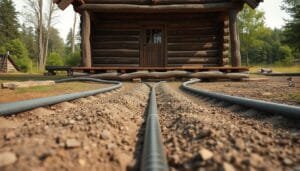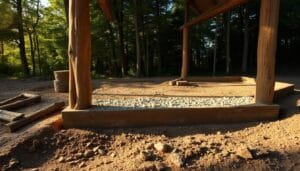
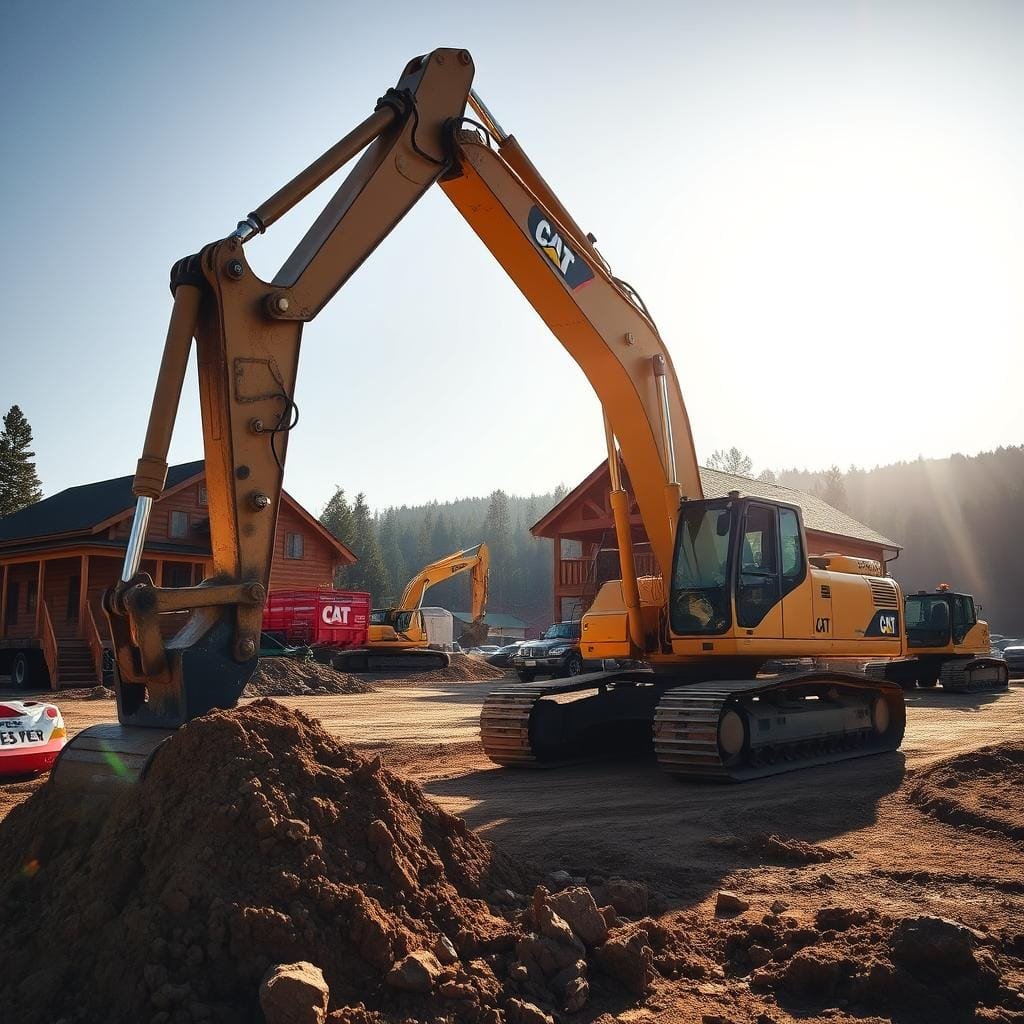

Building your dream cabin in the woods is exciting. But, getting the timing right on machinery rentals is key to your budget. Builders often lose thousands because they didn’t plan their rentals well.
Choosing construction machinery isn’t a quick decision. You need a solid plan. This plan should consider weather, ground conditions, and seasonal price changes.
Remote cabin locations come with unique challenges. Mountain terrain, limited road access, and extreme seasonal changes affect your rental timeline.
Poor planning can lead to expensive machinery sitting idle. You might wait for permits or better weather. But, smart timing helps you work efficiently. This keeps your project moving without delays.
This guide will show you how to pick the best times to rent equipment. You’ll learn to make the most of your investment. And avoid common pitfalls that cabin builders face.
Understanding Your Cabin Building Timeline
Knowing when you need each machine is key to saving money. A good plan means you won’t waste money on idle equipment. This is because you’ll wait for permits or materials.
Begin by dividing your cabin project into phases. These include site assessment, land clearing, and road construction. You’ll also need equipment for foundation work, utility trenches, and final grading.
Estimating how long each phase will take is important. Your site’s size, terrain, and soil conditions matter. Whether you’re doing the work yourself or hiring pros also affects the time needed.
Always build buffer time into your schedule. Weather can cause delays. So can equipment breakdowns, permit issues, and unexpected site conditions.
Knowing when to rent equipment means looking into seasonal rentals. Rental companies offer different terms. Longer rentals often cost less per day.
Make a timeline or Gantt chart to show when you need each piece of equipment. This helps avoid renting too early or too late.
A good timeline helps you plan equipment rentals with material deliveries and contractor schedules. This ensures your equipment is always working, saving you money.
When to Rent Heavy Equipment for Cabin Site Preparation
Before your cabin is built, the right equipment at the right time is key. The site prep phase needs a lot of heavy machinery for cabin site preparation. Planning these rentals well avoids delays and keeps costs down. Knowing when to use each piece of equipment helps work flow smoothly and cuts down on rental time.
In places with big weather changes, work usually starts in spring. This is when the ground thaws. Tools like brushcutters and blades are great for clearing winter debris and small trees.
Land Clearing Phase Timing
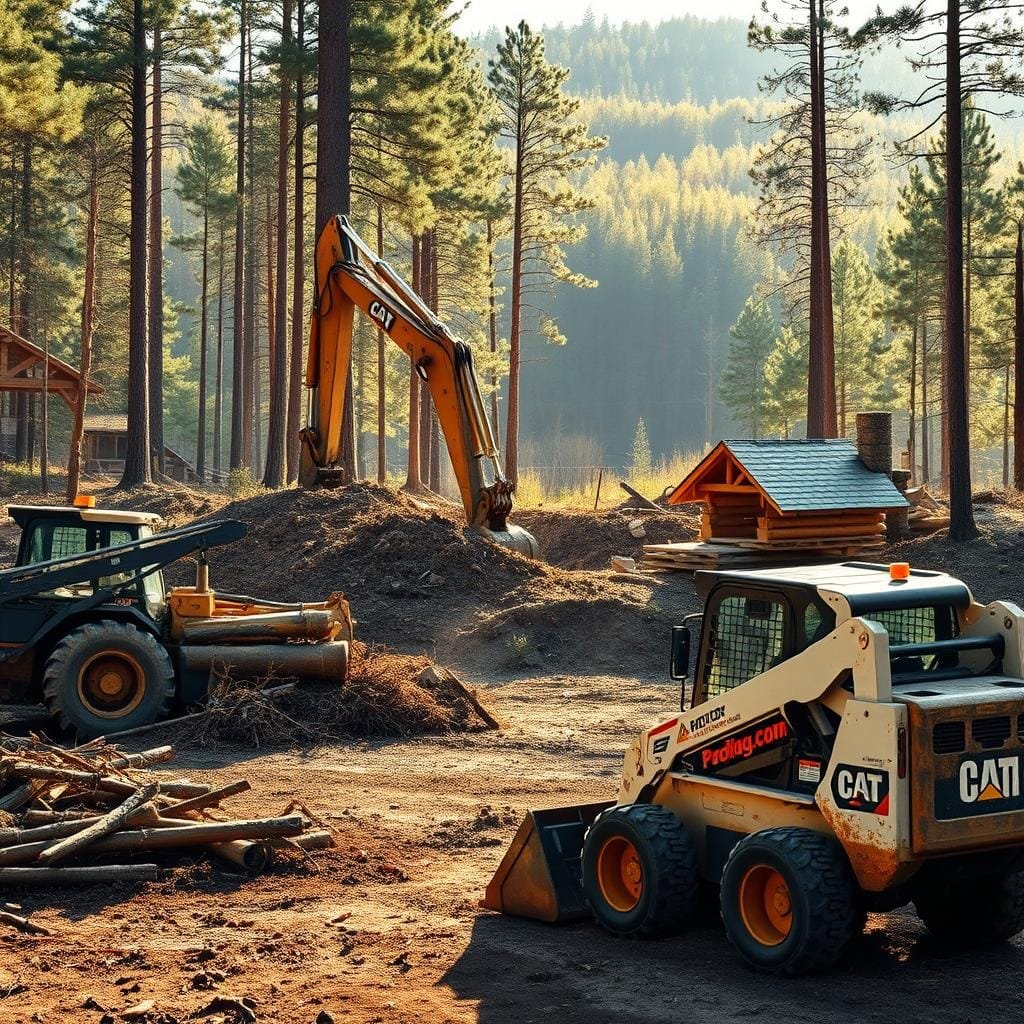
Land clearing is best when the ground is dry and firm. Late spring through early fall is usually the best time. The ground is dry but not yet muddy from fall rains.
Clear the land after marking boundaries and saving trees you want to keep. Use bulldozers, forestry mulchers, or excavators with grapple attachments. Make sure you have all permits before starting to avoid idle equipment costs.
Foundation Excavation Windows
Excavating for the foundation depends on ground conditions and weather forecasts. You need time to dig, pour footings, and build walls before bad weather hits. Renting too early when it’s frozen is a waste of money.
In cold areas, wait until the ground thaws fully. Check the soil moisture before renting. Dry conditions are essential for foundation work to prevent cave-ins and ensure concrete cures right.
Access Road Development Schedule
Access roads need to be ready before other equipment can reach your site. Plan to start the road early, then finish it after construction traffic dies down. This avoids constant repairs during building.
Many builders rent grading equipment for road work in stages. This saves money and keeps the road in good shape. Compacting the road base needs the right moisture, so time it right.
| Site Prep Activity | Optimal Timing | Equipment Needed | Typical Duration |
|---|---|---|---|
| Land Clearing | Late spring to early fall | Bulldozers, forestry mulchers, excavators with grapples | 3-7 days |
| Foundation Excavation | After ground thaws, dry conditions | Excavators, backhoes | 2-5 days |
| Access Road (Initial) | Before other equipment arrives | Bulldozers, graders | 2-4 days |
| Access Road (Final) | After heavy construction completes | Graders, compactors | 1-3 days |
Smart planning between these steps cuts down on expensive equipment days. Coordinate each step so they flow smoothly without unnecessary delays.
Seasonal Considerations for Equipment Rentals
Every season brings its own set of challenges and opportunities for cabin builders. The time you choose to rent equipment can greatly affect your project’s success. Weather, ground conditions, and demand all change with the seasons.
Knowing these seasonal patterns helps you make better rental choices. You’ll find the best deals and know when to expect more competition. You’ll also learn which seasons are best for your specific needs.
Spring Rental Advantages and Challenges
Spring offers a fresh start and longer days for working. As the ground thaws, sites become accessible again. This season marks the start of construction activity nationwide.
But, spring also has big challenges. Mud season can make your site hard to access, like in Connecticut. You might have to wait weeks for the ground to dry before heavy equipment can safely enter.
Spring rains can also delay your work, making your rental period longer and more expensive. Equipment demand is high, and options are limited during these months.
Summer Peak Season Logistics
Summer is the best time for cabin construction with its predictable weather and long days. The ground is perfect for heavy equipment, and you can work efficiently. This is when most builders do their excavation and foundation work.
The downside is the high prices and competition for equipment. Machines like excavators and compact track loaders are in high demand. You’ll need to book early and budget for higher rates.
Summer works best when you’re ready with all permits, materials, and a clear schedule. Any delays can be costly during this busy season.
Fall Rental Opportunities
Fall is a great time for cabin builders. Equipment is more available, and rates are often lower. The cooler weather makes physical work more comfortable.
The main challenge is the short weather window. You need to finish outdoor work before the first frost and snow. Ground conditions are good until early fall, but you must complete your work before winter.
Winter Equipment Rental Realities
Winter rentals are rare for cabin building due to frozen ground and snow. Extreme cold also poses operational challenges. But, some clearing work can be done on frozen ground in certain conditions.
Winter is best for tasks like tree removal when the ground is frozen. For foundation work and excavation, winter is off-limits in most of the United States.
Project Phase Equipment Needs
Building a cabin requires different heavy machinery for cabin site preparation at each stage. Most builders rent equipment as needed, saving money and getting the right tool for the job. This way, they avoid keeping one machine for too long.
Site Assessment and Initial Clearing
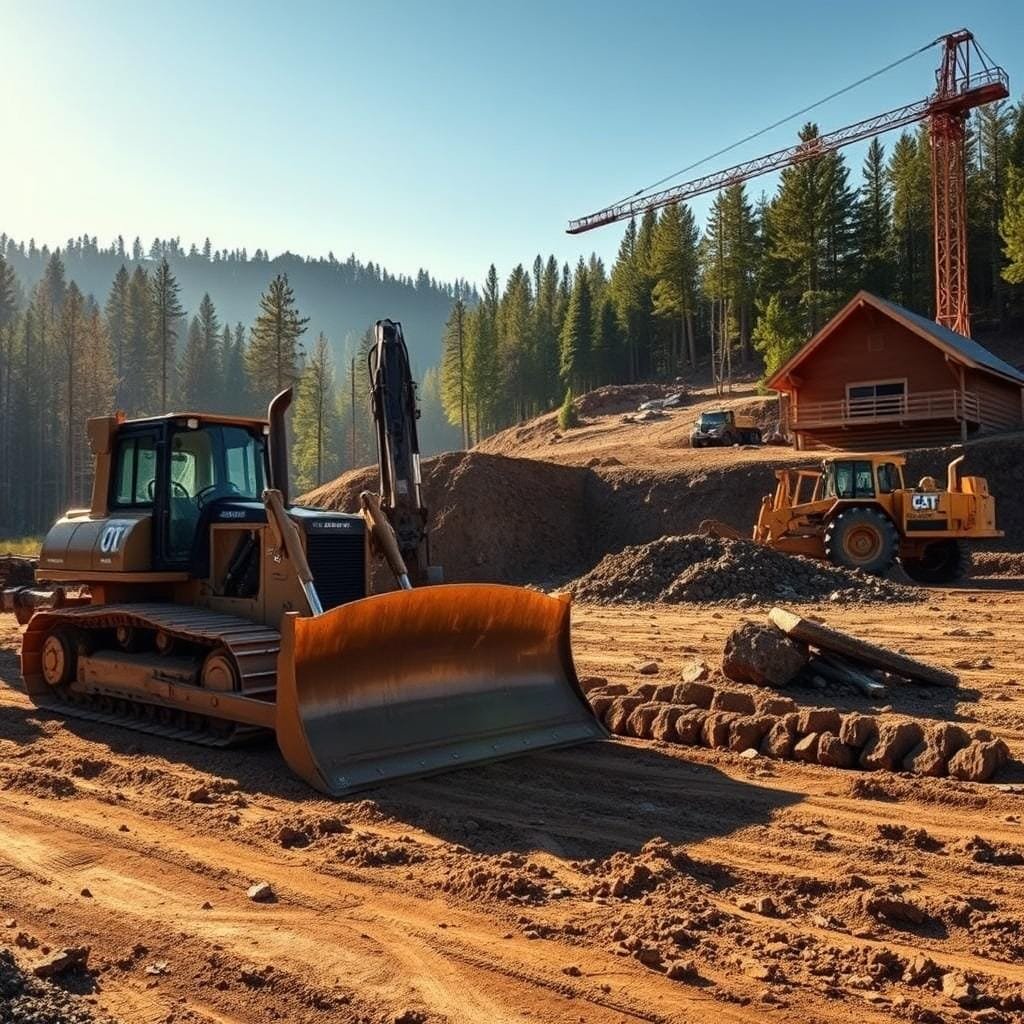
The first steps need lighter, easy-to-move equipment for rough terrain. Compact track loaders or skid steers are great for clearing brush and small trees. They help you see the property and clear the way without big earth moving.
Rent these machines after you’ve walked the property and marked where to clear. Many builders use a small machine for a few days to make basic paths. For bigger clearing, a bulldozer or excavator with a brush rake might be needed.
Foundation and Utility Trenching
This stage needs a lot of equipment. Excavators or backhoes are key for digging foundation footings, basements, and utility trenches. These machines do precise digging for stable foundations and for water, septic, and electrical lines.
Mini excavators are smaller and lighter, with 360-degree cab rotation. They’re perfect for tight spaces. Backhoes have loader and excavator functions, great for digging and handling materials.
Final Grading and Landscaping
After the cabin shell is up, final grading shapes the landscape. This includes smoothing the ground, creating drainage, building driveways, and preparing for landscaping. Box blades on skid steers or grading attachments on compact track loaders can do the job well.
This equipment is rented weeks or months after foundation work is done. The timing depends on your schedule and the weather for grading.
Cost-Effective Timing Strategies
Knowing when to rent equipment can save you a lot of money. Rental prices change with demand and season. This means you can get better deals if you plan carefully.
Planning your rental timing can greatly reduce costs. By matching your project with the rental market, you can save a lot. It’s all about knowing when companies are looking for business.
Taking Advantage of Slower Rental Periods
Rental demand changes a lot throughout the year. The busiest time is May to September. During these months, prices are high and choices are limited.
Early spring and late fall offer off-season discounts for heavy equipment rentals. Rental companies lower their prices by 20-40% during these times. They’d prefer to work at lower rates than have equipment idle.
Winter brings even bigger discounts in many places. If you can, plan big projects for September to November. Or, late winter might be a good time if the ground is okay.
Here’s a tip: call rental companies in January or February for slow-season prices. You might get surprisingly good deals for spring work.
Choosing the Right Days for Pickup
The day you pick up equipment affects the cost. Weekend rentals are more expensive because of DIYers and weekend warriors.
Weekdays, like Tuesday through Thursday, are cheaper. Rental yards are less busy then, so they offer better rates. You could save 15-25% compared to weekends.
Some companies offer weekend specials. You pick up Friday afternoon and return Monday morning for a low rate. But, these deals vary by location and demand.
Negotiating Extended Rental Agreements
Longer rentals are cheaper per day. Rental companies give better deals for longer commitments. It’s because it’s more predictable and saves them money.
Monthly rentals are only a bit more than weekly. If you rent for weeks, you often pay less than making short-term rentals. This is true even if you don’t use the equipment every day.
When talking to rental companies, remember these points:
- Your willingness to commit to a longer rental period for lower rates
- Competitor prices you’ve found
- Package deals that include delivery, damage waivers, and fuel
- Flexibility in pickup and return times
Don’t be shy about negotiating delivery fees and damage waivers. Rental companies have more room to move on these extras. Building a relationship with one company can help you get better deals.
Equipment Types and Rental Duration
Choosing the right machine for your cabin project saves time and money. Different equipment types are best for different tasks. Knowing this helps you pick the right machine and avoid overpaying.
Excavators for Cabin Projects
Mini excavators are great for excavator rentals for remote cabin building. They are light and can rotate 360 degrees. This is perfect for working around trees and in tight spaces.
Most builders rent mini excavators for 3 to 7 days. They are good for digging foundations and installing utilities. But, they might not be as strong in rocky soil.
Backhoes for Mountain Property Work
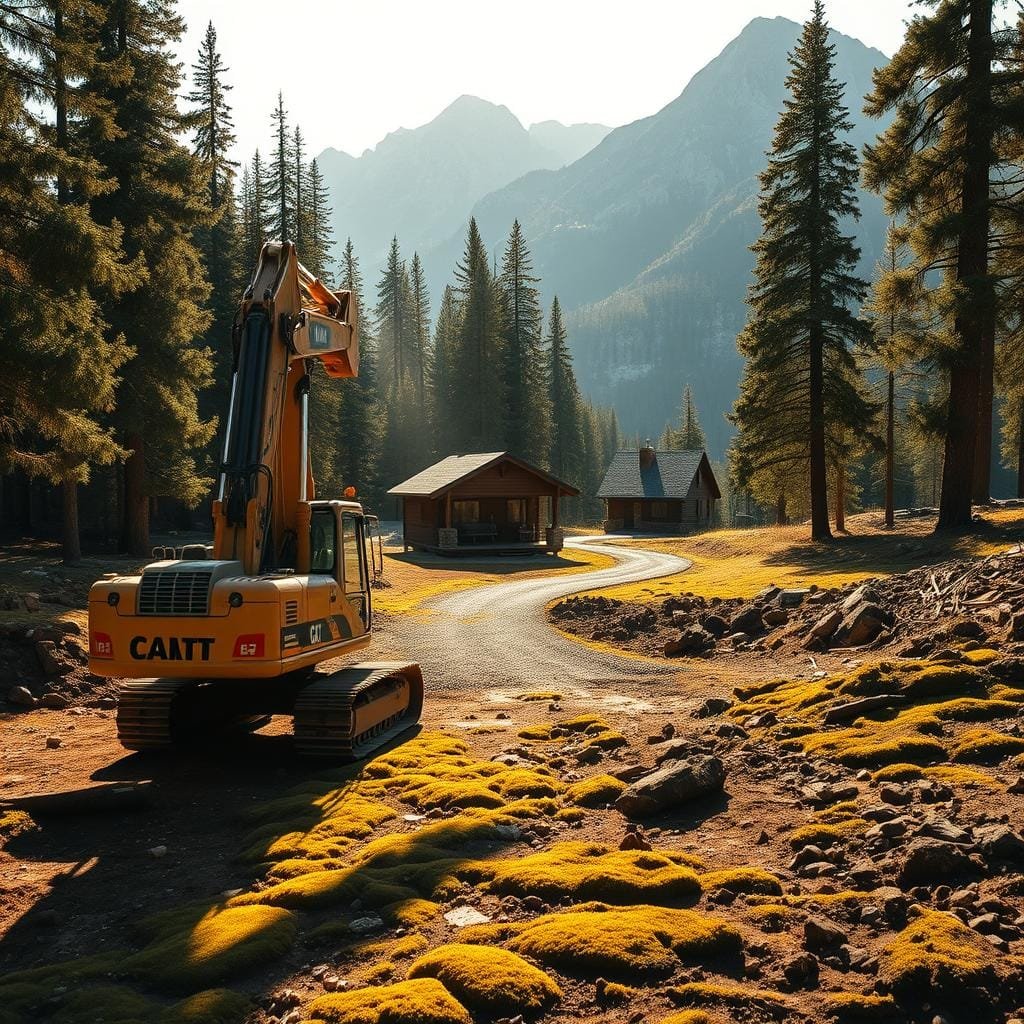
The best time to rent backhoes for mountain property is when you need a versatile machine. Backhoes can do many tasks and travel fast. This is great for large properties.
Backhoes are stronger than mini excavators, which is good for rocky soil. But, they only rotate 200 degrees. This can be a problem in tight spaces. Most projects need 5 to 10 day rentals for backhoes.
Bulldozers for Foundation Prep
Renting bulldozers for cabin foundation is best for moving a lot of earth. Dozers are powerful and can clear wooded areas. They are stable on slopes.
Bulldozers work fast, so they’re rented for 2 to 5 days. They are expensive and need skilled operators. They’re best for moving a lot of earth, not for detailed work.
Compact Track Loaders and Skid Steers
These machines are essential for many tasks in construction. They are good for clearing, grading, and placing materials. Compact track loaders work well in soft ground, while skid steers are better on firm ground and are cheaper to rent.
Many builders rent these for 1 to 3 weeks. They are affordable for longer periods. They can access areas where bigger machines can’t.
| Equipment Type | Best Use Cases | Typical Rental Duration | Key Advantage |
|---|---|---|---|
| Mini Excavators | Foundation digging, utility trenches, precision work | 3-7 days | 360-degree rotation, minimal site disturbance |
| Backhoes | Versatile digging and loading, rocky soil conditions | 5-10 days | Road-friendly, front loader included |
| Bulldozers | Hillside grading, heavy clearing, pad creation | 2-5 days | Fast bulk earth moving |
| Track Loaders/Skid Steers | Material handling, light grading, multiple phases | 1-3 weeks | Versatility with attachments, lower daily cost |
Remote and Rural Access Challenges
Rural cabin builders face three big challenges. They must get equipment to the site, keep it fueled, and deal with unpredictable access. Heavy equipment accessibility for rural cabin projects requires careful planning. This planning goes beyond just picking rental dates.
These challenges can add thousands of dollars to your budget and weeks to your timeline. If not addressed, they can cause big problems.
Understanding these challenges helps you make better rental timing decisions. You can avoid mistakes like scheduling equipment that can’t reach your property. Or renting during seasons when access is impossible.
Getting Heavy Machinery to Remote Locations
Transportation costs often surprise first-time cabin builders. Most rental companies include delivery within 30-50 miles. But, remote cabin sites often fall outside this zone.
Delivery and pickup charges for distances beyond the included radius usually cost $200-500 each way. Sometimes, more for difficult terrain.
These costs make renting equipment for longer periods more attractive. Spreading a $400 delivery charge across three days costs $133 per day. But, spreading it across ten days drops it to just $40 per day.
Access road limitations are another critical issue. Lowboy trailers need clear paths without low bridges, narrow passages, or tight turns. Before scheduling any rental, check if your access road can handle delivery trucks.
- Bridge weight limits and clearance heights
- Road width adequate for wide loads (minimum 12-14 feet)
- Turning radius at corners and intersections
- Steep grades that might prevent loaded trailers
- Overhead power lines crossing the road
Some remote sites require equipment that can reach the location under its own power. Backhoes can drive themselves on roads, while larger excavators need trailer transport. This access limitation might dictate which equipment types you can realistically rent.
Keeping Equipment Fueled and Maintained
Fuel consumption is a major concern during multi-day rentals at isolated locations. Excavators burn 3-8 gallons per hour depending on size and workload. A mid-size excavator running eight hours daily consumes 40-60 gallons.
This adds up quickly when the nearest fuel station is 30 miles away.
You have two options for remote fueling, both with drawbacks. Fuel delivery services charge premium rates and require advance scheduling—often 24-48 hours notice. Transporting fuel yourself in approved containers is time-consuming and limited by your vehicle’s capacity and legal transportation limits.
Equipment breakdowns create serious problems at remote cabin sites. Service technicians may be hours away and reluctant to make emergency calls to difficult-access locations. You’ll continue paying rental fees while waiting for repairs, potentially losing several days of productivity and rental value.
Weather Impacts on Site Access
Seasonal weather patterns can suddenly make heavy equipment accessibility for rural cabin projects impossible. Spring mud seasons turn unpaved access roads into impassable quagmires. Summer thunderstorms wash out mountain roads without warning. Fall rains soften road surfaces beyond safe weight capacity.
Winter snow creates the most obvious access barriers. A surprise snowstorm can strand rented equipment at your site, forcing you to continue paying rental fees for machinery you cannot use. Poor weather might prevent scheduled equipment delivery, delaying your entire project timeline.
These weather-related access issues make rental timing critical for rural properties. The table below compares common access challenges across different scenarios:
| Access Challenge | Impact on Project | Cost Consequence | Prevention Strategy |
|---|---|---|---|
| Excessive delivery distance | High upfront transportation fees | $400-1,000 additional | Extend rental period to spread costs |
| Inadequate road access | Cannot deliver standard equipment | Limited equipment options | Pre-verify road dimensions and capacity |
| Remote fuel availability | Daily refueling trips or expensive delivery | $50-200 per day extra | Arrange bulk fuel delivery before rental |
| Weather road closures | Stranded equipment, wasted rental days | $300-800 per day lost | Rent during stable weather windows only |
Planning for these access challenges before finalizing your rental dates prevents expensive surprises. Contact your rental company to discuss delivery feasibility and costs specific to your location. Many experienced rental companies can recommend solutions based on similar remote cabin projects they’ve supported.
Weather and Ground Condition Factors
Before you book that excavator delivery, it’s key to know about weather and ground conditions. These factors often decide when to rent equipment more than project plans or budget. Ignoring these can lead to stuck machines, lost rental days, and project delays.
The link between weather and equipment rental success is strong. Smart builders watch weather for weeks before bringing heavy machines to their site.
Soil Moisture and Workability
Soil moisture levels affect whether your rental equipment can work or get stuck. The ground must be dry enough for heavy machinery but not too hard for digging. This balance changes a lot by soil type.
Sandy soils dry quickly and are ready in days after rain. Clay-heavy soils stay muddy for weeks. A Connecticut cabin builder said spring means mud season, so wait for the ground to dry before equipment arrives.
Testing soil workability is easy—walk your site after rain and see your footprints. If you leave deep impressions or your boots get heavy mud, wait a few more days and test again.
Working in wet conditions causes big problems. You’ll get stuck machines, create water-collecting ruts, and need to fix drainage for years. Add weather monitoring to your rental timing to avoid these issues—check forecasts and add buffer days to your plan.
Frost and Frozen Ground Considerations
The choice between winter vs summer equipment rental is key in cold areas where frost affects digging. In cold places, spring is when construction starts as the ground thaws. South-facing slopes thaw first, while shaded north slopes and low areas stay frozen longer.
Frost penetration changes a lot by region—from a few inches in mild areas to several feet in cold ones. Once ground freezes solid, digging is hard without special equipment for winter cabin rentals.
| Season | Ground Condition | Equipment Access | Best Uses |
|---|---|---|---|
| Spring | Thawing, muddy | Limited until dry | Wait for drainage |
| Summer | Dry, workable | Excellent | All excavation work |
| Fall | Cooling, variable | Good early season | Complete before freeze |
| Winter | Frozen solid | Excellent for clearing | Land clearing, road building |
Interestingly, some builders like working on frozen ground for certain tasks. Frozen ground supports heavy equipment that would sink in warmer months, making it great for clearing land and building roads. But, digging must happen before the ground freezes.
Permit and Inspection Timing
Getting the timing right for permits, inspections, and equipment rentals can save you a lot of money. Many builders rent equipment too early, leading to wasted time and money. This happens when machines sit idle, waiting for paperwork to be approved.
Knowing when to rent heavy equipment is key. It depends on your permits and inspections. Your timing affects your costs and how fast you can finish the project.
Getting Your Permits Before Equipment Arrives
Always wait until you have approved permits before renting equipment. This rule helps you avoid wasting rental fees while waiting for permits.
Your cabin project might need different permits. Each one takes a different amount of time:
- Land disturbance permits for clearing and grading
- Septic system permits that need soil testing
- Building permits for the cabin itself
- Driveway access permits for entry roads
Permits can take from two weeks to several months. The time varies based on your area’s workload and if your plans need changes.
Look up your local municipal permit requirements early. Builders often rent equipment too soon, thinking permits will come any day.
Smart ways to get permits faster include:
- Submit complete applications first time with all needed documents
- Answer quickly to any reviewer questions or requests
- Build good relationships with permit staff through professional communication
- Consider hiring a permit expediter if you’re tight on time
Some builders make tentative rental reservations that can be changed once permits are approved. But, popular equipment might not be available during delays.
Matching Equipment Rentals with Inspection Schedules
Inspection timing is as important as permit approval. You don’t want to pay for equipment while waiting for an inspector.
Common inspections in cabin construction include:
- Foundation footings before concrete pouring
- Utility trenches before backfilling
- Septic systems at different stages
- Final grading and drainage patterns
Call your building inspection office before booking equipment rentals. Know their availability and scheduling needs. Some offer same-day or next-day inspections, while others need 48-72 hours’ notice.
Plan your equipment rental around these inspection delays. If an inspector needs three days’ notice, plan your rental or return dates around that.
Remote cabin sites have extra inspection challenges. Make sure inspectors can travel to your site and ask about any special scheduling needs. Some inspectors visit remote sites together, which might affect your project’s timing.
Coordinate your rental schedule with confirmed inspection appointments. This way, you avoid expensive downtime and keep your project moving efficiently.
Short-Term vs Long-Term Rental Decisions
Choosing how long to rent heavy equipment can greatly impact your budget for cabin construction. Knowing when to opt for short-term rentals versus long-term ones is key. The rental period affects your costs, project flexibility, and scheduling.
Your rental duration should align with your project timeline, considering weather delays and unexpected issues. Most rental companies offer flexible terms to adjust as your project changes. This is very important for remote cabin locations where conditions can change fast.
Daily Rental Scenarios
Daily rentals are best for quick tasks that experienced operators can finish in one session. These short-term equipment needs cost between $200 and $500 per day, based on the machine’s size and capabilities. You pay the full daily rate, whether you use the equipment for two hours or ten hours.
Consider daily rentals for these specific situations:
- Digging a foundation that takes 4-6 hours with clear access and prepared plans
- Trenching utility lines that can be completed in one focused work session
- Final grading work requiring just a few hours of equipment time
- Small clearing projects on accessible terrain with no obstacles
Daily rentals can get expensive if work takes longer than expected. Weather delays or unexpected site conditions can force you into multiple daily rentals at full price. You need everything ready before the equipment arrives—site access cleared, materials delivered, operators ready, and a favorable weather forecast.
Daily rentals are risky for cabin building projects due to tight scheduling. Unless you’re sure the task fits within one day, longer rental periods offer better value and less stress.
Weekly and Monthly Options
Weekly and monthly rentals offer better value for extended cabin projects. Weekly rates typically equal 3-4 daily rates, saving money if you need equipment for more than three or four days. Monthly rates often equal just 2-3 weeks of weekly rates, providing exceptional value for longer timelines.
Rental companies offer more competitive pricing for longer commitments. This ensures their equipment stays productive and saves them administrative work. Many cabin builders rent equipment for a full month, even if they use it only 15-20 days total.
Calculate your breakeven point by estimating realistic work days needed. Add buffer time for weather delays and compare total costs including delivery fees across different periods. A monthly rental might cost $3,000 while four weekly rentals would total $4,500—the monthly option saves $1,500 while providing schedule flexibility.
Longer rental terms give you freedom to work when conditions permit without watching the clock. This flexibility is invaluable for remote cabin sites where weather and access issues frequently interrupt progress. You avoid the pressure of cramming work into expensive daily windows and can plan around optimal working conditions.
Operator Availability and Skills
The person running your heavy equipment is just as important as the machine. Their skill can make your rental period productive or costly. Knowing your options helps decide when and how long to rent equipment for cabin projects.
Running Equipment Yourself vs Hiring Professional Services
Operating equipment yourself can save $50 to $100 per hour compared to hiring pros. If you’ve used machinery before, you might handle basic tasks yourself. This could include using a backhoe for grading or a skid-steer with attachments.
Self-operation lets you control your schedule. You work at your own pace, avoiding hourly fees. This is key when planning your cabin construction around your availability.
But, if you’re new to operating equipment, it’s tough. Learning new machines while working slows you down and increases mistakes. Switching from a backhoe to a skid-steer, for example, takes time, even if you’ve used similar machines before.
- Digging slopes too steep that collapse later
- Missing proper foundation depths and grade specifications
- Damaging underground utilities during excavation
- Getting equipment stuck in soft or wet ground
- Creating drainage problems through improper grading
These mistakes cost time and money to fix. If you’re learning, rent equipment for longer periods to account for your learning curve and slower pace.
Professional operators with 10 to 20 years of experience can finish excavation in hours. They dig foundations correctly and pass inspections right away. They know how to handle different soils and won’t damage your rental equipment.
Experienced operators work faster, meaning you rent equipment for shorter times. Even though they cost more per hour, the total cost is often balanced. Plus, they deliver better results.
Training Rules and Certification Needs
Certification rules vary by location and equipment type. Some places require proof of experience or certification before renting certain machines. Others just ask you to sign liability waivers.
Your insurance might require certified operators for coverage. This affects both timing and costs when renting equipment. Check your policy before renting to avoid coverage gaps.
Knowing the certification rules before renting prevents delays. It ensures your cabin project stays on schedule.
Budget Planning for Equipment Rentals
The rental rate you see online isn’t the whole story for heavy equipment in cabin building. To plan your budget wisely, consider all costs, not just the daily rate. This way, you can find cost-effective timing for cabin construction equipment and avoid surprises.
Getting accurate rental quotes upfront helps avoid budget overruns. Many builders focus only on the daily rate, then face costs 50-70% higher than expected. This section explains all the expenses you need to include in your equipment rental budget.
Understanding Your Complete Rental Expenses
Base rental rates are just the start of your costs. Delivery and pickup fees can add $150-400 each way for remote sites. Fuel costs can surprise you, as equipment must return full or you’ll pay high rates for used fuel.
Environmental fees and administrative charges are common on rental invoices. A “$300/day excavator” can cost $500+ per day with all included. This changes how you think about the best rental period for value.
Getting written, itemized quotes from rental companies before committing protects your budget. Compare total project costs, not just daily rates, to see the real financial picture. This approach shows which equipment and rental duration save you money.
| Cost Component | Typical Range | Budget Impact | Money-Saving Tips |
|---|---|---|---|
| Base Rental Rate | $250-$400/day | Primary expense | Consider weekly rates for better value |
| Delivery & Pickup | $150-$400 each way | 15-25% of total | Combine multiple equipment deliveries |
| Fuel Costs | $50-$150/day | 10-15% of total | Return with full tank to avoid premiums |
| Damage Waiver | 10-15% of rental | Optional protection | Check existing insurance coverage first |
| Administrative Fees | $25-$75 per rental | Minor but recurring | Negotiate removal for longer rentals |
Watching Out for Unexpected Charges
Hidden fees can blow your budget if you don’t know about them upfront. After-hours pickup or return fees hit hard when you need weekend delivery or evening pickup. Some companies charge premium rates for anything outside standard business hours.
Cleaning fees apply if equipment returns excessively dirty, which is common. Overtime charges stack up fast if you return equipment late, often calculated hourly at premium rates. Even minor damage like hydraulic leaks or torn seats can result in significant repair bills.
Rental companies perform maintenance and part replacement to keep equipment in good working order. They conduct regular tests to ensure everything functions as expected. When attachments require repair due to unexpected failure, the rental company swaps the defective equipment for a working replacement.
Normal wear and tear shouldn’t cost you extra, but “normal” gets defined subjectively. Some companies charge more aggressively than others. Photograph equipment during pickup, documenting existing damage, tire condition, and hydraulic hose conditions to protect against false damage claims.
Seeking off-season discounts for heavy equipment rentals can significantly reduce these charges. Many rental companies offer better terms during slower months when they’re eager to keep equipment working.
Protecting Yourself with Insurance Coverage
Basic rental contracts hold you responsible for all damage, theft, or loss. This exposure could mean five-figure liabilities if equipment gets seriously damaged or stolen. Understanding your protection options helps you make informed budget decisions.
Damage waiver coverage typically costs 10-15% of your rental expense. This protection limits your liability, but deciding whether to purchase it depends on several factors. Your experience level matters, as skilled operators damage equipment less frequently.
Site risks affect your insurance decision too. Rocky terrain or steep slopes increase damage risk. Check whether your existing insurance provides coverage before paying for redundant protection. Your financial ability to absorb losses should guide your final choice.
Some cabin builders skip damage protection to save money short-term, then regret it after an incident. Others pay for coverage they don’t need because they already have protection through business insurance. Review your specific situation carefully before making this important budget decision.
Signs You Should Delay Equipment Rental
At times, the best choice is to wait before renting heavy equipment for cabin projects. Rushing can cost thousands and leave machines idle. Knowing when to rent is key to avoiding these issues.
There are clear signs your site isn’t ready for heavy equipment. Spotting these red flags can save your investment and prevent frustration.
Incomplete Site Planning
Equipment waste is a big issue before site plans are finalized. You need complete documentation before renting for cabin site prep.
Having a stamped site plan is essential. All setback and easement locations should be marked. Your utility routing must be determined before digging starts.
Drainage plans and cut and fill calculations are also critical. Without these, rental fees can soar while you make last-minute decisions.
Planning is essential before equipment arrives. Every hour spent deciding costs money when the equipment is running.
Uncertain Weather Forecasts
Forecasting rain or storms in the next 3-7 days means delaying equipment delivery. Rain makes work difficult and often impossible once the ground is saturated.
Equipment sitting idle during multi-day weather events adds up in rental fees. Check multiple forecasts before setting rental dates. Mountain weather is notoriously unpredictable.
Plan conservatively. A 30% chance of rain each day for a week will likely lose several work days. This doesn’t help your rental budget.
Material Delivery Delays
Equipment ready to dig without concrete scheduled causes problems. You’ll dig and then wait for concrete trucks.
Grading equipment without driveway aggregate is also a waste. Confirm material deliveries are scheduled and guaranteed before equipment arrives. Have backup suppliers ready in case of delays.
Syncing rental timing with material deliveries ensures smooth work. This is smart planning for cabin construction phases.
| Warning Sign | Cost Impact | Recommended Action | Delay Duration |
|---|---|---|---|
| No stamped site plan | $300-500 daily waste | Complete engineering documents first | 1-3 weeks |
| Heavy rain forecast | $200-400 per unused day | Monitor weather and reschedule | 3-7 days |
| Concrete delivery uncertain | $150-300 daily idle costs | Confirm delivery dates before rental | 1-2 weeks |
| Utilities not marked | $500-2000 damage risk | Contact locate services immediately | 3-5 days |
Alternatives to Renting Heavy Equipment
Renting heavy equipment isn’t the only way to build a cabin. Before you decide, think about these three alternatives. They might save you money, reduce stress, or fit your skills and timeline better. Each option has its own benefits based on your project, budget, and experience.
Professional Contractors Own Everything You Need
Hiring full-service contractors means you don’t need to worry about when to rent heavy equipment for cabin site prep. Excavation contractors charge $100-150 per hour for equipment and operator. This might seem pricey, but it includes a lot.
Contractors work much faster than DIYers. What takes you three days, they do in one. They also bring insurance and equipment insurance, so you don’t have to worry about risks.
Contractors are great because they have many attachments for their machines. One excavator can do brush clearing, grading, and trenching by just changing attachments. This means they can do more tasks without needing different equipment.
Timing affects contractor rates a lot. Spring and fall are cheaper because contractors are less busy. Summer is busier and more expensive. Get quotes for both rental and contractor options, then think about your skills, time, and comfort with risk.
Buying Used Machines Makes Sense for Some Projects
Buying used equipment is good for big projects or building in phases. A used compact excavator or skid steer costs $15,000-40,000. This is cheaper than renting for a long time.
With ownership, you can work at your own pace. You can also sell the equipment later and get some of your money back. Some builders share equipment costs and use with neighbors.
The downside is you pay for maintenance, repairs, and storage. If equipment breaks, you can’t just swap it out. Decide if buying saves money based on how long you’ll need it.
Hand Tools Handle Smaller Tasks Effectively
Manual labor and small tools are the cheapest way for some tasks. Knowing when to use human power helps save money without losing quality.
These tasks work well without heavy equipment:
- Clearing brush and small trees with chainsaws and brush cutters
- Trenching for small utilities in workable soil using shovels and picks
- Finish grading with rakes, shovels, and wheelbarrows
- Spreading gravel for pathways and drainage areas
- Light landscaping and final site cleanup
Manual methods take more time and effort. But they save on rental costs for small tasks. Consider mixing methods: rent for big jobs, then use hand tools for details.
Making Your Final Rental Decision
Deciding when to rent heavy equipment for cabin construction is all about planning. You need to make sure your rental timing matches your permits, site access, and weather. Also, check the delivery of materials.
Before you rent, make a checklist. Make sure you have all the necessary permits. Ensure your site is ready for equipment delivery. Look at the weather forecast for the next ten days. Confirm that material deliveries fit your work schedule. Get quotes from different rental companies that include all costs.
The best time to rent heavy equipment is when you can use it right away. Equipment that sits idle wastes money. Plan for extra days for weather and unexpected issues.
Smart rental choices focus on using the equipment well, not just saving money. Choose rental times that match your project phases. Talk to local rental companies about your needs. They want your project to succeed because happy customers come back.
Your cabin building timeline is unique. Plan well before equipment arrives. This keeps your project on track and saves money by avoiding mistakes.