
Welcome! Many people believe a log home needs constant, difficult upkeep. That’s a common myth. With the right care, your beautiful structure can last for generations. It doesn’t have to take up all your free time.
Once a tree is cut, the material faces threats. The main enemies are water, sun, fungi, mildew, and insects. Seasonal temperature changes also cause the material to swell and shrink. This natural movement can impact its health over the long term.
Thankfully, manufacturers have created hundreds of protective products. These come in liquid, powder, or solid forms. Some seal out moisture. Others block harmful UV rays or discourage bugs. Understanding these options is key to finding a great solution.
A smart plan starts even before construction. It continues for the entire life of your house. This guide will walk you through drying methods, preservative choices, and application techniques. You’ll learn long-term strategies to keep your property looking beautiful and structurally sound. For more details, explore our guide on treating log cabin exterior surfaces.
Preparing and Drying Your Cabin Logs
Before any protective coatings are applied, moisture management takes center stage. Excess water within timber creates ideal conditions for fungi, mold, and destructive insects. Reducing moisture content is the critical first step in log preparation.
Air-Drying vs. Kiln-Drying Methods
Two main approaches exist for drying logs. Air-drying is a natural process that can take a year or more. Kiln-drying uses controlled heat to remove moisture uniformly in weeks.
Kiln-dried material offers several advantages. The heat eliminates insects, larvae, and fungi. It also crystallizes sap, preventing future seepage. Kiln-dried logs settle less and show reduced cracking over time.
Managing Moisture to Prevent Wood Damage
Proper drying prevents timber from hosting destructive organisms. Ideal moisture levels stop termites and beetles from thriving. This protection is essential for structural integrity.
Some producers use borate solutions during drying. This earth-mined powder mixes with water for easy application. Borate-treated logs resist termites, carpenter ants, and fungi without toxic chemicals.
For detailed techniques on proper drying, consult this comprehensive drying guide. Proper preparation ensures your structure lasts for generations.
Exploring the Best Treatment for Cabin Wood: Preservatives and Finishes
Modern protective solutions transform the challenge of log home maintenance into manageable care. The right combination of products creates a shield against nature’s elements.
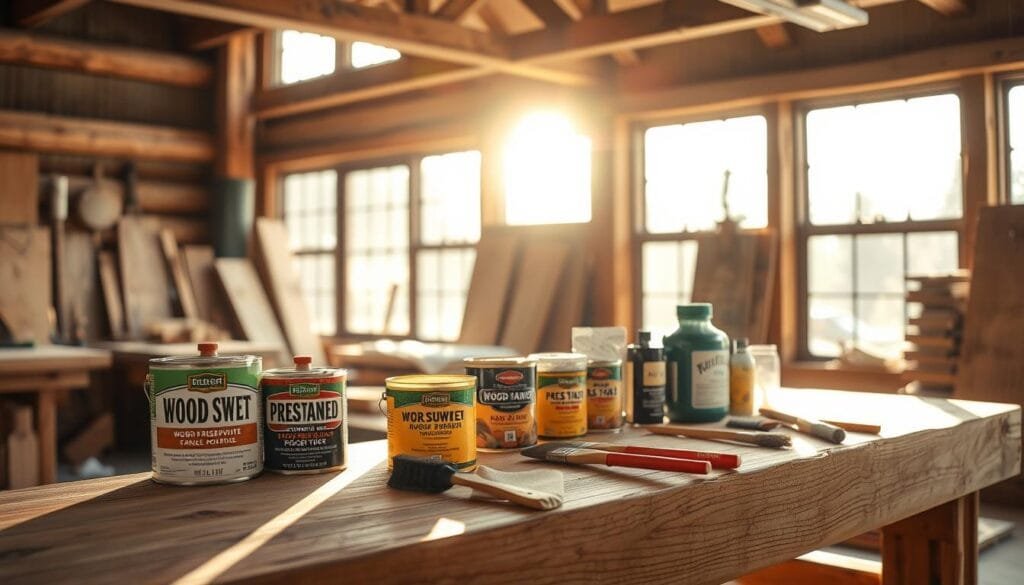
Understanding Wood Preservatives and Their Role
Wood preservatives serve as your structure’s first defense line. Their primary job is repelling water, which prevents mold and mildew growth.
Many modern preservatives include biocides. These chemicals are safe for families but lethal to wood-destroying organisms. This extra protection keeps your natural wood healthy.
| Preservative Type | UV Protection | Maintenance Cycle | Best For |
|---|---|---|---|
| Clear Preservative | Low | 3-4 years | Natural wood appearance |
| Pigmented Preservative | High | 4-5 years | Sun-exposed surfaces |
| Biocide-Enhanced | Medium | 3-5 years | Insect-prone areas |
Benefits of Pigmented Stains and Topcoats
Wood stain works with preservatives to create comprehensive protection. Apply stain after roof completion but before the topcoat. Darker stains provide superior defense against sun damage.
The final finish coat reflects ultraviolet rays and adds water repellency. For detailed maintenance schedules, consult this log cabin care guide. Proper application ensures years of beautiful protection.
Application Techniques and Maintenance for Log Home Protection
A successful protection plan hinges on proper technique. Correct methods ensure your chosen products bond well and perform as intended. This stage is all about the details.
Let’s explore the key steps for applying and maintaining your log home’s shield.
Effective Cleaning and Pre-Treatment Steps
Start with a thorough cleaning. Remove all mill glaze, road grime, and dirt from the surface. These contaminants block preservatives from penetrating the material.
For interior areas with cooking oils, use a strong detergent. Scrape off any existing growth with a stiff brush. A specialized cleaner like Barrettine Mould and Mildew Cleaner kills spores effectively.
Proper Application of Treatments in Varying Conditions
Apply your chosen solution carefully. For a product like Bora-Care, mix one part concentrate with one part water. One gallon covers up to 800 board feet.
Use a sprayer on a low-pressure setting or a wide brush. Apply until the surface appears wet and the solution begins to run off. This ensures deep penetration.
Weather matters. Never apply during rain or snow. Allow at least 48 hours of dry weather after the application for the product to set.
| Application Method | Equipment Needed | Key Consideration |
|---|---|---|
| Sprayer | Low-pressure sprayer, separate mixing container | Pre-mix to prevent nozzle blockages |
| Brush | Chemical-resistant gloves, large wide brush | Ensures even coverage on all surfaces |
Maintaining Wood Quality Over the Years
High-risk areas need extra attention. Apply two coats to log ends, notches, and corners. Wait at least one hour between applications.
The final finish or topcoat is crucial. Apply it within six weeks of the initial treatment. Wait at least 48 hours after the preservative application.
Always test for compatibility on a small, hidden section first. This simple step prevents issues across the entire surface of your home.
Final Thoughts on Long-Lasting Log Cabin Care
True longevity for your beautiful log home comes from viewing care as an ongoing partnership. This process starts before construction and continues for the entire life of your home.
Inside, products like Fiddes Hard Wax Oil protect your logs. They create a durable, easy-to-clean finish that resists dirt and moisture. This maintains the natural warmth of your interior.
Outside, the sun and water will naturally turn logs grey over the years. Using a pigmented stain or oil each year acts like sunscreen. It slows this aging process significantly.
A simple annual inspection and touch-up can prevent major issues. This small investment of time ensures your home remains a strong, beautiful legacy for many years to come.