
Building your dream getaway doesn’t have to empty your wallet. Many people think that affordable foundations mean sacrificing quality or longevity. But, smart choices in base structures can give you both durability and savings.
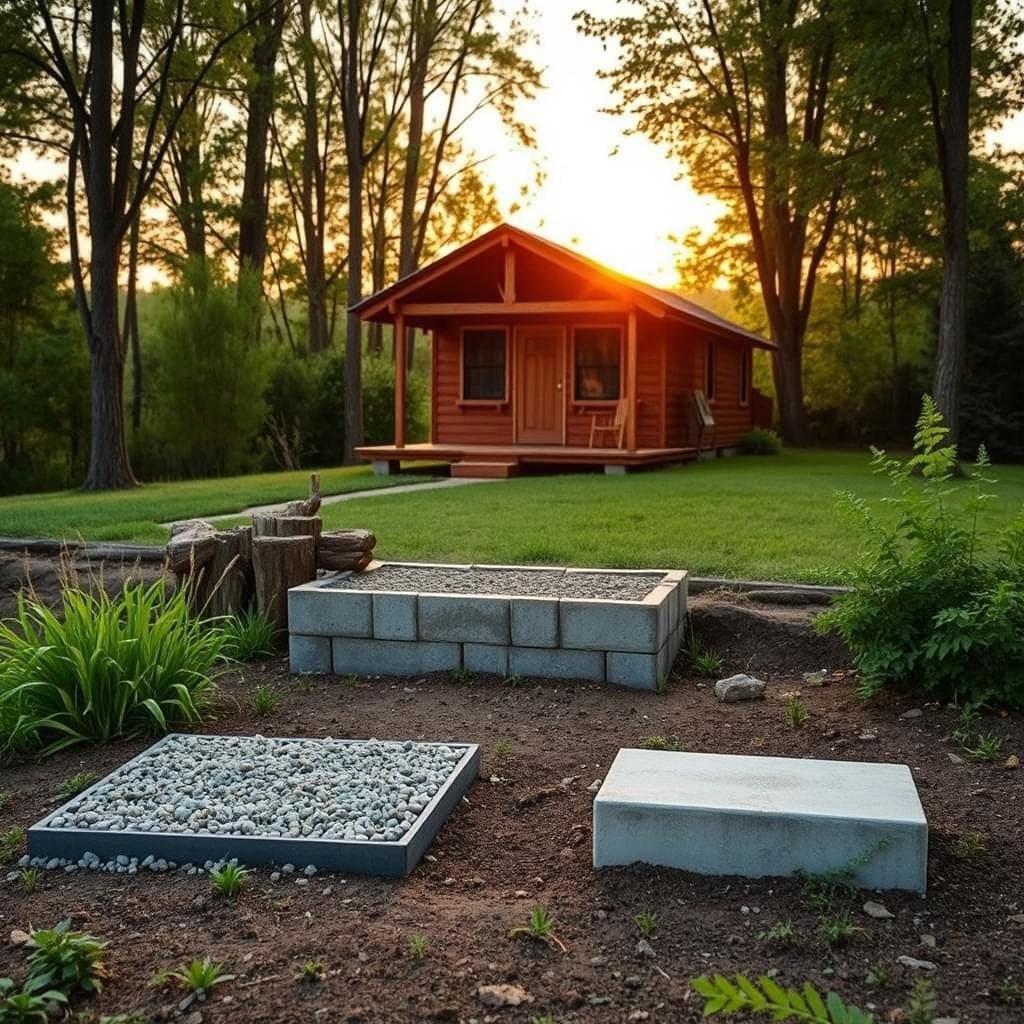
Several economical options exist that provide solid support without breaking the bank. You’ll discover pier and post systems, skid bases, gravel pads, concrete slabs on grade, and pole barn styles throughout this guide. Each option has unique benefits that match different building scenarios.
The most economical choice varies based on your specific situation. Concrete blocks offer decent support at low cost, while gravel pads provide excellent drainage and stability. Skid bases require minimal materials and labor, making them incredibly budget-friendly. Pier and beam systems need fewer materials than full concrete pours.
Your final decision depends on factors like soil conditions, local climate, and your DIY abilities. Understanding these elements helps you select the perfect base structure. Let’s explore each option in detail so you can make the smartest choice for your budget cabin building project.
Understanding Cabin Foundation Basics and Why They Matter
A cabin foundation does more than just hold up walls and floors. It’s a key system that protects your investment from the ground up. Knowing what foundations do is important for making smart decisions that save money.
A foundation transfers your cabin’s weight safely into the ground. It acts as a translator between your building and the earth. This way, no single point carries too much pressure.
Without this, your cabin would sink or shift as the soil reacts. This is because the load is not spread out evenly.
Foundations also protect against two big problems. The first is subsidence, where soil moves away from beneath your cabin. The second is settlement, where your cabin’s weight compresses the soil.
These problems can cause big issues. Doors that stick or floors that slope are warning signs. Windows that are hard to open also mean your cabin has shifted.
A good foundation keeps your cabin level and protects it from moisture. It also stops frost heave in cold climates. This is when freezing ground pushes buildings upward during winter.
Even pests are kept out by a proper foundation. Rodents and insects find it hard to get in through a solid foundation. This keeps them outside where they belong.
Skipping foundation work or choosing the wrong one can lead to expensive repairs. What starts as a small issue can turn into big problems. Fixing these problems later costs a lot more than installing the right foundation from the start.
But, you don’t need to spend a lot to get a good foundation. Many affordable foundations work well when chosen right for your site. The key is to pick one that fits your specific needs, not just the cheapest option.
Even portable cabins need a good foundation. You might think they don’t need permanent support because they’re designed to move. But, they face settling, moisture, and pest issues just like permanent structures. A simple foundation system makes maintenance easier and extends their life.
Your foundation works every day to keep your cabin comfortable and safe. It handles seasonal changes, channels water away, and keeps everything level. Spending time to understand your options now prevents future headaches and costly repairs.
Key Factors That Impact Foundation Costs for Cabins
Before choosing a budget-friendly cabin base, know your building site’s unique conditions. The right foundation for your neighbor might not work for you. Three key factors affect your foundation choice and costs: the ground, weather, and local rules.
These factors together decide which foundation is best for you. A foundation costing $2,000 on one site might need $5,000 changes on another nearby.
Soil Conditions and Site Preparation Requirements
The soil type greatly impacts foundation choices and costs. Different soils drain water, support weight, and react to temperature changes in unique ways.
Sandy and gravelly soils drain fast and need less prep. They compact well and support most foundations. Clay soils hold moisture and change with weather.
Rocky soil might seem ideal but can raise site prep costs. You might need special tools to excavate or level. Peat and organic soils are the toughest because they compress and hold moisture.
Soil testing shows what you’re dealing with before choosing a foundation. Tests cost $500 to $1,500 but prevent costly failures. They reveal soil composition, drainage, and strength.
Sloped terrain adds complexity. Slopes need more excavation or special designs. Level sites with good drainage have lower costs and more foundation options.
Here are common site prep costs:
- Land clearing to remove trees, stumps, and vegetation
- Excavation and grading to create a level building pad
- Soil amendments if your native soil needs improvement
- Drainage installation to direct water away from your foundation
- Access road creation for equipment and material delivery
Local Climate and Weather Patterns
Your local weather affects foundation types and longevity. Climate considerations go beyond looks—they ensure structural integrity for decades.
Cold climates face frost heaving, where water expands and lifts foundations. Foundations must go below the frost line to avoid damage.
Frost line depths vary across the U.S. Northern states have deeper frost lines, adding $1,000 to $3,000 to costs.
Wet climates need good drainage. Foundations on the ground can trap moisture, causing rot and problems. Pier and post foundations work well in wet areas.
| Climate Type | Primary Challenge | Best Foundation Options | Cost Impact |
|---|---|---|---|
| Cold/Freezing | Frost heaving and ice expansion | Deep piers, frost-protected slabs | +$2,000-$4,000 |
| Wet/Humid | Moisture and drainage issues | Elevated piers, gravel with drainage | +$800-$2,000 |
| Hot/Dry | Soil shrinkage and expansion | Reinforced slabs, deep footings | +$500-$1,500 |
| Moderate | Minimal weather concerns | Most foundation types work well | Standard costs |
Extreme temperature swings cause soil expansion and contraction. Reinforcement and proper design prevent costly repairs later.
High wind and seismic areas need strong anchoring. Hurricane straps, seismic ties, and deeper footings keep your cabin secure.
Building Codes and Permit Requirements in Your Area
Local building codes and permits vary widely. These rules impact your foundation choices and costs. Rural areas have fewer rules, while cities have stricter ones.
Permit fees range from $200 to $1,000. You might need engineers or architects for stamped plans. These services add $500 to $2,000.
Some foundation types are banned in certain areas. Simple skid foundations are okay in rural areas but not in cities. Concrete slabs and pier systems usually meet code requirements.
Required inspections add time and cost. Most places need at least one inspection before concrete pouring. Failed inspections mean delays and extra costs. Local contractors familiar with codes help avoid these issues.
Understanding soil, climate, and local rules helps choose the right foundation. Evaluate your site carefully before making any decisions.
Pier and Post Foundations: The Budget-Friendly Classic
Pier and post foundations are a budget-friendly choice that never goes out of style. They help cabin owners save money while getting the support they need. This system uses vertical posts or piers to support horizontal beams, which carry the cabin floor’s weight.
This foundation type is versatile and works well on uneven terrain. It prevents moisture problems and offers crawl space for storage and easy access to utilities. Other low-cost foundation solutions might struggle here.
Engineers love these foundations for their hidden advantage. They allow buildings to adjust to seasonal temperature changes without damage. This flexibility reduces stress on the structure over time.
How Pier Foundations Provide Stable Support
The science behind pier foundations is simple yet brilliant. Piers at strategic points carry the cabin’s weight, like a table with multiple legs. The more legs, the more stable the table.
Proper pier spacing is critical for creating durable cabin footings. Building codes and contractors recommend 6 to 8 feet apart in both directions. This spacing prevents overloading and sagging.
The weight distribution is straightforward. Your cabin’s floor joists rest on horizontal beams, which transfer the load to piers. The piers then carry the load down to solid ground or bedrock.
You can choose from several materials for the piers. Concrete blocks are affordable, while poured concrete piers offer strength and longevity. Treated wood posts are another option, though they don’t last as long as concrete.
Concrete piers are the gold standard for this foundation type. They resist moisture, insects, and temperature changes better than wood. They provide solid support that won’t shift or settle over time.
Complete Cost Breakdown for Materials and Labor
Understanding pier foundation costs is key to budgeting accurately. This knowledge helps avoid surprises and makes informed decisions about your cabin project.
For a 12×20 foot cabin, you’ll need about 12 piers for support. Here’s what you can expect to spend on materials:
| Material Item | Quantity Needed | Cost per Unit | Total Cost |
|---|---|---|---|
| Concrete mix (60lb bags) | 24-30 bags | $4-6 | $120-180 |
| Concrete blocks (8x8x16) | 48-60 blocks | $2-3 | $96-180 |
| Pressure-treated beams (4x6x12) | 4 beams | $35-50 | $140-200 |
| Hardware and anchors | Various | — | $75-125 |
| Gravel for drainage | 1-2 cubic yards | $30-50 | $60-100 |
Your total material costs will be $500 to $800 for a 12×20 cabin foundation. This is less than a full concrete slab, which costs $1,500 to $2,500 for the same size.
Labor costs vary based on whether you hire professionals or do it yourself. If you’re handy and have help, this is a DIY-friendly project. You’ll need basic tools like a post hole digger, level, measuring tape, and a mixing tub for concrete.
Professional installation for this size foundation costs between $800 and $1,500. That brings your total investment to $1,300 to $2,300 with hired help, or $500 to $800 if you do it yourself. Either way, you’re looking at competitive pier foundation costs.
The installation process takes 2-4 days for a small crew or a dedicated DIYer. You’ll start by marking pier locations, then dig holes 3-4 feet deep and 12-18 inches wide. The depth depends on your local frost line and soil conditions. Each pier needs to extend at least 12 inches above ground level to keep your cabin elevated and protected from moisture.
Expected Lifespan and Durability Factors
When you invest in any foundation, you want to know how long it’ll last. The good news is that properly installed pier foundations deliver impressive longevity that rivals much more expensive options.
Concrete piers can easily last 30 to 50 years or more with minimal maintenance. The concrete itself doesn’t rot, rust, or deteriorate from normal weather exposure. As long as you keep the supporting beams dry and treated, your foundation will serve your cabin for decades.
Wood components require more attention. The pressure-treated beams that connect your piers should be inspected every 3-5 years. Look for signs of moisture damage, insect activity, or wood rot. Applying a fresh coat of wood preservative every few years extends their life considerably.
Several factors influence how long your durable cabin footings will perform:
- Proper drainage: Water is the enemy of any foundation. Make sure water flows away from your piers and doesn’t pool around them.
- Wood-to-concrete contact: Always use metal brackets or moisture barriers between wood beams and concrete piers to prevent moisture transfer.
- Ground contact prevention: Keep all wood components at least 6-8 inches above ground level to discourage termites and reduce moisture exposure.
- Regular leveling checks: Inspect your cabin annually to ensure it remains level. Minor adjustments caught early prevent major problems later.
Maintenance costs remain minimal throughout the foundation’s life. You might spend $50-100 every few years on wood preservative and perhaps $200-500 once or twice over 30 years for beam replacement if needed. That’s remarkably affordable compared to repairing cracked concrete slabs or failing block walls.
One often-overlooked benefit is repairability. If a single pier does settle or develop problems, you can address it individually without disturbing the entire foundation. Try doing that with a monolithic concrete slab! This modular nature makes pier foundations both economical to maintain and practical to repair.
The crawl space created by pier foundations also contributes to longevity. Air circulation beneath your cabin keeps everything dry and allows you to inspect structural components easily. You can spot problems before they become expensive, which is impossible with slab foundations where everything is hidden beneath concrete.
Climate considerations matter too. Pier foundations perform exceptionally well in areas with freeze-thaw cycles because the individual piers can move slightly without damaging the overall structure. In wet climates, the elevation keeps your cabin high and dry. Even in seismic zones, the flexible connection between piers and beams helps absorb ground movement better than rigid foundations.
Skid Foundations: The Most Economical Mobile Option
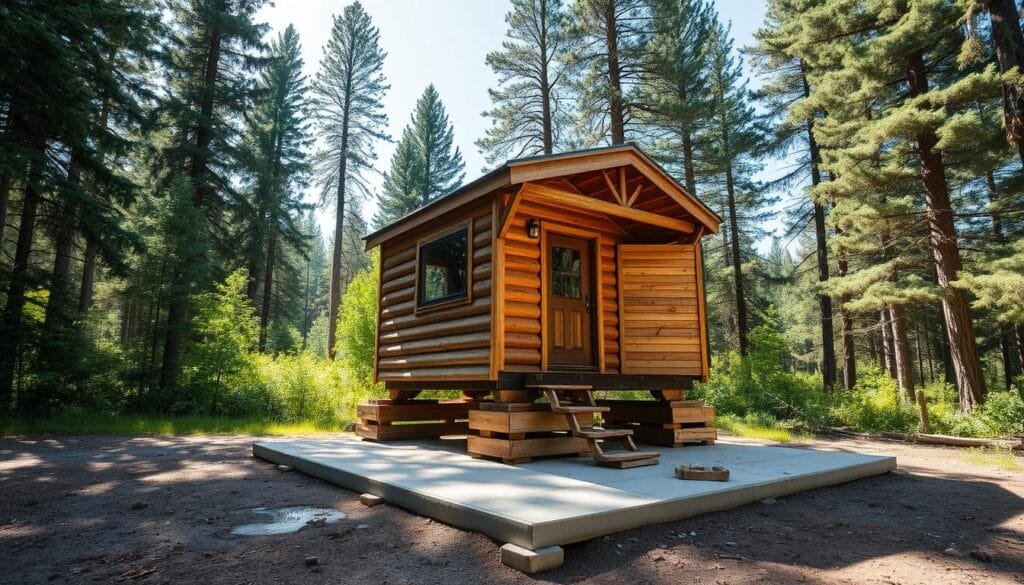
Skid foundations are great for builders who need something portable and affordable. They use large treated lumber beams, called skids, placed on the ground. Your cabin goes on top of these beams. It’s a simple, cost-effective way to start building.
A skid foundation has parallel wooden beams, like 6×6 or larger, laid on the ground. Your cabin’s floor sits on these beams. You don’t need concrete or heavy equipment to start.
Why Skid Foundations Cost Less Than Other Options
Skid foundations are cheaper because they use basic materials. For a small cabin, you might need just four to six 6×6 treated beams. This is a big cost savings.
The cost for materials is $200 to $400 for a small cabin. This is much less than other foundations like pier or slab. Labor costs also go down because there’s no digging needed.
Building a skid foundation is simple. You don’t need heavy equipment or a lot of help. This saves money and time. Plus, you might not need a building permit, depending on where you are.
Skid foundations are good for places where you don’t plan to stay long. They’re perfect for seasonal hunting camps or remote sites. You can move them if you need to.
They’re also great for testing a location before building for good. Or for weekend retreats and storage sheds. These places don’t need the same level of insulation as year-round homes.
| Foundation Aspect | Skid Foundation Performance | Best Use Case |
|---|---|---|
| Initial Material Cost | $200-$400 for small cabin | Extremely tight budgets |
| Installation Time | 1-2 days with helpers | Quick seasonal setups |
| Portability Factor | Can be moved or relocated | Temporary or test locations |
| Permit Requirements | Often none required | Avoiding regulatory delays |
| Expected Lifespan | 5-15 years depending on care | Short to medium-term projects |
Limitations and Durability Concerns
Skid foundations aren’t for permanent year-round living. They don’t keep your floor warm enough in cold climates. This can cause problems.
Moisture is a big problem for skid foundations. Even treated lumber can rot if it’s always wet. You can try to keep it dry, but it won’t last forever.
Skids can also move if the ground freezes and thaws. Or if it rains a lot. They’re best on level, well-drained sites. Make sure your site is stable before building.
Local laws might not allow skid foundations. Some places have rules about how long you can use them. Always check before you start.
Skid foundations usually last 5 to 15 years. This depends on the weather and how well you take care of them. If you live in a dry area, they might last longer. But in wet places, they won’t last as long.
Gravel Pad Foundations for Level Ground Installations
Gravel pads are a cost-effective option for a cabin base. They drain naturally and can be installed quickly. Unlike concrete, they don’t need forms or curing time.
They work best on level or gently sloping ground with good drainage. The crushed stone spreads your cabin’s weight evenly. This is great for remote locations where concrete is expensive or hard to get.
Step-by-Step Gravel Pad Installation Process
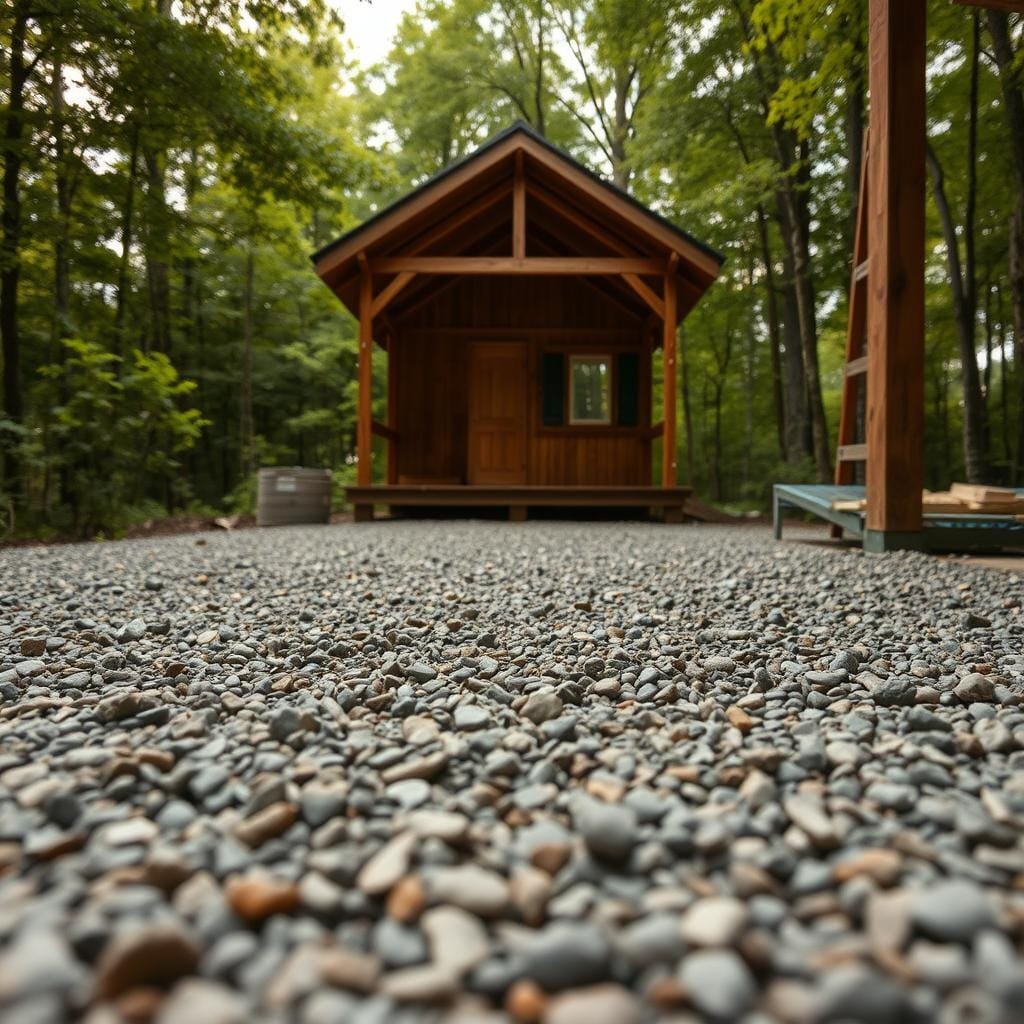
Start by marking your cabin’s footprint with stakes and string. Add 6-12 inches on all sides for support. This prevents erosion and gives a stable base.
Next, remove grass, roots, and topsoil to reach stable subsoil. Excavating 2-4 inches below ground level makes the pad more stable.
The foundation is built in layers for stability. Spread the first layer of crushed stone 2-3 inches deep. Use angular crushed stone for a firmer surface.
Compaction is key for a professional-grade foundation. Rent a plate compactor or hand tamper. Work in sections, checking for level often.
Add another layer of gravel and compact it again. For most cabins, two layers of 4-6 inches are enough. Larger cabins might need more depth.
Material Costs and Timeline Expectations
Plan your budget based on your cabin’s size. A 12×16 foot cabin with a 12-inch extension needs 2-3 cubic yards of gravel. Prices vary, but expect to pay $200-600 for materials.
Here’s a cost breakdown for a standard cabin gravel pad:
- Crushed stone gravel: $200-600 (varies by location and quantity)
- Landscape fabric: $50-100 for quality commercial-grade material
- Equipment rental: $50-100 per day for plate compactor
- Delivery fees: $50-150 depending on distance from supplier
- Hand tools: $30-50 if you need rakes, shovels, or levels
Total costs range from $380-1,000, making it very affordable. Concrete slabs cost $1,500-3,000 for similar sizes, showing big savings.
DIYers can finish small cabin pads in a weekend. Spend Friday evening preparing, Saturday spreading gravel and compacting, and Sunday on final touches. Larger cabins or tough terrain might take 4-5 days.
Adding Landscape Fabric and Proper Drainage
Landscape fabric is key to keep your gravel pad clean. It stops weeds while letting water through. Use commercial-grade fabric for foundation use, not garden types.
Put the fabric on the soil before adding gravel. Overlap seams by 12 inches and staple the edges to keep it in place.
Drainage is important too. Make sure water flows away from your cabin. A 2-3% slope is good for drainage without uneven floors.
Think about your property’s natural water flow. Place your pad on high ground, avoiding water collection areas. If water collects, you might need drainage ditches or French drains.
Gravel’s permeability means it drains better than concrete. Water flows through the stone and into the soil. This prevents water problems seen with solid foundations, like in rainy areas.
Keep your gravel pad in good shape with regular maintenance. Refresh the gravel every 3-5 years. Check drainage after storms and adjust as needed.
Concrete Slab on Grade: Affordable Permanent Solution
A concrete slab on grade is a good choice for cabin owners. It’s not as cheap as some options but lasts a long time with little upkeep. Think of it like buying quality boots that cost more but save money over time.
This foundation is great for cabins used all year or in places where stability is key. It’s a smart investment because a well-installed slab might never need to be replaced.
When Slab Foundations Offer the Best Value
Concrete slabs are best in certain situations. Knowing when they offer the most value helps you make a wise choice for your project.
Ideal scenarios for concrete slab foundations include:
- Year-round living cabins where interior comfort and finished flooring matter
- Larger structures exceeding 400 square feet where other foundations become impractical
- Sites with problematic or uneven soils where a monolithic slab bridges weak spots
- Climates with minimal frost heaving concerns or where proper depth prevents issues
- Projects wanting a finished floor surface that polished or stained concrete provides
- Locations where moisture protection and pest prevention are priorities
Slabs also allow for integrated plumbing, electrical, and heating systems. This flexibility is valuable as your cabin needs change over time.
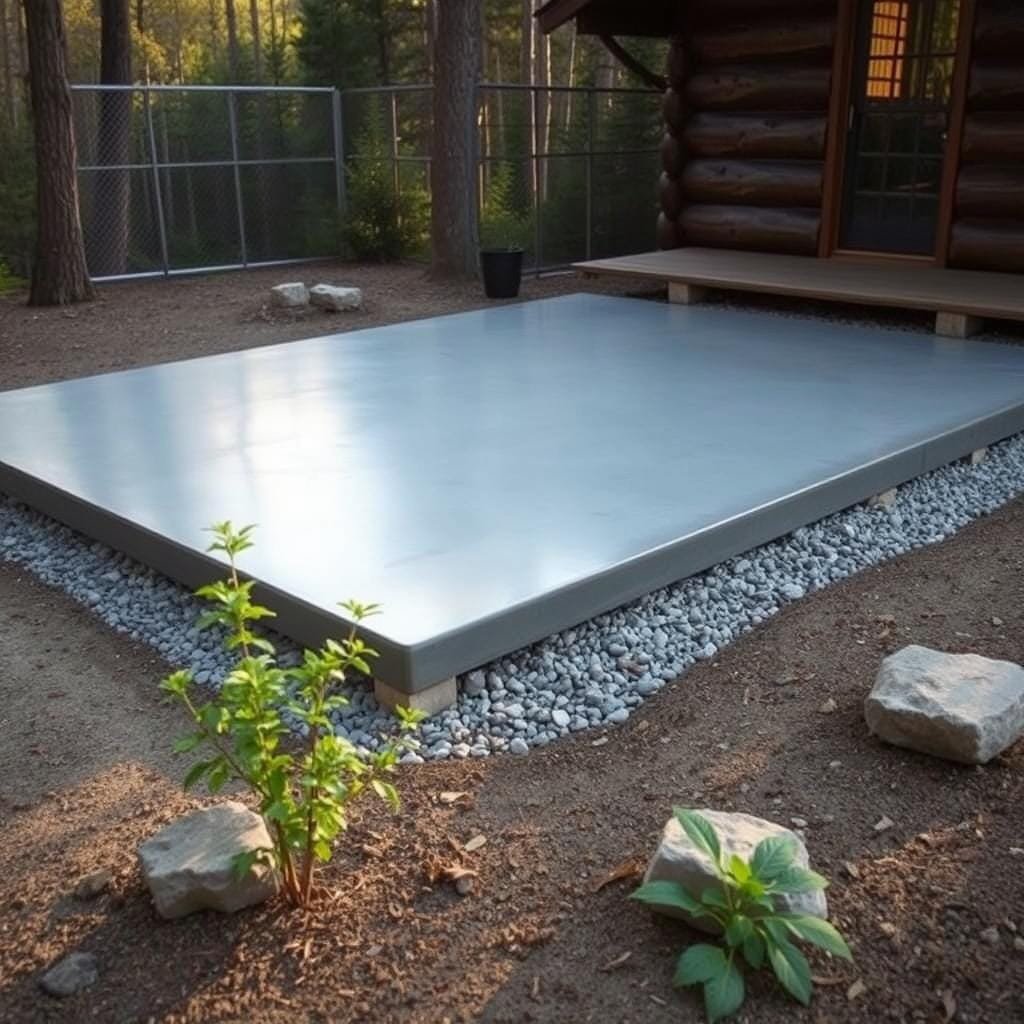
But, slabs might not be the best choice in all situations. Very small cabins under 200 square feet can be too expensive compared to other options.
Remote sites where concrete delivery is hard or impossible can be a big problem. Also, steeply sloped sites can quickly make your budget too high.
DIY Slab Pouring vs. Hiring Contractors
Deciding to do the slab yourself or hire pros depends on your skills, help, and project size. Being honest about your abilities saves money and stress.
Small slabs under 200 square feet are doable for DIYers with strong helpers. You’ll need to prepare the site, build forms, place reinforcement, and finish the concrete. Concrete doesn’t wait, so be ready to work fast.
Concrete slab costs vary by approach:
| Installation Method | Cost Per Square Foot | Labor Requirements | Skill Level Needed |
|---|---|---|---|
| DIY Materials Only | $3 – $6 | 4-6 helpers for pour day | Intermediate to Advanced |
| Professional Installation | $5 – $10+ | Contractor handles everything | None required |
| Hybrid Approach | $4 – $7 | You prep, pro pours | Basic construction skills |
A hybrid approach is a smart middle ground. You prep the site and build forms, then hire pros for the pour and finish. This way, you save money and ensure quality work.
For larger slabs over 400 square feet, hiring pros is usually best. DIY attempts can be risky, and a bad pour is expensive to fix.
Insulation Options to Prevent Heat Loss
An insulated foundation makes a basic slab into an energy-saving platform. It lowers heating costs for decades, making it a smart investment.
Rigid foam insulation under the slab acts as a thermal barrier. Two-inch thick foam boards have a high R-value and resist moisture and compression. This keeps your heating system from warming the ground instead of your cabin.
Edge insulation is also key in cold climates:
- Install vertical rigid foam around the slab perimeter before pouring
- Extend insulation at least two feet below grade or to frost depth
- Protect exposed foam above grade with cement board or metal flashing
- Seal all joints between insulation panels to prevent thermal bridging
Adding insulation costs $1-2 per square foot but can cut heating costs by 15-25% annually. In cold areas, this investment pays off in five to seven years through energy savings.
Some builders also use insulated concrete forms for slab edges. These forms provide structure and insulation but add complexity and cost. For most projects, rigid foam boards are the best choice for balance and affordability.
Drainage is key even with insulation. Make sure your slab slopes toward a central drain or away from edges to prevent water pooling. Good drainage protects your foundation and the durable concrete base you’ve invested in.
Pole Barn Style Foundations for Larger Cabins
Building large cabins often requires creative foundation solutions. Pole barn methods offer impressive savings without sacrificing structural integrity. This method, also known as post-frame construction, is ideal for buildings over 600 square feet. It becomes too expensive to use traditional foundations for such large areas.
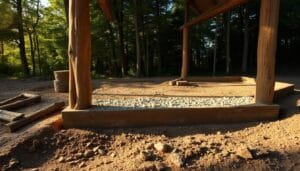
The idea is simple yet effective. Large pressure-treated posts are set deep into the ground, usually 3 to 4 feet below the frost line. They are then embedded in concrete. These posts serve as both the foundation and the structural framing system, supporting walls and roof directly.
This method eliminates the need for separate foundation walls and extensive floor framing. For builders looking for affordable cabin foundation options, this integrated approach is a game-changer. It fundamentally rethinks how structures are supported.
Reducing Material Expenses Through Smart Design
The economic benefits of a pole barn foundation are clear when you look at what you’re not buying. Traditional foundations require a lot of materials like continuous perimeter walls, floor joists, and subflooring. Pole foundations skip most of these, saving a lot of money.
For a 24×30 cabin, you might only need 12 to 16 posts instead of a full perimeter. Each post supports a big part of the building load. This means fewer excavations and less concrete than with multiple pier foundations.
The savings add up fast. You’ll use less lumber and subflooring. The posts become your wall framing, building your large cabin base and structure at the same time.
Concrete needs also go down a lot. Each post gets a concrete collar for stability, but you need less concrete than with slab or continuous foundation walls. This means lower material costs and less labor for concrete work.
Streamlined Construction Timeline
The installation process for pole foundations is straightforward and appreciated by experienced builders. First, you mark each post position on the ground according to your building plan.
Then, you dig holes for the posts using an auger. The hole size varies from 12 to 18 inches, depending on the post size and local building codes.
Setting the posts requires attention but goes quickly. Each post is checked for plumb and temporarily braced. Once all posts are in place, concrete is poured around each post, filling the hole and creating a solid anchor.
After the concrete cures, you can start connecting posts with horizontal girts. This is where cost-saving techniques really shine. You don’t have to wait for floor framing or subflooring installation. Wall construction can begin directly on the post framework.
Time savings are significant on larger projects. Traditional foundations require many steps, including pouring foundation, waiting for curing, and building floor framing. Pole foundations collapse these stages into a more efficient process, potentially saving a week or more on your construction schedule.
| Foundation Aspect | Traditional Foundation | Pole Barn Foundation | Advantage |
|---|---|---|---|
| Material Requirements | Concrete walls, floor joists, subflooring, beams | Posts, concrete collars, girts | 40-50% less lumber needed |
| Installation Timeline | 7-10 days (multiple curing periods) | 3-5 days (single cure, immediate framing) | Save 4-5 days construction time |
| Labor Complexity | Multiple specialized trades | General carpentry skills sufficient | Easier to DIY or find contractors |
| Best Size Range | Any size, but expensive for large | 600+ square feet cabins | Cost advantages increase with size |
| Site Adaptability | Requires extensive leveling | Works well on slopes | Reduced site preparation costs |
Pole foundations are great for sloped sites where traditional foundations would need a lot of excavation and fill work. The posts can be cut to different heights above ground, creating a level building platform without moving a lot of earth.
This foundation type allows structures to adjust slightly to seasonal ground movement without causing damage. The flexibility built into post-frame construction accommodates the natural expansion and contraction that occurs with temperature and moisture changes.
For smaller cabins under 400 square feet, pole foundations are not needed. But for larger structures, they offer significant savings. A 24×30 cabin or larger is the best size for this approach.
Open-plan cabin designs benefit a lot from pole construction. With fewer interior support requirements, you can design more freely. The posts can be placed strategically to support the structure while leaving interior space open.
Many builders overlook pole barn foundations when planning cabin projects. But they are a legitimate affordable cabin foundation option that deserves serious consideration. The combination of reduced material costs, faster installation, and excellent structural performance makes this approach compelling for the right project and site conditions.
The Cheapest Foundation for Durable Cabin Projects: Comparing Your Options
Let’s compare each foundation type to find the best value. The cheapest foundation for durable cabins isn’t just about the price. You must consider how it performs over time, maintenance needs, and if it fits your situation.
There’s no one-size-fits-all foundation for everyone. A weekend cabin has different needs than a year-round home. A remote cabin needs a different foundation than one on accessible land.
Let’s look at the numbers to help you make the best choice for your project.
Side-by-Side Cost Comparison of All Foundation Types
Understanding the foundation cost comparison means looking at more than just materials. Labor costs, site conditions, and cabin size all affect the final price. Here’s what you can expect for a standard 12×16 cabin (192 square feet).
| Foundation Type | Material Cost | Total DIY Cost | Professional Installation | Installation Time |
|---|---|---|---|---|
| Skid Foundation | $200-$400 | $200-$500 | $600-$1,200 | 1-2 days |
| Gravel Pad | $300-$600 | $400-$800 | $800-$1,500 | 2-3 days |
| Pier and Post | $600-$1,000 | $800-$1,500 | $1,500-$3,000 | 3-5 days |
| Concrete Slab | $900-$2,000 | $1,200-$3,000 | $2,500-$5,000 | 5-7 days |
| Pole Barn Style | $700-$1,500 | $1,000-$2,500 | $2,000-$4,000 | 3-6 days |
These numbers show average costs for affordable durable options across the United States. Your actual costs might vary due to regional prices and labor rates. Remote locations can add 20-30% to costs due to travel and logistics.
The skid foundation is the cheapest upfront. You can build one for as little as $200 if you’re handy. Gravel pads are the second cheapest, great for DIY projects.
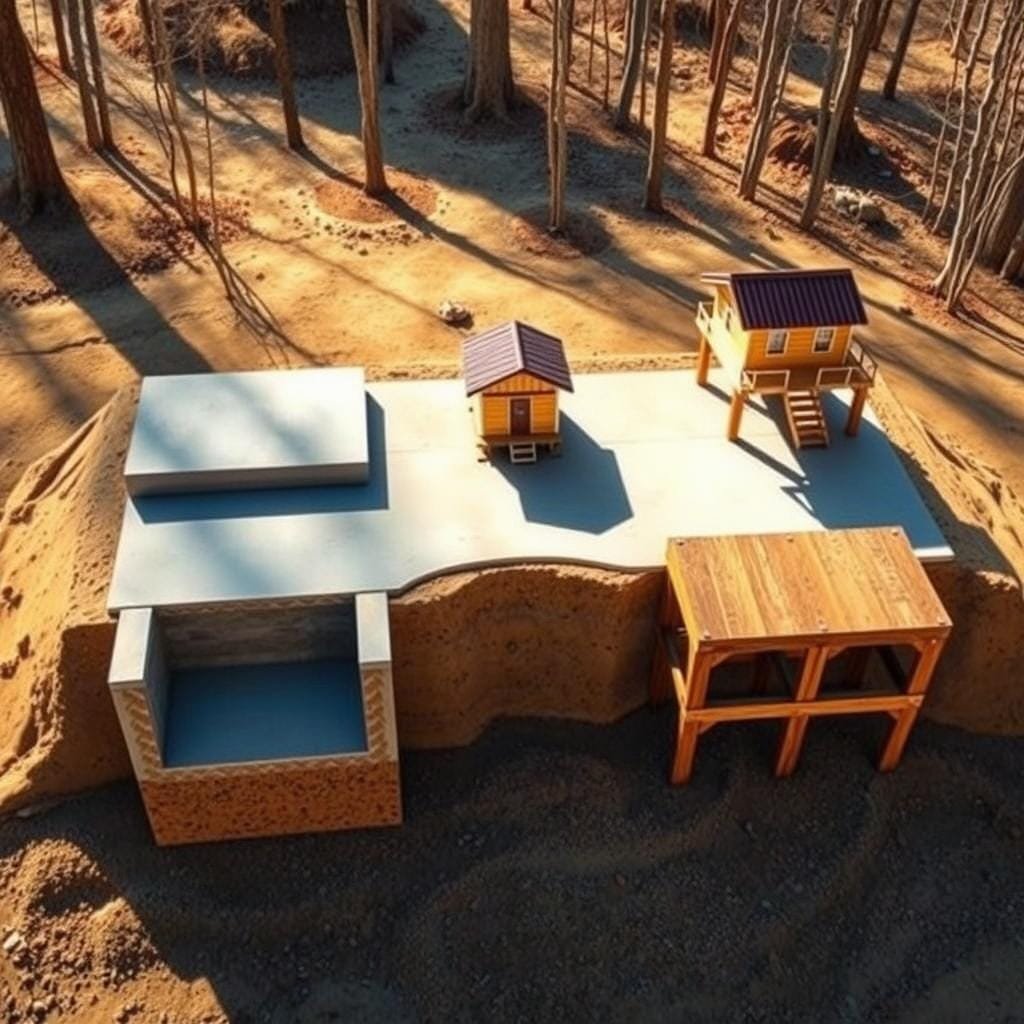
But, ease of installation varies a lot. Skid foundations need little excavation and no concrete mixing. Gravel pads require more site prep but are DIY-friendly. Concrete slabs need precision and often require professional help.
Also, consider permit requirements. Many places allow skid and gravel foundations without permits for small structures. Concrete slabs and pier foundations usually need permits, adding $200-$800 to costs.
Balancing Initial Investment with Long-Term Durability
The cheapest foundation for durable cabin construction over time might surprise you. A more expensive foundation can offer better long-term value through less maintenance and longer life.
Concrete slabs are a good example. You might spend $1,500-$3,000 upfront for DIY installation. That’s more than a $400 skid foundation. But, a concrete slab can last 50+ years with little maintenance.
Skid foundations need replacement every 10-15 years. Even treated lumber deteriorates in constant ground contact. You’ll face replacement costs of $400-$800 each time, plus the hassle of lifting or moving your cabin.
Gravel pads offer a middle ground. They cost more than skids but less than concrete. With proper installation and drainage, they can last 20-30 years. You’ll need to relevel and replenish gravel periodically, but these tasks are manageable for most owners.
Pier and post foundations offer great durability when installed right. The concrete piers last 40+ years. The wooden beams connecting them need inspection and possible replacement every 15-25 years, depending on the wood and treatment.
Think about your cabin’s use. A seasonal hunting cabin doesn’t need the same foundation as a year-round home. For temporary or occasional-use structures, minimal foundations are a good choice. Why invest in a 50-year foundation for a cabin you might replace in 10 years?
Weather conditions in your area matter a lot. Areas with freeze-thaw cycles are harder on foundations than mild climates. A gravel pad in Arizona might last 30 years, while the same foundation in Minnesota faces more challenges from frost heaving.
The initial investment affects your cabin’s resale value. Properties with permanent, code-compliant foundations usually sell for more. A concrete slab or properly engineered pier foundation signals quality to buyers. Skid foundations, while functional, might limit your resale market to buyers looking for movable structures.
Maintenance and Repair Costs Over 20 Years
Understanding maintenance costs gives you the full picture of ownership expenses. Let’s project what you’ll spend on each foundation type over 20 years, beyond the initial installation.
Concrete slabs need the least attention. You might spend $100-$200 total over 20 years on crack sealing and minor repairs. The slab just sits there, supporting your cabin without complaint. This long-term value makes concrete attractive despite higher upfront costs.
The total cost of ownership for a concrete slab looks like this: $1,500 initial installation + $150 maintenance = $1,650 over 20 years. That’s about $82 per year for a foundation that will outlast the cabin itself.
Gravel pad foundations require more active management. Plan on spending $300-$600 over 20 years for these tasks:
- Adding fresh gravel every 5-7 years ($50-$100 per addition)
- Releveling settled areas ($100-$200 total)
- Clearing drainage channels annually ($0 if DIY, $200-$300 if hired)
- Replacing landscape fabric if used ($50-$100)
Your 20-year total for gravel pads: $800 initial installation + $450 average maintenance = $1,250, or about $62 per year.
Pier and post foundations face higher maintenance costs because of the wooden beam components. Over 20 years, expect to spend $500-$1,000 on these items:
- Annual inspections for rot and pest damage ($0 if DIY)
- Re-treating exposed wood every 3-5 years ($100-$200 total)
- Replacing 1-2 beams that show deterioration ($300-$600)
- Adjusting or releveling settled piers ($100-$200)
Twenty-year total for pier foundations: $1,200 initial installation + $750 average maintenance = $1,950, or $97 per year.
Skid foundations present a unique maintenance picture. The treated lumber typically lasts 10-15 years before needing complete replacement. For our 20-year projection, you’ll likely replace the skids once.
Here’s the breakdown: $400 initial installation + $400 replacement at year 12 + $100 for interim treatments = $900 total over 20 years, or $45 per year. This makes skids the cheapest option for total cost of ownership if you plan to replace or relocate your cabin within 15 years.
Pole barn style foundations combine elements of both pier and skid systems. The buried poles themselves last 25-40 years when properly treated. But, above-ground connecting beams need attention similar to pier foundations. Budget $400-$700 for maintenance over 20 years.
Twenty-year total for pole barn foundations: $1,500 initial installation + $550 average maintenance = $2,050, or about $102 per year.
These projections assume you perform basic maintenance yourself. Hiring professionals for inspections and minor repairs can double or triple these costs. The good news? Most foundation maintenance tasks require only basic skills and common tools.
Regional factors affect maintenance needs a lot. Humid climates accelerate wood deterioration, increasing inspection frequency and treatment costs. Dry climates are gentler on all foundation types. Areas with aggressive soil conditions or high termite activity might see higher maintenance expenses for wood-based foundations.
The smartest approach balances your budget, timeline, and cabin usage. A skid foundation is great for a temporary structure or one used seasonally. For a cabin you plan to enjoy for decades, investing in a concrete slab or well-built pier foundation offers better foundation cost comparison results over time.
Remember, these are cost-effective foundation options when matched to the right situation. There’s no shame in choosing the least expensive option if it meets your needs. The key is understanding what you’re getting—and what you’ll need to maintain—for each choice you make.
How to Reduce Foundation Costs Without Sacrificing Quality
Building a budget-friendly cabin base is more than just picking the right foundation. It’s about making smart choices about DIY work, when to buy materials, and how to save every dollar. Even with an economical foundation, you can save hundreds or thousands by planning well. The trick is to cut costs without sacrificing the foundation’s strength, which keeps your cabin standing for decades.
Labor costs 40-60% of foundation expenses, making it a big chance to save. Choosing materials wisely and buying at the right time can save 20-35%. These cost-saving tips can turn an affordable foundation into a very economical project, fitting within tight budgets.
Tasks You Can Tackle Yourself and When to Call the Pros
Knowing your skills is key to deciding what DIY foundation work makes sense. Some tasks need little experience, while others require special knowledge or tools. Choosing wrong can waste money or pose safety risks.
Most DIYers can handle several foundational tasks that need effort but not expertise. Clearing the site and removing brush need basic tools and a weekend. Spreading and leveling gravel is hard work but simple to do. Installing landscape fabric requires careful placement but no special skills. Building wooden forms for small concrete pours uses basic carpentry that most homeowners can do with instructional videos.
The middle category of possibly DIY-able tasks depends on your comfort level and willingness to learn. Mixing and pouring small concrete pads works for careful homeowners who follow instructions precisely. Digging and setting pier foundations in stable soil requires patience and measuring skills. Operating rented equipment like plate compactors needs practice but becomes manageable after instruction. These tasks save significant labor costs if you’re willing to invest time in proper technique.
Professional work that’s worth the investment includes projects where mistakes cost more than hiring experts. Large concrete pours require timing and team coordination that DIYers struggle to manage. Operating excavation equipment on slopes presents safety risks that only experienced operators should handle. Screw pile installation needs specialized machinery and expertise. Any work requiring engineering calculations or inspections should involve licensed professionals who understand local codes.
Partial DIY approaches create the best balance for many cabin builders. Handle site preparation and finishing work yourself while hiring contractors for specialized middle stages. This strategy captures labor savings without the risks of tackling projects beyond your skill level.
Smart Material Choices and Buying in Bulk
Where you buy construction materials matters as much as what you buy when building a budget-friendly cabin base. Strategic sourcing and timing create material savings that add up quickly across your project. Small changes in purchasing approach often reduce costs by 30-50% compared to standard retail buying.
Local sawmills typically sell lumber at 20-40% below big-box store prices, making them perfect for foundation framing. Sourcing gravel directly from quarries eliminates landscaping company markups that can double your costs. Many quarries sell directly to homeowners and deliver truck loads at wholesale rates. Concrete suppliers often discount orders over certain minimums, making bulk purchases worthwhile.
Looking for alternative materials opens additional savings opportunities. Scratch-and-dent concrete blocks from manufacturer outlets work perfectly for foundation applications where appearance doesn’t matter. Reclaimed timbers from demolition yards provide sturdy pier supports at fraction of new lumber costs. Some builders report finding perfectly usable foundation materials through construction surplus stores or online marketplaces.
Bulk purchasing strategies work well for cabin builders in the same area. Coordinate with neighbors planning similar projects to order gravel or concrete together. Split delivery fees and negotiate volume discounts that individual buyers never access. Builder programs at supply warehouses offer contractor pricing to serious DIYers who register and commit to minimum purchases.
Joining local builder associations or co-ops provides access to group purchasing programs. These organizations negotiate standing discounts with suppliers that members can use year-round. The membership fees typically pay for themselves with a single foundation project.
Perfect Timing for Maximum Project Savings
When you build affects your budget almost as much as what you build. Construction material prices fluctuate seasonally, and contractor availability follows predictable patterns throughout the year. Understanding these cycles lets you schedule DIY foundation work when both materials and labor cost least.
Late fall and winter bring the best material discounts in most regions. Demand for construction supplies drops significantly after summer building season ends. Lumber yards, concrete suppliers, and gravel companies run sales to move inventory before year-end. Some builders report savings of 15-25% by purchasing materials in November or December for spring installation.
Contractor rates typically decrease during off-peak seasons when competition for work intensifies. Professional excavation, concrete work, and site preparation services charge premium rates during busy spring and summer months. Scheduling these services for late fall or early spring often reduces labor costs by 20-30%. Just ensure weather conditions in your area permit quality foundation installation during these periods.
Weather timing matters beyond seasonal discounts. Starting foundation work during dry weather prevents costly delays and site damage from mud and standing water. Wet conditions slow progress, damage materials, and sometimes require complete restarts. Patient builders who wait for optimal conditions avoid these expensive setbacks.
Taking time for thorough planning prevents the most expensive mistake of all—rushing. Hasty decisions lead to ordering wrong materials, making installation errors, and missing cost-saving opportunities. Builders who invest weeks in careful preparation typically spend less overall than those who rush through projects.
| Cost-Saving Strategy | Potential Savings | Difficulty Level | Best For |
|---|---|---|---|
| DIY site preparation and clearing | $800-$2,500 | Easy to Moderate | All foundation types |
| Direct purchasing from quarries and mills | 20-40% material costs | Easy | Gravel pads, pier foundations |
| Bulk buying with neighbors | 15-30% on volume orders | Easy | Concrete slabs, multiple cabins |
| Off-season contractor scheduling | 20-30% labor costs | Easy | Professional installation needed |
| Partial DIY with pro assistance | $1,500-$4,000 | Moderate | Skilled homeowners |
These cost-saving tips work together to create substantial reductions in your foundation budget. Combining multiple strategies amplifies savings beyond what any single approach provides. A builder who handles site prep themselves, sources materials directly from suppliers, purchases during off-season sales, and coordinates bulk buying with neighbors can reduce total foundation costs by 40-60% compared to standard contractor pricing.
The key is balancing savings opportunities against your available time, skills, and energy. Not every strategy suits every builder, but even implementing two or three approaches creates meaningful financial benefits. Start with the easiest cost reductions and add more advanced techniques as your confidence and experience grow throughout the project.
Common Mistakes That Increase Foundation Expenses
Foundation work needs careful planning. Small mistakes can lead to big repair bills later. Learning from others can help you avoid these costly errors.
Many builders rush through foundation planning to focus on the visible parts. This can lead to expensive problems later. Fixing foundation issues after the cabin is built can cost five to ten times more than doing it right from the start.
Let’s look at the three biggest mistakes that increase foundation costs and how to avoid them.
The Cost of Skipping Proper Ground Evaluation
Starting foundation work without knowing the ground is a costly mistake. Professional site assessment costs between $500 and $1,000, but it can prevent $10,000 or more in foundation repairs.
Site assessment shows important details about your soil and drainage. Without this, you’re guessing which foundation is best. Many builders think their soil is stable because it looks solid, but it’s not always true.
A Tennessee builder skipped soil testing to save money. He put in a concrete slab on what looked solid. But the soil had expansive clay that swelled with moisture. Fixing the damage cost $12,000—twenty times more than testing would have been.
Basic site evaluation involves several important steps:
- Digging test holes to examine soil layers at least 3-4 feet deep
- Observing your site during and after rainfall to identify water flow patterns
- Talking with neighbors or local builders about soil conditions in your area
- Checking with your county building department about known soil issues
- Getting professional soil testing when building on unfamiliar terrain
These simple checks reveal problems before they become expensive disasters. You’ll find out if you have stable soil, expansive clay, sandy conditions, or fill dirt. This information helps you choose the right foundation for your specific conditions.
Matching Your Foundation to Soil Characteristics
Choosing the wrong foundation for your soil is like wearing flip-flops to hike a mountain. It might seem fine at first but will cause problems. Each soil type needs a specific foundation for long-term durability.
The wrong foundation choice leads to uneven settling, stuck doors, sloping floors, and structural damage that’s difficult and expensive to repair. Knowing which foundations work with which soil types helps you avoid these problems from the start.
Here’s a practical guide matching foundation types to common soil conditions:
| Soil Type | Best Foundation Options | Foundations to Avoid | Special Considerations |
|---|---|---|---|
| Rock or Gravel | Pier foundations, concrete slabs, gravel pads | Deep excavation methods | Excellent drainage, minimal settling concerns |
| Sand | Wider piers with footings, reinforced slabs | Narrow posts without footings | Needs broader weight distribution to prevent sinking |
| Clay (Expansive) | Pier and beam with deep footings, engineered slabs with proper base | Simple slabs without preparation, skid foundations | Requires moisture barriers and engineered solutions for movement |
| Loam or Mixed | Most foundation types work well | None specific | Verify drainage is adequate regardless of foundation choice |
| Fill Dirt or Peat | Deep piers to undisturbed soil, helical piles | Shallow foundations of any type | Must reach stable soil below fill layer for support |
A Montana builder chose wooden skid foundations for a cabin in a damp valley. The moist soil caused the skids to rot in three years. Replacing the foundation cost $8,000, and the cabin had to be moved during repairs.
A Texas builder installed shallow concrete piers above the frost line in cold winters. The freeze-thaw cycles caused the piers to heave and shift. Releveling the cabin and installing proper deep piers cost $6,500.
These mistakes share a common thread—the builders chose foundations based on cost alone without considering soil compatibility. The cheapest option upfront became the most expensive choice in the long run.
Planning for Water Management From Day One
Water is your foundation’s biggest enemy, yet inadequate drainage planning is a common oversight. Poor drainage causes more foundation failures than any other single factor.
Drainage problems create multiple issues that compromise foundation integrity. Water pooling near your foundation causes pier settlement as soil softens and shifts. Concrete foundations develop cracks when water freezes and expands in cold weather. Wooden foundation components rot much faster when exposed to constant moisture.
Many builders don’t realize their site has drainage issues until after construction. By then, fixing the problem requires excavation around the finished cabin, installation of drainage systems in tight spaces, and potentially repairing foundation damage that’s already occurred. This reactive approach costs three to five times more than planning drainage properly from the start.
Effective drainage planning includes these essential elements:
- Grading the site so water flows away from the cabin in all directions
- Installing gutters and downspouts that direct roof water at least 10 feet from the foundation
- Adding French drains or drainage tiles in areas where water naturally collects
- Using gravel or permeable surfaces near the foundation instead of soil that holds water
- Creating swales or berms to redirect water flow around your cabin site
A Wisconsin cabin owner learned this lesson the hard way. He built a beautiful cabin with pier foundations but didn’t address drainage problems on his sloped lot. Water ran downhill during rainstorms and pooled under the cabin. Within two years, several wooden floor joists showed significant rot damage. Repairs required jacking up the cabin, replacing damaged lumber, and installing a complete drainage system—total cost exceeded $9,000.
Proper drainage doesn’t just protect your foundation. It also prevents moisture problems inside your cabin, reduces pest attraction, and extends the life of all your building materials. Spending $500-$1,500 on drainage during initial site preparation prevents thousands in future repairs.
The key insight about drainage problems is timing. Address water management before you build, not after problems appear. Walk your site during heavy rain to see where water flows and pools. Mark these areas and plan your drainage strategy. This simple observation costs nothing but provides invaluable information.
Remember that foundation work is one area where learning from others’ mistakes truly pays off. Site assessment, proper foundation selection, and drainage planning might seem like extra steps that slow down your project. In reality, they’re investments that ensure your low-cost foundation solutions deliver long-term durability without expensive repairs down the road.
Preparing Your Site for the Most Cost-Effective Installation
Smart site preparation makes installing durable cabin footings easy and affordable. The hours you spend preparing your site before installation greatly affect your project’s success. It ensures your foundation lasts for decades.
Good groundwork avoids surprises during construction. It helps place your cabin in the best spot and choose the right foundation. Saving money on site preparation often outweighs the cost of a professional assessment.
Comprehensive site preparation for cabins includes three key steps: evaluation, clearing and leveling, and drainage installation. Each step builds on the last to prepare your site perfectly.
Essential Site Evaluation Steps Before Breaking Ground
Walking your property under different conditions reveals important details. Visit during rain to see where water flows and pools. Come back on sunny days to understand shade and sun movement.
Mark underground utilities before digging. Even off-grid cabins have buried lines, pipes, and systems. Contact your local utility service or hire a private locator to find what’s buried.
Check your property lines with certainty before starting. Use survey stakes or hire a surveyor if unsure. Building over your property line can lead to legal issues that cost more than verification.
Observe the plants growing on your site. Certain plants indicate wet or stable soil. Willows and cattails suggest water problems, while established trees indicate good soil.
Take elevation measurements across your building area. A simple line level and string can show slope and grade changes. This helps decide your foundation approach.
Photograph your site from multiple angles with measurements noted. These images are invaluable during planning and help contractors estimate costs. Include close-ups of problem areas like rock outcroppings or wet spots.
Clearing and Leveling Techniques That Save Money
Remove all vegetation and organic material from your building footprint. Grass, roots, and topsoil decompose, causing settlement and instability. Strip down to mineral soil or subsoil for stability.
Decide whether to cut high spots or fill low areas. Building on undisturbed soil provides better stability than building on fill material. If possible, cut into the high side of a slope.
Basic leveling techniques using string lines and a line level cost little but deliver professional results. Set up a level string grid to identify high and low spots. This guide shows where to remove or add material.
Consider equipment rental for major leveling work. A small excavator or skid steer rents for $200-400 per day. Rent equipment for a full day and complete all site work at once to maximize rental value.
Create a level pad slightly larger than your cabin footprint. This extra space gives you working room during construction. An extra two feet on all sides makes installation easier.
Use materials like crushed stone or coarse sand for final leveling under durable cabin footings. These materials compact well and provide excellent drainage. The entire prepared area should be thoroughly tamped or compacted before placing any foundation elements.
Time your clearing work strategically to save money. Doing clearing yourself during mild weather eliminates contractor costs. Use cleared vegetation as mulch elsewhere on your property instead of paying for removal.
Installing Proper Drainage Systems from the Start
Foundation drainage installed during site preparation costs less than retrofitting. Water management prevents most foundation problems, making it a smart investment. Simple drainage solutions implemented early protect your cabin for its entire lifespan.
Grade your site to slope away from your cabin location at minimum. The ground should drop at least six inches over the first ten feet in all directions. This basic grading directs rainwater and snowmelt away from your foundation area.
Dig swales or shallow ditches to channel water around your building site. These landscaping features intercept water flowing downhill and redirect it safely past your cabin. Swales work well on sloped properties where water naturally moves across your site.
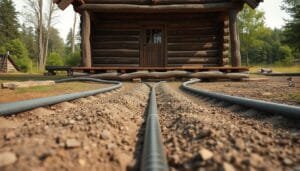
Install French drains or curtain drains upslope if your site has water issues. These underground drainage systems intercept groundwater before it reaches your foundation. A curtain drain consists of perforated pipe in a gravel-filled trench that captures and redirects subsurface water.
Place gravel drainage paths around your cabin perimeter. A border of crushed stone at least two feet wide provides a permeable surface that prevents splash-back and allows water to drain away quickly. This gravel barrier also gives you a clean walking surface around your cabin.
Use landscape fabric under gravel areas to prevent soil from mixing with stone. The fabric allows water to pass through while keeping the gravel clean and functional. Quality landscape fabric lasts for decades and maintains drainage effectiveness.
Consider installing foundation drainage before placing permanent foundations. Perforated drain tile around pier footings or along slab edges carries water away from these critical areas. Connect drain tile to daylight discharge points or dry wells away from your cabin.
The leveling techniques and foundation drainage you implement during site preparation determine whether your foundation performs as designed. Take time to get these elements right, and your cabin will sit stable and dry for generations.
Regional Considerations for Cabin Foundations in the United States
The United States has many different climates. Each one needs a special foundation that lasts long and doesn’t cost too much. What works in sunny Florida might not work in cold Minnesota. Knowing your area helps pick a long-lasting cabin foundation that fits your budget.
Where you live affects how deep you need to dig and what materials work best. Regional building codes are based on years of building in your area. These rules help protect your investment from local challenges.
Before choosing your foundation, learn about your local conditions. Talk to your county building department to find out what rules apply to your property. This helps avoid expensive mistakes and keeps your cabin stable for years.
Frost Line Depths and Cold Climate Foundation Needs
The frost line shows how deep winter cold reaches the ground. When the ground freezes, it expands and pushes up, causing damage. Foundations need to be below the freeze line to avoid this.
Frost line requirements change a lot across the country. Southern states have little frost, while northern states need deeper foundations. Here’s what you can expect:
- Southern states (Florida, Texas, Southern California): 0-12 inches—minimal frost concerns allow shallow foundations
- Mid-latitude states (North Carolina, Tennessee, Oklahoma): 12-24 inches—moderate depth requirements for pier and post foundations
- Northern states (Pennsylvania, Illinois, Ohio): 24-36 inches—significant excavation needed for stable support
- Coldest climates (Minnesota, Wisconsin, Maine, Montana): 36-60+ inches—deep foundations essential to prevent heaving damage
Pier and post foundations need to go below these depths to stay stable. Concrete slabs require a good base and sometimes insulation to avoid cracks. Even gravel pad foundations work better on well-drained ground to prevent moisture freezing.
The deeper you dig, the more it costs. But, not digging enough in cold climates means your foundation will fail. Plan for the excavation your climate needs, not shortcuts.
Earthquake Zones and Foundation Stability
West Coast builders and parts of Alaska face unique challenges from earthquakes. Earthquakes test foundations in ways regular weather doesn’t. Seismic considerations greatly affect which foundations are safe in your area.
Continuous foundations usually do better in earthquakes than disconnected ones. Concrete slabs spread out earthquake forces. Pier-and-beam systems work well with good bracing and connections.
Simple foundations and posts without proper anchoring can move too much in earthquakes. Regional building codes in earthquake zones often require special reinforcement. These rules help protect your cabin from big damage.
Adding seismic upgrades costs $500-1,500, depending on your cabin’s size. This is not optional in high-risk zones—it’s a must. Getting engineering certification costs $300-800, but it ensures your foundation meets safety standards.
Coastal Storm Protection and Wind Resistance
Hurricane-prone areas from the Gulf Coast to the Southeast Atlantic need special foundation anchoring. High winds can lift and slide cabins off their foundations. A long-lasting cabin foundation in these areas must handle both vertical and horizontal forces.
Anchoring systems connect your cabin to the foundation with hurricane straps and anchor bolts. These connections safely transfer wind forces into the ground. Coastal counties strictly enforce these rules.
Common anchoring needs for high-wind areas include:
- Hurricane straps: Metal connectors linking floor joists to foundation piers or slab
- Anchor bolts: Heavy-duty fasteners embedded in concrete at specified intervals
- Ground anchors: Screw or driven anchors for non-concrete foundations
- Engineering stamps: Professional certification that your design meets wind load requirements
Proper anchoring costs $200-500 for small cabins. This investment can save your cabin from major storm damage. Some insurance companies lower premiums for anchored structures, making up for the initial cost over time.
Local building codes might ban certain foundations in hurricane zones. Skid foundations rarely meet wind resistance without major changes. Always check your county regulations before choosing a foundation design.
See these regional adaptations as protective measures, not obstacles. Affordable foundation options exist in every climate zone when you choose the right one for your location. Talking to your local building department early saves money by avoiding designs that won’t pass inspection.
Making the Smart Choice for Your Cabin Foundation Budget
You now know how to make smart foundation choices for your cabin. The cheapest foundation isn’t the same for everyone. Your best choice depends on your specific needs.
Need to save money right away? Skid foundations are affordable at $200-500. For a good mix of cost and quality, consider pier-and-post or gravel pad foundations ($400-1,500). They offer great long-term results. If you want something that lasts forever, concrete slabs ($1,200-3,000+) are your best bet. You can also look into alternative materials like concrete slabs or patio for tiny cabins under 200 square feet.
When planning your budget, start by listing what you must have. Consider your budget, how long you plan to stay, and the climate. Also, think about your site conditions, DIY skills, and the total cost over 20 years.
Remember, how well a foundation is installed is more important than the type. A well-installed, affordable foundation will last longer than an expensive one done poorly. Begin with thorough site preparation. This step will help any foundation perform better.
Building affordable foundations that last is definitely possible. You can start with a simple foundation and upgrade later. Take pride in building something that will last for decades. Your cabin dream starts with the right foundation for your unique situation.