
Choosing the right roof for your cabin is different from picking one for a house. Remote spots, changing weather, and keeping that cabin feel are key. Finding quality protection that doesn’t drain your savings is possible with the right info.
You don’t have to spend a lot to get a reliable roof for your cabin. There’s a balance between cost and durability. Many roofing materials offer great value if chosen right for your needs.
This guide explores the top cabin roof options today. We’ll look at asphalt shingles, metal roofs, and more. We’ll compare prices, how long they last, and how they handle the weather. Your perfect choice depends on several factors like your local weather, how often you use it, and your style.
Knowing how to install and maintain your roof is key to getting the most out of it. Whether it’s a new roof or a replacement, making smart choices means years of protection without worry.
Understanding Your Cabin Roofing Needs and Priorities
Choosing the right cabin roof starts with knowing how you use your retreat. This helps save money and avoid headaches later. Every cabin owner has unique needs that should guide their choices.
Consider how often you visit your cabin. If it’s a year-round home, you’ll need different roofing than a seasonal place. For a summer cabin, energy savings might not be worth the cost.
Your roofing priorities should match your usage. Weekend homes need simpler care than full-time homes. Small issues can grow into big problems if you visit rarely.
Start your roofing needs assessment by identifying what’s most important to you. Some look for the lowest upfront cost due to tight budgets. Others seek the longest lifespan for remote locations.
Think about these key factors:
- Upfront budget constraints versus long-term value
- Maintenance accessibility based on visit frequency
- Aesthetic preferences that fit your cabin’s style
- Climate challenges specific to your area
- Ownership timeline and resale value
There’s no one-size-fits-all roof for every cabin. The best budget solutions depend on your unique situation. What’s perfect for a lakeside cottage might not work for a mountain cabin.
Your DIY skills affect material choice. Some roofs are easy for homeowners to install. Others need professional help and specialized tools, which can be hard to find in remote areas.
Access to good contractors is key. If your cabin is far from town, finding a contractor can be tough. Some materials require expert installation to keep warranties valid.
Consider your ownership timeline. A short-term owner might choose budget options that meet immediate needs. Long-term owners might invest more in durability.
The essential guide to cabin roofing offers more insights. But your personal needs assessment is most important. Generic advice can’t match your specific situation.
By setting clear priorities, you’ll make better choices. You’ll focus on what matters most for your cabin. This approach helps you avoid generic advice and choose what’s best for you.
Critical Factors When Choosing Budget Cabin Roofing Solutions
Choosing the right roofing for your cabin starts with knowing its unique needs, not just the cost. Several factors, like the weather and the cabin’s design, will help pick the best roofing options. These factors often rule out some materials before you even look at the price.
Knowing these factors early saves you from costly mistakes. You won’t spend time on materials that won’t work for your cabin. Here are the three key factors to consider.
Weather Conditions and Climate Impact
Your local weather greatly affects which roofing materials will last. Weather factors include snow, heat, and wind. Each one has specific needs that certain materials meet better than others.
In snowy areas, roofs need to handle heavy snow or let it slide off. Steep roofs, with a 10/12 ratio, are best for snow. Metal panels shed snow well, while textured shingles may hold it longer.
Extreme temperatures also matter. Materials expand and contract with heat and cold, which can cause damage. Areas with big temperature swings need materials that can flex without breaking.
Wind is another big factor, more so for cabins in open areas. High winds can lift and tear roofing materials. In windy areas, choose materials that interlock well and have high wind ratings.
UV rays and direct sun can also damage materials. Southern-facing roofs in sunny areas get a lot of UV radiation. Desert cabins need materials that resist UV damage.
Getting Materials to Remote Sites
Many cabins are hard to reach, which can increase your roofing costs even with affordable materials. Transporting materials can be the biggest hidden cost.
Access roads can limit what can be delivered. Narrow roads or mud can make it hard to get materials. Lighter materials like metal panels might be easier to transport.
Distance from suppliers affects delivery costs and what’s available. Rural areas may have fewer options, leading to higher freight costs.
Some owners transport materials themselves. This works for budget-friendly projects if you have time and a good vehicle. But, consider if fuel and time costs are more than delivery fees.
Structure and Slope Considerations
Your cabin’s roof pitch and strength limit material choices. Not all materials work on every roof angle. Ignoring these specs can lead to leaks and premature failure.
Low-slope roofs need special materials because water doesn’t drain fast. Bitumen shingles don’t work well on these roofs. Instead, use specialized membranes or metal roofing.
Steep roofs can handle more materials but are harder to work on. They’re great for areas with a lot of rain or snow. But, they’re more dangerous to install, which can raise labor costs.
The cabin’s structure also matters. Older cabins may not support heavy materials like slate or concrete tiles. Lighter materials like metal or composites are better for these cabins.
Here’s how different roof pitches match with common materials:
| Roof Pitch Range | Compatible Materials | Weather Performance | Installation Difficulty |
|---|---|---|---|
| 2/12 to 4/12 (low slope) | Metal panels, rolled roofing, modified bitumen | Requires excellent drainage | Moderate |
| 4/12 to 8/12 (standard) | Asphalt shingles, metal, wood shakes, composites | Good for most climates | Easy to moderate |
| 8/12 to 12/12 (steep) | All materials, ideal for snow shedding | Excellent water and snow management | Challenging, higher labor costs |
| Above 12/12 (very steep) | Lightweight materials preferred for safety | Maximum precipitation shedding | Requires specialized equipment |
Understanding these structural limits helps you choose wisely. You won’t waste time on materials your cabin can’t handle. This approach keeps your budget in check while ensuring a durable roof for years.
How to Calculate Your True Roofing Budget
The cost of a cabin roof is more than what you see at the store. You need to think about materials, labor, prep work, and future upkeep. Many owners only look at material costs and get surprised by the final bill.
Creating a detailed budget helps you compare options and avoid financial stress. The cheapest quote might not be the best value when you consider durability and upkeep. Knowing each cost helps you make smart choices that save money and protect your cabin.
Breaking Down Material and Labor Expenses
Material and labor costs vary with the roofing choice. Asphalt shingles start at $90-$150 per square for materials. They’re the cheapest option. Architectural shingles cost more but last longer and come with better warranties.
Metal roofing is pricier at first, with corrugated steel panels at $150-$300 per square. But, it’s cheaper to install because it covers more area. Over 40-50 years, metal roofing’s total cost is competitive.
Labor costs often match or beat material costs for most projects. Roofers charge $150-$300 per square for their work. Complex roofs or hard-to-reach areas increase labor time.
Remote cabins add extra costs for contractor travel and stay. Some charge $500-$1,500 extra for sites over 50 miles away. Getting quotes from different contractors helps find fair prices.
To figure out material needs, measure your roof’s square footage and add 10-15% for waste. A 1,200 square foot roof needs 1,320-1,380 square feet of materials. This waste factor covers cuts, overlaps, and mistakes.
Unexpected Expenses That Impact Your Bottom Line
Hidden costs can surprise many owners and add 25-50% to your budget. Roofing budget planning must include these costs to avoid mid-project funding issues.
Permits and inspections are needed in most places, even for remote cabins. Fees range from $150-$500. Some areas require engineered drawings for metal roofs, adding $300-$800 to costs.
Removing your old roof adds significant expenses if not a simple overlay. Contractors charge $50-$100 per square for removal, plus dump fees of $300-$800. This work often reveals hidden problems.
Structural repairs during installation can impact your budget. Rotted decking costs $2-$4 per square foot to replace. Damaged rafters need carpentry work at $75-$125 per hour. Budget at least $500-$1,000 for unexpected repairs.
- Underlayment and water barriers: Ice and water shield costs $80-$120 per roll, with most cabins needing 2-4 rolls
- Flashing and ventilation: New flashings around chimneys and vents run $200-$600 for materials and installation
- Rental equipment: Scaffolding, roofing jacks, or lift rentals add $150-$400 for DIY projects
- Contractor accommodation: Remote locations may require housing contractors for multi-day projects at $100-$200 per night
Hidden expenses explain why the cheapest material quote is not always the cheapest project. Always ask for detailed estimates before choosing a contractor.
Planning for Years of Maintenance Ahead
Smart owners think about the total cost of ownership, not just installation. A $5,000 roof lasting 10 years costs $500 annually. A $9,000 roof lasting 30 years costs $300 annually.
Annual cost helps compare materials fairly. Divide your total investment by the roof’s expected lifespan. This often shows mid-range materials offer better value.
Roof felt is a short-term savings trap. It costs little but needs replacement every 2-3 years. Three-tab asphalt shingles cost more upfront but last longer with less maintenance.
Different materials need different maintenance over their lifespan. Asphalt shingles need occasional repairs and debris removal. Metal roofing needs fastener checks and resealing every 10-15 years. Cedar shakes need annual treatments and repairs.
| Roofing Material | Expected Lifespan | Annual Maintenance Cost | Annual Cost Per Square |
|---|---|---|---|
| Roof Felt | 2-3 years | $50-$100 | $40-$60 |
| Three-Tab Shingles | 15-20 years | $75-$150 | $12-$18 |
| Architectural Shingles | 25-30 years | $75-$150 | $9-$14 |
| Metal Roofing | 40-50 years | $100-$200 | $8-$12 |
Consider your cabin’s use when planning maintenance budgets. Weekend retreats need less frequent checks than year-round homes. But cabins left unattended for months can develop problems that cost a lot to fix.
Set aside 1-2% of your roof investment annually for upkeep and minor repairs. This fund prevents small issues from becoming big problems. For a $10,000 roof, budget $100-$200 yearly for maintenance and unexpected repairs.
Asphalt Shingles: The Most Economical Starting Point
Asphalt shingles are a top pick for those on a budget. They’re affordable, easy to find, and reliable. They’re a solid choice for protecting your cabin without breaking the bank.
Asphalt shingles are simple and versatile. You can find them at most stores, and contractors know how to install them well. This makes them cheaper to buy and install. Plus, they come in many colors and styles, so you can match your cabin’s look without extra costs.
Knowing the different asphalt shingle options helps you choose wisely. Three-tab and architectural shingles serve different needs and budgets for cabins.
Three-Tab Shingles for Tight Budgets
Three-tab shingles are the most basic and affordable choice for cabin roofs. They’re flat, easy to install, and very cheap.
They last 15 to 20 years under normal conditions. This makes them great for seasonal cabins or if you plan to upgrade later. Many DIY fans can install them themselves, saving money.
But, there are some downsides:
- Wind resistance: They can be blown off in strong winds
- Aesthetic simplicity: They look flat and simple
- Durability factors: They’re not as strong against bad weather
- Warranty coverage: Warranties are shorter than for architectural shingles
Despite these, three-tab shingles have protected many cabins well. They work best when installed right and with good roof pitch and ventilation.
Architectural Shingles for Better Durability
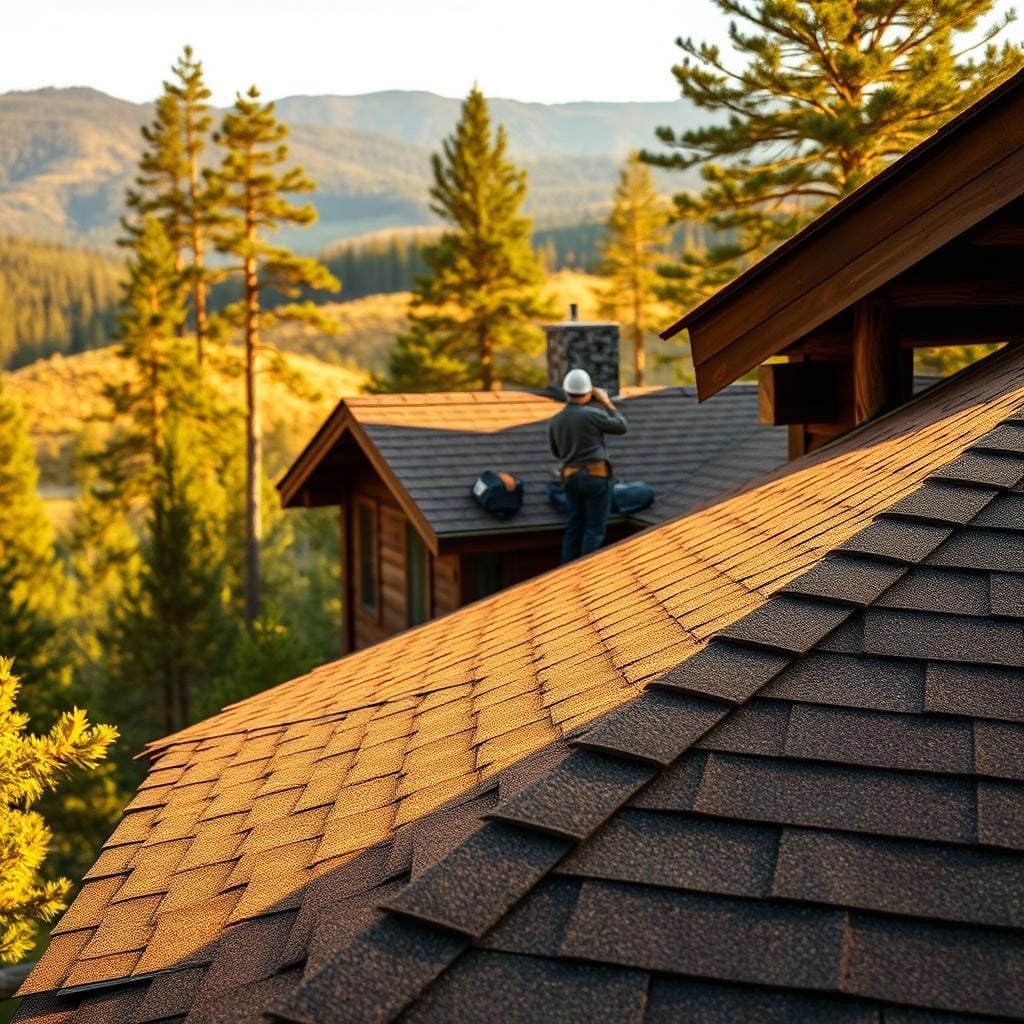
Architectural shingles are a better choice if you can spend a bit more. They look like expensive materials like wood shakes or slate tiles. They’re made of layers that give them texture and shadow lines.
They last 25 to 30+ years and often come with longer warranties. Some makers even offer lifetime warranties on their top lines.
They cost 20 to 40 percent more than three-tab shingles. For a 1,200 square foot roof, that’s an extra $800 to $1,600. But, they offer:
- Superior wind ratings: They can handle winds up to 130 mph
- Enhanced curb appeal: They look better and improve your cabin’s look
- Better impact resistance: They handle falling branches and hail better
- Improved warranty protection: Longer warranties mean less cost over time
For cabins in harsh areas or if you plan to keep it long-term, architectural shingles are a smart choice. The initial cost is worth it for the long-term protection they offer.
Expected Lifespan in Cabin Environments
The lifespan of your asphalt shingles depends on your cabin’s use and environment. Seasonal use can help them last longer. But, other factors like wildlife and weather can affect them.
Wildlife like squirrels and raccoons can damage shingles. Forest debris needs regular cleaning to prevent moisture buildup. Temperature changes, common in mountain cabins, can also shorten their life.
Performance in Different Climates
The performance of your affordable shingle roofing varies by climate. In snowy areas, they handle snow loads well if installed correctly. A 4:12 roof pitch helps snow slide off.
In sunny areas, lighter-colored shingles reflect more heat and last longer. UV rays can damage asphalt, so choose shingles with UV inhibitors in sunny spots.
In humid areas, good ventilation is key to prevent moisture buildup. This can cause algae growth and shingle damage. Use algae-resistant shingles with copper or zinc granules in wet or shaded areas.
In cold weather, asphalt shingles become brittle and prone to cracking. Wind-driven rain or snow can damage them. High winds are a big challenge, even for architectural shingles, without extra fastening.
Asphalt shingles are a good choice for many cabins, despite the challenges. Knowing how they perform in different climates helps you make the best choice for your cabin.
Inexpensive Metal Roofing for Cabins That Lasts Decades
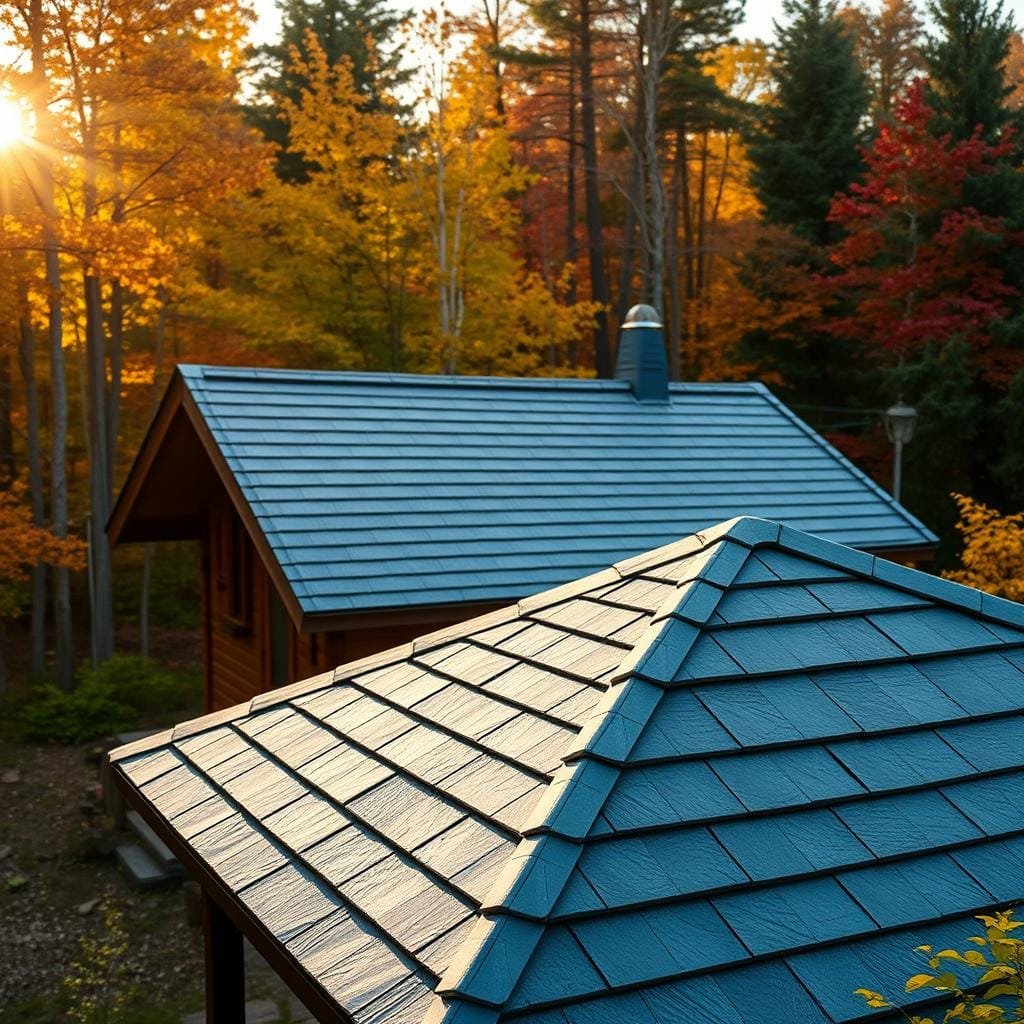
For those on a budget, inexpensive metal roofing for cabins is a top choice. It may cost more upfront than asphalt shingles, but its durability and low maintenance make it a smart choice. Many cabins have metal roofs that last over fifty years with proper care.
Metal roofing is great for cabins. It sheds snow and rain, preventing rot. It also keeps your cabin cool in summer by reflecting the sun’s heat.
There are many metal roofing options to fit your budget and style. You can choose from industrial-looking panels to sleek designs. Metal roofing works well with many architectural styles and lasts for decades.
Corrugated Galvanized Steel Panels
Corrugated galvanized steel is the most affordable metal roofing option. It has a classic look and is easy to install. This makes it a cost-effective choice for many cabins.
The galvanized coating protects the steel from rust. Corrugated steel panels usually come with warranties of twenty to thirty years. They cost between two to four dollars per square foot.
Installing corrugated panels is simple for DIYers. They overlap and attach with special screws. This design is less watertight but works well with proper installation.
Corrugated panels shed snow efficiently. The design helps regulate temperature and prevents ice dams. This is great for cabins in snowy areas.
The industrial look of corrugated steel may not fit every cabin style. But, it complements rustic or modern designs well. You can also paint it to match your cabin’s color scheme.
Standing Seam Metal Roofing Systems
Standing seam metal roofing is the premium choice for cabins. It has vertical panels with raised seams for a watertight surface. The concealed fasteners prevent leaks.
Standing seam roofs last over fifty years with proper installation. They cost between seven to twelve dollars per square foot. This is a long-term investment for your cabin.
These systems are great for snowy areas. The seams prevent water from flowing sideways. The panels also shed snow efficiently.
Standing seam roofing looks great on cabins. It suits modern designs and traditional styles. The vertical lines make cabins appear taller and more distinctive.
Professional installation is recommended for standing seam systems. The specialized tools and techniques ensure a watertight roof. The cost is worth it for the long-term benefits.
Aluminum Roofing for Coastal Cabins
Aluminum roofing is best for coastal cabins. It resists corrosion from salt spray and humid air. This makes it a durable choice for harsh marine conditions.
Aluminum is lightweight, which is a plus for coastal cabins. It weighs less than steel, reducing the load on cabin frames. This is ideal for older cabins or remote locations.
Aluminum roofing costs more than steel but lasts longer. It’s more expensive upfront but provides decades of service. Near saltwater, aluminum roofs last fifty years or more.
Aluminum is available in various profiles. Standing seam aluminum with quality paint is best for coastal areas. It prevents salt intrusion and protects against UV damage and corrosion.
Paint and Coating Options
The finish of your metal roof affects its performance and longevity. Basic galvanized coating offers rust protection but has limited color options. It’s the most affordable choice but has a utilitarian look.
Polyester paint systems offer better appearance and durability. They cost more than galvanized but resist fading better. They last fifteen to twenty years before showing wear.
Premium coatings like Kynar 500 or Hylar 5000 provide the best protection. They come with warranties of thirty to forty years. They maintain color and gloss throughout their lifespan. The extra cost is worth it for reduced maintenance and curb appeal.
Choosing the right color affects more than looks. Lighter colors reflect solar radiation, keeping your cabin cooler. Darker tones absorb heat, which is beneficial in cold climates. Earthtone colors blend well with wooded settings.
Calculating the cost-effectiveness of metal roofing shows its value. A standing seam roof costing twelve thousand dollars lasts fifty years, costing just two hundred forty dollars annually. This is cheaper than asphalt shingles over time. Metal roofing also requires less maintenance and is more energy-efficient, making it a cost-effective choice for decades.
Durable Cabin Shingles: Alternative Materials Worth Considering
Smart cabin owners are exploring alternative roofing materials. These options offer benefits that traditional materials can’t match. They balance cost and performance well for cabins.
Looking for a material that solves specific problems? Maybe you want slate’s look without its weight or cost. Or perhaps you care about the environment and durability. You might seek that rustic look for your cabin.
Long-lasting cabin roof materials are worth considering. Each offers something special for your cabin.
Composite Synthetic Shingles
Modern engineering has created synthetic roofing options that look real. Composite shingles mix recycled plastics, rubber, and more to mimic natural materials. They look authentic but perform better.
These engineered shingles last 50 years or more. They resist damage that would crack real slate. They also won’t rot or absorb moisture like wood.
Composite shingles are lightweight, which is great for cabins. They offer the look of heavy materials without stressing your roof. This is important for older cabins.
Cost-wise, composite shingles are between asphalt and natural materials. They cost more than basic shingles but less than slate. The investment is worth it for their minimal maintenance and long life.
- Exceptional resistance to insects, rot, and moisture damage
- Class 4 impact rating on many products (highest available)
- Variety of colors and styles to match any cabin aesthetic
- Virtually no maintenance required beyond occasional cleaning
- Manufacturer warranties often extending 50 years
Recycled Rubber Slate Alternatives
Recycled rubber shingles look like natural slate. They offer elegance without the high cost or structural issues of real stone.
These eco-friendly shingles earn the highest Class 4 impact rating. They withstand hail and falling branches better than almost any other material. They won’t crack or break like real slate.
Temperature extremes don’t affect recycled rubber roofing. They stay flexible in cold and don’t soften in heat. This makes them perfect for cabins with big temperature swings.
These shingles are great for the environment. They keep tires out of landfills and provide a durable roof for your cabin. Many products use 95% or more recycled content.
Pricing is lower than natural slate—often 40-60% less. Installation is easier too, as they weigh less than stone. Standard roofing crews can handle the job without special equipment.
Treated Cedar Shakes for Rustic Appeal
Cedar shakes bring authentic character to a cabin roof. They age beautifully, developing a silvery patina that enhances rustic charm. They’re the traditional choice that’s been protecting cabins for centuries.
Cedar shakes work well with log or timber frame cabins. The natural material complements the organic architecture in ways synthetic products can’t. If authentic appearance is key, cedar delivers unmatched results.
Modern treated cedar shakes resist bugs and decay far better than untreated versions. Factory treatments penetrate deep into the wood, providing long-lasting protection. This makes cedar practical for cabin owners who can’t perform constant maintenance.
Expect a properly maintained cedar roof to last 20-30 years. That’s respectable longevity, though shorter than metal or composite options. The lifespan depends on your climate and maintenance commitment. Humid regions accelerate wear, while dry mountain air preserves cedar beautifully.
The maintenance requirements are honest considerations. Cedar shakes need periodic treatment to maintain their protective properties. You’ll also need to clear debris promptly, as trapped moisture against wood accelerates deterioration. Some cabin owners view this upkeep as connecting with their property; others see it as a burden.
Initial costs run higher than asphalt but lower than premium synthetics or metal systems. You’re paying for natural beauty and traditional craftsmanship. For many cabin owners, that authentic appearance justifies the extra expense and maintenance effort.
| Material Type | Expected Lifespan | Maintenance Level | Best Application |
|---|---|---|---|
| Composite Synthetic | 50+ years | Very Low | Low-maintenance retreats |
| Recycled Rubber Slate | 40-50 years | Low | Impact-prone forest areas |
| Treated Cedar Shakes | 20-30 years | Moderate | Rustic aesthetic priority |
Alternative roofing materials make sense for cabins with specific needs. Consider them when aesthetics matter, environmental impact is important, or unique performance characteristics justify the investment. The right choice depends on your priorities, budget, and maintenance commitment.
Affordable Durable Roofing Cabin: Comparing Your Top Options
When looking for roofing options, it’s key to compare them clearly. This helps find the right mix of affordability and durability. We’ll look at how different materials stack up in terms of cost, durability, and upkeep.
Choosing the right roofing for your cabin involves understanding what you get for your money. Some materials might be cheaper but need more care. Others cost more upfront but save money over time.
The best choice depends on your needs, budget, and what matters most to you. Let’s dive into how popular cabin roofing materials compare.
Side-by-Side Cost Comparison
Understanding the true cost of roofing means looking at material and installation prices. These figures show typical costs per square foot for a standard cabin roof in the U.S.
| Roofing Material | Material Cost (per sq ft) | Installation Cost (per sq ft) | Total Project Cost (1,000 sq ft) |
|---|---|---|---|
| Three-Tab Asphalt Shingles | $0.80 – $1.20 | $1.50 – $2.50 | $2,300 – $3,700 |
| Architectural Shingles | $1.20 – $2.00 | $2.00 – $3.50 | $3,200 – $5,500 |
| Corrugated Metal Panels | $1.50 – $3.00 | $2.50 – $4.00 | $4,000 – $7,000 |
| Standing Seam Metal | $3.00 – $5.50 | $4.00 – $6.50 | $7,000 – $12,000 |
| Composite Synthetic Shingles | $2.50 – $4.00 | $3.00 – $5.00 | $5,500 – $9,000 |
Prices can change based on where your cabin is. Getting materials to remote areas can add 15-30% to costs. Buying off-season can get you better deals on materials and labor.
Don’t just look at the initial cost. Consider how long it lasts and upkeep needs. This will give you a clearer picture of the true cost.
Durability Ratings by Material Type
The durability of your cabin’s roof depends on several factors. Here’s how different materials rate in key areas.
Asphalt Shingles (Three-Tab):
- Expected lifespan: 15-20 years in typical cabin environments
- Wind resistance: Moderate (rated to 60-70 mph)
- Impact resistance: Low to moderate
- Fire rating: Class A when properly installed
- UV degradation: Moderate susceptibility
Architectural Asphalt Shingles:
- Expected lifespan: 25-30 years with proper maintenance
- Wind resistance: Good (rated to 110-130 mph)
- Impact resistance: Moderate to good
- Fire rating: Class A
- UV degradation: Better resistance than three-tab versions
Metal Roofing (Corrugated and Standing Seam):
- Expected lifespan: 50+ years with minimal maintenance
- Wind resistance: Excellent (rated to 140+ mph for standing seam)
- Impact resistance: Very good to excellent
- Fire rating: Class A (non-combustible)
- UV degradation: Minimal with quality coatings
- Expected lifespan: 30-50 years depending on quality
- Wind resistance: Good to excellent (varies by product)
- Impact resistance: Superior to natural materials
- Fire rating: Class A or B depending on composition
- UV degradation: Excellent resistance built into design
Cedar Shakes:
- Expected lifespan: 20-30 years with regular treatment
- Wind resistance: Moderate when properly installed
- Impact resistance: Moderate
- Fire rating: Class C untreated, Class B with treatment
- UV degradation: Natural weathering changes appearance
Installation Difficulty and Time
When comparing roofing options, consider how easy they are to install. This affects both cost and how long the project takes. Some materials are better for DIY projects, while others need a pro.
Easiest DIY-Friendly Options: Three-tab asphalt shingles and corrugated metal panels are great for DIY. A skilled DIY team can finish a 1,000 square foot roof in 3-5 days. They are lightweight, easy to follow instructions, and don’t need special tools.
Moderate Difficulty Materials: Architectural shingles and composite synthetics are a bit harder but DIY-friendly. Plan for 5-7 days with a helper. They are heavier and need careful attention to manufacturer specs for warranty.
Professional Installation Required: Standing seam metal roofing needs special tools and skills. Pros usually finish in 4-6 days. DIY attempts are not recommended due to the need for precise seaming and expansion joints.
Timing affects contractor availability and prices. Spring and fall are peak seasons with higher rates. Summer installations in mountain cabins have better weather but cost more.
Maintenance Requirements Over Time
Choosing the right roofing means understanding ongoing care needs. Maintenance needs vary greatly between materials.
Virtually Maintenance-Free Options: Metal roofing needs little care, just annual checks. Check fasteners every few years and clear debris from valleys. Budget $50-100 annually for basic upkeep. Standing seam systems need even less care than exposed fastener panels.
Low-Maintenance Materials: Architectural asphalt shingles and quality composite synthetics need occasional checks and repairs. Plan for professional inspections every 3-5 years at $200-400 per visit. Replace damaged shingles quickly to avoid water damage. Annual costs average $100-200 for routine care.
Moderate-Maintenance Solutions: Three-tab asphalt shingles need more frequent checks as they age. Inspect twice yearly for curling, cracking, or missing granules. Expect to spend $150-300 annually on maintenance after the first 10 years. Budget for partial replacement of damaged sections every 5-7 years.
High-Maintenance Traditional Materials: Cedar shakes need the most care. Apply protective treatments every 3-5 years at $800-1,500 per application. Remove moss and debris quarterly. Clean gutters more often to prevent moisture damage. Annual maintenance costs run $300-500 plus periodic treatment expenses.
Remote cabin locations make maintenance harder and pricier. Limited access in winter means scheduling all work in brief summer windows. Travel costs for contractors serving isolated areas often add $200-500 to maintenance calls.
The material needing the least maintenance often offers the best value, even with higher upfront costs. Calculate lifetime maintenance costs when comparing options. A metal roof costing $7,000 with $2,000 in maintenance over 50 years beats asphalt shingles at $3,500 initially plus $5,000+ in maintenance and replacement costs over the same period.
Weatherproof Cabin Roof Options for Extreme Conditions
Cabins in harsh climates need roofs that can handle extreme weather. This means protecting against heavy snow, strong winds, and ice. Luckily, weatherproof cabin roof options have improved, providing strong protection without breaking the bank.
It’s important to know how different materials and installation methods work in extreme weather. The right mix of products and techniques creates a strong roofing system that lasts through many seasons.
Heavy Snow Load Solutions
Snow can be very heavy on your cabin roof, so careful planning is key. In snowy areas, a roof pitch of at least 10/12 helps snow slide off before it becomes too heavy.
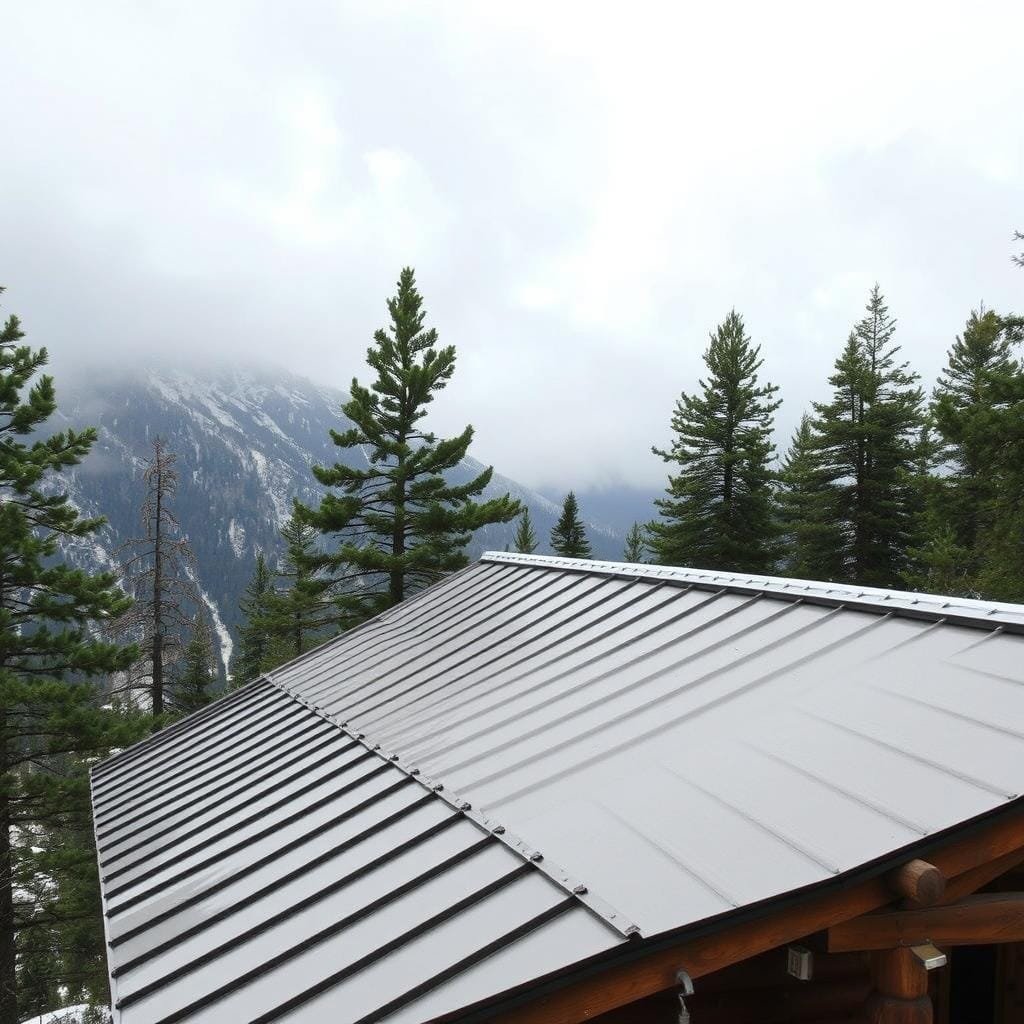
Metal roofing is great for snowy areas because it’s slippery. This prevents snow from piling up. The smooth panels let snow slide off, reducing the weight on your roof.
It’s also important to make sure your rafters can handle the expected loads. Building codes set minimum requirements, but going beyond them can give you peace of mind.
Snow guards or retention systems are important for safety. They control how snow releases from your roof, preventing dangerous slides near entryways or parking areas. They work well on metal roofs where snow can slide off suddenly.
Here are some key snow load solutions for your cabin:
- Install roofing with a pitch of at least 10/12 in heavy snow regions
- Choose metal panels that encourage gradual snow shedding
- Ensure rafter spacing meets or exceeds local snow load requirements
- Add snow guards near vulnerable areas like doorways and decks
- Select lightweight materials to reduce total structural load
High Wind Resistance Features
Wind damage often starts at roof edges and ridges. Proper fastening is key to keeping your roof in place. Exceeding minimum code requirements for fasteners adds extra security during storms.
The material you choose also affects wind resistance. Architectural shingles with high wind warranties work well, but metal roofing offers even better protection. Standing seam metal roofs are sealed systems without exposed edges for wind to grab.
Pay special attention to edge and ridge detailing during installation. These areas face the highest wind forces and need strong attachment methods. Quality contractors know to use extra fasteners and sealants here.
Extreme weather roofing relies on these wind resistance factors:
- Use fastening patterns that exceed local building code minimums
- Select materials with documented wind ratings for your region
- Install standing seam metal for maximum edge protection
- Reinforce ridge caps and starter strips with additional fasteners
- Ensure proper edge flashing installation to prevent wind uplift
Ice and Water Shield Protection
Ice and water shield is a critical weatherproofing component for cold climate cabins. It’s a self-adhering waterproof membrane that prevents leaks when ice dams form. Many cabin owners skip this layer to save money, but it’s a costly mistake.
Knowing where to install this protection is key. At a minimum, ice and water shield should cover your eaves, valleys, and areas around penetrations like chimneys and vents. In severe climates, covering your entire roof deck provides complete protection.
Ice dams form when heat escaping through your roof melts snow that then refreezes at cold eaves. This forces water under shingles where it can penetrate your cabin. Proper attic insulation and ventilation work together with ice and water shield to prevent this common problem.
The relatively low cost of this membrane makes it an easy choice for weatherproof cabin roof options. Spending a few hundred extra dollars on quality underlayment prevents thousands in water damage repairs. It’s a long-term investment that pays off for decades.
Key installation points for maximum protection include:
- Cover at least the first 3-6 feet from eaves in all cold climates
- Extend protection through all valleys where water concentrates
- Seal completely around chimneys, vents, and skylights
- Consider full-deck coverage in regions with severe winters
- Combine with proper ventilation to address heat loss at the source
Investing in proper extreme weather roofing protection is worth it every time a storm hits. These specialized features and materials cost more upfront but deliver reliable performance when conditions get tough. Your cabin deserves protection that matches the challenges of its environment.
Cost-Effective Cabin Roofing Installation Strategies
Choosing how to install your cabin roof can save you a lot of money. Deciding who installs it and when can cut your costs by 30% or more. By planning smartly, you can save money on DIY projects, contractor selection, and timing.
Many people focus only on the cost of materials. But, the cost of installation can be just as high. A smart approach balances cost with quality and durability.
Taking the DIY Route for Simple Projects
DIY roofing can save money if you’re careful. Not every project is right for DIY. Knowing when to DIY and when to hire a pro is key.
Ideal candidates for DIY installation include simple gable roofs with moderate pitch (between 4:12 and 6:12), straightforward materials like three-tab asphalt shingles or corrugated metal panels, and cabin owners with construction experience and proper safety equipment. Remote cabin locations where contractor availability is limited or transportation costs are prohibitive also make DIY more attractive.
Safety is the top priority. Working with experienced friends makes the job safer and faster. Always use proper safety gear and know your limits.
Even with DIY, you must follow local building codes. Make sure you have the right permits before starting. Some areas require professional installation for certain roofs.
Avoid DIY installation for these scenarios:
- Complex roof designs with multiple valleys, dormers, or steep pitches above 8:12
- Heavyweight materials like slate or concrete tiles requiring structural assessment
- Standing seam metal roofing that demands specialized seaming tools and expertise
- Situations where manufacturer warranties require professional installation
- Multi-story cabins where fall risks increase dramatically
Bitumen shingles and corrugated metal panels are good for DIY. But, some materials need special skills. It’s better to hire pros for those.
Comparing Local and Specialized Roofing Contractors
Choosing the right contractor is key to saving money. Local contractors might be cheaper but may not have the expertise for complex roofs. The best choice depends on your specific needs.
Local contractors are often cheaper and easier to find. They know the local weather and building codes. But, they might not have the skills for advanced roofs.
Specialized roofers offer better warranties and quality. They have the knowledge and tools for complex roofs. Their higher prices are worth it for the quality and speed.
| Factor | Local Contractors | Specialized Roofers |
|---|---|---|
| Cost | 15-25% lower rates, flexible negotiation | Premium pricing, fixed estimates |
| Expertise | General construction knowledge, variable roofing experience | Dedicated roofing focus, advanced techniques |
| Availability | Better for remote locations, flexible scheduling | Limited service areas, busy schedules |
| Warranties | Basic workmanship guarantees | Extended warranties, manufacturer certifications |
Essential questions to ask any contractor during the selection process:
- How many years have you been installing roofs professionally?
- Can you provide references from recent cabin or residential projects?
- What insurance coverage do you carry (liability and workers’ compensation)?
- Are you licensed and bonded in this jurisdiction?
- What warranties do you offer on your workmanship?
- How do you handle unexpected issues or cost overruns?
Check a contractor’s credentials yourself. Look up licenses, confirm insurance, and call references. Experienced roofers can prevent costly mistakes.
Get at least three detailed estimates for cost-effective roofing. Compare costs, materials, timelines, payment plans, and warranties. The cheapest bid might not be the best value.
Timing Your Installation for Maximum Value
Seasonal timing affects costs and quality. Weather impacts material performance and crew efficiency. Smart timing can save money and ensure quality.
Late spring through early fall is the best time for most roofing projects. Temperatures are moderate, and weather is stable. But, prices may be higher due to demand.
Installing in late fall or early spring can save 10-20% on costs. But, weather risks increase, and some materials perform poorly in cold.
Metal roofing is more flexible than asphalt. It can be installed in cooler weather without issues. This flexibility can save money by allowing off-peak installation.
Seasonal considerations by material type:
- Asphalt shingles: Best installed when temperatures stay above 50°F for proper adhesive activation
- Metal roofing: Can be installed year-round in most climates with minimal temperature restrictions
- Synthetic materials: Follow manufacturer specifications, typically requiring moderate temperatures
- Cedar shakes: Prefer dry conditions with low humidity for proper installation
Emergency replacements can’t wait for the best timing. But, for planned replacements, timing is key to saving money and ensuring quality.
Remote locations have narrower installation windows due to weather and road access. Plan ahead and work with contractors familiar with your area’s challenges.
Economical Cabin Roof Installation: Saving Without Sacrificing Quality
By understanding the trade-offs, you can save thousands on cabin roofing. The key is making smart choices that keep your roof strong and last long. This way, you can stretch your budget without sacrificing quality.
Planning smartly is key to a budget-friendly project. The strategies below help cut costs without compromising on your cabin’s safety.
Roof Overlay Versus Complete Tear-Off
Putting a new roof over the old one can save a lot of money. It cuts down on labor and disposal costs by 20-30%. But, it only works under certain conditions.
Your roof must meet specific criteria for an overlay. It can only have one layer, and the deck must be solid without damage. This ensures the roof can handle the new layer.
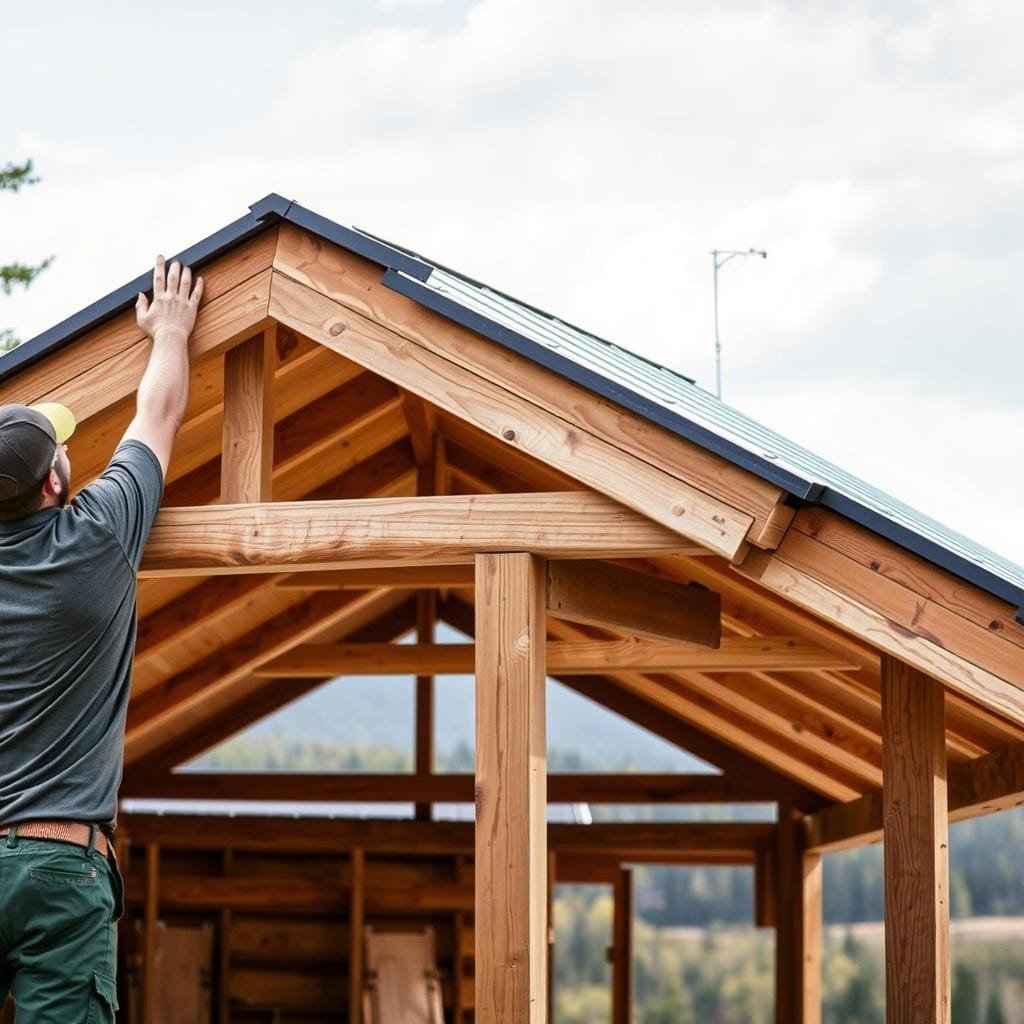
Metal roofing is great for overlays because it’s strong and doesn’t add too much weight. It’s a cost-effective and durable option.
But, there are downsides to consider:
- It may put too much weight on your cabin
- You can’t check for hidden damage
- It might not last as long as a new roof
- Moisture can cause rot and mold
- Removing it later will cost more
Don’t do an overlay if your roof is damaged or sagging. The savings won’t last if the roof fails early.
Buying Materials in Bulk or Off-Season
Buying materials at the right time can save 15-35% without losing quality. Roofing companies offer big discounts in winter when demand is low. Planning your project for these times can save a lot of money.
Buying in bulk is cheaper than small amounts. Manufacturers price materials for full orders, so buying extra can save money. This extra material can be useful for future repairs.
Old or discontinued materials are also a good deal. They’re cheaper because they’re being cleared out. But, they’re just as good as new materials for your cabin.
Here are some smart buying tips:
- Buy with neighbors to get better deals
- Get quotes from suppliers when they’re slow
- Check the quality of discounted materials
- Think about storage costs for materials you buy early
- Make sure warranties cover discontinued products
Be careful of deals that seem too good. Some might be low-quality or near expiration.
Navigating Permits for Remote Cabins
Even in remote areas, you need to follow building codes and get permits. Permits are required for new roofs, but small repairs might not need one. Knowing the rules helps avoid costly mistakes.
Permits cost 1-2% of your budget but are worth it. They ensure your roof is installed correctly and meets local standards. This protects your investment and keeps your cabin safe.
Ignoring permits can lead to big problems. Insurance might not cover repairs, and it can hurt your cabin’s resale value. It’s better to follow the rules to avoid these issues.
| Permit Scenario | Typical Cost | Benefits Provided | Risks if Skipped |
|---|---|---|---|
| Complete Roof Replacement | $150-$500 | Structural inspection, code compliance verification, warranty protection | Insurance claim denial, resale complications, contractor liability issues |
| Overlay Installation | $100-$400 | Confirms existing structure supports additional weight | Potential structural failure, difficulty obtaining future permits |
| Minor Repairs | Often exempt | N/A for small projects | Minimal if truly minor work |
| Material Changes | $150-$400 | Engineering review for weight differences, attachment methods | Structural inadequacy, wind uplift failure |
Even in unincorporated areas, check with the county about permits. They’re important for safety, even if your cabin is far away. Online resources and phone calls can help you understand what you need.
Working with licensed contractors makes getting permits easier. They handle all the paperwork and ensure your roof meets codes without delays.
Long-Lasting Cabin Roof Materials for Regional Challenges
Choosing the right roof for your cabin starts with knowing your local weather threats. Cabins in the Rockies face different challenges than those near Michigan lakes or in Arizona deserts. It’s important to pick materials that can handle your area’s weather, from heavy snow to intense sun.
For your cabin’s location, look for materials that last long, are cost-effective, and perform well in your climate. We’ll look at the best options for four different environments and why location is key.
Snow Loads and Temperature Extremes
Mountain cabins deal with harsh weather. Heavy snow and big temperature swings can damage roofs.
Standing seam metal roofing is great for mountains. It sheds snow well and handles temperature changes without issues. Metal also resists UV damage better than asphalt shingles.
For mountains, architectural shingles with Class 4 impact ratings are a good choice. They can handle hail and shed snow. Make sure your roof is well-ventilated to prevent ice dams.
Roofs should be steep to shed snow. Use heating cables in valleys to fight ice dams.
Humidity and Water Exposure
Lake and river cabins face constant moisture. This leads to algae and mildew growth that harms roofs.
Metal roofing is best for these areas. It prevents water absorption and stops organic growth. Aluminum is a good choice because it resists corrosion.
If you like shingles, choose ones with algae-resistant granules. Copper or zinc granules prevent algae. Zinc or copper strips along ridges offer similar protection.
Waterfront cabins need careful underlayment and flashing. Moisture can find weak spots during storms. Use ice and water shield around all vulnerable areas.
| Regional Challenge | Best Material Options | Key Protection Features | Average Lifespan |
|---|---|---|---|
| Mountain Snow/Cold | Standing seam metal, Class 4 architectural shingles | Snow shedding, thermal movement tolerance, impact resistance | 40-50+ years metal, 25-30 years shingles |
| Waterfront Moisture | Aluminum metal, algae-resistant shingles | Corrosion resistance, algae prevention, water shedding | 50+ years aluminum, 20-25 years treated shingles |
| Forest Debris/Shade | Metal panels, synthetic composites | Impact resistance, moss prevention, quick drying | 40-50 years metal, 30-40 years synthetics |
| Desert Heat/UV | Cool metal roofing, light-colored tiles | UV-stable coatings, heat reflection, thermal expansion management | 50+ years metal, 40-50 years tiles |
Branch Impact and Organic Growth
Forest cabins face threats from falling branches and moss growth. The woodland beauty comes with tough roofing challenges.
Metal roofing is top-notch for forests. It bounces off branches and sheds debris well.
Avoid wood shakes in forests. They trap moisture and rot. Synthetic shakes are a better choice.
Forest cabins need regular upkeep. Trim branches and install zinc or copper strips to fight moss.
Clear debris often, more often in dense forests. Use a soft brush to clean without damage.
Sun Exposure and Extreme Heat
Desert cabins face intense UV and heat. These conditions quickly damage roofs.
Cool metal roofing in light colors or reflective finishes is ideal. It reflects sun and keeps interiors cool. Metal handles temperature changes without cracking.
Clay or concrete tiles resist UV and moderate temperature swings. They reflect heat and are durable. Tiles last long but cost more.
Premium shingles with UV-resistant coatings work in deserts but last less than in milder climates. Choose light colors to reflect heat.
Good ventilation is key in deserts. Use ridge vents and soffit intake vents to remove hot air. This protects roofs and interiors.
In deserts, focus on heat and UV protection over moisture. But, don’t ignore water management when it rains.
Rustic Cabin Roof Replacements Without Losing Charm
Many cabin owners worry that affordable, durable roofing means sacrificing that authentic rustic look. The good news is that modern roofing technology has advanced dramatically in recent years. You can now choose materials that deliver exceptional performance and longevity while maintaining the traditional cabin aesthetics that make your retreat special.
The key to successful rustic cabin roof replacements lies in selecting materials that honor your cabin’s character while providing the protection and durability you need. Today’s roofing manufacturers understand that cabin owners value both function and form. They’ve developed innovative products that bridge this gap beautifully.
Whether you’re replacing an aging roof or building a new cabin, you don’t have to compromise. The following approaches help you preserve that timeless cabin charm while benefiting from modern roofing innovations.
Replicating Heritage Looks With Contemporary Products
Modern roofing materials have become remarkably sophisticated at mimicking traditional appearances. Architectural shingles create dimensional shadow lines that convincingly resemble expensive wood shakes or natural slate. These authentic-looking materials fool even experienced eyes from ground level.
Composite cedar shake alternatives replicate the natural color variation and texture of real wood without the drawbacks. They capture the irregular grain patterns and weathered appearance that give wood shakes their character. Yet they resist rot, insects, and fire hazards that plague authentic cedar.
Synthetic slate products have advanced to the point where they’re virtually indistinguishable from quarried stone. They deliver the same elegant, textured appearance at a fraction of the weight and cost. This makes them practical for cabin structures that couldn’t support genuine slate.
Metal roofing now comes with embossed patterns that replicate shingle or shake profiles. Modern coating technologies allow manufacturers to apply realistic wood grain textures and color variations. These options provide superior weather resistance and longevity while maintaining a traditional appearance.
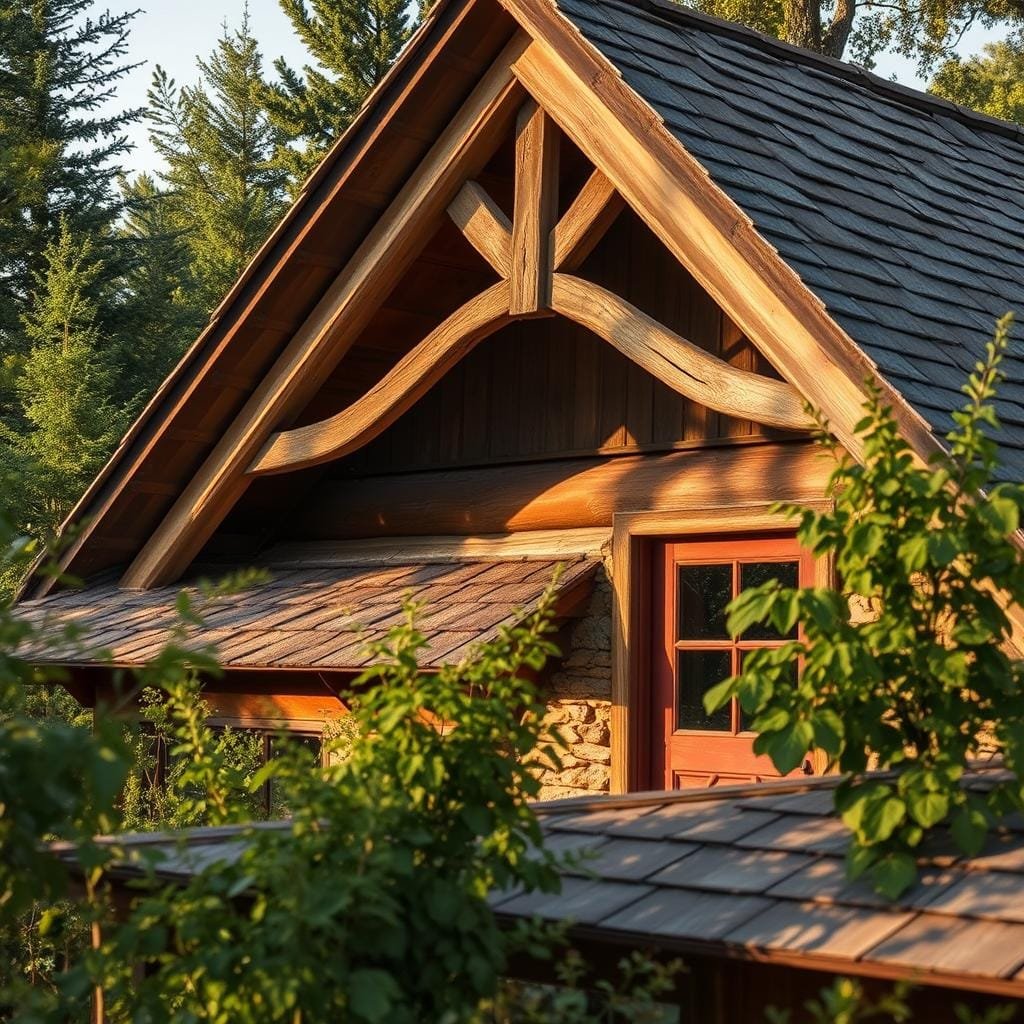
The beauty of these modern alternatives is that they often outperform the materials they mimic. They require minimal maintenance compared to authentic wood or slate. For cabin owners wanting rustic appeal with modern reliability, they represent the best of both worlds.
When shopping for authentic-looking materials, request samples and view them in natural lighting conditions. Pay attention to texture depth, color variation, and how they weather over time. Many manufacturers now offer specific “cabin” or “heritage” product lines designed for this aesthetic.
Harmonizing Hues With Your Natural Setting
Color selection plays a critical role in maintaining traditional cabin aesthetics. The right tones make your roof appear like a natural extension of the surrounding environment. Earth tones work best for most cabin settings—warm browns, forest greens, and slate grays harmonize beautifully with wooded landscapes.
Weathered wood appearances create an authentic look from installation day. These finishes mimic the natural aging process of cedar shakes without waiting decades for authentic patina. They blend seamlessly with log or timber construction and feel established.
Avoid colors that clash with natural logs and forest settings. Bright blues, vivid reds, or stark whites typically look out of place on rustic cabins. These colors draw attention to the roof, not the cabin.
Faded or variegated finishes often appear more authentic than uniform colors. Real wood shakes naturally develop color variations from weather exposure and shade patterns. Modern shingles that replicate this irregularity look more genuine and aged.
Consider how your color choice will appear in different seasons and lighting conditions. What looks perfect in summer sunlight might appear different under winter’s overcast skies. Request color samples you can view against your actual cabin exterior at various times of day.
Many manufacturers have recognized the demand for cabin-appropriate colors. They now offer dedicated rustic color palettes with names like “cedar blend,” “weathered wood,” or “forest shadow.” These options are formulated to complement log and timber construction.
For detailed guidance on selecting the right roof for your cabin’s unique needs, explore our log cabin roof guide. It covers materials, installation, and maintenance strategies.
Maintaining Historic Character and Authenticity
Owners of older or historic cabins face unique considerations when replacing roofs. Preserving historical cabin aesthetics often requires extra research and sometimes accepting higher costs. The goal is honoring the cabin’s heritage while providing adequate protection.
Start by researching your cabin’s original roofing materials and installation methods. Old photographs, building records, or consultation with local historical societies can provide valuable insights. Understanding the original design helps you make informed replacement decisions.
Finding modern equivalents that preserve historic appearance takes effort but yields rewarding results. Some manufacturers produce specialty products designed to meet historic preservation standards. These materials deliver authentic looks while incorporating modern performance improvements.
If your cabin falls under historic preservation regulations, you may need to navigate specific requirements. Some jurisdictions require matching original materials exactly, while others allow modern substitutes that maintain visual continuity. Check local requirements before proceeding with rustic cabin roof replacements.
Sometimes maintaining absolute authenticity means accepting shorter lifespans and higher maintenance. Genuine cedar shakes or slate tiles require more care than synthetic alternatives. For cabins where historical integrity is key, this trade-off may be worthwhile.
Balance authenticity with practicality by considering which elements matter most visually. Roof areas visible from the ground merit closer attention to authentic appearance. Less visible sections might accommodate more practical modern materials without affecting overall aesthetics.
| Aesthetic Priority | Traditional Material | Modern Alternative | Visual Accuracy | Cost Difference |
|---|---|---|---|---|
| Wood Shake Texture | Cedar Shakes | Architectural Shingles | 85-90% Similar | 40% Less Expensive |
| Slate Elegance | Natural Slate | Synthetic Slate | 90-95% Similar | 60% Less Expensive |
| Aged Wood Look | Weathered Cedar | Composite Cedar | 80-85% Similar | 30% Less Expensive |
| Traditional Profile | Wood Shingles | Embossed Metal | 75-80% Similar | 25% More Expensive |
The table above shows how modern alternatives compare to traditional materials in visual accuracy and cost. Most contemporary products achieve remarkable visual similarity while saving money and improving performance.
Remember, thoughtful material selection allows you to preserve your cabin’s rustic charm while benefiting from modern roofing technology. You’re not forced to choose between aesthetics and practicality. With careful planning and the right products, you can achieve both goals successfully.
Preventative Maintenance for Maximum Roof Lifespan
Preventative maintenance turns your roof into a strong shield for your cabin. Even the toughest shingles need regular care to last. By taking care of your roof early, you save money and extend its life.
Keeping your roof in shape doesn’t need a pro for every task. Many important jobs are easy DIY tasks. The trick is to stay consistent and fix small issues before they get big.
Twice-Yearly Inspection Routine
A seasonal inspection checklist is key to a long-lasting roof. Check your roof twice a year—once in spring and again in fall. This helps catch problems early.
Start at the top and work down during inspections. Look for missing shingles, loose flashing, and attic water damage. This careful check helps spot issues fast.
You don’t always need to climb up to inspect. Binoculars from the ground can show most roof problems. Take photos to track changes and keep a record of your roof’s condition.
| Inspection Area | What to Check | Warning Signs | Action Needed |
|---|---|---|---|
| Shingles/Panels | Surface condition and attachment | Curling, cracking, missing pieces | Replace damaged sections immediately |
| Flashing | Seals around penetrations | Gaps, rust, lifted edges | Reseal or replace flashing |
| Attic Interior | Water stains, daylight, ventilation | Dark spots, visible light through gaps | Locate and repair leak source |
| Debris Accumulation | Leaves, branches, moss growth | Buildup in valleys or behind chimneys | Clear debris to prevent moisture retention |
Keeping Water Flowing Away
Gutter cleaning is vital for roof health. Clogged gutters can damage your roof and shorten its life. Regular cleaning keeps your roof safe.
Clean your gutters at least twice a year. If your cabin is near trees, you might need to do it more often. Make sure downspouts direct water away from your cabin’s base.
Think about gutter guards if you can’t clean your gutters often. They help keep your gutters clear and save you time. They’re great for cabins you don’t visit all year.
The Small Fixes That Prevent Big Problems
Fixing small roof problems early saves a lot of money. A missing shingle can lead to big damage if not fixed. Catching these issues early is key.
Keep basic repair tools handy for quick fixes. Have replacement shingles, roofing cement, and other essentials ready. Many repairs are easy DIY jobs.
Small leaks can quickly become big problems. What starts as a small leak can damage your roof’s structure. Fixing issues early saves you from costly repairs later.
Keep a record of every repair you do. Photos and notes help when selling your cabin and show where you need to focus. This can also help you spot bigger issues that need a pro.
Fighting Green Growth
Stopping moss and algae keeps your roof looking good and lasting longer. These growths love the damp, shaded areas around forest cabins. They can damage your roof if not stopped.
Zinc or copper strips near the ridge help prevent moss. They release particles that stop growth. These strips work for years with no upkeep.
To remove moss, use soft brushes, not pressure washers. They can harm your shingles. Special roof treatments can help but need to be reapplied often.
Good ventilation helps prevent moss and algae. Make sure your cabin has enough vents for airflow. This keeps your roof dry and moss-free.
Trim branches that shade your roof and drop debris. More sunlight and less debris help prevent moss. This simple step helps protect your roof and investment.
Seven Costly Mistakes Cabin Owners Make With Roofing
Knowing what not to do with your cabin roof can save you more money than knowing what to do. Even with the best budget cabin roofing solutions, mistakes during planning, installation, or maintenance can destroy your investment. These mistakes often hide for years before causing expensive damage that requires complete roof replacement.
Learning from others’ expensive lessons helps you avoid repeating common roofing mistakes to avoid. The following errors account for most premature cabin roof failures. Each one costs significantly more to fix than it would have cost to do correctly from the start.
The False Economy of Lowest-Bid Pricing
Choosing the cheapest roofing quote usually means you’re paying for shortcuts that will cost you later. That $3,000 savings on installation often translates to $8,000 in premature replacement costs within five years. The lowest bidder typically cuts corners on materials, preparation, or experienced labor.
Quality materials and skilled installation provide far better value than rock-bottom pricing. A mid-range quote from an experienced contractor typically delivers decades of reliable performance. The cheapest option frequently uses substandard materials that fail before their expected lifespan.
You can spot suspiciously low bids by comparing them against material costs alone. If the total quote barely covers wholesale material prices, the contractor is either inexperienced or planning to cut corners. Legitimate contractors price their work to include quality materials, proper preparation, skilled labor, and warranty coverage.
The “buy cheap, buy twice” principle applies strongly to roofing projects. Spending an extra $2,000 upfront for quality installation prevents spending $10,000 on premature replacement. Ask detailed questions about materials, preparation steps, and installation techniques.
Ventilation Systems That Don’t Work
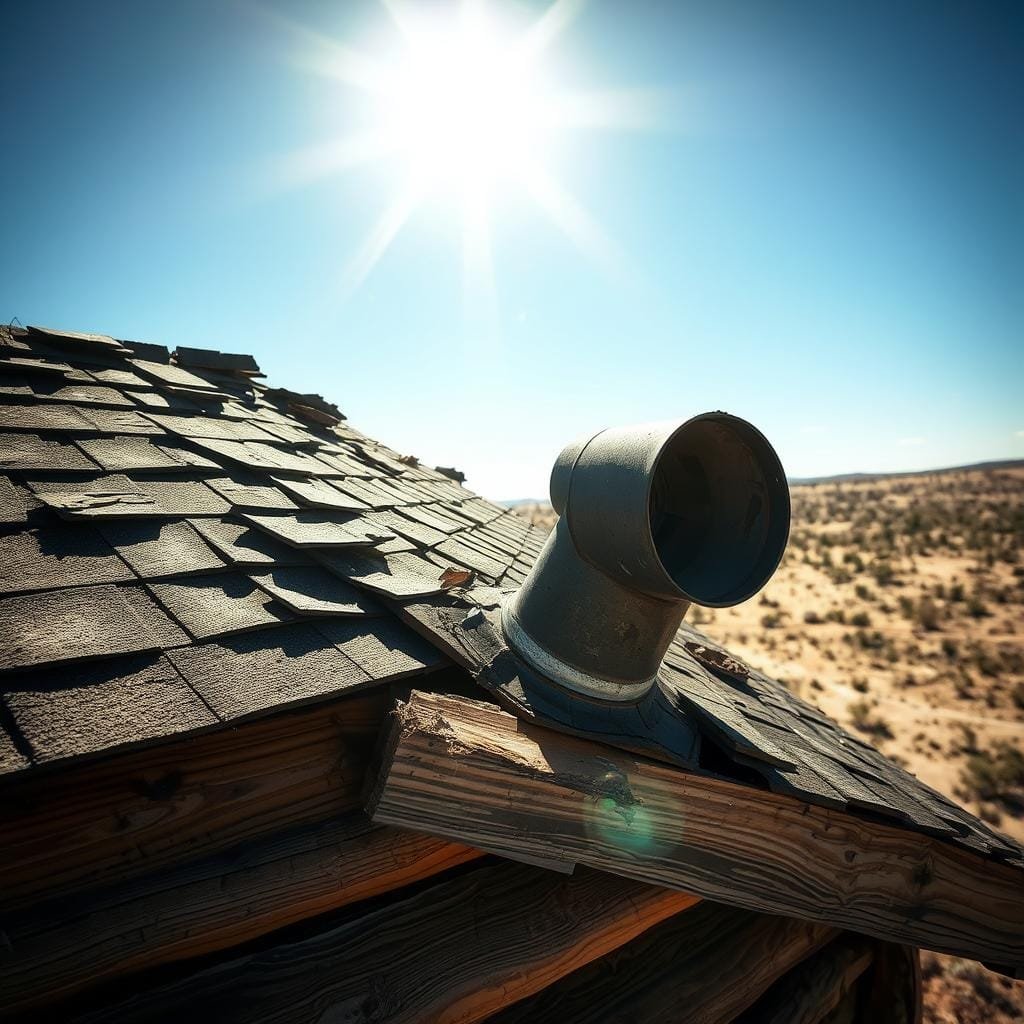
Inadequate roof ventilation causes expensive damage that doesn’t appear until years after installation. Proper airflow prevents moisture accumulation that rots roof decking and promotes dangerous mold growth. This represents one of the most common yet completely avoidable roofing mistakes to avoid.
Ventilation regulates attic temperature, which prevents ice dams in winter and reduces cooling costs in summer. Without proper intake and exhaust vents, your cabin’s roof traps heat and moisture. These conditions destroy roofing materials from the inside out.
Effective ventilation requires balanced intake vents at the soffits and exhaust vents at the ridge. Many installers add ridge vents but forget adequate soffit vents, creating insufficient airflow. The system only works when air can enter low and exit high.
Climate and roof design determine specific ventilation requirements for your cabin. A steep-pitch mountain cabin needs different ventilation than a low-slope desert retreat. Ventilation mistakes often don’t become apparent until significant damage has already occurred, making prevention critical.
Flashing Details That Leak
Improper flashing installation causes more cabin roof leaks than any other single factor. Flashing consists of metal strips that waterproof vulnerable areas where the roof plane changes or meets vertical surfaces. These critical transition points include valleys, chimneys, vent pipes, skylights, and wall intersections.
Quality flashing requires detail-oriented work from experienced installers who understand water flow patterns. Cheap materials or sloppy installation create immediate leak paths, though problems may not appear until after heavy rain or snowmelt. This represents a major category of cabin roof installation errors that destroy sound roofs.
Reviewing flashing plans should be part of evaluating any roofing estimate. Ask contractors how they’ll handle each transition point on your roof. Reputable installers explain their flashing approach and use premium materials at these critical locations.
Even expensive roofing materials fail when flashing is installed incorrectly. A $15,000 metal roof leaks if the $500 flashing work is done poorly. Pay special attention to this detail-intensive work that determines whether your roof stays dry.
Building Codes You Can’t Ignore
Remote cabin locations don’t exempt you from building code requirements, despite what some contractors might suggest. Codes exist for legitimate safety and structural performance reasons, not bureaucratic hassle. Ignoring applicable regulations creates serious problems that surface during inspections, insurance claims, or property sales.
Non-compliant roofing work can void your homeowner’s insurance when you need it most. Insurance companies regularly deny claims on structures that don’t meet code requirements. You also face legal liability if code violations contribute to property damage or injuries.
Research applicable building codes even for cabins in unincorporated areas without regular inspections. County or state regulations often apply regardless of location. Reputable roofing contractors ensure code compliance as standard practice, while fly-by-night operators may ignore requirements entirely.
Failed inspections during property sales cost you negotiating power and potentially buyers. Correcting code violations discovered later costs significantly more than doing the work properly initially. Make code compliance a non-negotiable requirement when hiring contractors.
Additional Critical Errors
Several other common mistakes deserve attention when planning your cabin roofing project:
- Skipping ice and water shield: Inadequate underlayment in vulnerable areas allows leaks during freeze-thaw cycles and wind-driven rain
- Using wrong materials for climate: Installing products unsuited to local weather conditions guarantees premature failure regardless of quality
- Neglecting structural assessment: Adding new roofing without verifying the deck and framing can support it creates dangerous conditions
- Ignoring manufacturer instructions: Improper installation voids warranties and reduces material performance dramatically
These preventable errors cost cabin owners thousands in unnecessary repairs and replacements. Taking time to avoid these pitfalls during the planning phase saves far more than rushing into poorly executed budget solutions. Quality installation of appropriate materials always delivers better long-term value than cutting corners on critical details.
Warranties, Insurance, and Protection for Your Investment
The paperwork for your cabin roof installation might seem boring. But, these warranties and insurance policies protect a big investment. Knowing what’s covered and how to use these protections can save you a lot of money later.
Many cabin owners ignore warranty documents. Others think their homeowner’s insurance covers everything. These mistakes can lead to big surprises when problems show up years later.
Smart protection starts with knowing what coverage you have. And what steps to take to keep it active.
Understanding What Manufacturer Coverage Actually Includes
Manufacturer roofing warranties sound great, but the fine print is key. That “lifetime warranty” on architectural shingles usually means 50 years, but coverage decreases over time. Metal roofing warranties often last 25 to 40 years, but what do they really cover?
Most warranties cover material defects only. This means problems with the shingles, panels, or tiles themselves. They don’t cover installation errors, storm damage, or normal wear from weather.
The coverage usually follows a prorated schedule. You might get full replacement value for the first 10 years. But after that, reimbursement decreases annually. By year 20, you might only get 30% of the original material cost.
Registration requirements often surprise homeowners. Most manufacturers require you to register your warranty within 30 to 90 days of installation. If you miss this window, your “lifetime” warranty might default to a basic 10-year coverage instead.
Different product lines from the same manufacturer offer vastly different warranty terms. Premium products usually have stronger warranties that justify their higher cost. When comparing materials, look at warranty details as carefully as price and appearance. Understanding a standard roof warranty explained helps you make informed decisions about long-term value.
What Contractor Guarantees Cover Beyond Materials
While manufacturer warranties protect against product defects, contractor workmanship guarantees cover installation problems. This separate protection addresses issues like leaks from improper flashing, premature failure from installation errors, and structural problems caused by incorrect techniques.
Reputable contractors usually offer 5 to 10-year workmanship guarantees. These guarantees promise to fix any problems that arise from their installation work at no extra cost to you. This coverage is very valuable because many roofing problems come from installation mistakes, not material defects.
Always ask for written guarantees before work starts. Verbal promises don’t hold up when problems appear years later. The written guarantee should clearly say what’s covered, for how long, and what steps to take to make a claim.
Contractor insurance and bonding add more protection layers. Licensed contractors carry liability insurance that protects you if someone gets hurt during installation. Bonding ensures you have financial recourse if the contractor fails to complete the work or doesn’t pay their suppliers.
| Protection Type | What It Covers | Typical Duration | Red Flags |
|---|---|---|---|
| Manufacturer Warranty | Material defects and manufacturing flaws | 25-50 years (prorated) | No registration requirements mentioned |
| Workmanship Guarantee | Installation errors and technique problems | 5-10 years | Only verbal promises offered |
| Contractor Insurance | Injuries and property damage during work | Active during project | Can’t provide proof of coverage |
| Contractor Bonding | Financial protection if work isn’t completed | Project duration plus claim period | Unlicensed or unbonded contractor |
Several red flags should make you cautious about a contractor’s guarantees. Contractors who can’t or won’t provide written guarantees often disappear when problems arise. Those who refuse to show insurance certificates or bonding documentation may not actually carry these protections. Always verify credentials independently, not just taking a contractor’s word.
Special Considerations for Seasonal and Remote Properties
Insuring cabins is different from insuring primary residences. Seasonal occupancy and remote locations affect coverage and premium costs. Many standard homeowner policies don’t cover properties that sit vacant for months well.
Insurers see unoccupied cabins as higher risk. Frozen pipes, undetected leaks, and delayed damage discovery all increase claim likelihood. Some insurers won’t cover seasonal cabins at all, while others charge much higher premiums or require special endorsements.
Your roofing choices impact insurability and rates. Installing impact-resistant shingles or fire-rated metal roofing can qualify you for premium discounts of 10% to 25%. Some insurers offer additional discounts when you document professional installation and provide warranty information.
Notifying your insurer about roof replacement can lower your premiums. A new roof lowers claim risk, and insurers reward this with better rates. Always document your roofing work thoroughly—save receipts, warranties, inspection reports, and photos. This documentation is key when filing claims or switching insurers.
Roof age and condition greatly impact cabin insurability. Many insurers refuse coverage or charge high rates for cabins with roofs older than 20 years. Some require roof inspections before issuing policies. This makes timely roof replacement a financial necessity beyond just weather protection.
Consider these key insurance documentation steps:
- Photograph your roof before, during, and after installation to document condition and quality
- Keep all invoices, material receipts, and contractor agreements in a dedicated file
- Register manufacturer warranties promptly and store confirmation documents
- Obtain written workmanship guarantees and contractor insurance certificates
- Schedule professional inspections every 3-5 years and maintain inspection reports
Remote location affects not just insurance availability but also claim processes. Insurers may require more documentation for cabins in hard-to-reach areas. Some policies include higher deductibles for remote properties or exclude certain coverage types entirely.
Working with insurance agents experienced in cabin insurance coverage helps navigate these complexities. They know which carriers offer favorable terms for seasonal and remote properties. They can also advise on coverage gaps specific to your situation and recommend appropriate supplemental policies.
Your affordable durable roofing cabin investment deserves full protection. Manufacturer warranties, contractor guarantees, and proper insurance coverage work together to safeguard this significant expense. Taking time to understand these protections, maintain proper documentation, and choose materials that qualify for insurance discounts pays dividends throughout your roof’s lifetime.
Selecting the Best Roofing Solution for Your Cabin Retreat
Your cabin needs a roof that’s both affordable and durable. The right choice depends on your situation. This includes the weather, your budget, and how you use your cabin.
First, think about what you really need. Do you want a roof that can handle heavy snow? Or are you looking to save money now but plan to spend on upkeep later? Different materials are better for different needs. Metal roofing lasts 40 to 70 years with little care, while architectural asphalt shingles are cheaper but last 25 to 35 years.
Don’t just look at the cost. Think about the total cost of owning a roof. This includes the initial cost, upkeep, and when you’ll need to replace it. Get detailed quotes that show the cost of materials and labor. This makes it easier to compare.
It’s smart to talk to experts who know your area well. Local contractors understand the weather, building codes, and how materials perform in your region.
It’s possible to find a roof that’s both affordable and long-lasting. Choosing the right material and having it installed well will protect your cabin for many years. Your roof keeps your cabin safe, whether you’re there or not. Now, you can make a choice that will benefit you for years to come.