Grab a sheet of plywood at any lumberyard and flip it over. One face looks smooth and defect-free, the other has knots, patches, and rough spots. That’s the whole game with grades of plywood for cabinets: the letter stamped on each face tells you exactly what you’re paying for, and most first-time cabin builders overpay because nobody explained the system before they hit checkout.
If you’re building cabinets for a cabin kitchen or a tiny-home bathroom vanity, you don’t need top-shelf material everywhere. You need the right grade in the right spot, and that decision changes depending on whether the part is visible, load-bearing, or hidden inside a box nobody will ever see again.
What Do the A-D Letters Actually Mean?
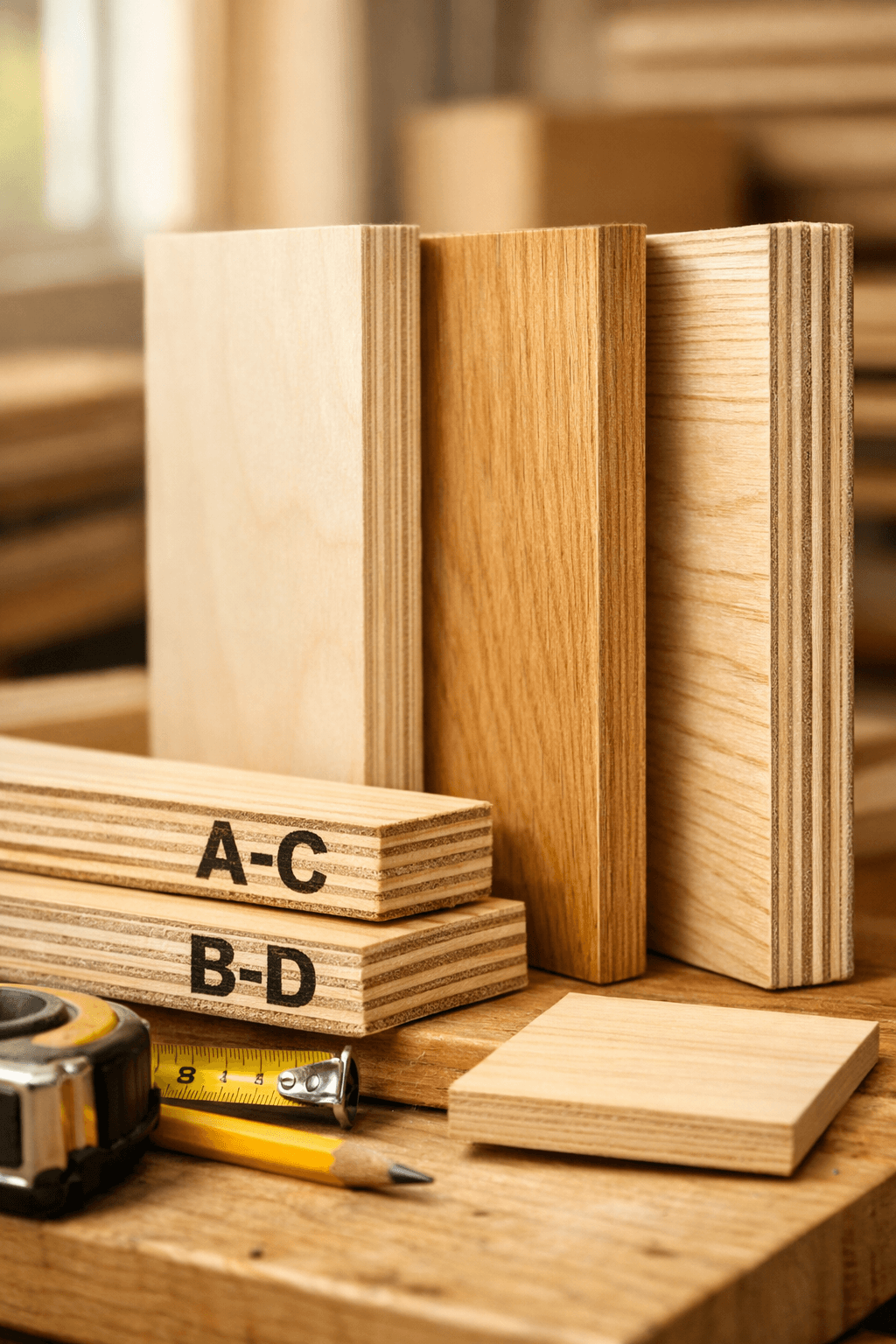
The A-D system rates the veneer quality on each face of a sheet, not the plywood’s structural strength. “A” is sanded smooth with no knots or filled patches; “D” can have open knots, splits, and rough patches up to a few inches wide.
Face Grade vs. Back Grade
Plywood is often sold as a two-letter combo, like A-C or B-D. The first letter is the good face, the second is the back. An A-C sheet gives you one show-quality side and one utility-grade side, which is exactly what you want for a cabinet side panel that has one visible face and one hidden against a wall.
Where This Trips People Up
Construction-grade softwood plywood, the stuff labeled CDX for roof and wall sheathing, uses a totally different rating system than hardwood cabinet plywood. CDX is graded for structural use with exterior glue, not for finish appearance. Don’t grab a sheet of CDX thinking it’s a budget cabinet option; it’ll take stain badly and the face veneer is rough enough that sanding won’t fix it. Save CDX for framing and subfloor, not for anything with a door on it.
Hardwood Species and Core Type Change the Price Fast
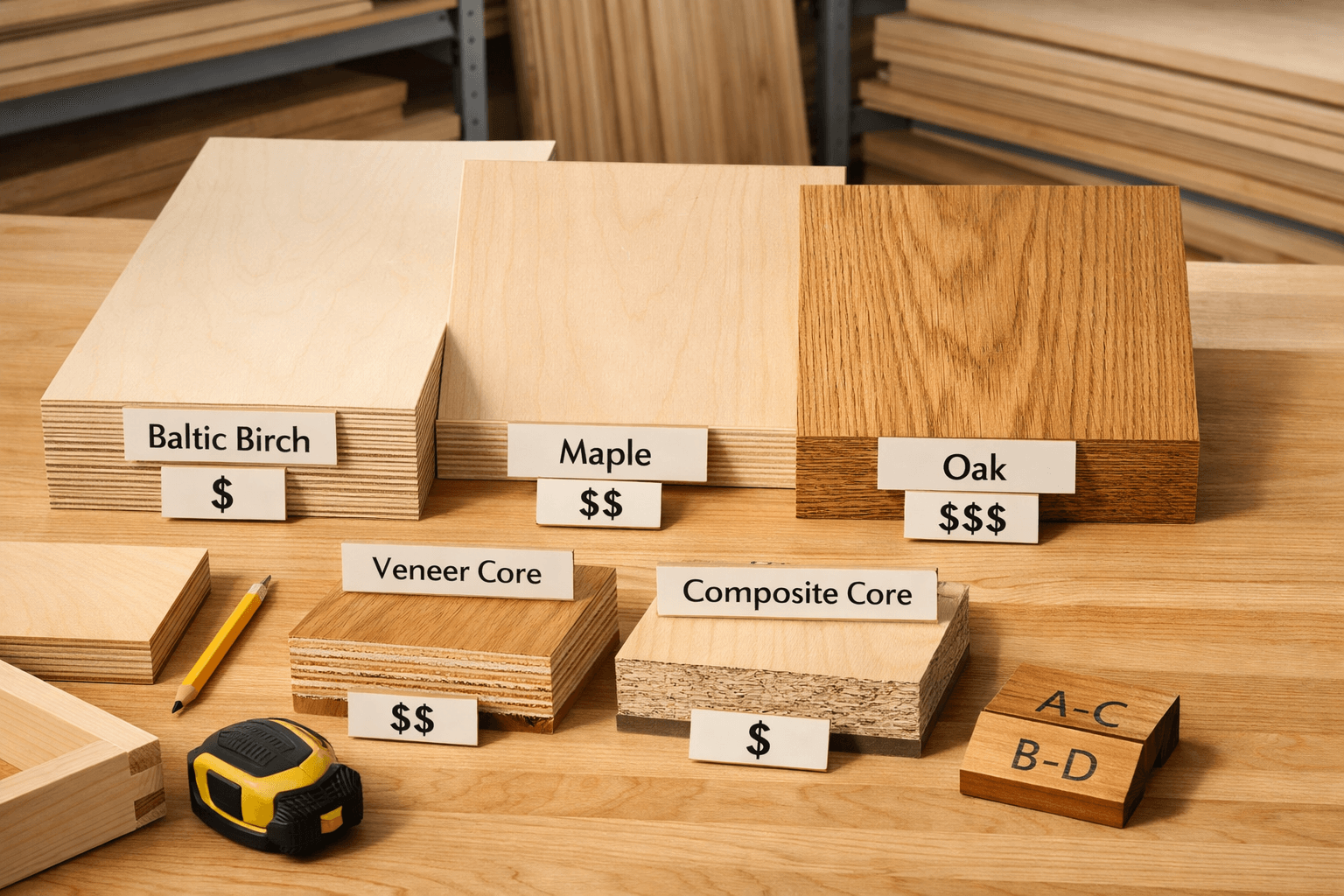
Birch, maple, and oak are the three hardwood veneers you’ll see most often for cabinet-grade sheets, and the species you pick affects both cost and how the finished piece looks once stained. Birch is the budget-friendly default and takes paint or light stain well. Maple has a tighter, more uniform grain and costs more. Oak shows a heavy, open grain that works great for rustic cabin aesthetics but eats more sanding time to fill.
Baltic Birch: The Void-Free Option
Baltic birch plywood is worth knowing about even though it’s technically a different product than standard domestic hardwood plywood. It’s made from thin birch veneers stacked with almost no voids in the core, which means the edges look clean without banding and the sheet holds screws better than typical veneer-core plywood. Expect to pay roughly $70 to $110 for a 3/4-inch, 5×5-foot sheet, more than standard birch plywood but worth it for drawer boxes that get opened and slammed a thousand times.
Plywood Core, MDF Core, or Veneer Core?
These are three different guts inside the same outer veneer. Plywood core (cross-laminated wood plies) holds screws well and resists warping, making it the strongest all-around choice for cabinet boxes. MDF core is dead flat and cheaper, which makes it popular for melamine and pre-finished panels, but it doesn’t hold screws as well and swells if it gets wet. Veneer core is a middle ground, lighter than plywood core but less stable in humid conditions, which matters more than most generic guides admit once you’re dealing with an off-grid cabin’s humidity swings between seasons.
Matching Grade to the Part: Boxes, Faces, and Doors
This is where most budgets get blown. Cabinet carcasses (the boxes) don’t need A-grade anywhere except the one face that shows when the door’s open. Doors and face frames are the opposite story; every square inch is visible, so that’s where the good veneer earns its keep.
Use B or C-grade plywood core for the back and bottom panels nobody will ever see.
Use A-C grade for side panels, with the A face oriented toward the room.
Reserve premium A-grade birch or maple for door panels and any open-shelf faces.
Pick 3/4-inch thickness for cabinet boxes, shelves, and anything load-bearing.
Drop to 1/2-inch for cabinet backs and drawer sides where weight matters more than rigidity.
Add moisture-resistant or exterior-rated plywood only where actual water exposure happens, like under a sink or in a bathroom vanity.
Finish exposed edges with iron-on veneer edge banding regardless of grade, since even A-grade face veneer shows raw plywood layers at the cut edge.
A mixed-grade approach like this, cheap grade inside, better grade outside, is honestly the smarter play for a remote cabin build where hauling premium hardwood sheets down a dirt road isn’t always practical. It also means if a local lumberyard only stocks lower grades, you’re not stuck redesigning the whole cabinet run.
Cost Comparison Across Common Grades and Options
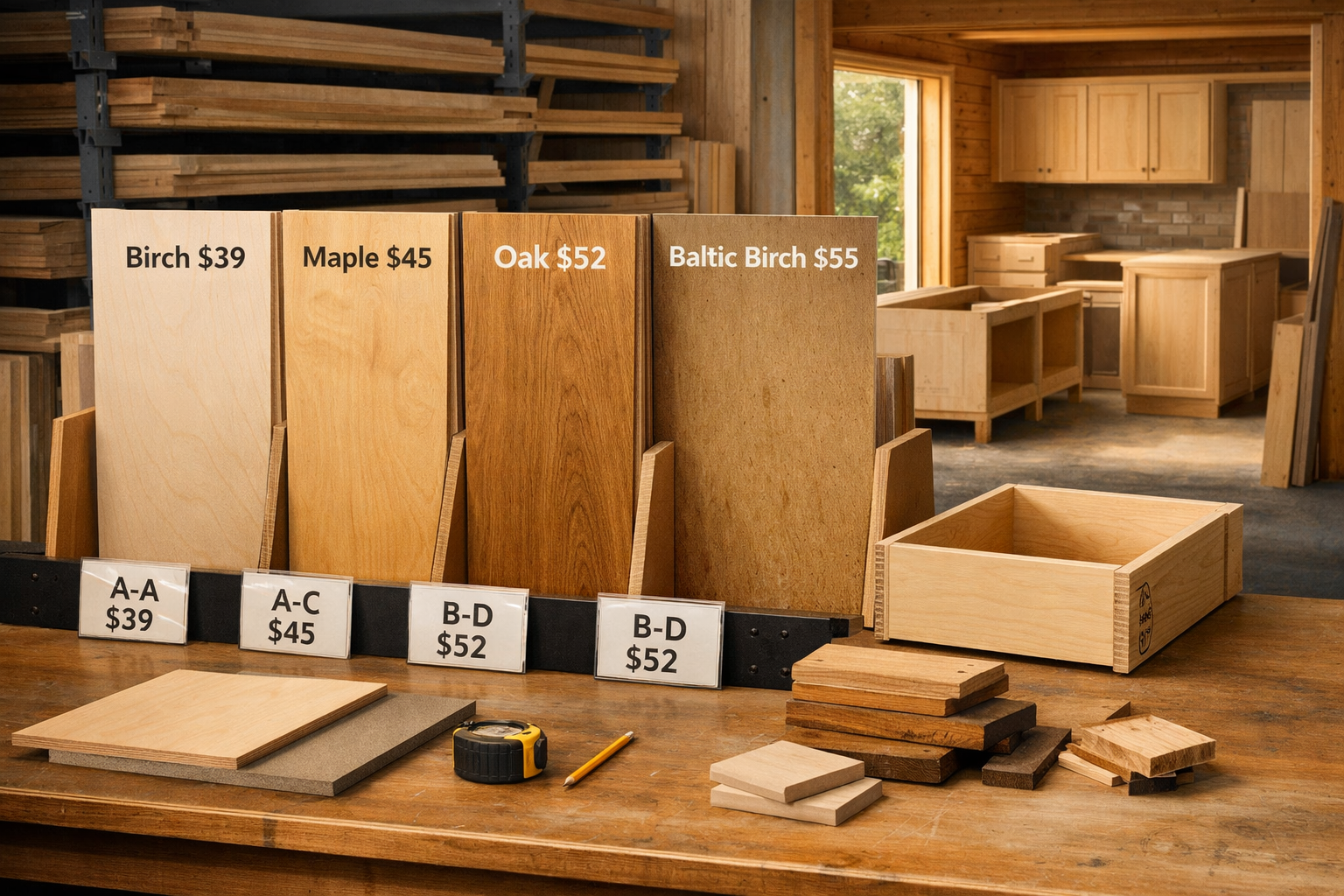
Prices shift by region and by how far you are from a real lumberyard, but the relative gap between grades stays fairly consistent. Here’s a rough breakdown for a standard 3/4-inch, 4×8-foot sheet.
Plywood Type
Typical Price (4×8, 3/4-inch)
Best Use in a Cabin Build
CDX softwood (construction grade)
$35-$55
Framing, subfloor, never cabinet faces
B-C hardwood plywood
$50-$75
Hidden box parts, shelving
A-C birch hardwood plywood
$65-$95
Visible side panels, one-face cabinets
A-A maple plywood
$90-$130
Doors, open shelving, high-visibility faces
Baltic birch (void-free)
$70-$110
Drawer boxes, small cabinet parts
Melamine/pre-finished MDF core
$55-$85
Interior shelving, no-sand finish needs
Melamine-faced sheets skip sanding and staining entirely since the surface is already finished, which saves real labor time on a cabin build where you’re already short on daylight hours. The tradeoff is you can’t repair a chipped edge the way you can sand out a ding in real veneer, and cut edges need banding or they’ll show the MDF core underneath.
Sealing and Finishing: Grade Doesn’t Mean Waterproof
No plywood grade, not even exterior-rated sheets, is waterproof on its own. Grade tells you about veneer appearance and glue type, not whether water will swell the edges after a humid week in an off-grid cabin with no climate control running while you’re away.
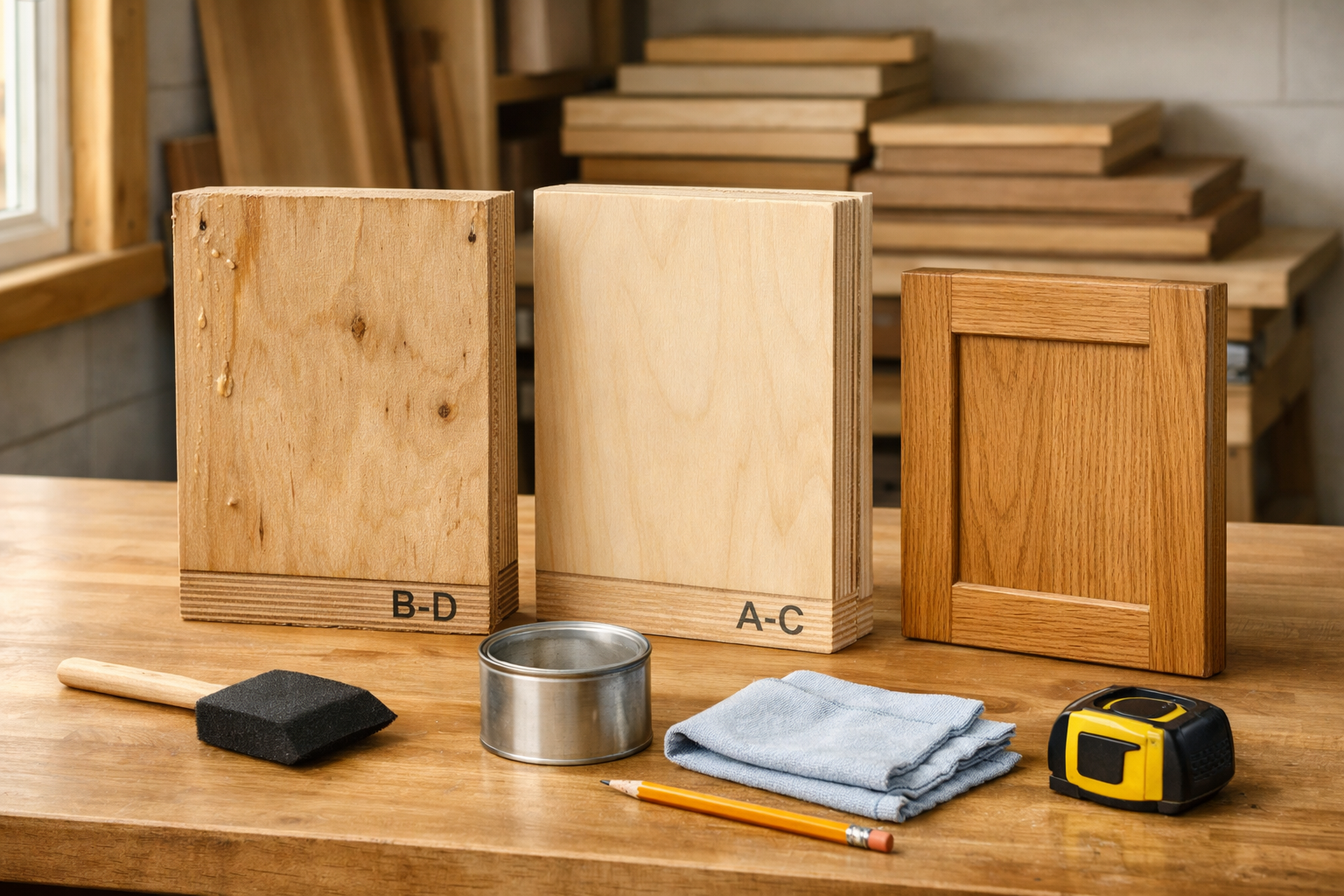
Lower grades (C and D) need more prep before finishing: filling knot holes, sanding rough patches, sometimes a full skim coat before stain will look even. A-grade sheets need light sanding and go straight to stain or clear coat. Either way, seal every cut edge with a wood conditioner or edge banding, especially on kitchen and bathroom cabinets where steam and spills happen daily.
For kitchens specifically, moisture-resistant or exterior-grade plywood under the sink cabinet is worth the upcharge, usually $10 to $20 more per sheet. It won’t stop standing water from ruining a panel over time, but it buys you real margin against the humidity swings and occasional splashes that hit every cabin kitchen sooner or later. If you’re planning out a full cabin kitchen build, it’s worth mapping the whole cabinet layout before buying any sheets at all, which is something I’ve walked through in more detail over on Cabin Lodger.
Frequently Asked Questions
Is A-grade plywood worth it for every cabinet in a cabin?
No. Save A-grade for doors, open shelving, and any visible face; use B or C-grade plywood core for hidden box parts. That mixed approach can cut material costs by 20-30% on a full cabinet run without any visible tradeoff.
Can I use construction-grade CDX plywood for cabinet boxes to save money?
You can, but you shouldn’t for anything visible. CDX uses a structural rating system, not a finish-grade system, so the face veneer is rough, inconsistent, and takes stain poorly compared to real hardwood plywood.
Does plywood need extra sealing in a humid off-grid cabin?
Yes, always. Seal every cut edge with edge banding or wood conditioner, and use moisture-resistant plywood near sinks or bathrooms, since no grade of plywood is waterproof without added protection against humidity swings.