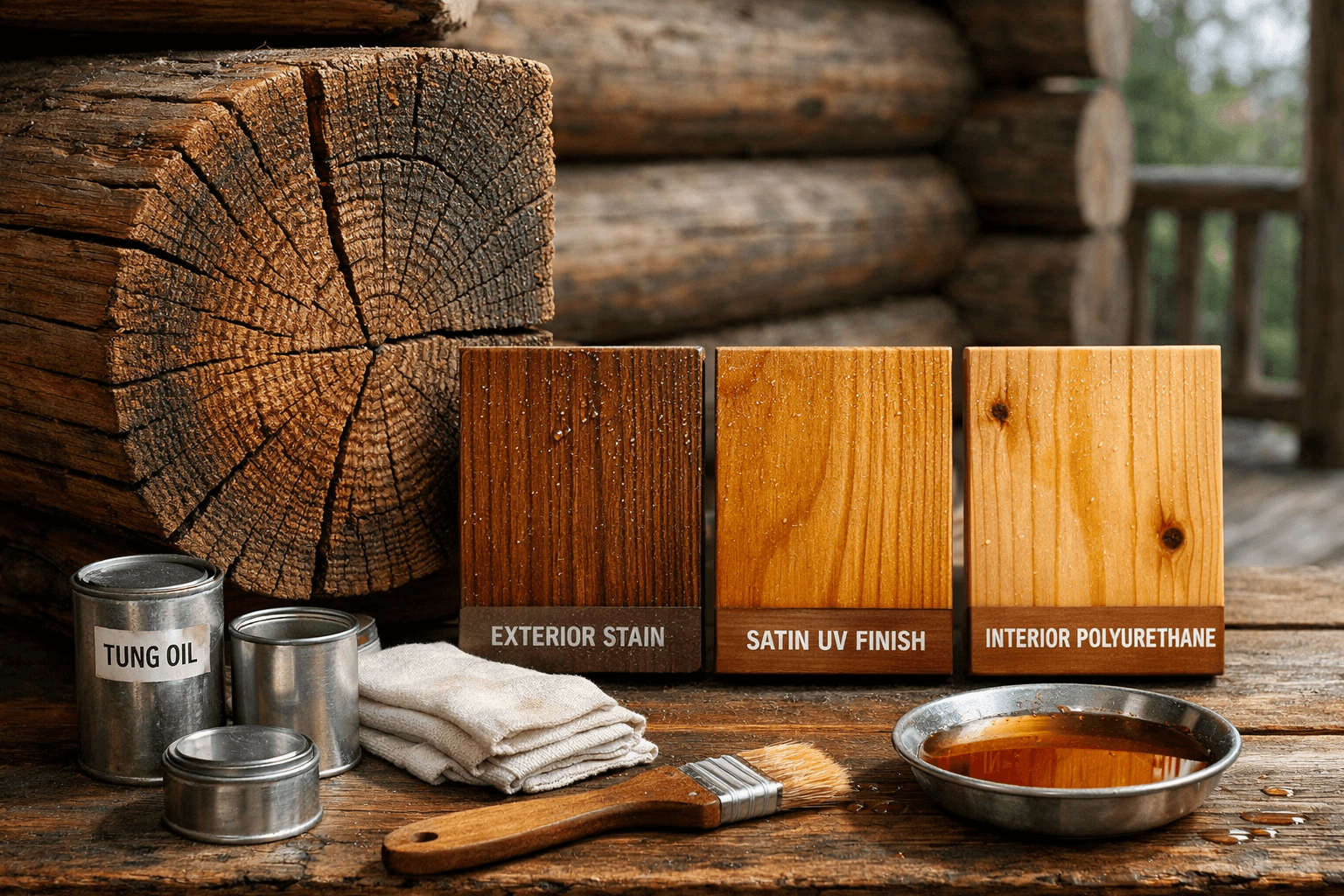
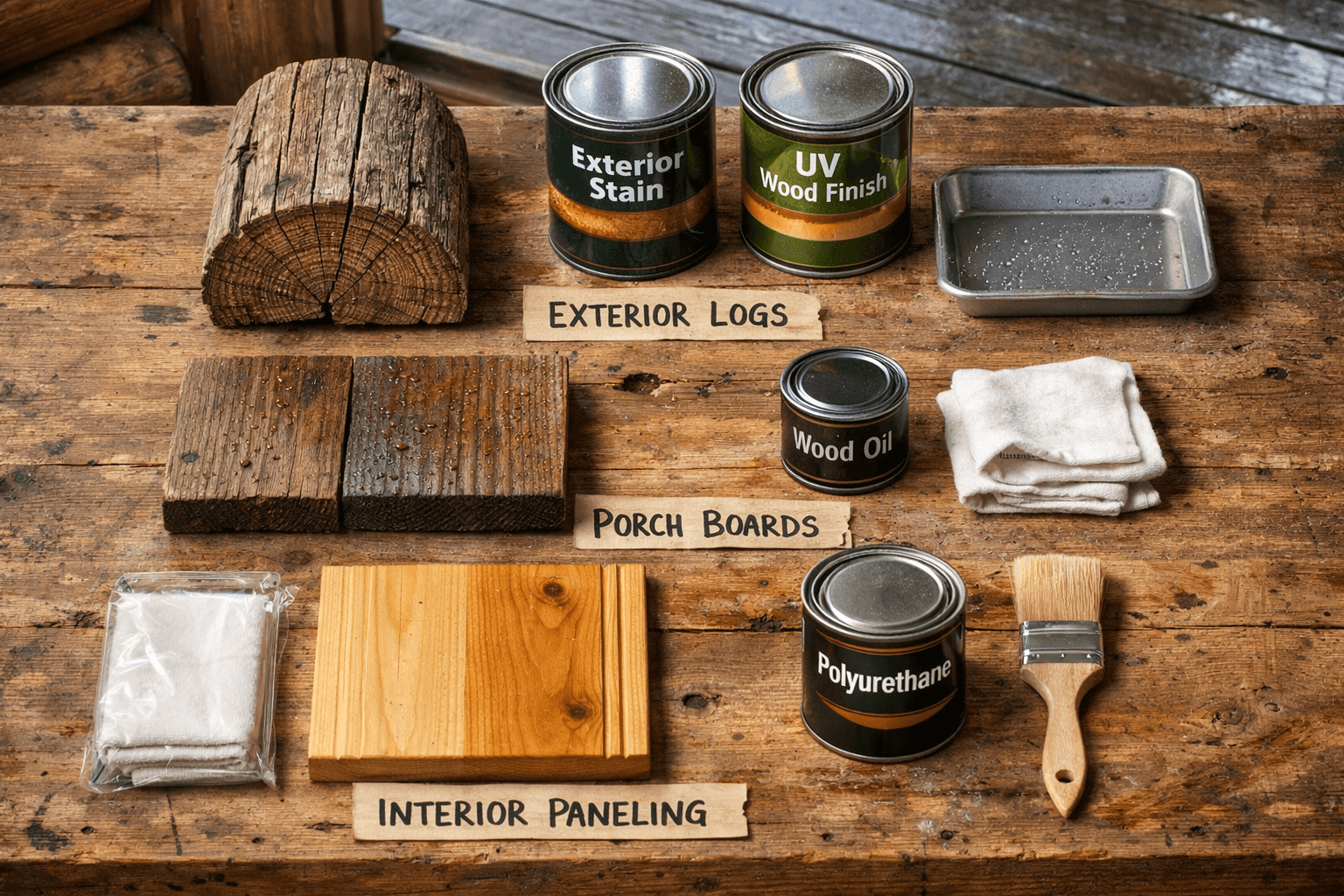
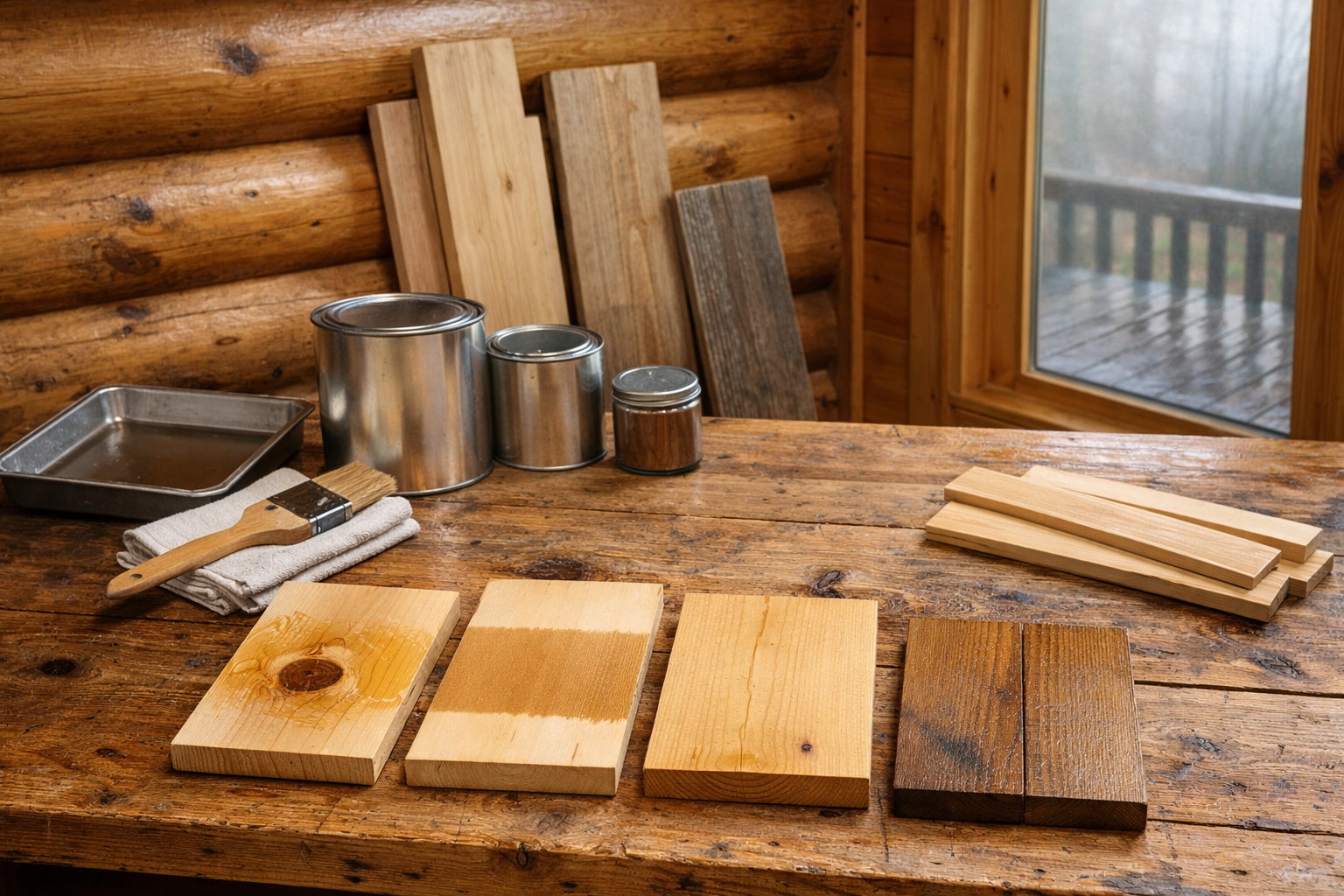
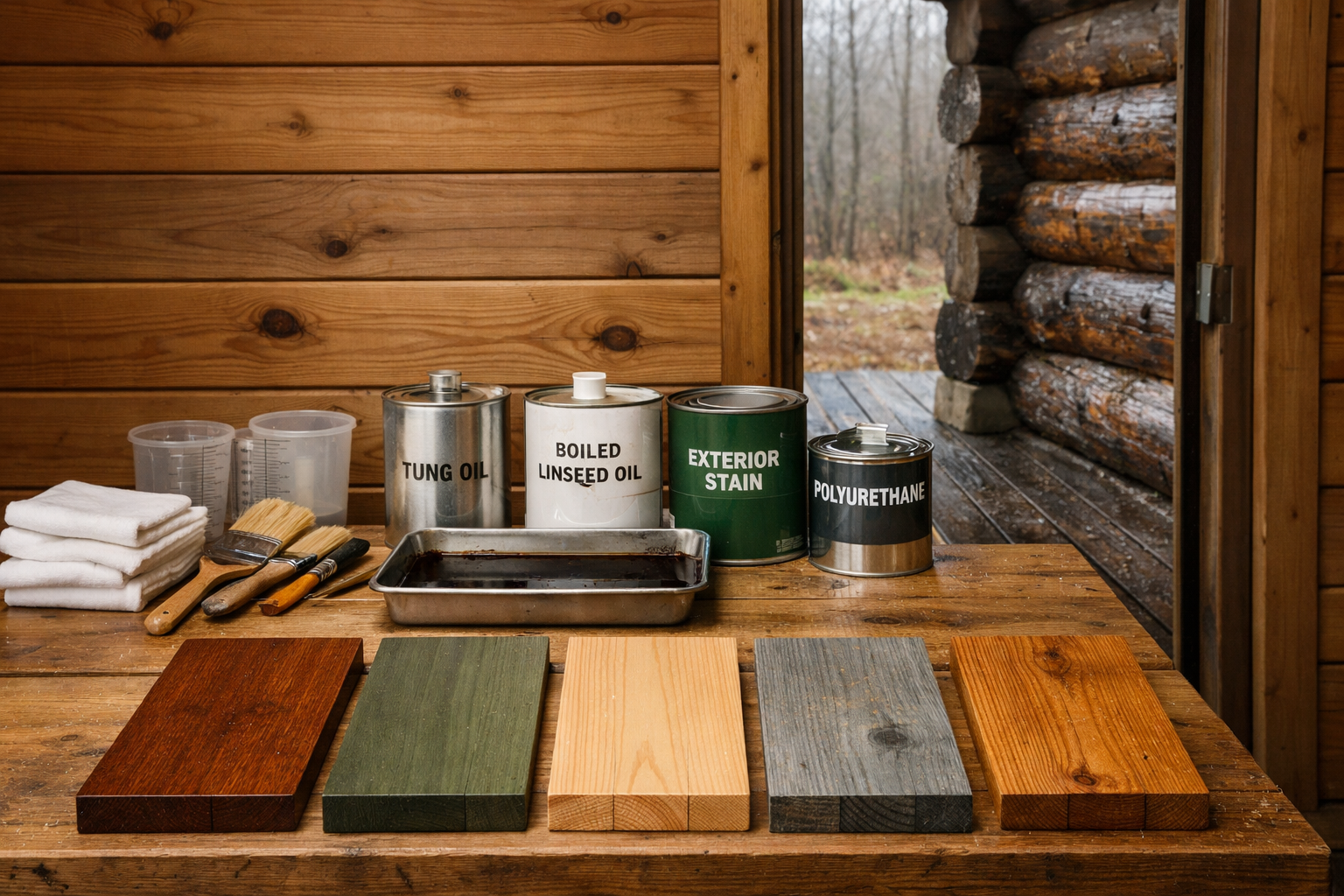
Bare wood on a cabin doesn’t last one Midwest winter before it starts checking. Pick the wrong wood finish materials and you’re not just risking a bad look — you’re inviting rot, UV graying, and log movement that pries joints apart. The right finish choice depends less on brand loyalty and more on where that wood sits: baking on a south-facing exterior wall or tucked inside where humidity swings are gentler.
That distinction drives everything in this guide. I’ve dealt with logs that cupped after one wet spring and trim that grayed out in eighteen months because nobody mentioned UV blockers. Get the finish matched to the exposure, and you’ll cut your maintenance labor by years, not just months.
Why One Finish Never Covers the Whole Cabin
Exterior logs and interior paneling live in two different worlds, and treating them the same is the single biggest mistake I see in first-time builds. Sun, rain, and freeze-thaw cycles hit your exterior walls hard; your interior trim just deals with indoor humidity and the occasional space heater drying it out.
Exterior Demands: UV, Moisture, and Movement
Exterior wood finish materials need to handle direct UV exposure, standing moisture at joints, and the constant expansion and contraction of logs as humidity swings through the seasons. A finish without UV-blocking pigment or additive will let the wood gray out in one to two summers, even if it’s technically “waterproof.” I’ve watched unprotected cedar go silver-gray in under a year on a west-facing wall.
Interior Needs: Wear Resistance Over Weatherproofing
Inside, you’re fighting foot traffic, spilled coffee, and dry winter air from a wood stove, not driving rain. A film-forming finish like polyurethane makes sense indoors because it doesn’t need to flex with weather extremes the way exterior wood does. Skip the heavy UV additives inside — they add cost without doing much, since indoor light exposure is nowhere near as brutal.
Confusing these two jobs is how people end up applying spar varnish inside (overkill, and it ambers unevenly under lamps) or slapping indoor polyurethane on exterior logs, where it cracks and peels within two seasons because it can’t move with the wood.
Matching Finish Type to Cabin Surface
Every finish material has a personality. Some soak in and flex with the wood; others sit on top and form a shell. Knowing which category you’re buying matters more than the brand on the can.
Penetrating Oils: Tung Oil and Linseed Oil
Tung oil and boiled linseed oil soak into the wood grain instead of sitting on the surface, which means they flex naturally as logs expand and contract with humidity. Pure tung oil resists moisture better than linseed oil, which can support mildew growth in damp climates if not maintained. Expect to reapply every 1-2 years on exterior surfaces, more often in coastal or high-rain regions.
Film-Forming Finishes: Spar Varnish and Polyurethane
Spar varnish was literally developed for ship spars, so it’s built to flex and resist saltwater spray and sun. It’s the better call for exterior cabin trim and doors because it stays elastic instead of cracking. Polyurethane, by contrast, is harder and more abrasion-resistant, which is why it belongs on interior floors and tabletops rather than exterior logs, where its rigidity works against log movement.
Shellac and Wood Conditioner as Prep Steps
Shellac isn’t a standalone exterior finish, it’s a fast-drying sealer useful for interior furniture or as a barrier coat before staining. Skipping wood conditioner before staining porous woods like pine is one of the most common mistakes I see — it causes blotchy, uneven color because the end grain soaks up stain faster than the face grain. A $12 can of conditioner saves you from redoing an entire wall of trim.
Reapplication Schedules: The Real Cost of Each Finish
Nobody talks enough about the labor side of finish choice, and that’s the differentiating problem for cabin builders versus furniture makers. A finish that looks great on day one but demands recoating every year will eat your weekends for a decade.
Here’s roughly how the common options stack up for an exterior cabin wall under normal four-season exposure:
Finish Type
Reapplication Interval
UV Resistance
Labor Level
Penetrating oil (tung/linseed)
12-24 months
Moderate (needs UV additive)
Low-medium, easy re-coat
Spar varnish
2-3 years
Good, if UV-inhibited formula
Medium, requires sanding
Polyurethane (exterior-rated)
1-2 years
Poor without additive
Medium, prone to peeling
Penetrating oil sealer w/ UV blocker
2-3 years
Good
Low, wipe-on reapply
If you want the lowest long-term labor on exterior logs, go with a penetrating oil sealer that has a UV-blocking additive built in. It won’t peel because there’s no film to crack, and a simple wipe-on reapplication every 2-3 years is far less work than stripping and sanding a varnish coat.
Building a Realistic Finish Plan for Your Build
Don’t buy one gallon of anything until you’ve mapped your cabin’s surfaces by exposure and function. That planning step takes twenty minutes and saves you from buying the wrong five gallons.
Walk the exterior and mark surfaces by sun exposure: full south/west sun gets the worst UV load and needs the strongest UV additive.
Check for standing water risk at joints, sills, and log ends — these need extra coats or a dedicated end-grain sealer.
Separate interior trim, floors, and furniture by traffic level; high-traffic floors get polyurethane, low-traffic shelving can use oil or shellac.
Test stain and conditioner on a scrap piece of the same wood species before committing to the whole wall.
Set a calendar reminder for reapplication based on the table above, not “whenever it looks bad.”
Budget for one full maintenance day per season on exterior logs, even with a low-labor finish.
That last step is the one people skip, and it’s the one that actually determines whether your cabin looks good in year five. I’ve put together a longer walkthrough of full exterior wood treatment steps over on cabinlodger.com if you want the sequence from bare wood to final coat.
Frequently Asked Questions
Does polyurethane stop log movement and moisture problems by itself?
No. Polyurethane forms a hard film that can crack when logs expand and contract, and it does nothing to address moisture already trapped inside the wood from poor drainage or grade issues.
Can I use the same stain and finish combo inside and outside the cabin?
Not if you want it to last. Exterior finishes need UV blockers and flexibility for log movement; interior finishes prioritize hardness and clarity, so mixing the two wastes money and shortens the lifespan of both.
How often should I really expect to redo exterior finish work?
Plan on 1-3 years depending on the product, with penetrating oils needing yearly attention in wet climates and UV-inhibited sealers stretching to 2-3 years between coats.