Got a stump staring back at you from the middle of your build site? Knowing how to pull a stump the right way starts with one honest question: how big is it? That answer decides whether you grab a shovel and a come-along or call the equipment rental yard.
Most guides skip this part. They hand you a method and send you digging, which wastes a full afternoon if the stump was never a candidate for hand-pulling in the first place.
Pick Your Method Before You Touch a Shovel: Stump Size Decides Everything
Stump diameter is the single number that drives every other decision. A pine stump at 6 inches wide pulls out in an hour with basic tools. That same job on a 14-inch oak becomes a machine rental situation, full stop.
Stump Diameter
Practical Method
Realistic Time
Under 8 inches
Hand dig + come-along winch
1–3 hours
8–12 inches
Hand dig + vehicle chain (if roots are shallow)
2–5 hours
12–24 inches
Stump grinder or excavator rental
Half to full day
Over 24 inches
Excavator or professional removal
Full day or more
Species matters too. A tap root system (common in oaks) goes straight down and fights you hard. Shallow lateral root systems, typical in pines and most softwoods, give up much easier.
What You Need to Pull a Stump: Tools and Equipment by Method
The tool list changes based on your method, so don’t buy or rent everything at once. Figure out which approach fits your stump size first, then grab what you actually need.
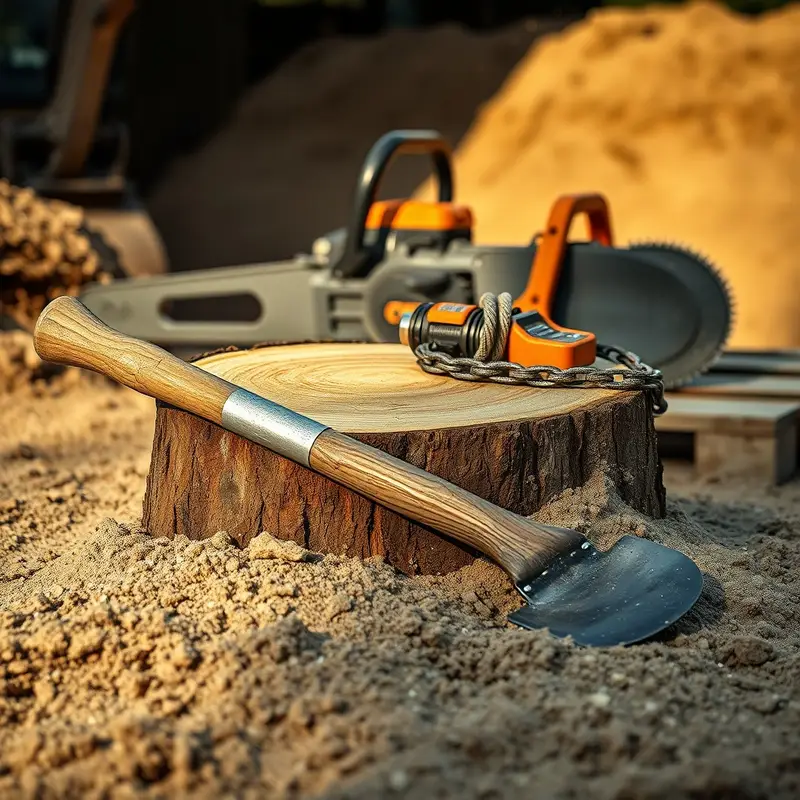
Digging bar and spade shovel. A 6-foot digging bar (also called a breaker bar) breaks compacted soil around the root ball far faster than a shovel alone.
Loppers or a hand saw for small surface roots under an inch thick.
A reciprocating saw with a demolition blade, or a chainsaw, for lateral roots 1–3 inches in diameter.
A come-along winch (also called a hand winch) rated at 2 tons minimum. A 1-ton model will fail on anything but the smallest stumps.
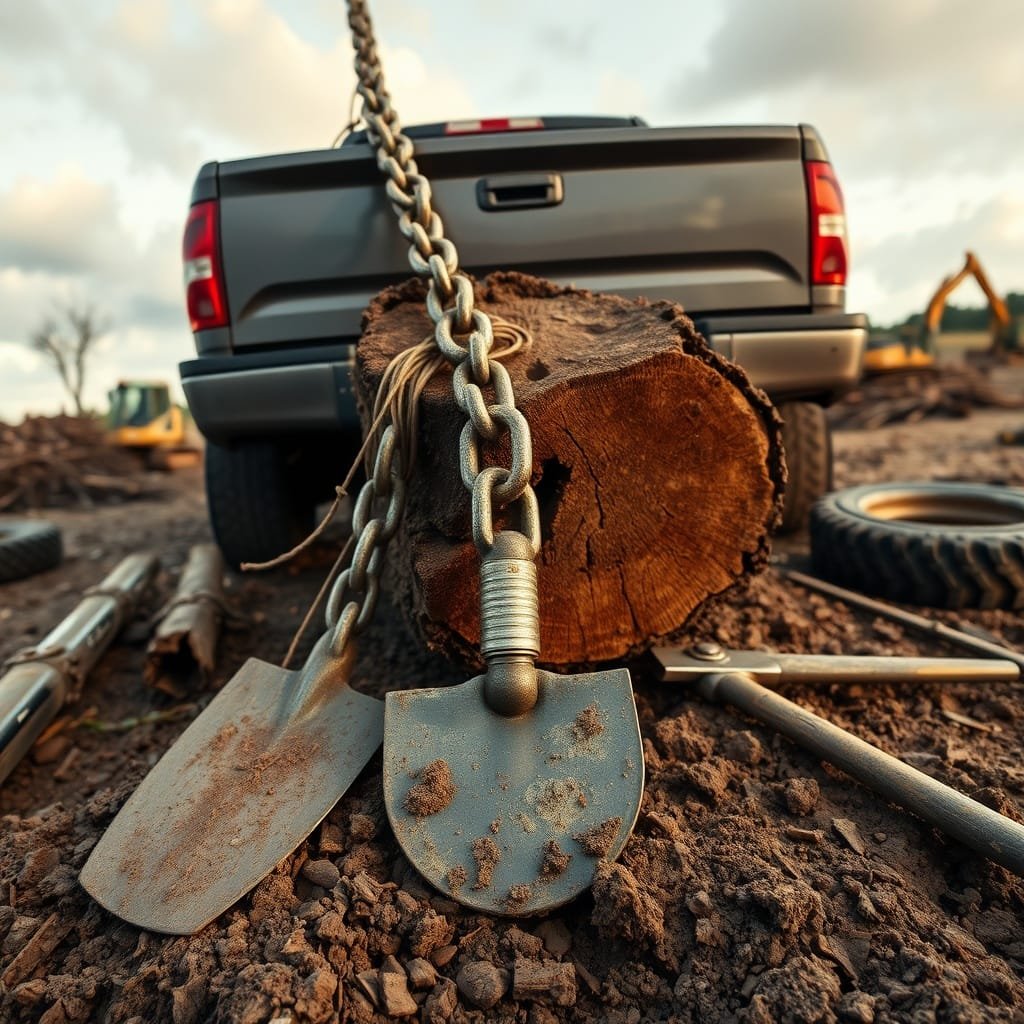
Heavy-duty tow chain, at least 3/8-inch grade 70, if you’re using a vehicle.
Stump grinder (rental) for stumps 12 inches and wider that you’re leaving in the ground.
Excavator or skid steer (rental) for full root ball extraction on a build site.
A decent come-along runs around $40–$70 at any hardware store. The chain is another $25–$50. Renting a stump grinder for a day typically costs $150–$200 depending on your area.
How to Pull a Stump by Hand (Works Up to About 8–10 Inches Wide)
Hand-pulling works, but only when the stump is small and the roots are shallow. Go in expecting to spend 2–3 hours on an average 6–8 inch stump in normal soil. Clay soil or a deep tap root will push that longer.
Step 1: Dig Out and Expose the Root System
Start 12–18 inches out from the base of the stump and dig a trench all the way around it. You’re not digging straight down. Angle your shovel toward the root ball to expose where the lateral roots branch off. Getting the roots fully exposed before you cut anything is what separates a clean pull from a stuck chain and a wasted hour. Aim to go at least 18 inches deep on a stump with a 6–8 inch diameter.
Step 2: Cut the Lateral Roots
Once you can see the roots, cut them. Use loppers for anything under an inch. Pull out the reciprocating saw for anything thicker. Work your way around the stump and sever every lateral root you can reach. This step is where most DIYers fail. They skip it, hook up the chain, and wonder why nothing moves. The roots are what anchor the stump, not the trunk.
Step 3: Use a Come-Along Winch to Pull It Free
Attach your come-along to the stump as low as possible, ideally below the soil line if you can manage it. Anchor the other end to a solid tree at least 12 inches in diameter, not a fence post or vehicle bumper. Crank the winch slowly and let it work. If it stalls out completely, you’ve got a root you missed. Go back and find it. Once the lateral roots are fully cut, most stumps under 10 inches will tip and lift free with steady tension.
Pulling a Stump With a Truck, Tractor, or Chain
The vehicle method works fast when it works, but it goes wrong just as fast when you skip the rigging basics. A pickup truck or garden tractor can generate enough pull to yank a well-prepped stump clean out of the ground. The word “prepped” is doing a lot of work in that sentence.
Cut the lateral roots first. This applies just as much here as it does with the come-along. Hooking a chain to an unprepped stump and flooring it is how people bend trailer hitches and snap chains. Do the digging. Do the cutting. Then bring in the vehicle.
Rigging It Right So Nothing Snaps Back
Use Grade 70 transport chain, minimum 3/8-inch thickness, rated for at least 4,700 lbs working load. Wrap the chain around the base of the stump as low as possible (not around a surface root, not halfway up the trunk). Loop it, hook it back on itself, and connect the other end to the vehicle’s receiver hitch or a proper tow hitch shackle. Never use a ball hitch alone. A ball can pop free under load and become a projectile.
Keep everyone out of the pull zone. That means at least 30 feet to either side and behind the vehicle. A snapping chain carries serious energy. Drive forward slowly with steady acceleration rather than a hard launch. Jerking the chain is how you damage the drivetrain and still fail to pull the stump.
When the Vehicle Method Fails (and What to Do Instead)
If the truck pulls tight and the stump doesn’t move after two or three attempts, stop. You either missed a root or the root ball is deeper than expected. Go back with the reciprocating saw and probe around the base. On stumps over 12 inches wide, the vehicle method rarely finishes the job alone. It gets the stump rocking, but you’ll need a digging bar to lever it the rest of the way out. At that point, you’re better off renting an excavator and doing it cleanly in one pass.
Renting a Stump Grinder vs. Renting an Excavator: Which Makes More Sense
The answer depends on what you need the ground to do afterward. Grinding leaves the root ball in place. Extraction removes it entirely. For a cabin build site where you’re pouring a pad or laying a foundation, extraction wins every time.
Stump Grinder: Best for Stumps You’re Leaving in Place
A stump grinder uses a spinning carbide-tipped wheel to chew the stump down 6–12 inches below grade. It does not remove the roots. What’s left decomposes over a few years, which is fine for a lawn or garden bed but not for any area where you’re building on top.
Rental cost runs roughly $150–$200 per day for a self-propelled walk-behind unit. Larger rear-engine models cost more, around $250–$300 per day, but handle stumps over 18 inches much faster. The machine is physically demanding to operate — the grinding wheel kicks back against hard wood, so expect to work it in short passes. Wear eye protection and hearing protection. The debris it throws is not subtle.
Grinding makes sense when you have multiple stumps in a yard you’re landscaping, not clearing for construction. Three or four stumps in an afternoon is realistic with a rental grinder.
Excavator or Skid Steer: Best for Full Extraction on a Build Site
A mini excavator (a compact unit in the 1.5–3 ton class) can pop a 20-inch stump out of the ground in under 10 minutes once the operator gets the bucket positioned under the root ball. Rental runs around $300–$450 per day depending on machine size and your region. If you’re clearing multiple stumps on a cabin site, a full day rental gets a lot done.
The real advantage is what you’re left with: a clean hole, a root ball you can haul off, and ground you can actually build on. A skid steer with a root rake attachment works well for cleaning up after the stumps are out, pulling smaller roots and debris into a pile for burning or hauling.
Chemical Stump Removal Is Slow — Here’s When It’s Worth Considering
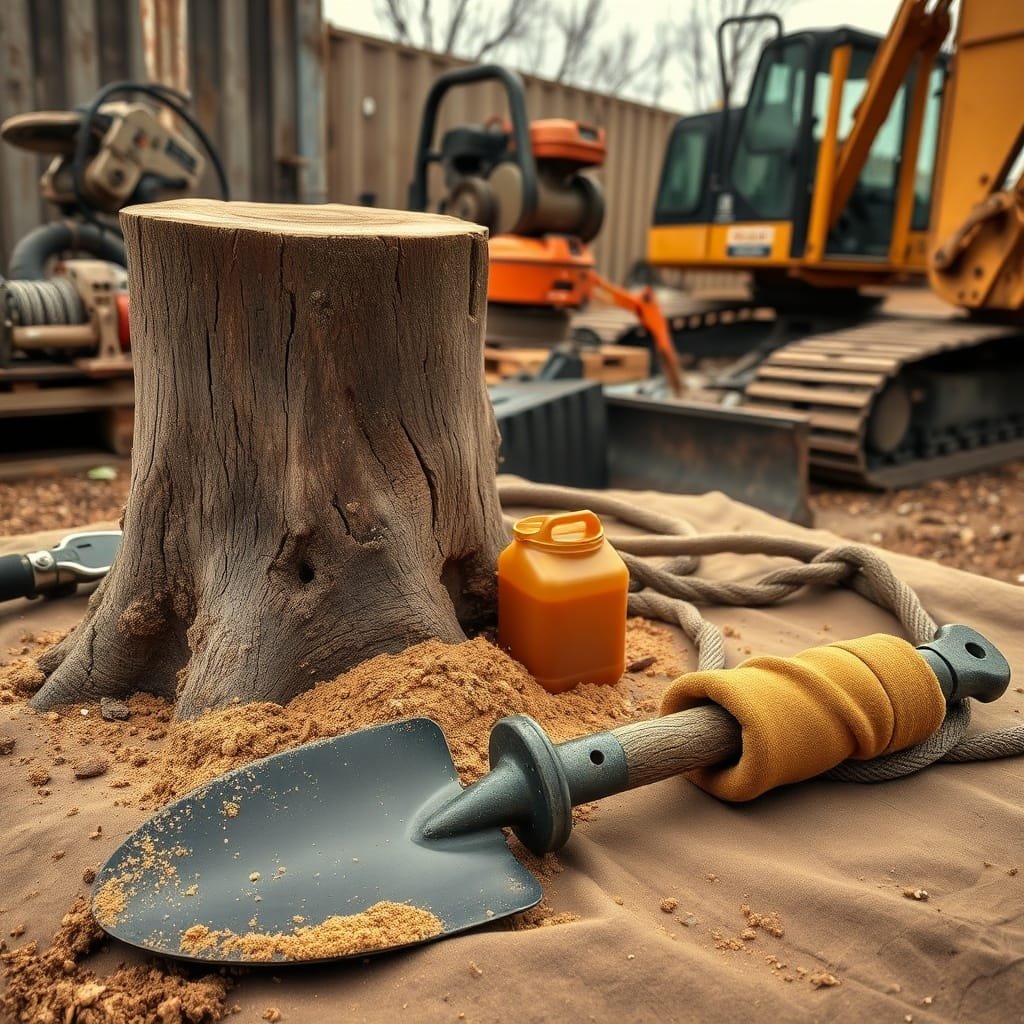
Chemical stump removal is not a removal method. It’s a decomposition accelerator. Most products use potassium nitrate to speed up the rotting process. You drill holes in the stump, pack in the granules, and wait. Realistically, expect 4–6 weeks before the wood softens enough to break apart, and full decomposition takes several months, sometimes longer for dense hardwoods like oak or hickory.
That timeline rules it out for any active build project. Where it makes sense is a stump in a corner of the yard that’s not in the way but is too awkward to grind, say, tight against a fence line where a grinder can’t maneuver. Potassium nitrate products like Spectracide Stump Remover are inexpensive (around $8–$12 a bottle) and require almost no physical effort.
One real drawback: you still have to physically break up and remove the softened wood when it’s done. The chemical doesn’t make the stump disappear. It just makes the final cleanup easier.
Safety and Utility Lines: The Step Most DIYers Skip
Call 811 before you dig. That’s the national call-before-you-dig number in the US, and it’s free. A utility locator will come out and flag underground lines within a few business days. Skipping this step and hitting a gas or electrical line while digging around a stump is not a recoverable mistake.
Call 811 at least two business days before you plan to start digging.
Wait for the locator to flag your yard. Do not start early.
Note the flag colors: red is electric, yellow is gas, orange is communications, blue is water.
Dig by hand within 18 inches of any flag. No power tools, no machine buckets.
If a stump sits directly over a flagged line, stop and call a professional before going further.
Roots from large trees often grow toward water and sewer lines, which means the stump you’re pulling may be physically tangled with a pipe you can’t see. This is especially common with older oak or willow trees near a house. If you’re clearing land for a cabin build, check the site plan for any buried service lines run during earlier construction too.
What to Do With the Stump After You Pull It Out
You’ve got a root ball sitting on the ground. Now what? Your three real options are burning, hauling, or chipping, and the right one depends on your local rules and what you have on hand.
Burning is the most practical option on a rural cabin site where open burning is allowed. A dry stump burns well, but a freshly pulled one won’t. Give it a few weeks of drying time first, or the fire will smolder and go out. Check your county’s burn permit rules before you light anything.
Hauling means renting a dump trailer or calling a green waste disposal service. Expect to pay roughly $50–$100 per load depending on your region. It’s the fastest option if you need the site clean immediately, and it’s the only option in areas where burning is restricted.
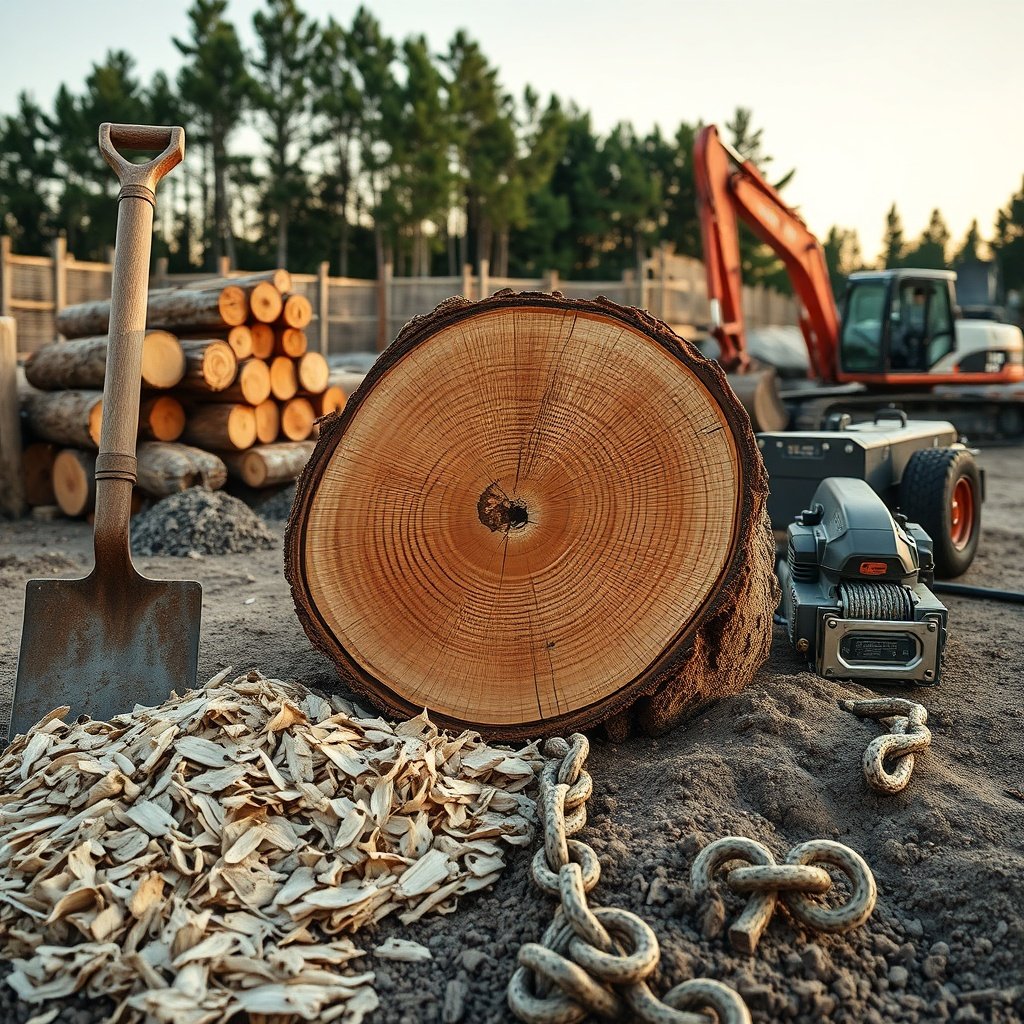
Chipping is worth considering if you pulled several stumps and have access to a wood chipper rental (around $150–$200 per day). The resulting wood chip mulch is useful around garden beds. Just don’t pile it directly against a foundation or structure. Fresh wood chips trap moisture.
The hole left behind needs to be filled with clean fill dirt and tamped down. Roots left in the soil will rot and cause the ground to settle unevenly over the next few years, which matters a lot if you’re building on that spot.
Frequently Asked Questions
How long does it take to pull a stump by hand?
For a stump under 8 inches wide with a shallow root system, expect 2–4 hours of work including digging, root cutting, and pulling. Larger stumps or those with deep taproots can stretch that to a full day, and at that point a rental machine is the faster choice.
Can I pull a stump without cutting the roots first?
No. Cutting the lateral roots is what makes the stump move. Without it, a come-along or vehicle chain just pulls against the entire root system — the stump won’t budge and you risk snapping equipment or damaging your hitch.
What’s the cheapest way to remove a stump?
Manual removal with a come-along winch is the lowest-cost method. A decent come-along runs $40–$80 at a hardware store, and you likely already own a shovel and a reciprocating saw. The trade-off is time and physical effort, and it only works on smaller stumps.
Will the hole left by a pulled stump cause problems?
It can, especially on a build site. The void left by the root ball will settle as remaining organic material decomposes. Fill it with compacted clean dirt or crushed gravel, not the loose organic soil you dug out. For cabin foundation areas, have the fill properly tamped before you build over it.