Maple wood has a reputation as the gold standard for hardwood floors, and in a climate-controlled house, that reputation is earned. But cabins aren’t houses. If your build has no HVAC and the humidity swings 20-30% between seasons, maple wood can turn from a showpiece into a headache full of gaps, cupping, and cracked finish.
That’s the honest answer a lot of flooring guides skip. Maple is gorgeous, it’s hard, and it takes stain evenly when it wants to. Whether it belongs in your cabin depends less on looks and more on how much climate control you’re willing to run.
Hard Maple vs Soft Maple: Know the Difference Before You Buy
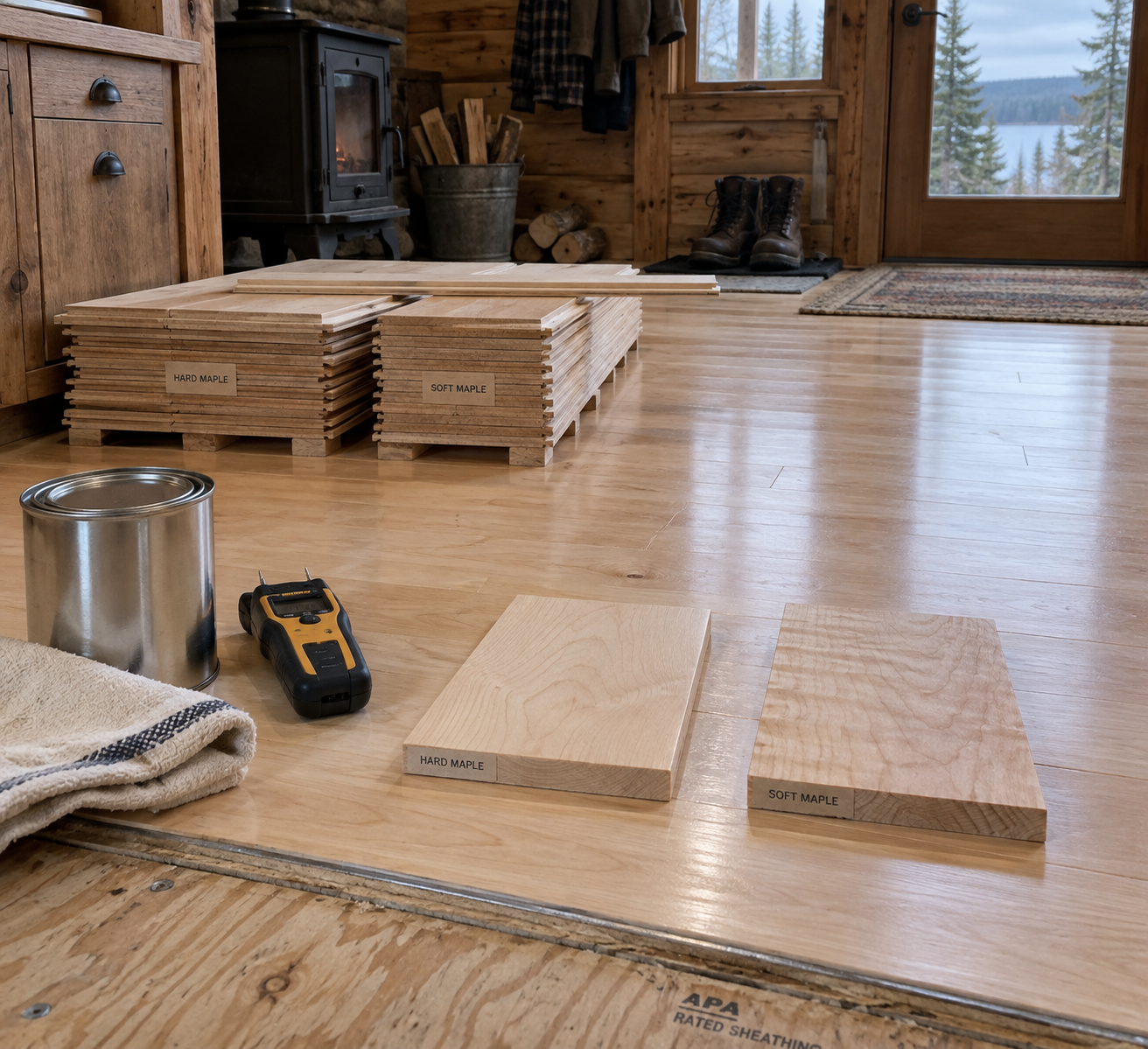
Hard maple (also called sugar maple) and soft maple (red or silver maple) get sold side by side at lumber yards, and a lot of first-time buyers assume they’re interchangeable. They’re not. Hard maple scores 1,450 on the Janka hardness scale, while soft maple runs closer to 950. That’s a real difference in dent resistance, especially for a cabin floor that’s going to take boots, dropped firewood, and dragged furniture.
Why the Mix-Up Happens
Both species get labeled “maple” at the mill, and the grain looks similar enough that an untrained eye won’t catch it. Ask specifically for hard maple flooring or hard maple boards for trim, and get it in writing on the invoice if you’re ordering online.
What Soft Maple Is Actually Good For
Soft maple still works fine for cabinetry doors, shelving, or interior trim where hardness matters less than workability. It cuts easier with hand tools, which matters if you’re running a cabin build off a generator and a circular saw instead of a full shop setup.
Will Maple Floors Hold Up in a Cabin With No Climate Control?
Not reliably, and that’s the part most flooring articles won’t tell you straight. Maple has a tight, closed grain that looks clean but also means it moves more with humidity swings than open-grained woods like oak. In a cabin that gets hot and dry in summer and cold and damp in winter, that movement shows up as gaps in January and buckling in July.
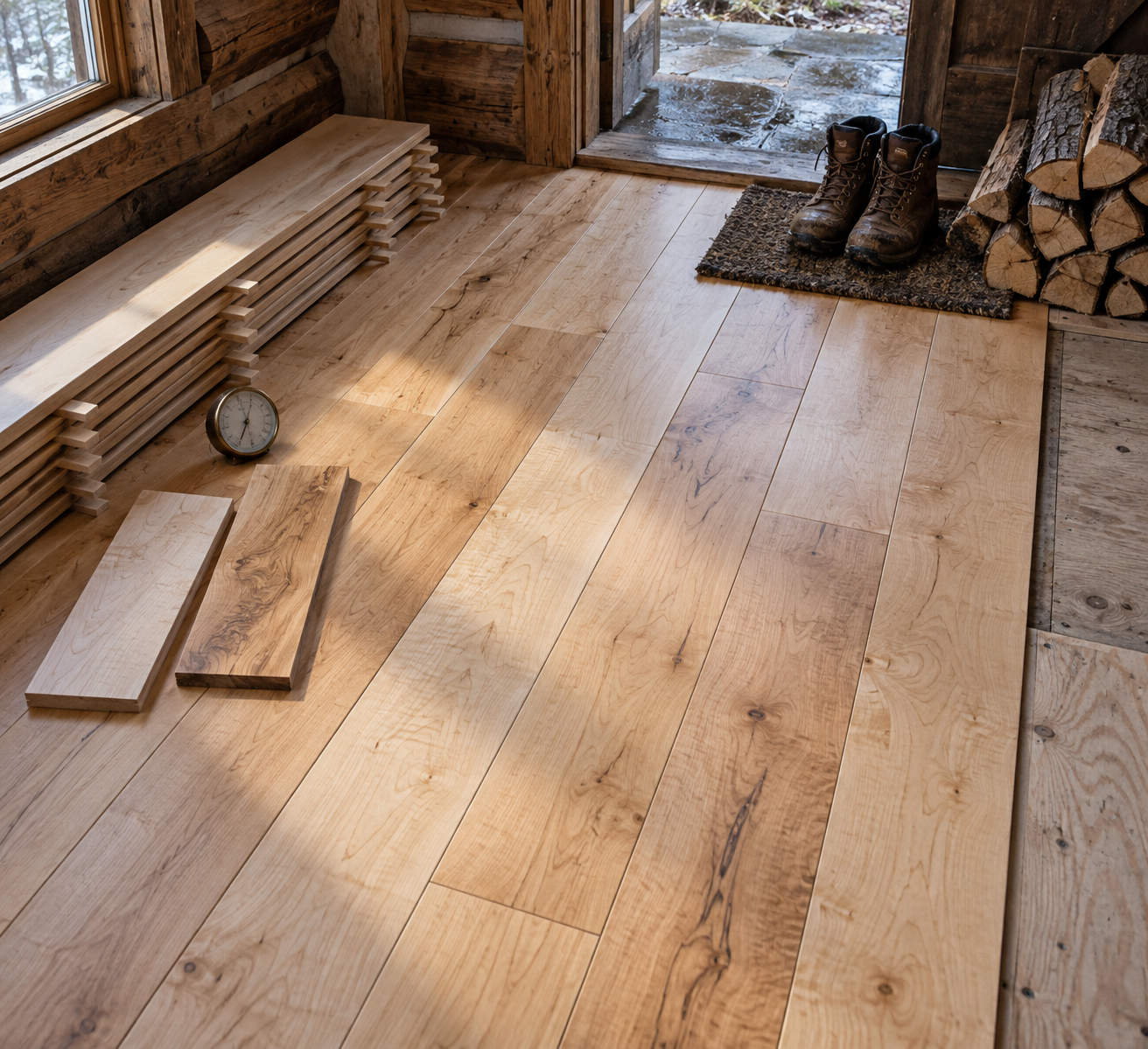
The fix isn’t skipping maple entirely, it’s respecting the acclimation process. Before installation, the flooring needs to sit inside the cabin, stacked with spacers, for at least 5-7 days, ideally two weeks if your cabin swings hard between seasons. Skip this step and you’re gambling with gaps that show up six months later.
Subfloor Matters More Than the Species
A plywood subfloor with proper venting underneath handles moisture better than OSB, and if your cabin sits on piers rather than a slab, you’ve got airflow working in your favor already. Cabins on skids or a floating foundation without underfloor insulation are the riskiest setup for any solid hardwood floor, maple included.
When Pine or Engineered Flooring Is the Smarter Call
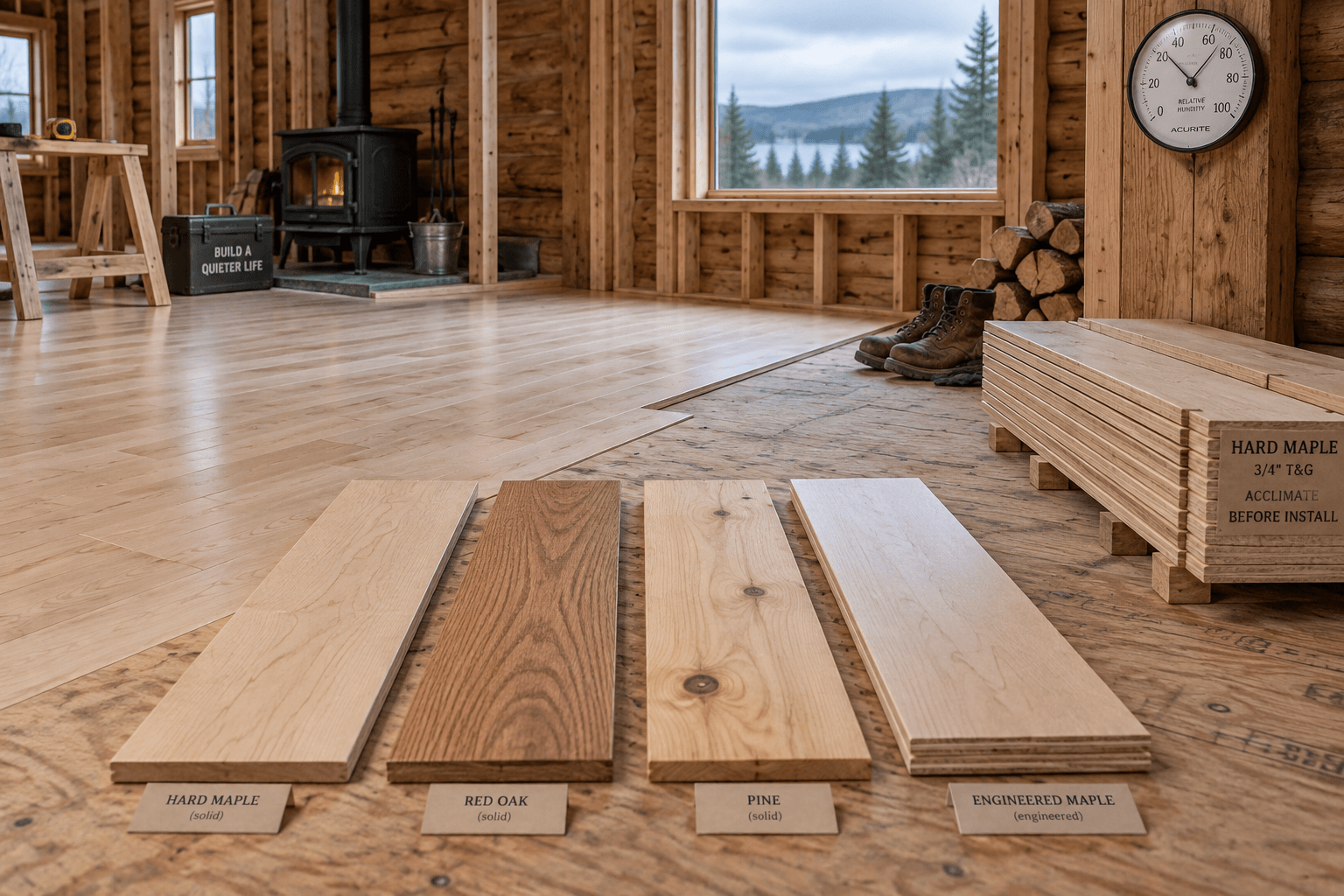
If your cabin has no plans for a mini-split, wood stove with a hygrometer, or any humidity control, I’d steer you toward site-finished pine or an engineered maple-veneer product instead. Pine is more forgiving of movement, costs less, and a few gaps or dents just read as cabin character. Engineered flooring uses a maple veneer over a plywood core that resists humidity swings a lot better than solid boards, giving you the look without the risk.
Maple Cabinetry and Trim: Where It Shines
Maple earns its reputation back once you move it off the floor and onto cabinets, countertops, and trim. Kitchen cabinet boxes and doors made from hard maple hold their shape well because they’re smaller pieces, glued and screwed into a frame that resists the kind of wide seasonal movement a 20-foot floor run can’t avoid.
The pale, almost creamy color of maple wood also takes stain and clear coats evenly, which matters if you’re trying to match trim to store-bought cabinet doors or a specific look from a house plan. Unlike oak, maple doesn’t have big open pores that swallow stain unevenly, so you get a smoother, more consistent finish with less sanding between coats.
One thing worth planning around: maple is genuinely harder to cut and shape by hand than pine. Router bits dull faster, table saw blades need to be sharp and fed slowly, and hand-planing figured maple (the wavy or curly grain pattern some boards have) can tear out badly if you go against the grain. Budget more time for cabinetry work than you would with pine.
Maple vs Oak vs Pine vs Engineered: Picking the Right Wood for Your Build
Every wood option trades off hardness, cost, and humidity tolerance differently, and there’s no single “best” answer for a cabin.
Wood
Janka Hardness
Approx. Cost (installed)
Humidity Tolerance
Best Use in a Cabin
Hard maple
1,450
$8-$14/sq ft
Low-moderate
Cabinetry, trim, climate-controlled floors
Red oak
1,290
$7-$12/sq ft
Moderate-good
Floors in cabins with some seasonal humidity
Pine
380-870
$3-$6/sq ft
Good (forgiving of movement)
Floors and trim, no HVAC
Engineered maple
N/A (veneer over plywood)
$5-$9/sq ft
Good
Floors where you want the maple look without solid-wood risk
For most off-grid cabins without ductwork, I’d rank pine first for floors, engineered maple second if you want the look, and reserve solid hard maple for cabinetry and trim where movement is easier to manage.
Sealing, Maintenance, and Sourcing Maple Wood
Maple needs sealing, and skipping it is one of the more common mistakes I see in DIY builds. A lot of first-timers assume a dense hardwood like maple can go bare, but cabins face bigger moisture swings than a typical house, from steam off a wood stove kettle to condensation near an uninsulated wall.
Sand the surface to 120-150 grit before any finish goes on.
Apply a penetrating oil-based sealer or a water-based polyurethane rated for floors.
Let each coat cure fully (usually 24-48 hours) before the next.
Apply 2-3 coats minimum for floors, 3 coats for cabinetry that will see moisture.
Recoat every 3-5 years depending on foot traffic and cabin humidity swings.
Check edges near exterior doors and stove areas yearly for finish wear.
For sourcing, buy from a hardwood supplier that grades and kiln-dries lumber rather than a big-box store’s limited softwood selection; ask if the maple is FSC-certified if sustainability matters to you, since sugar maple stands take decades to mature. If you want a deeper walk-through of sealing schedules and which finishes hold up best against wood stove condensation, cabinlodger.com has more detail on wood treatment for off-grid builds. Maintenance mostly comes down to keeping humidity swings smaller, not chasing a perfect finish.
Frequently Asked Questions
Is maple wood good for a cabin floor with no air conditioning?
It can work, but it’s riskier than pine or engineered flooring. Solid hard maple needs acclimation of 5-7 days minimum and stable subfloor ventilation; without those, expect gaps or cupping within a year.
How much does maple flooring cost compared to pine?
Hard maple runs roughly $8-$14 per square foot installed, versus $3-$6 for pine. That gap often makes pine the more practical choice for a first cabin build on a budget.
Does maple need to be sealed differently than oak?
Yes, somewhat. Maple’s tight grain seals more evenly but shows lap marks more easily, so apply finish in thin, consistent coats and avoid overlapping strokes on a bare board.