Your basement smells like a wet towel that never dries. That musty smell isn’t just annoying — it’s a sign that relative humidity in your cabin’s basement is probably sitting above 60%, which is exactly where mold, mildew, and wood rot start doing real damage. A basement dehumidifier can fix that, but only if you pick the right one for a space that might sit unheated all winter and run on solar power instead of a wall outlet.
Most buying guides treat this like picking a toaster: check the square footage, grab a unit, done. Cabin basements don’t work that way. They’re often seasonal, off-grid, and cold enough in January to freeze a cheap compressor solid.
How Many Pints Do You Actually Need?
Sizing by square footage alone is the most common mistake, and it’s the wrong starting point. What matters more is how damp the space already is — a basement with standing water or visible mold needs a bigger unit than one that just feels a little clammy, even if they’re the same size.
Reading the Dampness, Not Just the Room
Manufacturers rate capacity in pints removed per 24 hours, usually 30, 50, or 70 pints for residential units. A “moderately damp” 1,000-square-foot basement (musty smell, slight condensation on pipes) typically calls for a 30-pint unit. A “wet” basement with visible water stains or standing puddles after rain needs 50 pints or more, and if you can see mold colonies or the floor stays damp for days, go with 70 pints.
The Square-Footage Trap
Here’s the problem with charts that just list square footage: they assume average dampness. A 600-square-foot cabin basement with a dirt floor and no vapor barrier can out-humidify a 1,500-square-foot poured-concrete basement with a sump pump. Match capacity to what’s actually happening on the floor and walls, not the number on your house plans.
Dampness Level
Signs
Recommended Capacity
Moderately damp
Musty smell, slight condensation
30 pints/day
Very damp
Water stains, damp spots after rain
50 pints/day
Wet / standing water
Visible mold, puddles, soaked framing
70 pints/day
Cold Basements Break Compressors — Here’s What Actually Works
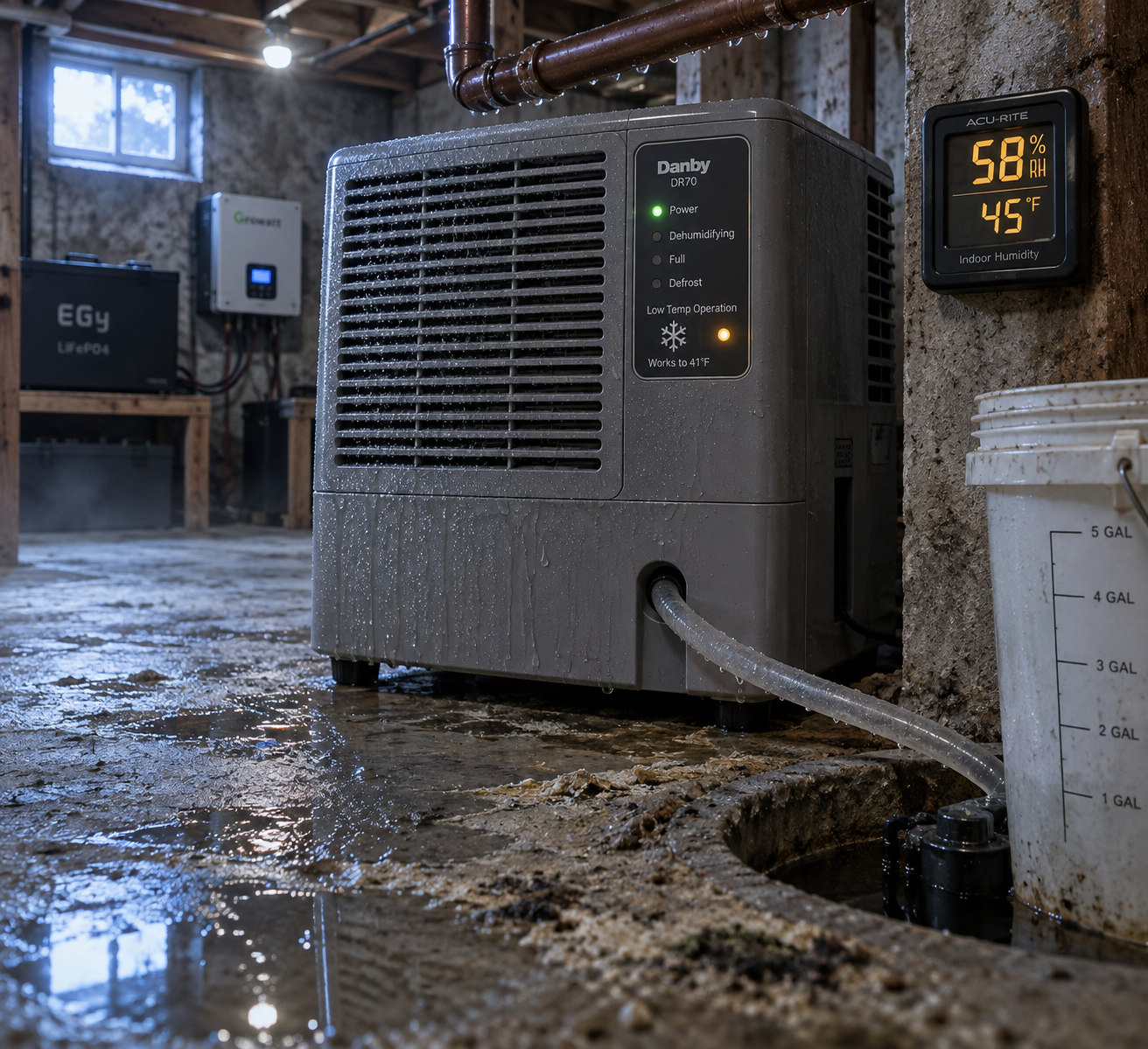
Most standard basement dehumidifiers stop working reliably once room temperature drops below 65°F, and many freeze up entirely below 41°F. That’s a real problem for a cabin basement that isn’t heated all winter, and it’s the single biggest gap in most buying advice online.
Standard compressor units rely on a refrigeration cycle that needs warmish air to work efficiently. Drop the temperature and the coils ice over, airflow stops, and the unit either shuts down or runs constantly without pulling any real moisture out of the air. If your cabin basement dips into the 40s or 50s for months at a time, a “standard” dehumidifier is close to useless for half the year.
Look specifically for units labeled low-temperature or frost-tolerant, rated to operate down to 33°F–36°F. These typically use a modified refrigerant cycle or an auto-defrost feature that cycles the compressor off periodically to melt any ice buildup. They cost more upfront, often $250 to $400 versus $150 to $200 for a standard 50-pint unit, but they’re the only realistic option if your basement isn’t heated.
One more option worth considering: desiccant dehumidifiers. They don’t use a compressor at all, so cold temperatures don’t bother them, and they run quieter — often under 40 decibels compared to 50-55 decibels for compressor units. The trade-off is they pull moisture more slowly and cost more per pint removed in electricity.
Power Draw Matters More Than Brand When You’re Off-Grid
A 50-pint Energy Star basement dehumidifier typically draws 300 to 500 watts while running, which adds up to 3-6 kilowatt-hours a day if it runs constantly. On a modest solar setup, that can eat a big chunk of your daily generation before you’ve powered anything else.
Energy Star certified units use about 15% less power than standard models, and at this wattage level, that difference actually matters if you’re budgeting against a 200-400 amp-hour battery bank. Non-certified units can pull closer to 600-700 watts for the same 50-pint capacity, which on a small solar array might mean choosing between drying the basement and running your fridge.
If your cabin power setup at cabinlodger.com’s off-grid articles sounds familiar — a mid-size solar array paired with a generator backup — run the numbers before you buy. Multiply the unit’s rated wattage by expected daily runtime, then compare that to your daily generation. A dehumidifier that runs 12 hours a day at 400 watts needs 4.8 kWh, which is a real bite out of a system generating 10-15 kWh on a sunny day.
Drainage, Placement, and the Fix-It-First Question
A dehumidifier is not a substitute for stopping water at the source. If your foundation has visible cracks, or there’s no vapor barrier over a dirt crawl space floor, seal that first — otherwise you’re running the unit nonstop just to keep up with water that shouldn’t be getting in.
Gravity Drain vs. Pump Drain
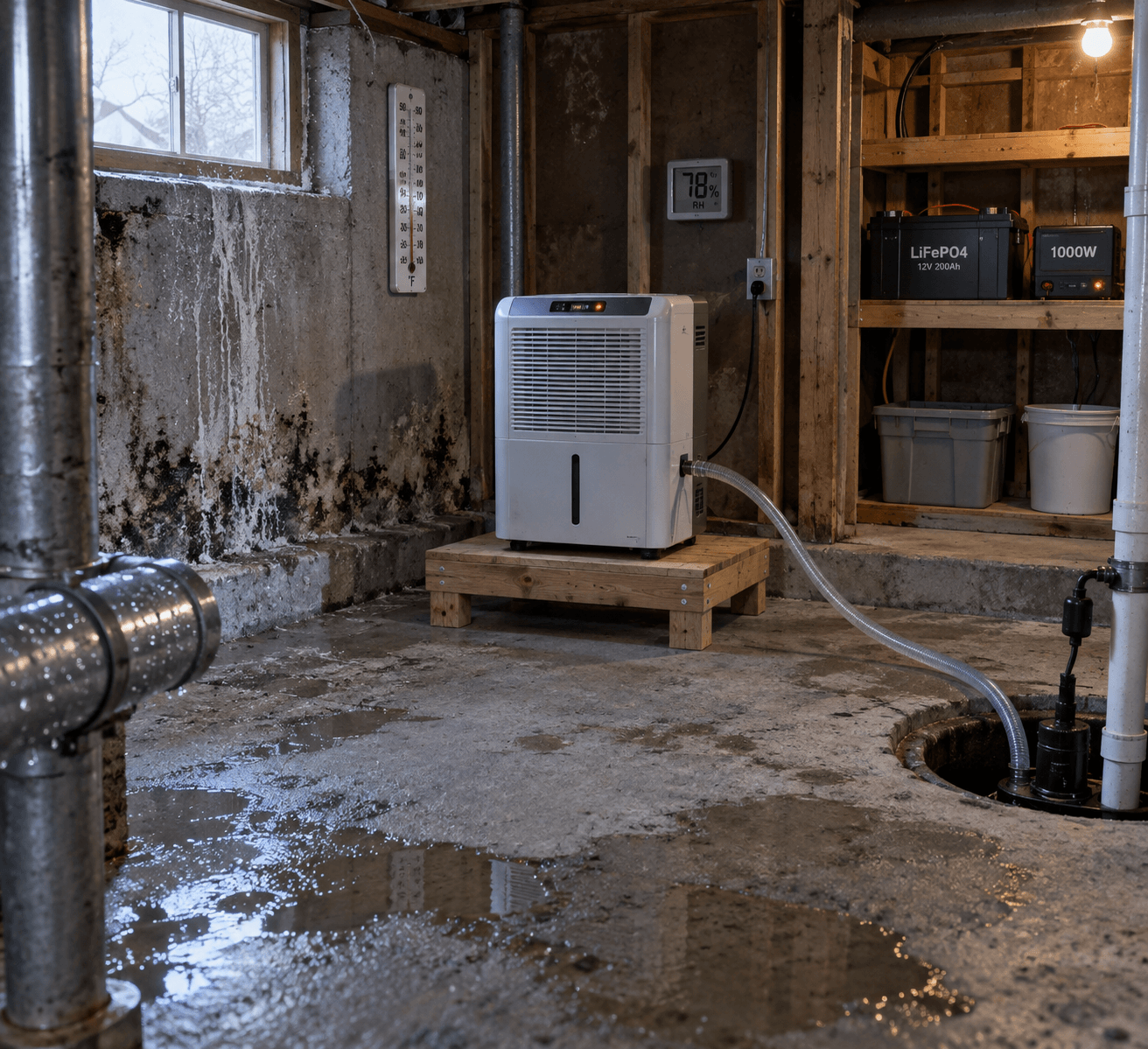
Gravity drainage works if your basement floor drain sits lower than the dehumidifier’s outlet — just run a hose and let it flow, no emptying buckets required. If there’s no floor drain nearby or your basement is below the drain line’s exit point, you’ll need a built-in condensate pump to push water uphill and out. Skipping this and manually emptying a bucket a couple times a day works for a weekend cabin, but it’s a bad plan for anyone who isn’t around often.
Where You Put It Changes Everything
Placement wrecks more dehumidifier setups than people realize. Shoving the unit into a corner restricts airflow on two sides and can cut effectiveness by a noticeable margin — you want at least 6-12 inches of clearance on all sides, and ideally centered in the room or near the dampest area rather than tucked against a wall.
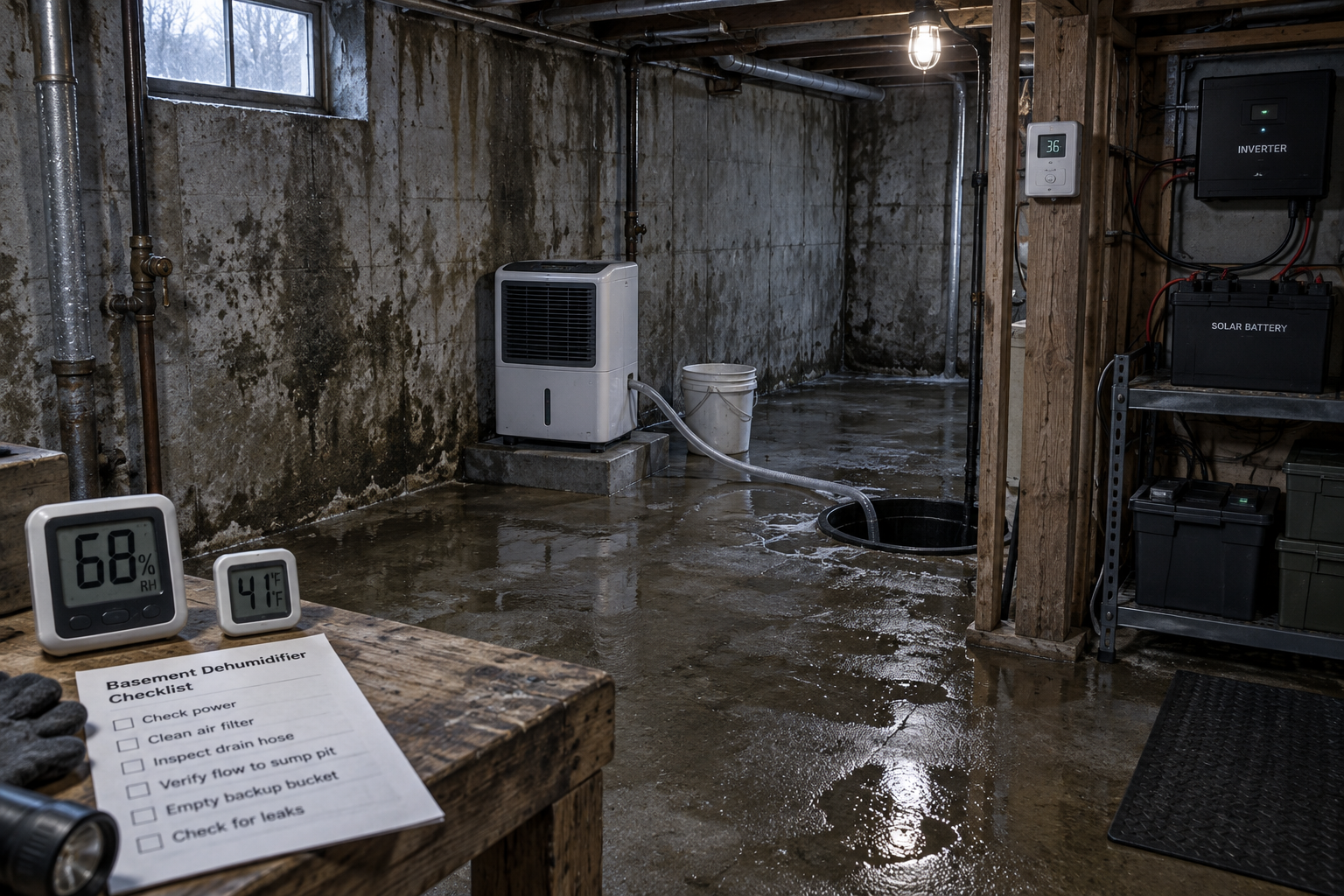
Check the foundation and crawl space for cracks, gaps, or missing vapor barrier before buying anything.
Measure basement temperature in the coldest month you’ll be occupying the cabin.
Choose pint capacity based on visible dampness signs, not square footage alone.
Set up continuous drainage — gravity or pump — instead of planning to empty a bucket.
Place the unit centered in the room with clear airflow on all sides.
Clean or replace the filter every 2-4 weeks during heavy use to keep airflow up.
Recheck relative humidity with a cheap hygrometer weekly until it holds steady under 50%.
Frequently Asked Questions
What relative humidity level should I aim for in a cabin basement?
Keep relative humidity between 30% and 50%. Mold growth typically starts once humidity sits above 60% for extended periods, so a $10-15 hygrometer left in the basement is worth checking weekly, especially right after heavy rain.
Can I run a basement dehumidifier on a generator instead of solar?
Yes, but check the generator’s continuous wattage rating against the unit’s running watts (usually 300-500 for a 50-pint model) plus startup surge, which can briefly spike 2-3 times higher. A 2,000-3,000 watt generator handles most units fine alongside basic lighting.
Do I need a dehumidifier if I already have a vapor barrier?
Probably still yes, but a smaller one. A vapor barrier stops ground moisture from rising through a dirt floor, but it won’t fix humidity from rain infiltration, poor ventilation, or seasonal condensation on cold walls.