
Building a cabin is one of the most rewarding DIY projects you can tackle. It combines personal craftsmanship with careful planning. The goal is to create a lasting structure for you and your family to enjoy.
Whether you’re constructing an off-grid retreat or a weekend getaway, having the proper equipment makes a huge difference. The right gear turns a potential struggle into a smooth, enjoyable process. This guide breaks down what you’ll need.
We have organized this comprehensive list into practical categories. This helps you prioritize purchases based on your project timeline and budget. From the foundation to the finishing touches, reliable equipment saves time and improves safety.
This isn’t about buying every gadget available. It’s about investing in versatile, durable items that will serve you well during construction and for years after. Our list will help you build with confidence and efficiency.
Embracing the Cabin Building Lifestyle
When you commit to the cabin lifestyle, you quickly discover that self-reliance becomes your new normal. This approach moves you away from urban convenience toward creating and maintaining your own space.
One thing becomes immediately apparent: you’re going to use your hands constantly. From fixing doors to clearing trails, proper equipment transforms difficult tasks into manageable projects.
The cabin journey extends beyond construction. It’s about developing skills and building confidence that will serve your family for generations. Each project adds to your knowledge foundation.
Time invested in planning your collection pays significant dividends later. Having the right gear for each job prevents frustration and saves countless hours.
This way of life rewards those who choose quality items and learn proper techniques. The satisfaction comes from creating something meaningful with your own hands.
Understanding Your Tool Philosophy for Cabin Projects
The most successful cabin builders often share a common trait: a well-defined strategy for their gear. This mindset helps you avoid impulse buys and focus on items that deliver real value. It’s about making smart choices from the start.
We believe in having fewer items, but better ones. Each piece of equipment on our list has been used repeatedly. They aren’t fancy, just reliable gear that works when you need it most.
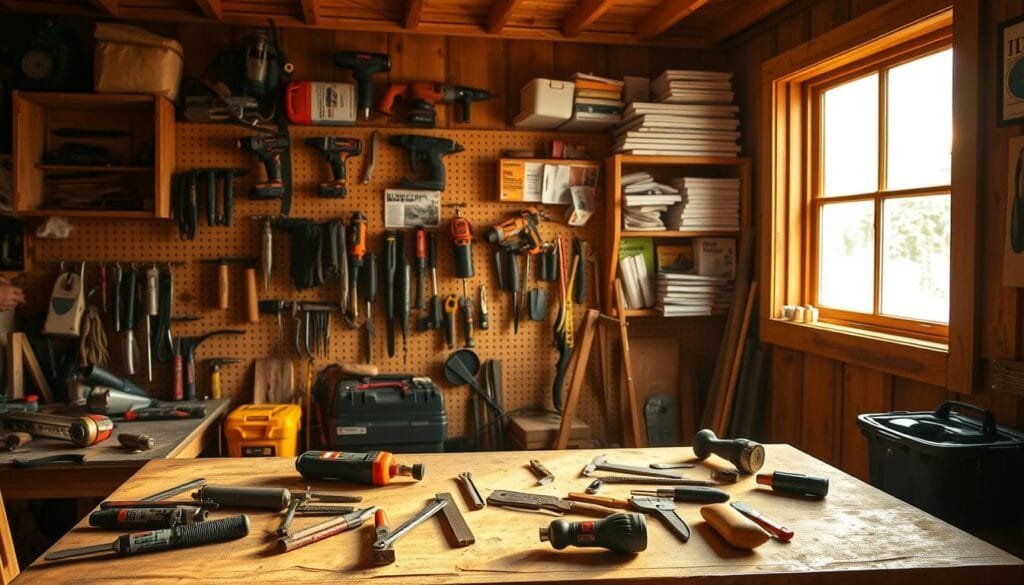
Investing in higher-quality equipment is the best approach. It beats having a large collection of mediocre items that break down. This philosophy maximizes your investment and saves storage space at your work site.
Think about how you’ll use each piece. Will it see daily use during construction, or is it for occasional, specialized tasks? Choosing items that serve multiple purposes is a smart way to work.
Building a cabin teaches you that the right equipment doesn’t just make the job easier. It makes your entire project safer, more accurate, and far more enjoyable. This thoughtful way of planning pays off tremendously.
Hand Tools: The Foundation of Cabin Construction
Before you even think about plugging anything in, your collection of manual equipment becomes your most trusted partner on a remote build site. These items offer silent, battery-free operation that you can always count on.
Building away from utilities demands gear that won’t quit when the power does. This is where classic, manually operated items shine brightest.
Multipurpose Versatility and Durability
A great axe is far more than a wood-cutting instrument. It can drive stakes, clear brush, and even help with land preparation tasks.
Think of a general-purpose claw hammer as your universal key for construction. It handles framing, demolition, and countless adjustments.
Investing in a durable chisel set provides control for detailed work like fitting door hinges. These items are built to last for generations.
Classic Hand Saws and Hammers in Action
A reliable hand saw is perfect for quick lumber cuts. It requires no setup and works quietly, which is a major advantage.
This basic set of hand tools ensures you can keep making progress no matter the conditions. They form the reliable core of any successful building project.
essential power tools for cabin
Moving from manual implements to motorized equipment marks a significant leap in cabin construction efficiency. These devices dramatically accelerate your timeline, turning hours of hand work into minutes of productive activity.
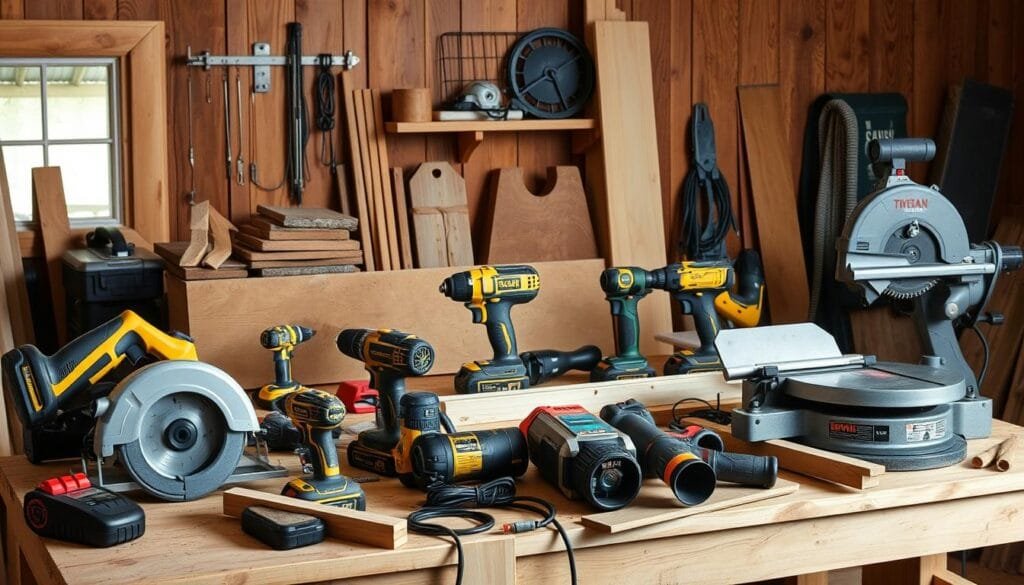
The right selection focuses on items that deliver maximum return on investment. Versatility and reliability matter more than specialized features that might rarely get used.
Quality motorized equipment improves more than just speed. It enhances accuracy, consistency, and safety throughout your entire project. Starting with core items prevents overspending on devices that may sit unused.
This represents a significant investment, but choosing dependable brands with solid warranty support protects your purchase. Understanding what’s truly necessary versus merely convenient helps you build a practical, functional collection of equipment.
A thoughtful approach to your tool list ensures you have what you need without clutter. This balanced strategy serves you well during construction and for years of maintenance ahead.
Power Tools: Drilling, Cutting, and Fastening for Efficiency
A select group of motorized devices will become your daily workhorses. They handle the core tasks that move a project from plans to reality.
Focusing on versatile items prevents clutter. You get maximum utility from a minimal, well-chosen collection.
Cordless Drill + Impact Driver Insights
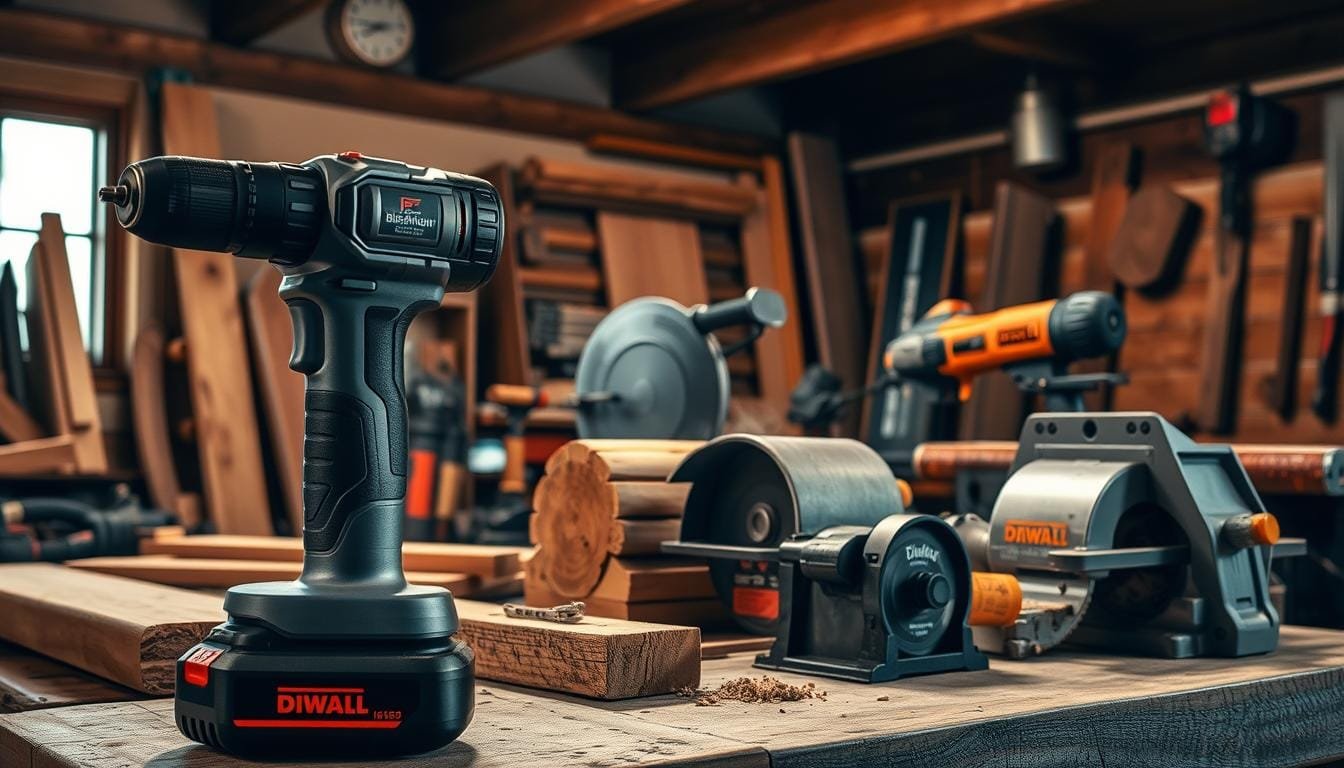
This duo is arguably the most important investment you can make. A reliable cordless drill handles drilling holes and driving smaller screws with precision.
An impact driver adds brute force for driving large lag bolts and long screws without straining your wrist. We’ve used our DeWalt 20V Max combo for everything from framing to finish work.
Circular and Reciprocating Saw Applications
A quality circular saw makes straight cuts through lumber and plywood quickly. It’s perfect for framing walls and cutting joists to length.
The Makita 18V model offers great portability. A reciprocating saw is fantastic for demolition and cutting in tight spots.
It trims studs and pipes with ease. For a budget-friendly start, the BLACK+DECKER 20V MAX kit bundles these core items together.
| Tool Type | Primary Use | Key Advantage | Example Model |
|---|---|---|---|
| Cordless Drill/Driver | Drilling holes, driving screws | Precision and control | DeWalt 20V Max |
| Circular Saw | Making straight cuts in wood | Speed and accuracy for long cuts | Makita 18V Cordless |
| Reciprocating Saw | Demolition, pruning, cutting pipes | Accesses confined spaces | BLACK+DECKER BDCR20 |
Safety Gear and Personal Protection Essentials
Your personal safety should never be an afterthought when you’re working on a remote construction site. The right protection equipment keeps you secure and productive through every phase of your project.
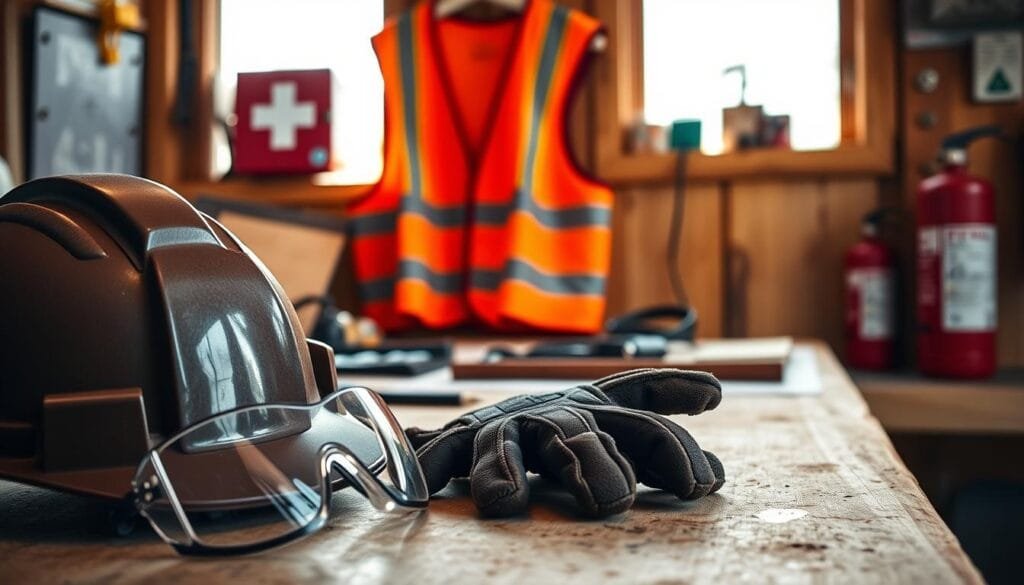
Quality gloves protect your hands from blisters and splinters during manual tasks. When you find comfortable, durable pairs that fit well, buy several. This ensures you always have dry gloves ready for the next job.
Proper eyewear is non-negotiable for construction work. Look for safety glasses with neck straps and scratch-resistant lenses. Flying wood chips or metal fragments can cause permanent eye damage in an instant.
Protective Eyewear, Gloves, and Headlamps
A reliable headlamp provides hands-free lighting for early mornings or evening work. Choose LED models with adjustable brightness to save battery life. The multi-strap harness keeps it secure during active movement.
For elevated work, the Malta Dynamics Warthog Comfort MAXX Construction Harness offers full-body fall protection. It fits various body types with a removable waist belt for comfort.
The Pyramex Safety HP44118 Ridgeline Hard Hat protects against falling objects with its low-profile design. Vented pressure pads make it comfortable for all-day use.
SolidWork Safety Goggles provide panoramic vision with anti-fog, UV-protective lenses. They shield your eyes from particles coming from any angle during extended work time.
- Gloves: Protect hands from abrasions and cuts
- Safety glasses: Prevent eye injuries from debris
- Headlamps: Enable hands-free illumination
- Harnesses: Provide fall protection for elevated work
- Hard hats: Guard against overhead hazards
- Goggles: Offer comprehensive eye coverage
Making safety equipment part of your routine creates a secure work environment. This habit protects everyone involved in your building project.
Emergency Tools: Preparedness for the Unexpected
Beyond your standard construction gear, a separate category of items exists solely for handling unforeseen events. These are non-negotiable investments for any remote location.
One thing you must prioritize is a proper fire extinguisher. In an off-grid setting, this handheld tool is often your only defense against a blaze. Research and purchase extinguishers rated for multiple classes, including A, B, C, and electrical fires.
A simple scissor jack proves incredibly versatile. While vital for changing a flat tire, it also helps level foundations, set beams, and even lift heavy logs or rocks. It’s a multi-purpose piece of equipment that earns its keep.
You’ll want a 5-way solar-powered emergency radio. This handy device does more than play music. It functions as an LED flashlight, a weather radio, and a USB charger, keeping you connected and informed during outages.
| Item | Primary Function | Critical Feature |
|---|---|---|
| Multi-Class Fire Extinguisher | Fire suppression | Rated for wood, electrical, and liquid fires |
| Scissor Jack | Lifting and leveling | Multi-purpose utility beyond vehicle use |
| Solar Emergency Radio | Communication and light | Solar/USB power with NOAA weather bands |
Having these tools ready means you can respond calmly and effectively to a crisis. This preparedness turns potential disasters into manageable situations.
Landscaping and Gardening Tools for Your Cabin Surroundings
Land management around your building site transforms rough terrain into functional, beautiful spaces with the right implements. This outdoor work complements your construction efforts and creates the setting your retreat deserves.
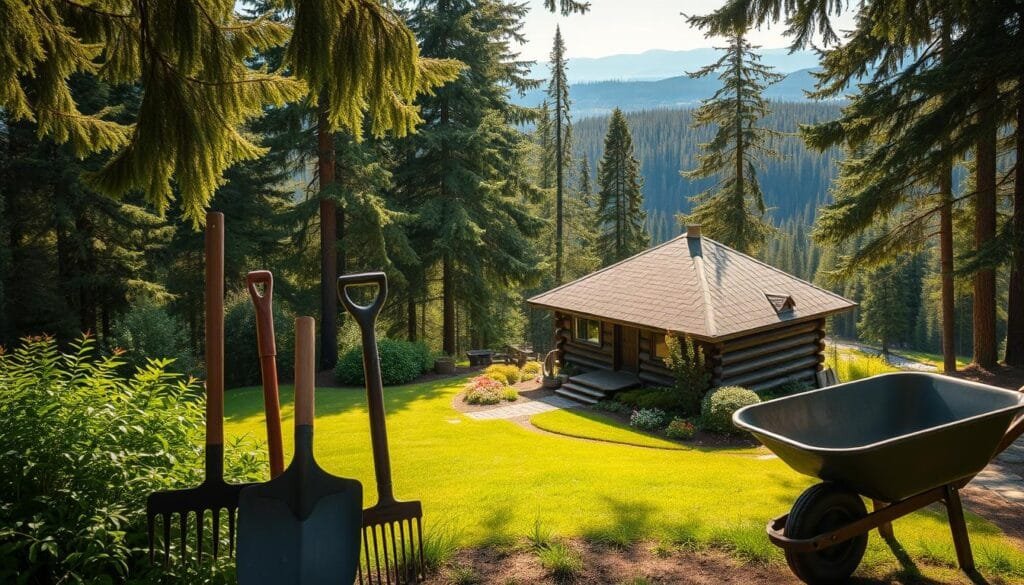
Proper ground preparation makes a big difference in how you experience your property. The right selection of outdoor equipment handles everything from driveway creation to garden bed establishment.
Shovels, Rakes, and Brush Axes for Versatile Use
A pointed digging shovel becomes your go-to for earthmoving tasks. It excels at moving gravel, digging holes for planting, and trenching for drainage systems around your structure.
This versatile tool handles a lot of different jobs efficiently. Garden rakes are another frequently used item for leveling surfaces and preparing soil.
They spread gravel evenly and break up compacted earth with ease. For tougher challenges, a pick/mattock tackles rocky soil and stubborn roots that regular shovels can’t handle.
A brush axe proves invaluable for clearing overgrown areas and creating trails. It strips bark from logs and manages small trees effectively. Choosing models with replaceable handles ensures long-term value from your investment.
Maintaining these items properly extends their lifespan significantly. Clean them after each job and store them in a dry location. This careful approach ensures they’re ready for whatever task comes your way.
High-End Tools and Equipment for Advanced Builders
Serious cabin builders know that some investments deliver returns far beyond their initial cost. When you’re managing a larger property or tackling complex projects, specialized gear becomes necessary for efficiency.
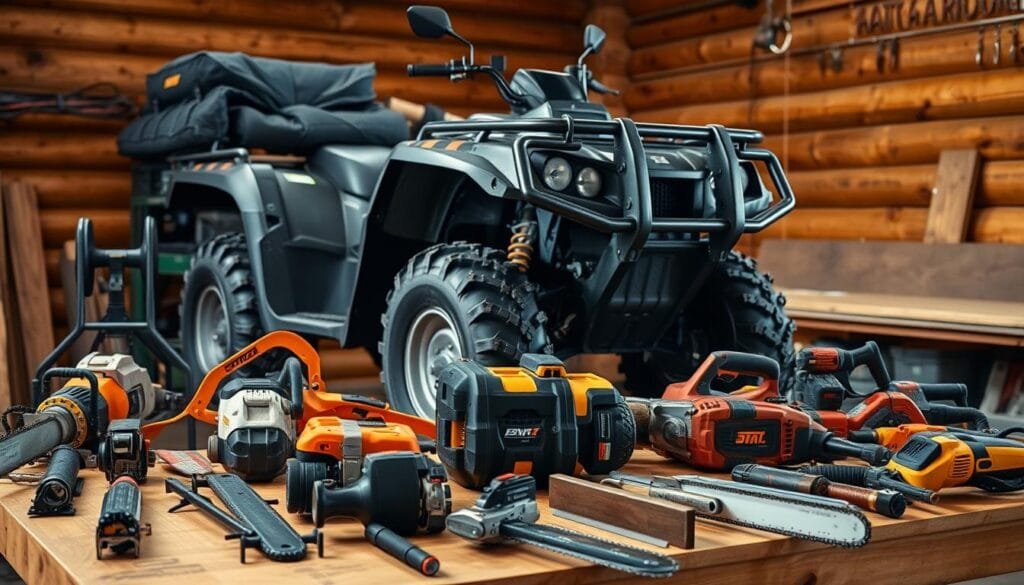
An All-Terrain Vehicle like the Yamaha Grizzly 550 handles transportation across challenging terrain. It moves building supplies, hauls gravel, and even plows snow with the right attachments.
ATVs, Trailers, and Custom Storage Solutions
The Warn ProVantage plow attachment saves significant time during winter months. It’s a smart way to maintain access without hiring outside services.
A utility trailer is absolutely vital equipment for remote sites. Without one, moving logs and materials becomes incredibly difficult. This heavy duty solution pays for itself quickly.
The 11×11 foot Lifetime Garage provides perfect storage place for your gear. You can set it up in a day or two, creating a permanent shelter. It holds a lot of items while keeping them secure.
These investments make property management much smoother. They’re the kind of upgrades that transform how you work at your retreat.
Power Systems and Portable Generators: Ensuring Continuous Workflow
At a site far from the grid, a consistent energy source becomes your most critical asset. Portable generators transform impossible building projects into manageable ones by providing reliable electricity where none exists.
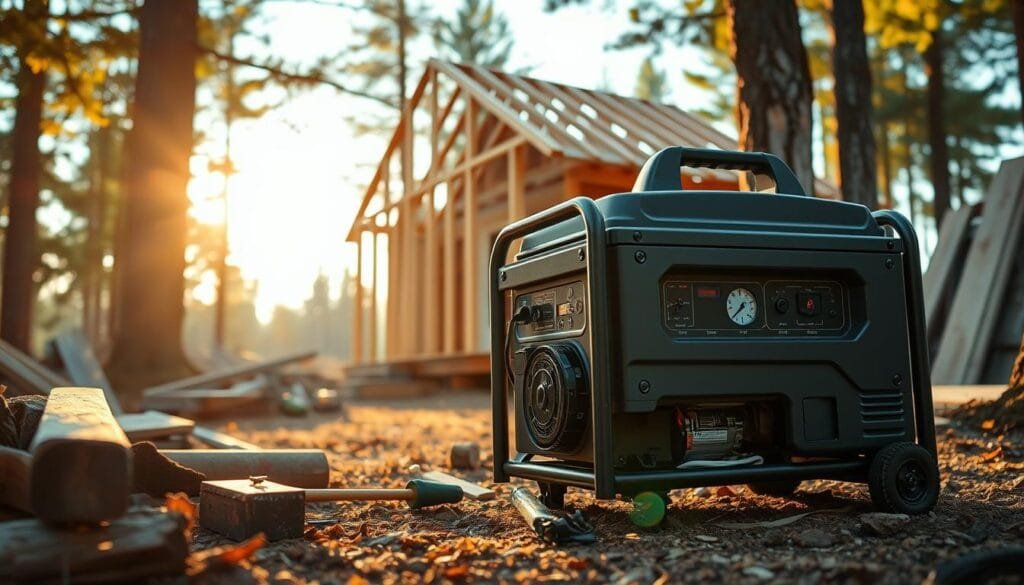
A backup generator isn’t a luxury—it’s a necessity for running your equipment during construction. It also provides emergency electricity for your finished retreat during outages.
The Champion Power Equipment 100891 delivers 9375 starting watts with dual-fuel capability. This model runs on gasoline or propane, offering flexibility at your work site.
This generator features an intelligauge that monitors voltage and run-time in real-time. Remote start and stop functionality adds convenience when positioned away from your work area.
Make sure your unit has adequate capacity to run multiple items simultaneously. Also ensure you have heavy-duty extension cords to distribute electricity safely across your entire site.
Proper maintenance protects your investment and ensures reliable performance every time. Regular oil changes and fuel stabilization keep your generator ready when needed.
Organizing Your Workshop: Storage and Tool Management
The final piece of your cabin-building puzzle isn’t a tool you use, but how you store and access all the others. A good system saves time and protects your investment.
When a tool belt isn’t practical, a sturdy portable toolbox becomes your mobile base. It keeps your most-needed items together as you move around the site.
For tasks requiring constant access, a carpenter’s belt is the classic solution. It keeps hammers, tape measures, and fasteners within an arm’s reach all day.
We recommend a two-part storage approach. A heavy-duty rolling toolbox stays in the shed for your complete set. A soft bag is perfect for carrying a smaller list of items indoors.
In humid climates, organization must include moisture protection. Use silica gel packets and proper chest liners to prevent rust. This simple step extends the life of your equipment a lot.
| Storage Type | Primary Function | Key Benefit |
|---|---|---|
| Portable Toolbox | Mobile tool transport | Consolidates gear for moving between work areas |
| Carpenter’s Belt | On-person tool access | Eliminates trips back to the main storage place |
| Rolling Tool Chest | Centralized, secure storage | Protects a full tool collection from weather and damage |
Having a designated spot for every item is the best way to work. You spend less time searching and more time building.
Expert Insights: Off Grid and DIY Cabin Building Experiences
Looking back at the successes of legendary builders like Richard Proenneke offers timeless lessons for modern projects. He stands as an off-grid icon who built his iconic log cabin with a remarkably small set of hand tools, some of which he crafted himself.
One thing you can’t deny is that skill and patience can accomplish amazing things. This philosophy is a great guide for your own diy journey.

Lessons from Off Grid Experts and Richard Proenneke
Modern builders can blend traditional techniques with contemporary efficiency. Understanding wood properties and grain direction makes any equipment more effective.
We’ve used a simple rule to avoid clutter: wait until a thing is needed three separate times before buying it. This prevents accumulating specialty gadgets that collect dust.
Early in our diy cabin life, we bought items for problems we rarely faced. Learning which tools not to buy is valuable insight that saves money and space.
| Approach | Primary Focus | Key Strength | Best For |
|---|---|---|---|
| Traditional Hand-Tool | Skill, patience, material understanding | Ultimate self-reliance, quiet operation | Smaller projects, remote locations, skill development |
| Modern Power-Assisted | Efficiency, speed, precision | Rapid completion of large-scale tasks | Larger builds, tighter timelines, complex cuts |
| Blended Method | Combining the best of both worlds | Versatility and adaptability on site | Most DIY cabin builders seeking a balanced toolkit |
Balancing Quality and Budget in Tool Selection
Every cabin builder faces the challenge of building a toolkit without overspending. The right approach involves strategic thinking about where premium investments pay off.
We believe in having fewer items, but better ones. This philosophy proves more economical than accumulating budget-grade equipment that breaks mid-project.
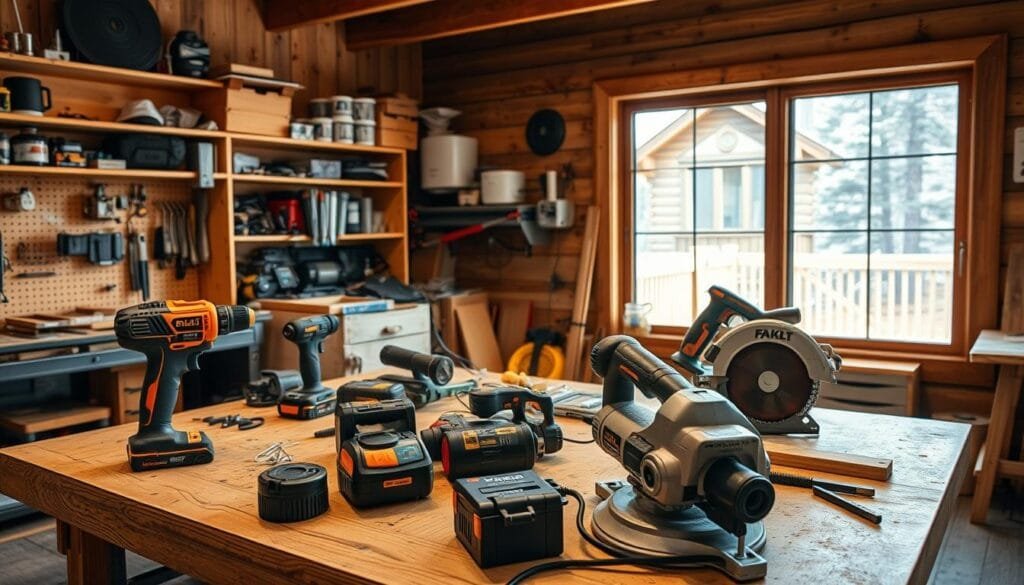
Start small with just a drill, saw, and hammer. Let each project reveal what you genuinely need next rather than guessing in advance.
High-use items like drills and levels justify quality brands with solid warranties. Specialty tools used rarely can be more modestly priced.
Your cabin project teaches which tools deliver real value. Creating a prioritized list helps spread purchases across your budget cycle.
| Tool Category | Investment Level | Reasoning | Maintenance Priority |
|---|---|---|---|
| Daily Use (drills, saws) | Premium Quality | Justified by frequent use and reliability needs | High – regular cleaning and inspection |
| Specialty Items | Mid-Range | Cost-effective for occasional tasks | Medium – proper storage essential |
| Starter Kit Basics | Good Value | Build skills before upgrading | High – foundation for future work |
One thing experienced builders emphasize: proper maintenance extends any tool’s life. The way to build a practical collection is responding to real needs as they arise.
Integrating Renewable Energy and Solar Tools for a Sustainable Cabin
Creating a truly self-sufficient retreat means thinking beyond construction to long-term energy independence. Solar technology offers a clean solution that eliminates reliance on noisy generators.
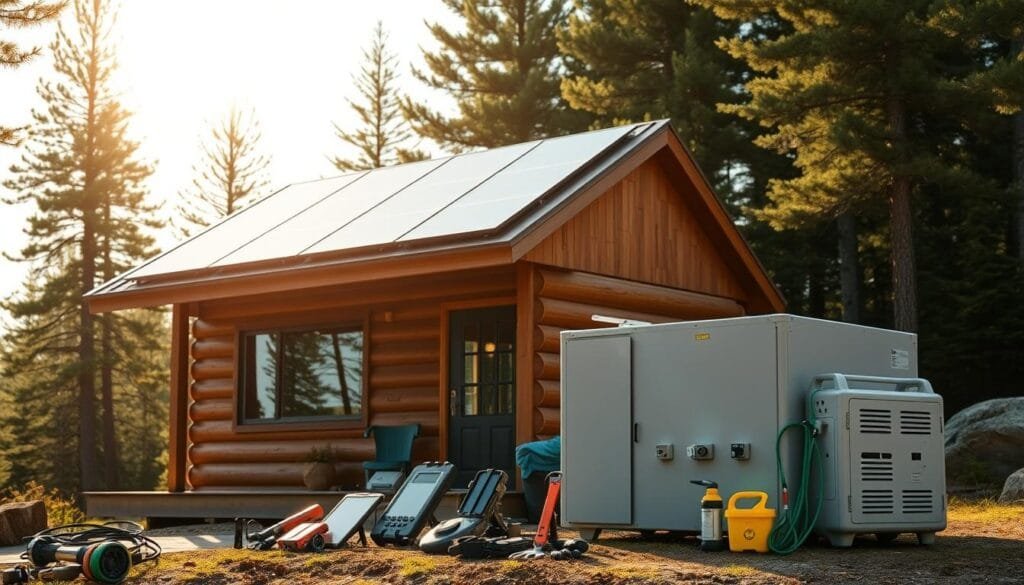
Professional solar kits arrive pre-configured for easy setup. The Canadian Solar CS6K-270P panels provide durable performance in harsh conditions. Installation typically takes just one day with quick-connect systems.
Battery backups ensure continuous electricity for lighting and devices. Solar-powered flashlights charge during daylight hours, ready for nighttime use. This approach reduces fuel costs and maintenance demands significantly.
Proper wiring and surge protection prevent electrical hazards. Fire safety becomes crucial when integrating renewable systems. Correct installation maximizes efficiency while minimizing risks.
| Component | Primary Function | Installation Time | Key Benefit |
|---|---|---|---|
| Solar Panels | Energy generation | 2-3 hours | Durable outdoor performance |
| Battery Bank | Power storage | 1-2 hours | Nighttime energy availability |
| Charge Controller | System regulation | Pre-installed | Prevents battery damage |
| Inverter | DC to AC conversion | Pre-wired | Powers standard appliances |
Early planning for solar integration influences roof orientation and tree clearance. A well-designed off-grid solar system provides reliable electricity for years. This sustainable approach supports both daily living and future projects at your remote site.
Adapting Your Tool Set for Evolving Cabin Projects
A smart builder recognizes that their equipment collection must adapt alongside their project’s development. Your needs change dramatically from initial clearing through construction and long-term maintenance.
You’re going to discover that each phase demands different priorities. Foundation work requires digging equipment and accurate levels. Framing calls for saws and fastening devices.
As projects evolve into finish work, precision becomes crucial. Your initial construction set gradually transforms into a maintenance collection. Different equipment serves new purposes as your property matures.
At times you’ll want specialized items for specific tasks. Rental options often make more sense than purchasing gear used once. Staying responsive to actual needs prevents shortages and clutter.
| Project Phase | Primary Tool Focus | Key Equipment Examples | Skill Emphasis |
|---|---|---|---|
| Site Preparation | Earthmoving and clearing | Shovels, axes, measuring tapes | Rough work and measurement |
| Foundation & Framing | Structural construction | Circular saws, drills, 4-foot levels | Speed and structural accuracy |
| Finish Work | Precision and detailing | Torpedo levels, trim saws, sanders | Detail orientation and finesse |
| Long-Term Maintenance | Repairs and improvements | Multi-tools, specialized repair items | Problem-solving and adaptation |
Building a cabin isn’t one project but many evolving challenges. Your equipment strategy should grow strategically with each new phase. This approach ensures you have what you need without wasteful accumulation.
Final Reflections on Building a Lifetime Cabin with the Right Tools
There’s a special kind of pride that comes from looking around your property and knowing every improvement was made by your own hands. This satisfaction defines the cabin life experience.
Your equipment becomes trusted companions through this journey. They turn challenging repairs into valuable lessons that serve you for years. The right selection gives you confidence and capability.
Start with the basics—a quality drill, circular saw, and hand tools. Build slowly and enjoy each job. Make sure you learn proper techniques as you progress.
One thing remains constant: the profound satisfaction of creating something permanent. Your retreat stands as testament to what’s possible with determination and the right approach.