Those perfectly round, half-inch holes drilled into your fascia board didn’t happen by accident. That’s a carpenter bee, not a bumblebee, and she’s been quietly boring a tunnel straight into the wood you spent a weekend installing. If you want to know how to get rid of wood bees without turning your cabin’s exposed cedar into a cracked, stained mess, the answer starts with treating what’s inside the hole before you ever touch a caulk gun or a paintbrush.
Carpenter Bees vs. Bumblebees: Know What You’re Actually Fighting
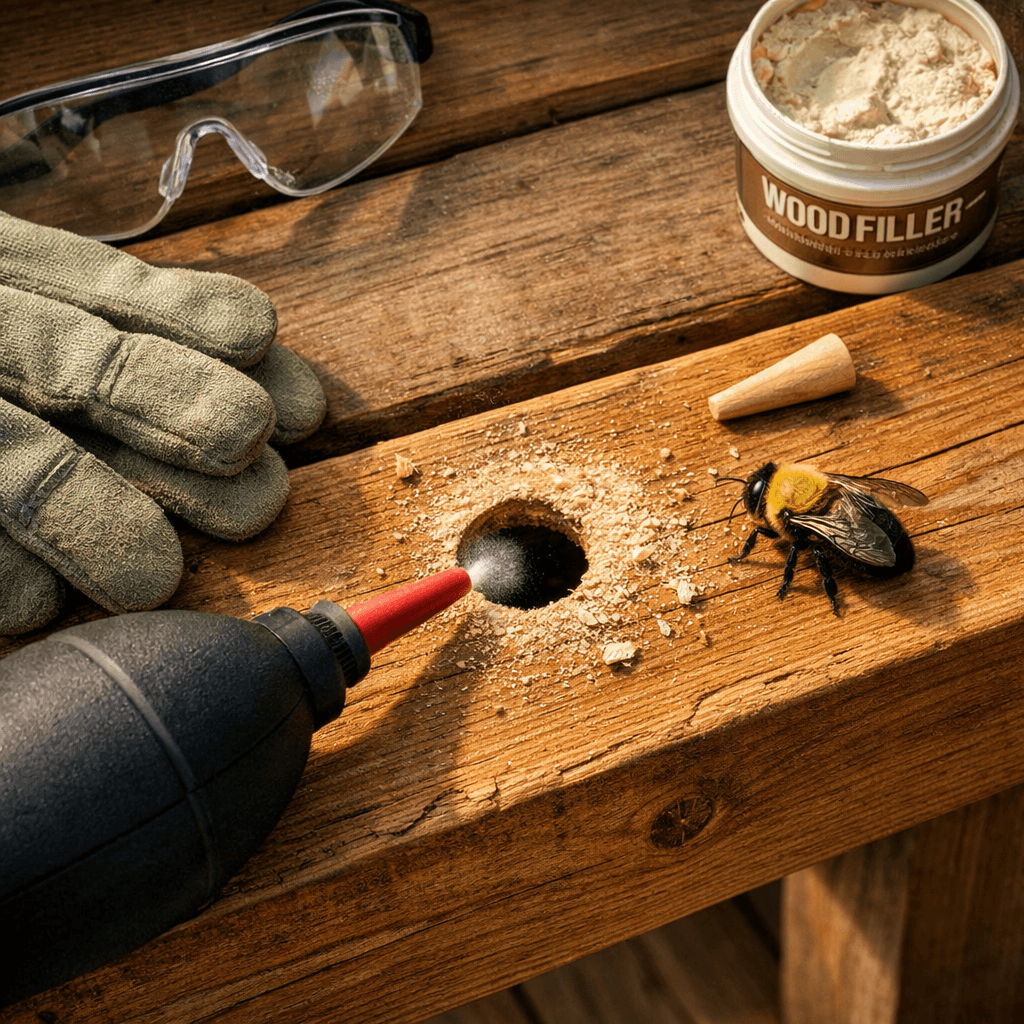
Carpenter bees and bumblebees look almost identical from ten feet away, but they behave nothing alike, and that difference changes your whole approach. Carpenter bees are solitary, meaning each female drills her own tunnel and doesn’t defend a hive the way a bumblebee colony does.
That matters because people often panic and assume they’re dealing with an aggressive swarm. In reality, male carpenter bees can’t sting at all, and females rarely sting unless you grab one directly. Bumblebees, on the other hand, nest in the ground or in dense clumps of vegetation, not in your fascia boards or porch beams.
The other myth worth killing right now: carpenter bees don’t eat wood like termites do. They excavate tunnels for nesting, not for food, so you won’t see the kind of structural collapse termites cause. The damage is real, but it’s slower and more localized, usually just around entry holes and the tunnels branching off them, often 4 to 6 inches deep into softwood like cedar or pine.
Untreated eaves, fascia boards, and exposed porch beams are basically an open invitation for these bees because bare, unfinished softwood is far easier to bore into than sealed or painted lumber.
How to Get Rid of Wood Bees Without Cracking Your Cabin’s Wood
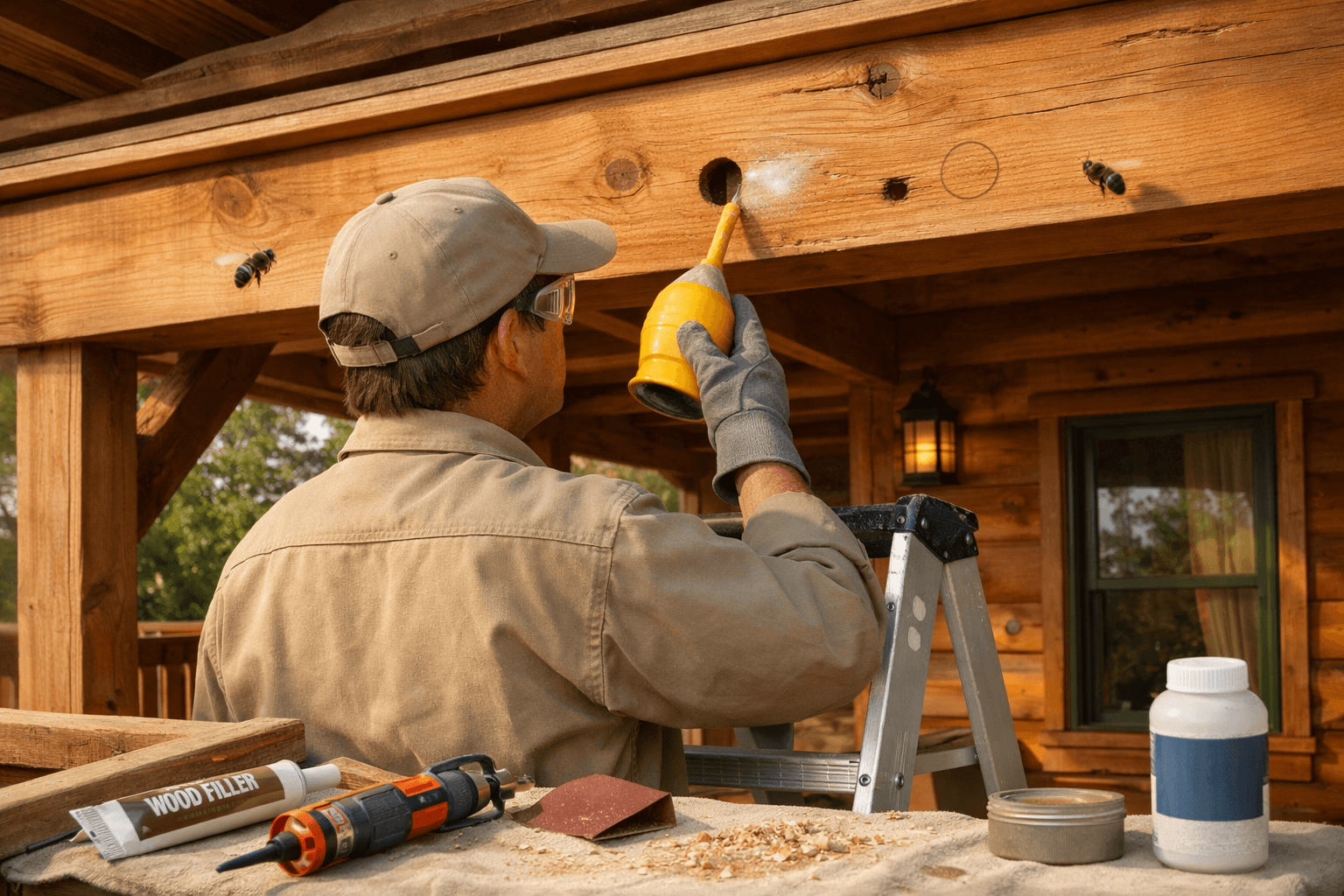
The direct answer: treat the bee inside the tunnel first with an insecticidal dust, wait at least 24 to 48 hours, then plug the hole and finish the wood. Skipping the treatment step and sealing the hole immediately just traps the bee inside, and she’ll chew a brand-new exit hole a few inches away, sometimes within days.
Dust the Tunnel Before You Plug Anything
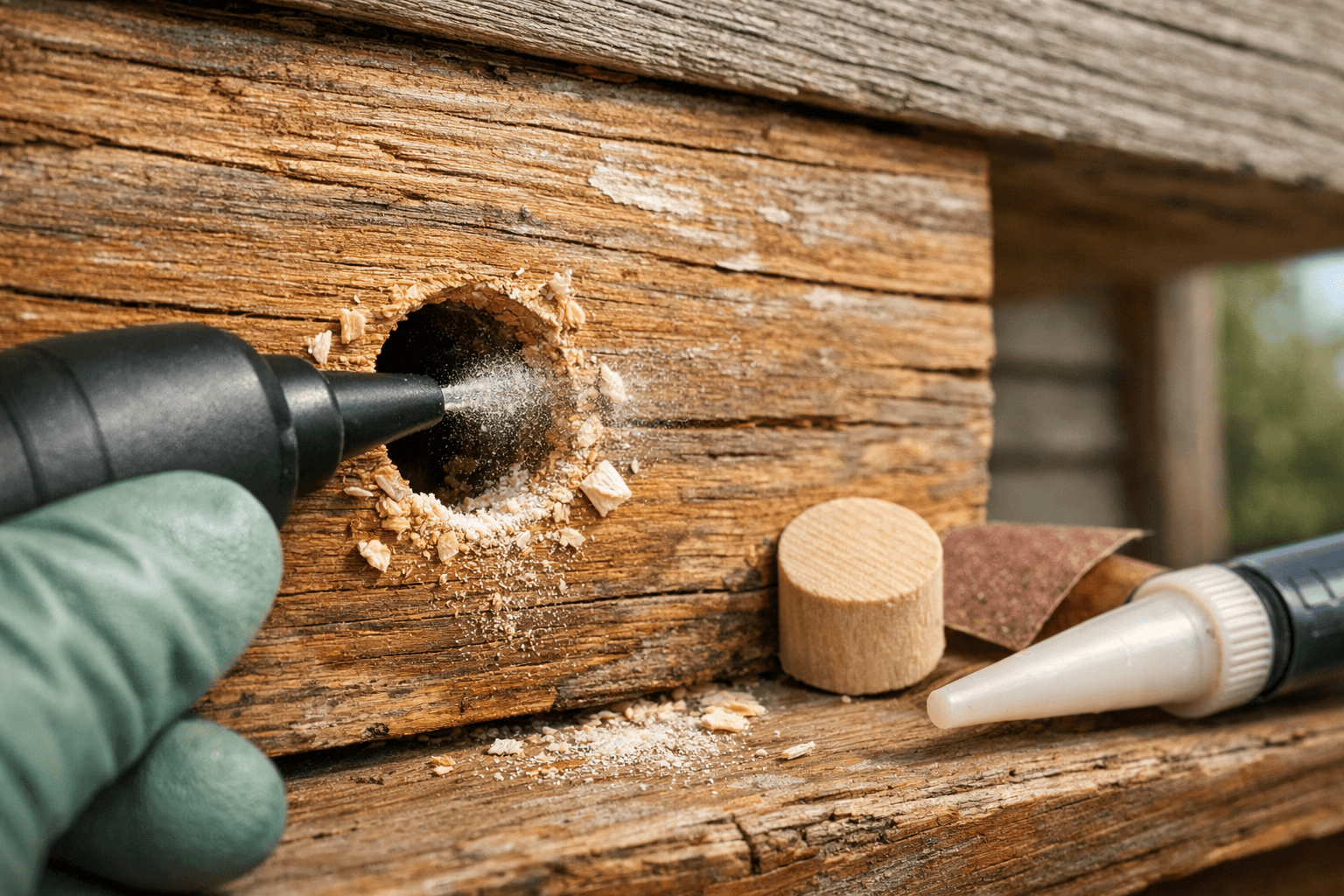
Apply an insecticidal dust labeled for wood-boring insects, something like a permethrin-based or boric acid dust, directly into the entry hole using a squeeze duster with a narrow nozzle. Puff it in generously and let the bee track it through the tunnel on her own body. This is far gentler on your wood than drilling out the tunnel or flooding it with liquid pesticide, which can swell or discolor cedar and pine.
Seal the Hole the Right Way
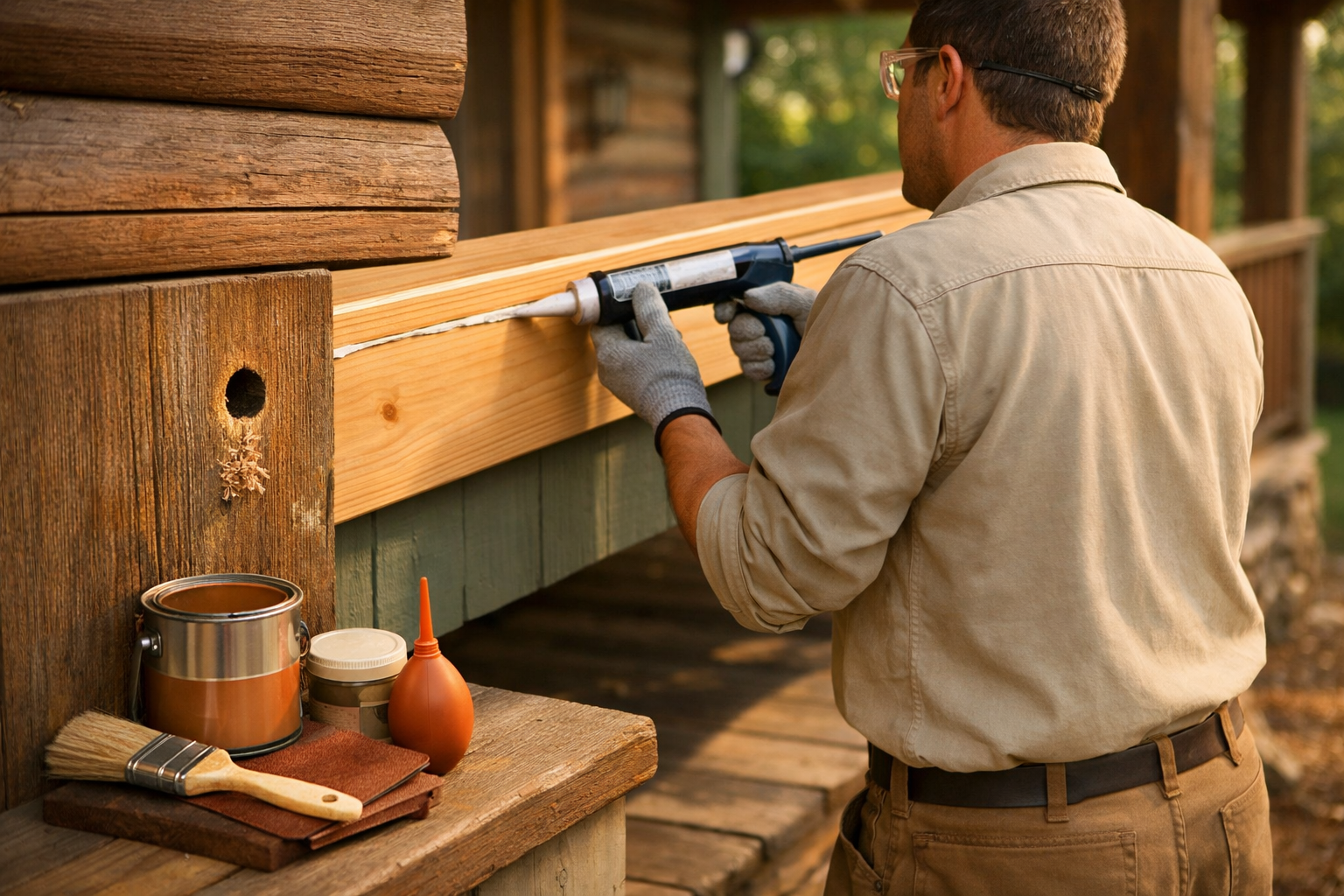
Once activity has stopped, usually after two days, fill the hole with a wood putty or a dowel plug glued in with exterior-grade wood glue, then sand it flush. Avoid straight caulk alone on load-bearing beams. It’s flexible but doesn’t have the structural bite that a glued dowel plug gives you on a fascia board that’s taking weather and weight.
Don’t Paint or Stain As Your Only Fix
Paint and stain alone won’t get rid of an active infestation. Bees can still find bare wood underneath old caulk lines, exposed end grain, or hairline cracks, so finishing the wood is prevention, not treatment, and needs to happen after the dust and plug step, not instead of it.
Repellents That Actually Move Bees Along
Almond oil is the repellent carpenters and cabin owners talk about most, and it works because carpenter bees seem to genuinely dislike the smell. Mix a few drops into a citrus-based spray (orange or lemon oil works well) with a splash of white vinegar and water, then spray it directly into holes and along fascia boards every one to two weeks during peak season.
Peak season matters here. Carpenter bee activity ramps up in early spring, typically March through May across most of the U.S., when females are drilling new nests or reopening old tunnels. A second smaller wave shows up in late summer as new adults emerge. Spraying repellent in January does almost nothing.
Traps help too, especially the hanging wooden box style with angled entry holes that funnel bees into a mason jar below. They won’t wipe out a population, but they’re a low-cost, wood-safe way to reduce pressure near a specific eave without chemicals touching your finish.
Natural predators do some of the work for you. Woodpeckers actually target carpenter bee larvae inside tunnels, which is great for population control but can chew up your fascia board even worse than the bees did, so a woodpecker problem is sometimes a sign you’ve got a bee problem to solve fast.
Treatment Option
Wood-Safe?
Best Timing
Rough Cost
Insecticidal dust
Yes, if applied only in tunnel
Spring or late summer
$10-$15 per can
Almond oil/citrus spray
Yes
Every 1-2 weeks, spring-fall
$8-$12 per bottle
Hanging wood trap
Yes
Set up by early March
$20-$35 each
Paint/stain finish
Yes, as prevention only
During construction or refinishing
$30-$60 per gallon
Prevention Through Finishing Choices Made at Construction
The real fix isn’t reactive treatment at all. It’s finishing your wood correctly before bees ever show up, because a properly sealed board is dramatically less appealing to a female carpenter bee looking for a soft, bare surface to drill into.
Oil-based paint is the strongest deterrent, since carpenter bees strongly prefer bare or lightly stained wood over a hard painted shell. Solid-color stains do a reasonable job too, and they let you keep some of the wood grain showing if you’re going for that cabin look. Clear sealants and semi-transparent stains offer the least protection, since they don’t change the wood’s texture much.
Here’s a practical sequence if you’re building or re-finishing fascia, eaves, or porch beams:
Choose kiln-dried lumber over green or rough-cut boards when possible; denser, drier wood is harder to bore into.
Prime all exposed end grain and cut edges before installation, since exposed end grain is the most common entry point.
Apply two coats of solid-color exterior stain or oil-based paint, not just one.
Recoat every 2 to 3 years, since UV exposure breaks down even good finishes over time.
Inspect fascia and eaves each spring before peak season hits, catching new holes while they’re still small.
If you’re planning a cabin build from scratch, working the finish schedule into your construction timeline (not as an afterthought after move-in) saves a lot of dust cans and repellent spray down the road; it’s the kind of detail that’s easy to skip early on but pays off for years, which is part of why sites like cabinlodger.com spend so much time on wood treatment steps specifically.
Frequently Asked Questions
Do carpenter bees come back to the same holes every year?
Yes, often the same female or her offspring reuse and extend existing tunnels rather than starting fresh, which is why plugging old holes with a glued dowel matters even if you don’t see current activity.
Is it safe to plug a hole with a bee still inside?
No, plug only after treating with insecticidal dust and waiting 24 to 48 hours; sealing an active hole traps the bee, and she’ll bore a new exit nearby instead of dying quietly inside.
Will one coat of stain stop carpenter bees for good?
Not reliably. One coat wears thin within a season or two, especially on south-facing fascia boards; two coats of solid stain or oil-based paint, reapplied every 2-3 years, gives lasting protection.