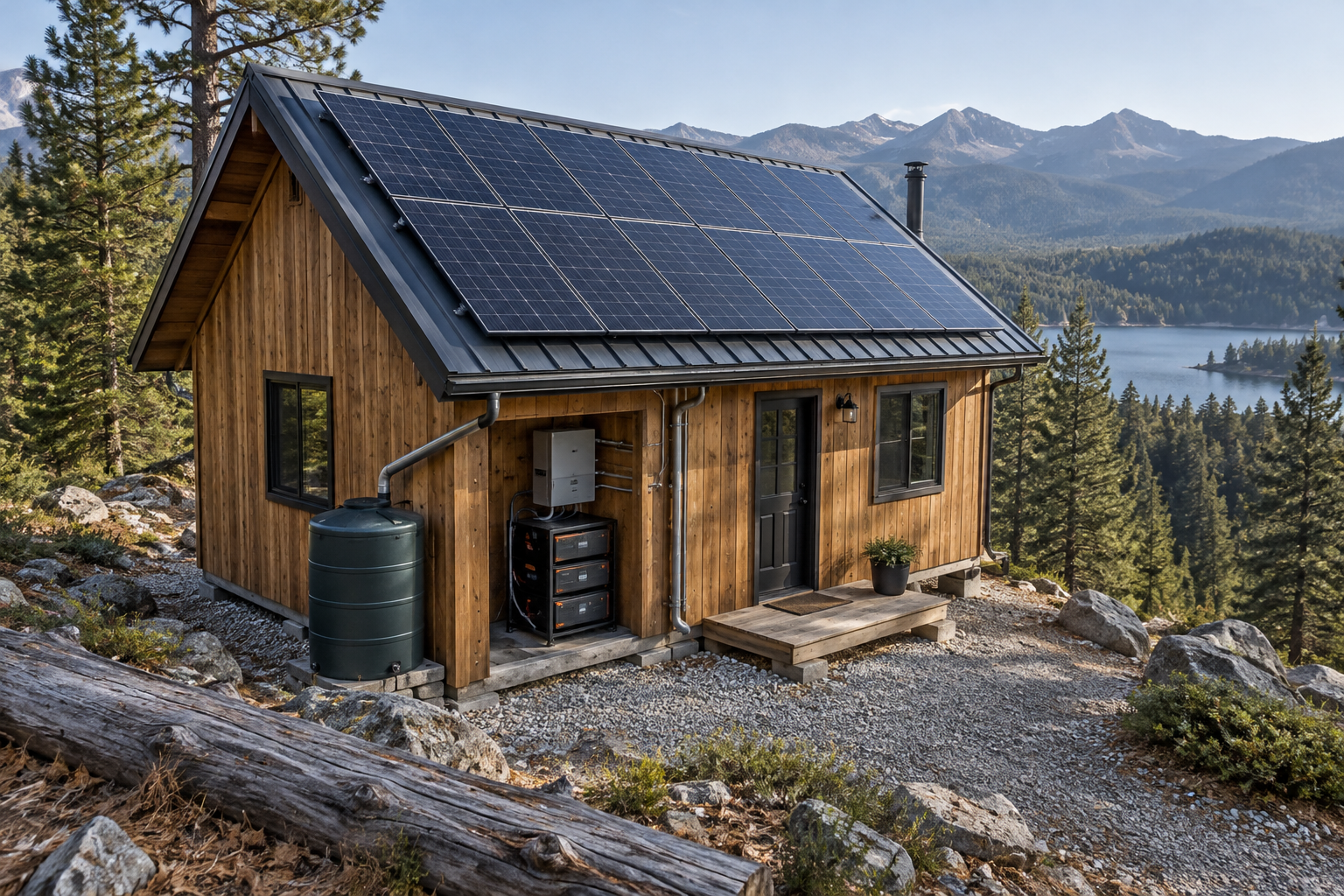
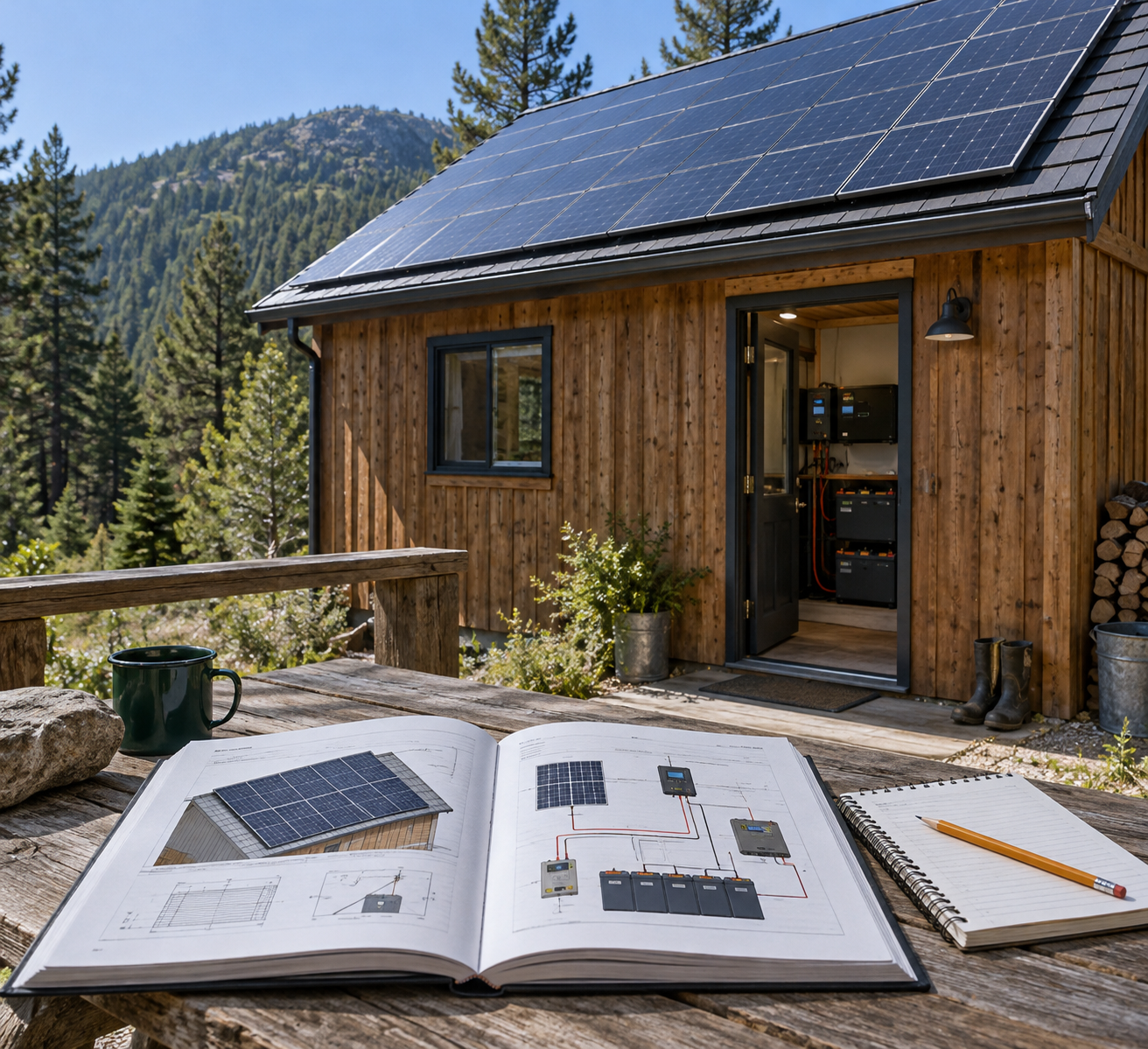
Size a solar cell roof from your daily watt-hours and local peak sun hours, not from how many panels fit on the shingles. You mount rigid panels on the roof, then wire them to an MPPT charge controller, a battery bank and an inverter. Here’s how to size it, mount it and decide if the roof is even the right spot.
Size the System From the Load, Not the Roof
Do the math before you buy a single panel. The roof is the last decision.
The sizing steps
List every load and its watts. Lights, fridge, water pump, laptop, fan.
Multiply each by hours used per day to get watt-hours (Wh).
Add them up for your daily total, then add a cushion for losses in wiring, the inverter and the batteries.
Divide that total by your peak sun hours (the hours per day of full-strength sunlight) for the worst month you’ll use the cabin.
Pick a battery bank that covers your total for the days of autonomy (cloudy days with no charging) you want.
Size the charge controller and inverter to match the array and your biggest surge load.
The first-pass array size is daily watt-hours divided by peak sun hours. Use winter sun hours if you stay in winter. One builder on a forum estimated about 4 solar hours in winter and 6 in summer for his cabin. That’s a real difference.
Example loads and arrays
These are rough planning examples, not quotes. Your own load list wins.
Cabin use
Daily load
Sun hours
Base array
Practical array
Weekend: lights, phone, small pump
500 Wh
4
125 W
400 W
Part-time: add 12V fridge, laptop
1,500 Wh
4
375 W
800 W
Full-time: add water pump, small appliances
3,000 Wh
4
750 W
1,200 W
Why is the practical column bigger? Losses, shade, dirty glass and cloudy weeks. Sizing the panels first and treating the controller as an afterthought is a classic mistake, so match your MPPT controller’s voltage and amp limits to the array.
Can Your Roof Carry It? Mounting by Roof Type
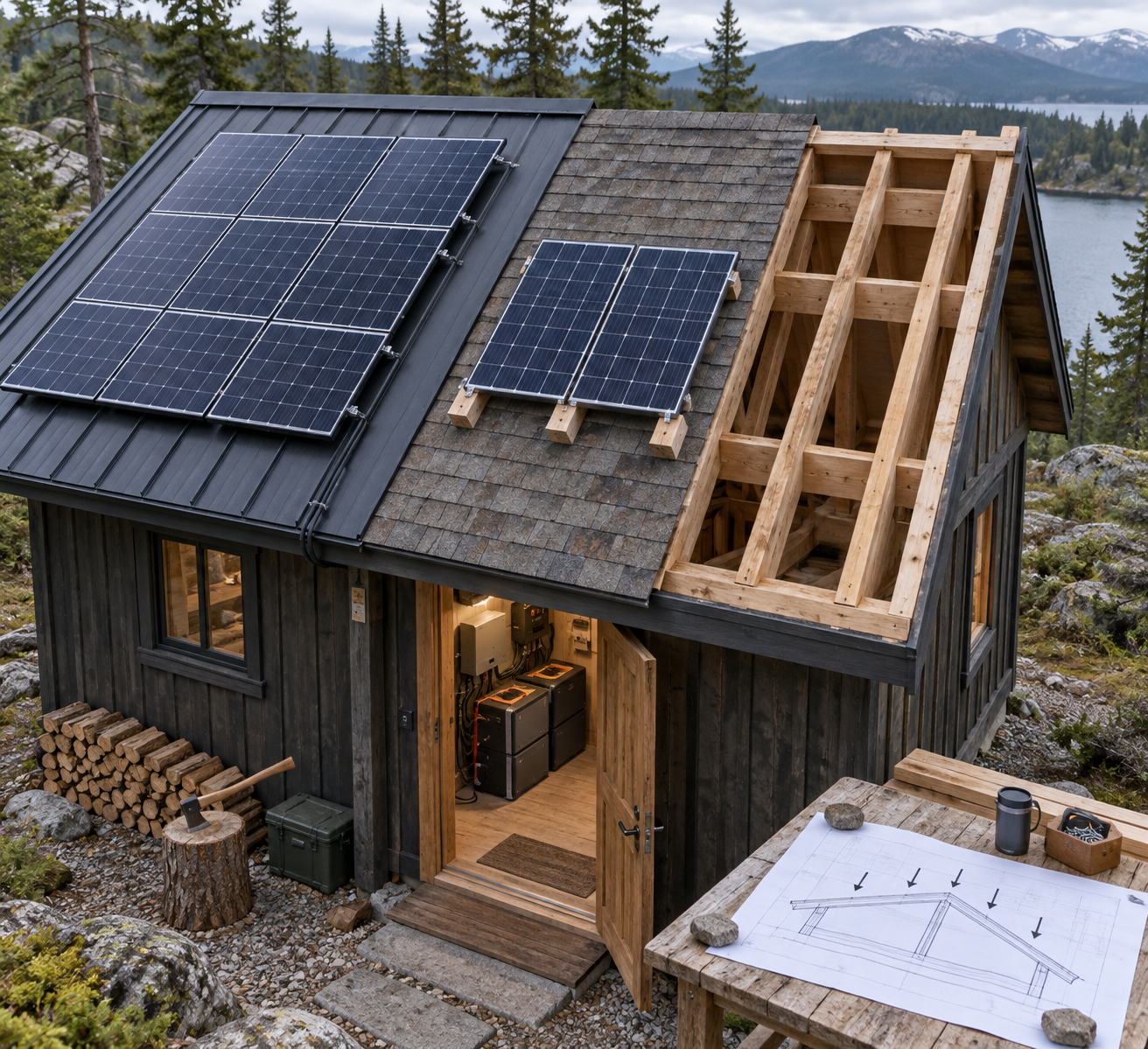
Panels are light, but the attachments, flashing and wind are where roofs fail. Uplift and leaks are.
Metal, shingle and tile
One builder planning a metal roof found an air gap and wood slats under it, so he needed longer fasteners. Check what’s under your metal before you drill.
Never fasten to the sheathing alone. I’d skip tile for a DIY first install.
Wind, snow and glue
Wind creates lift over the roof, much like a wing. Snow adds downward weight, and drifting makes it uneven. Engineers use ASCE 7 methods to calculate both, so check your local wind and snow loads with your building department. Hit rafters, every time.
Can you glue flexible panels to a roof? You can, but I wouldn’t on a roof you care about. Flexible panels make sense on curved RV-style roofs or lightweight structures where racks can’t go.
Roof Mount vs. Ground Mount: When I’d Skip the Roof
Skip it when any of those fail. Ground or pole mounts cost more in racking and trenching, but you pick the tilt and aim.
Here’s my rule. If trees shade the roof for part of the day, don’t force it. Even partial shade on one panel can drag down a whole string.
Snow is the other dealbreaker. A steep metal roof sheds it, but a low-pitch roof buries panels. A ground mount lets you rake the snow off from the ground, no ladder needed. The drawback is wire length, since longer runs need thicker cable to limit voltage drop.
Roof mounts win on simplicity. No trenching, no extra footings, and the array stays out of reach of animals. Think about winter service too. A roof with a 45-degree pitch needs a harness anchor and a safe access plan.
Wiring, Fuses, Permits and Kits
Undersized wire and missing fuses cause fires. Fuse the battery, put a disconnect between array and controller, and size cable for the amps, not the panel count. Check your array’s cold-weather open-circuit voltage so it never exceeds the controller’s limit.
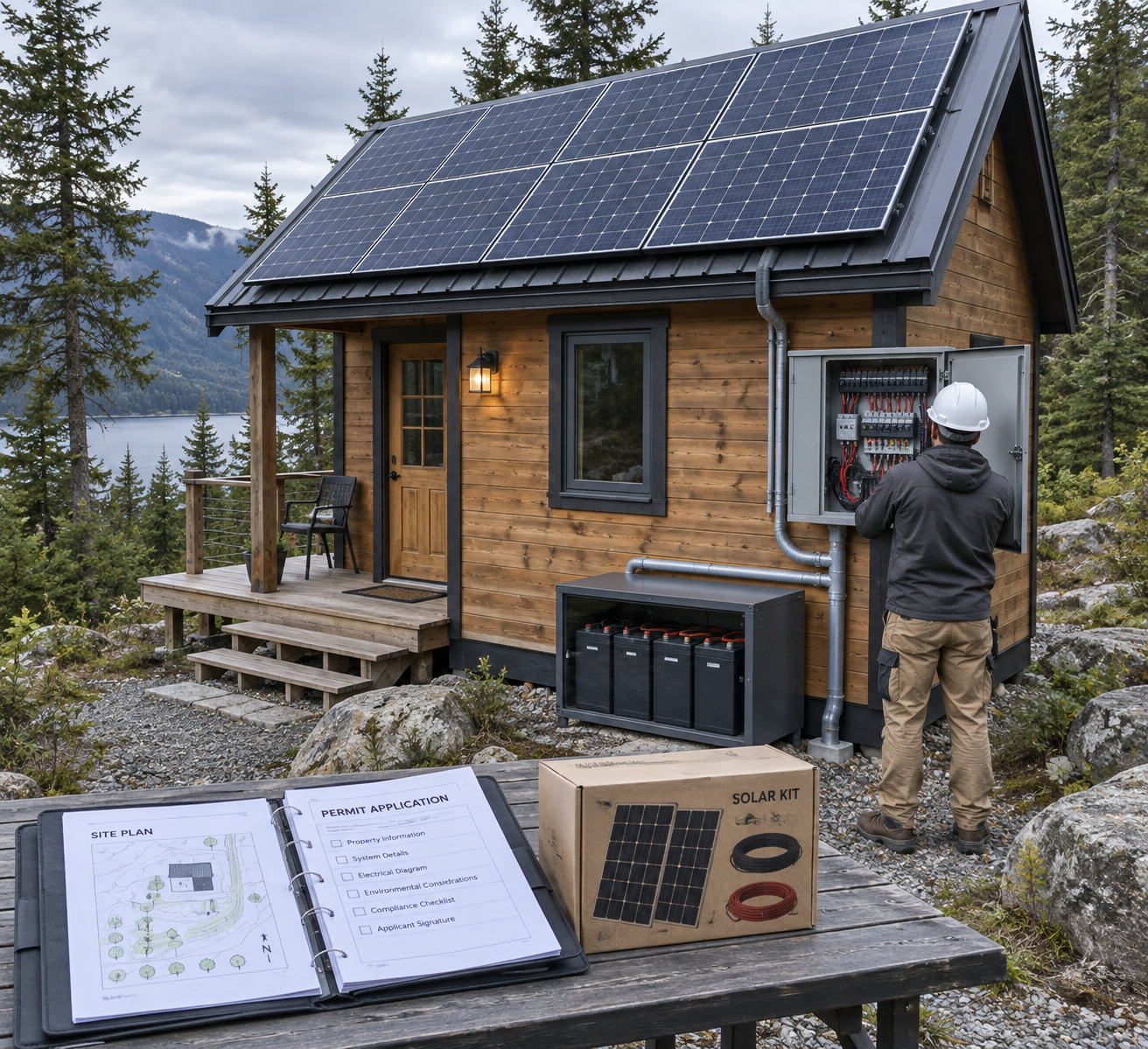
Off-grid doesn’t mean permit-free. Most local authorities still want an electrical permit, and roof attachments may get a structural review. The NEC covers photovoltaics in Article 690 and stand-alone systems in Article 710; Article 706 may also apply where the battery installation falls within its scope. The edition adopted varies, so call your county before buying.
Budget kit or custom build? A kit gets you matched parts and a fast start. Custom costs more time but lets you size the battery and controller to your actual load. For a 400-watt starter, buy a kit. Past 800 watts, I’d build custom. Cabin Lodger covers more off-grid power upgrades as my own build moves along.
Frequently Asked Questions
How many solar panels does a small off-grid cabin need?
Most small cabins need 400 to 1,200 watts of panels, which is two to six 200-watt panels or one to three 400-watt panels. Your daily watt-hours and winter sun hours decide the count, so do the load list first.
Do I need a permit for off-grid solar on a cabin?
In most places, yes. Off-grid skips the utility paperwork, but you’ll usually still need an electrical permit, and sometimes structural review for roof attachments. Rural areas with no code enforcement exist, but wiring to code protects you anyway.
What is the 33% rule in solar panels?
I can’t point you to one standard definition, and people use the phrase differently. Don’t size around it. Use daily watt-hours, peak sun hours and a loss cushion, which is the method that actually holds up.