Oil vs water based stain, which one? Neither wins everywhere. Oil-based stain soaks deeper, looks richer and usually lasts longer on exposed exterior wood like decks. Water-based dries faster, smells less, cleans up with water and suits interiors. Pick by location, exposure and how much prep and recoat work you’ll accept.
The Side-by-Side: Where the Two Stains Actually Differ
Most criteria split cleanly. A few don’t, and I’ll say so.
Criterion
Oil-based
Water-based
Dry time
Slow, 8+ hours (up to 24 in cool, humid weather)
Fast, 1-4 hours
Color
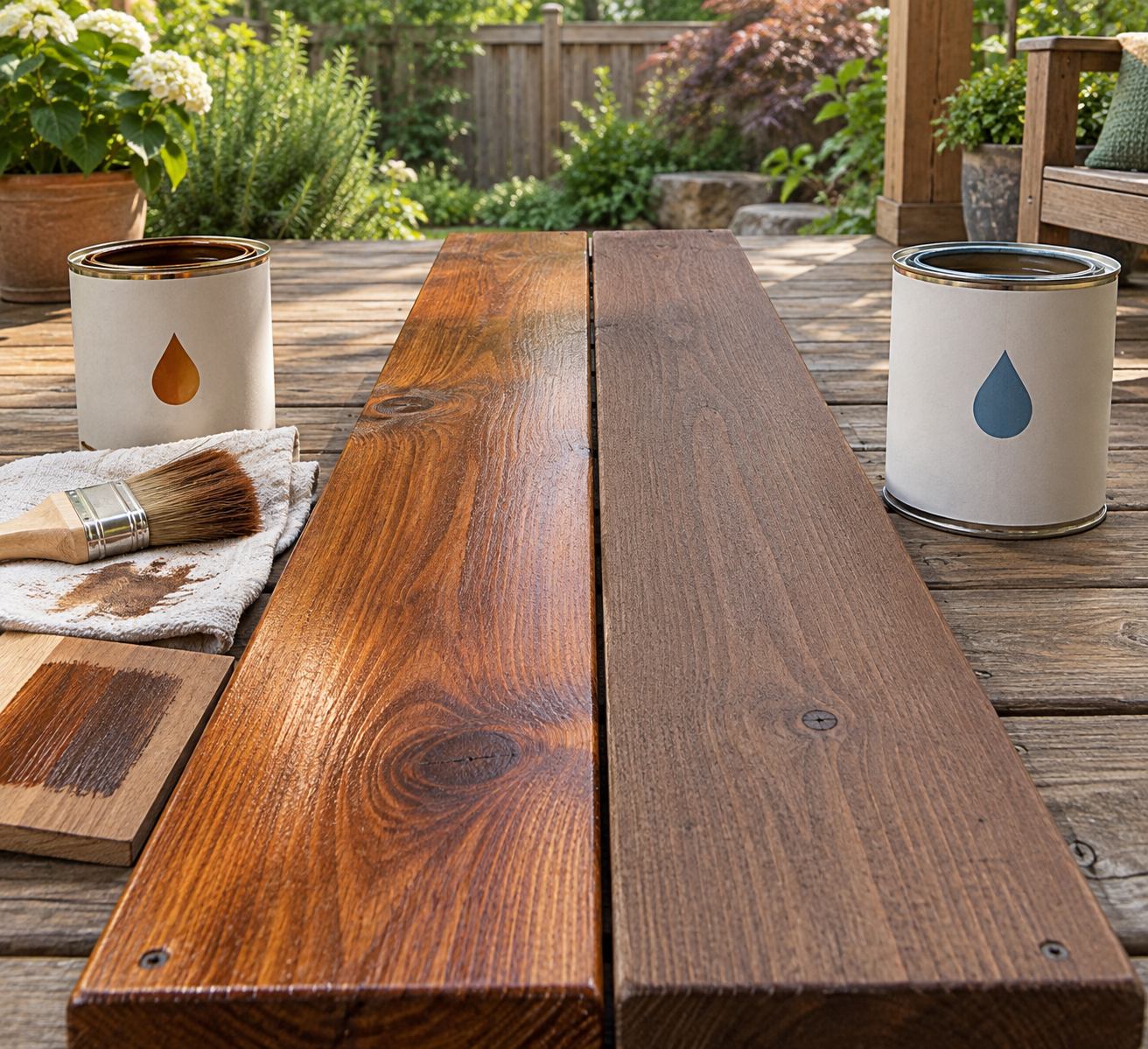
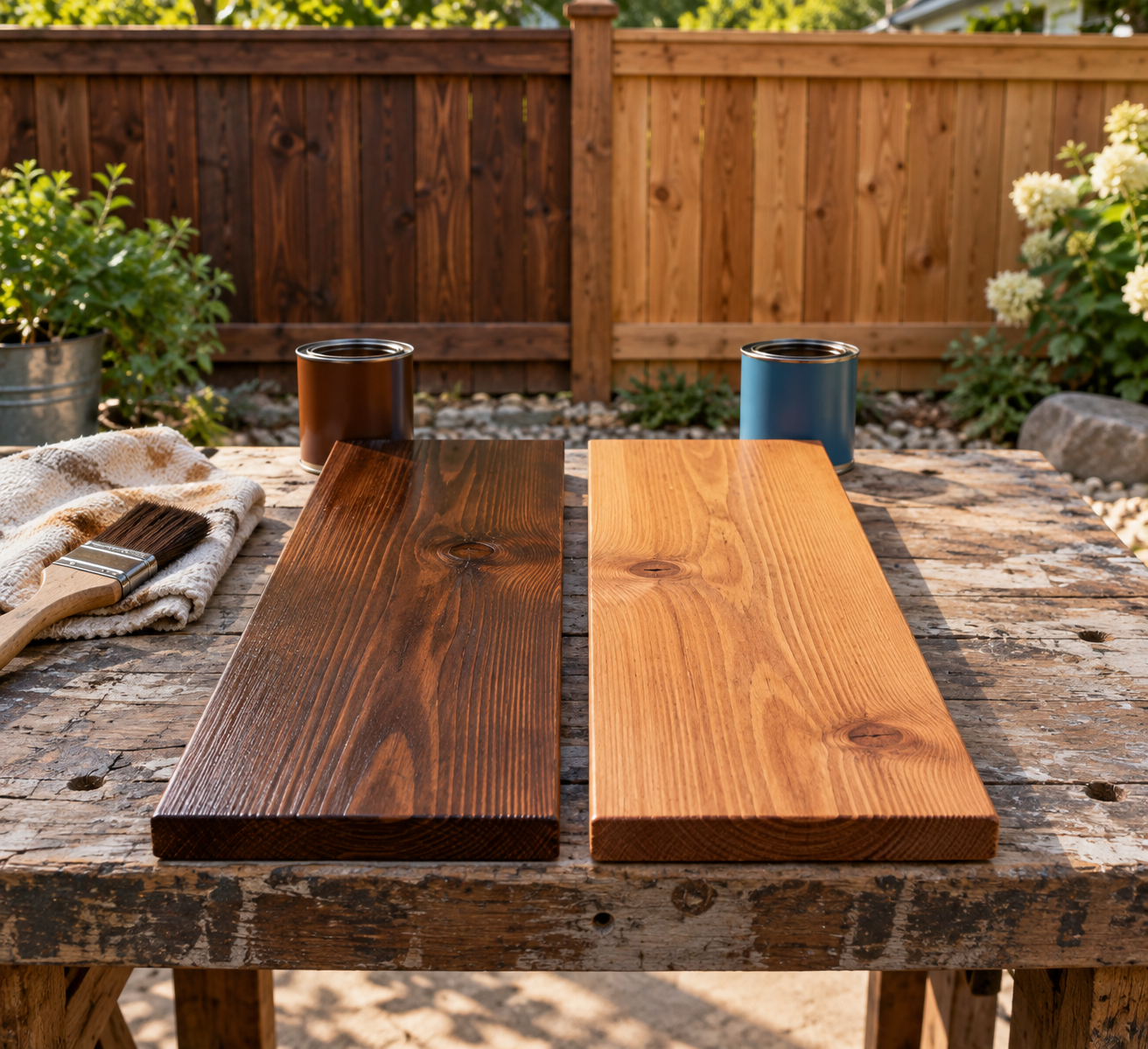
Rich, deep, warm amber undertone
Lighter, more natural look
Penetration
Deep
Newer resins close the gap
Fumes and VOCs
Strong odor, higher VOCs
Low odor, lower VOCs
Cleanup
Mineral spirits
Soap and water
Exposed exterior durability
Generally longer-lasting
Improved, but recoat sooner
Grain raise
Minimal
Common, needs sanding
Maintenance effort
Normal
Normal
Maintenance is a tie. Both need a fresh coat when the wood looks dry or worn.
Why Oil Wins Outside
Oil molecules are smaller than water’s, so they carry pigment deeper. That deep hold matters on a south-facing deck baking in sun, then soaked by rain. It also handles temperature swings better.
Wipe off the excess within about an hour. Stain that can’t soak in dries into a sticky, peeling film. That’s the most common beginner failure with either type.
Why Water-Based Is No Weakling
Modern formulas are not the thin stuff your dad remembers. Many use resins that penetrate nearly as deep as oil. Color retention can even be better. The drawback is that sun, rain and wind punish a water-based stain faster if it lacks UV absorbers, so read the label.
Project by Project: What I’d Put on Each
Here’s my field verdict, sorted by where the wood lives.
Decks, Siding and Logs
Use oil. Anything in direct sun and rain, like decks, cabin siding and log walls, gets the deeper penetration. Oil is also easier to recoat later, because new stain blends into the old.
Water-based can still work on cedar, cypress and pine, since it lets the wood breathe. Just expect to redo it sooner.
Interiors, Furniture and Cabinets
Use water-based. In a closed-up cabin, fumes hang around for days. Water-based dries in a few hours, so you can apply a second coat the same day. It also pairs with water-based polyurethane for the clearest, most accurate color.
Two catches. Water raises the grain, so sand lightly after the first coat dries. And oil-based gray stain on red oak often turns green-gray, so test first.
Tight, Low-Ventilation Spaces
A loft, a closet, a winter job with windows shut. Water-based, no argument. Oil-based fumes are strong and flammable.
Prep, Compatibility and Safety Traps
Most failures come from what happens before the can opens, not from the stain itself.
Strip or sand to bare wood. Stain won’t bond over old finish.
Test a scrap or hidden spot. Species and sanding grit change the color.
Sand evenly. Skipped sanding causes blotching.
Apply thin coats and wipe off the excess.
Let it dry fully before topcoating. Oil needs 24-48 hours before a water-based topcoat.
Handle rags safely (see below).
Water-based over oil-based fails. It won’t bond and usually peels. Oil over water-based works. To switch from oil to water, strip fully and sand to bare wood.
Rags and Regulations
Oily rags can self-heat and catch fire. Lay them flat outdoors to dry, away from anything flammable, before you toss them. Don’t pour used mineral spirits down a drain.
Are oil stains being phased out? Not nationally, but VOC rules are tight in some places. California’s South Coast AQMD bars high-VOC products, even ones bought online from out of state.
The Verdict: Choose Oil If, Choose Water If
Choose oil-based if the wood sits in full weather, you want deep color, and you can ventilate and wait a day between coats. Downside: slow drying, strong fumes and mineral spirits cleanup.
Choose water-based if the job is indoors, fumes are a problem, or you want fast recoats and easy cleanup. Downside: grain raise and, outdoors, earlier recoating.
Neither fits if you want a hard, film-forming surface on a tabletop. That’s a topcoat job. Gel stain is also worth a look on blotchy woods or vertical surfaces, since it sits where you put it.
Frequently Asked Questions
How long does each type take to dry?
Water-based is usually dry in 2-4 hours. Oil-based needs 6-8 hours at minimum, and 24 is safer. Cold, humid weather stretches oil’s time further.
Which is better for a deck?
Oil-based, for most decks. It penetrates deeper and tends to last longer in sun and rain. Water-based works if you accept more frequent recoats and don’t want the fumes.
Which is better for furniture or kitchen cabinets?
Water-based. It dries fast, smells little and cleans up easily. Sand lightly after the first coat to knock down raised grain, and test the color on scrap first.