Is logging wood yourself actually the cheaper way to build a small cabin? Often it isn’t. Once you count chainsaw gear, milling, hauling, and a year or more of drying, buying logs or lumber can win on both time and money.
Here’s how I’d weigh it, what the work involves, and where a hybrid plan makes the most sense.
Cut Your Own or Buy: The Honest Math
Cutting your own feels like free material. It isn’t. You pay in hours, tools, fuel, and risk.
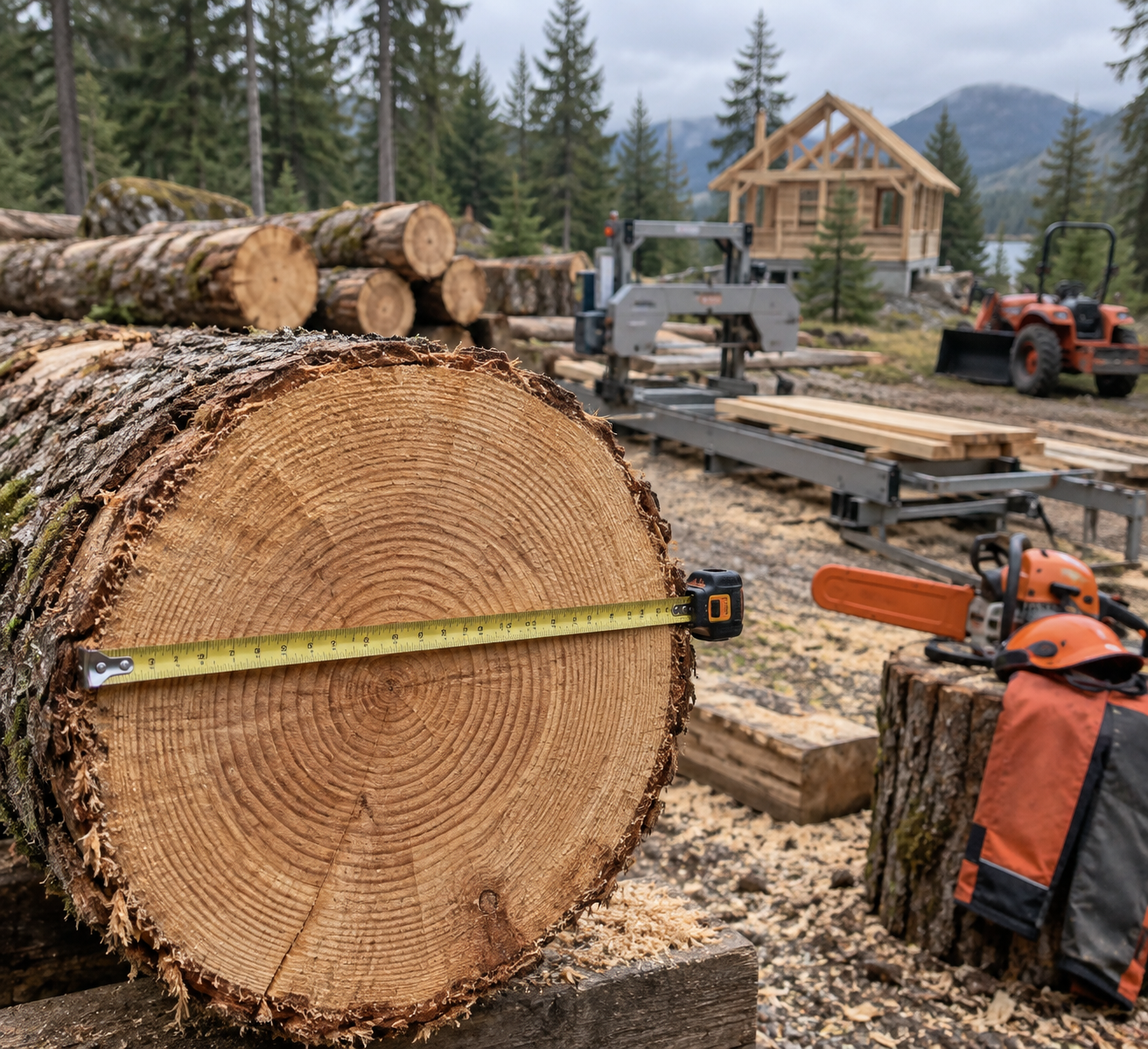
A decent 60cc chainsaw runs about $500 to $900. Add chaps, a helmet with face shield, ear protection, and boots, and safety gear adds roughly $200 to $350. A chainsaw mill attachment is another $200 to $600, and a portable bandsaw sawmill starts around $5,000 to $8,000 new.
When Buying Wins
For a 12×16 cabin, you need a few thousand board feet at most. Pre-milled or kiln-dried lumber from a local sawmill or yard is ready to use. Kiln-dried material skips the drying wait entirely, and that’s often worth the premium.
When Cutting Wins
If you own timber, have a tractor or ATV, and don’t mind a slow schedule, your own logs for posts, beams, and rafters make sense. That’s the hybrid route I like: own logs where size and character matter, bought lumber for sheathing, flooring, and framing.
The drawback is time. One person felling, limbing, and skidding logs for a full log shell can burn weeks of weekends.
Permits, Species, and Picking the Right Tree
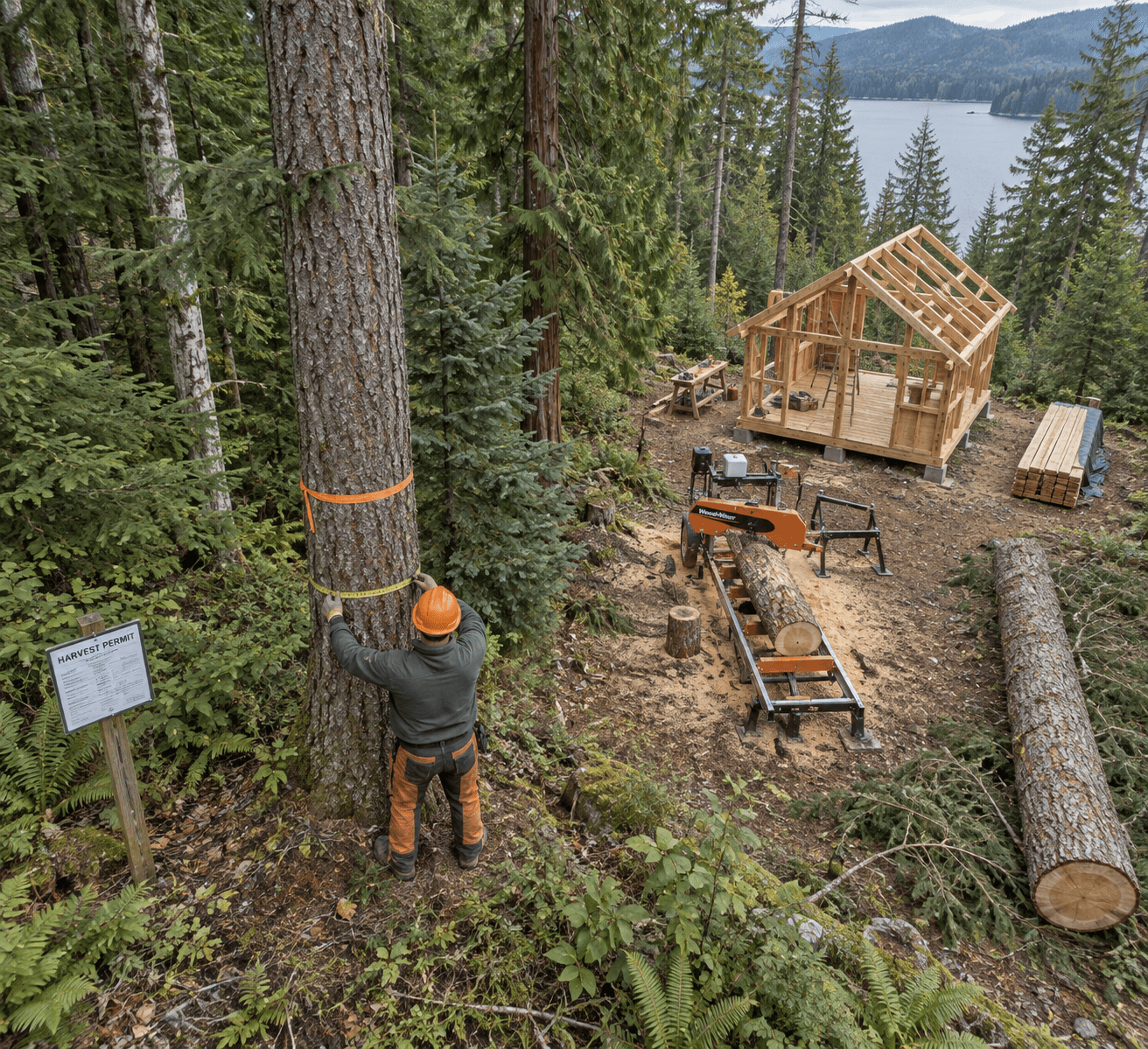
Before you touch a saw, confirm who owns the trees and what rules apply. Even on your own land, many counties and states require a forestry notice or harvest permit, and wetland or stream buffers can restrict cutting. Call your county extension office or state forestry agency and ask what triggers a permit at your acreage.
Species That Work
Cedar resists rot best and is light but soft. Pine and spruce are easy to find, straight, and cheap, but they need good bark removal and treatment. Douglas fir is strong for beams and posts. Match the species to the job rather than defaulting to whatever’s standing nearest.
Trees to Skip
Don’t cut crooked, leaning, or already-dying trees. A leaning tree can barber-chair (split up the trunk and kick back), and dead trunks hide rot and insect galleries. Pick straight trunks with little taper. For walls, logs 8 to 10 inches at the small end suit a small cabin.
Felling, Bucking, and Getting Logs Out
Felling is the most dangerous part of the whole project. Never do it alone, and tell someone your location and return time.
Check the lean, wind, dead branches overhead, and your escape path at roughly 45 degrees behind the tree.
Cut a notch (the face cut) about one-fifth to one-third of the trunk’s diameter.
Make the back cut slightly above the notch, leaving a hinge of uncut wood.
Drive a wedge if the tree hesitates, then walk your escape path as it falls.
Limb from the base toward the top, keeping the trunk between you and the saw.
Buck (cut) logs to length, adding 6 to 12 inches for trimming.
Hauling is where remote sites hurt. A 12-foot log at 10 inches across can weigh several hundred pounds green. Use a winch, log arch, or tractor to skid it, and never roll a log downhill with people below.
Peeling, Drying, and Treating Logs
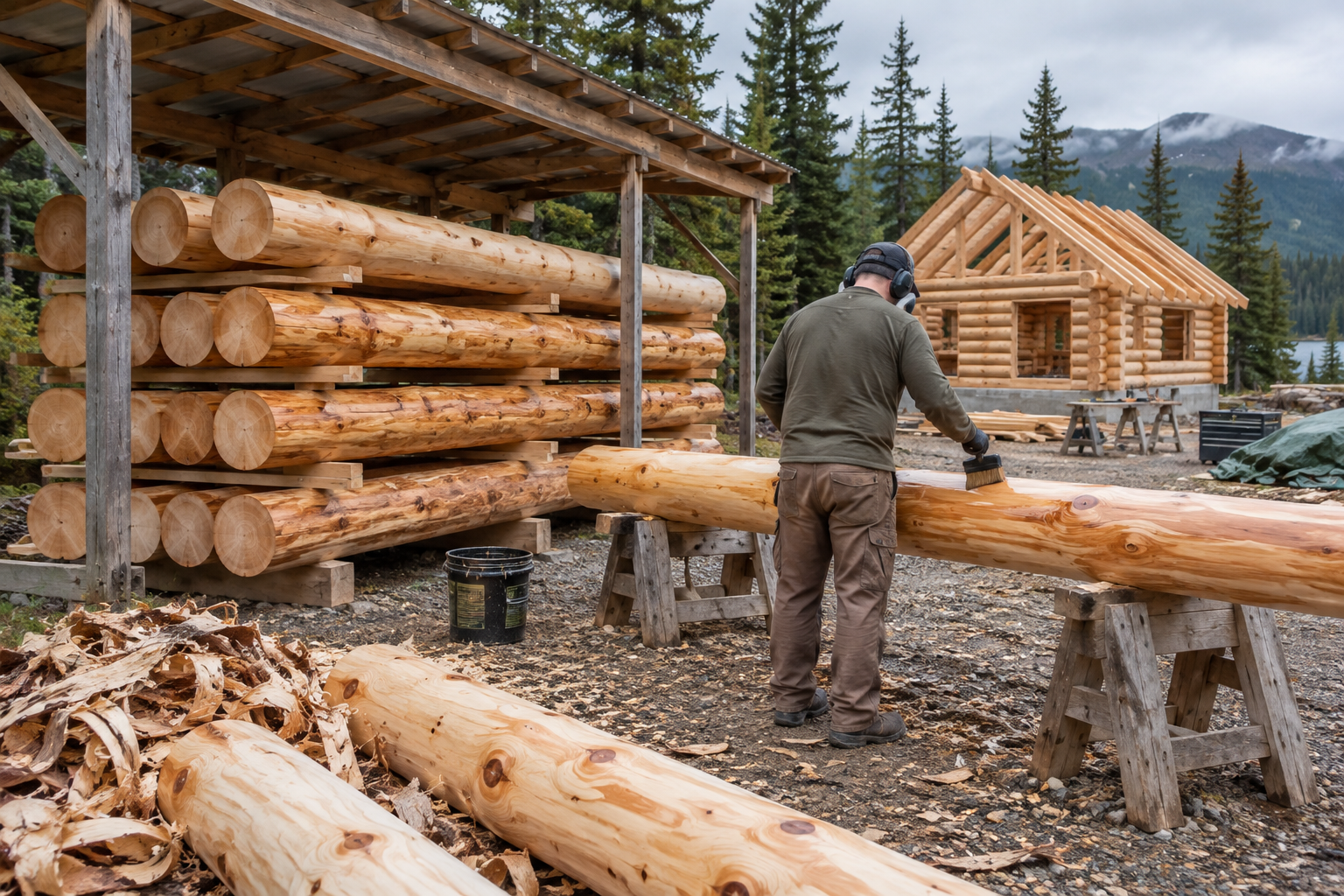
Peel bark soon after felling. Bark holds moisture and hides beetles, so skipping peeling invites rot and insects. Spring is easiest because the sap is running and bark slips off with a drawknife or spud.
Method
Typical cost
Drying time
Best for
Air-dry, stacked and stickered
Low
6-12 months per inch of thickness (rule of thumb)
Posts, beams
Buy kiln-dried
Highest
None
Framing, flooring
Buy pre-milled green
Medium
Months
Siding, rafters
Stack logs off the ground on level supports, with spacers between layers, under a roof with open sides for airflow. Seal the end grain, since ends dry fastest and crack first.
Building with green logs and ignoring shrinkage, checking, and settling is a classic mistake. Logs can shrink noticeably in diameter and settle over a year or more, so leave gaps above windows and doors. Finish with a borate treatment and a UV-resistant sealer. I cover treatment options in more detail in the wood treatment guides on cabinlodger.com.
Estimating How Many Logs You Need
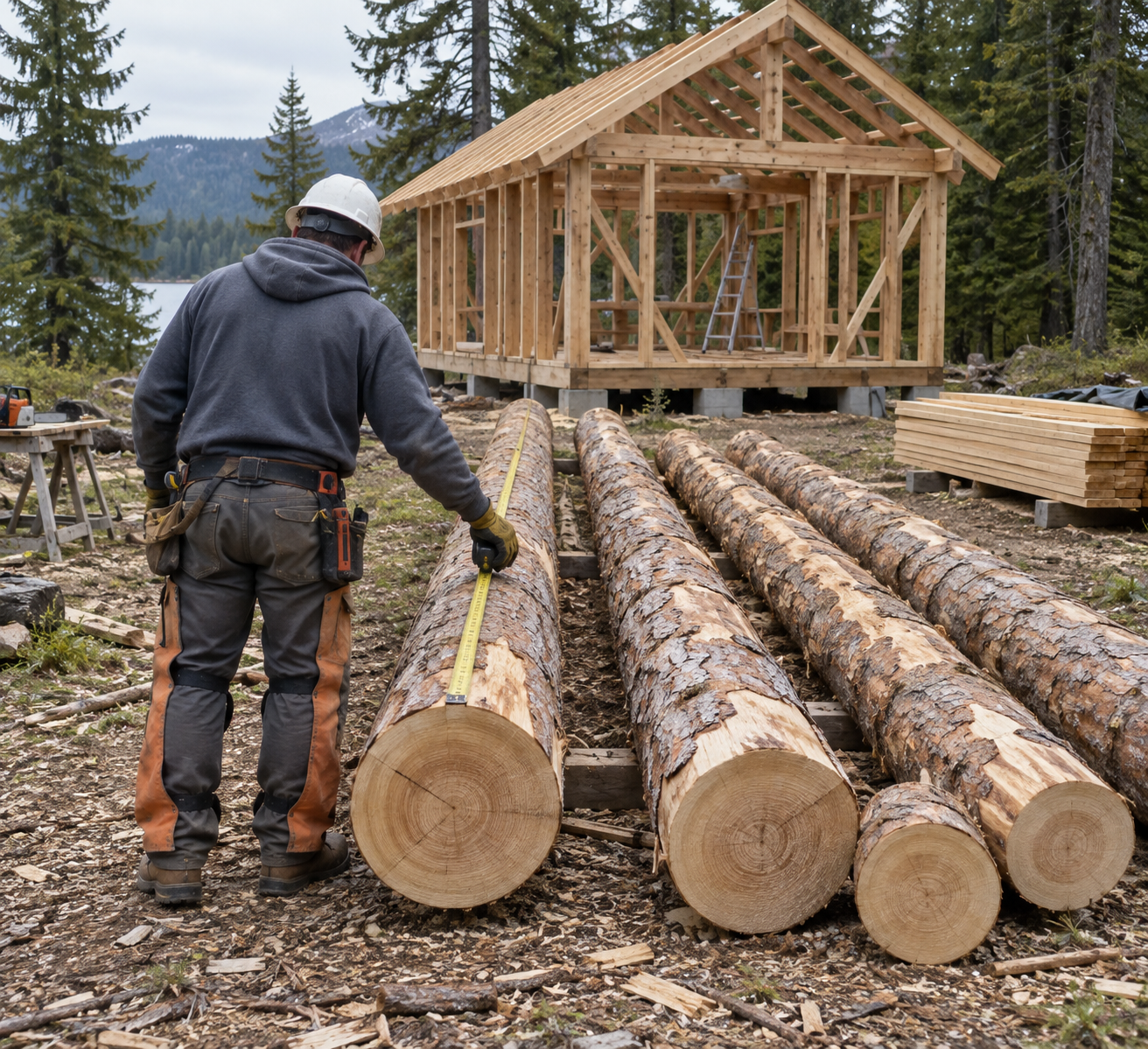
Count wall length first. A 12×16 cabin has 56 feet of perimeter. At 8-inch logs stacked about 7 inches per course, an 8-foot wall needs around 14 courses.
That’s roughly 56 feet times 14 courses, or 784 linear feet of wall logs, before subtracting door and window openings. Add 10 to 15 percent for waste, bad cuts, and knots. Plan joists, rafters, and posts separately.
Frequently Asked Questions
How long does cut logs need to dry before building?
Plan on at least six months, and closer to a year for 8-inch logs. Dry them until they stop losing weight, ideally near 15 to 20 percent moisture. A pin meter costs about $30 to $50 and removes the guesswork.
Do I need a permit to cut trees on my own land?
Often yes, or at least a notice. Rules vary by state and county, especially near streams, wetlands, or protected habitat. Call your state forestry agency before cutting, since fines for unpermitted harvest can exceed the value of the timber.
Is a chainsaw mill worth it for one cabin?
Usually only for a few beams or boards. Milling with a chainsaw is slow and wasteful, with a wide kerf (the slot the blade removes). For a full cabin, hiring a local portable sawmill operator is typically faster.